
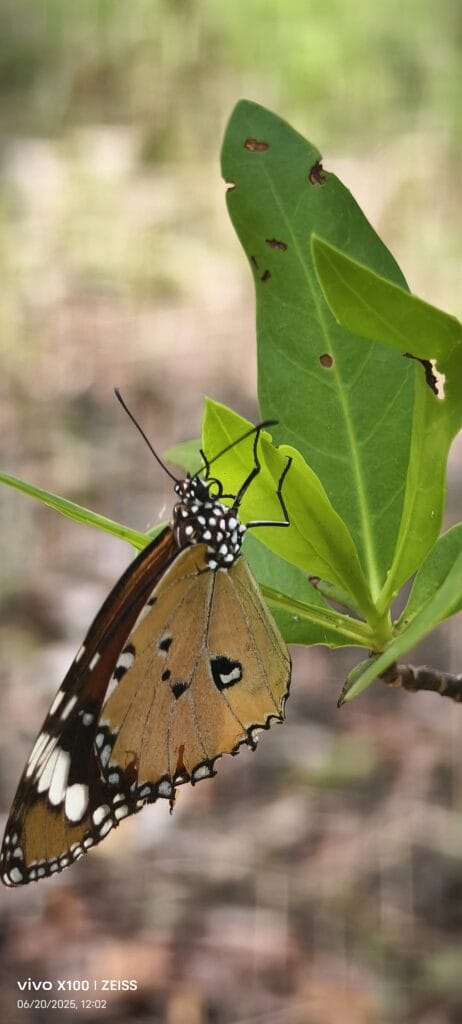
This photograph was taken inside Tadoba Tiger Reserve, a place best known for its powerful predators. Yet, in between the excitement of tracking big cats, the forest quietly offers scenes like this — a Plain Tiger Butterfly, resting calmly on fresh green leaves, completely unaware of human admiration.
The Plain Tiger (Danaus chrysippus) is one of India’s most familiar butterflies, but familiarity doesn’t make it ordinary. Its warm orange-brown wings, bold black borders, and delicate white spots are a perfect example of nature’s balance between beauty and survival. The slightly worn edges of its wings suggest this butterfly has already lived through sun, wind, and narrow escapes — a small but resilient resident of the forest.
Tadoba’s dry deciduous landscape provides an ideal environment for this species. Milkweed plants grow naturally here, serving as food for caterpillars and giving the butterfly its well-known chemical defense. Birds quickly learn to avoid it, making the Plain Tiger a master of survival through experience rather than speed.
While safaris often rush from one sighting to another, this butterfly stayed long enough to be noticed, observed, and photographed. The soft background blur keeps the chaos of the forest away, letting the viewer focus on a single life form doing absolutely nothing — and doing it beautifully.
This image is a reminder that Tadoba is not just about tigers. It is a living system where even the smallest creatures play their role quietly, gracefully, and without applause.
Sometimes, the forest whispers — and this butterfly was one such whisper.
The butterfly in the image shows the classic orange-brown wings, bold black borders, and white spots that make the Plain Tiger instantly recognizable. The slightly worn wing edges suggest this individual has been around for a while—nature’s version of a seasoned traveler.
Where You’ll Find It
The Plain Tiger is widely distributed across India, Asia, and Africa. It prefers:
- Open forests
- Grasslands
- Roadside vegetation
- Gardens and parks
Basically, if plants are growing and the sun is shining, this butterfly is happy.
What It Eats
- Caterpillars feed mainly on milkweed plants (Calotropis species).
- These plants contain toxic chemicals, which the caterpillars store in their bodies.
- Adult butterflies sip nectar from a variety of flowers.
Here’s the clever part: because of those toxins, predators like birds learn very quickly—don’t eat this one. Bright colors = bad taste. Nature’s warning label, no fine print required.
Why Birds Avoid It
The Plain Tiger is unpalatable. Birds that try eating one usually regret it immediately and remember the experience. This makes the butterfly an important model for mimicry, where other harmless butterflies copy its colors to gain protection.
Behavior and Life Cycle
- Mostly active during daylight
- Often seen basking with wings open
- Can live several weeks as an adult
- Plays a role in pollination
Despite being common, it’s an essential part of the ecosystem—quietly doing its job while looking good.
Tadoba’s dry deciduous forest supports more than just large mammals.
While tigers dominate attention, insects, birds, and butterflies quietly thrive.
The presence of native plants creates a balanced ecosystem.
Therefore, species like the Plain Tiger Butterfly are seen regularly, especially during warmer months.
Curious to explore more quiet moments, forest stories, and real safari experiences Read more wildlife and safari stories here: https://travelontales.com/category/safaris/