
Panna National Park Safari — India’s Greatest Tiger Comeback & the Ken River Forest
Safari Smart · Panna Tiger Reserve, Madhya Pradesh · April 2026 · Prashant S. Gupta
There are national parks in India that are famous for what they have. And then there is Panna — famous for what it lost, and more importantly, for what it got back. In 2009, this forest had no tigers. Not one. Systematic poaching had stripped it completely. What followed is one of the most extraordinary wildlife conservation stories on earth — a story that is still unfolding in the dry teak forests above the Ken River every single morning.
Today, Panna National Park supports over 55 tigers and is one of Madhya Pradesh’s most rewarding safari destinations. It sits just 25 km from the World Heritage temples of Khajuraho, making it the perfect add-on — or the main event — for anyone travelling through central India. The Ken River runs through its heart, gharials slide off sandbars into cold green water, and vultures circle above sandstone cliffs that existed long before anyone thought to name this place.
🐅 Visiting from Khajuraho? Book your Panna safari in advance
🐅 Book Panna Safari Now – Limited SlotsPanna National Park Jeep Safari from Khajuraho — via Viator
▶ Panna National Park — safari field footage | TravelOnTales YouTube
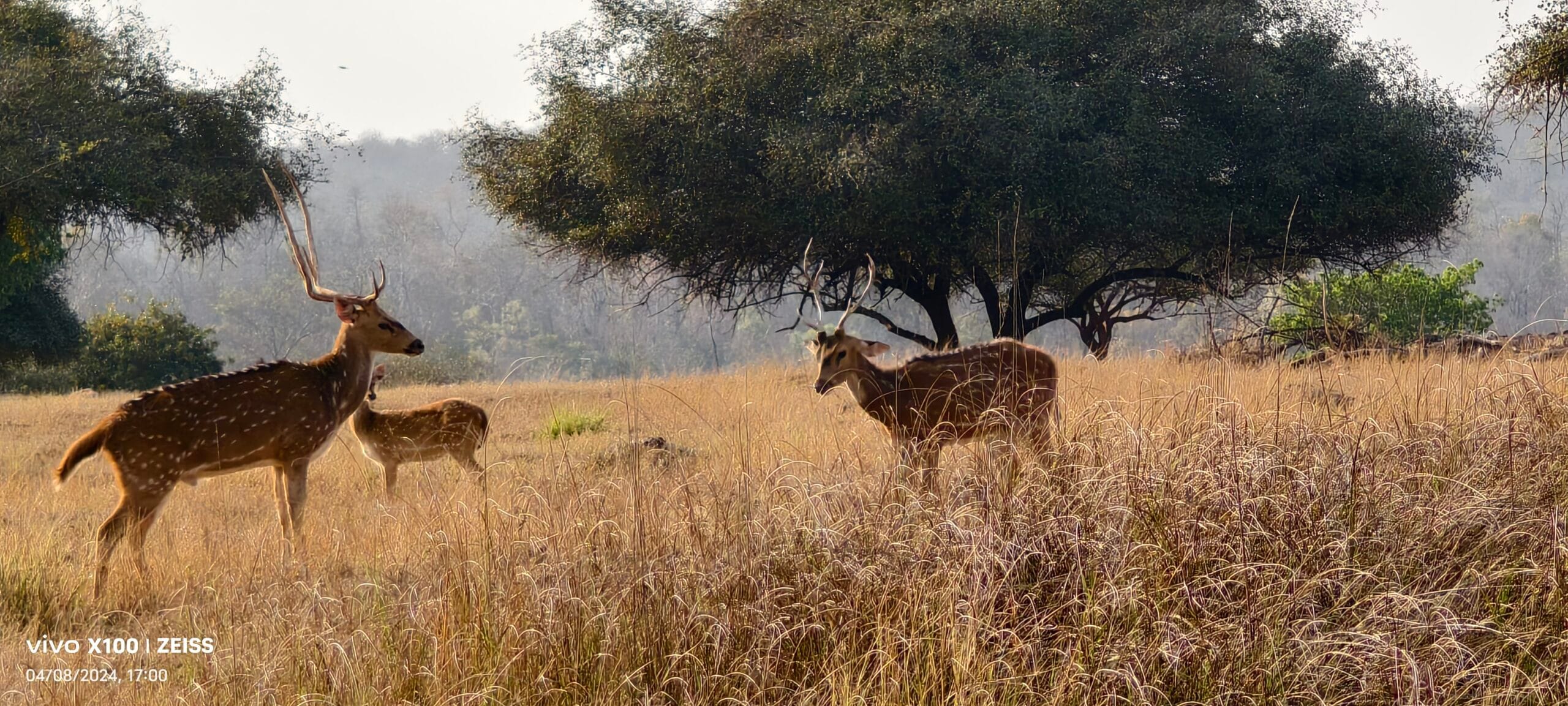
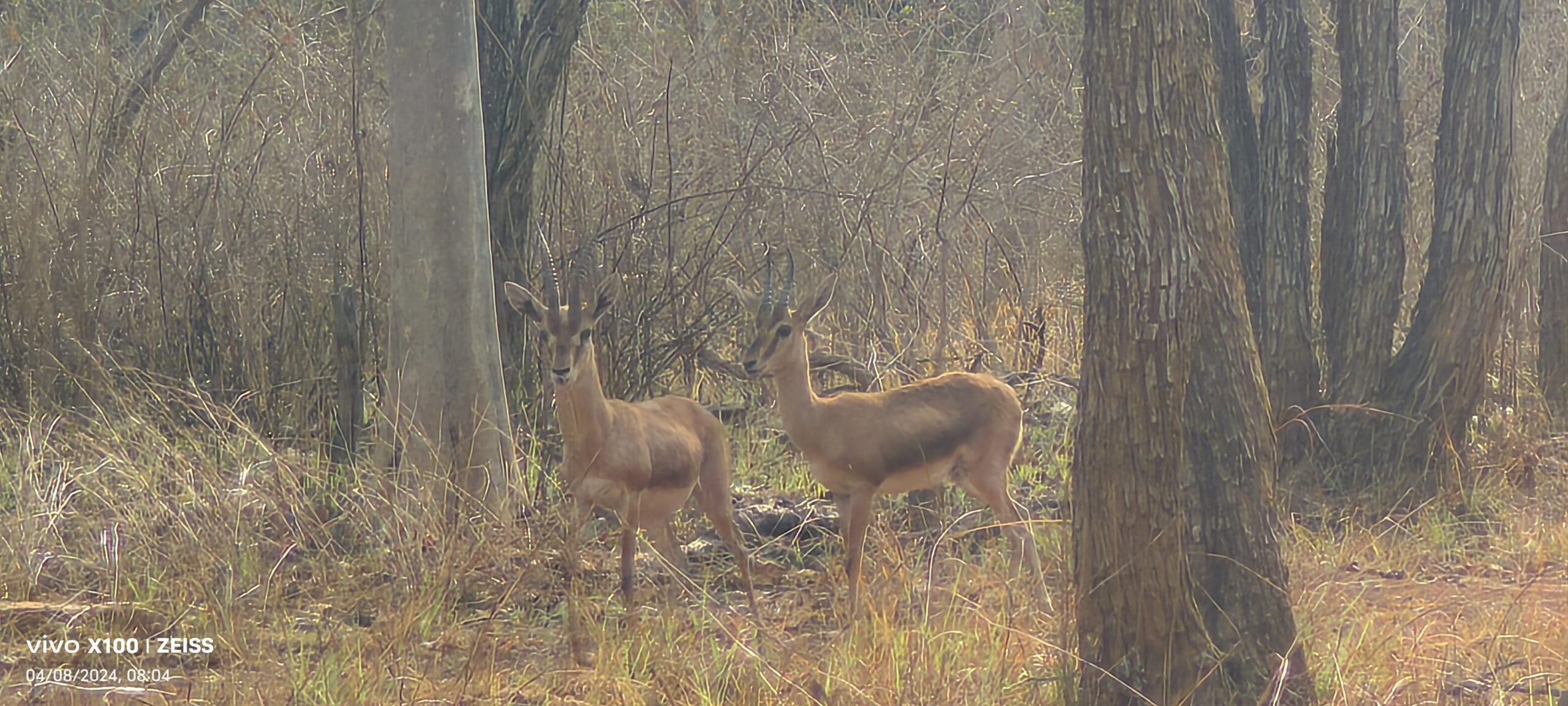
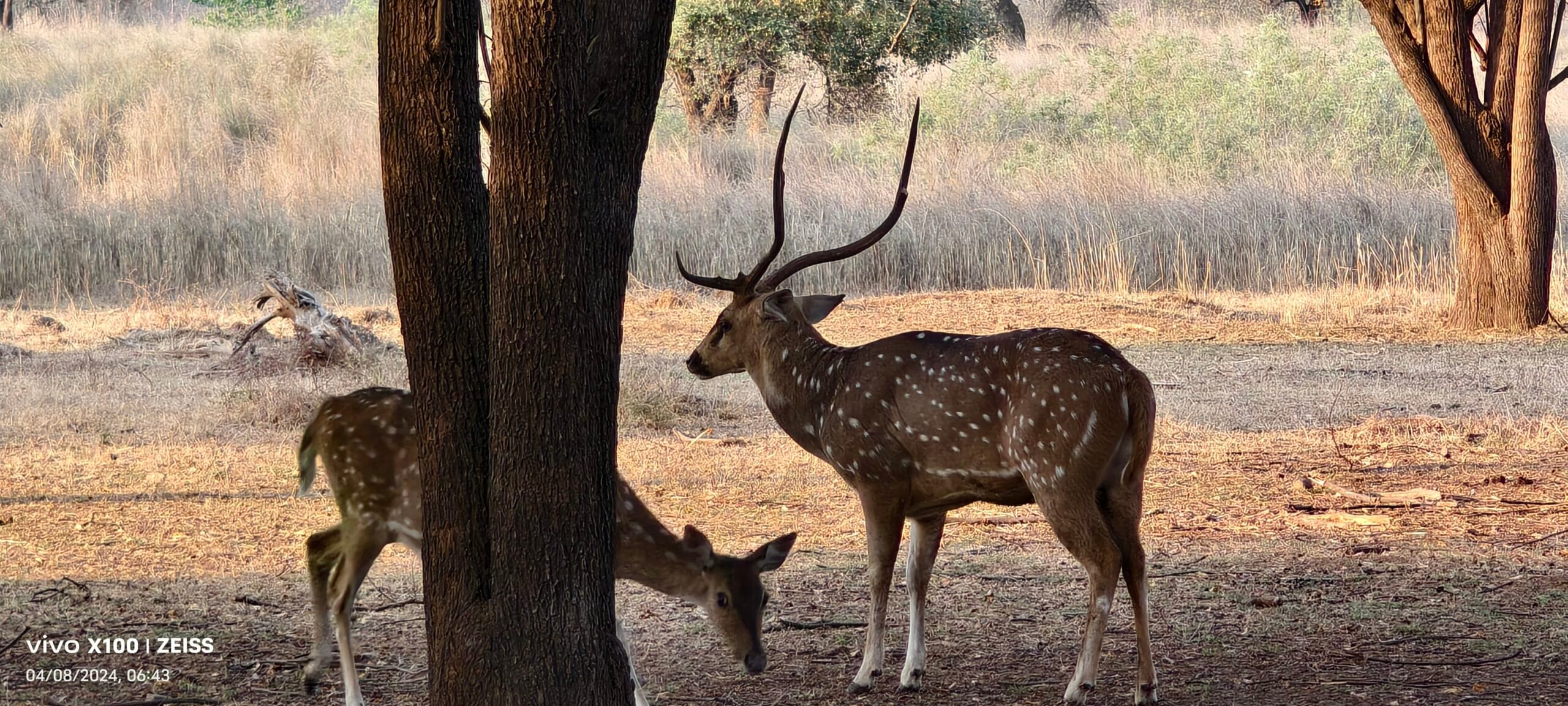
Spotted deer (chital) in the dry deciduous forest of Panna — a constant presence on every safari drive
About Panna National Park & Tiger Reserve
Panna National Park, established in 1994, covers a total area of 1,645 sq km — with a core of 542.67 sq km and a buffer of 1,002 sq km — spread across the Panna and Chhatarpur districts of northern Madhya Pradesh. It is Madhya Pradesh’s fifth tiger reserve and sits within the ancient Vindhyan plateau, a landscape of dry teak and mixed deciduous forest, sandstone ridges, gorges, and the extraordinary Ken River valley.
The name Panna carries history well beyond wildlife. This was the capital of the Bundela kingdom, diamond mines still exist within the district, and nearby Khajuraho — just 25 km away — is one of the great archaeological sites of the world. Panna is where you come for tigers and stay for everything else the landscape reveals.
India’s Most Inspiring Conservation Story
Between 2006 and 2009, every single tiger in Panna was poached. The forest fell silent in the worst way. In 2009, the Forest Department began a reintroduction programme — bringing tigresses from Bandhavgarh and Kanha, and a male from Pench. The first cubs were born in 2010. Today the reserve supports 55–70 tigers. What was once a cautionary tale has become the most powerful proof that Indian wildlife can recover — if given the chance, the protection, and the will.
The Ken River — Panna’s Living Heart
The Ken River — known locally as the Karnavati — winds through Panna for 55 km, forming part of the western boundary before cutting through the core of the reserve. It is widely regarded as one of the cleanest rivers in the region, a tributary of the Yamuna that flows south to north through Lower Vindhyan rock formations before joining the Yamuna downstream.
Along the Ken’s banks, the forest changes. Wooded riverbanks give way to open sandbars where mugger crocodiles bask in full view. Gharials — the long-snouted, critically endangered fish-eating crocodilians — occupy quieter stretches. Herds of spotted deer and sambar approach the waterline at dawn. And occasionally, a tiger walks down to drink, crosses without ceremony, and disappears back into the teak.
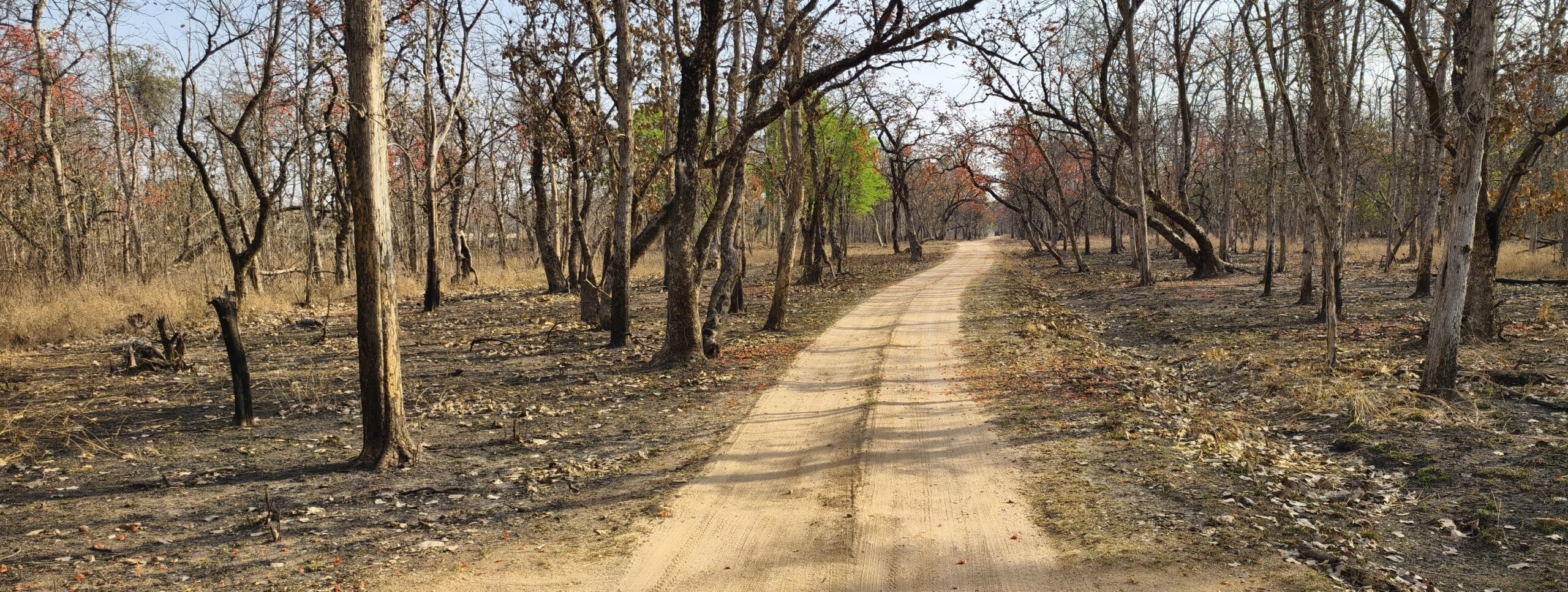
Forest safari track, Panna — the dry deciduous forest opens dramatically as you descend toward the Ken River valley
The Ken River Boat Safari
One of Panna’s most distinctive experiences is the boat safari on the Ken River, departing from the Bhoura Dau jetty inside the reserve. Drifting quietly along the river — with crocodiles on the banks, vultures overhead, and kingfishers cutting across the water — is a fundamentally different experience from the jeep safari. Storks, migratory waders, plovers and raptors are seen in numbers. And on rare, extraordinary mornings, a tiger appears at the waterline.
Entry Gates — Madla & Hinauta
Unlike most Indian tiger reserves, Panna does not operate a strict zone system. Approximately 20% of the core area is open to tourism, and safari vehicles are relatively free to explore within this region — making every drive feel less prescribed than at Tadoba or Bandhavgarh.
| Gate | Distance from Khajuraho | Character | Best For |
|---|---|---|---|
| Madla | ~25 km | Main and most popular gate on NH39. Located on the Ken River bridge road. Most accommodation is concentrated here. Richer herbivore density, open forest floor, well-maintained tracks. | Tiger sightings, deer, Ken River access, first-time visitors |
| Hinauta | ~55 km | Rocky, drier terrain with sandstone escarpments. Quieter and less visited. Harder landscape with more dramatic scenery. Gates are approximately 30 km apart from each other. | Leopard, sloth bear, vultures, cliff landscapes, fewer vehicles |
| Ken River | Within reserve | Accessible via both gates. Bhoura Dau jetty offers boat safaris. Open sandbars, crocodile habitat, spectacular birdlife including seven vulture species on the Dundhwa Seha gorge cliffs. | Boat safari, crocodiles, gharials, birds, tiger at waterline |
Field note: Panna has only around 25 vehicles permitted in the core at any time — significantly fewer than Tadoba or Bandhavgarh. This means quieter drives, less vehicle clustering at sightings, and a more genuine forest experience. Book early — there is no Tatkal quota at Panna.
Wildlife — What the Forest Holds
Panna’s recovery means its wildlife density is still growing. Alongside the recovering tiger population, the reserve supports one of the finest leopard populations in Madhya Pradesh, a strong vulture colony — seven of India’s nine vulture species nest on the Dundhwa Seha cliffs — and a birdlist of over 300 recorded species.
- 🐅 Bengal Tiger
- 🐆 Leopard
- 🐻 Sloth Bear
- 🦌 Spotted Deer (Chital)
- 🦌 Sambar Deer
- 🐃 Indian Gaur
- 🦎 Mugger Crocodile
- 🐊 Gharial
- 🦅 Seven Vulture Species
- 🦢 Storks & Waders
- 🦚 Peacock
- 🐒 Langur & Macaque
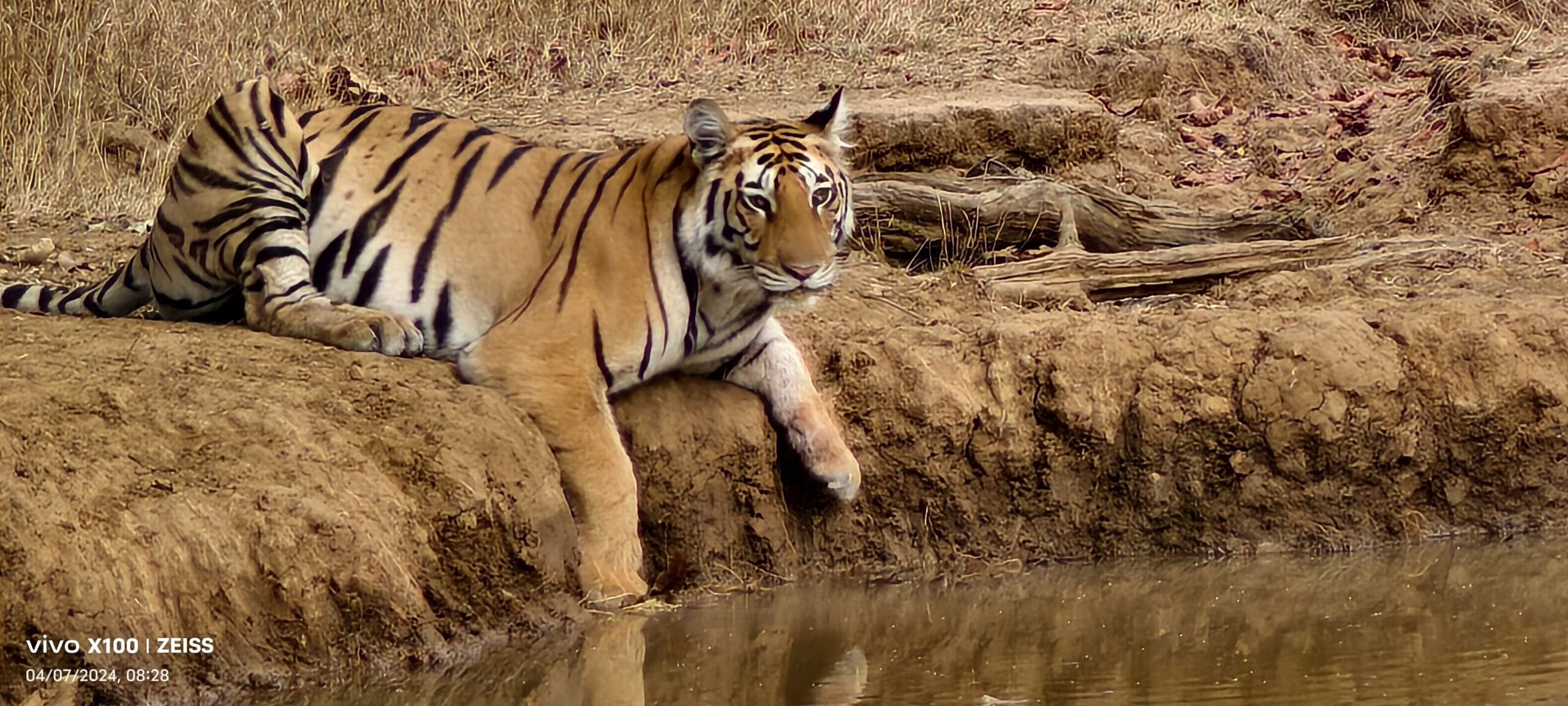
Morning light on the forest tracks — Panna’s landscape shifts dramatically from plateau to river valley within a single drive
The Vulture Cliffs — Dundhwa Seha
Panna is one of the few places in India where vultures are genuinely abundant. The sandstone gorge at Dundhwa Seha supports nesting colonies of long-billed vultures and Egyptian vultures — and on early morning safaris, the thermal currents above the cliff faces lift dozens of birds simultaneously. Watchtowers at Kamani, Titli and MahuaPani offer sweeping views of the river valley and forest canopy. For bird photographers, these locations are unmissable.
Pandava Falls & Raneh Canyon
Beyond the safari zones, the Panna landscape holds two extraordinary geological features. Pandava Falls, one of the tallest waterfalls in central India, plunges over 30 metres into the Ken River. Raneh Canyon, near the reserve edge, reveals volcanic rock formations in the Ken riverbed — layers of ancient lava that have been cut by centuries of river flow into a canyon of surreal colours. Both are accessible as day trips from Khajuraho.
Jeep Safari from Khajuraho — Panna National Park & Tiger Reserve via Viator
How to Reach Panna National Park
Panna’s proximity to Khajuraho is its single greatest logistical advantage. Most visitors combine both in a single trip — world-heritage temples in the morning and tigers in the afternoon, or vice versa. Here is the full route breakdown.
Getting to Panna — All Routes
Safari Booking — Practical Guide
- Book online at the Madhya Pradesh Forest Department portal: forest.mponline.gov.in
- No Tatkal quota: Unlike Tadoba, Panna has no last-minute booking window. Book well in advance, particularly for October–February peak season.
- Vehicle limit: Only approximately 25 vehicles are permitted in the core area at any time — making Panna one of the least crowded tiger reserves in India.
- Safari slots: Morning and evening. Morning safaris begin around 6 AM. Evening safaris are not available on Wednesdays.
- ID proof mandatory: Carry the original Aadhaar or passport used during booking. No ID means no entry.
- Mobile phones not permitted inside core safari zones. Carry a dedicated camera. Violations can result in ejection from the safari.
- Safari types: Both jeep safari and Ken River boat safari can be booked. The boat safari requires advance arrangement — ask your resort or book via Viator below.
- Park season: Open October 1 to June 30. Closed July to September during monsoon. Best tiger sightings: March to June.
Photography tip: The Ken River descent from the plateau forests delivers exceptional light between 7 AM and 9 AM. Carry a 300mm+ lens for river wildlife — crocodiles, gharials and birds on the sandbars reward patience. The Dundhwa Seha gorge at dawn is extraordinary for vulture photography.
Combining Panna with Khajuraho
This is the journey that central India was designed for. The Khajuraho temples, built between 950 and 1050 AD by the Chandela dynasty, are among the finest examples of medieval Hindu and Jain architecture in the world — and they sit just 25 km from Panna’s Madla gate. The combination of a morning temple visit and an afternoon forest safari, or an early morning safari followed by temple exploration, is entirely practical from a single base in Khajuraho.
The Kalinjar Fort, one of India’s most historically significant hill forts, is approximately 90 minutes from Panna — worth a half-day visit for anyone with an interest in Bundela and Mughal history. The Panna diamond mines, the only commercial diamond mining region in India, add another layer to a destination that rewards visitors who stay longer than a single safari.
Field Notes — What Panna Teaches
Panna is not the showiest forest in India. It does not have Bandhavgarh’s density or Tadoba’s tiger boldness or Ranthambore’s dramatic ruins. What it has is something rarer — a forest that was destroyed and chose, with a great deal of human help, to come back. Every tiger you see here is a descendent of animals that were brought from other reserves and released into a silent, empty forest. Every alarm call you hear is the sound of an ecosystem rebuilding itself.
The Ken River at dawn — mist rising off the water, crocodiles still motionless on the banks, a heron standing in the shallows — is one of the most quietly beautiful things a wildlife photographer can witness in India. And Panna, sitting 25 km from one of the world’s great archaeological wonders, is still undervisited enough that you will often have the forest roads almost entirely to yourself.
Go before everyone else figures that out.
Frequently Asked Questions — Panna National Park
How to reach Panna from Khajuraho?
Panna Madla gate is just 25 km from Khajuraho — approximately 30 minutes by taxi via NH39. Most visitors stay in Khajuraho and travel to the park for morning safaris. The Viator safari below includes pickup from Khajuraho.
How many tigers are in Panna Tiger Reserve?
The current estimate is 55–70 tigers including cubs. This is a remarkable recovery from zero — the entire tiger population was wiped out by poaching between 2006 and 2009. Reintroduction began in 2009 and the population has grown steadily since.
What is the best time to visit Panna National Park?
November to April for a balance of comfortable weather and wildlife sightings. March to June for the highest tiger sighting probability as animals concentrate near water. Avoid July to September when the park is closed.
Is there a boat safari at Panna?
Yes. The Ken River boat safari from the Bhoura Dau jetty is one of Panna’s most distinctive experiences — crocodiles, gharials, migratory birds and occasional tiger sightings at the waterline. Arrange in advance through your resort or via the Viator link below.
Are mobile phones allowed at Panna safari?
No. Mobile phones are not permitted inside core safari zones. Carry a dedicated camera. Violations can result in ejection from the safari.
How is Panna different from Bandhavgarh or Tadoba?
Panna is smaller, quieter and less crowded than both. It has a unique river landscape the others lack — the Ken River with its gharials, crocodiles and boat safari — plus proximity to Khajuraho, vulture cliffs, and India’s most powerful conservation comeback story. It rewards the curious traveller who wants more than just tiger sightings.
Ready to Visit Panna? Book Your Safari.
Jeep safari from Khajuraho — includes forest drive, expert naturalist guide, and Ken River access. Book in advance, slots are limited.
🐅 Book Panna Safari Now – Limited SlotsAffiliate link — we earn a small commission at no extra cost to you
Also from the field