
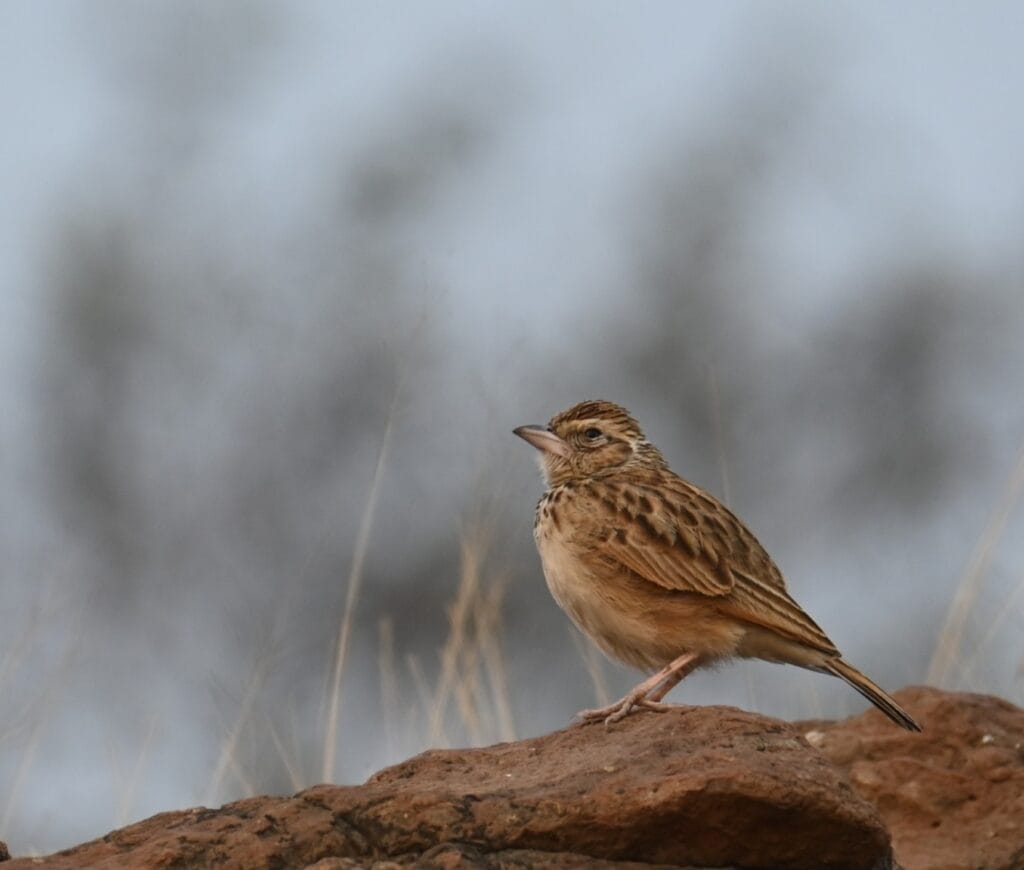
In the vast open landscapes of Bhigwan, where wetlands meet dry grasslands, not every bird announces its presence with bright colors or dramatic movements. Some survive through subtlety, patience, and near-perfect camouflage. This small ground-dwelling bird is a perfect example of that quiet brilliance.
Often overlooked by casual visitors, it blends seamlessly into the earthy tones of rocks and dry grass. Yet, for those who slow down and observe closely, it becomes one of the most fascinating species to watch and photograph in this region.
Understanding the Grassland Ecosystem of Bhigwan
Bhigwan is widely known for flamingos and waterbirds, but what truly makes it unique is its dual ecosystem. Alongside wetlands, there are expansive dry patches, rocky terrains, and agricultural edges that support an entirely different set of bird species.
These grasslands are home to birds that have evolved to survive in harsh, open environments. With minimal tree cover and constant exposure, survival depends on blending in rather than standing out.
- Dry soil and rocky patches provide natural camouflage
- Low vegetation allows clear visibility of predators
- Abundant insects and seeds support ground feeders
- Open skies influence behavior and movement patterns
This bird fits perfectly into this ecosystem, rarely drawing attention unless it moves.
Behavior and Movement Patterns
Unlike birds that perch high or fly frequently, this species spends most of its time on the ground. It walks, pauses, observes, and then moves again—always cautious, always aware.
Its behavior is minimalistic but highly effective:
- Prefers short bursts of movement rather than continuous activity
- Often freezes when sensing danger
- Relies on stillness to avoid detection
- Feeds quietly on seeds and tiny insects
What looks like inactivity is actually a well-developed survival strategy refined over generations.
Why This Species is a Photographer’s Challenge
Let’s be honest—this is not a “quick win” bird. You won’t spot it easily, and even if you do, capturing it cleanly requires effort.
This is where Bhigwan separates casual visitors from serious wildlife photographers.
- Requires sharp observation skills
- Demands patience and stillness
- Blends into background making focus tricky
- Works best with low-angle or eye-level shots
The beauty of this frame lies in its simplicity—clean composition, natural tones, and a distraction-free background. No drama, just pure storytelling.
Best Conditions to Observe and Photograph
Timing plays a critical role when it comes to spotting ground birds in Bhigwan.
- Early morning: Birds are active and light is soft
- Late evening: Golden tones enhance natural colors
- Winter months: Overall bird activity increases
- Calm weather: Less disturbance, better visibility
Avoid rushing. The slower you move, the more the landscape reveals.
The Role of Camouflage in Survival
In open habitats, visibility is both an advantage and a risk. Birds like this rely heavily on camouflage to survive. Their feather patterns match the surrounding soil, rocks, and dry vegetation almost perfectly.
Predators such as raptors depend on movement to detect prey. By staying still, this bird effectively disappears into its surroundings.
It’s not just hiding—it’s strategic invisibility.
Why You Should Explore Beyond the Obvious
Most visitors come to Bhigwan chasing iconic birds. But the real depth of this destination lies in its diversity.
If you only focus on popular species, you miss the ecosystem. If you slow down and observe everything, you start understanding it.
This is where Bhigwan transforms—from a sightseeing spot into a learning ground for nature and behavior.
Planning a Better Birding Experience
A well-planned visit can completely change what you see and how you experience Bhigwan.
Book Bhigwan Bird Watching Tour
Click here to read the Bhigwan Bird Sanctuary Guide