
Characteristics and Types of Parrots – Discover the Meaning, Habitat, and Beauty of Green Parrots

Parrots Green — Nature’s Vibrant Communicator

Characteristics and Types of Parrots — Nature’s Brightest Minds

Parrots are among the most colorful and intelligent birds on Earth. In this article, we’ll explore the characteristics and types of parrots, their meanings, habitats, and how these vibrant green birds bring color and curiosity into our world.

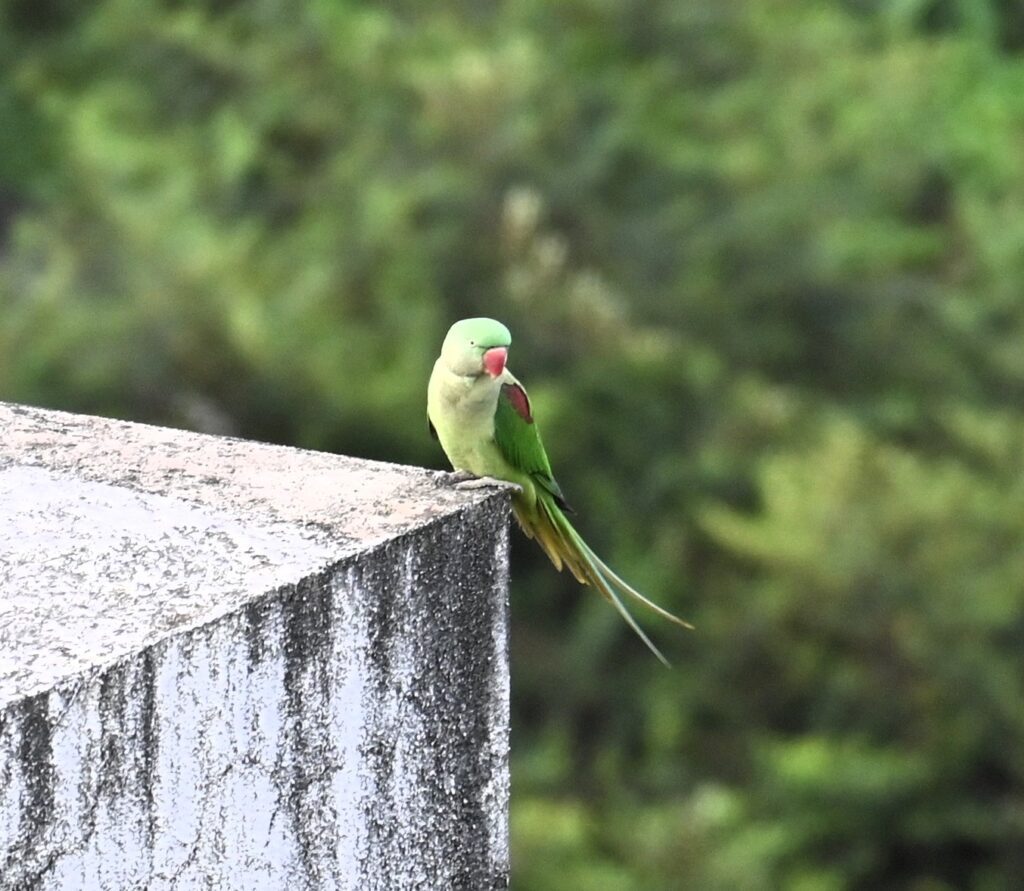
This green parrot from India reminds us how wildlife continues to thrive amid our cities — a blend of freedom, beauty, and resilience.

The green parrot has long been a symbol of liveliness and communication — a splash of color that brings forests and cities alike to life. Captured here on the edge of a concrete wall, this parrot represents a perfect balance between nature’s playfulness and human encroachment.

With its sleek green plumage, red beak, and curious tilt of the head, the bird seems lost in thought — as if wondering whether to fly or to stay.

Characteristics of Parrots

  1. Highly Intelligent – Parrots can mimic human speech and recognize words and tones.
  2. Social Birds – They thrive in flocks, building strong social bonds.
  3. Strong Beaks – Perfect for cracking nuts and seeds.
  4. Brilliant Colors – Their plumage ranges from bright greens to reds and blues.

Types of Parrots

There are over 390 species of parrots globally, but the main types include:

  • True Parrots (Psittacoidea) – The classic green parrots, macaws, and lovebirds.
  • Cockatoos (Cacatuoidea) – Known for their crests and playful nature.
  • New Zealand Parrots (Strigopoidea) – Unique to that region, including the kea and kakapo.

Where Do Parrots Live?

Parrots primarily inhabit tropical and subtropical regions, including India, South America, and Africa. They prefer woodlands, rainforests, and even city gardens, adapting remarkably to human environments — often spotted on apartment ledges just like this one.

Parrots Green — Nature’s Vibrant Communicator

Green parrots blend into foliage yet stand out with their chatter. Their vivid hue isn’t just for beauty — it’s camouflage in the wild. The green represents growth, renewal, and harmony — much like their presence in cities that softens the hard lines of concrete.

Fun Facts

  • The Alexandrine Parakeet was once a royal pet in India and named after Alexander the Great.
  • Parrots use their feet like hands, holding food while they eat.
  • Their feathers contain pigments that reflect ultraviolet light, invisible to humans.

Discover the fascinating colors of tropical birds

“Green parrot” is not a species

If you searched for the meaning of “green parrot”, the honest answer is that it is not a bird name. It is a description that covers a dozen different Indian birds, and the one you saw is almost certainly a parakeet, not a parrot.

Parrots and parakeets are in the same family. In common usage, parakeet means the long-tailed ones, and every wild green “parrot” in India is one of these.

Which one you probably saw

  • Rose-ringed Parakeet: the default. Bright green, long blue-tipped tail, and in the male a black-and-pink collar. This is the bird screeching over most Indian towns.
  • Plum-headed Parakeet: smaller and quieter, the male with a plum-red head, the female grey-headed. More a bird of wooded country.
  • Alexandrine (Large Indian) Parakeet: bigger, heavier-billed, with a maroon shoulder patch. Deeper, hoarser call.
  • Malabar Parakeet: Western Ghats only, bluish-grey rather than truly green.
  • Vernal Hanging Parrot: tiny, stubby-tailed, green — and it really does sleep upside down.

How to separate them quickly

Three things settle it almost every time: tail length, head colour, and call.

A long slim tail and a piercing repeated screech is Rose-ringed. A coloured head with a softer, more musical call is Plum-headed. Larger, slower, hoarser is Alexandrine. Something the size of a sparrow that whistles is a Hanging Parrot.

The symbolism question

The other reason people search this phrase is meaning rather than identification. In Indian tradition the parrot appears as a bird of speech, love and messages — the mount of Kamadeva, and a stock figure in folktales for a bird that carries news between lovers.

That is culture, not biology, and it is worth keeping the two separate. What the bird actually does is eat fruit, grain and buds, nest in tree holes, and roost communally in very large, very loud numbers.

A note on cages

All Indian parakeets are protected under the Wildlife Protection Act. Keeping one as a pet is illegal, and the trade that supplies them takes chicks from nest holes. If you want parakeets in your life, plant a fruiting tree.

Frequently asked questions

What is the green parrot found in India called?

Most often the Rose-ringed Parakeet. Plum-headed and Alexandrine Parakeets are the other common green ones.

Is there a difference between a parrot and a parakeet?

They belong to the same family. “Parakeet” conventionally refers to the smaller, long-tailed species, which is what all wild Indian green parrots are.

What does a parrot symbolise in Indian culture?

Speech, love and messages. It is associated with Kamadeva and appears in folktales as a carrier of news.

Can I keep an Indian parakeet as a pet?

No. Native parakeets are protected under the Wildlife Protection Act and keeping them is illegal.


Related: Rose-ringed Parakeet and Plum-headed Parakeet.

Scroll to Top