
Our Safari Experience in Panna Forest
Why We Chose Panna
We recently visited Panna Forest, knowing very well that the chances of seeing a tiger were low. Many people had already told us that Panna does not have too many tigers. Still, we wanted to go because we wanted to enjoy the silence of the jungle, the fresh air, the trees, the birds, and the wildlife that appears naturally.
The Morning Safari
We entered the forest early in the morning when the sky was still dim. The cool wind and the sounds of the jungle made the experience feel fresh and exciting. Panna has a dry, rocky landscape that gives the forest a unique look. As we drove deeper, we saw spotted deer, peacocks, and langurs jumping across branches. These small sightings already made the safari enjoyable.
Waiting for the Tiger
After a couple of hours, our guide stopped the jeep and showed us fresh pugmarks. That increased our excitement. We waited quietly for some time, hoping the tiger was nearby, but nothing happened. The forest takes its own time, and we continued moving slowly. Almost four hours into the safari, just when we felt our luck might not work today, something special happened.
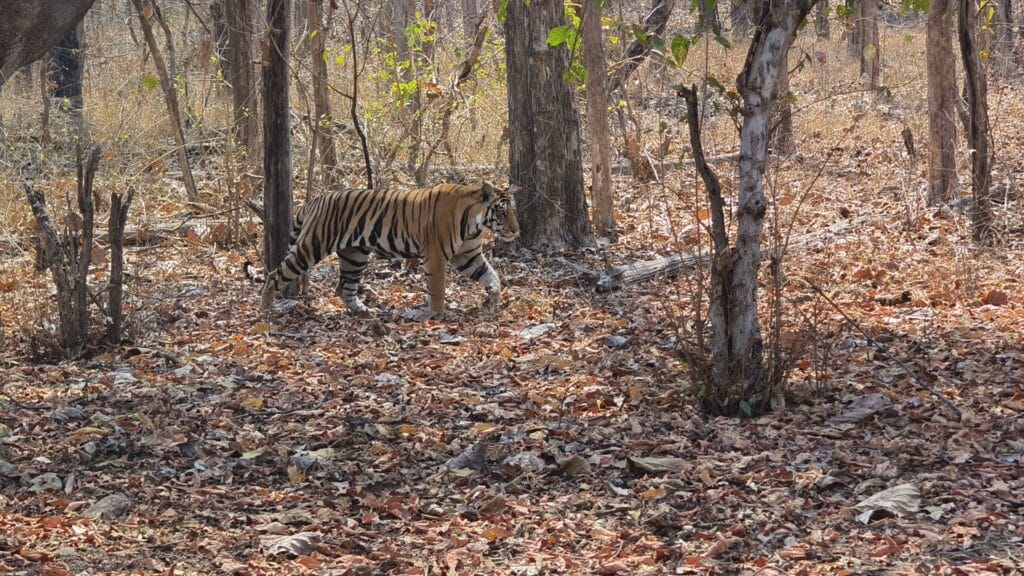
A Tiger Sighting After Four Hours
A tiger appeared ahead of us, walking calmly toward a waterbody. He looked tired but confident. Watching him in such a natural moment felt pure and unforgettable. Even though we saw him only for a few seconds, it became one of the most memorable moments of the trip.
Panna Is About Patience
Panna is not a place where tigers appear quickly. The forest is large, and the tiger density is low. You need patience here. If someone plans a trip to Panna, I recommend doing at least two or three safaris. The beauty of Panna is not only the tiger but also the calmness, the greenery, the rocky landscape, and the Ken River flowing through the park.
Is Panna Worth Visiting?
Yes, completely. Panna is peaceful, less crowded, and feels raw. The landscape changes every few minutes — from grasslands to rocks, hills, and rivers. Even without a tiger sighting, the forest itself makes the trip worth it.
Tips for Visitors
- Carry a DSLR or a good camera if you enjoy photography.
- Keep water and light snacks during the safari.
- Never throw waste in the forest; carry a small bag for wrappers or bottles.
- Stay quiet inside the jeep to avoid disturbing wildlife.
- Morning safaris often have better chances of sightings.
- Go with an open mind and enjoy the forest, not just the tiger.
Final Thoughts
Panna teaches you to slow down and enjoy the moment. The forest has its own rhythm, and when you observe quietly, the jungle rewards you. Our tiger sighting lasted only a few seconds, but it created a memory that will stay with us forever. Even without a sighting, Panna is worth visiting for its peace, beauty, and natural charm.
For more articles, visit Safari Tales on TravelOnTales.