
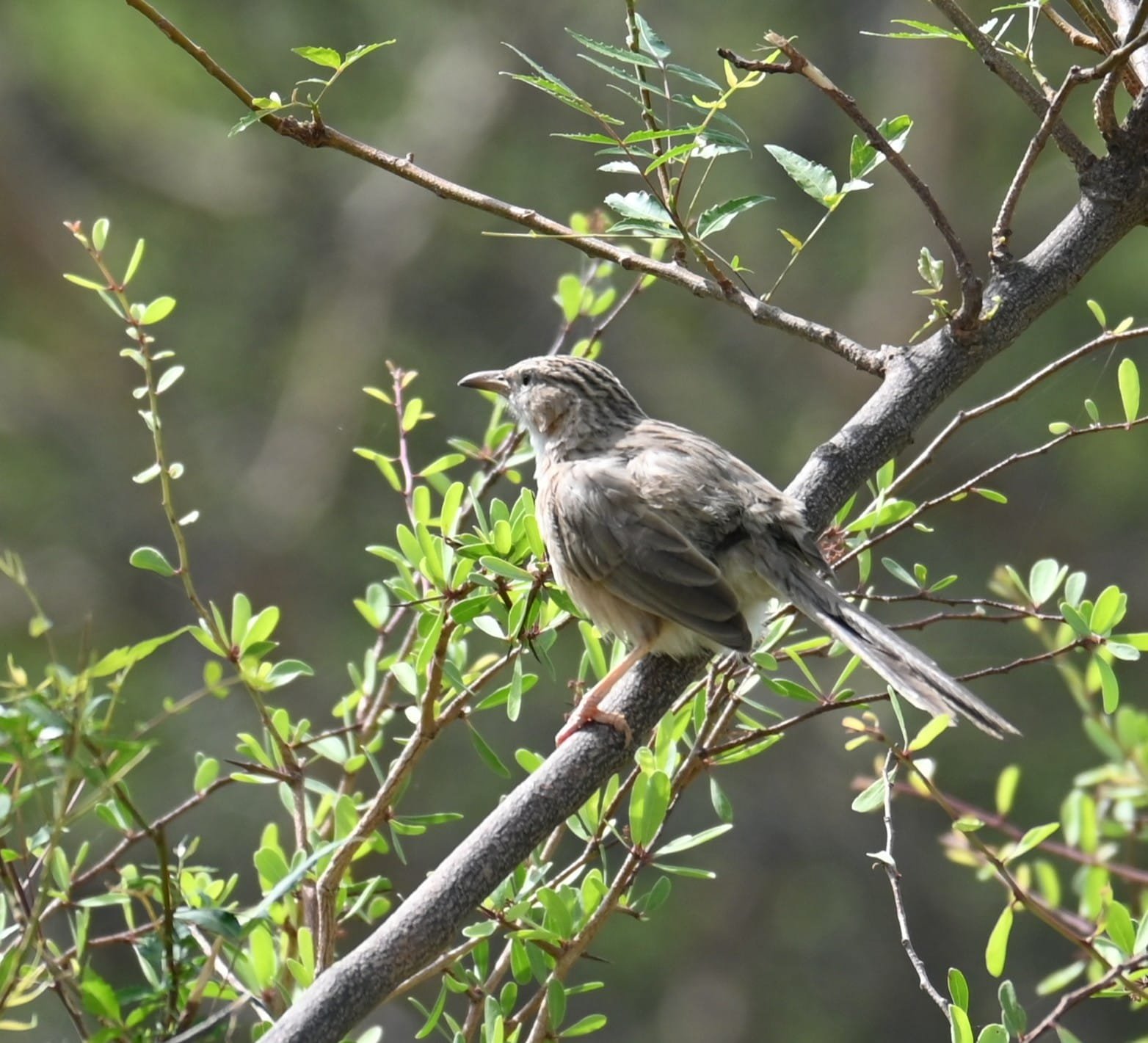
In the rugged, granite-studded landscapes of Jawai, Rajasthan, the apex predators often steal the headlines. Yet, for the patient observer, the true character of this ecosystem is revealed in its smaller, vibrant inhabitants. One such species is the Common Babbler (Argya caudata), a bird that has mastered the art of survival in one of India’s most unforgiving environments.
Habitat and Adaptations
The Common Babbler is a hallmark of dry, open country. They are specifically adapted to the low-lying, thorny scrub vegetation that defines the Jawai region.
- Thorny Protection: They rely heavily on dense thickets, such as Zizyphus or thorny acacias, which provide both nesting sites and shelter from predators.
- Ground-Foraging Mastery: Unlike birds that frequent high canopies, these babblers spend most of their time hopping and creeping through the undergrowth, using their long, graduated tails as a rudder for balance.
- Resilience: Their ability to thrive in arid conditions makes them a permanent, reliable resident of the Jawai landscape, unlike many migratory visitors that only appear during the winter months.
Fun Facts: The “Seven Sisters” of the Scrub
Common Babblers are rarely seen alone. Their social structure is among the most fascinating in the avian world:
- The Social Network: Often found in parties of 6 to 20, they are colloquially called “Seven Sisters” due to their tendency to forage in close-knit groups.
- Cooperative Breeders: They utilize a “helper” system where non-breeding members of the group assist the primary parents in raising chicks, increasing the survival rate of their brood.
- Vocal Communication: Their name is well-earned. They produce a constant, rapid, trilling “which-which-whichi-ri-ri-ri-ri” sound, which helps keep the group coordinated while moving through dense vegetation.
- Reproduction: They construct distinctively deep, cup-shaped nests in low, thorny bushes and are known for laying striking, turquoise-blue eggs.
Why This Matters for Your Jawai Experience
Jawai is a land of contrasts—where leopards roam ancient granite hills and birds thrive in the surrounding scrubland. Birdwatching here offers a deeper connection to the environment than a leopard safari alone. By taking the time to document these smaller species, we build a comprehensive picture of the area’s biodiversity.
Whether you are here for the predators or the passerines, Jawai never fails to impress. To help you plan your next expedition to this unique region, read our comprehensive guide: Jawai Leopard Safari: The Complete Travel Guide.
The seven sisters
Babblers travel in groups, and in India the Jungle Babbler is known everywhere as the “seven sisters” — saat bhai in Hindi, seven brothers. The number is not literal. Parties usually run from six to a dozen.
What is literal is the constant noise. A babbler flock announces itself continuously with a rasping, quarrelsome chatter that sounds like an argument in progress and never quite resolves.
Why they stay in groups
Babblers are cooperative breeders, which is unusual and is the real reason the flock holds together. Non-breeding birds in the group help feed and defend the chicks of the dominant pair — often their own siblings from an earlier brood.
The group also functions as a shared alarm system. With eight birds foraging, several always have their heads up, and a babbler flock will mob a snake, an owlet or a cat with startling commitment.
Which babbler you are looking at
- Jungle Babbler: the common one, dull grey-brown, pale eye, noisy, everywhere including gardens.
- Large Grey Babbler: paler, longer-tailed with white outer tail feathers visible in flight, drier open country.
- Yellow-billed Babbler: southern and Sri Lankan, paler-headed, yellow bill.
- Common Babbler: slimmer and streaked, scrub country.
- Rufous Babbler and Puff-throated Babbler: Western Ghats and forest floor, both skulking and heard far more than seen.
How they feed
Almost entirely on the ground and in low cover, working through leaf litter by flicking it aside with the bill. They take insects, spiders, small lizards, berries and nectar, and they will follow a langur troop or a ploughing farmer for what gets disturbed.
A babbler flock crossing open ground does it one bird at a time, in a strung-out line, which is the easiest way to count them.
Living alongside people
Jungle Babblers are one of the few Indian birds that have genuinely benefited from gardens, hedges and neglected corners. They are also a favourite host of the Pied Cuckoo and the Common Hawk-Cuckoo, both of which lay in babbler nests and let the group raise the chick.
Frequently asked questions
Why is the babbler called seven sisters?
Because it moves in noisy groups of roughly six to a dozen. The number seven is traditional, not exact.
Do babblers really help raise each other’s young?
Yes. They are cooperative breeders, and non-breeding group members feed and defend the dominant pair’s chicks.
What do babblers eat?
Insects, spiders, small reptiles, berries and nectar, mostly taken from the ground and low cover.
Which babbler is common in Indian cities?
The Jungle Babbler, which thrives in gardens, parks and hedges.
Related: Jungle Babblers near Kihim Beach.