
Bandhavgarh National Park — Tiger Walk, Wild Elephants & Field Notes from the Heart of India
Jungle Royalty · Bandhavgarh, Umaria District, Madhya Pradesh · April 2026 · Prashant S. Gupta
Some forests announce themselves slowly. Bandhavgarh does not. The moment you cross the gate, the trees close in, the road narrows to a red dirt track, and the world you came from becomes genuinely irrelevant. Although we had done safaris before and waited patiently through many mornings, nothing quite prepares you for the moment a tiger simply walks out of the forest and uses your jeep road as if it owns it — because, of course, it does.
This is our field journal from Bandhavgarh National Park — the crown jewel of Madhya Pradesh’s tiger corridor and the reserve with the highest recorded tiger density in India. In total, we covered all three core zones — Tala, Magdhi and Khitauli — and came back with a tiger walk, a herd of wild elephants, and more deer than we could count.
The Tiger Walk
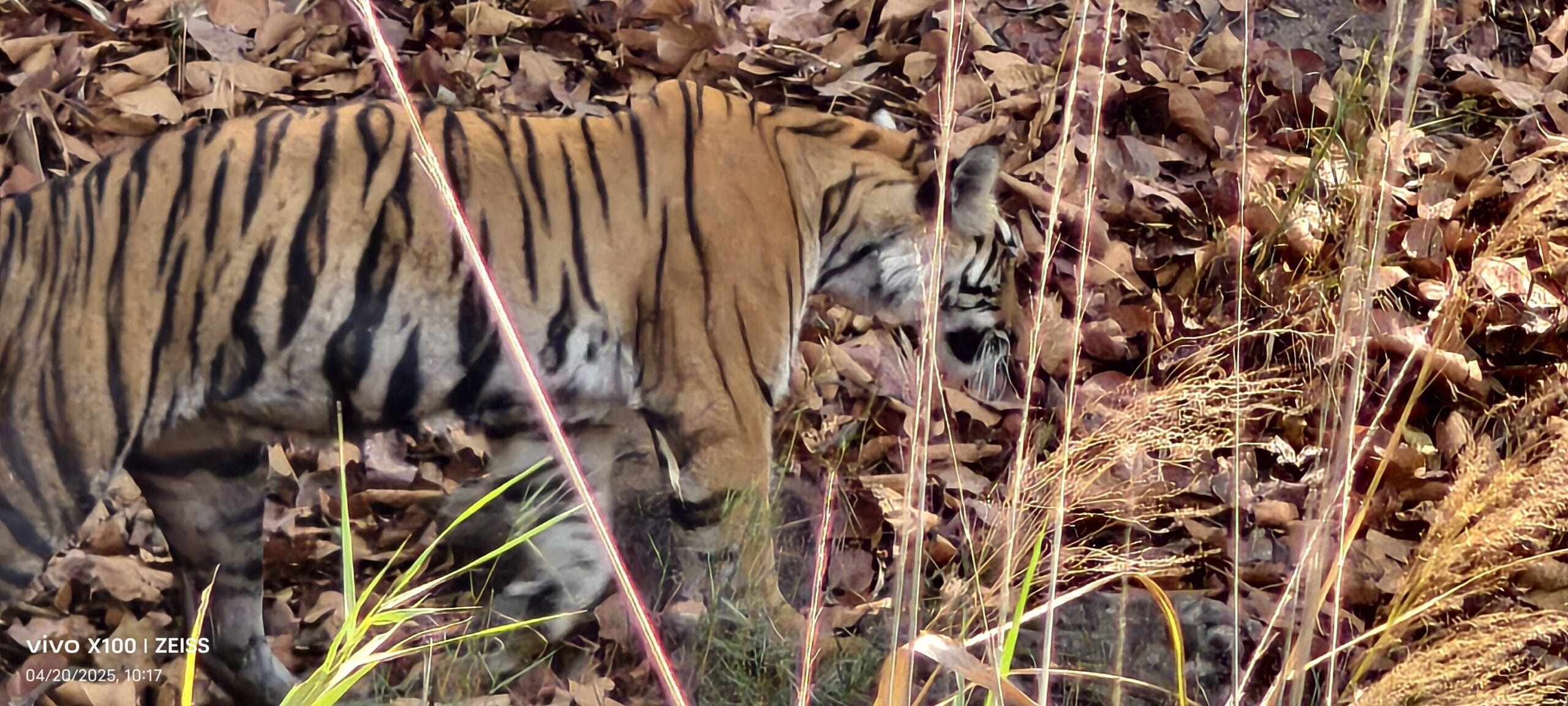
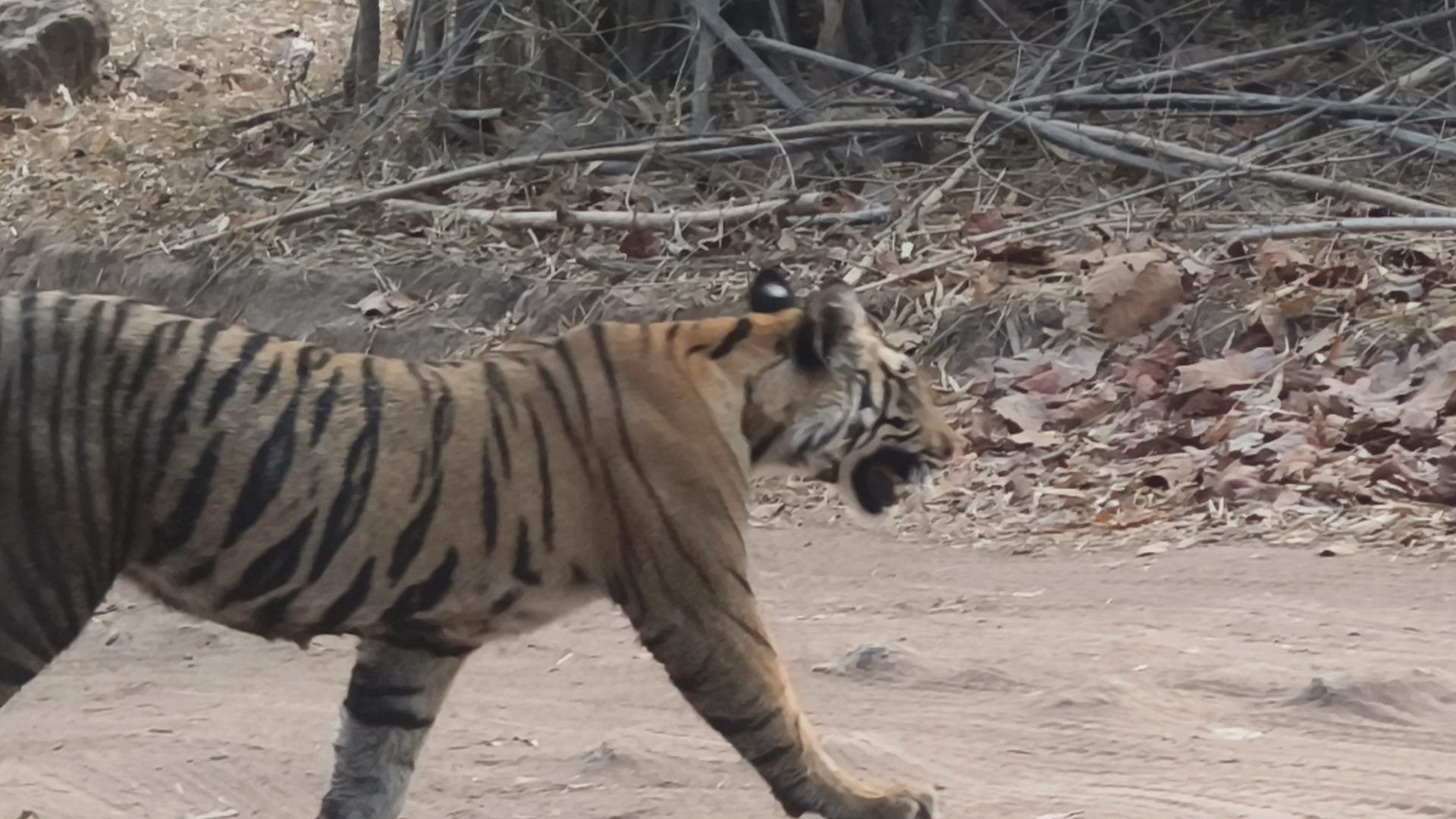
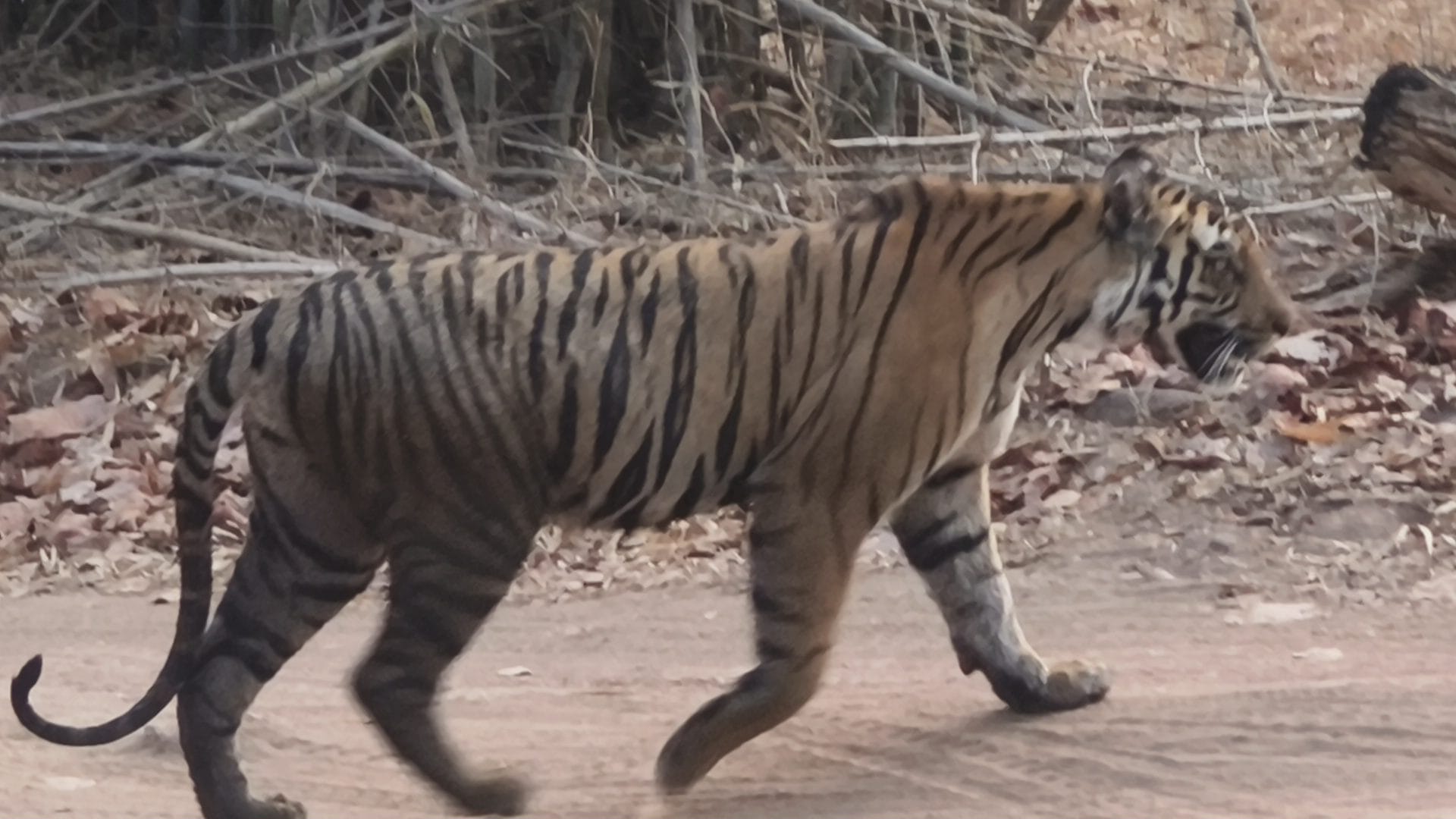
A tiger walking directly toward the safari jeep on an open forest road, unhurried, sovereign, filling the frame with nothing but intent. This is the sighting every wildlife photographer spends years waiting for. At Bandhavgarh, it happened on an April morning in the Tala zone, in light that could not have been better planned.
▶ Tiger walk, Bandhavgarh National Park — shot on Nikon Z50 | TravelOnTales
The Tala zone is where Bandhavgarh earned its global reputation. It holds the highest tiger density of any zone in India — reportedly one tiger per 3 square kilometres — and the tigers here are completely habituated to safari vehicles. Rather than running or hiding, they walk the road, and go about their lives with the absolute authority of an apex predator that has never needed to fear anything. As a result, sightings here feel less like luck and more like the forest simply choosing when to reveal itself.
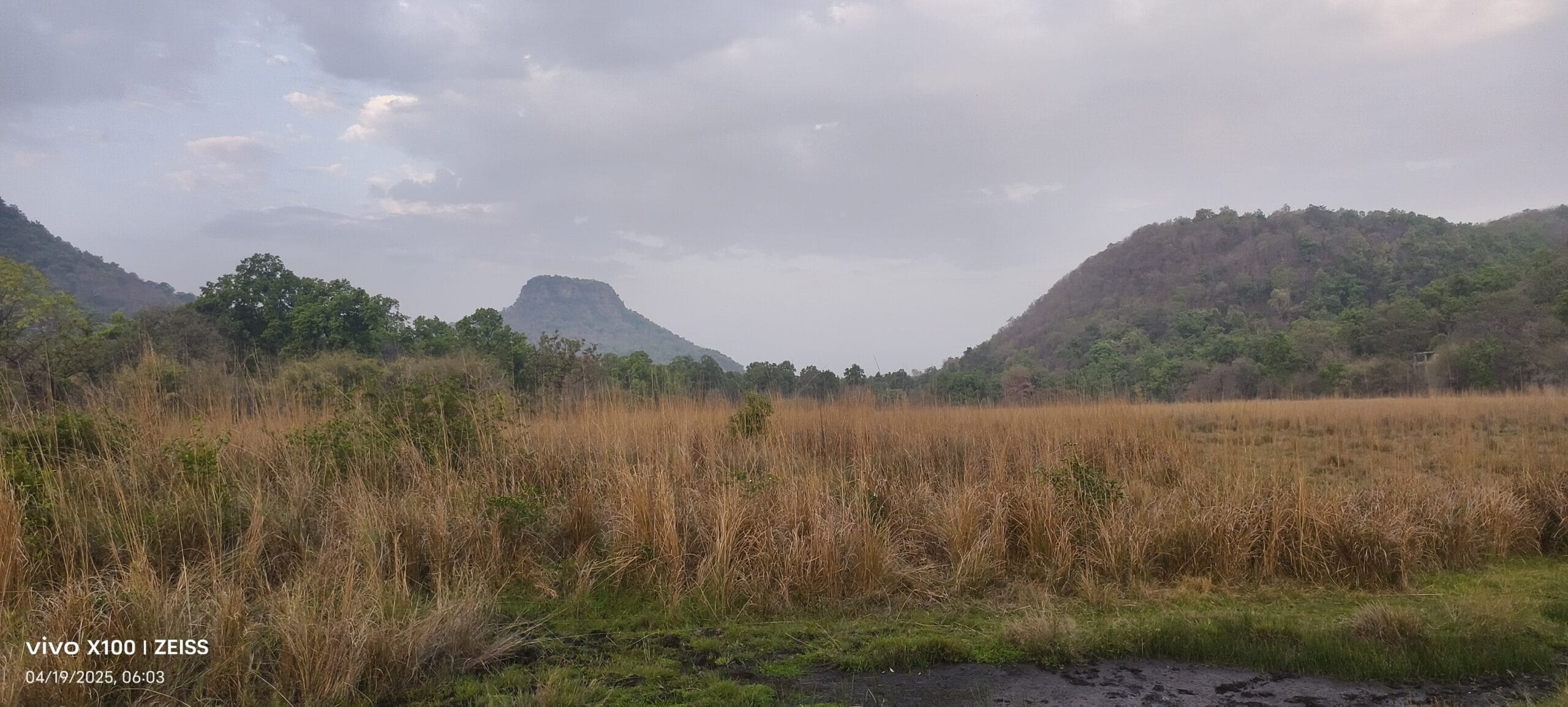
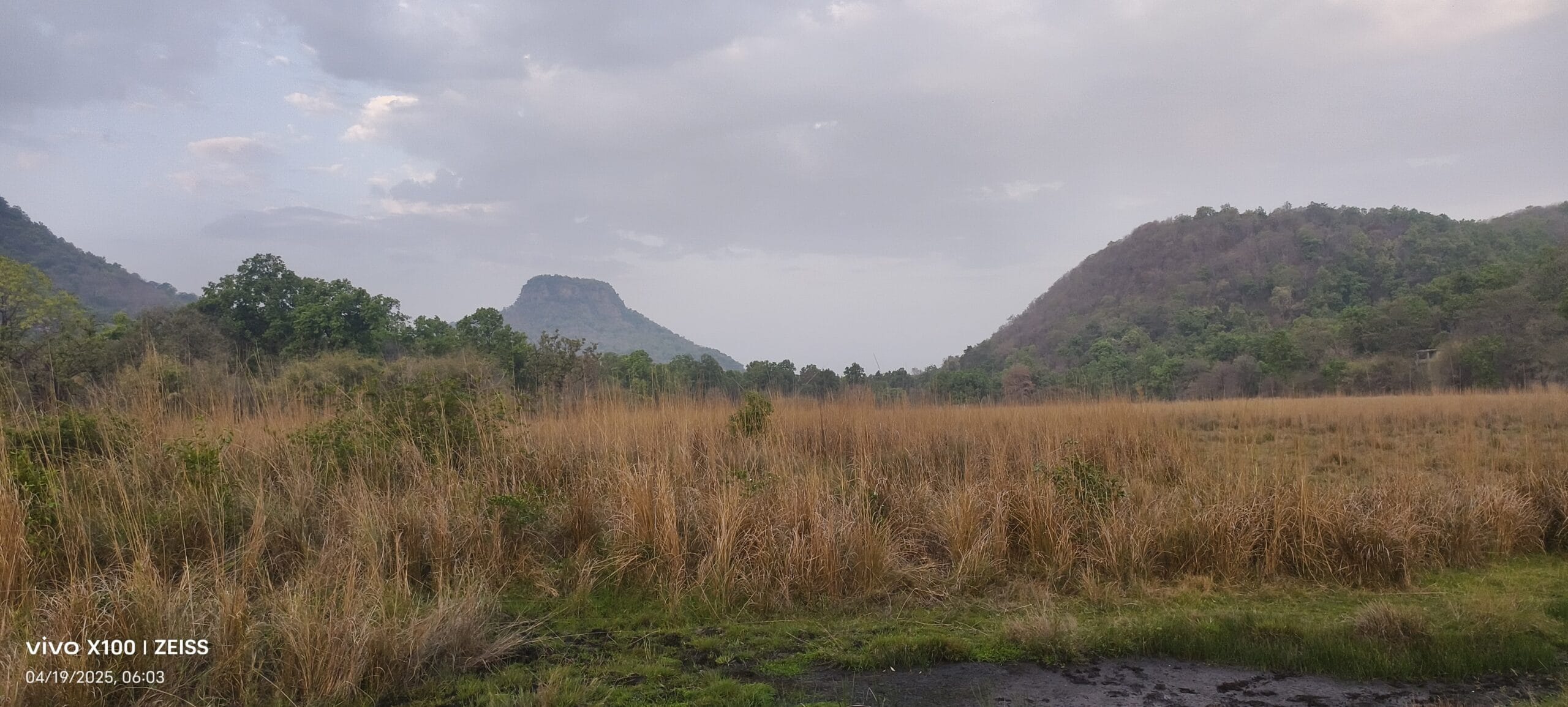
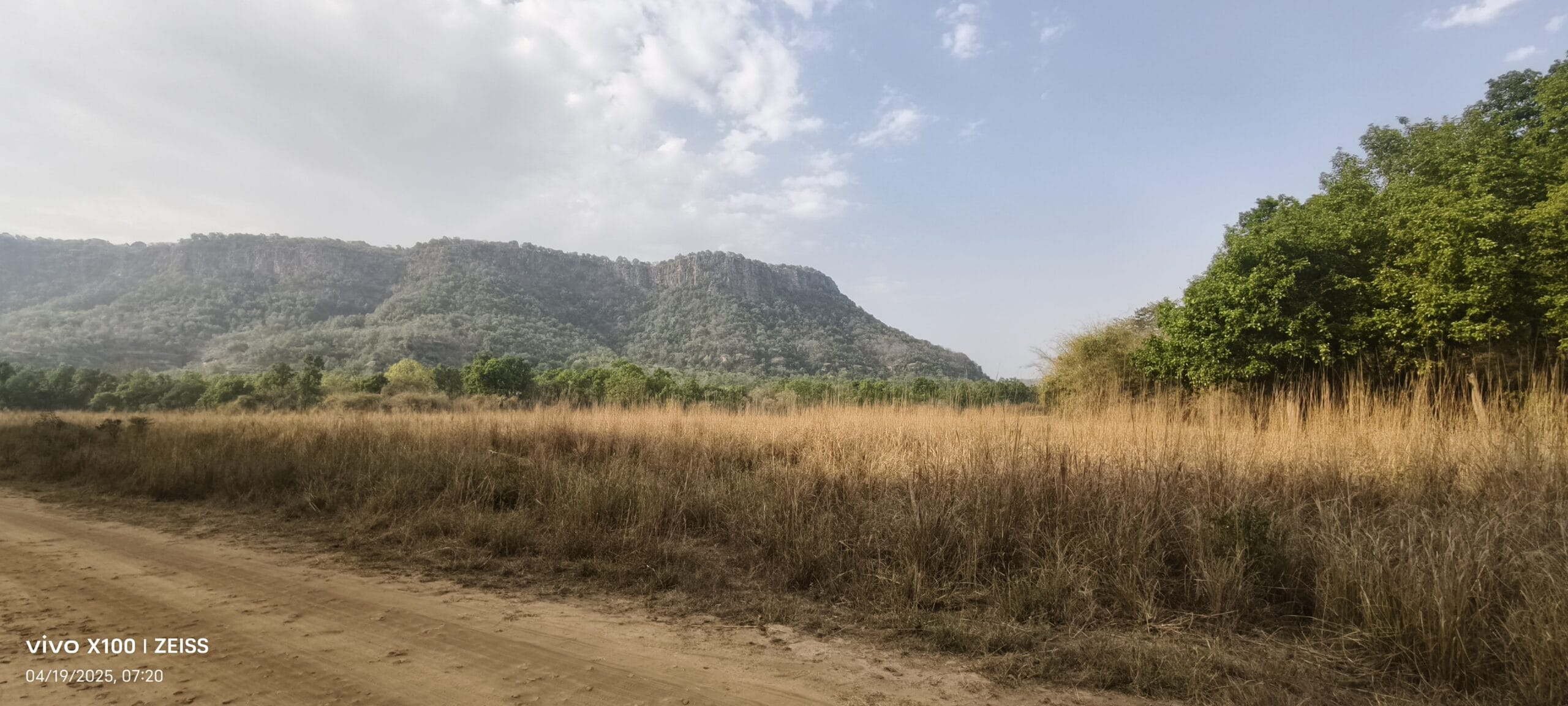
Early morning light, Bandhavgarh — the best safari hour begins before 7 AM
▶ Bandhavgarh safari field notes — TravelOnTales YouTube
About Bandhavgarh National Park
Bandhavgarh National Park, located in the Umaria district of Madhya Pradesh, is one of India’s most celebrated tiger reserves. Covering 1,161 sq km with a core area of approximately 440 sq km, it was declared a national park in 1968 and subsequently a tiger reserve in 1993. The name itself carries mythology — Bandhavgarh translates as “Brother’s Fort,” rooted in the legend that Lord Ram gifted this hillock to his brother Lakshmana. Even today, the ancient Bandhavgarh Fort, now half-swallowed by forest, watches over the Tala valley from the plateau above.
Furthermore, the reserve holds the unique distinction of being the birthplace of the world’s white tigers. In 1951, the Maharaja of Rewa captured a white tiger cub named Mohan from this very forest. Remarkably, every white tiger in the world today is a descendant of that single animal.
Today, Bandhavgarh hosts over 150 tigers — legendary individuals tracked across generations, from the famous Charger and Sita to current dominant males and their lineages. In addition to tigers, the park supports leopards, sloth bears, wild dogs, Indian gaur, sambar, spotted deer, and since 2018, a growing population of wild elephants that migrated from Chhattisgarh and made Khitauli their permanent home.
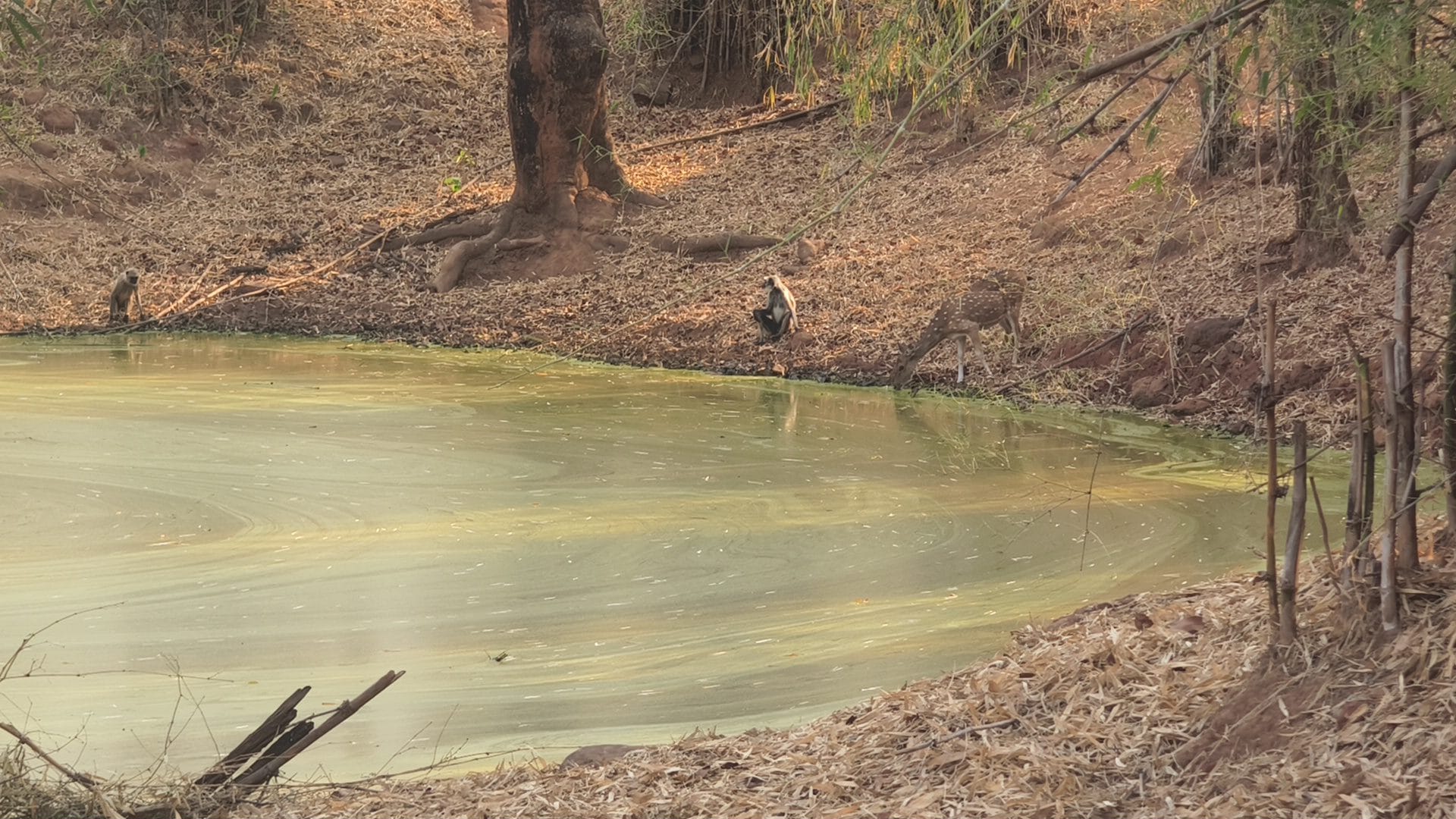
Deer at the forest
Spotted deer and sambar gathering at a Bandhavgarh in the afternoon light. Where deer gather in numbers, the forest tells you something — a predator is likely not far.
Spotted deer at a Bandhavgarh — field footage, Nikon Z50 | TravelOnTales
Safari Zones of Bandhavgarh National Park
Bandhavgarh divides into three core zones — Tala, Magdhi and Khitauli — plus several buffer zones. Each zone has a distinct personality, terrain and wildlife focus. Understanding the zones before booking can make the difference between a good safari and an extraordinary one.
| Zone | Type | Character | Best For |
|---|---|---|---|
| Tala | Core — Premium | Oldest and most iconic zone. Home to Bandhavgarh Fort, Chakradhara meadow, Badi Gufa caves and Shesh Shaiya. Highest tiger density in India — 1 tiger per 3 sq km. Premium entry fee applies. Dense, dramatic terrain. | Tiger sightings, photography, historical landmarks |
| Magdhi | Core | Gate No. 2. Opened to reduce pressure on Tala. Grasslands mixed with woodland. Less crowded than Tala. | Tiger sightings, sambar, spotted deer, quieter drives |
| Khitauli | Core | Gate No. 3. Opposite to Magdhi. Flatter terrain, denser bamboo, excellent for wildlife diversity. Home to the wild elephant herd that arrived in 2018 — now 80+ animals across 3-4 herds. | Wild elephants, birds, sloth bears, blue bulls |
| Buffer Zones | Buffer | Dhamokhar (extension of Magdhi), Johila and others. Open year-round including during monsoon. Less vehicle density, longer safari windows. | Nilgai, chinkara, wild dog, off-season visits |
Booking note: Tala zone commands a premium entry fee — roughly double the standard rate. It is worth it for a first visit. If budget is a consideration, Magdhi and Khitauli offer excellent tiger sightings at standard rates with significantly fewer vehicles.
Wild Elephants — The Unexpected Residents of Khitauli
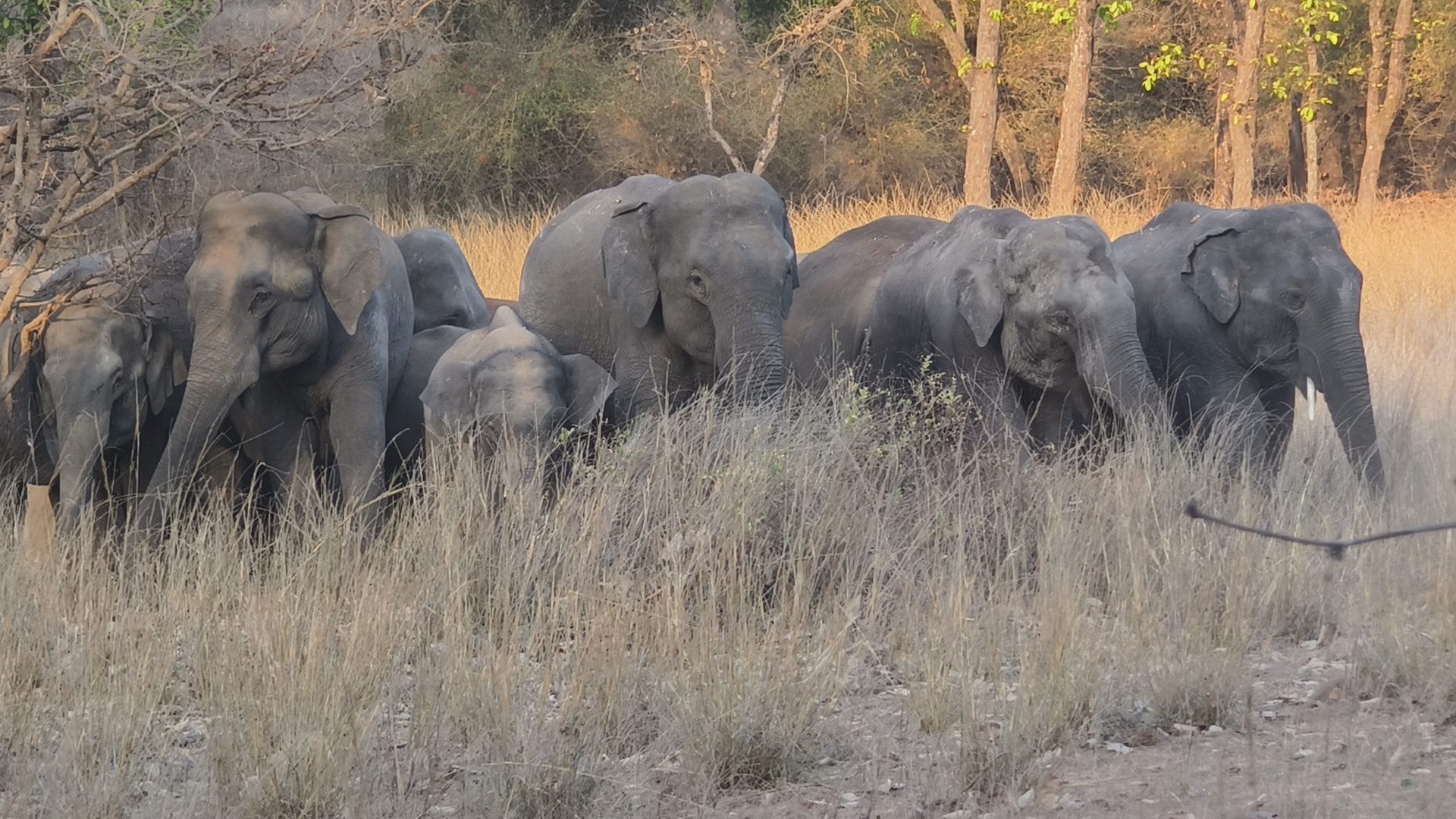
Nobody expected elephants at Bandhavgarh. For decades, the reserve had no resident elephant population at all. Then in 2018, a herd migrated westward from Chhattisgarh and settled into the bamboo forests of the Khitauli zone. Since then, that population has grown to over 80 wild elephants across three to four herds — a remarkable and entirely unplanned rewilding that has transformed Khitauli into one of the most exciting zones in the park.
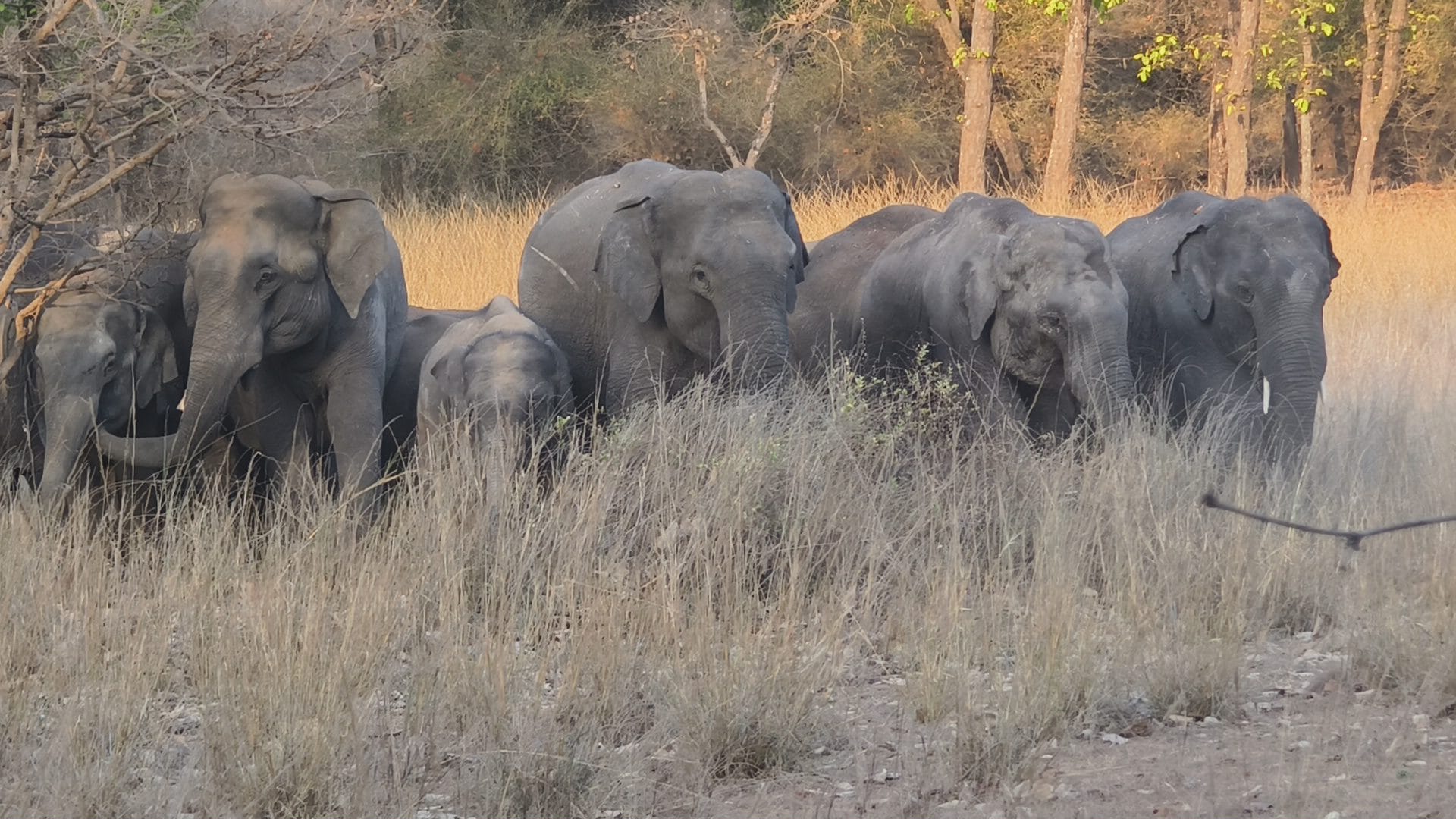
Wild elephant herd, Khitauli zone, Bandhavgarh — an unexpected and unforgettable sighting
Seeing wild elephants at a tiger reserve is a genuinely extraordinary experience. The bamboo parts, a silhouette emerges that is simply too large to be any other creature, and then the rest of the herd follows. They move with a quiet authority that, in its own way, rivals even the tigers. Consequently, the Khitauli zone has become a must-visit safari stop — entirely apart from its strong tiger and bird records.
Wildlife We Saw — Full Sighting Record
- 🐅 Tiger — road walk
- 🐘 Wild Elephants
- 🦌 Spotted Deer
- 🦌 Sambar Deer
- 🐃 Indian Gaur
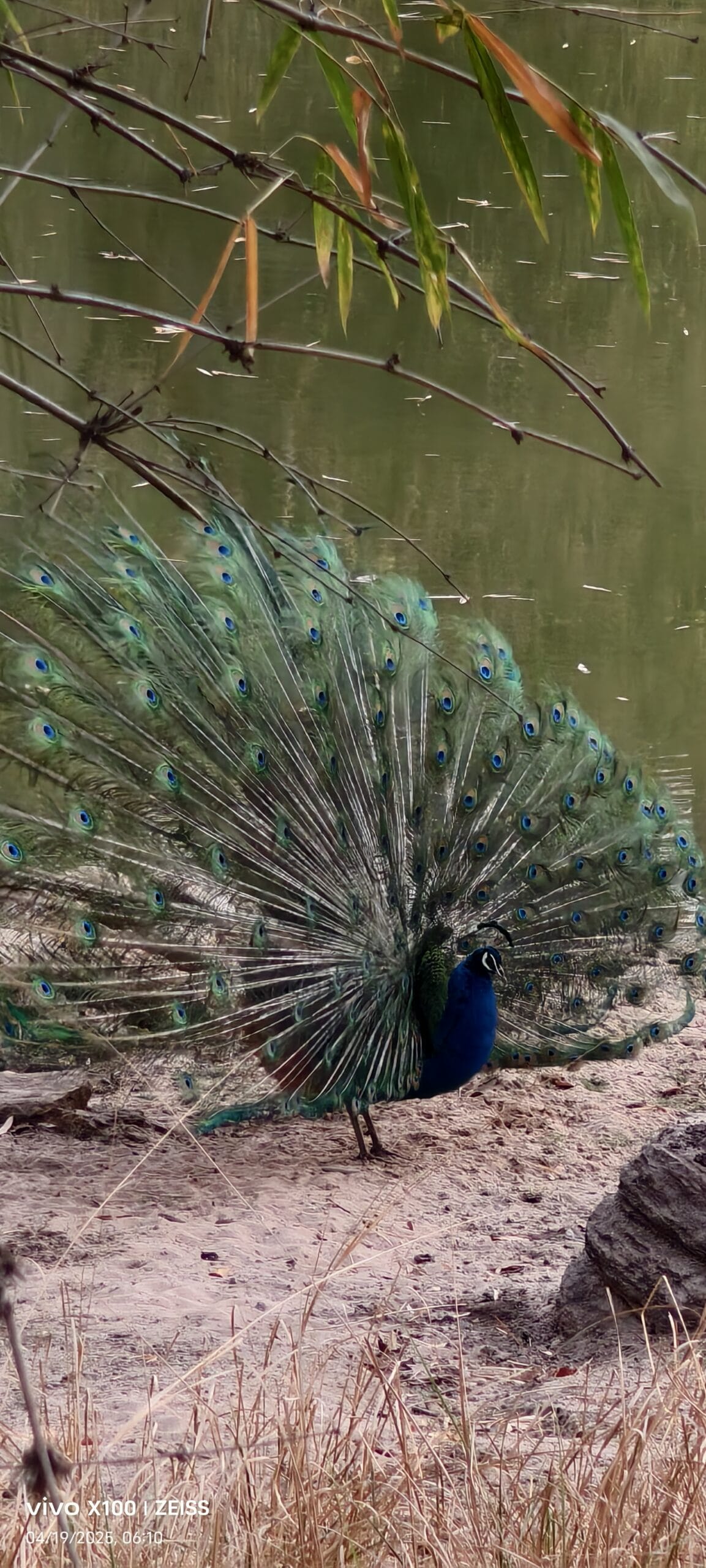
- 🦚 Peacock
- 🐒 Langur
- 🐗 Wild Boar
- 🦅 Crested Serpent Eagle
- 🦎 Monitor Lizard
- 🐦 Indian Roller
- 🦉 Owls
Evening light at Bandhavgarh — the forest changes completely after 4 PM
What Makes Bandhavgarh Different
Most tiger reserves require patience, luck and multiple safaris for even a glimpse. Bandhavgarh is different — the tigers here walk roads in full view, and have been photographed and named across generations. A sighting is not guaranteed anywhere in the wild, but if there is one reserve in India where it comes closest to likely, this is it. The BBC filmed the Dynasties series here for exactly that reason.
How to Reach Bandhavgarh National Park
Getting There — All Routes
Safari Booking — Practical Guide
- Book online at forest.mponline.gov.in — the official Madhya Pradesh Forest Department portal.
- Advance booking opens 120 days prior. Tala zone fills within hours — set a reminder and book immediately when the window opens.
- Park closure days: Core zones are closed on Tuesdays. Buffer zones are closed on Wednesdays. Plan your dates accordingly.
- Safari slots: Morning (6 AM–10 AM approx) and evening (2:30 PM–6:30 PM approx). Arrive at least 30–40 minutes before reporting time for vehicle allotment.
- Tala premium fee: Entry to Tala zone costs approximately double the standard rate for other zones. Budget accordingly.
- ID proof mandatory: Carry original Aadhaar or passport — the same ID used during booking. Digital copies are rarely accepted. No ID means no entry.
- Mobile phones not permitted inside core safari zones. Carry a dedicated camera. Violations can result in ejection and permit cancellation.
- Best time: March to June for tiger sightings. October to February for comfortable weather and birdlife.
- Park season: Open October 16 to June 30. Closed July to mid-October during monsoon.
Photography tip: The first 90 minutes after gate opening — roughly 6 AM to 7:30 AM — delivers the best light and the highest animal movement. Tigers are most active on roads at this hour. The Nikon Z50 performed exceptionally in low dawn light across all three zones.
Field Notes — What the Forest Teaches
Bandhavgarh is not a gentle forest. It is dense, ancient and entirely certain of itself. The sal trees are enormous, the bamboo impenetrable, and the hillocks cut by streams that fill during the rains and dry to cracked mud by April. In that dry April mud you will find tiger pug marks, elephant prints the size of serving plates, and the imprints of every creature that came to drink in the night.
Moreover, the Bandhavgarh Fort — visible from the Tala valley below — adds something no other tiger reserve in India can offer: a sense of history so deep that the tigers seem like the latest inhabitants of a place that has always been contested ground. Carved statues from the 10th century sit quietly in the forest. A reclining Vishnu, partially obscured by tree roots, stares upward at a canopy that has been growing over him for centuries. You can reach the fort area on a full-day jeep safari through the Tala zone.
In the end, we will come back to Bandhavgarh. Every wildlife photographer who visits says the same — not out of obligation, but because the forest makes it feel genuinely unfinished. There is always another morning drive, and another set of pug marks leading somewhere the road does not go.
Frequently Asked Questions — Bandhavgarh National Park
Which is the best zone in Bandhavgarh for tiger sightings?
The Tala zone has the highest tiger density in India and is the most reliable for sightings. It commands a premium entry fee but is worth it for first-time visitors. Magdhi is an excellent second option — good tiger sightings with fewer vehicles. Khitauli is the zone for wild elephants and bird photography.
Are there wild elephants at Bandhavgarh?
Yes. A herd migrated from Chhattisgarh in 2018 and now numbers over 80 elephants across 3–4 herds. They are primarily seen in and around the Khitauli zone. Seeing elephants at a tiger reserve is a uniquely Bandhavgarh experience.
What is the best time to visit Bandhavgarh National Park?
March to June for tiger sightings — the dry heat forces animals to water and visibility is excellent. October to February for comfortable temperatures, lush greenery and birdwatching. Avoid July to mid-October when core zones are closed.
How to reach Bandhavgarh from Mumbai?
Fly to Jabalpur (160 km away) for the fastest route, then cab to the park. By train, take any service to Umaria (35 km from Tala gate). By road it is approximately 1,100 km from Mumbai — a comfortable two-day drive.
Are mobile phones allowed in Bandhavgarh safari zones?
No. Mobile phones are strictly not permitted inside core safari zones. Carry a dedicated camera. Violation can result in ejection from the safari and cancellation of the permit.
How many days should I spend at Bandhavgarh?
A minimum of 3 nights is recommended — this gives you 4–5 safari drives across different zones and genuinely increases your chance of a tiger sighting. Two nights with 3 safaris is a reasonable minimum for a first visit.
Planning a Tiger Safari? We Can Help.
For honest zone-by-zone advice, timing recommendations, or safari planning for Bandhavgarh, Tadoba, Panna or any Indian tiger reserve — get in touch. Field notes, not sales pitches.
Contact via Best Safaris in India (2026 Guide) →Also from the field