
Bhigwan · Recurvirostridae (stilts & avocets)
Black-winged Stilt
Himantopus himantopus
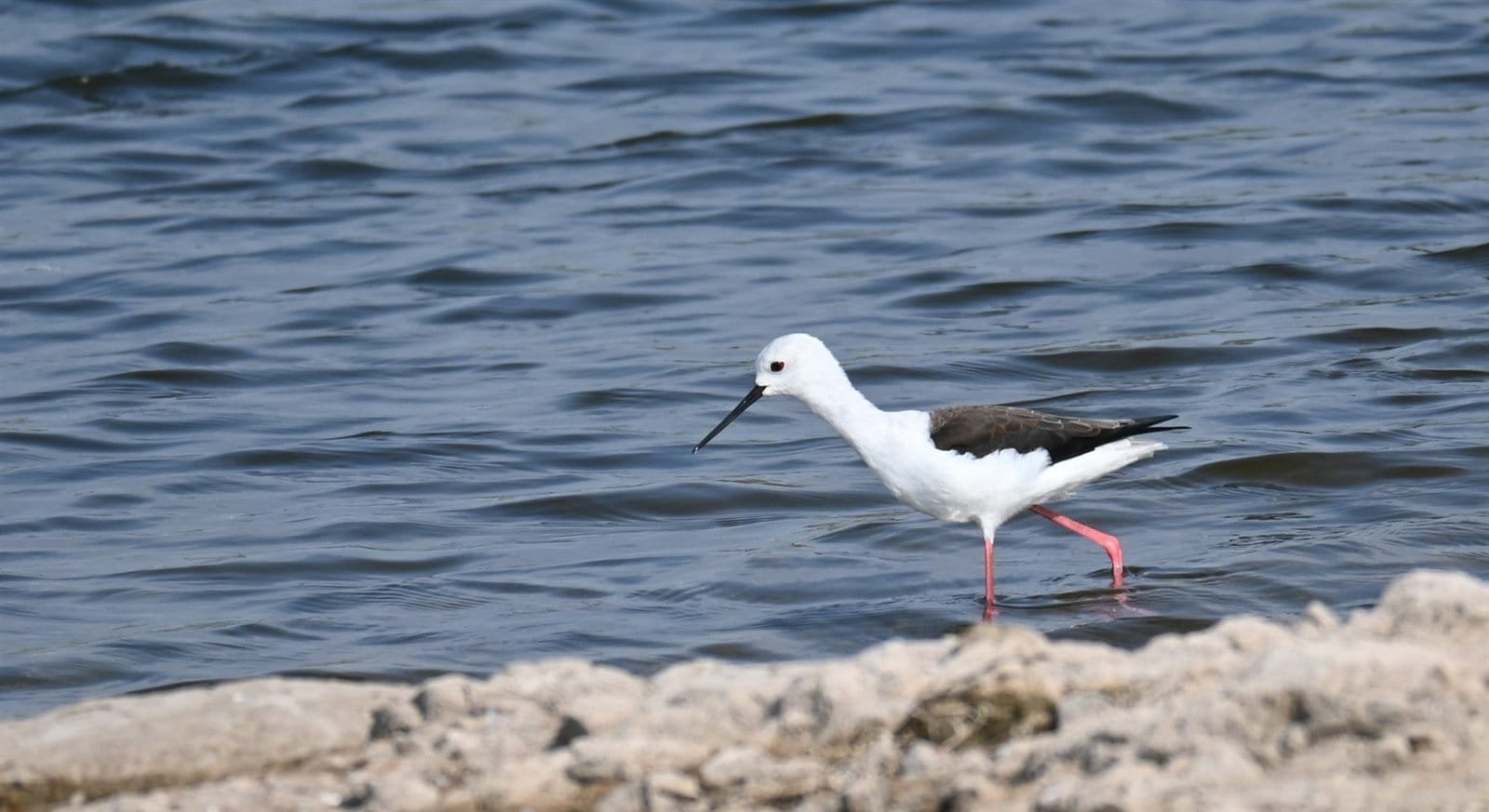
The Black-winged Stilt looks like a bird designed by someone who ran out of leg at the wrong moment — its extraordinary pink-red legs are so long that it has to fold them awkwardly to sit. But on the mudflats of Bhigwan, those legs are the reason it can wade into water that keeps every other wader on the shore.
- Status at Bhigwan
- Resident & winter visitor
- How often
- Very common
- Size
- 35–40 cm
- Family
- Recurvirostridae
How to identify it
There is no subtlety required: the Black-winged Stilt is black above and white below, with pink-red legs that extend well beyond the tail in flight. In the field the legs look cartoonishly long even compared to the Avocet or the Painted Snipe. The bill is straight, slender and black. The eye is red — visible at closer distances and startling when the bird turns to look at you.
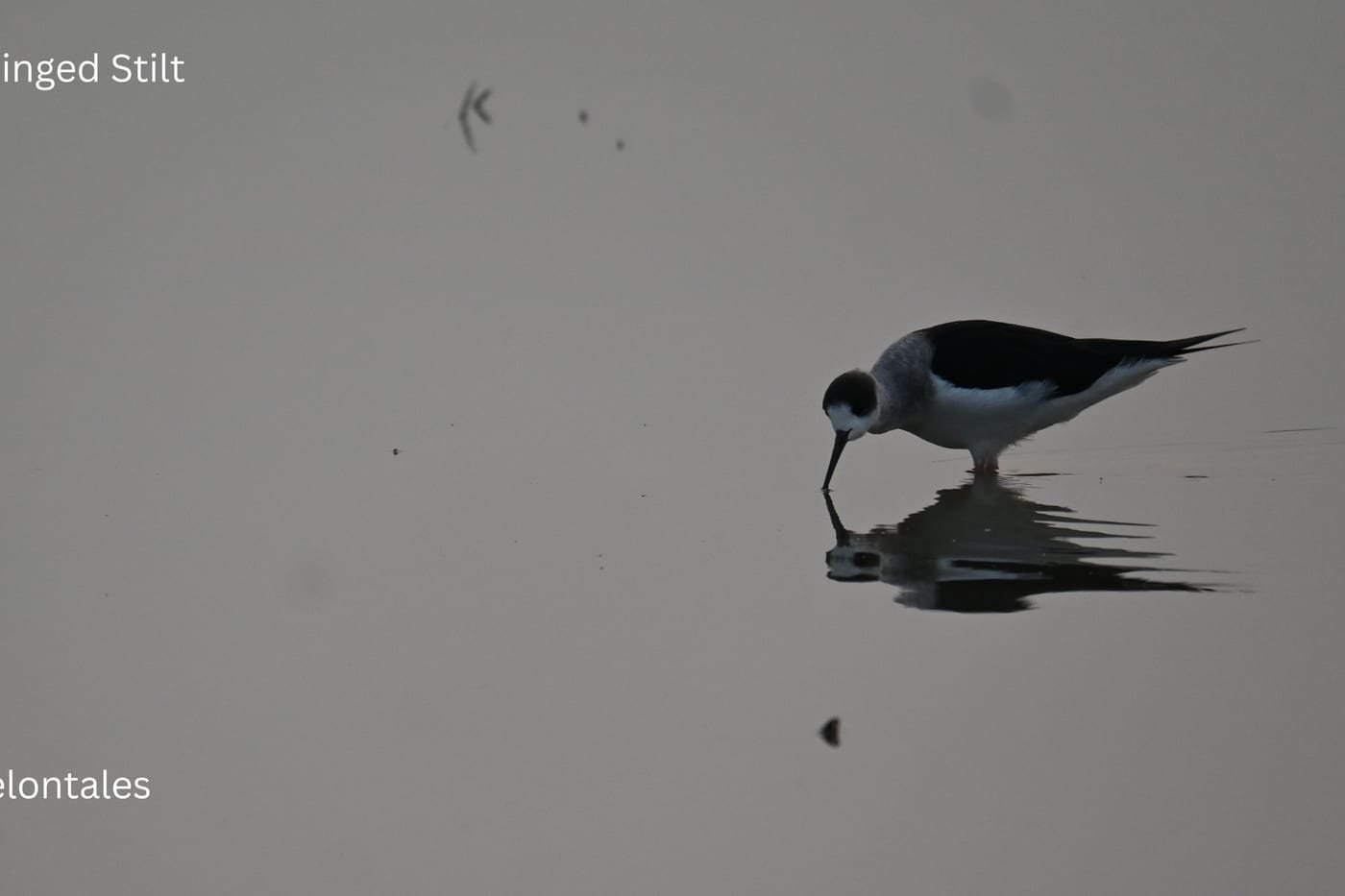
Males typically show more black on the head (sometimes a full black cap reaching the nape) while females show white or pale grey on the head. The juvenile has browner upperparts and pinkish rather than bright red legs. In flight the long legs trail far behind and the black-and-white pattern is striking from above and below.
Where & when to see it at Bhigwan
The shallow muddy margins of the reservoir — particularly the areas near Kumbhargaon where the depth is ankle-to-knee deep — hold stilts throughout the year. They prefer areas with an open muddy substrate and some water movement, and are often seen alongside other waders such as Little Ringed Plover, Common Sandpiper and Marsh Sandpiper.
Numbers increase in winter when birds from further north join the local population. Flocks of 20–100 are common; occasionally much larger groups aggregate at the best foraging areas after rains.
Field notes & behaviour
The stilt’s long legs allow it to wade into water up to 20 cm deep — territory that excludes most other waders. It feeds by picking invertebrates from the water surface and from the sediment just below it, moving with a deliberate, high-stepping gait. It rarely probes deeply; the food it finds is mostly at or just below the surface.
Stilts are among the noisiest birds at Bhigwan — a sharp, high-pitched “kik-kik-kik” carries across the reservoir constantly. They are even noisier at the nest, dive-bombing intruders with an intensity that seems disproportionate to the bird’s size, sometimes striking large mammals and humans on the head.
Photography tip
Stilts are approachable from a boat and will often wade in close. The reflection of the black-and-white plumage in still morning water is the classic shot. For behaviour, watch for the high-stepping gait through very shallow water and the moment when both legs are lifted and the bird seems to be marching. The red eye requires a close approach and a long lens to show clearly — it is worth the effort.
Similar species — don’t confuse it with…
At Bhigwan no other wader has the combination of black-and-white plumage and bright pink-red legs. The Avocet (occasional visitor) has an upturned bill and different patterning. The Painted Snipe has a very different shape and habits.
Frequently asked questions
Do Black-winged Stilts breed at Bhigwan? +
Yes — they are resident breeders. Nests are simple scrapes or minimal pad structures on exposed mudflats and islands within the reservoir, often barely above the waterline. The birds are fiercely territorial around nests and will mob any intruder, including people walking the bund.
Why do stilts have such long legs? +
The legs allow the stilt to wade into deeper water than other similarly-sized waders, giving it access to food in zones that competitors cannot reach. The trade-off is poor mobility on land — stilts walk awkwardly on flat ground — but in shallow water the proportion is perfectly matched to the habitat.
Plan the trip
Birds — and how to reach Bhigwan
This species is part of our Bhigwan photo checklist. Browse all ten birds with names and photos, then follow the full sanctuary guide for boat safaris, the best season and how to get to Kumbhargaon.
Plan your trip: Bhigwan Bird Sanctuary: Complete Travel and Birding Guide