
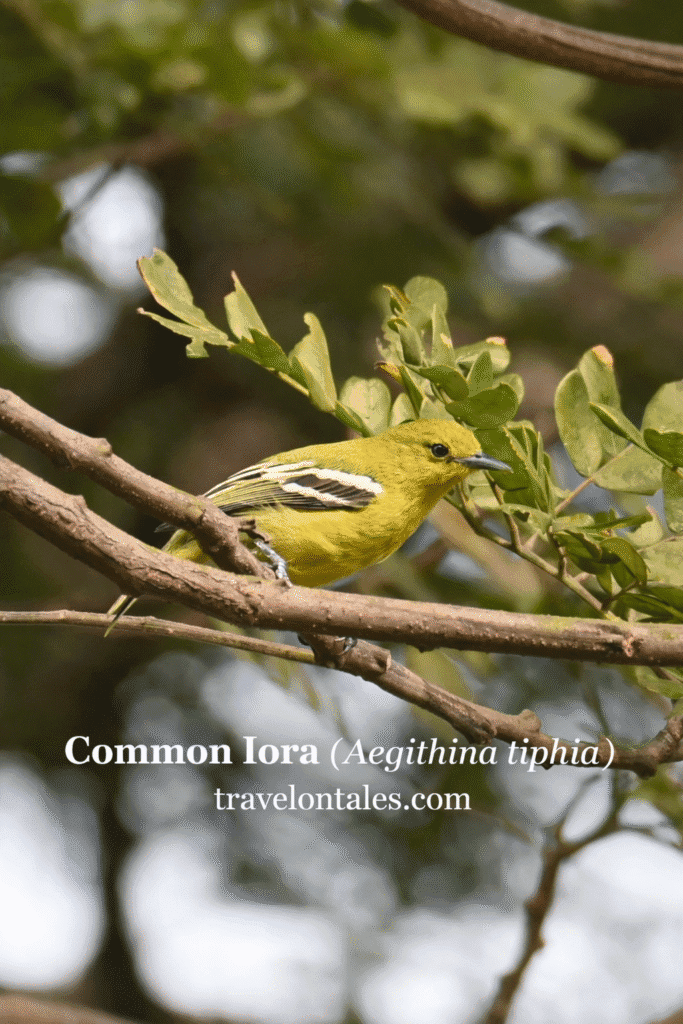
Common Iora at Kihim Beach, Alibaug | Habitat & Behavior
This photograph is a bright yellow Indian songbird perched quietly in the coastal greenery near Kihim Beach, Alibaug. While Alibaug is widely known for its relaxed beaches, its surrounding vegetation supports a surprising diversity of birdlife, making it a rewarding destination for nature lovers exploring Indian birds and bird photography.
Small, energetic, and often overlooked, the Common Iora plays an important ecological role in these landscapes. Observing such species reminds us that meaningful wildlife encounters are not limited to national parks or safaris.
Species Overview – The Common Iora
The Common Iora (Aegithina tiphia) belongs to the Aegithinidae family and is widely distributed across the Indian subcontinent. Despite its striking colour, it tends to remain discreet, spending most of its time within foliage rather than in open spaces.
- Common name: Common Iora
- Scientific name: Aegithina tiphia
- Family: Aegithinidae
- Conservation status: Least Concern
Habitat of This Coastal Songbird
This species prefers semi-open environments where sunlight filters through dense vegetation. Around Kihim Beach, coastal trees, shrubs, and lightly wooded patches form an ideal habitat. Such environments are typical of many travel destinations in Maharashtra.
- Coastal scrub forests
- Beachside trees and groves
- Open deciduous woodland
- Gardens and rural green spaces
Behavior and Daily Activity
This small yellow bird is constantly on the move. Instead of long flights, it prefers quick hops between branches, scanning leaves for insects. It is most often seen alone or in pairs, maintaining quiet communication through soft calls.
- Active foraging among leaves
- Short, quick movements rather than long flights
- More vocal during breeding season
- Non-migratory and present year-round
Diet and Feeding Habits
An efficient insect-eater, the iora contributes significantly to natural pest control. Its feeding behavior involves careful inspection of foliage, often hanging briefly from branches while searching for prey.
- Caterpillars and larvae
- Beetles and ants
- Small insects hidden under leaves
- Occasionally berries and soft fruits
Identification Tips in the Wild
Spotting this species becomes easier once you focus on movement rather than colour alone. Its wing pattern is especially helpful for identification in mixed foliage.
- Bright yellow underparts
- Black wings with distinct white bars
- Slim, slightly curved beak
- Alert posture with frequent pauses
Interesting Facts About the Iora
- It can remain almost invisible when motionless among sunlit leaves
- The yellow plumage appears brighter during breeding season
- Its calls are soft and pleasant rather than loud
- Often mistaken for a leaf or flower at first glance
Photography Notes from Kihim Beach
Photographing birds in coastal settings requires patience more than equipment. Calm daylight hours and quiet observation often lead to the best results. Experiences like this align closely with wildlife experiences from India, even outside traditional safari zones.
- Early mornings offer the best activity
- Watch foliage carefully for subtle movement
- Natural perches create authentic compositions
- Coastal light enhances yellow plumage beautifully
Why Kihim Beach Supports Rich Birdlife
Kihim Beach represents a transition zone where coastal ecosystems meet inland greenery. This blend allows small songbirds to thrive quietly alongside human activity, offering rewarding sightings to attentive observers.
Such reinforce the idea that meaningful nature stories are often found in overlooked corners, not just famous wildlife reserves.
www.travelontales.com