
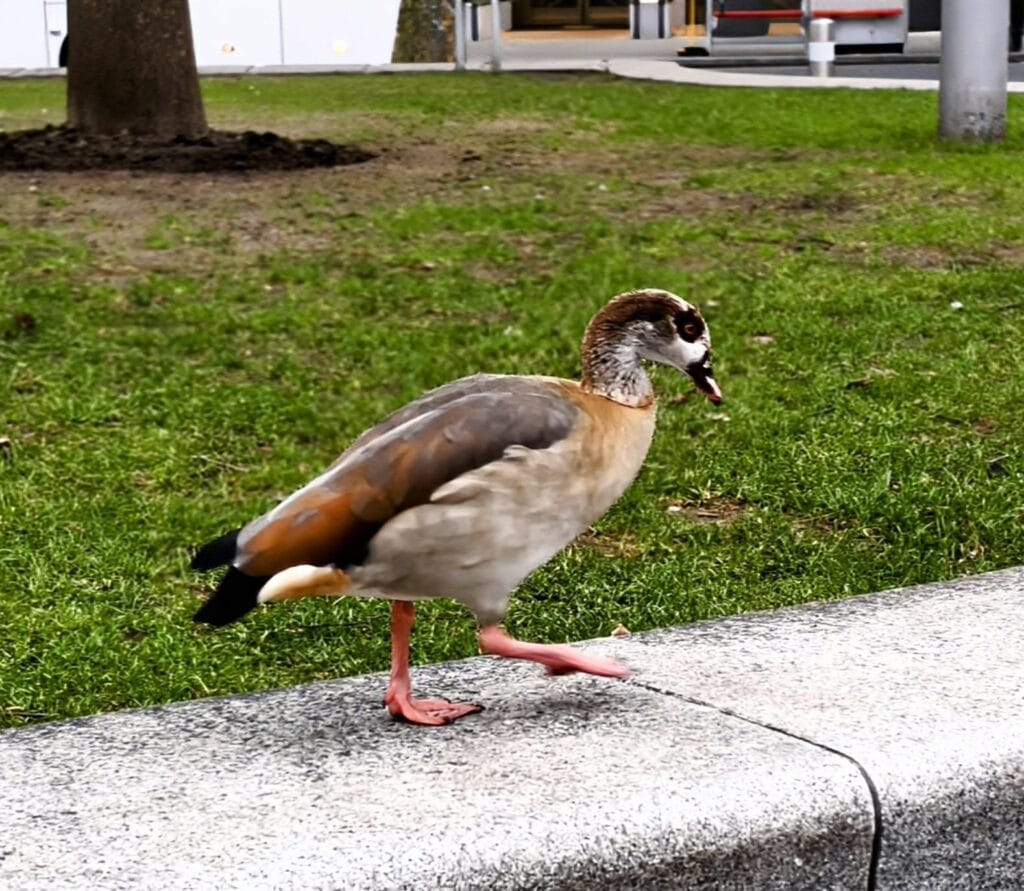
While walking near the River Thames, it’s common to spot a goose calmly strolling along the pavement, completely unbothered by people passing by. This bird is known as the Egyptian Goose, and despite its exotic name, it has become a regular part of London’s urban wildlife.
These geese behave as if the riverbanks, lawns, and walkways belong to them—and in many ways, they do. Today, they are firmly established across the UK, especially around rivers like the Thames.
Species Name
Egyptian Goose
Scientific name: Alopochen aegyptiaca
Originally native to Africa, especially around the Nile region, the Egyptian Goose was brought to Europe hundreds of years ago as a decorative bird for parks and estates. Over time, many escaped or were released and adapted well to local conditions.
Appearance
Egyptian Geese are easy to recognize:
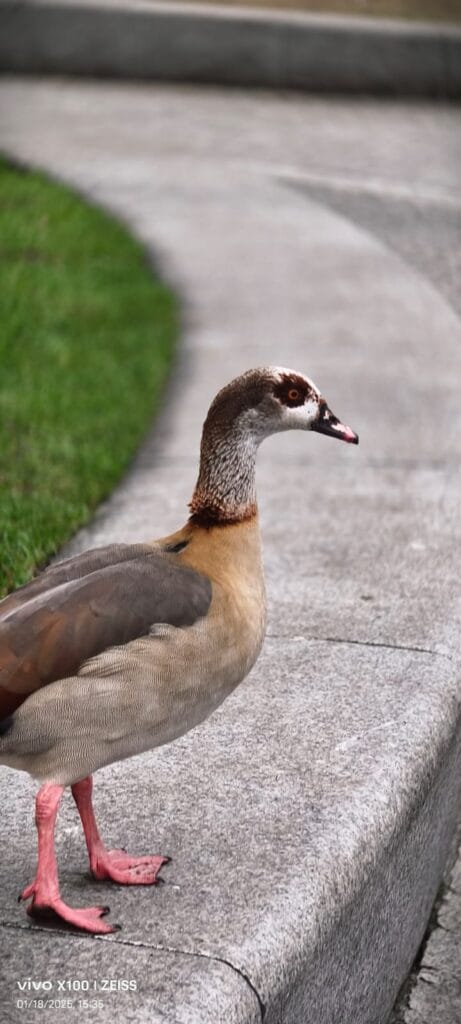
- Light brown and grey body
- Dark patch around the eyes
- Pink legs and feet
- Upright posture while walking
- White wing patches visible when flying
Behaviour and Habits
These geese are known for being bold and territorial.
- Comfortable around humans
- Often seen walking rather than swimming
- Can be aggressive during breeding season
- Usually found in pairs or small groups
Along the Thames, they freely move between water, grass, and footpaths. Unlike many birds, they don’t rely only on rivers and lakes—they are just as happy on dry land.
What Do Egyptian Geese Eat?
Egyptian Geese are mostly plant-eaters.
Their diet includes:
- Grass and leaves
- Seeds and grains
- Small plants near water
Do They Migrate?
No. Egyptian Geese do not migrate.
Once they settle in an area, they stay there year-round. Even during winter, they remain active and visible along the Thames. Mild UK winters suit them well, so there’s no reason for them to travel long distances.
Nesting and Breeding
During spring and early summer, Egyptian Geese become more protective.
- They nest near water, in tree holes, riverbanks, or even buildings
- Females lay several eggs at a time
- Both parents guard the nest strongly
This is the time when they may hiss or chase if someone comes too close.
Why They Are So Common Near the Thames
The Thames provides everything Egyptian Geese need:
- Water for safety
- Open grassy areas for feeding
- Fewer natural predators
- Plenty of quiet nesting spots
Over time, they’ve learned to live alongside people without fear.
The Egyptian Goose may not be native to the UK, but it has become a familiar and fascinating sight along the River Thames. Calm, confident, and well adapted to city life, it’s a reminder of how wildlife can quietly blend into urban spaces.
Next time one walks past you on the pavement, just remember—you’re sharing the path with a bird that feels perfectly at home.