
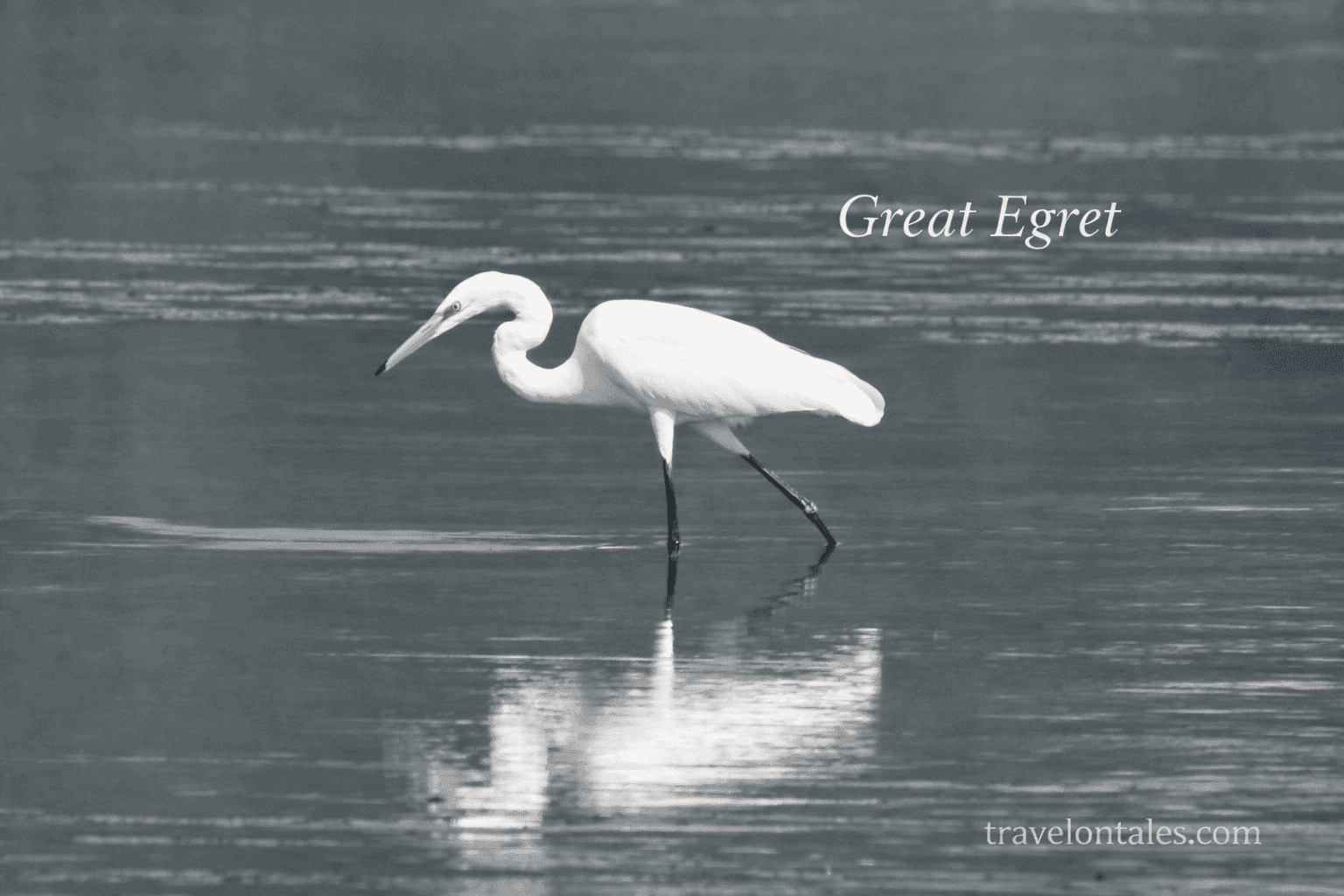
Great Egret at Seawoods Wetlands, Navi Mumbai – Stillness Near the Flamingo Grounds
The wetlands near Seawoods in Navi Mumbai are often spoken about for flamingos, but on this particular visit, it was the quiet presence of a Great Egret that held my attention. Standing alone in shallow water, its white body reflected clearly below, the bird seemed completely at ease—unbothered by the city that exists just a short distance away.
The Seawoods Wetlands Experience
This sighting took place near the well-known flamingo area at Seawoods, a fragile wetland ecosystem that supports an incredible variety of birdlife. While crowds often gather hoping to spot flamingos, species like the Great Egret go unnoticed, despite being just as significant to the health of this habitat.
The calm, shallow water and open mudflats make this area ideal for wading birds that rely on patience rather than pursuit.
Identifying the Great Egret
The Great Egret is among the tallest and most elegant white birds found in Indian wetlands. Even from a distance, its proportions stand out.
- Completely white plumage without markings
- Long black legs adapted for shallow water
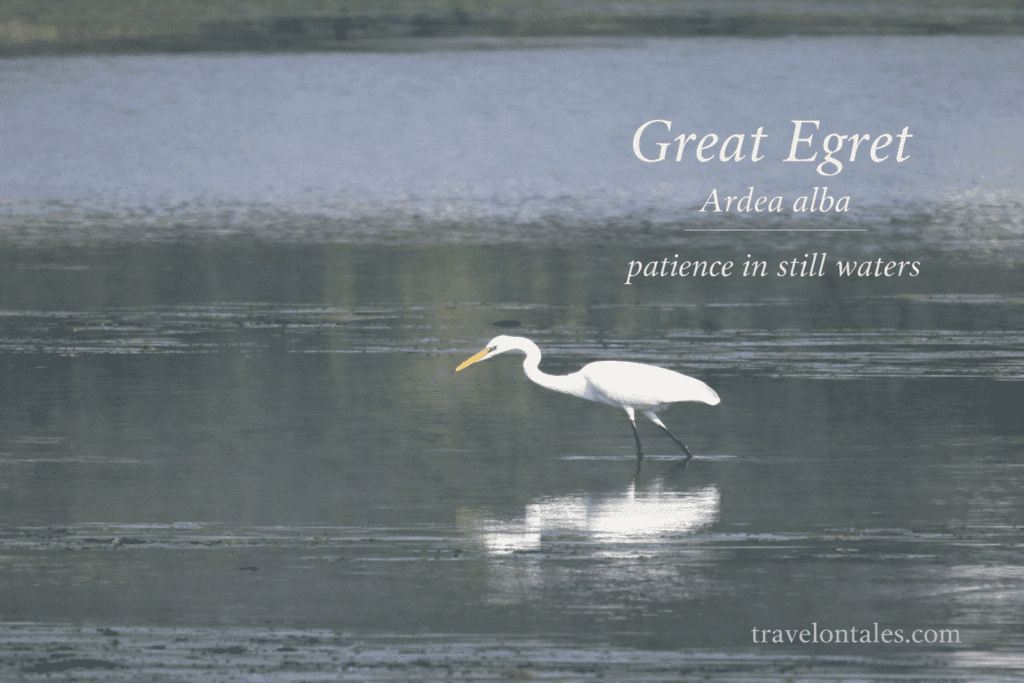
- Yellow to orange bill, sharp and straight
- Graceful S-shaped neck when alert
- Slow, deliberate walking style
Its size alone separates it from smaller egrets commonly seen in urban water bodies.
Behaviour Observed at Seawoods
For long minutes, the Great Egret barely moved. This species hunts by waiting—allowing fish or aquatic insects to come close before striking with sudden precision. In a wetland like Seawoods, where human activity is constant, such behaviour highlights the bird’s remarkable ability to adapt while remaining cautious.
Flight and Movement Patterns
When disturbed, the Great Egret lifts off with slow, powerful wingbeats. In flight, the neck folds back neatly, and the long legs trail behind. The movement is calm rather than hurried, reflecting the bird’s overall temperament.
Seasonal Presence in Navi Mumbai
The Great Egret can be spotted in the Seawoods wetland area throughout the year. Sightings become more frequent during winter months, when water levels stabilize and food availability improves. This period also coincides with flamingo activity, making the region especially rich in bird diversity.
Photography Tips from This Location
This image reinforced an important lesson—urban wetlands reward patience.
- Use a telephoto lens to maintain distance and avoid disturbance
- Early morning light enhances feather detail and reflections
- Expose carefully to preserve highlights on white plumage
- The reflections for added visual balance
Ecological Importance of the Great Egret
The presence of the Great Egret is a strong indicator of a functioning wetland ecosystem. By feeding on fish and aquatic organisms, it helps maintain balance within the food chain. Wetlands like Seawoods are not just stopover points—they are living systems that depend on birds like this for stability.
Similar Birds in the Area
At Seawoods, the Great Egret is often seen alongside smaller egrets and herons. Key differences include its larger size, slower movement, and proportionally longer neck and legs. With practice, distinguishing it becomes effortless.
Why This Sighting Matters
In a city constantly expanding, moments like this feel quietly important. Watching a Great Egret stand undisturbed near the flamingo zone was a reminder that wildlife still finds space to exist—if we allow it to. These wetlands deserve attention not just during flamingo season, but all year round.
Final Thoughts
The Great Egret doesn’t compete for attention. It earns it through presence alone. Seawoods wetlands, often reduced to headlines about flamingos, are home to many such silent residents. Observing them reminds us that conservation begins with noticing what is already here.
Explore more field sightings and bird stories at TravelOnTales.com