
Green Bee-eater in Bhigwan
A vivid wildlife moment from Bhigwan, where a emerald green turns a dry branch into a complete story of patience, color, and perfect timing.
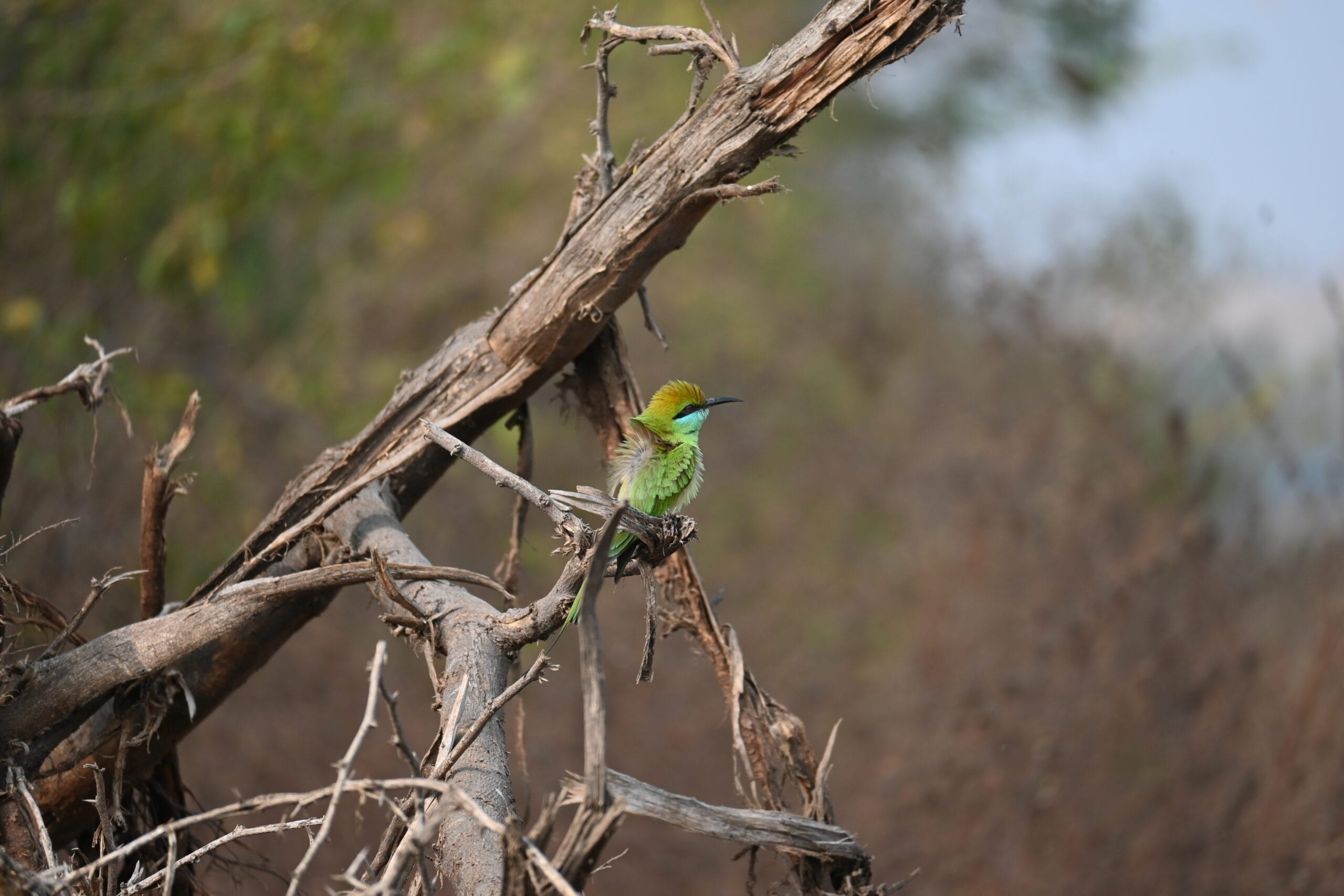
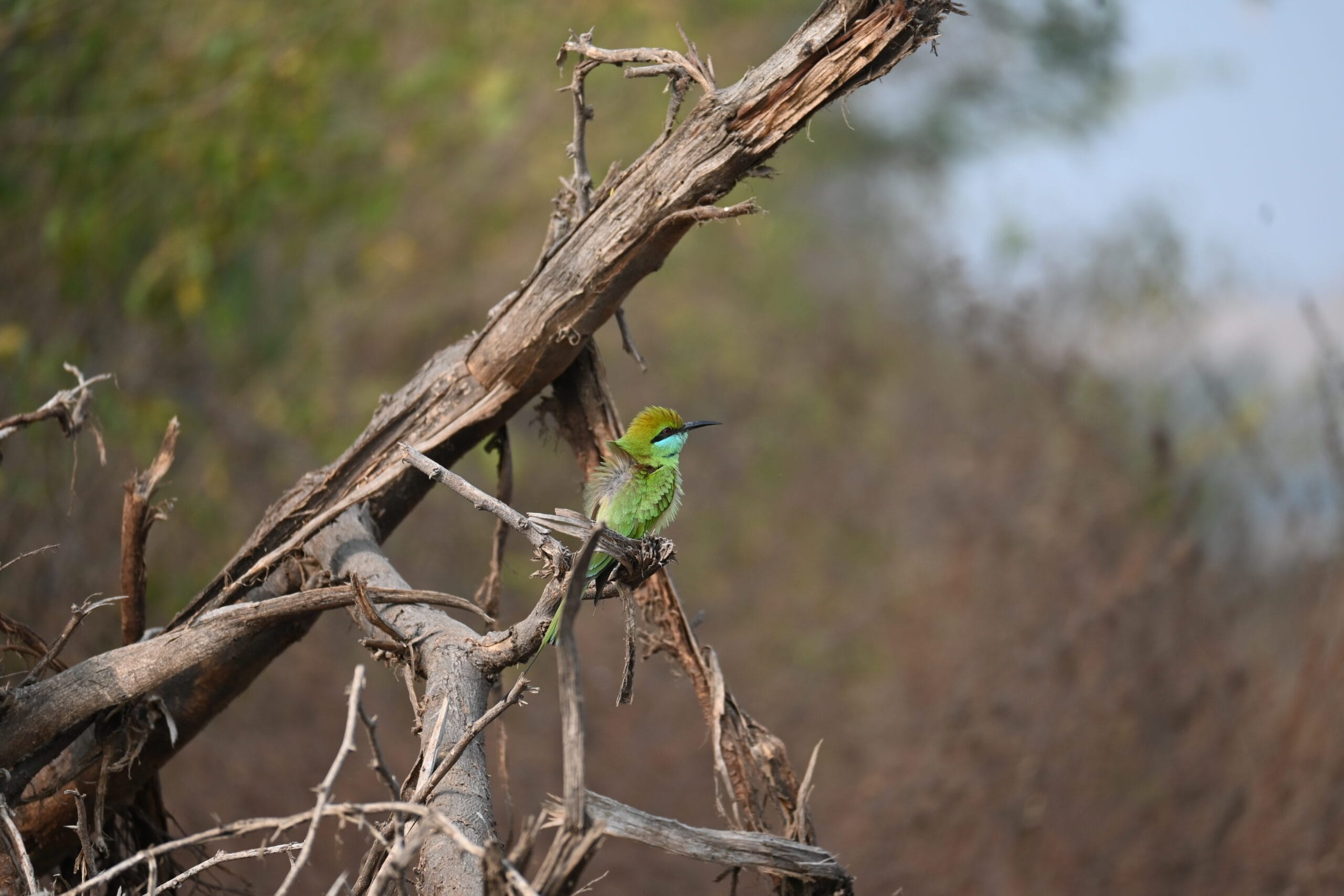
There is something quietly magical about spotting a Green Bee-eater in the wild. Not dramatic like a tiger, not grand like flamingos — but give it a moment, and it owns the entire frame.
This moment was one of those — no sudden movement, no chaos, just a bird sitting still as if it had all the time in the world. And maybe it does. Because in that stillness, it’s watching everything.
The Green Bee-eater (Merops orientalis) is one of those birds you might ignore at first glance. But stay with it for a few seconds, and suddenly you realise — this tiny bird is running a perfectly calculated hunting operation.
Bhigwan Beyond Flamingos
Most people come to Bhigwan for flamingos. And fair enough — they’re spectacular. But the real magic of Bhigwan lies in slowing down and noticing everything else.
The dry branches, open skies, scattered shrubs — they may look empty at first, but they’re full of life if you pay attention. Birds like the Green Bee-eater thrive here because this landscape gives them exactly what they need: visibility, space, and prey.
If you’re planning to explore Bhigwan properly, this guide will help you see beyond just the obvious: 👉 Complete Bhigwan Bird Sanctuary Guide
The Art of Stillness and Speed
What makes this bird fascinating is contrast — it is both patient and explosive.
- It sits quietly for long periods
- Suddenly launches into the air
- Catches insects mid-flight
- Returns to the same perch like nothing happened
There’s no wasted movement. Everything is efficient. Almost surgical.
A Small Detail Most People Miss
If you observe closely, you’ll notice something interesting — when it catches a bee, it doesn’t just eat it immediately. It hits the insect against a branch to remove the stinger first.
It’s a small detail, but it tells you something important: survival in the wild is not about size, it’s about intelligence.
Photography Perspective
This image works not because something dramatic is happening, but because everything is balanced.
- The green bird cuts through the brown background
- The branch creates a natural frame
- The background stays soft and distraction-free
- The subject sits slightly off-center — naturally pleasing to the eye
Sometimes the best wildlife photographs are not about action — they’re about presence.
Experiencing Bhigwan the Right Way
Bhigwan is not a place you “cover” — it’s a place you experience slowly. The more patient you are, the more it reveals.
Many first-time visitors miss these smaller moments simply because they don’t know where or how to look. Having someone who understands the terrain, the bird behavior, and the timing can completely change the experience.
If you’re planning a visit and want to make the most of it, it might actually be worth exploring a guided experience — something like this: 👉 Bhigwan birding tour options
Not necessary, of course — but definitely helpful if you want to go beyond just “seeing” and actually start noticing.
Why This Bird Matters
In the bigger picture, birds like the Green Bee-eater are essential. They control insect populations and help maintain balance in the ecosystem.
But beyond ecology, they offer something else — perspective. A reminder that not everything in the wild needs to be massive or dramatic to be meaningful.
Final Thought
Sometimes, the most unforgettable moments are the quiet ones. A small bird, a dry branch, a still frame — and suddenly, you realise nature doesn’t need to impress you. It just needs you to pay attention.
And if you do, Bhigwan will show you far more than you expected.