
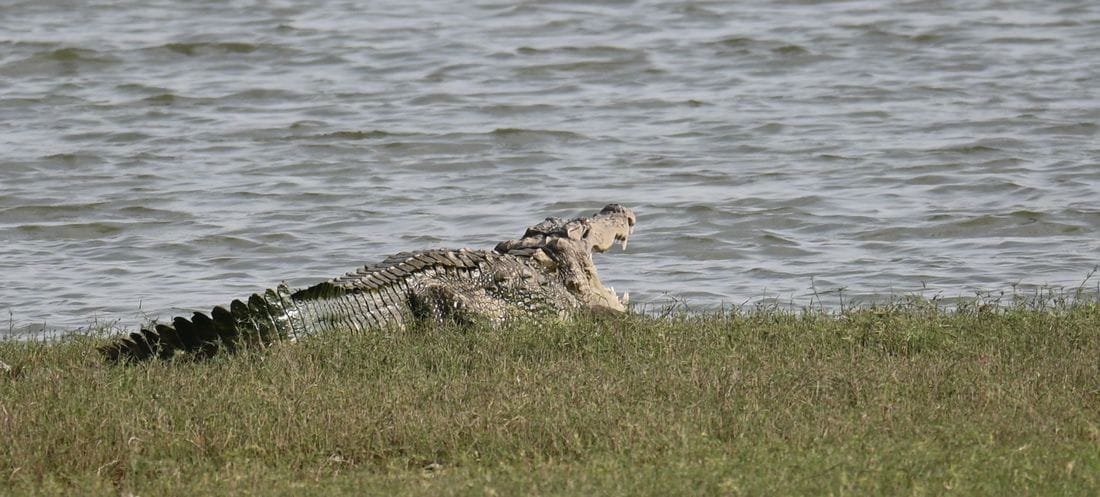
Almost everyone who comes to Jawai comes for one animal. The leopard. I did too, the first time. But the picture I keep coming back to isn’t a cat on a rock. It’s a crocodile lying dead still in the morning sun, jaws gaping wide at the water’s edge.
This post is about that other Jawai — the birds and crocodiles of Jawai Bandh, the big dam that gives this dry pocket of Rajasthan its water. The leopards take all the attention, and they earn it. But the backwater quietly runs its own show. Give it one slow morning and it pays you back.
Where Jawai Bandh is, and why the water matters
Jawai Bandh sits in Pali district, roughly halfway between Udaipur and Jodhpur. Most people drive in from one of those two cities; it’s about three hours either way. There’s also a railway station, Jawai Bandh, on the Delhi–Ahmedabad line, which is how a lot of birders arrive.
The dam was built across the Jawai River, a feeder of the Luni. Work started in 1946 under Maharaja Umaid Singh of Jodhpur and finished in 1957. It’s the largest dam in western Rajasthan and the main water source for the whole district. None of that sounds like a wildlife story. But here’s the thing: in a dry, rocky, semi-desert landscape, a big permanent body of water changes everything. The reservoir and the marshy edges around it became a wetland in the middle of thorn country. That’s why the crocodiles are here. That’s why the birds stop here every winter.
So while the granite hills hold the leopards, the water holds nearly everything else.
Yes, the leopards are real — a quick word
I’m not going to pretend the cats aren’t the headline. Jawai has one of the densest leopard populations in India, living in the caves and crevices of these billion-year-old granite hills. What’s strange and wonderful is how openly they live. No fences, no gates. Shepherds graze their flocks below the same rocks where a leopard is dozing, and the two mostly leave each other alone.
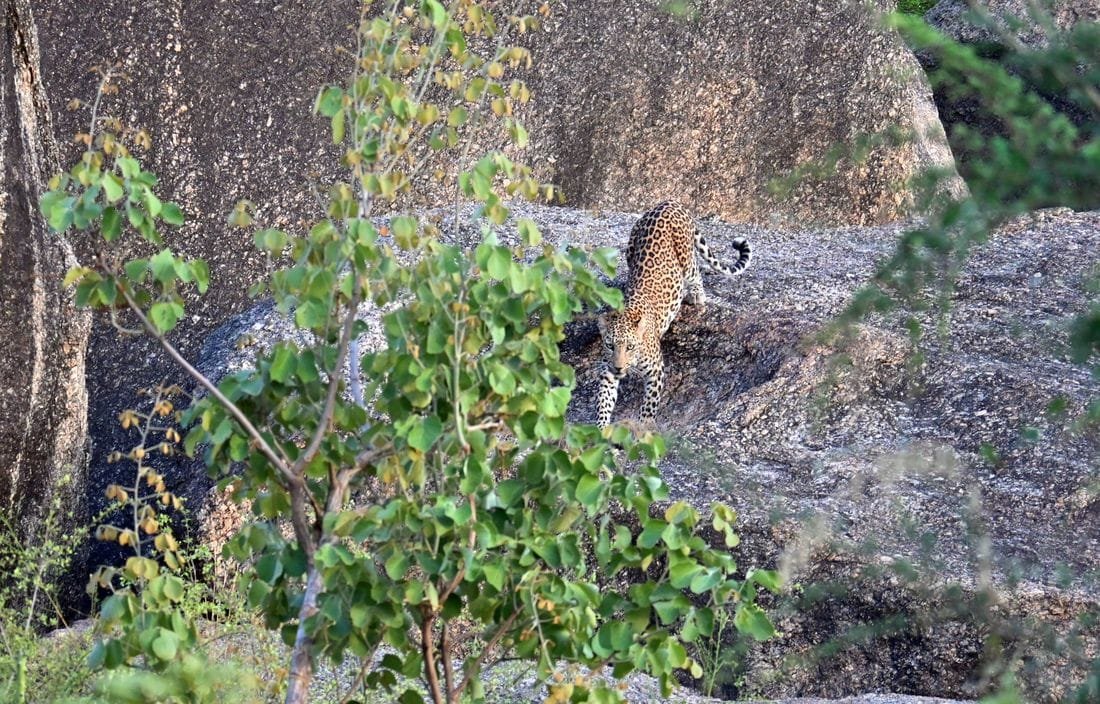
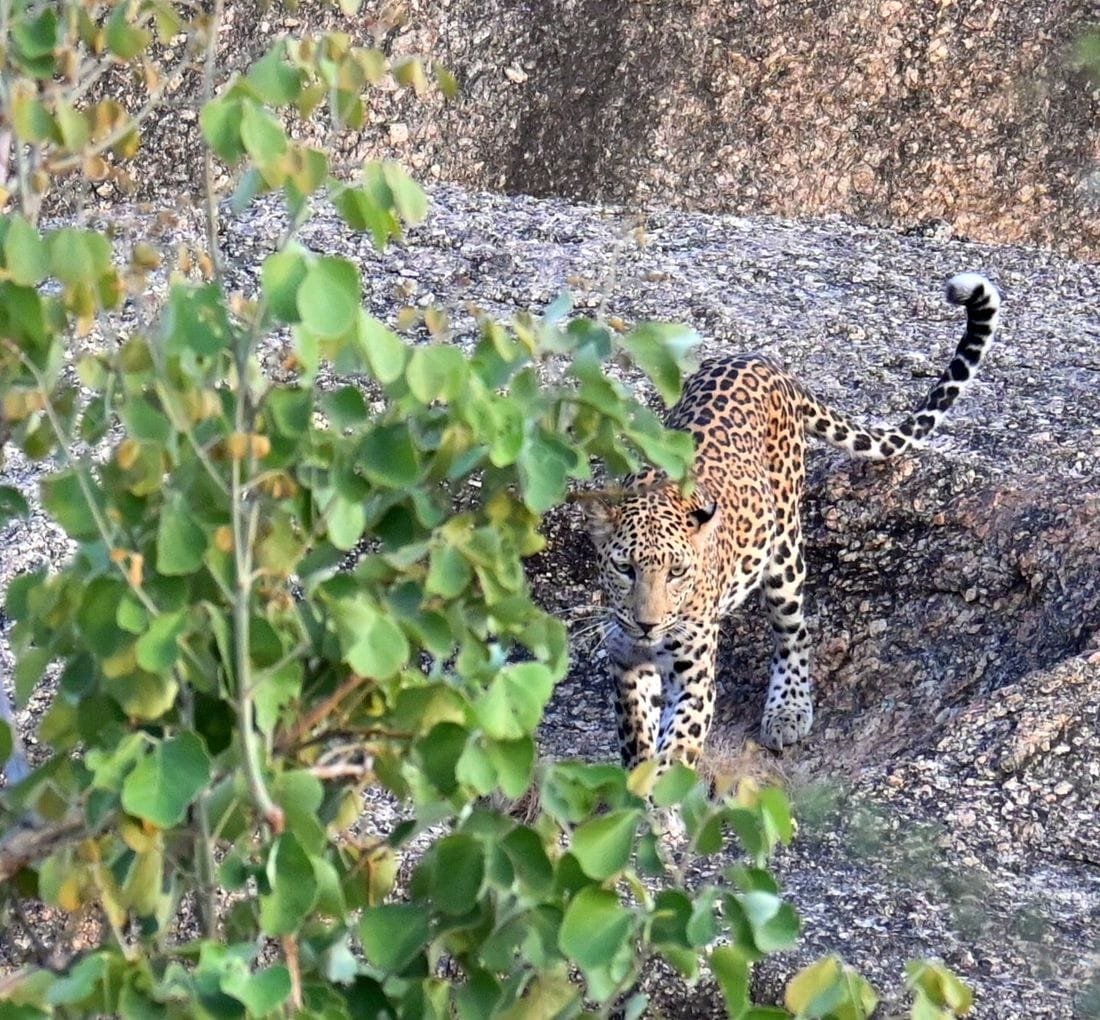
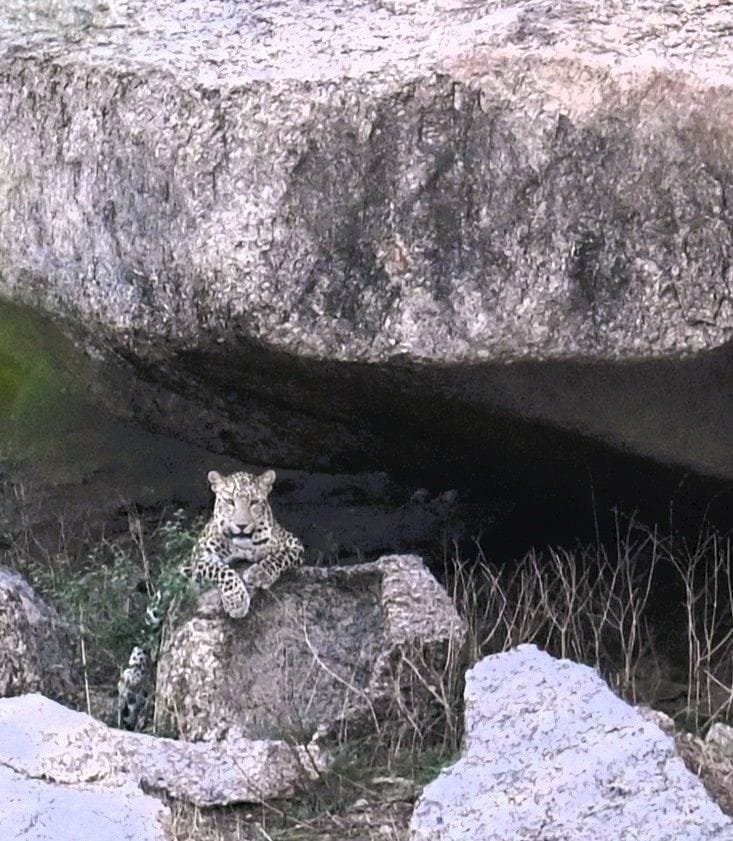
If leopards are your only goal, do a hill safari at dawn or dusk and you’ll likely get lucky. But block out a separate slot for the dam. Now turn your eyes to the water.
The mugger crocodiles of Jawai Dam
The first time a crocodile slid off the bank a few metres from our jeep, I forgot to press the shutter. They’re bigger than you expect, and they move without any fuss at all.
These are mugger crocodiles, also called marsh crocodiles. They’re native freshwater crocodiles found across the Indian subcontinent, and Jawai holds one of the healthier populations in this part of Rajasthan — the most recent count put it at roughly 377 animals in the dam. You won’t see anywhere near that many on a single visit, of course. But on a calm, sunny morning, a few are almost always hauled out on the grassy banks, soaking up heat with their mouths wide open.
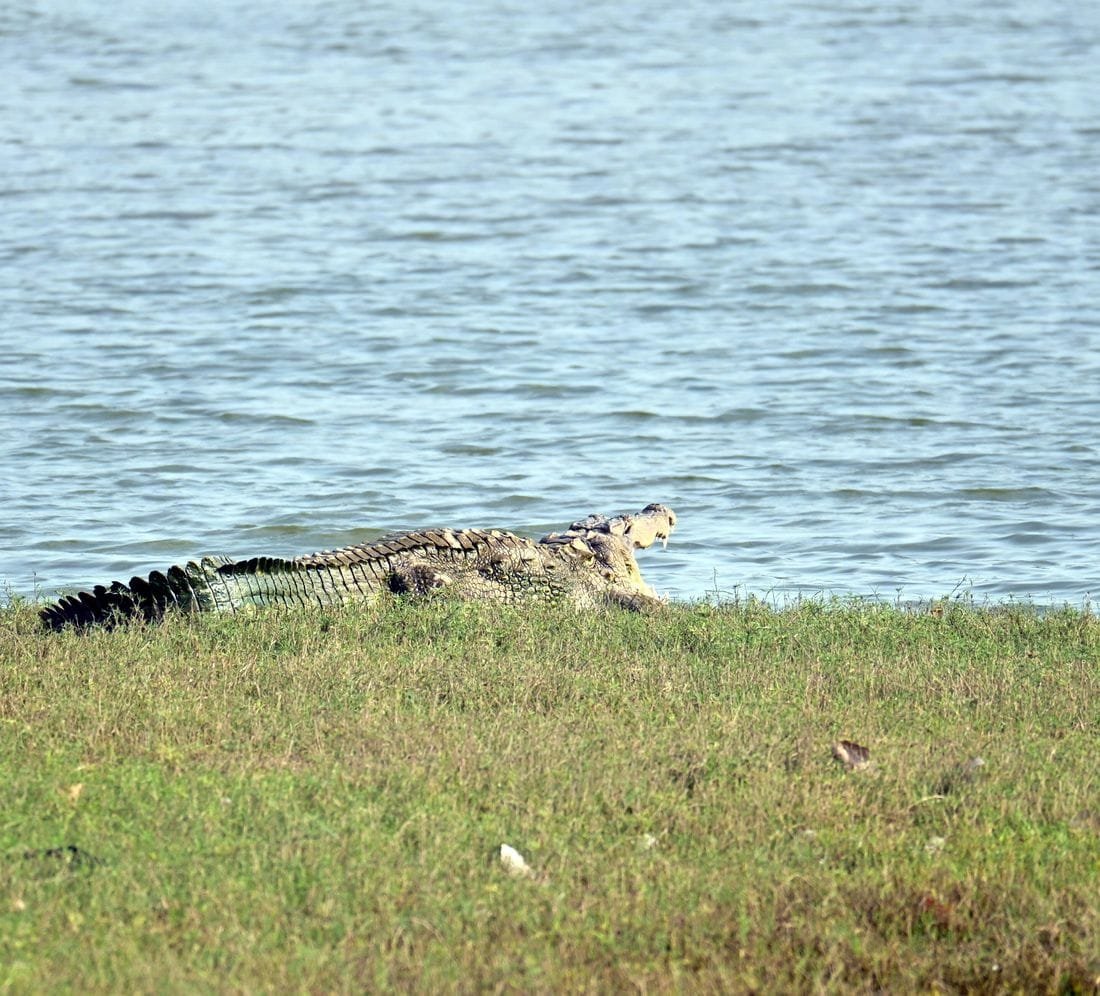
Look again at the crocodile in the photo that opens this post, jaws wide open. That gape startles a lot of first-timers, but it isn’t aggression. A crocodile can’t sweat, so when it gets too warm it opens its mouth and lets heat off that way, like a dog panting. Most of the time a basking mugger is doing nothing more dramatic than warming up.
Birds of Jawai Bandh — the backwater wakes up
This, for me, is the real reason to set an early alarm. The dam and its seasonal wetlands pull in well over a hundred bird species across a season, resident and migratory. Winter is the busy time, when ducks, geese and waders arrive from the north. Even on an ordinary morning, the variety along one stretch of bank is hard to believe for a place this dry.
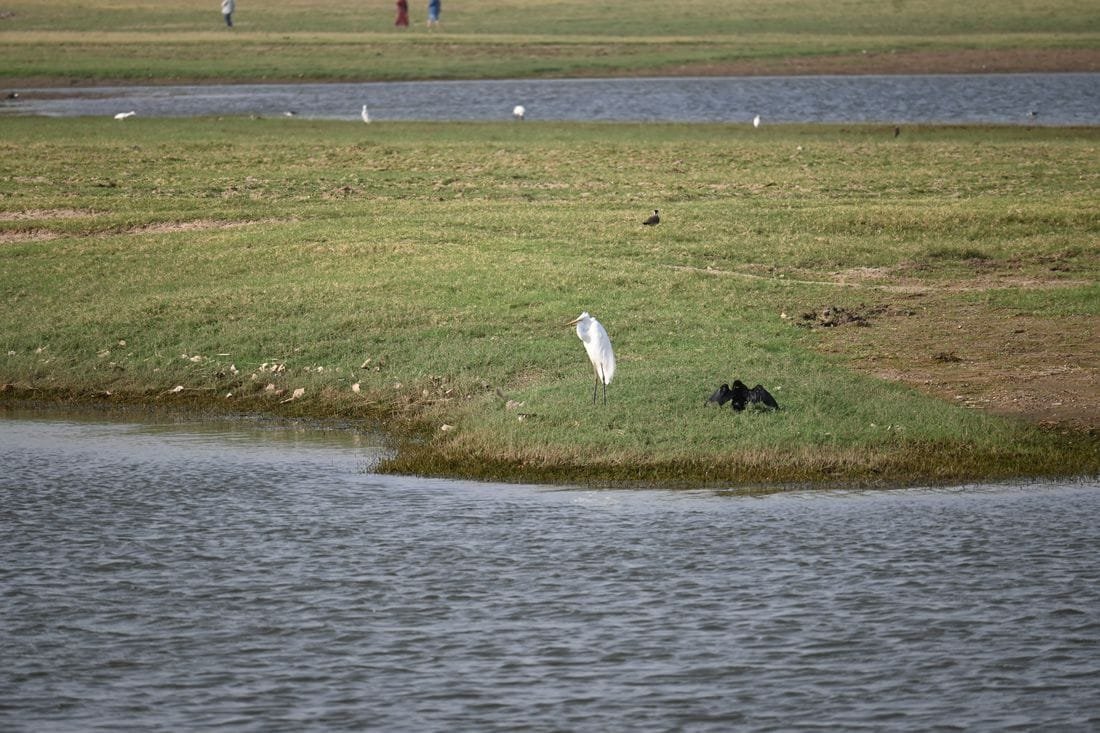
Here’s a handful I photographed, and what to look for.
Asian Openbill
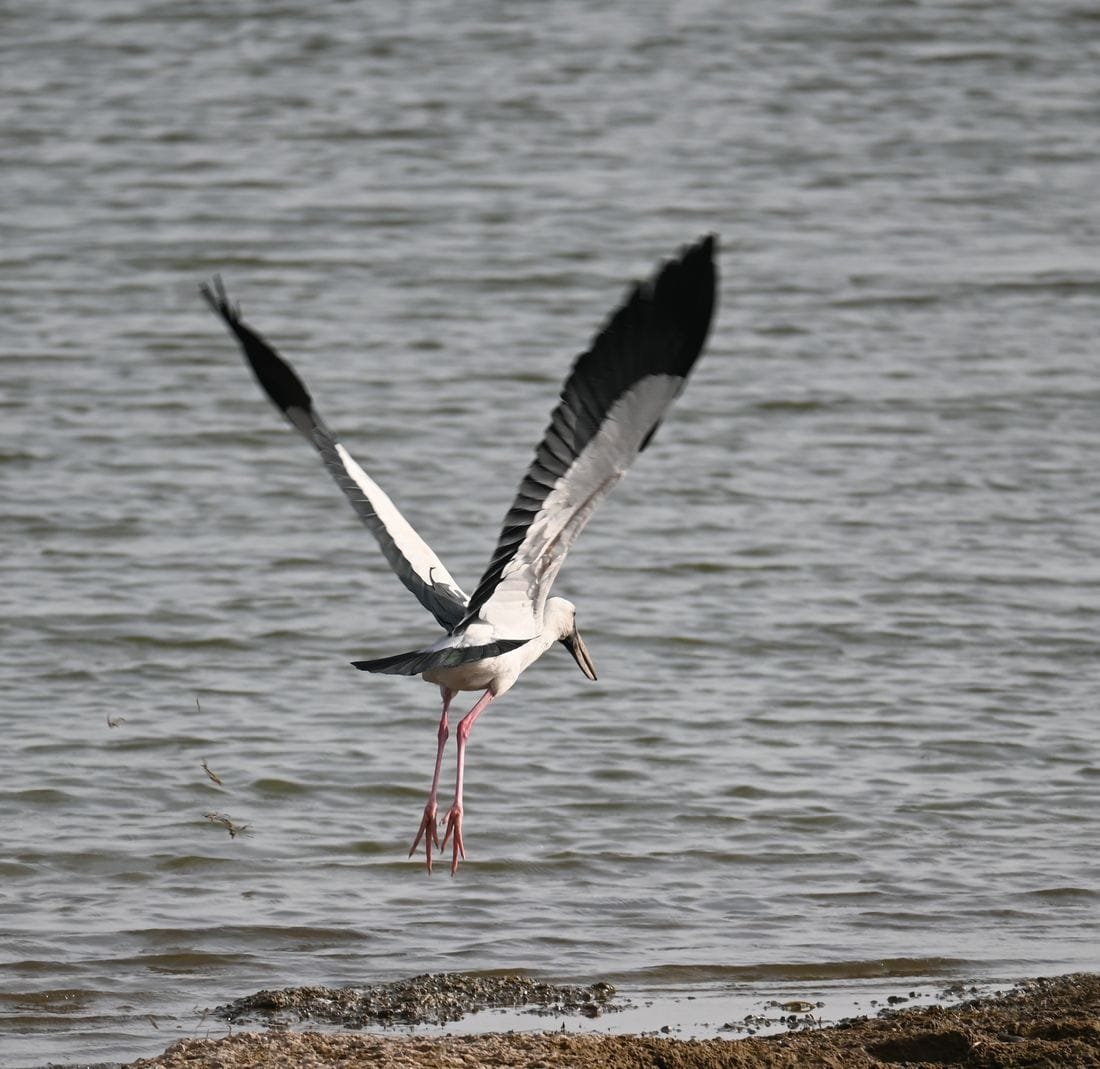
A black-and-white stork with pinkish legs. The give-away is the bill: the two parts don’t close all the way, leaving a small gap in the middle. That gap is a tool. It helps the bird grip and crack open the apple snails it loves to eat. Once you’ve seen one, you can’t un-see the gappy bill.
Oriental Darter (the “snakebird”)
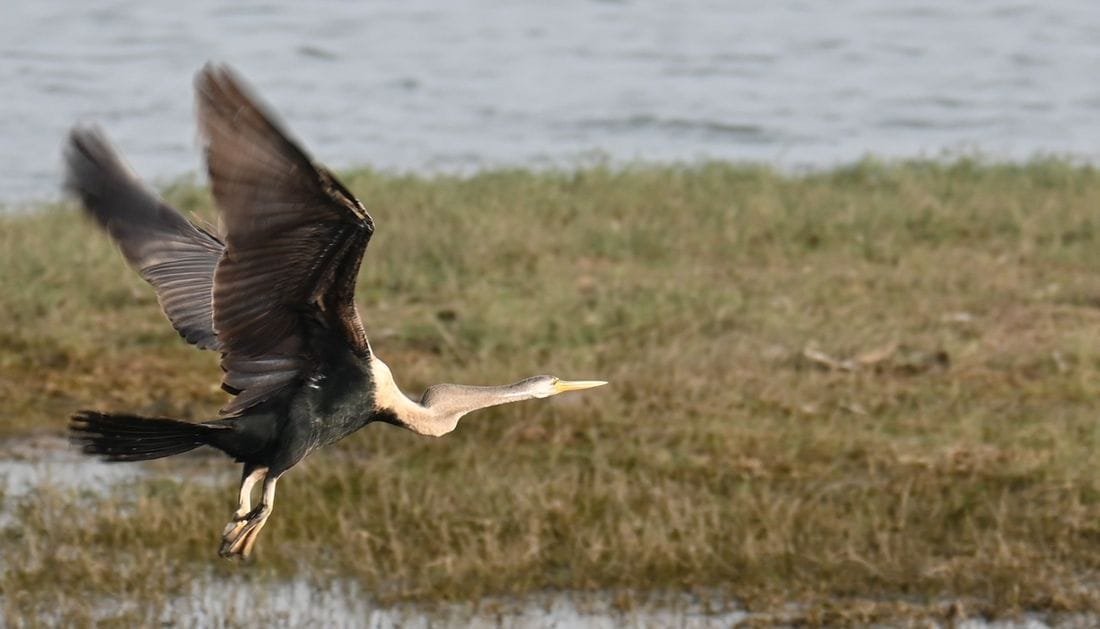
People call this one the snakebird, and it makes sense the moment you see it swim. It paddles low with just that thin, crooked neck above the surface, so it looks exactly like a snake gliding through the water. The bill is straight and sharp, almost like a spear — the darter actually stabs fish rather than grabbing them. After fishing it has to sit with its wings spread out to dry, because its feathers aren’t fully waterproof.
Black-headed Ibis & Black-winged Stilt
Two very different birds, often feeding in the same patch. The black-headed ibis is the bigger one: a white body, a bald black head and neck, and a long bill that curves down like a sickle. It walks the mud slowly and sweeps that curved bill through the soft ground for grubs and small creatures.
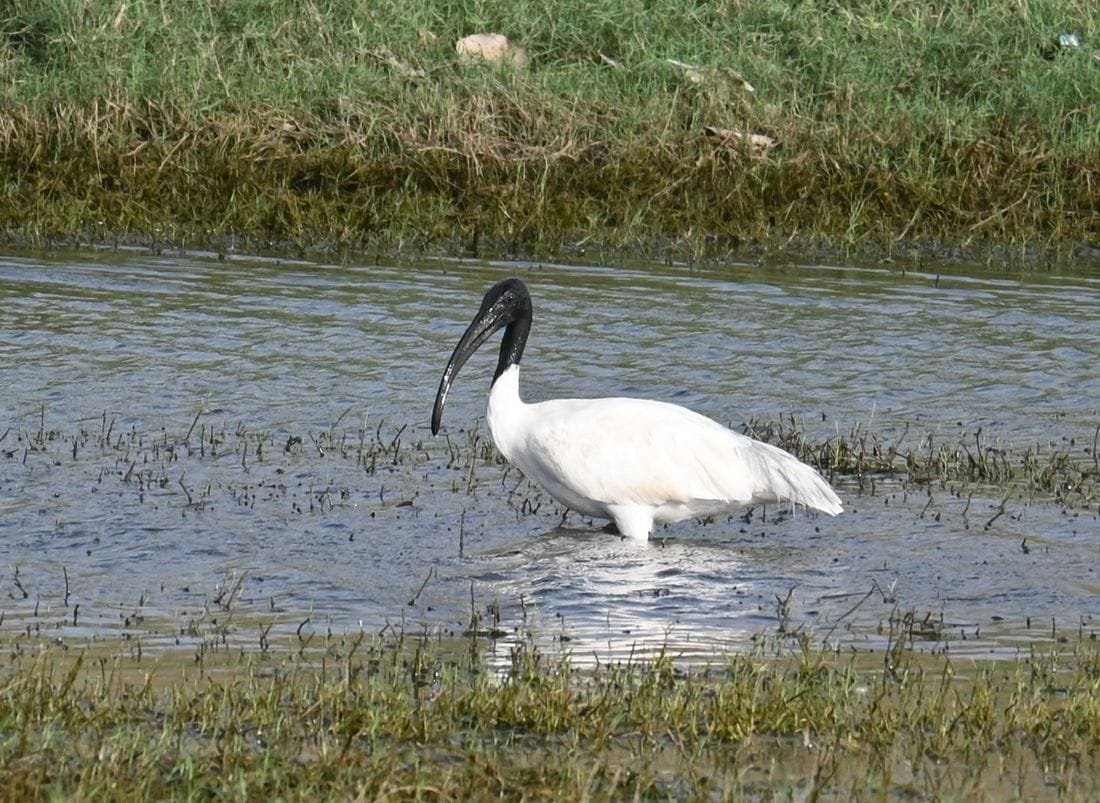
The black-winged stilt is the show-off next to it — black and white, with a needle-thin bill and ridiculous bright-pink legs that look two sizes too long. Those legs let it wade out deeper than most small waders dare, picking insects off the surface.
Red-wattled Lapwing
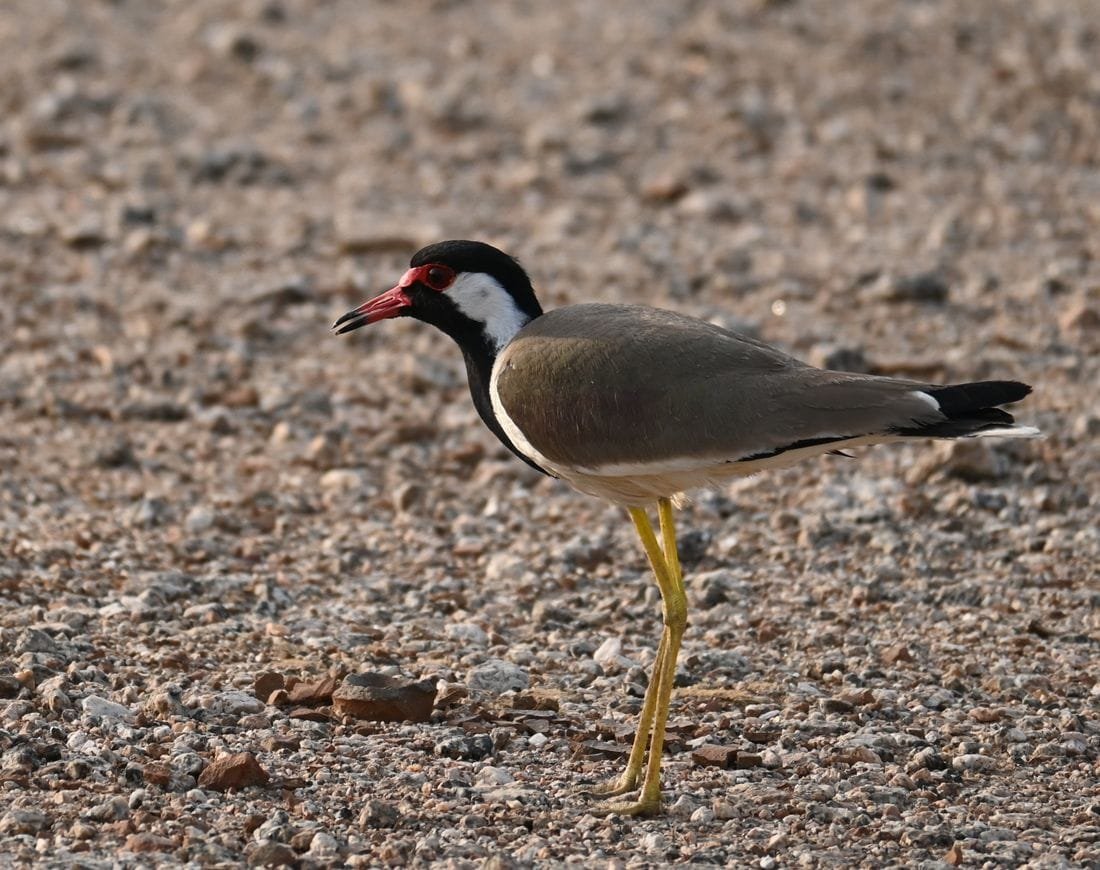
You’ll probably hear this one before you see it. The red-wattled lapwing is the wetland’s alarm system — a loud, sharp call that birders the world over describe as “did-he-do-it.” The black head, the red bill with a black tip, the small red wattle of skin by the eye and the long yellow legs all add up to a bird that’s easy to name once you’ve met it. When it starts shouting, look up; something is moving nearby.
A young cormorant
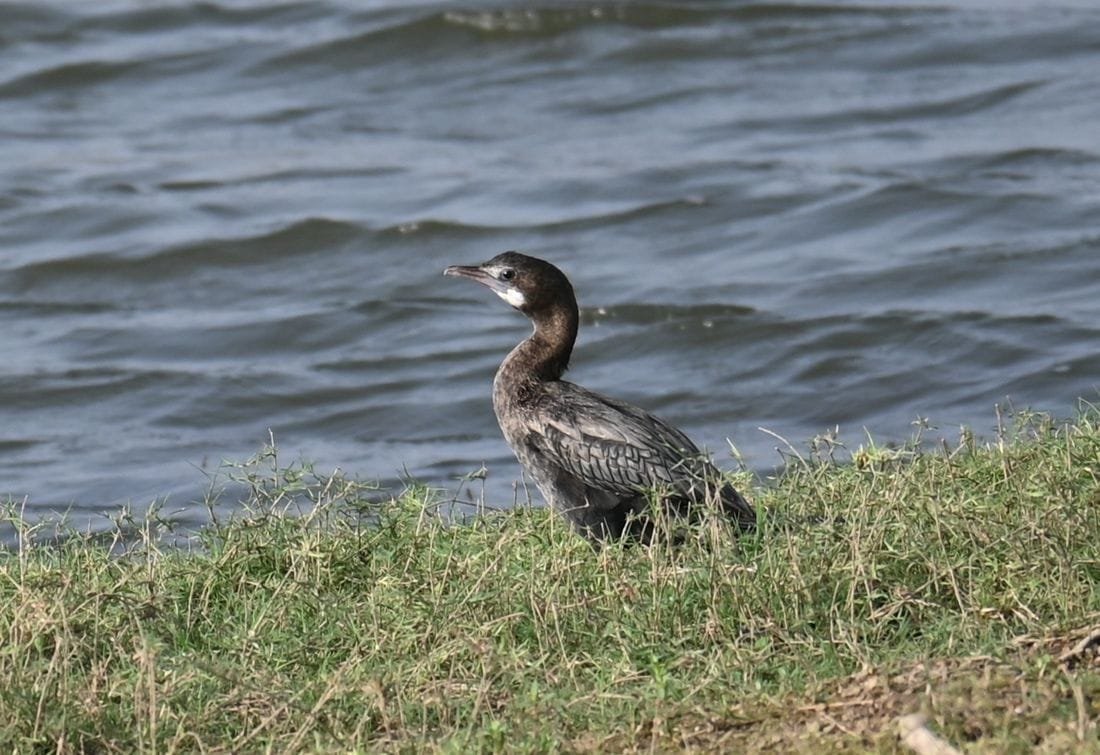
This brownish bird with the pale throat is a young cormorant, most likely a little cormorant (Jawai gets its bigger cousin, the Indian cormorant, too). Cormorants are the divers of the wetland. They swim down and chase fish underwater, then climb out onto a bank or a rock and hold their wings open to dry, just like the darter. The dull brown shows it’s a younger bird — adults are much blacker.
And those tall white egrets standing sentinel along the water, like the great egret in the wetland shot earlier? Regulars here too — one more of the long-legged waders that make the Jawai backwater worth a long, patient look.
Best time for birdwatching and crocodile spotting at Jawai
Keep it simple: October to March. The weather is kind, and winter brings in the migratory birds on top of the residents. Crocodiles are easiest to spot on bright, still mornings when they come out to bask.
Whatever the month, go at first light. The animals are active, the heat hasn’t built up, and the low sun does lovely things to the water and the granite. By late morning the birds settle and the crocodiles slip back in. The early start is the whole game.
How to do the Jawai backwater drive
The dam run is usually a daytime jeep drive that starts from the backwater area and loops along the water, taking in crocodile spots and bird-rich banks, sometimes with a stop at the local leopard temple and a bit of off-road. It’s a separate outing from the dawn or dusk leopard safari on the hills, and honestly the two complement each other — cats on rock in the half-light, then water and wings when the sun’s up.
Jeeps are run by local operators and the lodges around Bera and Jawai Bandh, and most cap it at five or six people, so a smaller group means more room to swing a lens. In the busy winter season it’s worth booking your dam drive a day or two ahead, either through your lodge or a local operator.
How I shot these
You don’t need pro gear to enjoy Jawai, but a bit of reach helps with both birds and crocodiles, because you’re keeping a safe, respectful distance from everything.
I shot these on a Nikon Z50 with the Nikkor Z DX 50–250mm lens — light, quick to swing onto a bird in flight, and enough reach for a crocodile across a channel. I mostly stay in aperture-priority mode: I set the aperture I want, usually fairly wide to keep the bird sharp and the background soft, and let the camera pick the shutter speed. On a bright Jawai morning that gives speeds fast enough to freeze a stork lifting off without much fuss. A pair of binoculars and a small field guide round out the kit — you’ll spot far more with them than with your eyes alone.
My quick Jawai Bandh bird list (from this trip)
- Asian Openbill
- Oriental Darter
- Black-headed Ibis
- Black-winged Stilt
- Red-wattled Lapwing
- Little Cormorant
- Great Egret
That’s one morning’s worth. Spend a full winter weekend and the list grows fast — ducks, geese, kingfishers, eagles and more all use this water.
Quick questions about Jawai Bandh
Is Jawai Bandh good for birdwatching?
Yes, and it’s under-rated. The dam and its wetlands draw well over a hundred resident and migratory bird species across a season. Mornings along the backwater are the most rewarding.
How many crocodiles are in Jawai Dam?
The most recent count put it at roughly 377 mugger crocodiles, one of the larger populations in this region. You’ll only see a fraction on any one visit, but a few are usually basking on a sunny morning.
What is the best time for birds and crocodiles at Jawai?
October to March. Winter adds migratory birds to the resident ones, and clear, still mornings are best for crocodiles. Always start at first light.
Can I see leopards and crocodiles on the same trip?
Yes. Leopard safaris run on the granite hills, and the crocodile-and-bird drive runs along the dam backwater. Many visitors do a hill safari at dawn and the dam drive separately.
What birds did you photograph at Jawai Bandh?
Asian openbill, Oriental darter, black-headed ibis, red-wattled lapwing, a young cormorant, and a great egret out on the backwater.
One last thing
Go to Jawai for the leopards. Of course you should. But don’t treat the dam as a throwaway add-on. Some of my favourite memories from this trip are quiet ones — a stork lifting off the water, a crocodile gaping in the sun, a lapwing yelling at nothing. The big cats are the reason you come. The backwater is the reason you’ll want to come back.
Been to Jawai, or planning to? Tell me what you spotted on the water — I’m always adding to my list.
The leopards in detail? Read Jawai leopard safari guide.