
Painted Stork
Painted Stork at Seawoods Flamingo Point, Navi Mumbai
Seawoods Flamingo Point in Navi Mumbai is best known for its seasonal gatherings of flamingos, transforming the wetlands into a sea of pink. However, this ecosystem supports far more than its most celebrated visitors. Among the quieter yet equally important residents is the Painted Stork, a large and elegant wading bird that thrives year-round in these wetlands.
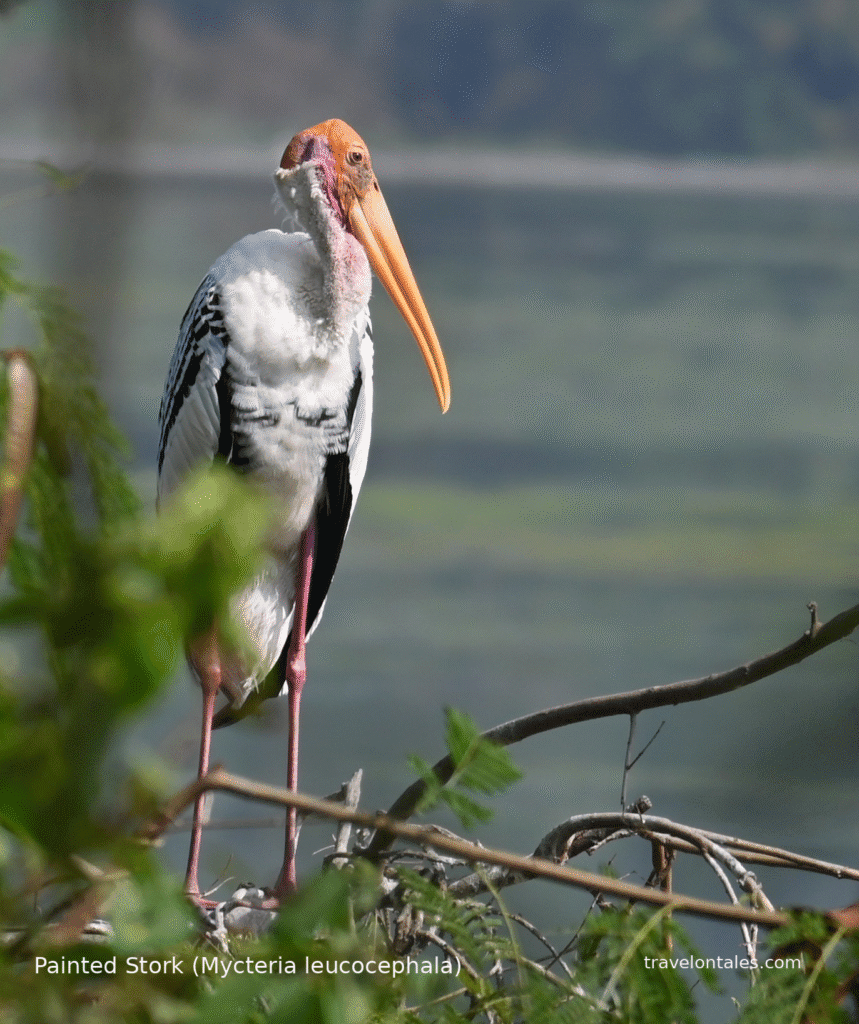
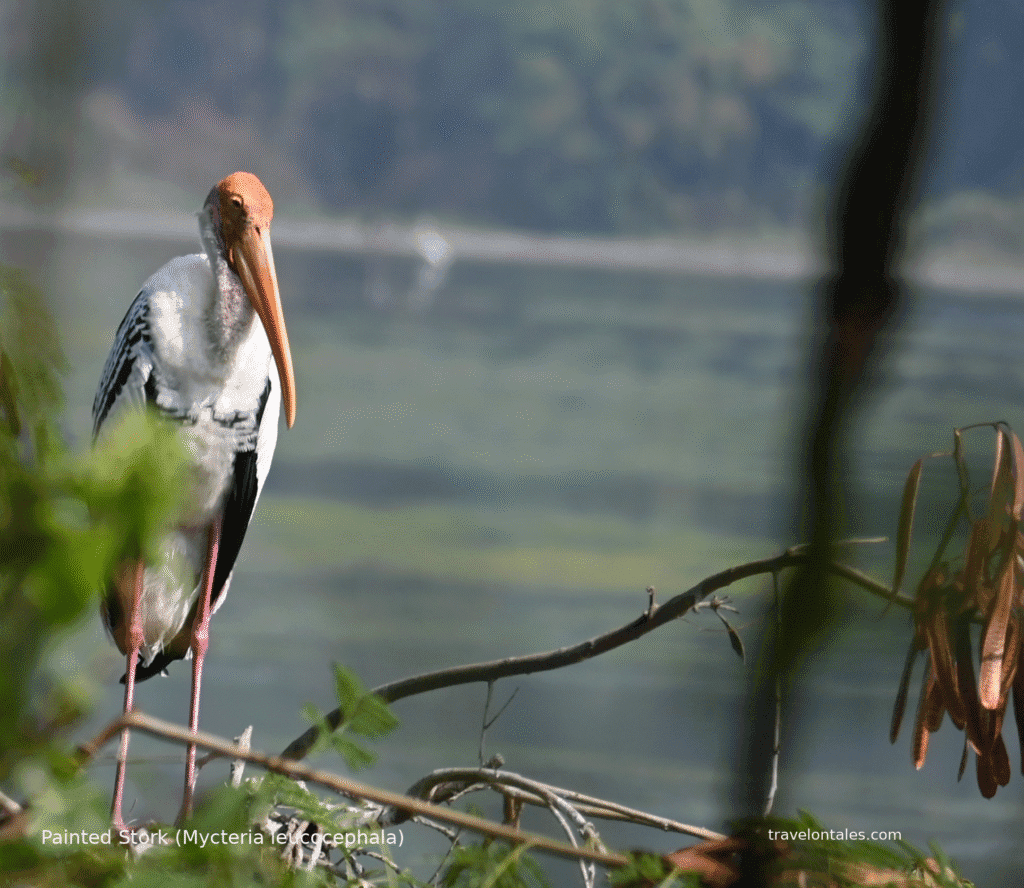
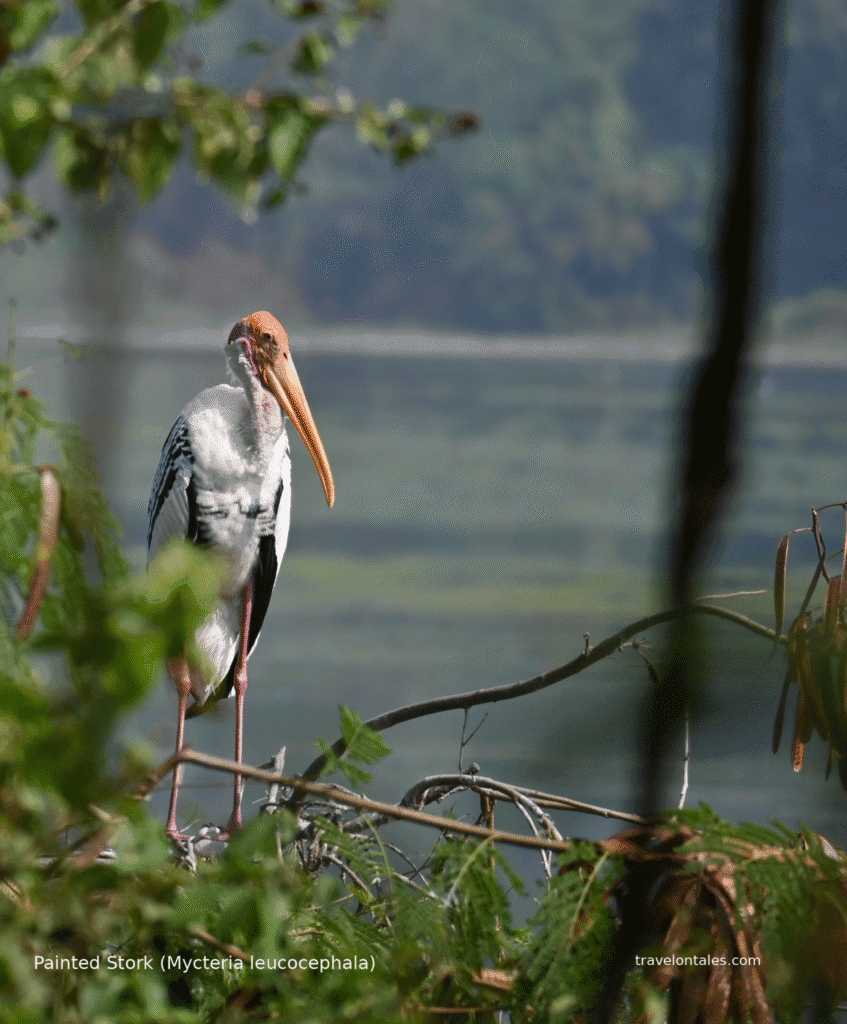
This photograph was taken at Seawoods Flamingo Point, a prominent birding location within Navi Mumbai’s coastal wetland and mangrove belt. The image shows an adult Painted Stork resting calmly near the water’s edge, framed by natural vegetation—an unhurried moment that reflects the everyday rhythm of wetland life.
Location: Seawoods Flamingo Point, Navi Mumbai
Seawoods Flamingo Point forms part of the larger Thane Creek wetland system, one of Maharashtra’s most significant coastal ecosystems. The area consists of shallow waters, mudflats, and mangroves that support both migratory and resident bird species throughout the year.
The abundance of fish, crustaceans, algae, and plankton—combined with relatively low disturbance—makes this wetland suitable for species with very different feeding habits. This is why flamingos and Painted Storks are often seen sharing the same landscape without competing for resources.
How to Identify a Painted Stork
The Painted Stork is a large wading bird, standing close to one meter tall. It has a solid, upright posture and appears bulkier than herons, though slightly shorter than flamingos.
Its long, straight, yellow-orange bill is a key identifying feature. Unlike flamingos, the bill is not curved and is adapted for catching fish rather than filtering water.
The body is mostly white with bold black wing markings. This strong contrast is clearly visible when the bird is perched or resting.
Adult Painted Storks have distinctly pink legs. Juveniles usually appear duller, with greyish tones and less contrast.
At rest, the neck appears gently curved. In flight, it stretches straight forward—a useful identification cue from a distance.
Male or Female?
The Painted Stork seen in this photograph is a fully grown adult, evident from its vibrant bill color, pink legs, and sharply defined plumage.
Painted Storks are sexually monomorphic, meaning males and females look almost identical. There are no reliable visual markers to distinguish gender from a single photograph. Unless observed during courtship or nesting, it is scientifically accurate to identify this bird simply as an adult Painted Stork.
Why Is the Painted Stork Sitting Alone?
Although Seawoods Flamingo Point is associated with large flocks, a solitary Painted Stork is not unusual. While these birds nest in colonies during the breeding season, they often feed, rest, or observe alone or in small groups.
Their diet consists of larger prey such as fish, frogs, and aquatic invertebrates. Maintaining distance reduces competition and allows more efficient hunting. In wetlands, solitude often signals comfort and normal behavior—not isolation.
Flight Ability and Flying Height
Painted Storks are strong and efficient fliers. They typically fly between 300 and 800 meters and can soar up to approximately 1,500 meters when using thermal air currents.
In flight, the bird stretches its neck straight and glides with broad wings fully extended, creating a slow, graceful silhouette over wetlands.
Painted Stork and Flamingos: Sharing the Same Habitat
Despite sharing the same wetlands, Painted Storks and flamingos occupy different ecological roles. Flamingos are filter feeders, consuming algae, plankton, and tiny crustaceans, while Painted Storks actively hunt fish and other larger aquatic prey.
This separation of feeding strategies allows multiple species to thrive together, highlighting the ecological richness of Seawoods Flamingo Point.
Fun Facts About the Painted Stork
The Painted Stork gets its name from the natural contrast of white, black, and pink on its body, not from any artificial coloring.
It sweeps its open beak through shallow water and snaps it shut the instant it feels a fish.
Painted Storks are mostly quiet birds, relying on stillness and patience rather than calls while feeding.
Males and females appear almost identical; their roles differ mainly during breeding rather than in appearance.
Even when sharing the same wetland, Painted Storks and flamingos do not compete for food due to very different feeding habits.
These birds use warm air currents, known as thermals, to glide long distances with minimal wing flapping.
They nest in large colonies but often feed or rest alone, which is completely normal behavior.
The presence of Painted Storks usually indicates clean water and abundant aquatic life.
Painted Storks belong to an old bird lineage that has changed very little over millions of years.
Despite their wild appearance, they have adapted to wetlands near cities like Navi Mumbai—if the habitat remains protected.
Conclusion
While flamingos may draw the spotlight, the Painted Stork remains a vital and fascinating resident of Seawoods Flamingo Point. This photograph serves as a reminder that every species plays a role in maintaining the health of wetland ecosystems.
Protecting wetlands around Navi Mumbai ensures that birds like the Painted Stork continue to thrive—quietly, steadily, and beautifully.
To explore more birds, wildlife, and travel stories, visit:
https://travelontales.com/category/safaris/