
Brown-headed Gull Over the Arabian Sea | Mumbai to Alibaug Ferry Wildlife Experience
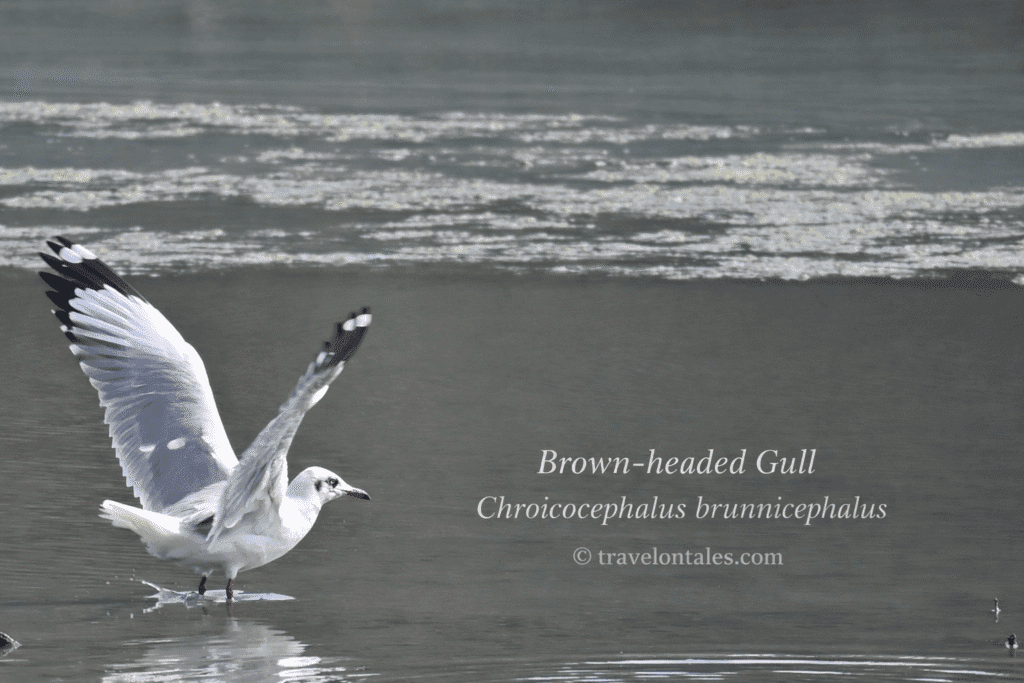
This photograph documents a Brown-headed Gull (Chroicocephalus brunnicephalus) in mid take-off, during a ferry journey from Mumbai to Alibaug. Set against the calm yet textured surface of the Arabian Sea, the image reflects the often-overlooked wildlife encounters available along India’s coastal travel routes.
Why the Mumbai to Alibaug Ferry Route Is a Hidden Wildlife Corridor
The ferry route between Mumbai and Alibaug is not just a convenient travel connection — it also passes through an active coastal ecosystem. During winter months, migratory seabirds frequently use this corridor for feeding and resting, making it an unexpected yet rewarding route for birdwatchers and nature photographers.
The presence of open water, fishing activity, and tidal movement creates ideal conditions for seabirds such as gulls, terns, and cormorants.
Natural Habitat of the Brown-headed Gull
The Brown-headed Gull is a migratory seabird that breeds in Central Asia and the Tibetan Plateau. Between October and March, it migrates southward to coastal regions of South Asia, including India.
Preferred Habitats
• Coastal shorelines and estuaries
• Harbours and fishing zones
• Mudflats and shallow tidal waters
• Open sea routes near the coastline
Along India’s west coast, Maharashtra provides ideal wintering grounds due to its extensive shoreline and marine food availability.
Flight Mechanics and Behaviour
The flight style of the Brown-headed Gull is a study in efficiency. Its broad wings and lightweight body allow it to conserve energy while covering long distances.
How They Fly
• Strong but smooth wingbeats
• Extended gliding over water surfaces
• Low-altitude flight to scan for food
• Short running steps during water take-off
The moment captured in this photograph shows the bird transitioning from surface contact to airborne control — a behaviour commonly observed during feeding or repositioning.
How to Identify a Brown-headed Gull in the Wild
Correct identification is essential, as multiple gull species share similar habitats.
Key Identification Features (Winter Plumage)
• White head and underparts
• Pale grey wings with black-tipped primaries
• White spots visible on black wing tips
• Red to dark pink bill and legs
• Medium-sized, clean wing profile
The brown head appears only during the breeding season, which is rarely seen in India.
Behavioural Traits and Feeding Habits
Brown-headed Gulls are opportunistic feeders. They feed on small fish, crustaceans, insects, and marine scraps. Around ferry routes, they are often seen following fishing boats or floating debris where food availability is higher.
Interesting Facts About the Brown-headed Gull
• Migrates thousands of kilometres annually
• Highly adaptable to human-modified coastlines
• Uses visual scanning rather than diving for prey
• Often mistaken for other gull species due to seasonal plumage changes
Why This Image Matters for Coastal Wildlife Documentation
This image is more than a wildlife photograph. It highlights the ecological richness of everyday travel routes and reinforces the importance of observing nature beyond protected reserves.
Such sightings encourage responsible travel, awareness of marine ecosystems, and appreciation of migratory species that depend on coastal habitats.
Discover more wildlife encounters and travel stories at TravelOnTales.com