
I have been asked this question more times than I can count, standing at the edge of the Kadbanwadi grasslands near Bhigwan with fellow birders squinting at a distant silhouette — is that a Short-toed Snake Eagle or a Bonelli’s Eagle? Both are big. Both are brown on top and pale underneath. Both love open country. And both have a talent for making you feel slightly foolish when you get it wrong.
The answer to the confusion.
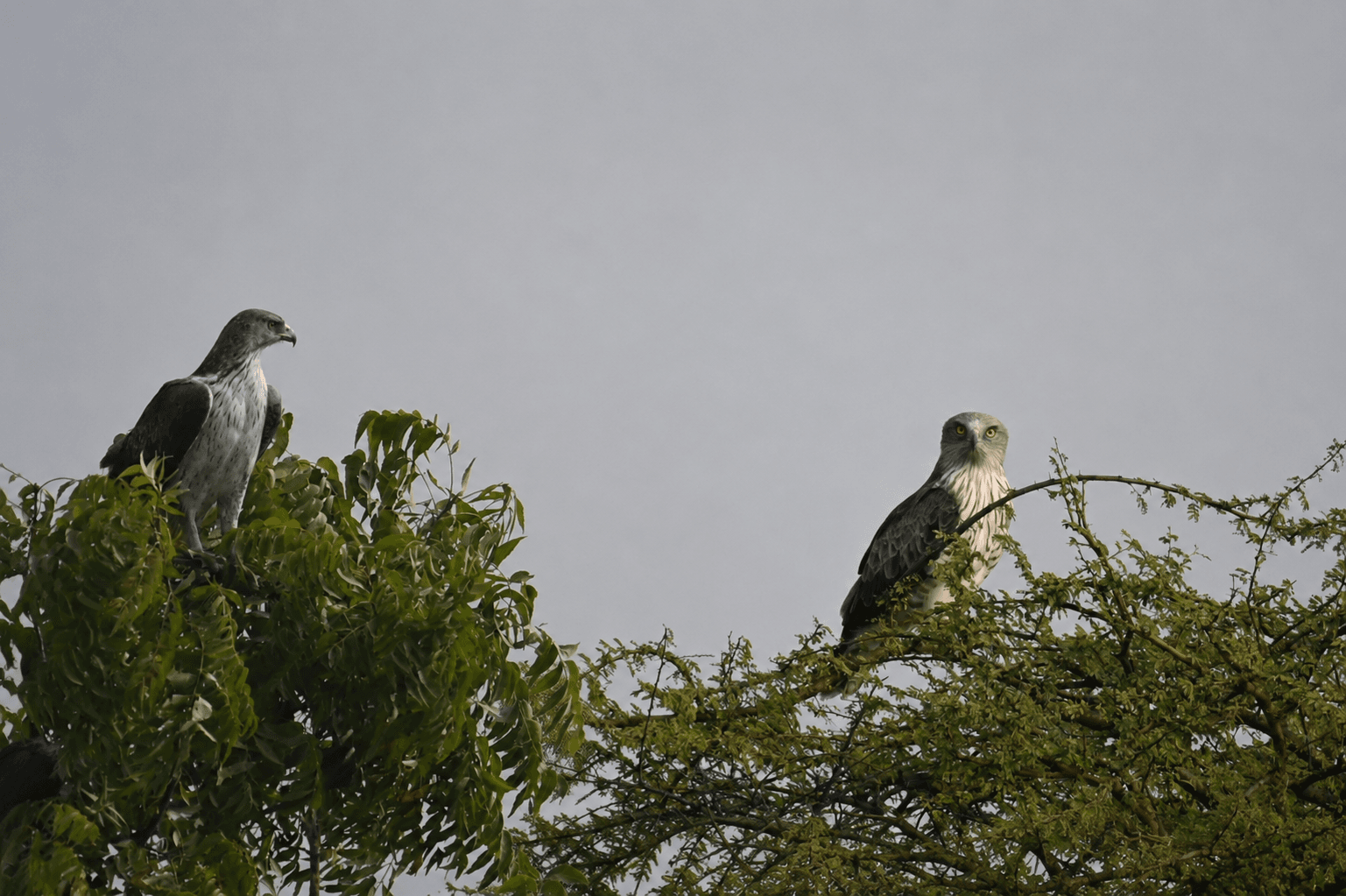
The bird on the left is the Bonelli’s Eagle — dark upperparts, sleek and athletic, a neat proportionate head, all business. The bird on the right is the Short-toed Snake Eagle — rounder head, that unmistakable golden-yellow stare looking straight at the camera, heavier and more owl-like in its whole bearing. Same tree. Same morning. Completely different birds.
Once you have seen them together like this, the confusion disappears. The rest of this article explains exactly what to look for — and why each difference exists.
Meet the two birds
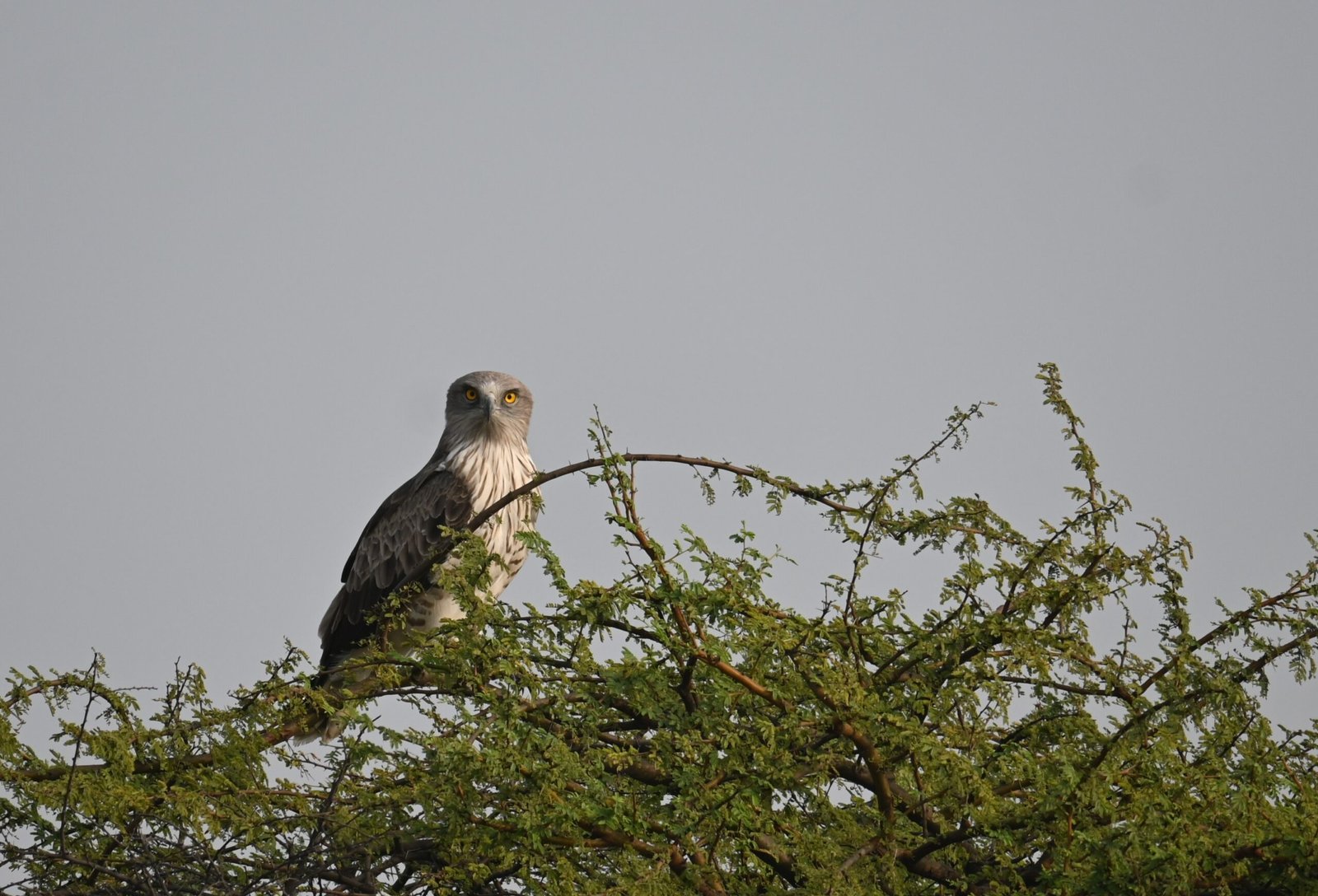
Short-toed Snake Eagle
Winter visitor
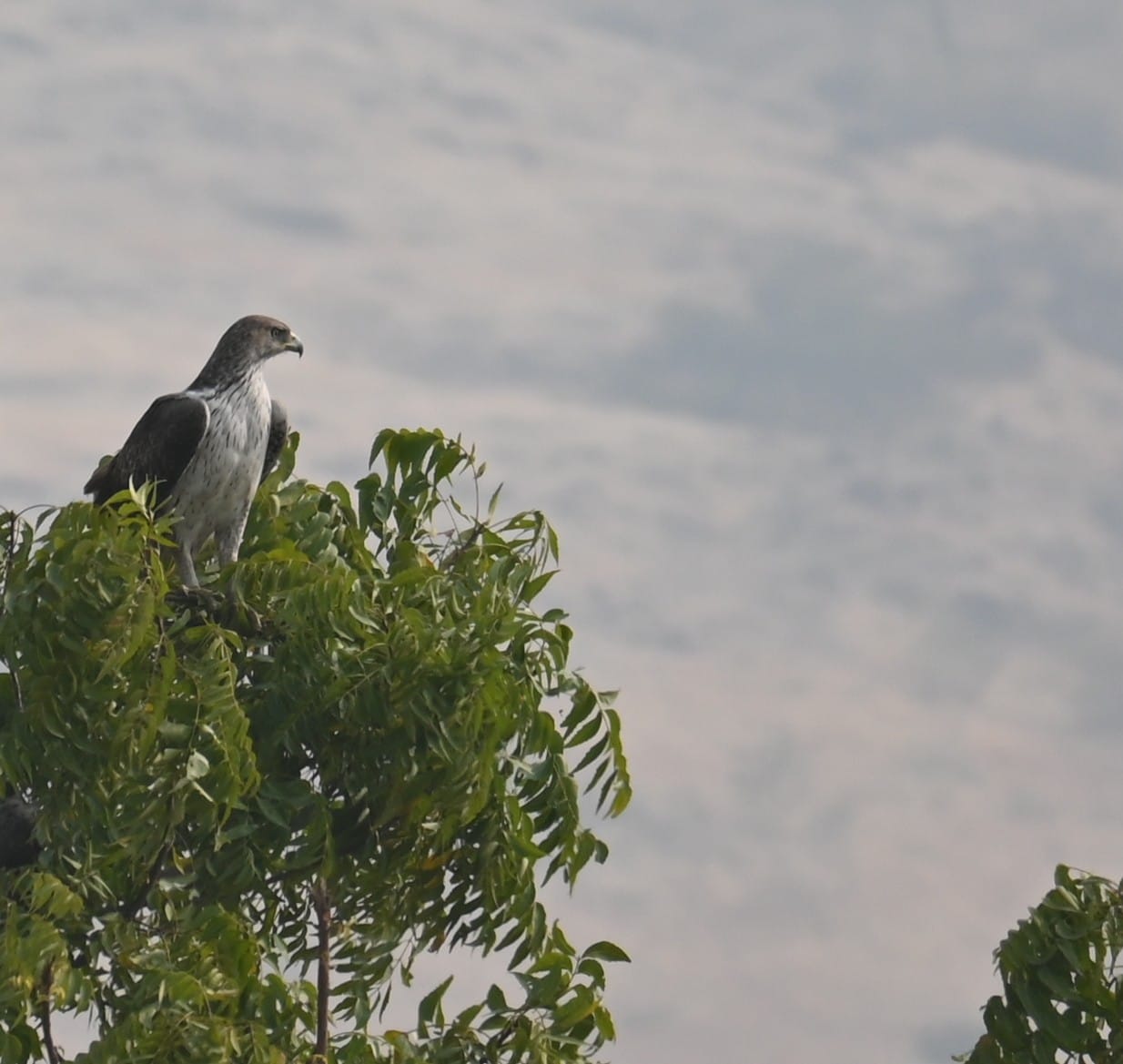
Bonelli’s Eagle
Year-round resident
The Short-toed Snake Eagle is a winter visitor across India — it arrives from Central Asia and Europe to escape the cold, spends its time hunting snakes across our open grasslands, and heads back by April. The Bonelli’s Eagle lives here all year as a permanent resident — faster, more powerful, and built for chasing birds and rabbits rather than waiting patiently for a reptile to show itself. Same sky. Very different lives.
The head — your single best clue
Snake Eagle
Huge round head, golden owl-like stare
Bonelli’s Eagle
Neat, sharp, streamlined head
Go back to the hero shot at the top and look at the two heads — the difference hits you immediately. The Short-toed Snake Eagle has a ridiculously large, round head. It looks like someone placed an owl’s head on an eagle’s body. The eyes are huge, bright golden-yellow, and face almost forward like an owl’s. When this bird sits on a branch, that head turns slowly and deliberately, reading every inch of ground below.
Bonelli’s Eagle carries its head the way a proper eagle should — sharp, neat, proportionate. Nothing owl-like about it at all. This single feature alone is enough to separate them at a distance. Spot the big round head and oversized golden eyes — you have your Snake Eagle.
What you see when it flies over
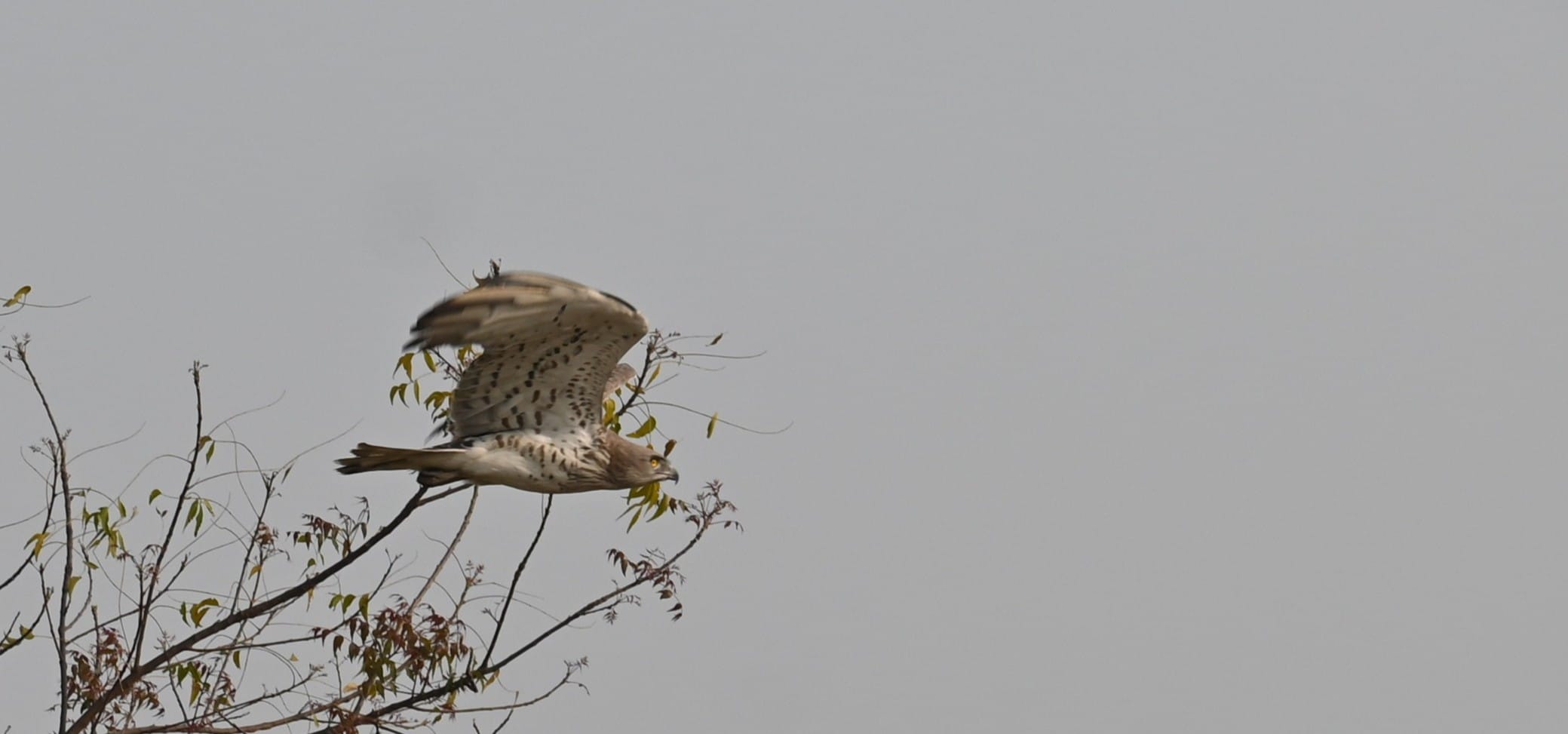
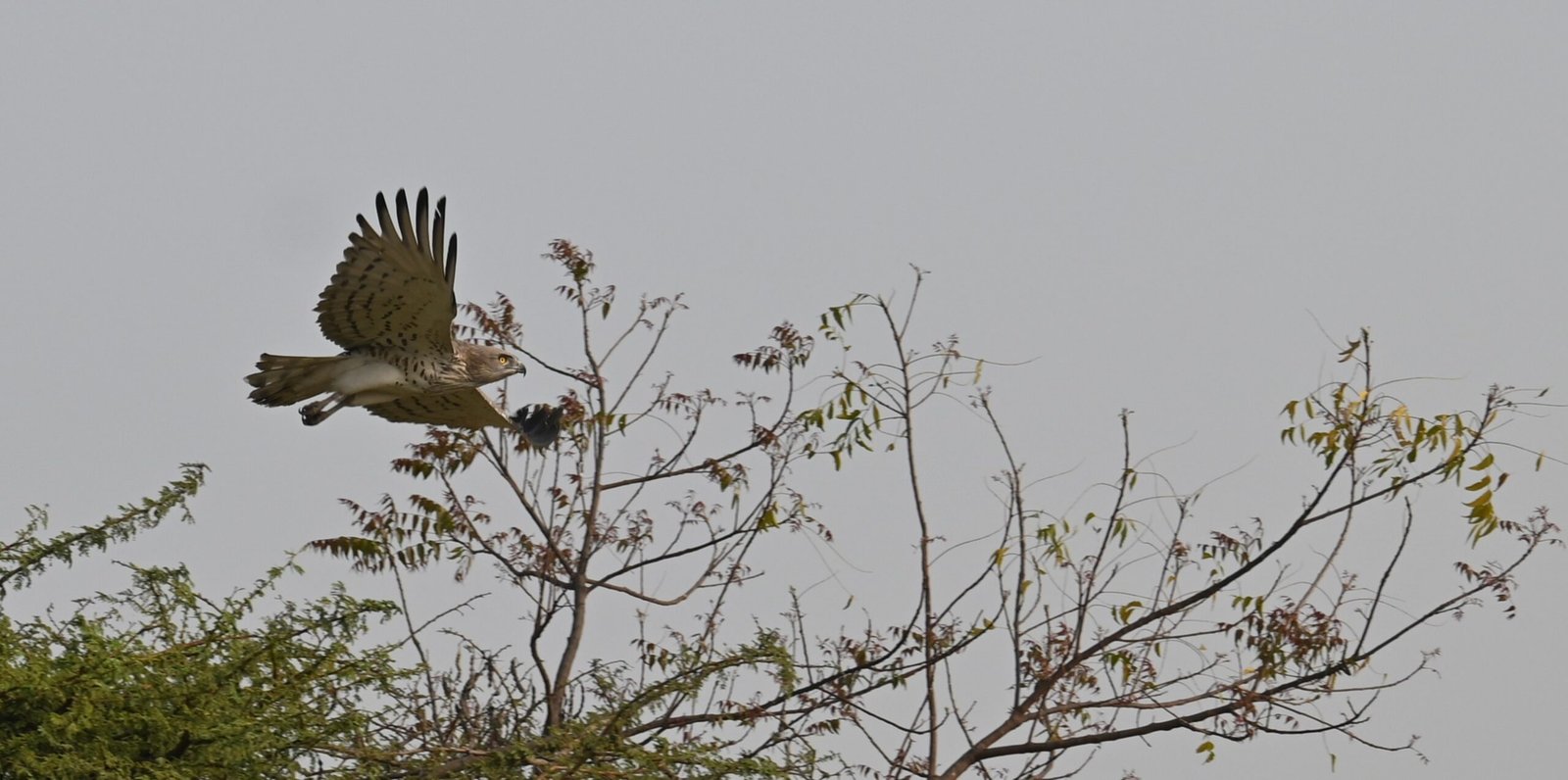
Snake Eagle
Dark bib on chest, clean white belly below
Bonelli’s Eagle
Streaked all over, bold dark wing linings
When an eagle passes directly overhead, the underside is what you see. Look at both photos together — the difference is obvious when they are side by side.
The Snake Eagle wears a dark brown chest like a bib, with a clean white belly below it. Two neat zones, easy to read even at distance. Bonelli’s Eagle is quite different — dark streaks spread all over the underside, and the wing linings are almost black in adults, creating a bold, dramatic contrast against the paler flight feathers. That dark underwing on Bonelli’s is one of its most reliable field marks. Once you have seen it, you will not forget it.
The tail — stripes vs plain
The tail is a quick check when the bird is soaring above you. The Snake Eagle’s tail has three or four clear dark bars crossing it — striped like a zebra pattern — visible even from below in good light. Bonelli’s Eagle has a longer, plainer tail, mostly grey with a broad dark band right at the tip. Less striped, more like a clean dark edge on an otherwise pale tail.
The one behaviour that settles it every time
This is the trump card. If the eagle stops mid-air and just hangs there — hovering in one spot the way a kestrel does — it is the Short-toed Snake Eagle. Every single time. No question.
The Snake Eagle hunts by hovering high above open ground, staring down, waiting for a snake to move. It can hold that position for a surprisingly long time. It is one of the most striking things to watch in the field — a large eagle hanging perfectly still in the sky.
Bonelli’s Eagle never hovers. It is a speed hunter — low, fast, using the landscape for cover and surprising its prey. If the eagle you are watching is making fast low passes or actively chasing something, that is Bonelli’s.
Where and when to find them around Bhigwan
Both birds turn up around the Bhigwan reservoir and the Kadbanwadi grasslands between October and March. The Snake Eagle is a winter visitor — it arrives with the cold weather and leaves by April. Bonelli’s Eagle is here all year, so if you visit in summer the Snake Eagle will be gone but Bonelli’s will still be around.
The Snake Eagle works the open grassland, soaring and hovering over scrub where snakes bask in the afternoon sun. Bonelli’s prefers the rougher, drier ground and rocky edges where there are rabbits and pigeons worth chasing.
For a full guide to planning your Bhigwan birding visit — best seasons, access points, and everything else you might see — take a look at the complete Bhigwan Bird Sanctuary guide on TravelOnTales.
Three things to check in the field
If you are out there and need a fast answer, run through these three in order.
Is it hovering? Yes — Snake Eagle. Done.
Does the head look round and owl-like with big golden eyes? Yes — Snake Eagle. Almost certainly.
Are the underwings dark with pale flight feathers? Yes — Bonelli’s Eagle.
Two out of three pointing the same way and you have a confident identification. That is all it takes.
From the field
That photograph at the top of this article — both birds on the same trees, just metres apart — was one of those moments you cannot plan for. I had my Nikon Z50 up, tracking the Bonelli’s on the left when I noticed the second bird settle quietly on the right. For a second I just stared. Then I shot.
Two completely different personalities sharing the same patch of sky at Bhigwan. The Bonelli’s all lean angles and quiet power, scanning the scrub below. The Snake Eagle round-headed and golden-eyed, staring straight back at me as if it was the one doing the identifying.
Once you have seen them like this, together in the same frame, you will never confuse them again.