
Monsoon Birding in Sindhudurg
24 species, 59 photographs — kingfishers, owls, bee-eaters and more from the Western Ghats
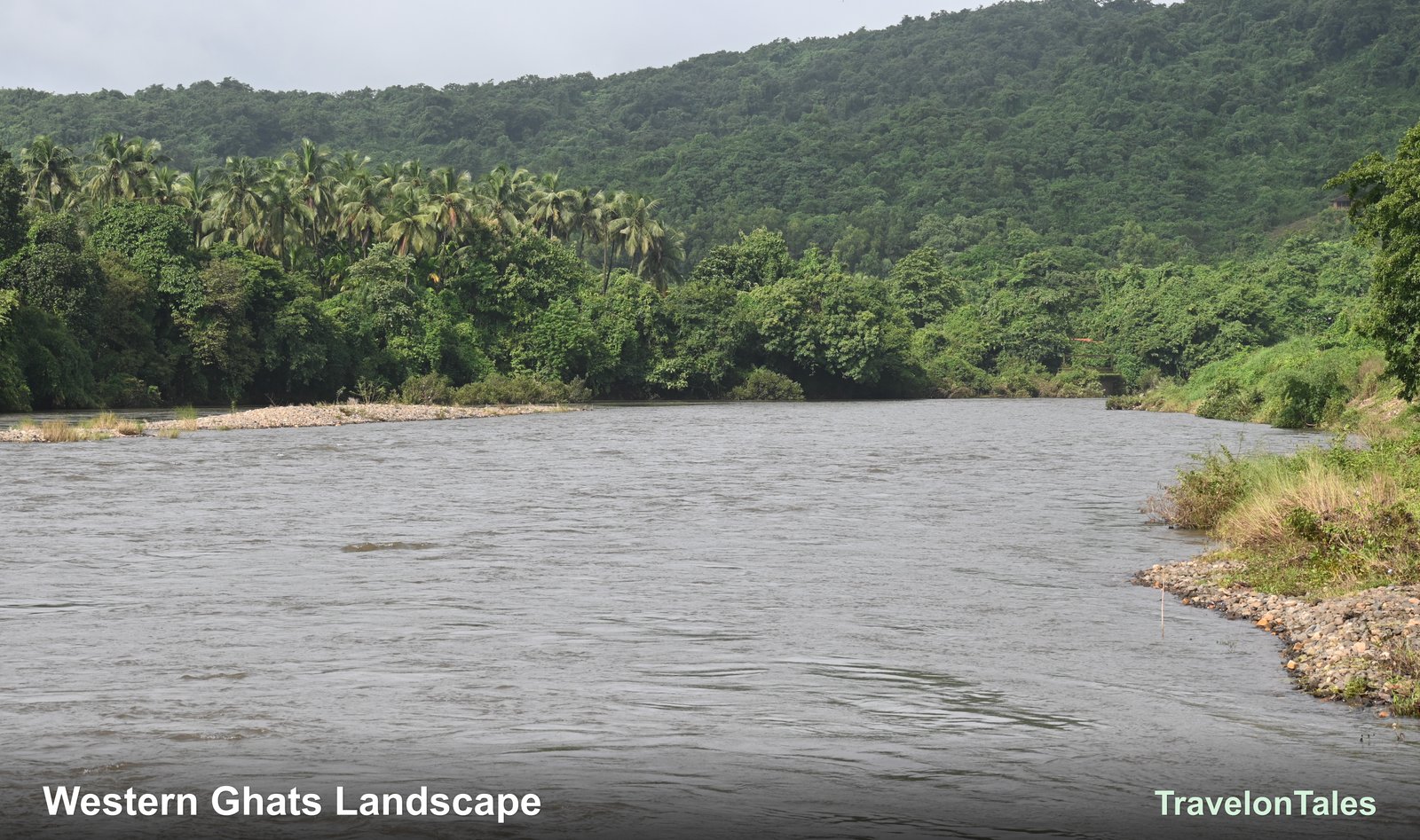
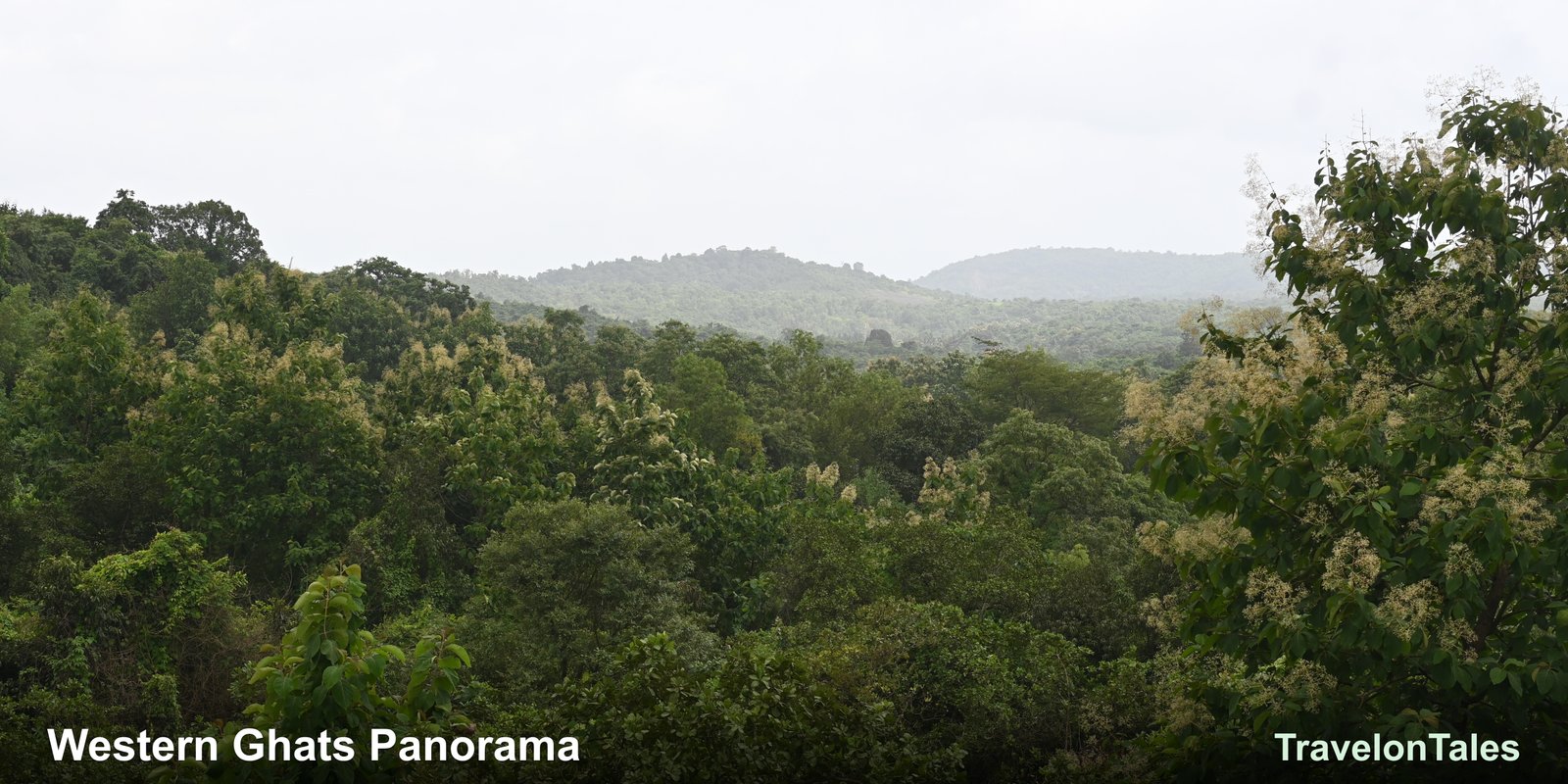
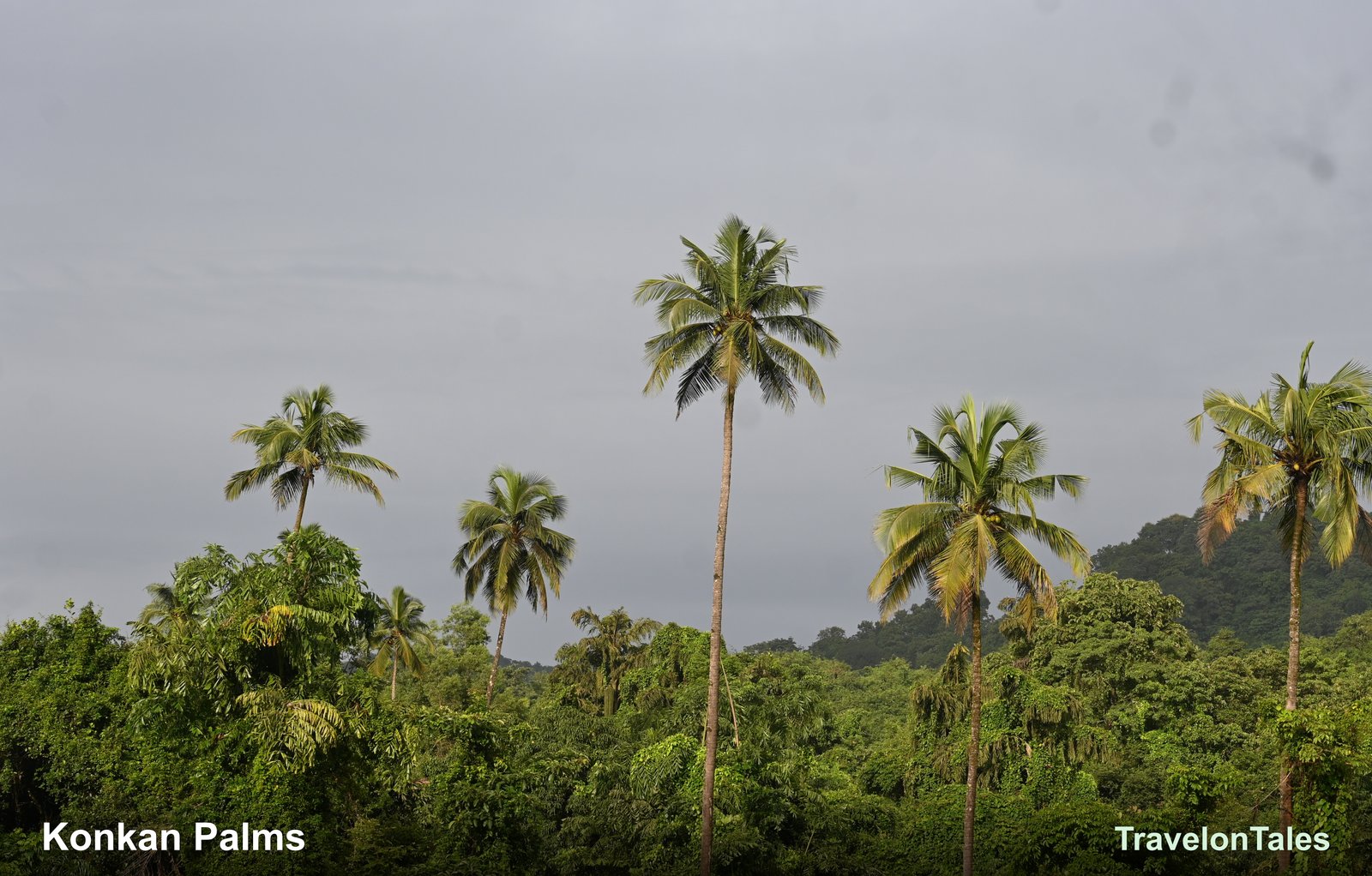
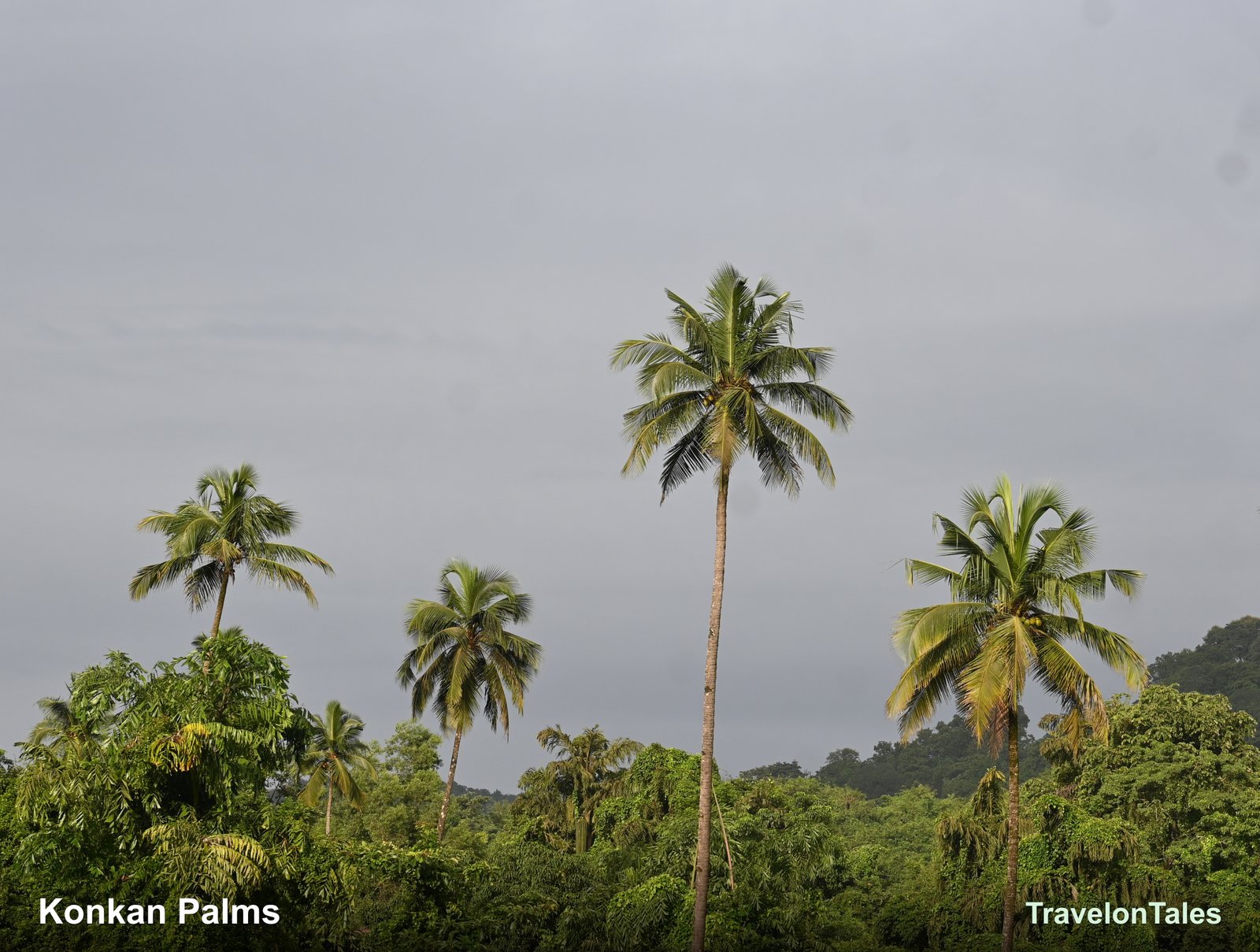
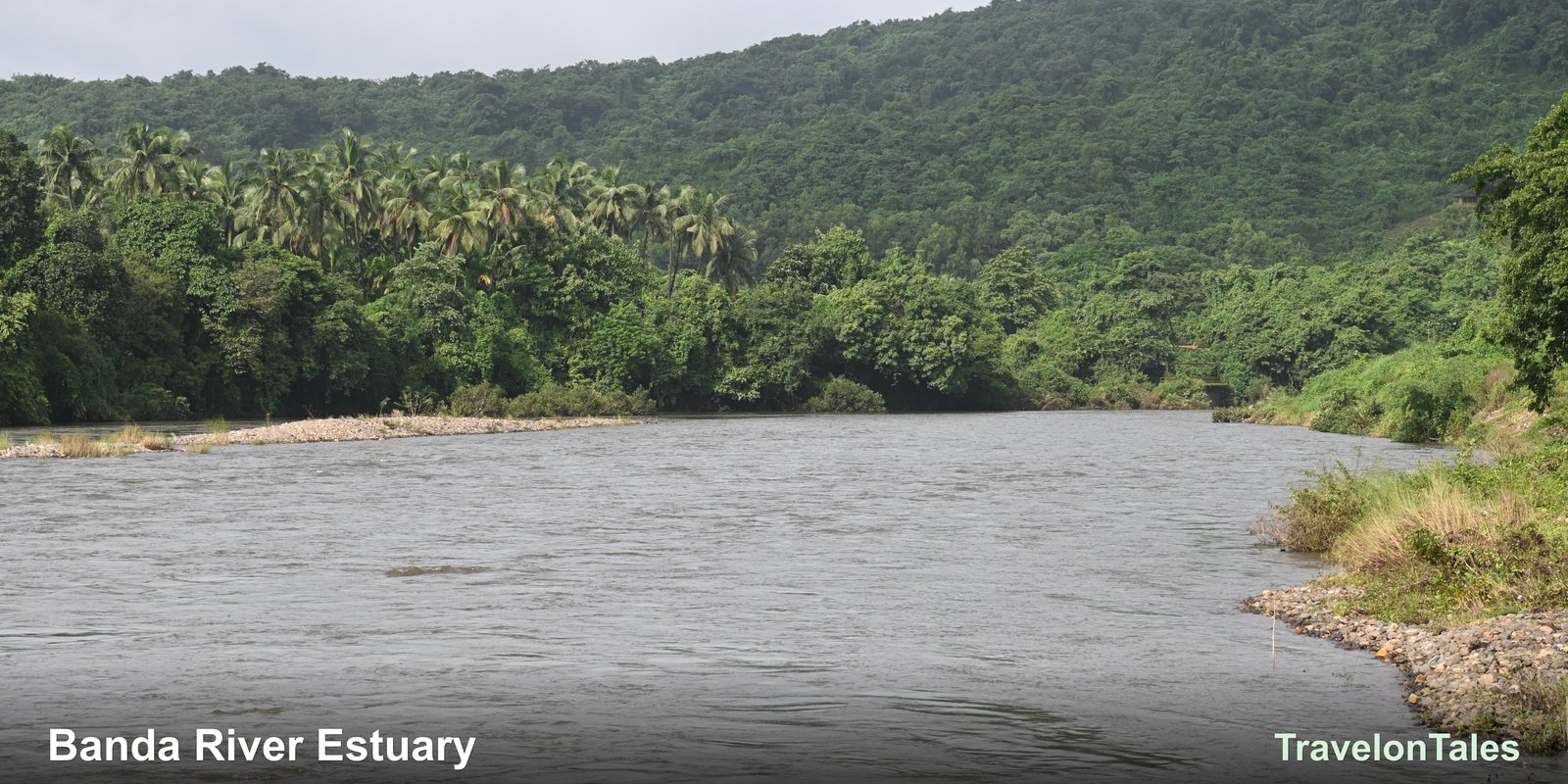
Sindhudurg district in southern Maharashtra sits where the Western Ghats meet the Konkan coast. During the monsoon, this quiet region becomes one of the best birding destinations in India. Rivers fill up, the forest turns deep green, and seasonal visitors like the Oriental Dwarf Kingfisher and Indian Pitta arrive to breed.
We spent two days birding around the Vanoshi area, guided by the team at Wildagram Wildlife Expeditions. This article covers every species we photographed, with field notes and identification tips. If you are planning a monsoon birding trip to the Western Ghats, this is what you can expect.
The Setting — Vanoshi and Surrounds
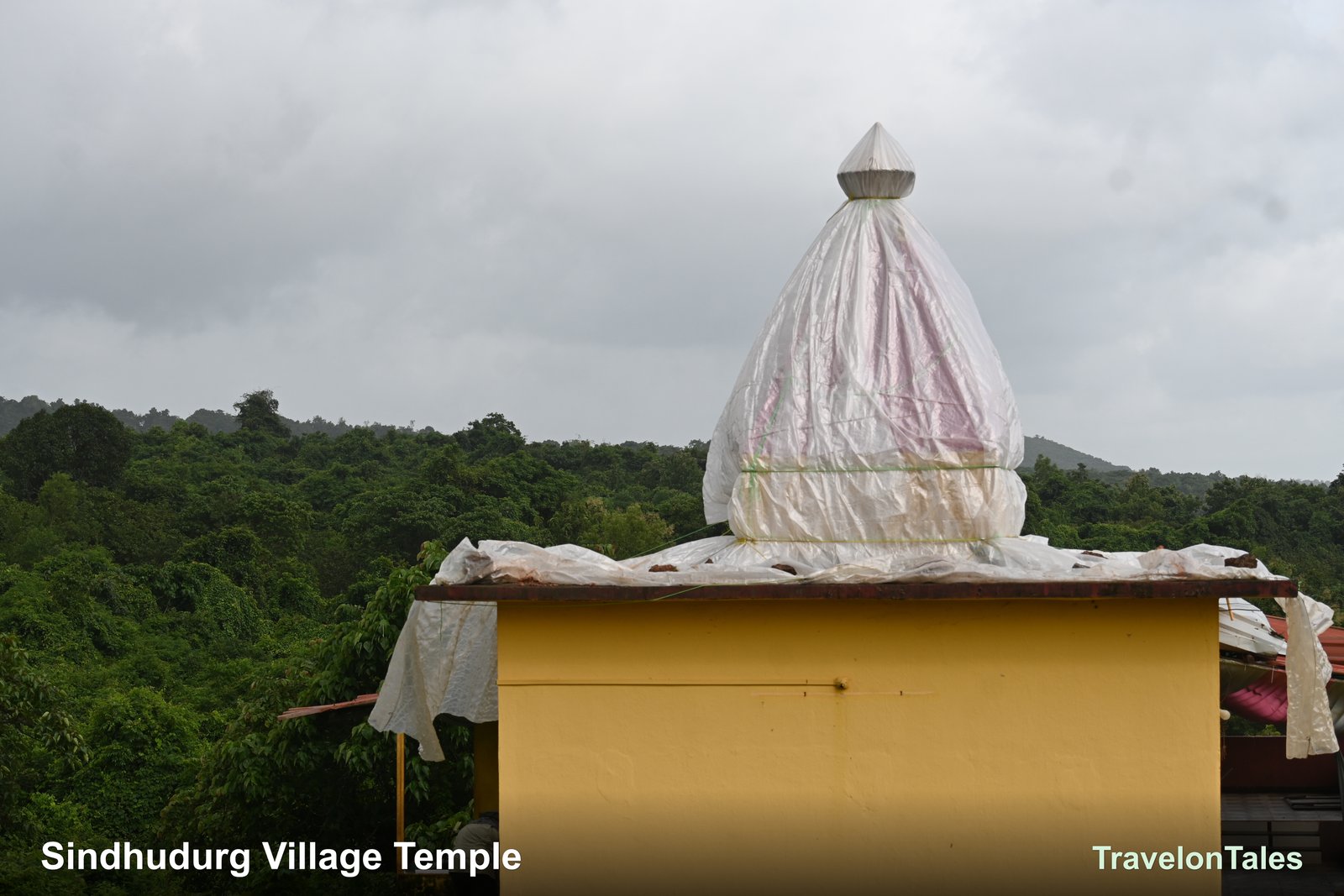
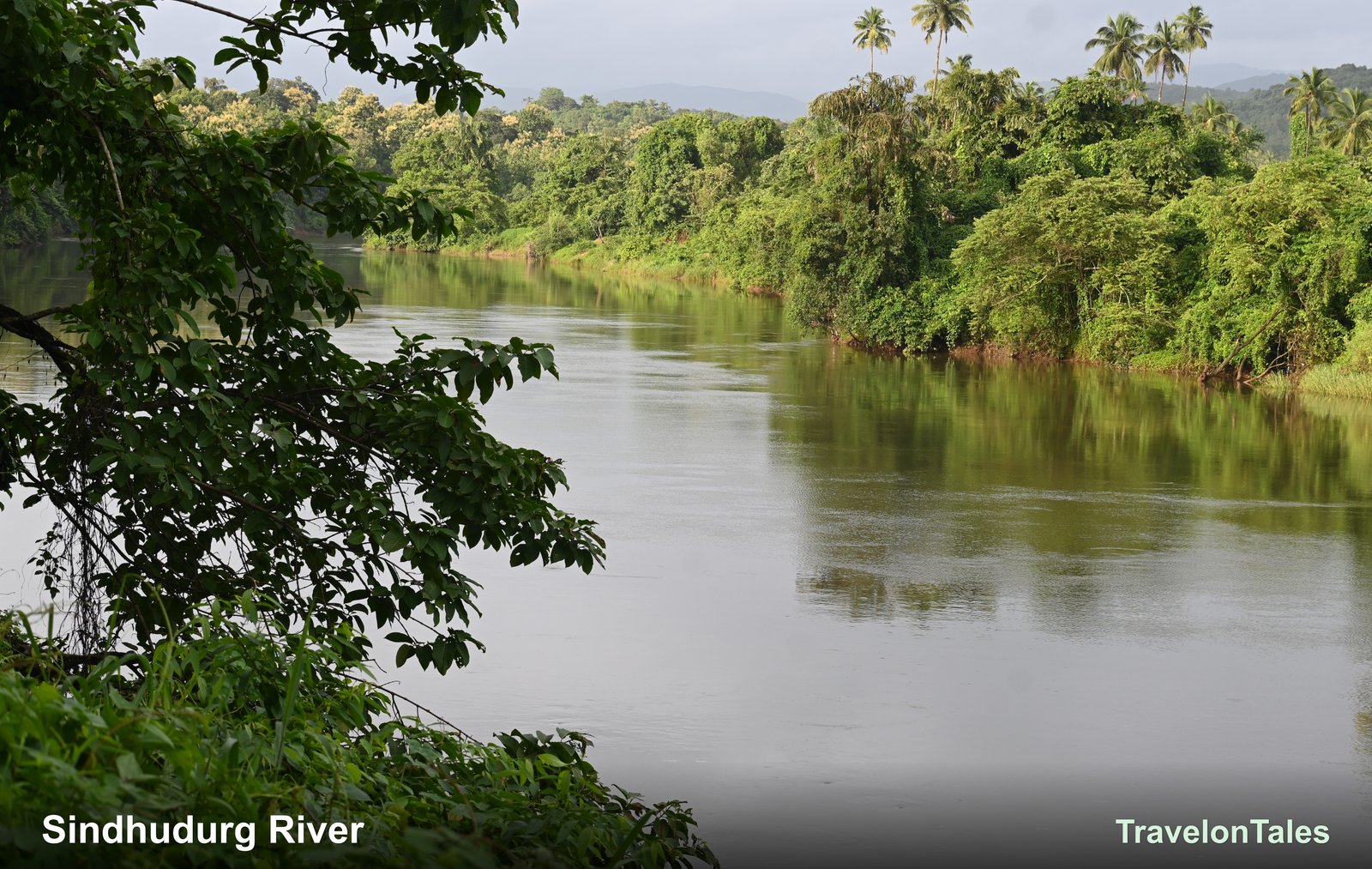
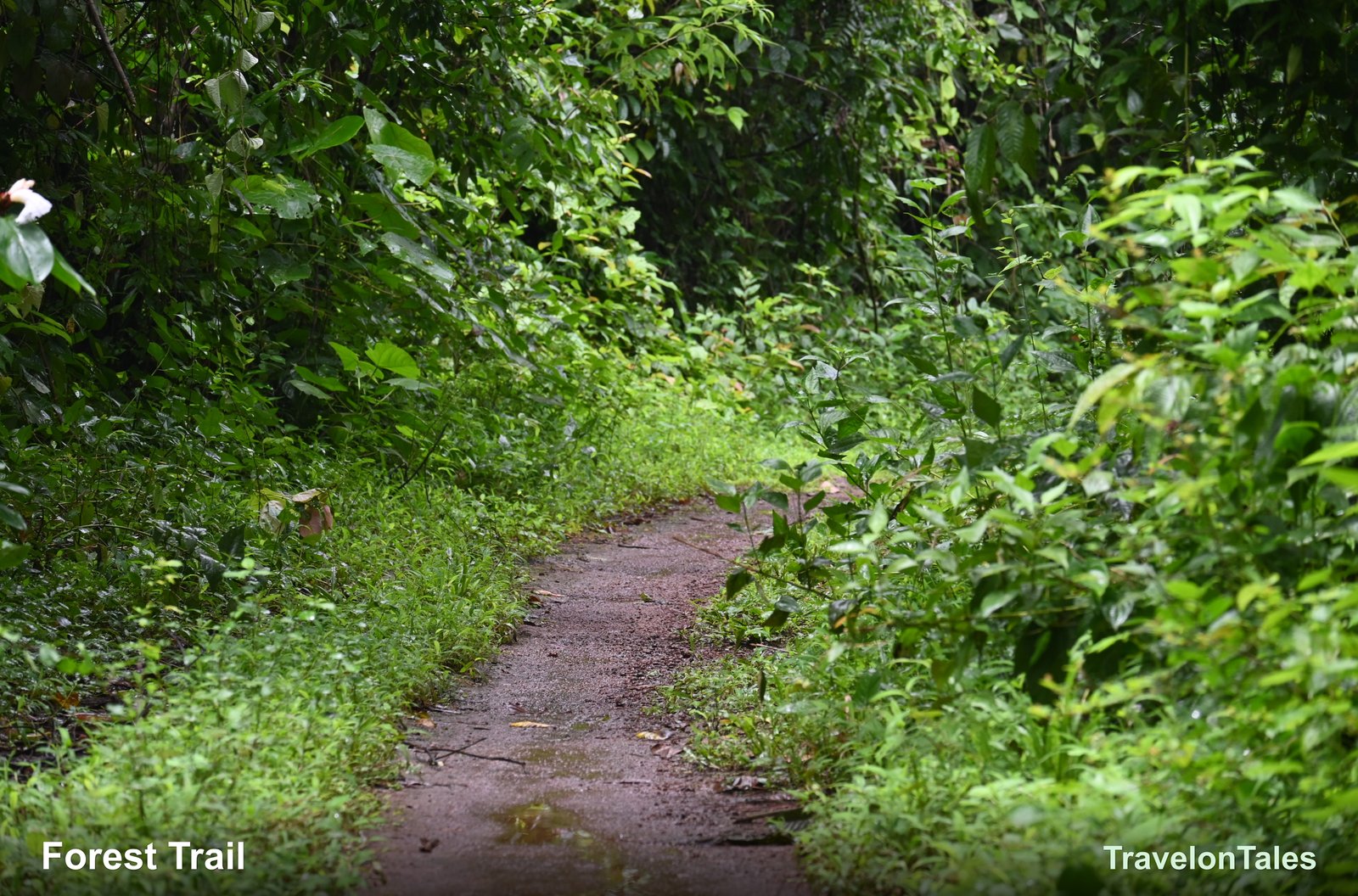
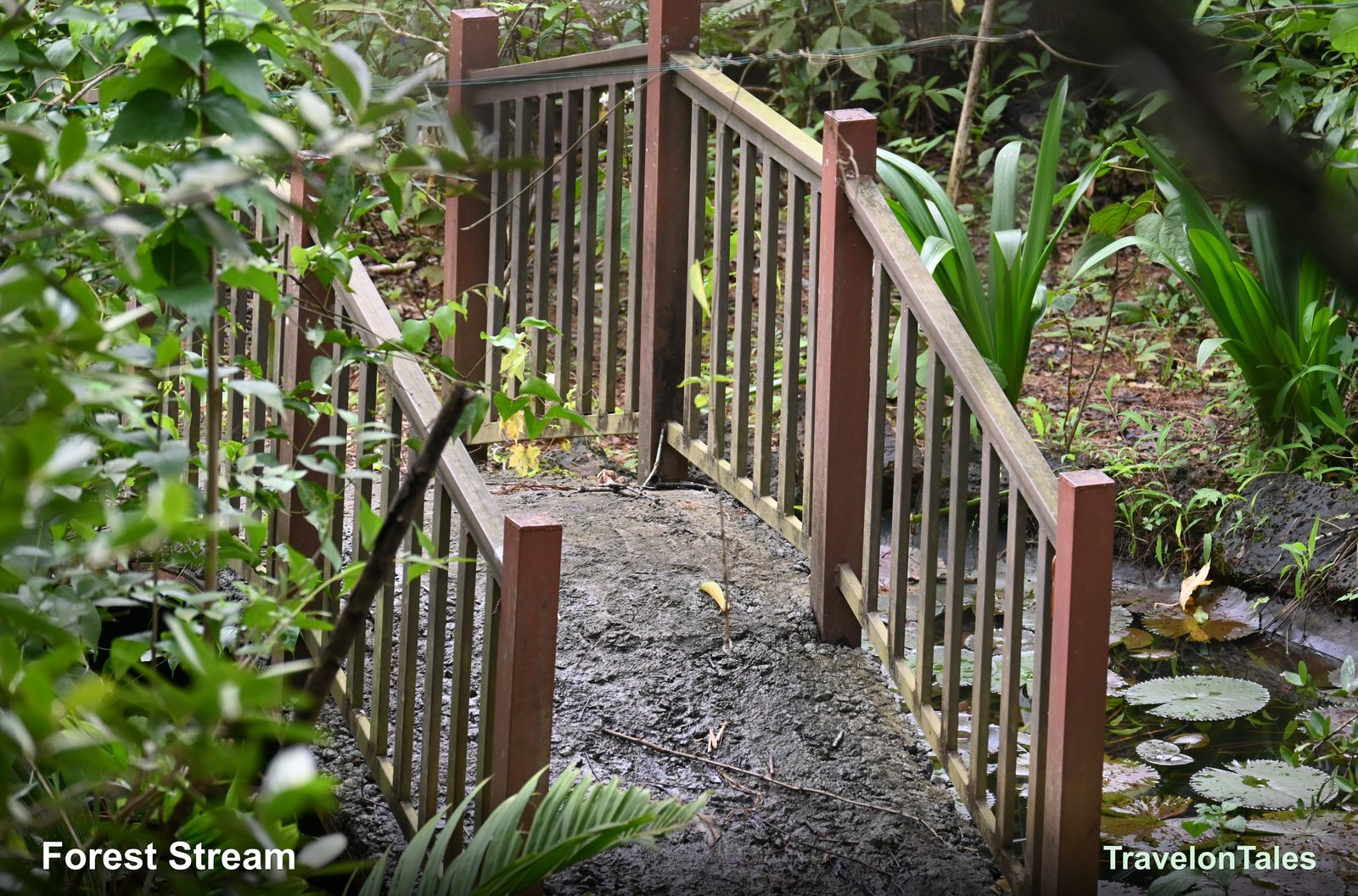
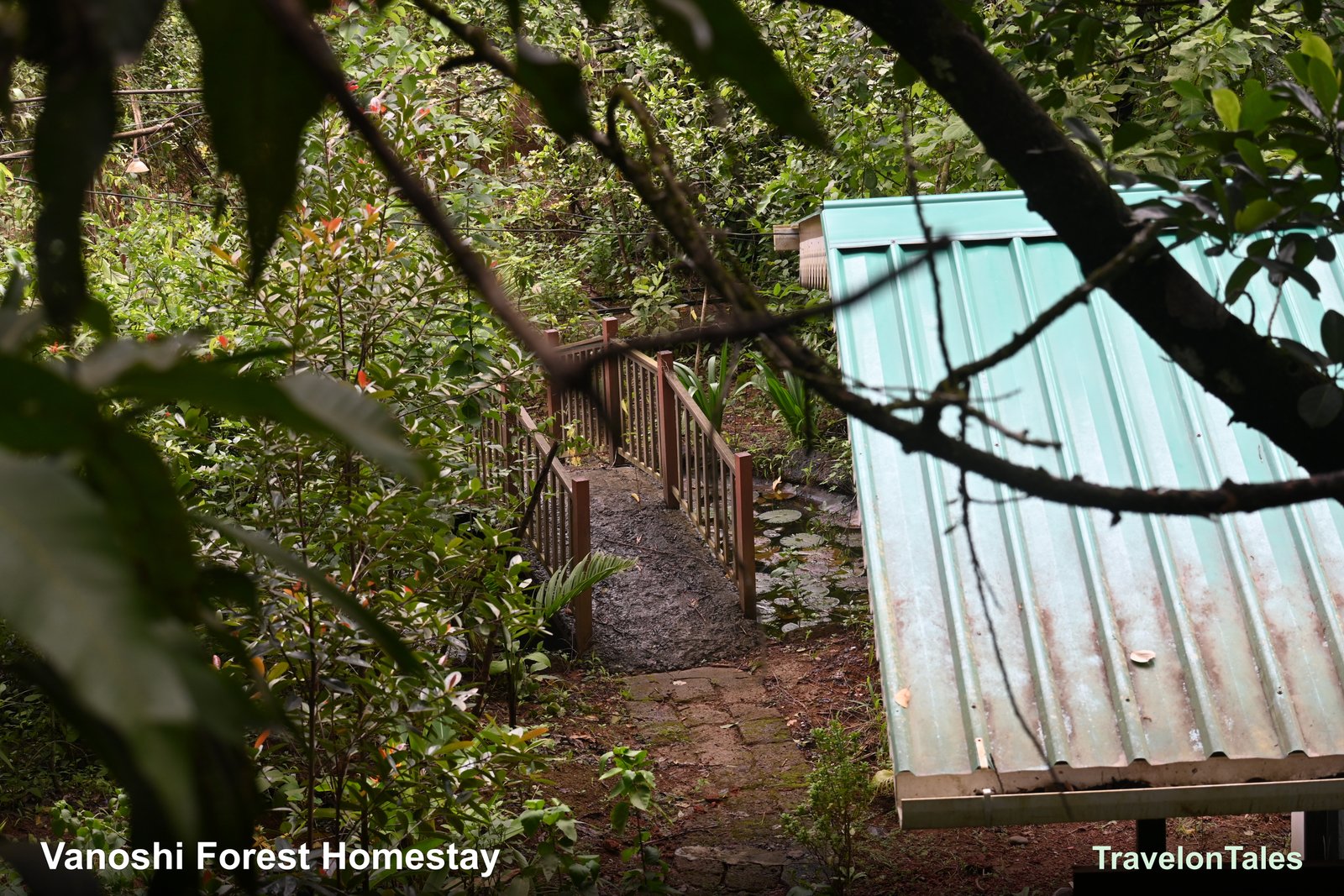
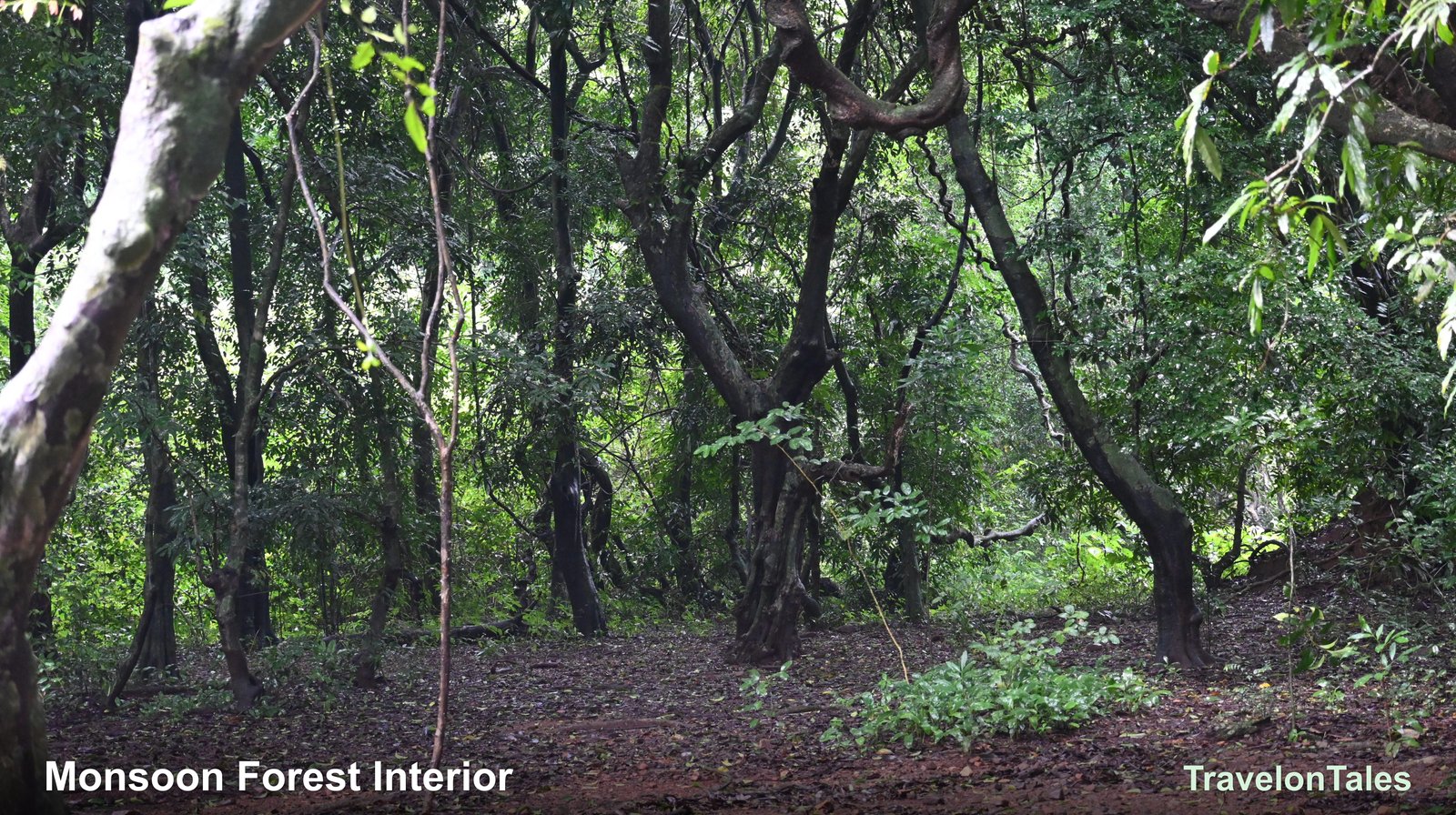
Before the first bird sighting, Sindhudurg sets the mood. Temple spires wrapped in plastic against the monsoon rain, hand-painted homestay signs hidden in the forest, laterite pathways through thick vegetation, and wooden bridges over lily ponds. This is birding in the Konkan.
We stayed at the Vanoshi Forest Homestay, which sits right at the edge of prime birding habitat. Morning and evening walks along forest trails and stream crossings produced most of our sightings.


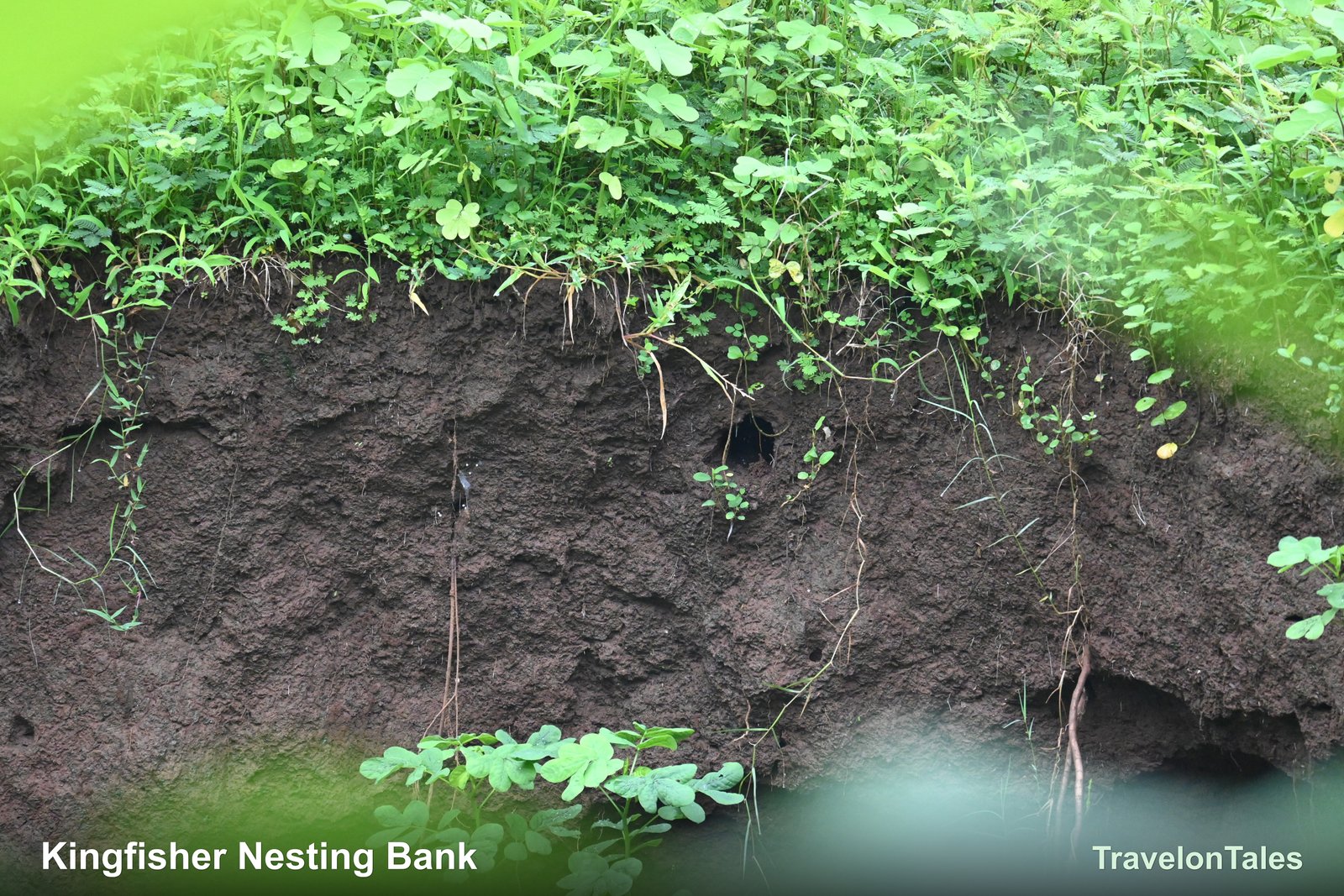
Kingfisher Nesting Holes
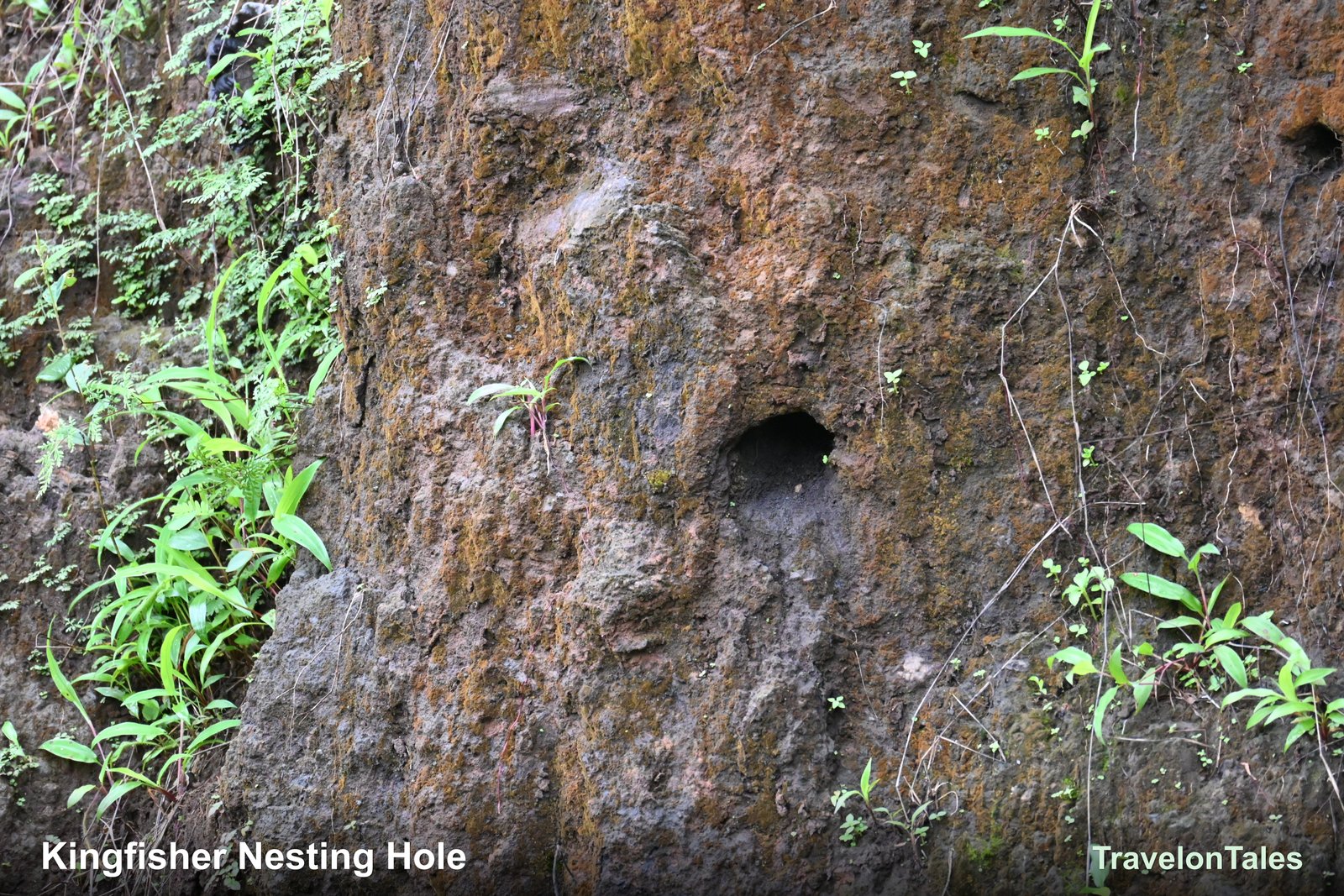
The Oriental Dwarf Kingfisher digs a horizontal tunnel into an earth bank or laterite cliff near a forest stream. The tunnel runs about a metre deep and ends in a small nesting chamber. These holes are the key to finding the birds — locate a fresh hole near water, wait quietly, and the kingfisher will eventually return.
We found nesting holes in two types of substrate: a soft mud bank along a stream, and a harder laterite rock face. Both had active nests.
Oriental Dwarf Kingfisher
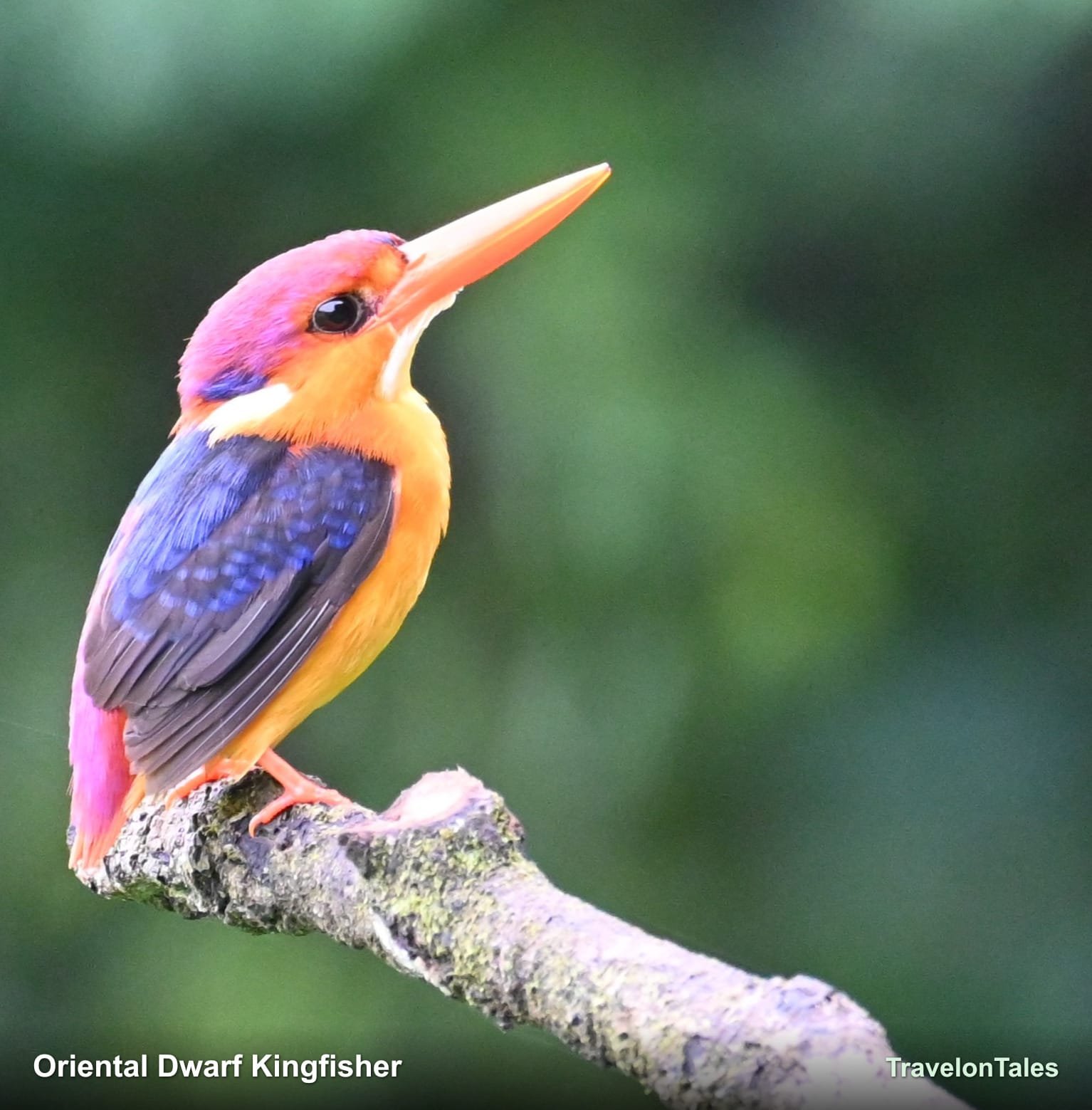
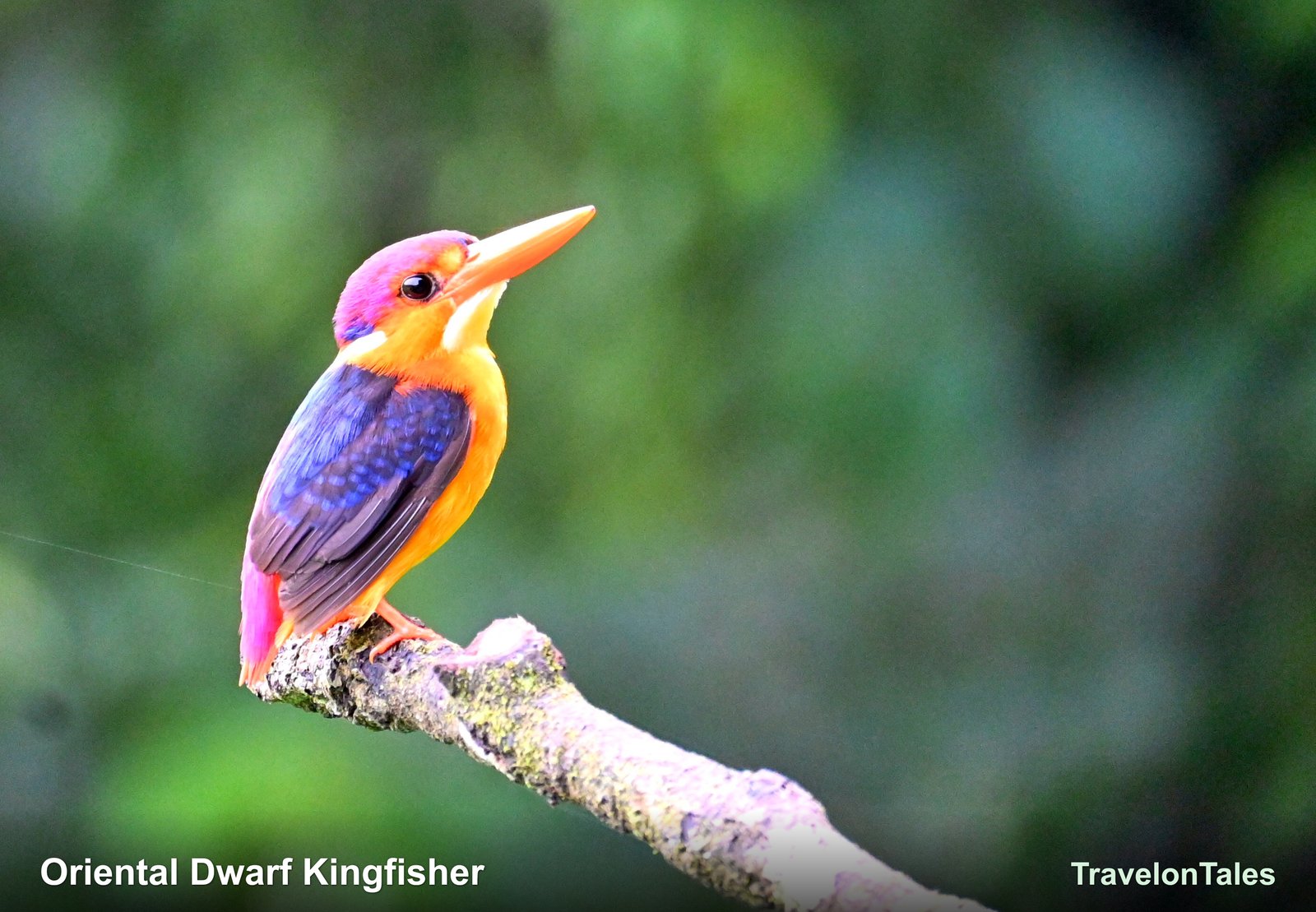
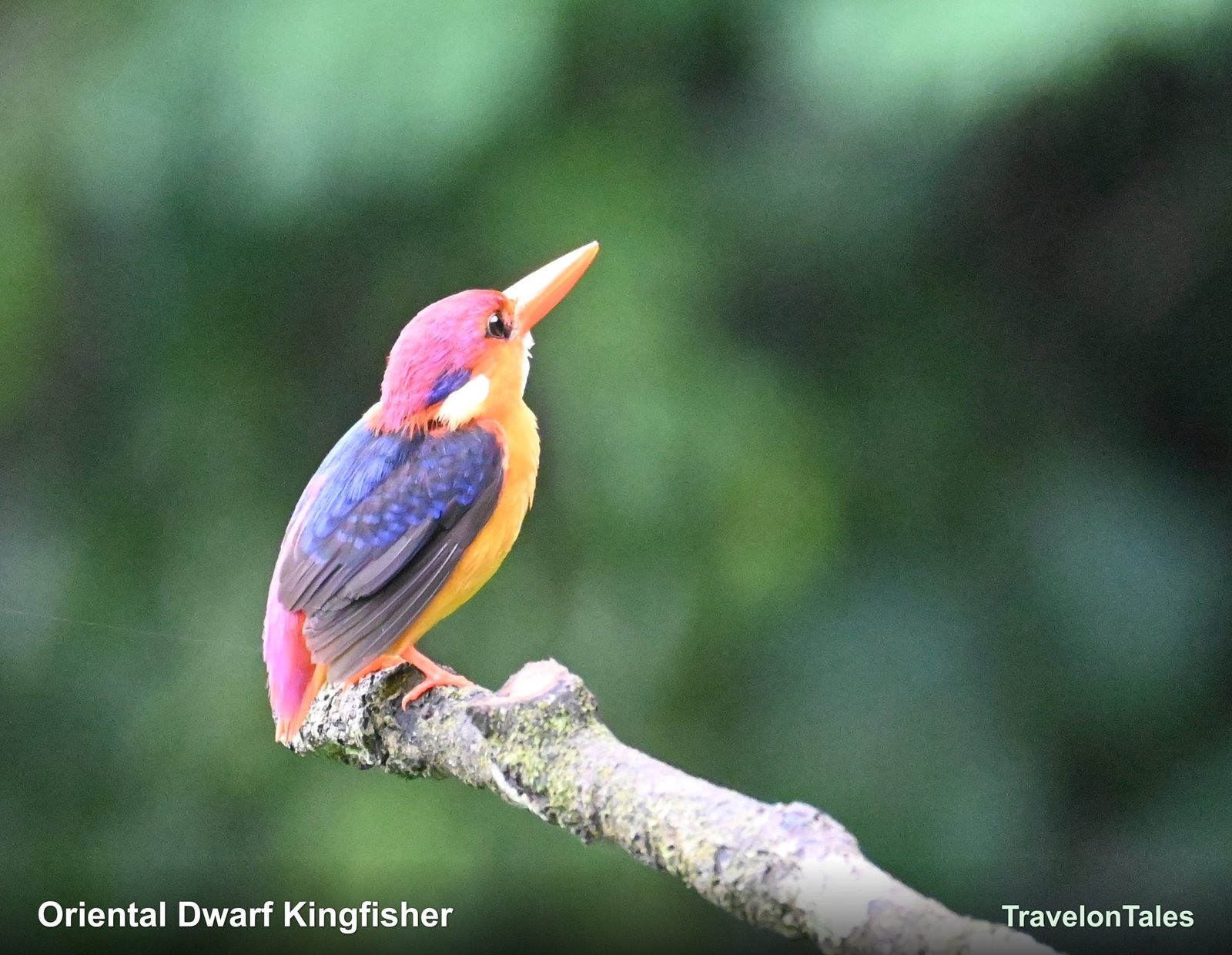
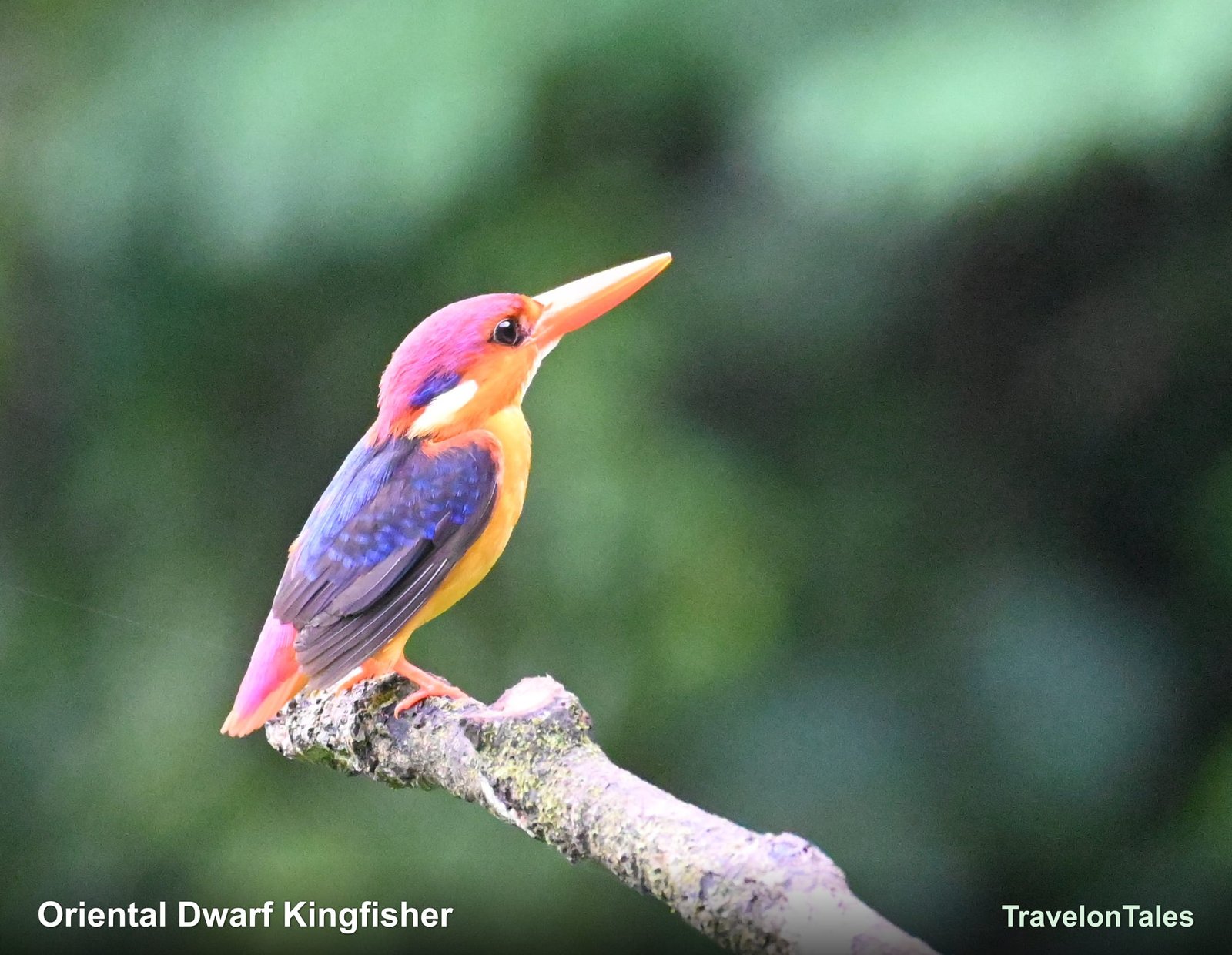
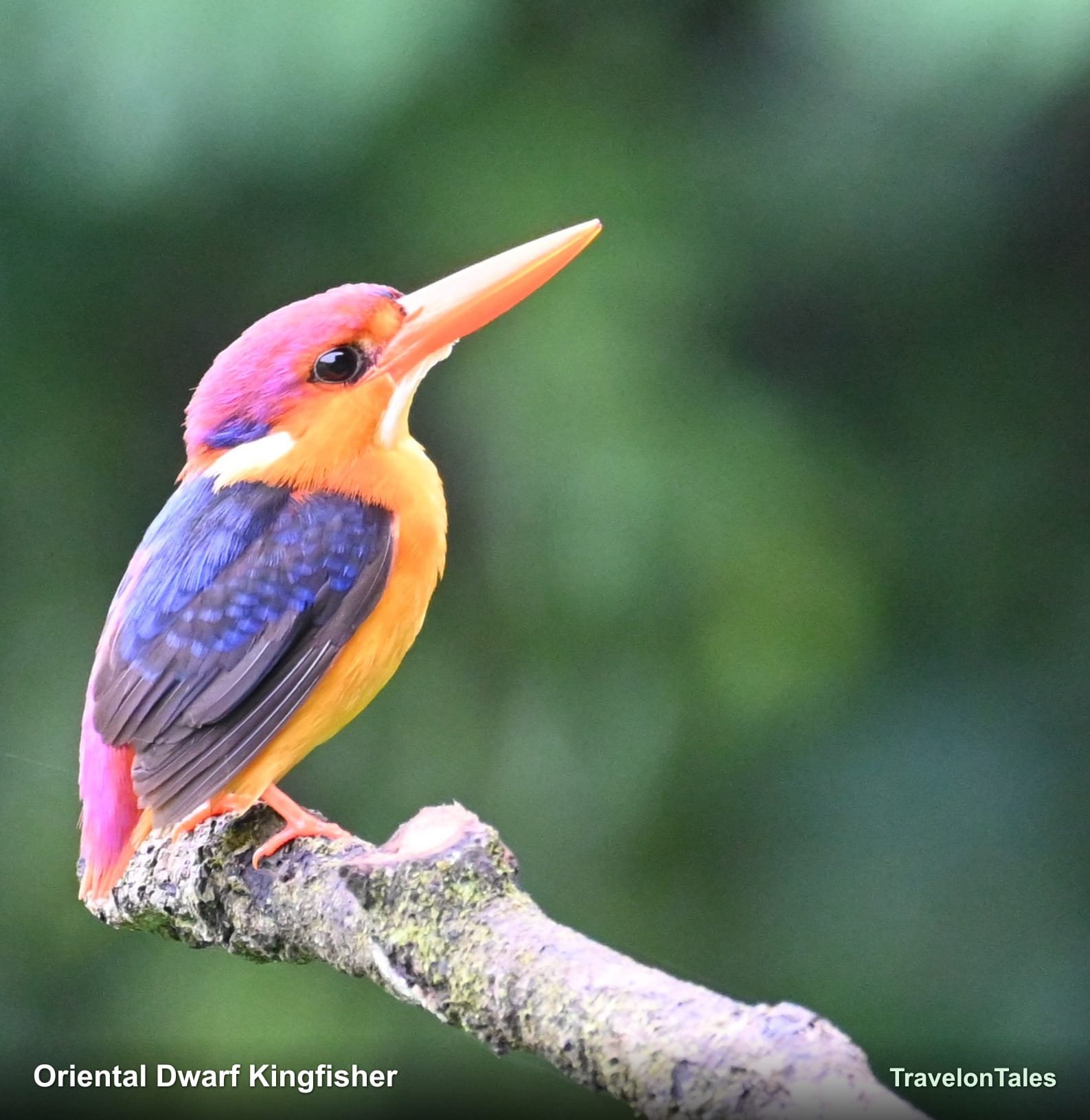
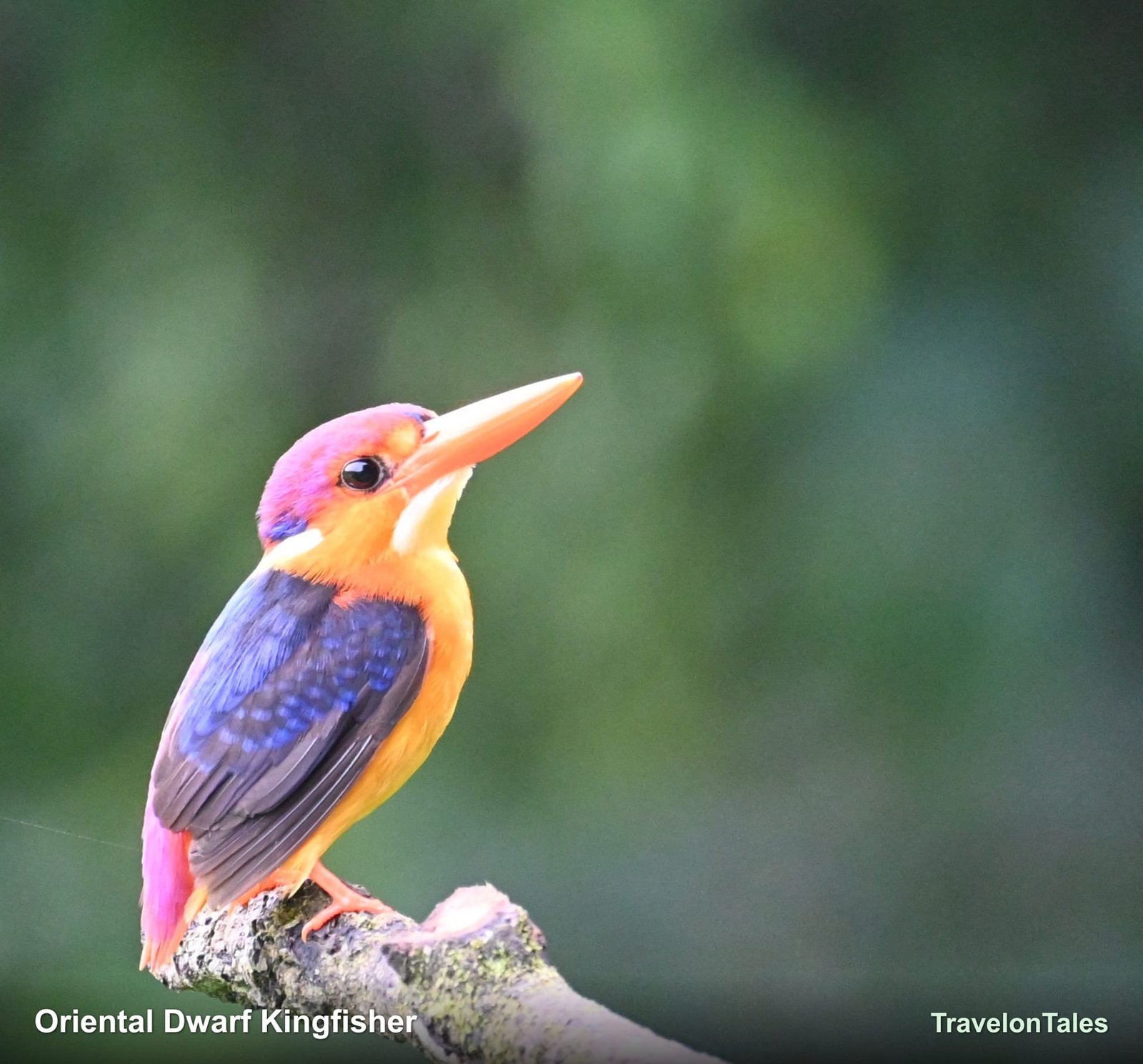
Ceyx erithacaThis is the bird most people come to Sindhudurg for. The Oriental Dwarf Kingfisher is a monsoon breeding visitor to the Western Ghats. It arrives in June, digs a nesting tunnel in a mud bank near a stream, and stays until September. At about 13 cm, it is one of the smallest kingfishers in the world.
We found several individuals along forest streams near their nesting holes. They sit still on low perches, waiting for insects, lizards and small frogs. The rufous-orange body with a lilac-blue cap is unmistakable, though they blend into the dark forest floor surprisingly well.
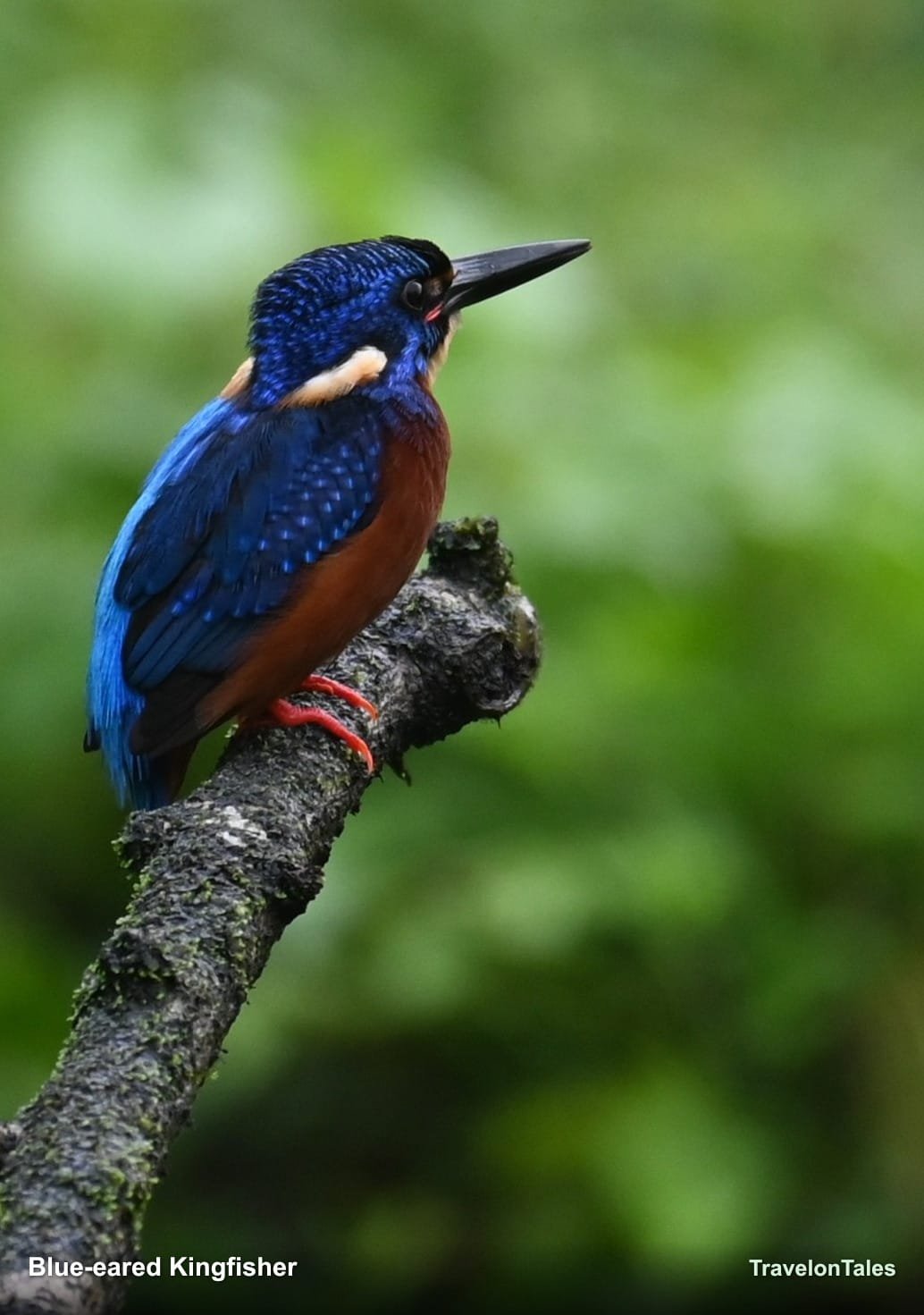
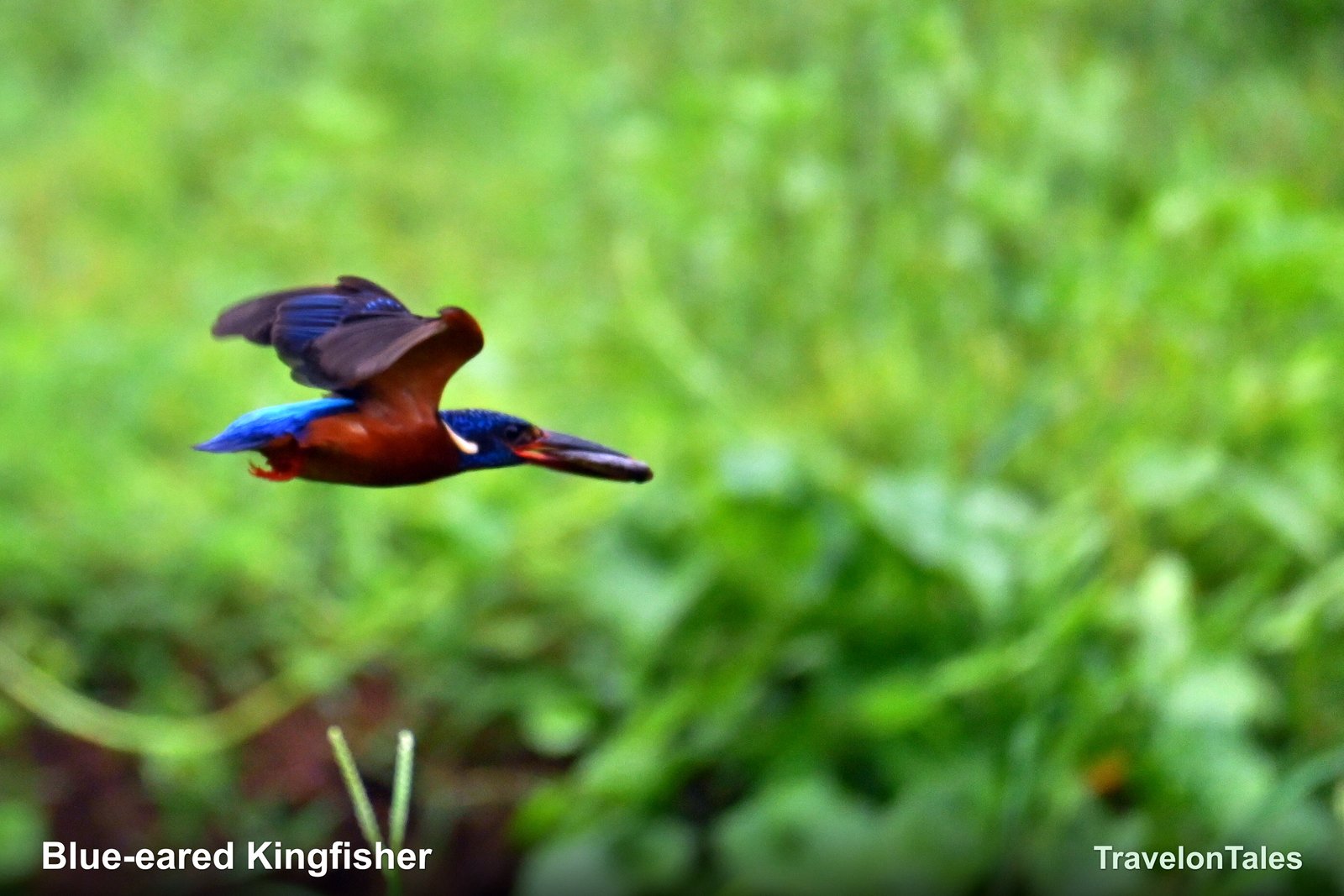
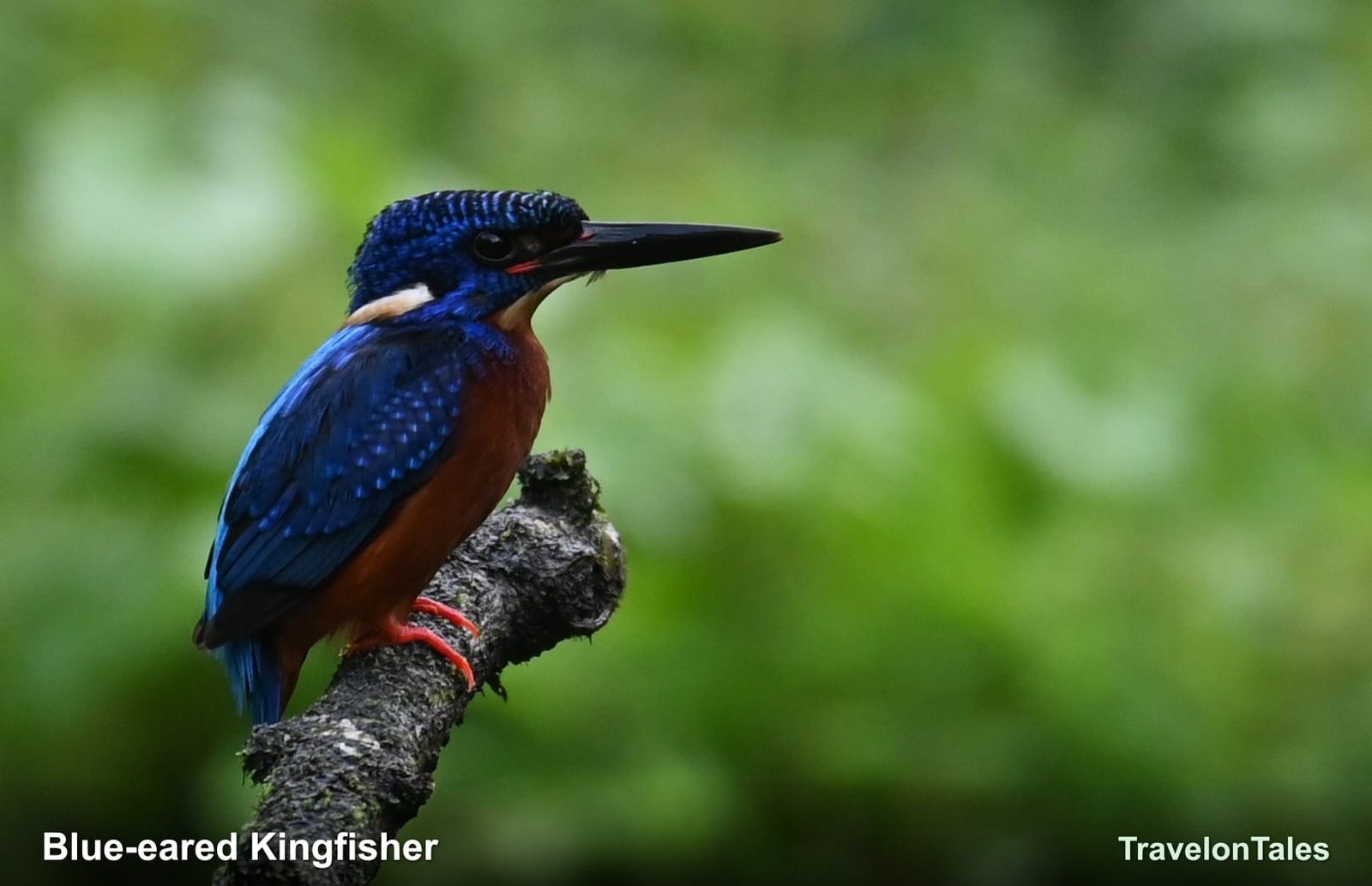
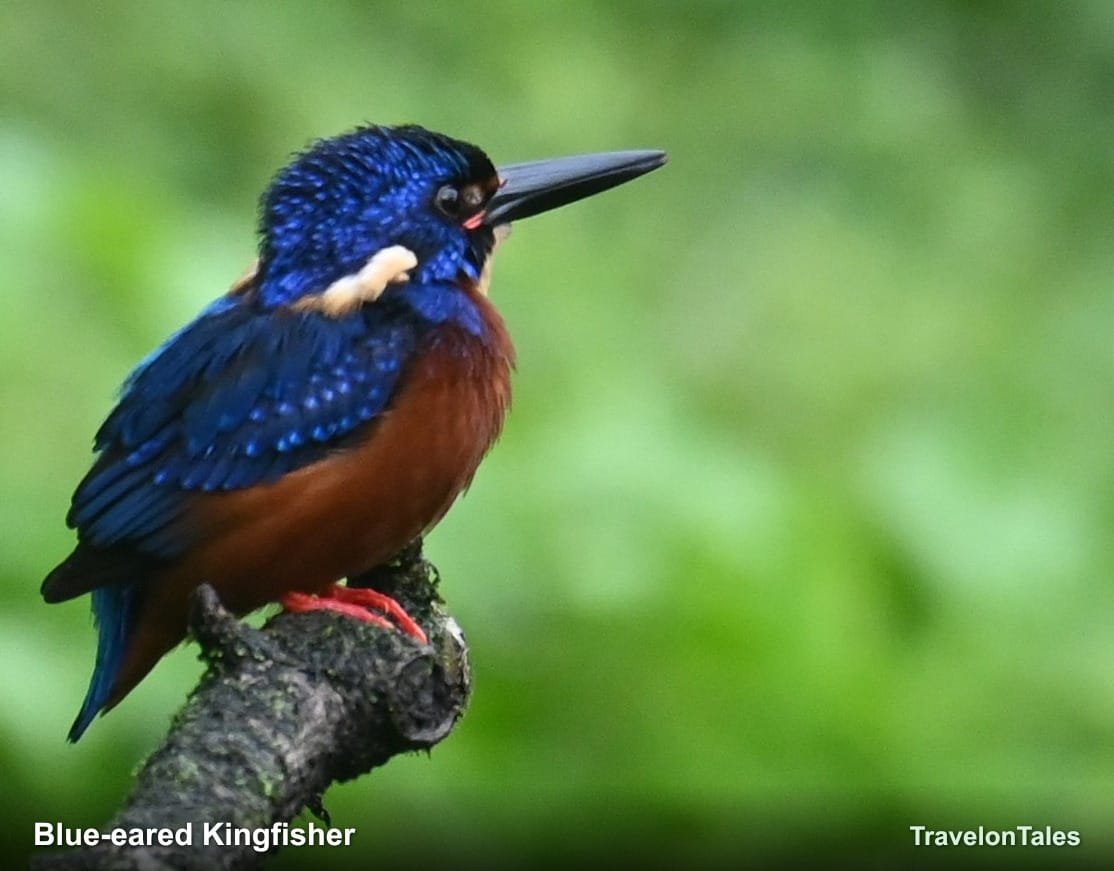
Blue-eared Kingfisher
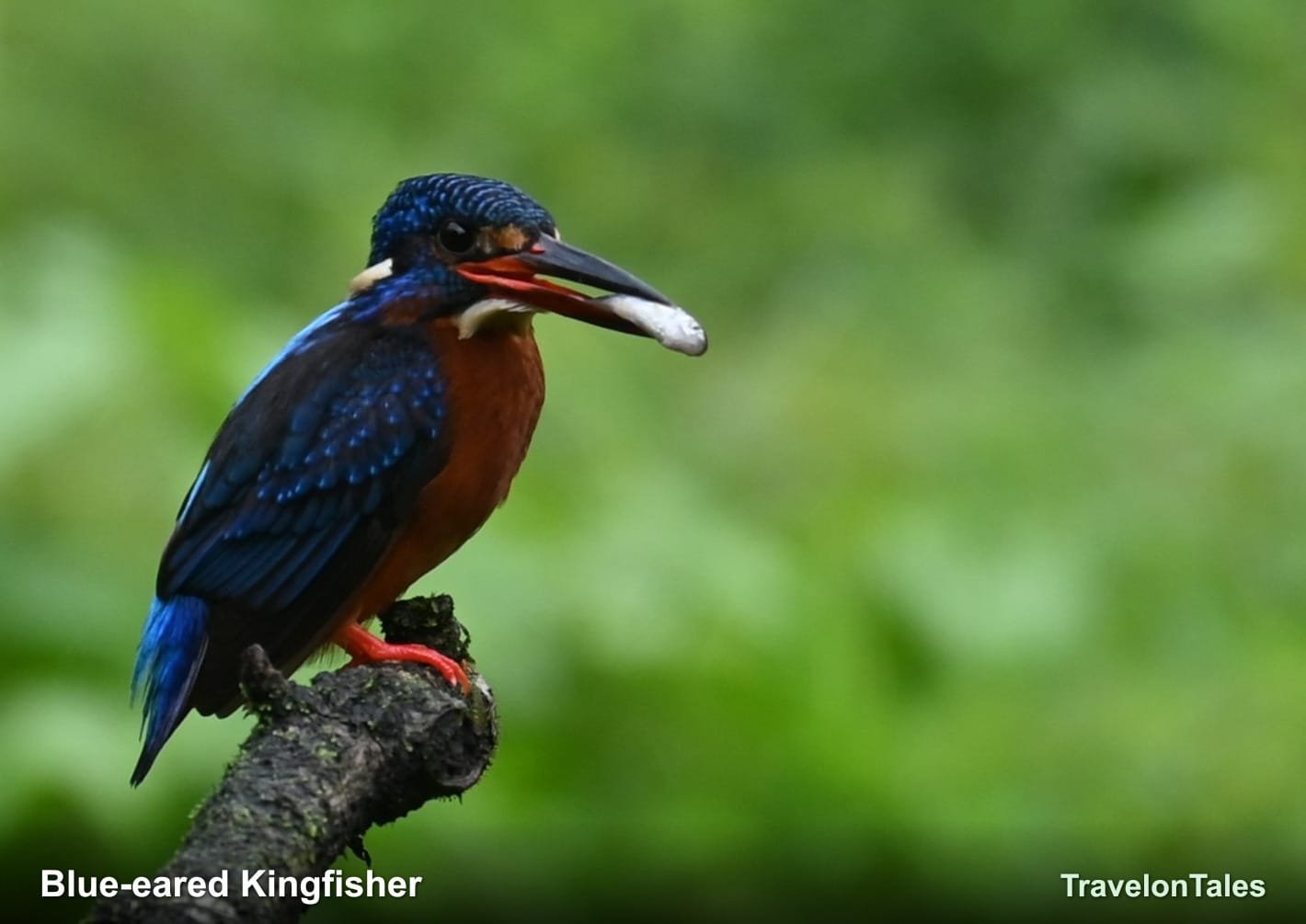
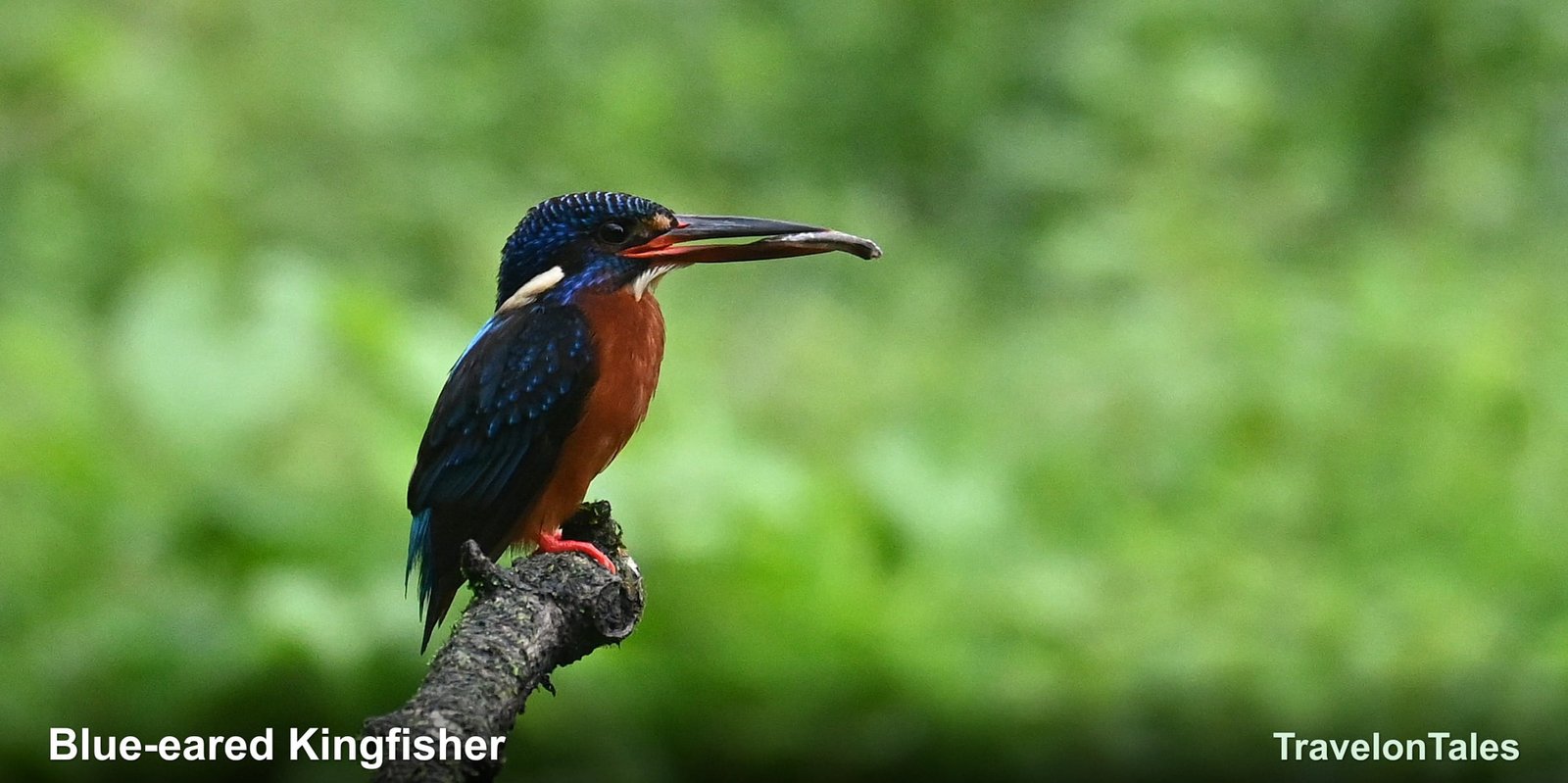
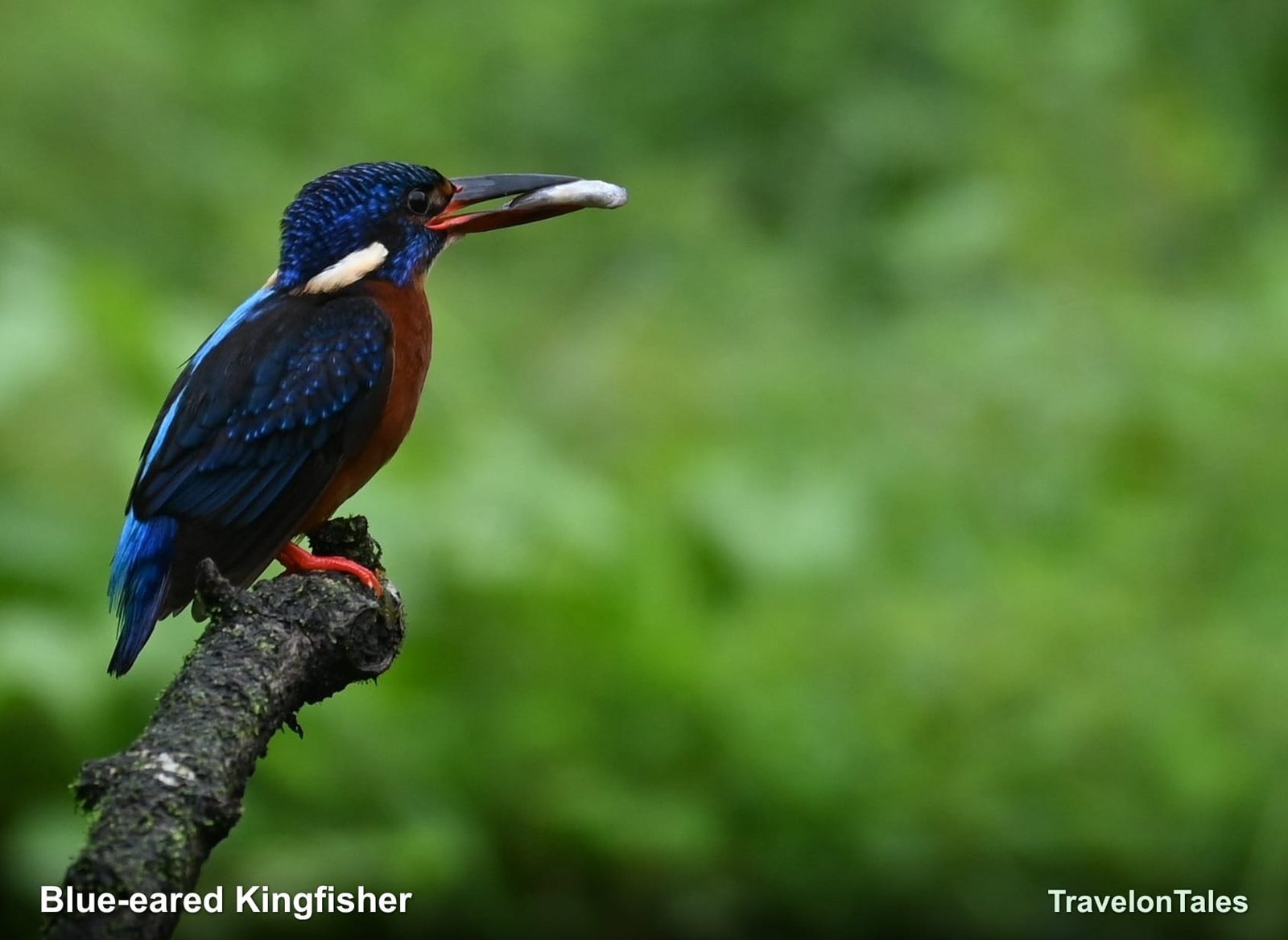
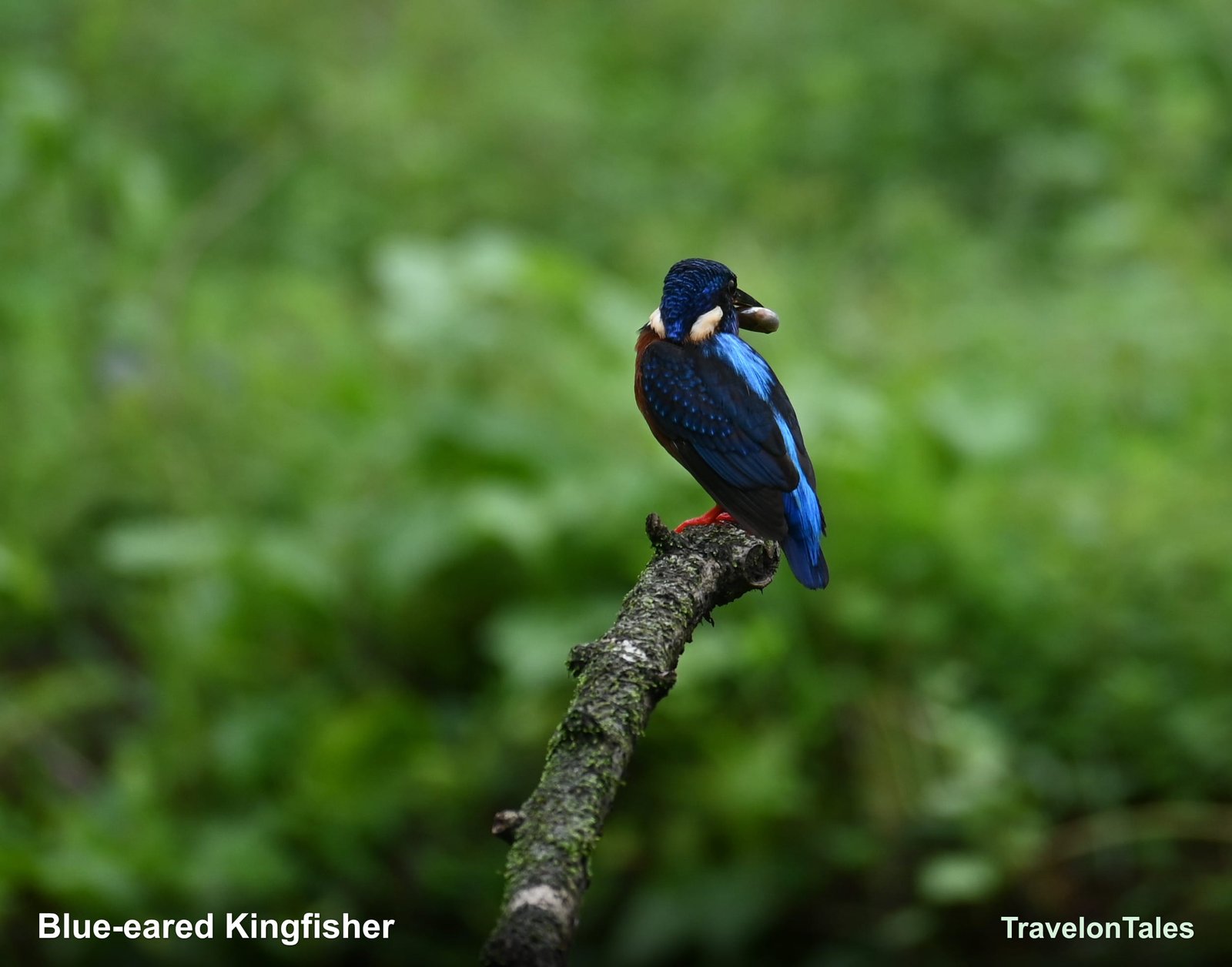
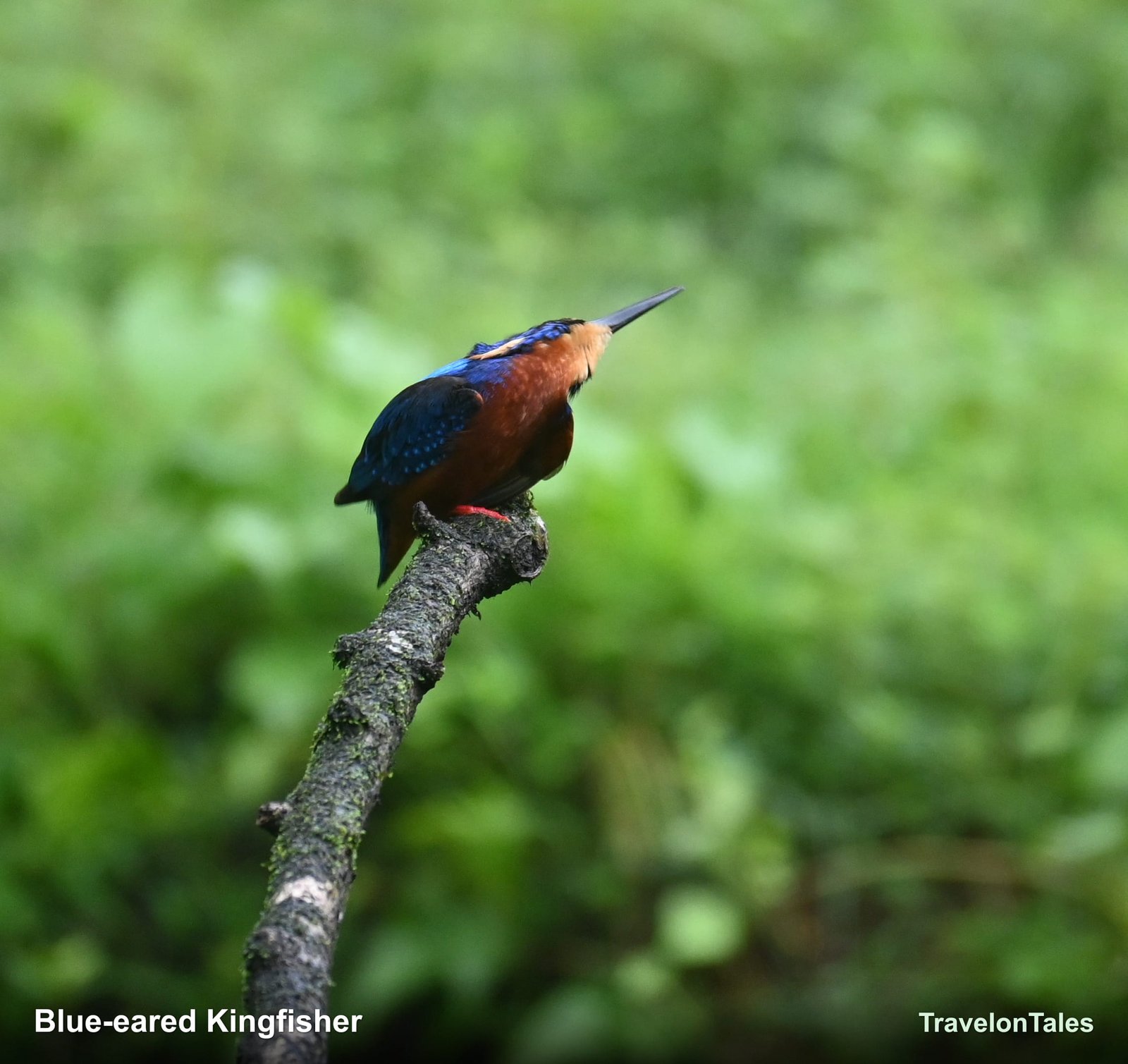
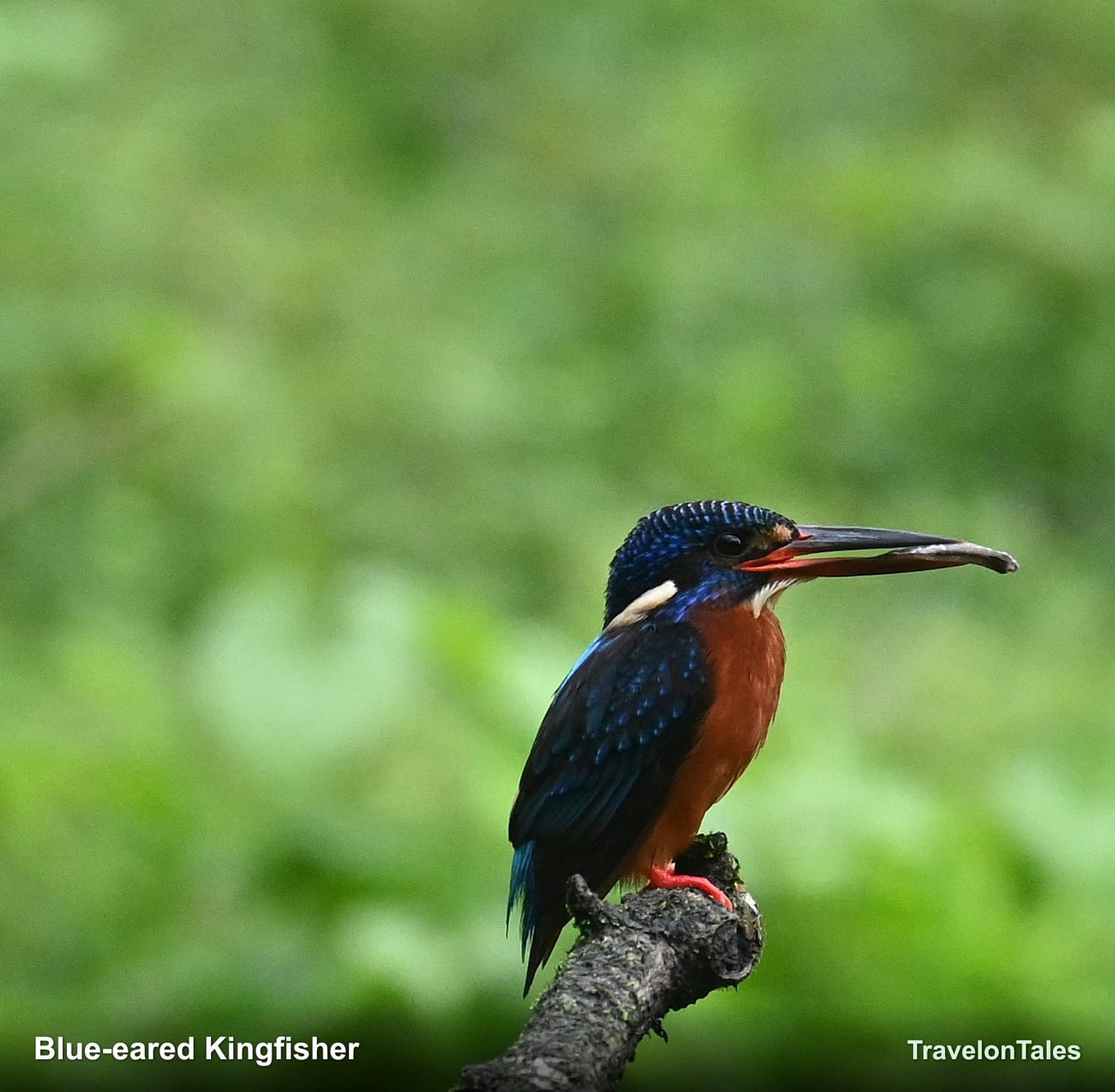
Alcedo menintingClosely related to the Common Kingfisher but distinguished by its blue ear-coverts and deeper ultramarine upperparts. The Blue-eared Kingfisher prefers shaded forest streams over open water. In Sindhudurg, they were active along every stream we visited.
We watched one bird dive repeatedly for small fish, returning to the same perch each time. Their call — a sharp, high-pitched tsiit — often gave them away before we could see them.
Stork-billed Kingfisher
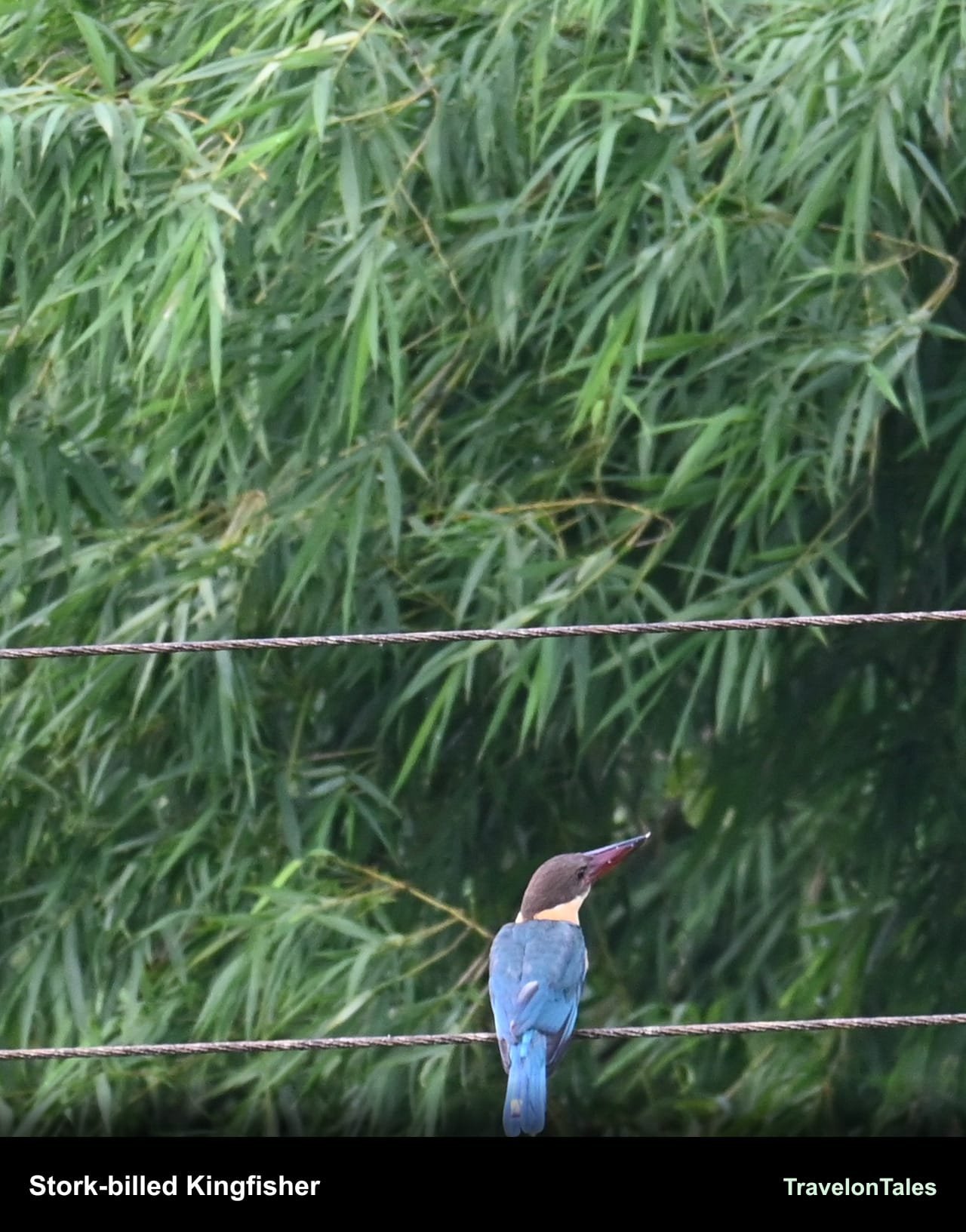
Pelargopsis capensisThe largest kingfisher we spotted on this trip. The Stork-billed Kingfisher has a massive red bill, brown cap, and blue-green wings. It hunts fish, frogs and crabs along rivers and streams. Less common than the White-throated Kingfisher, so always a good sighting. We found one perched on a wire near a stream.
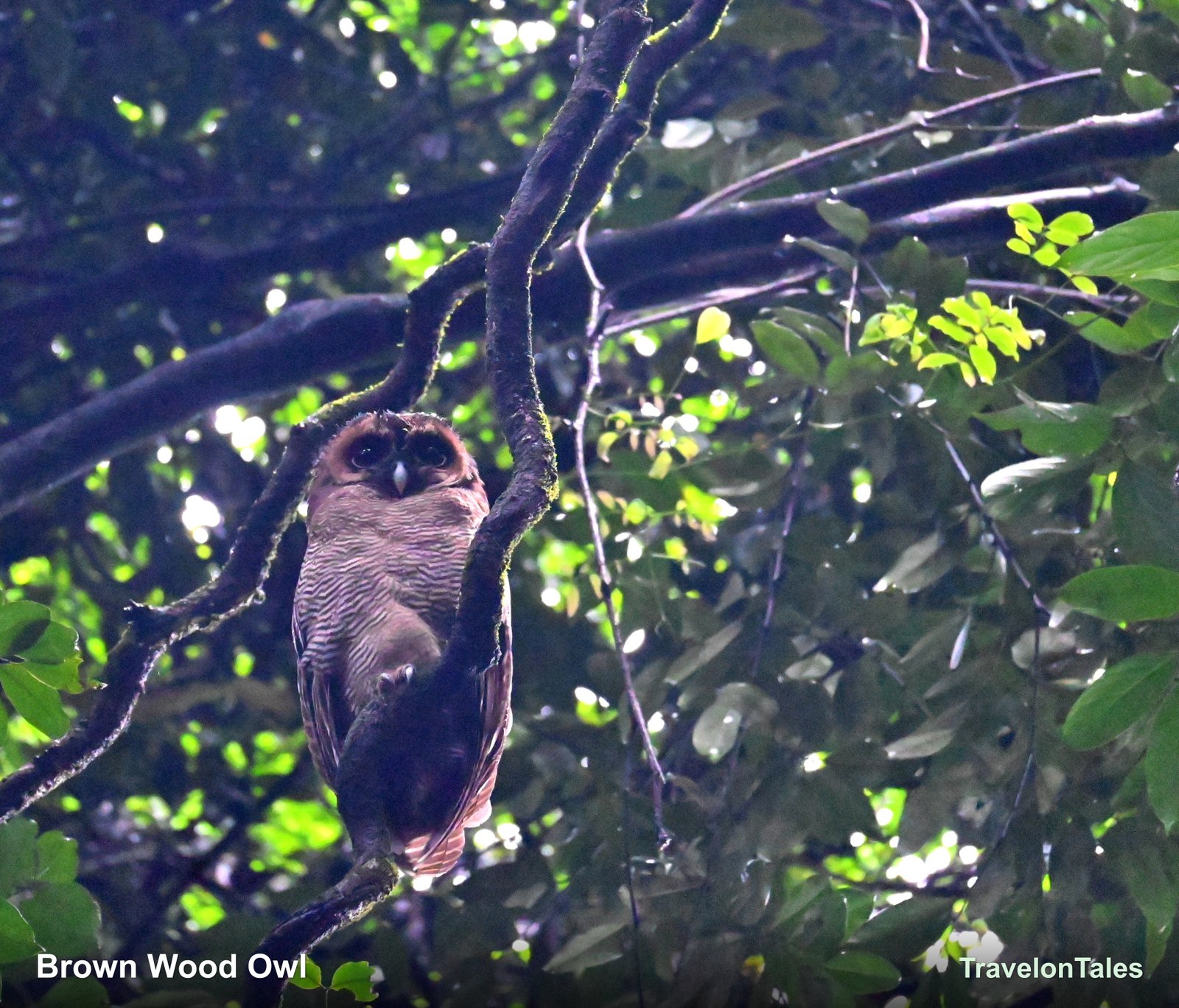
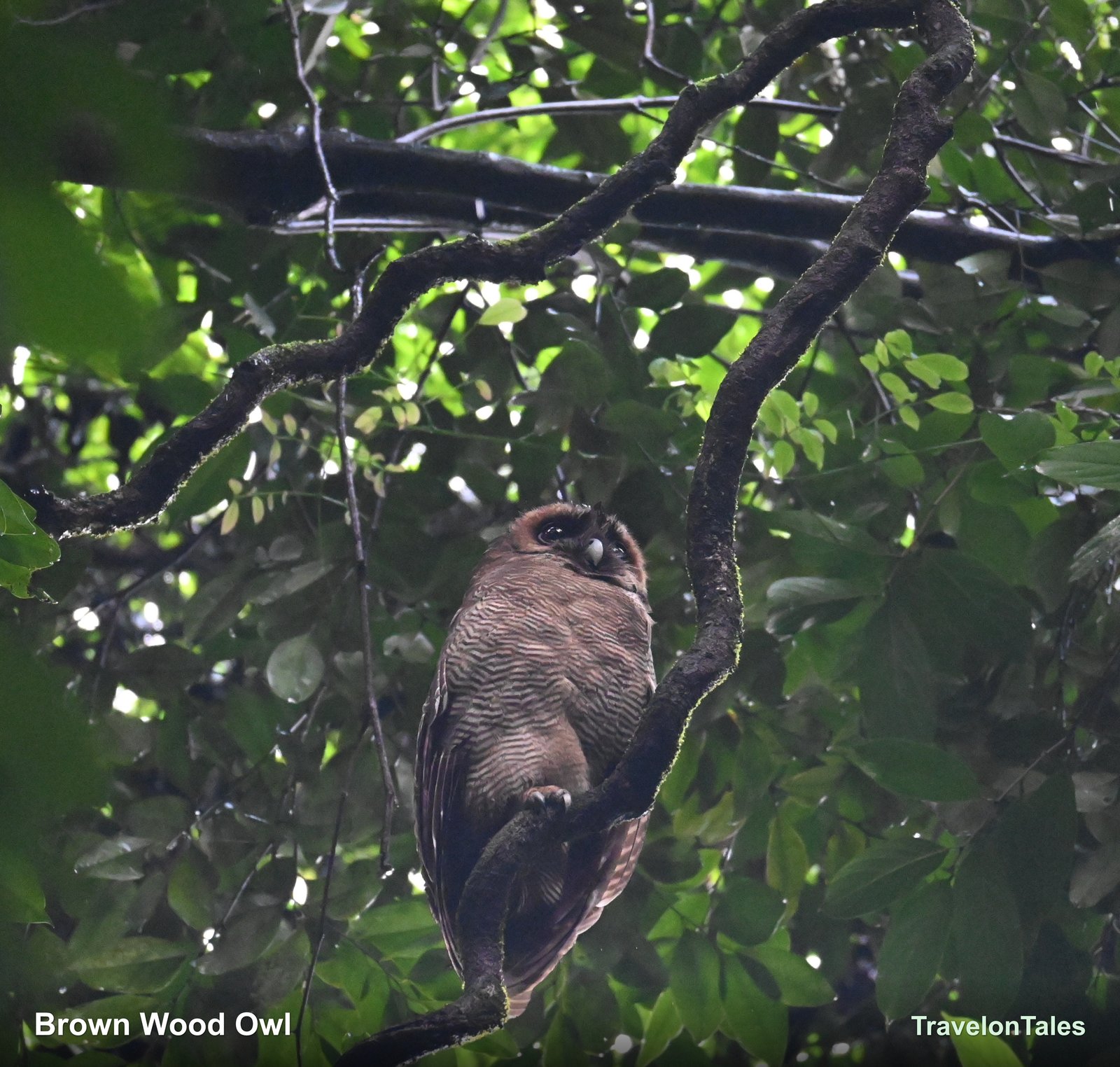
Brown Wood Owl
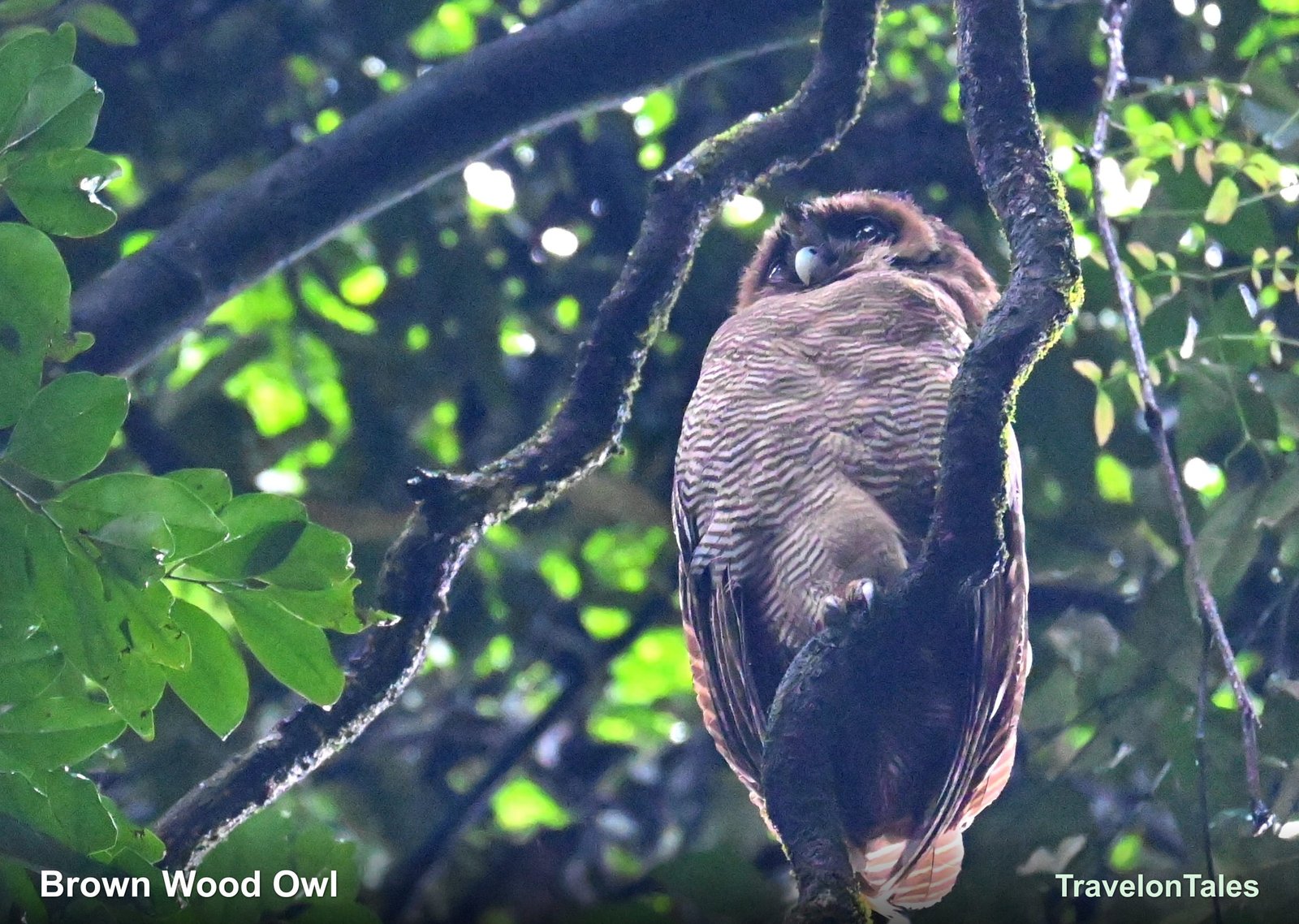
Strix leptogrammicaOne of the highlights of the trip. The Brown Wood Owl is a large, dark owl of dense forest. It roosts during the day in thick canopy, often near streams. Our guide from Wildagram located a roosting bird sitting quietly among branches, its barred plumage breaking up its outline against the leaves.
This is a resident species in the Western Ghats. Its deep, resonant hoo-hoo call is one of the characteristic sounds of the night forest here.
Chestnut-headed Bee-eater
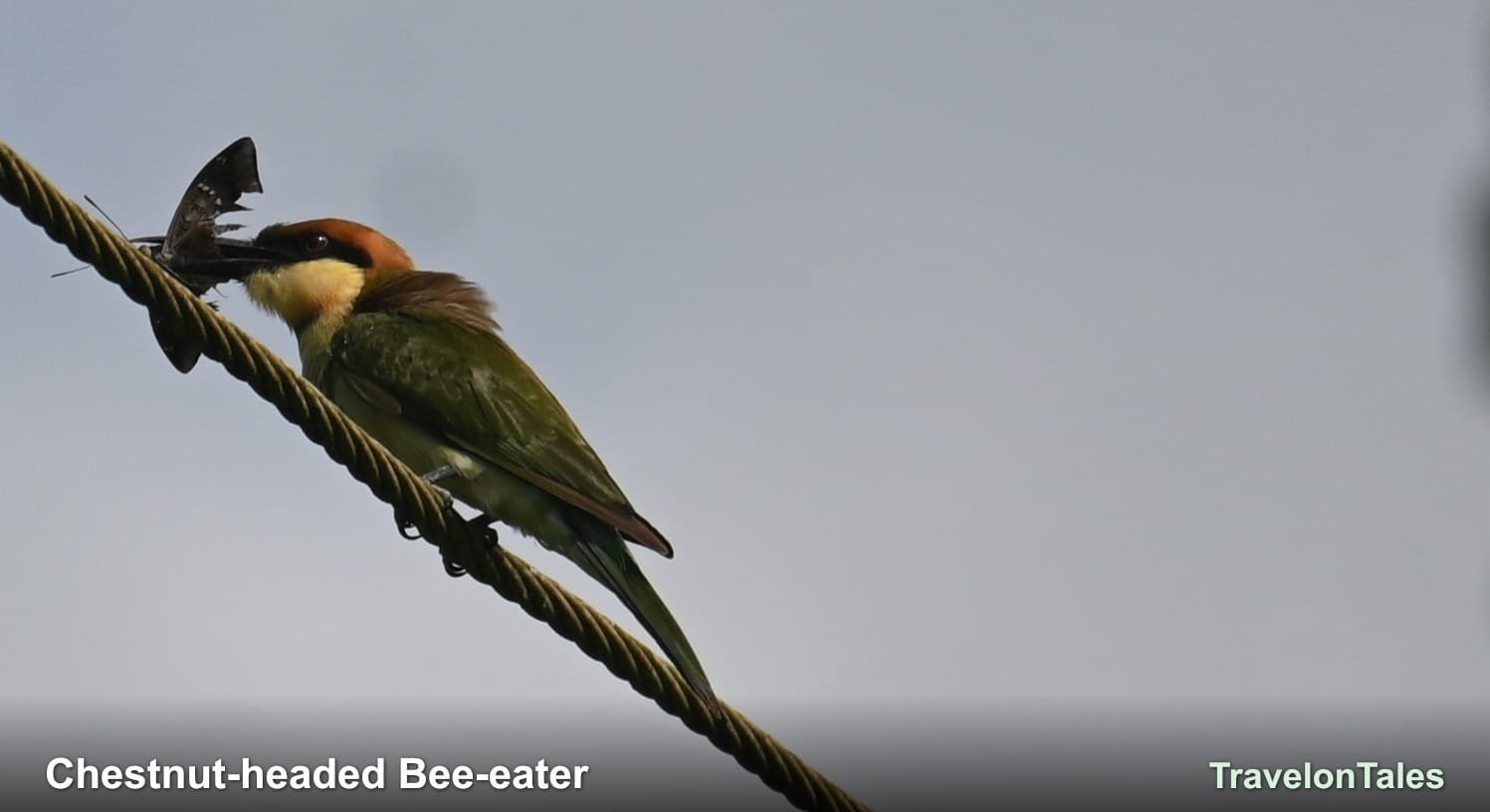
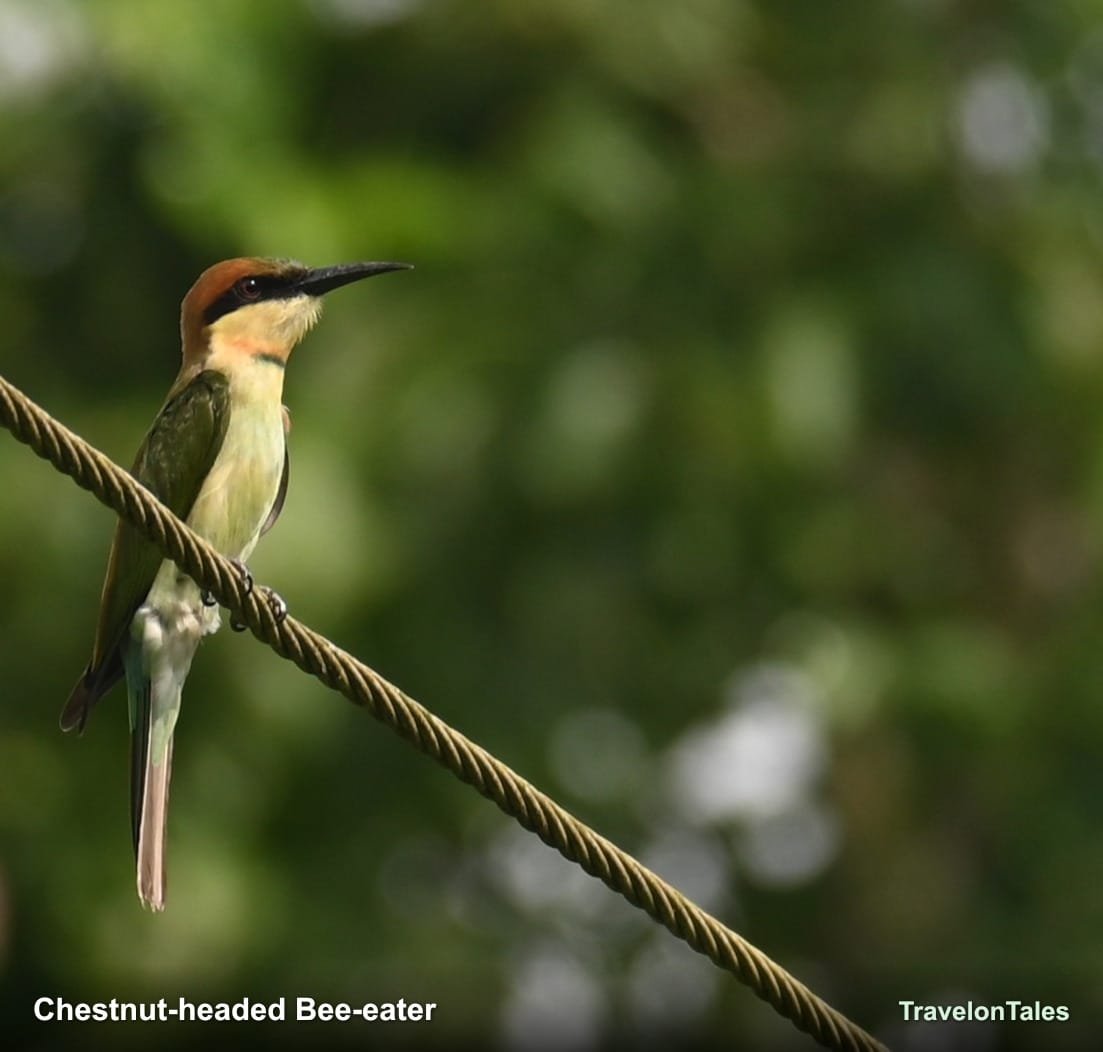
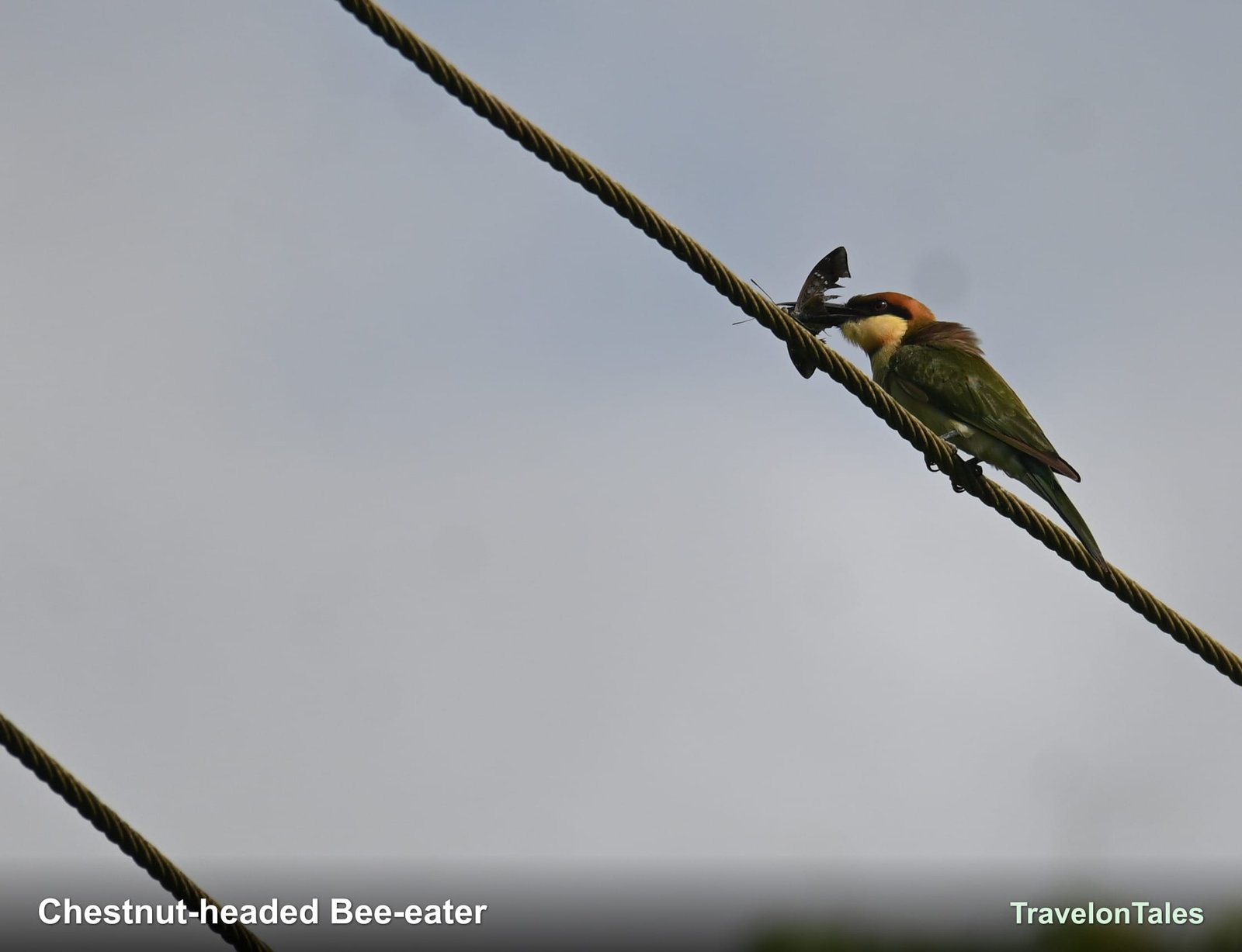
Merops leschenaultiA beautiful bee-eater of forest clearings and edges in the Western Ghats. The chestnut crown and nape, green body, and yellow throat make it easy to identify. We watched one catch a butterfly mid-air and return to its perch on a wire rope to eat it — the classic bee-eater feeding style.
Unlike the more widespread Green Bee-eater (Merops orientalis), this species prefers wooded habitats. It catches prey in flight and beats it against the perch to remove stingers before swallowing.
Indian Pitta
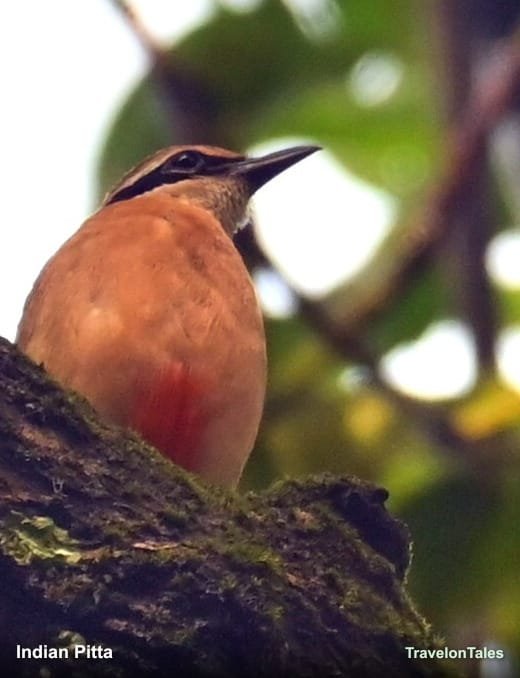
Pitta brachyuraThe Indian Pitta is a monsoon breeding visitor to the Western Ghats. Its loud wheeet-tew call echoes through the forest at dawn and dusk. Despite its bright plumage — green upperparts, buff underparts with a crimson vent, and a bold black eye-stripe — it can be difficult to spot on the dark forest floor where it feeds on insects and worms.
We heard several calling but managed to photograph one that briefly perched in the open.
Malabar Grey Hornbill
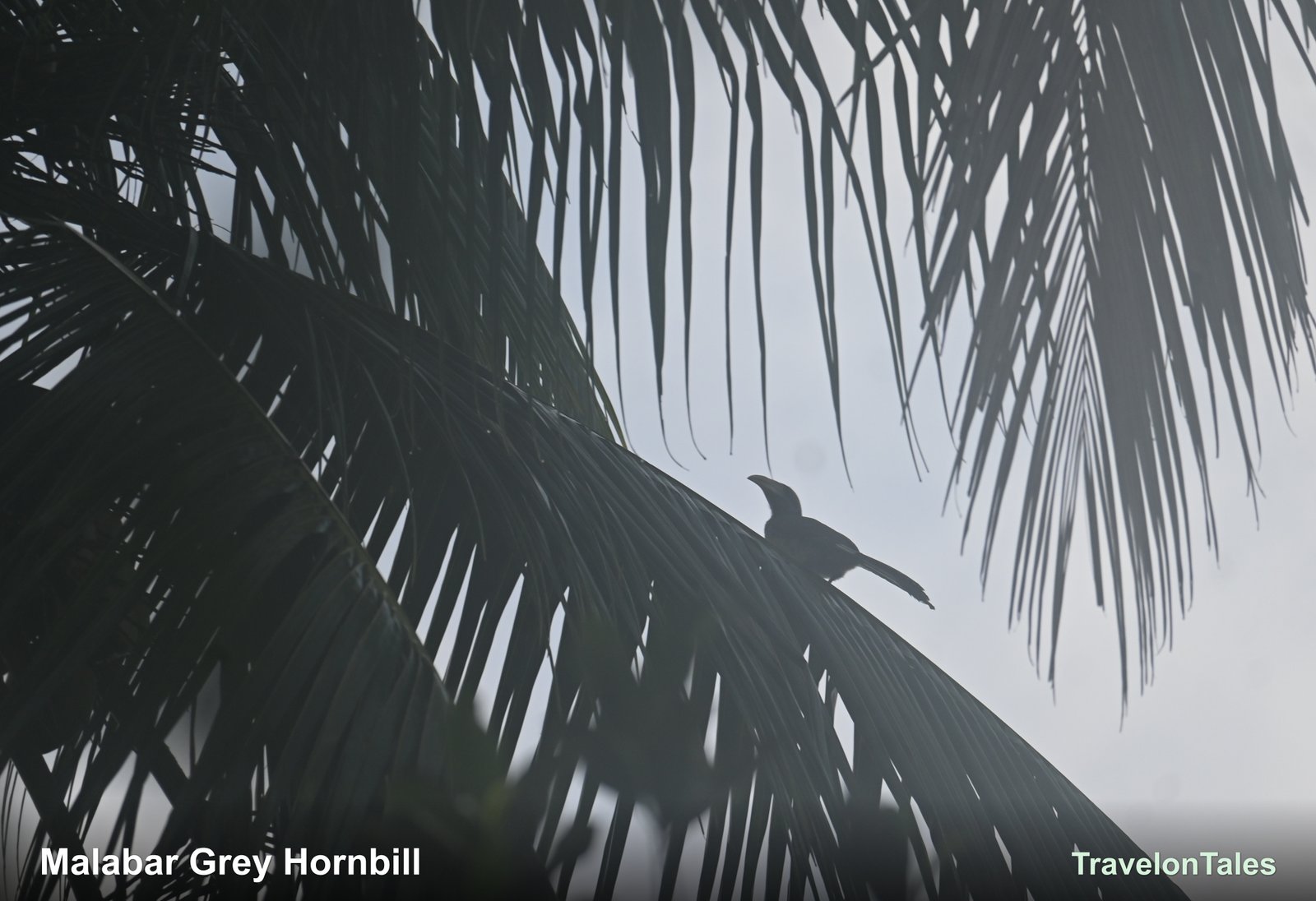
Ocyceros griseusA Western Ghats endemic. The Malabar Grey Hornbill is smaller than the Malabar Pied Hornbill and tends to stay high in the canopy. We spotted one in silhouette against the sky, its casque clearly visible. It feeds mainly on fruit, especially figs, and moves through the canopy in small groups.
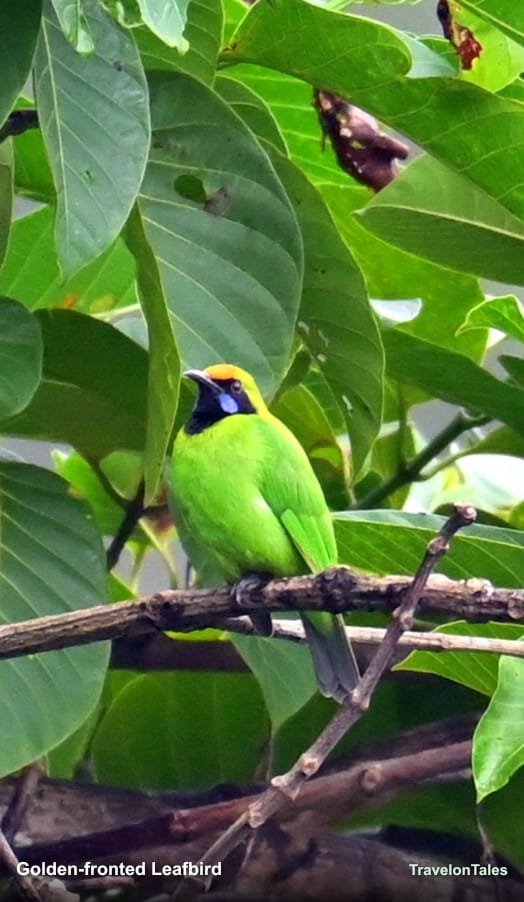
Golden-fronted Leafbird
Chloropsis aurifronsA bright green canopy bird with a golden-orange forehead and blue throat patch. The Golden-fronted Leafbird feeds on nectar, insects and small fruit in well-wooded areas of the Western Ghats. We spotted one perched on a branch, its orange forehead clearly visible.
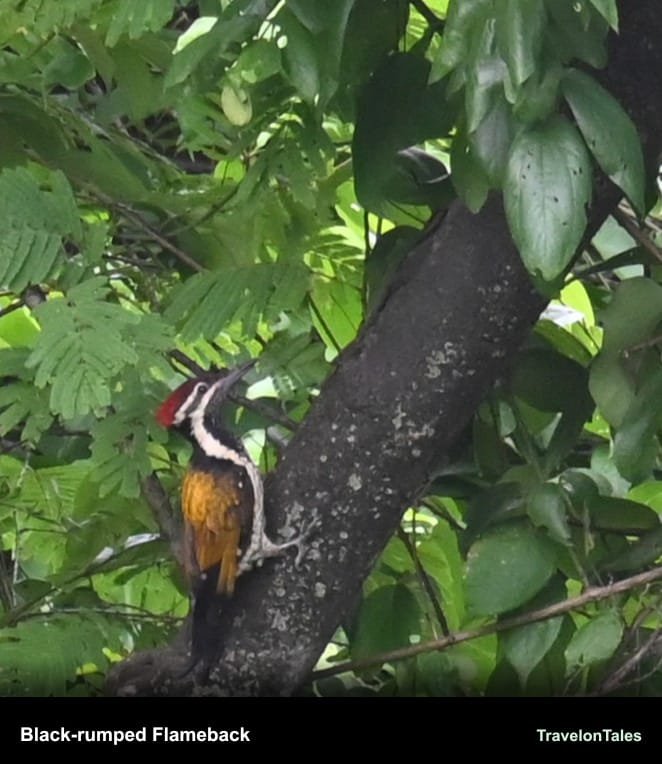
Black-rumped Flameback
Dinopium benghalenseAlso called the Lesser Golden-backed Woodpecker. Golden-yellow back, black rump and red crest. Common throughout peninsular India but always good to see. We spotted one clinging to a tree trunk, tapping for insects under the bark.
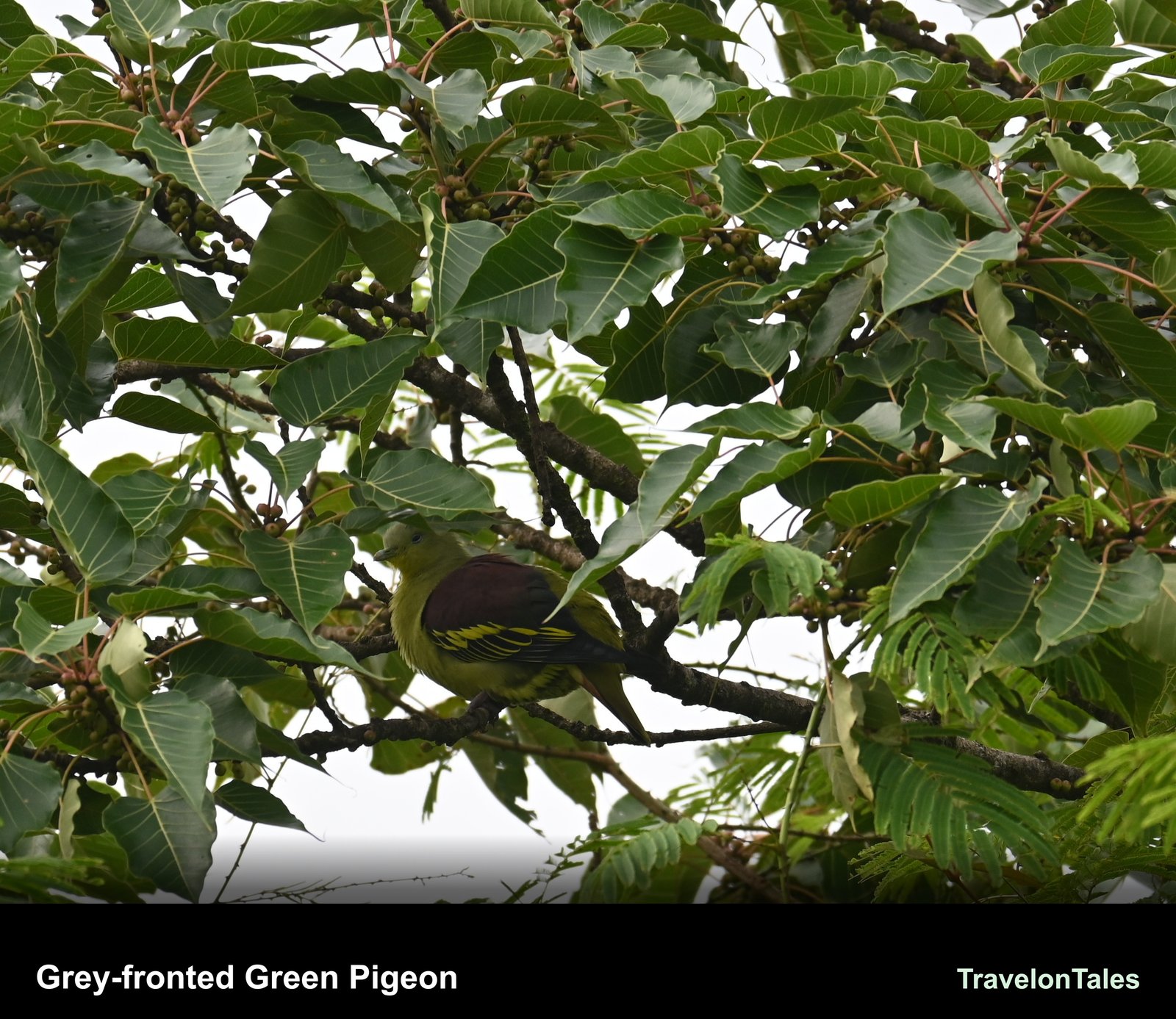
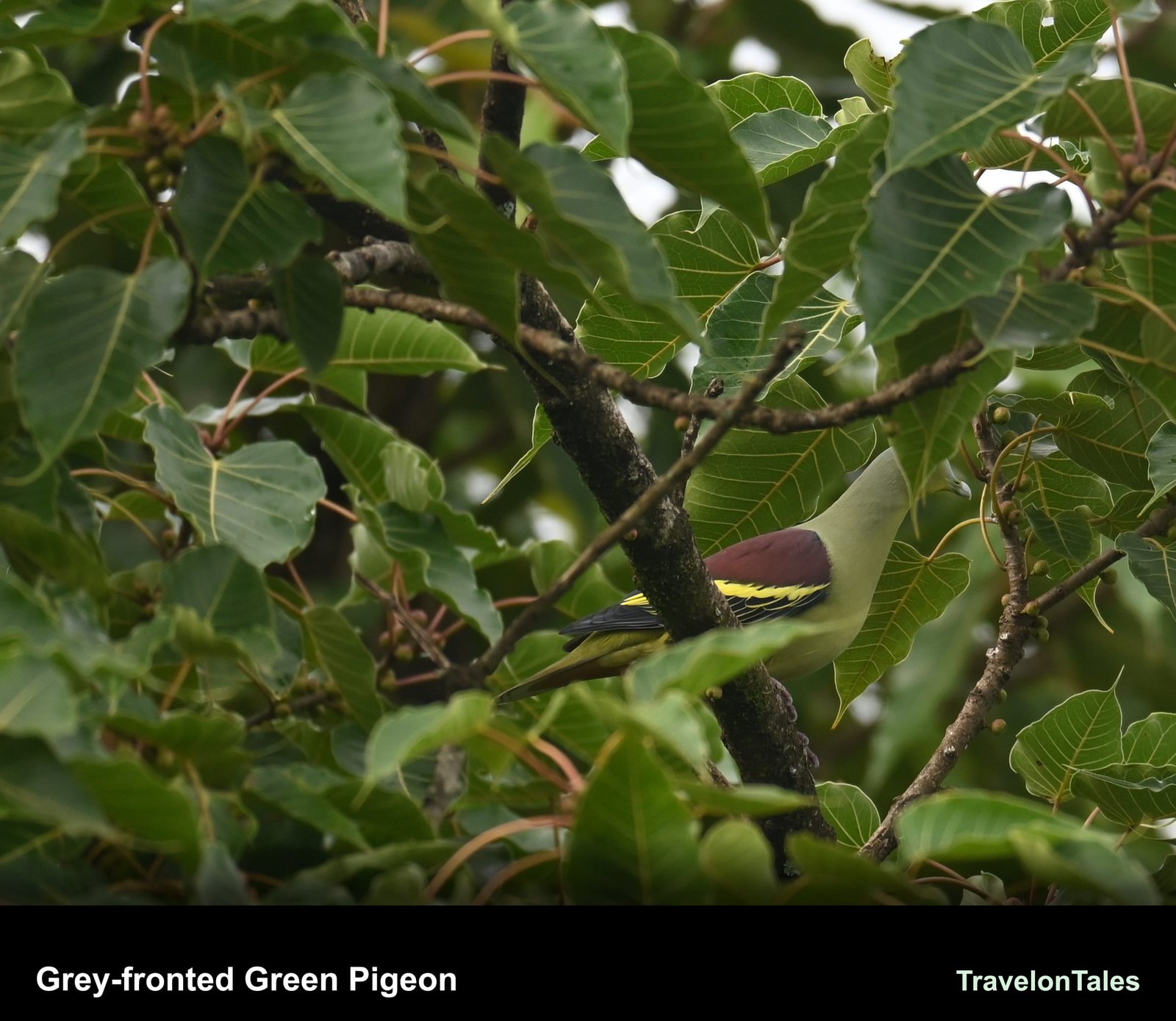
Grey-fronted Green Pigeon
Treron affinisA Western Ghats endemic, recently split from the Yellow-footed Green Pigeon. The Grey-fronted Green Pigeon has a grey forehead, green body and maroon back. It is a canopy dweller that feeds on fruit, especially figs. It often sits motionless among leaves and can be hard to spot despite its size. We photographed one perched high in a fruiting tree.
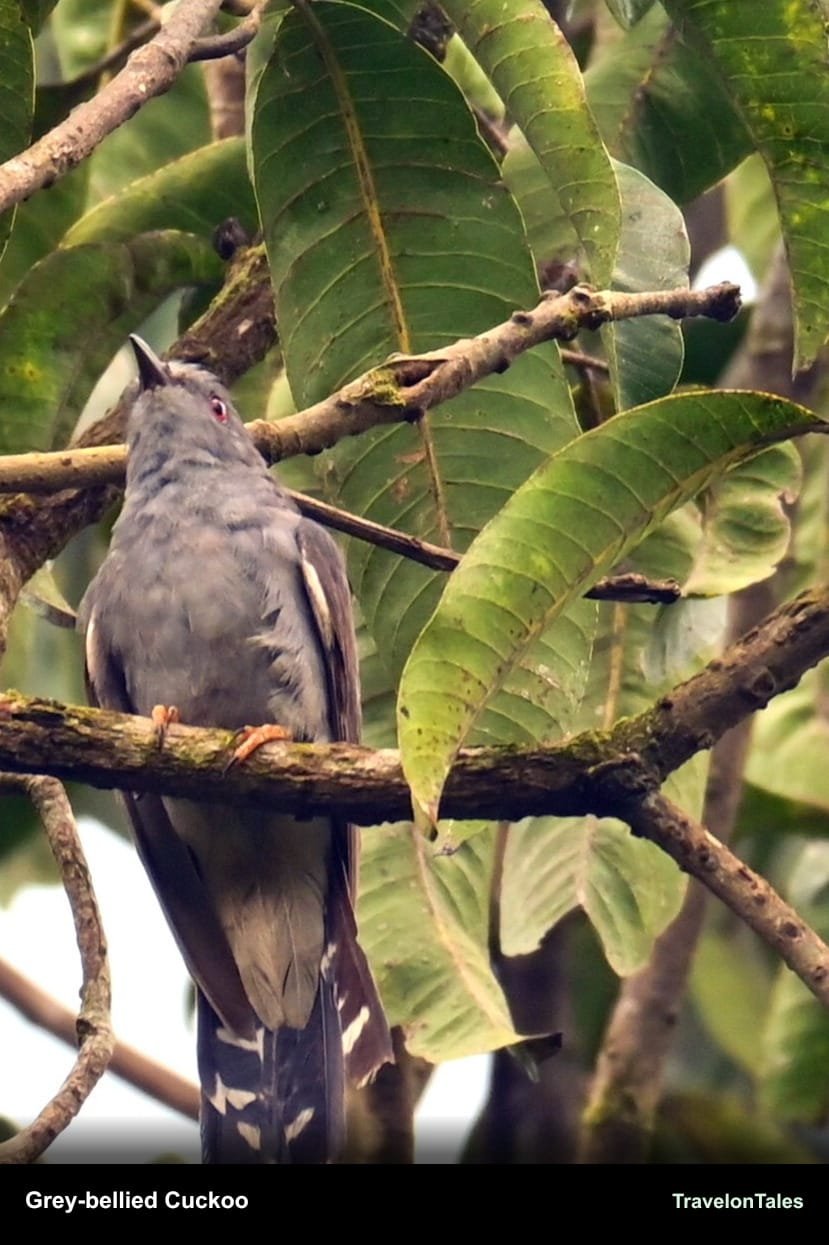
Grey-bellied Cuckoo
Cacomantis passerinusA medium-sized grey cuckoo with a distinctive red eye-ring. The Grey-bellied Cuckoo is a brood parasite found in well-wooded areas. It has a plain grey plumage with barred tail. We spotted one perched quietly among leaves in the forest canopy.
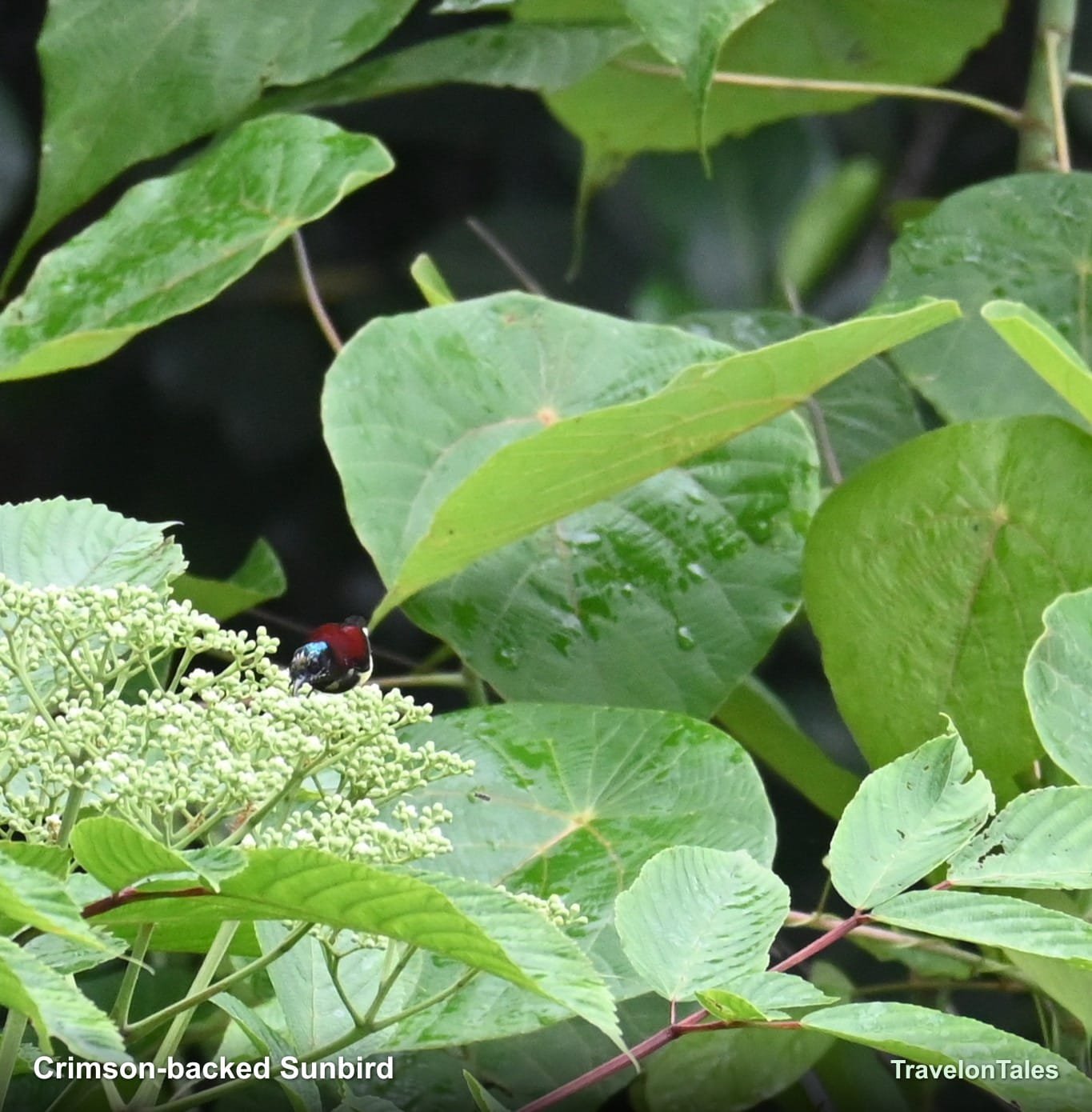
Crimson-backed Sunbird
Leptocoma minimaAnother Western Ghats endemic, and the smallest sunbird in India at around 8 cm. The male is a jewel: deep crimson back and breast band, a metallic blue-green crown that flashes in the light, and a dark face. It is restless and rarely sits still, moving constantly through flowering shrubs and the middle canopy.
We found this male working a cluster of flower buds at the forest edge, hanging upside down to reach the nectar. Its small size makes it easy to miss — you often notice the movement before the bird.
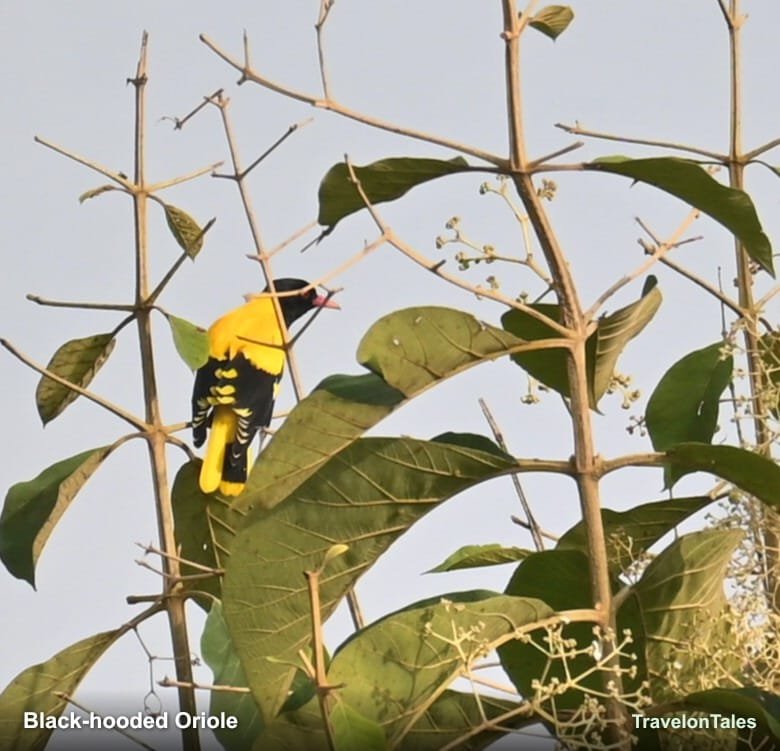
Black-hooded Oriole
Oriolus xanthornusImpossible to mistake once you see it: a bright golden-yellow body with a solid jet-black hood covering the entire head and throat, black wings and a coral-pink bill. The Black-hooded Oriole is a canopy bird of open woodland and wooded villages, often heard before it is seen — a fluid, liquid whistle carrying across the trees.
We photographed this one high in a flowering tree in the early morning, feeding among the buds. The yellow is startling against grey monsoon sky.
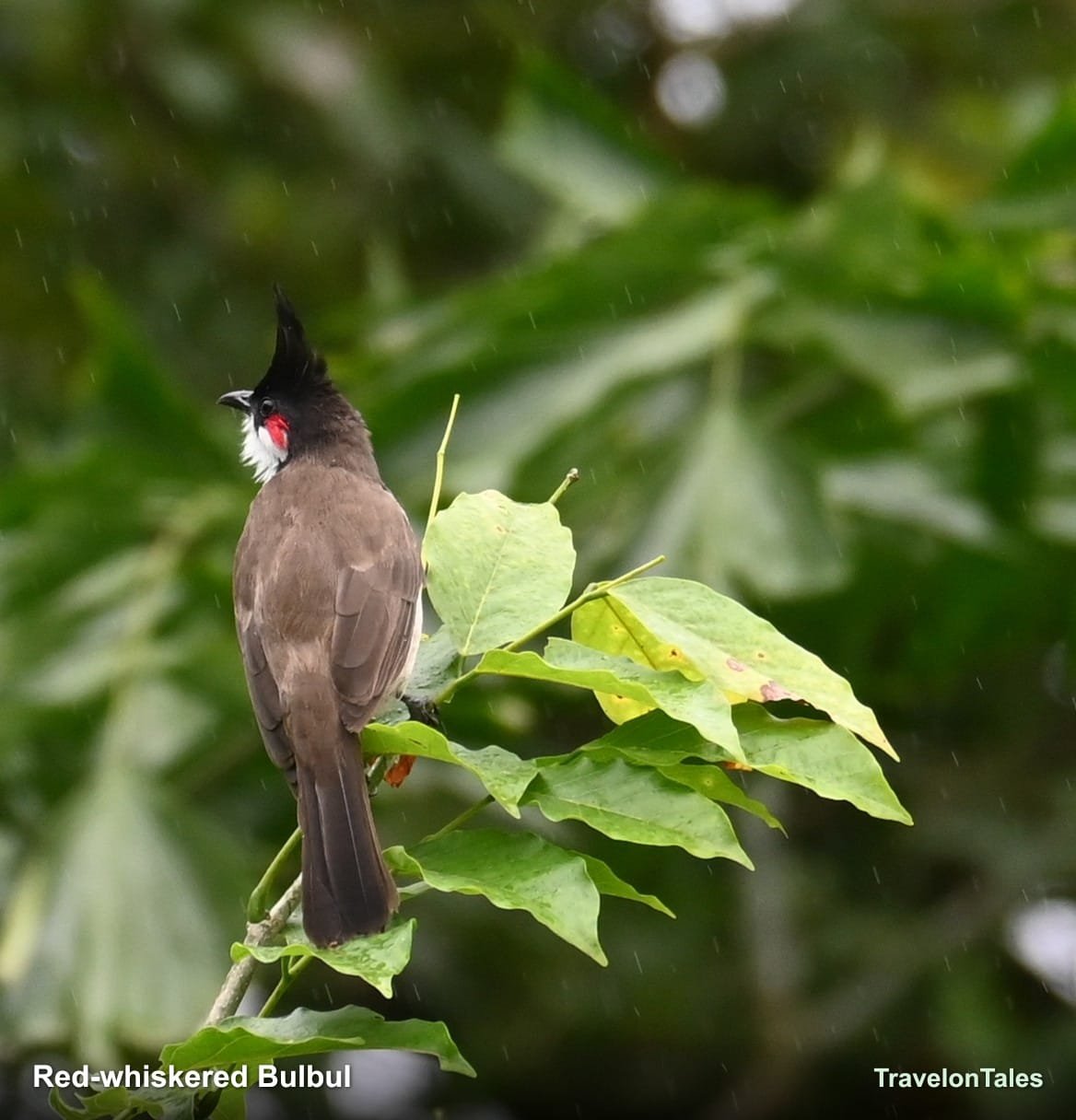
Red-whiskered Bulbul
Pycnonotus jocosusA handsome bulbul with a tall pointed black crest, red ear-patch (the “whiskers”), and a white cheek. Common across peninsular India, it is found in gardens, forest edges and scrub. We photographed one perched on a rain-wet branch, its crest standing upright.
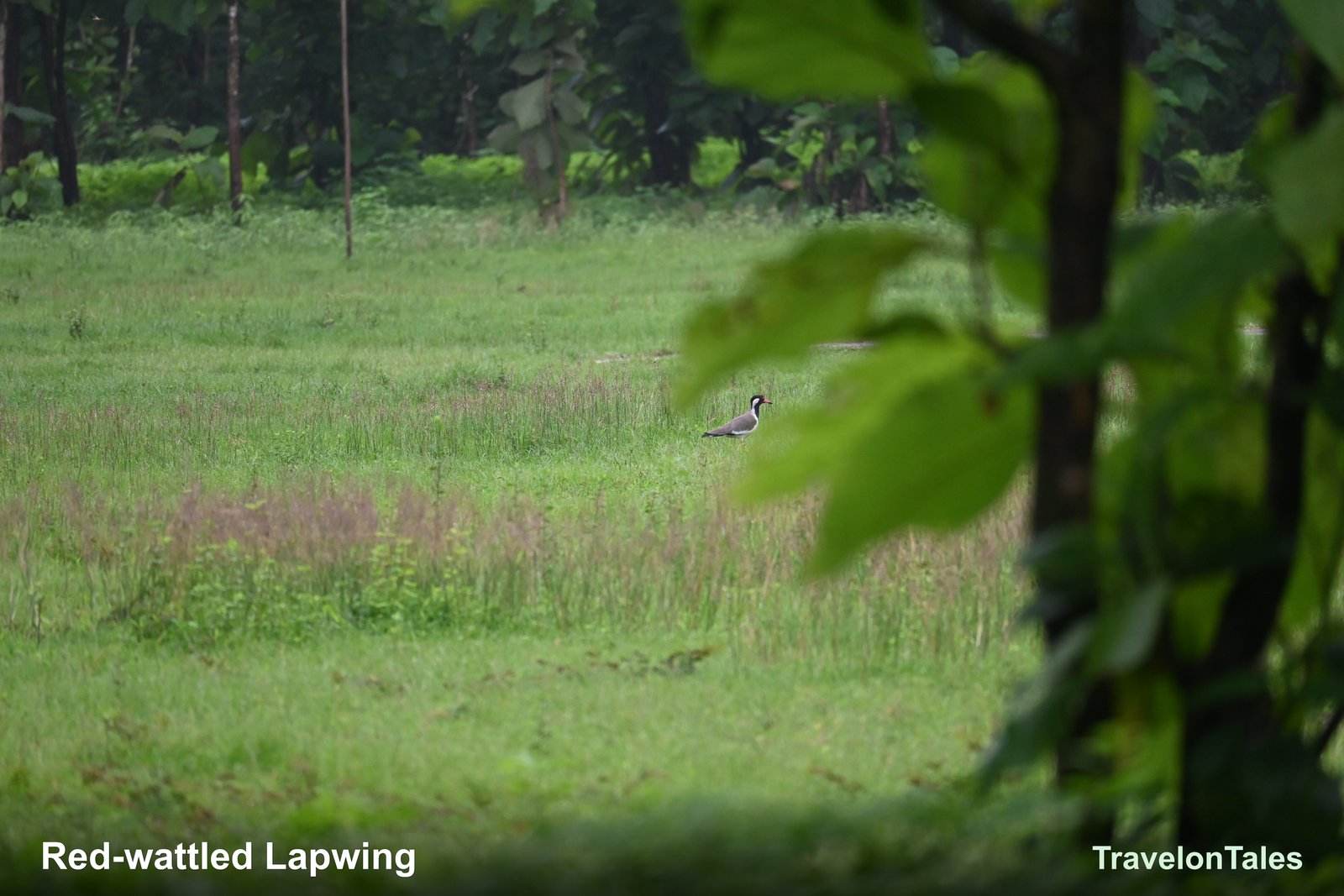
Red-wattled Lapwing
Vanellus indicusOne of the most common ground birds in India, the Red-wattled Lapwing is found in open fields, riverbanks and wetlands. Its loud “did-he-do-it” alarm call is a familiar sound across the countryside. We spotted one standing in a green paddy field near the village.
Prinias
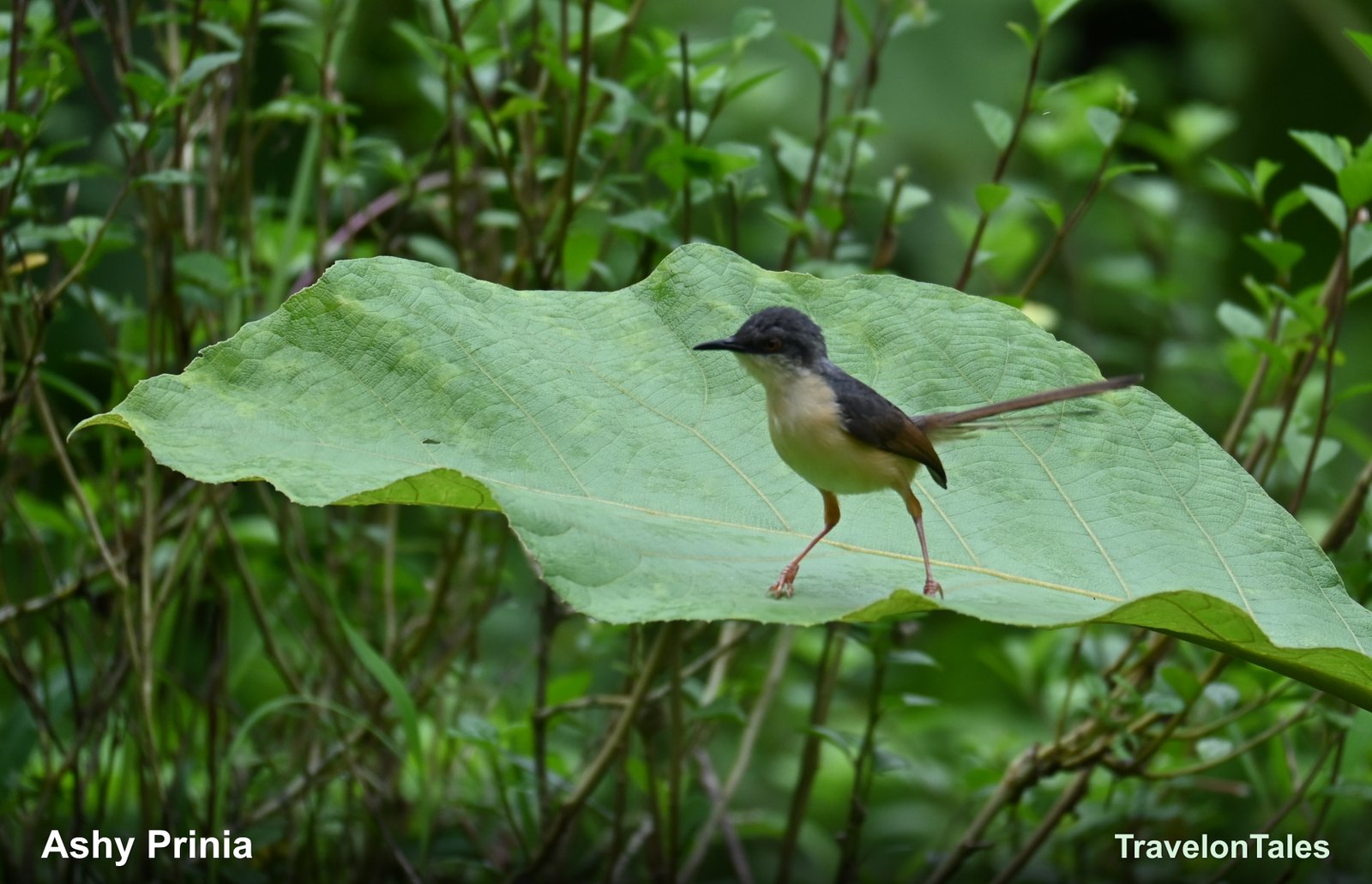
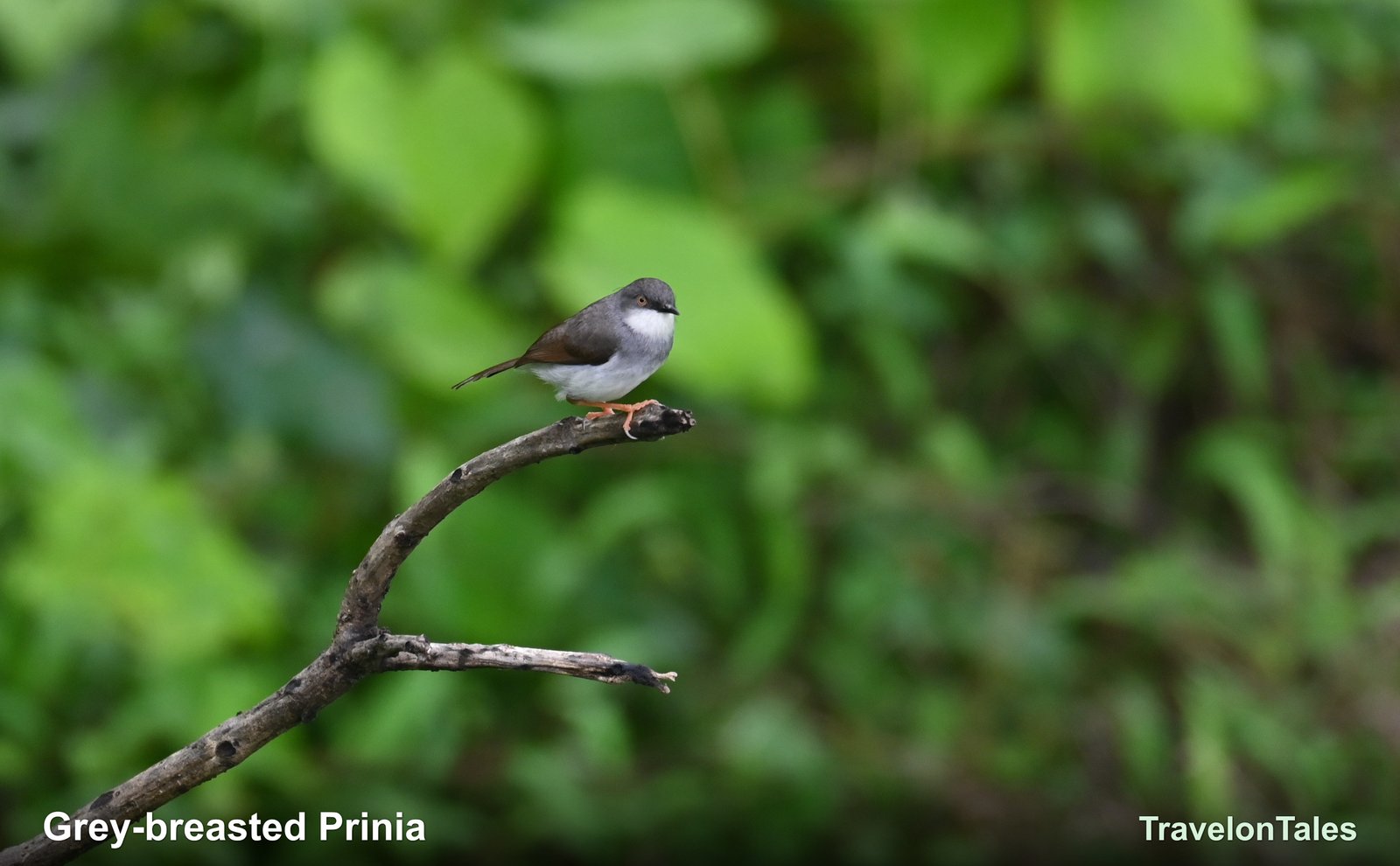
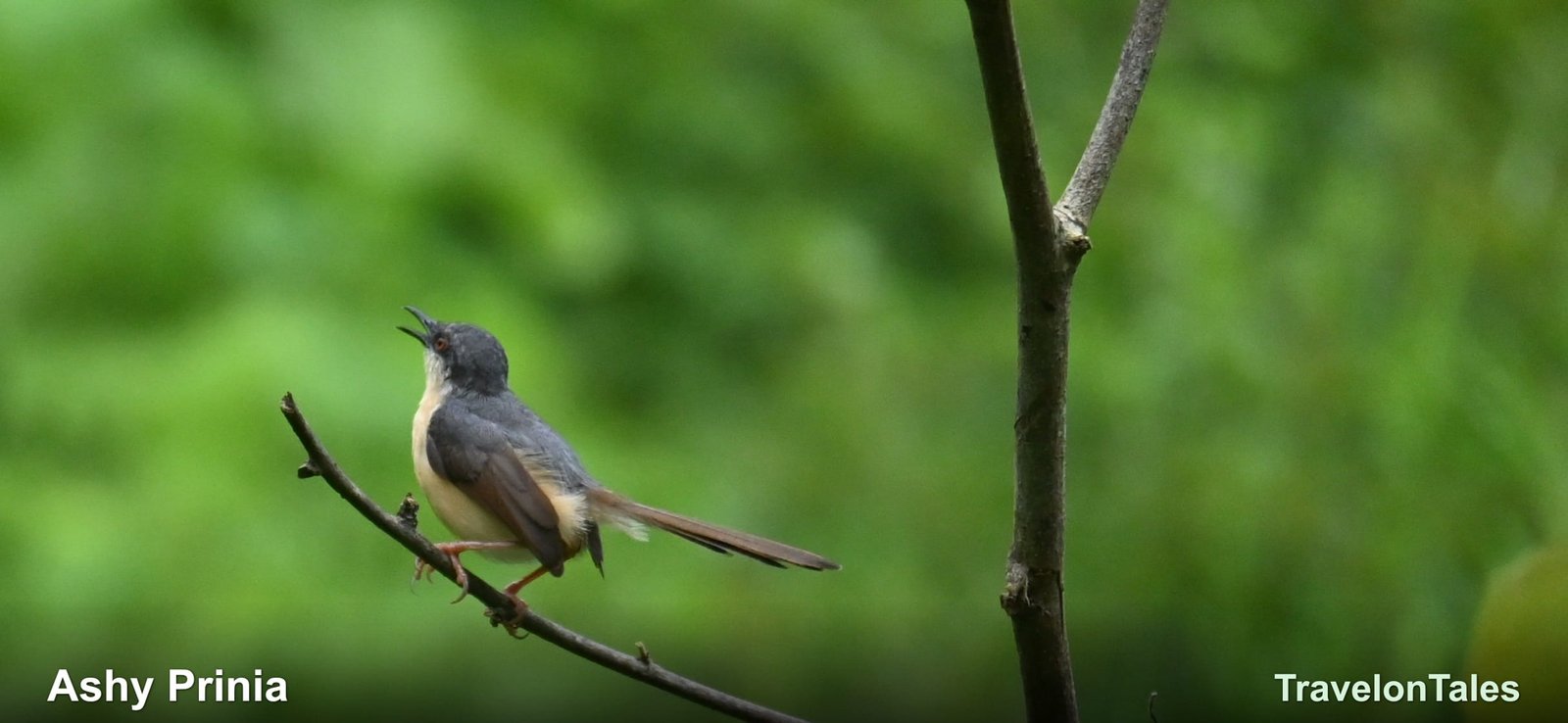
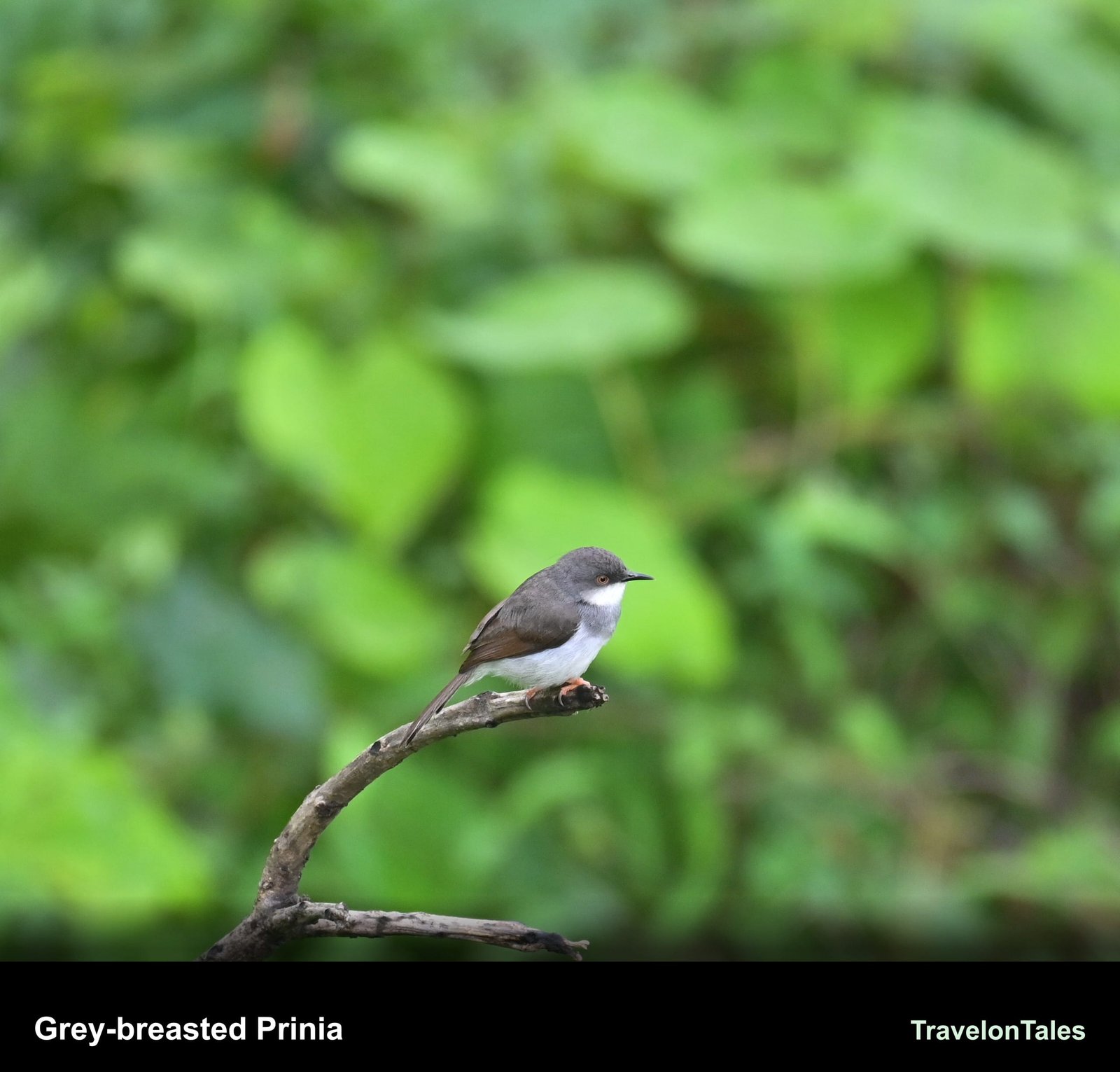
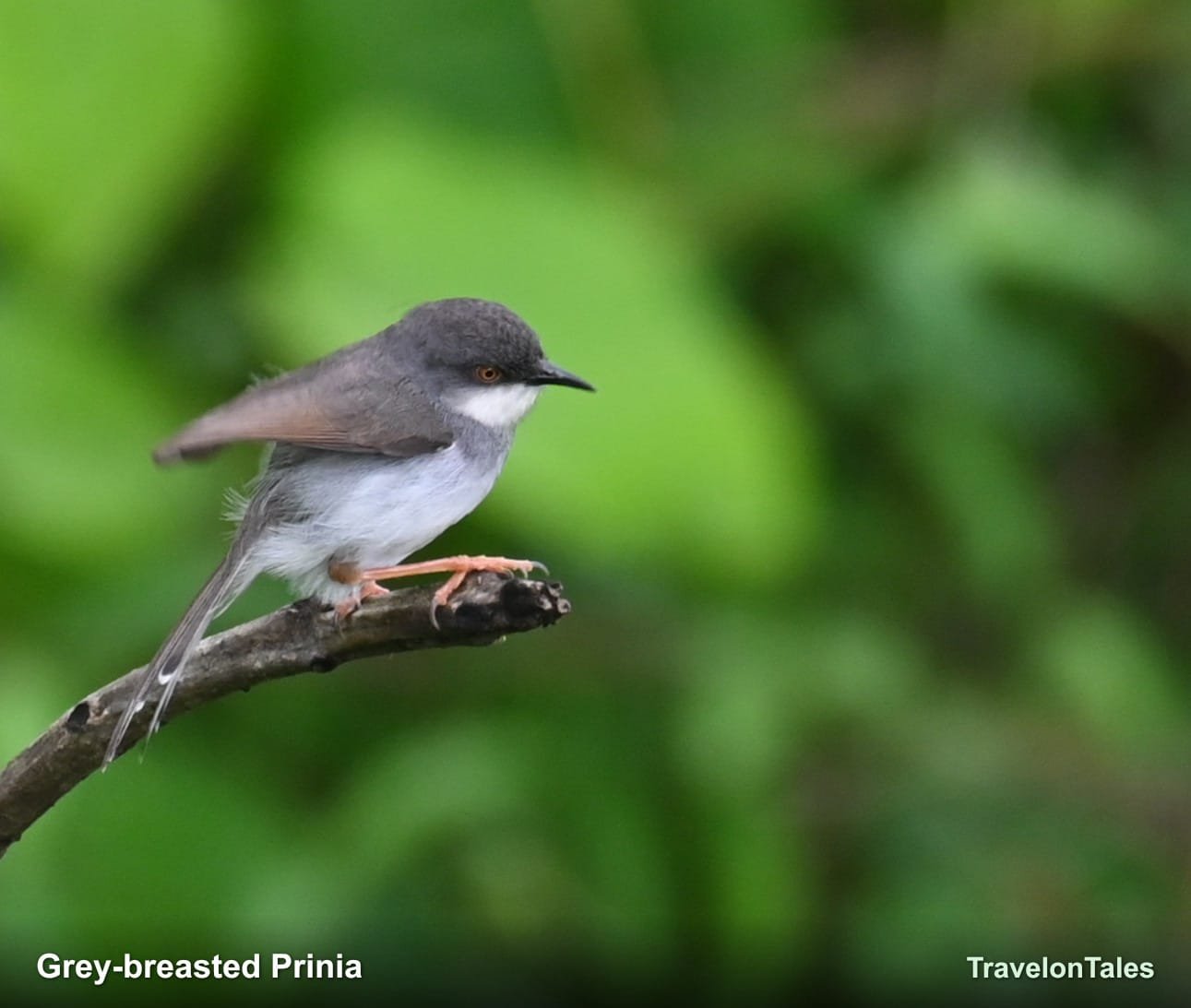
Two prinia species were seen around the forest edges and scrubby areas near the homestay.
The Ashy Prinia (Prinia socialis) is a common resident with a grey head and rufous wings. The Grey-breasted Prinia (Prinia hodgsonii) is plainer, with a grey breast and whitish belly. Both are skulkers that respond well to pishing.

Wire-tailed Swallow
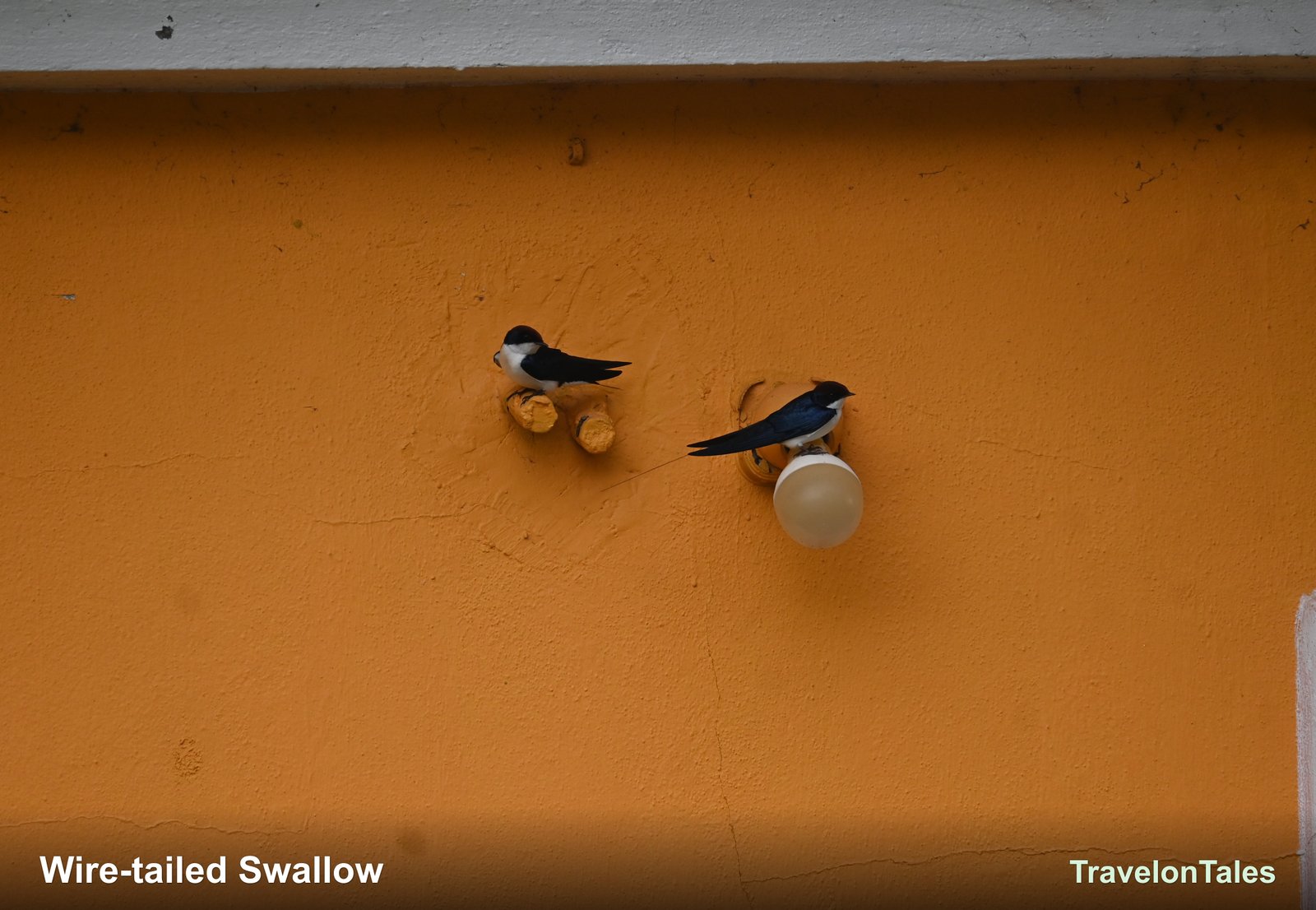
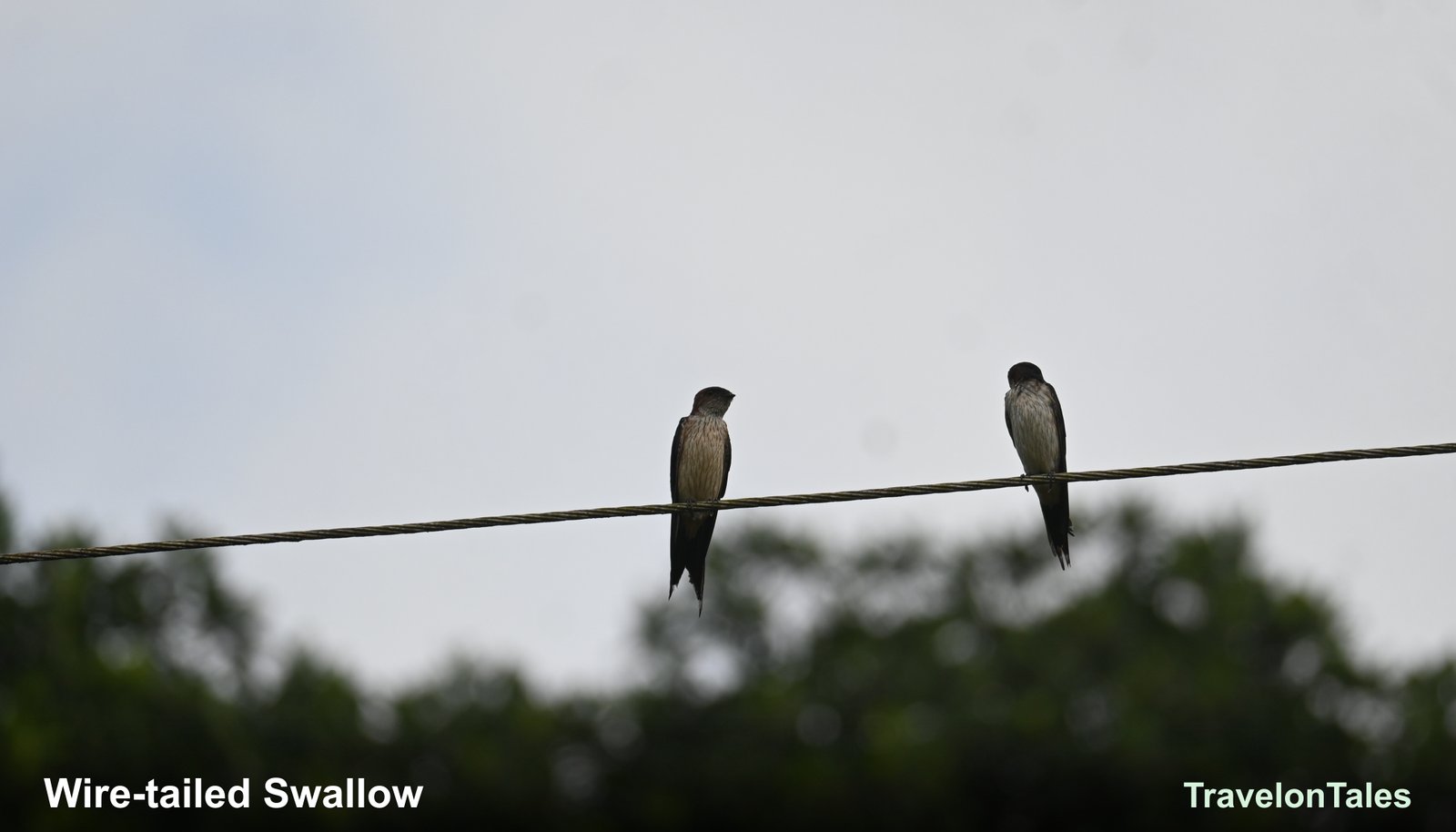
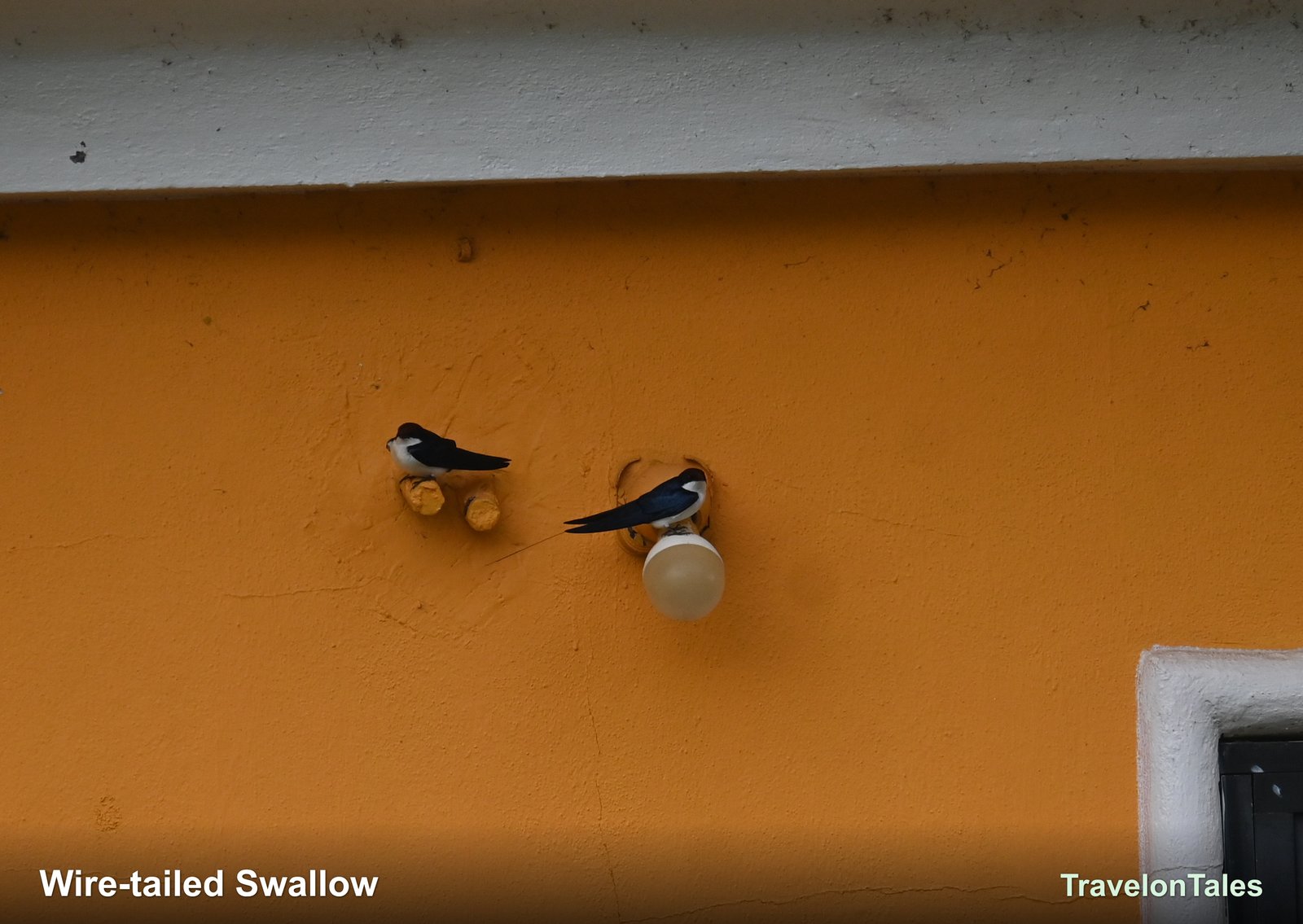
Hirundo smithiiA handsome swallow with a deep blue back, chestnut crown, and long thin outer tail feathers that give it its name. Usually found near water and bridges. We saw them resting on lamps and wires, and flying low over the river catching insects.
Atlas Moth
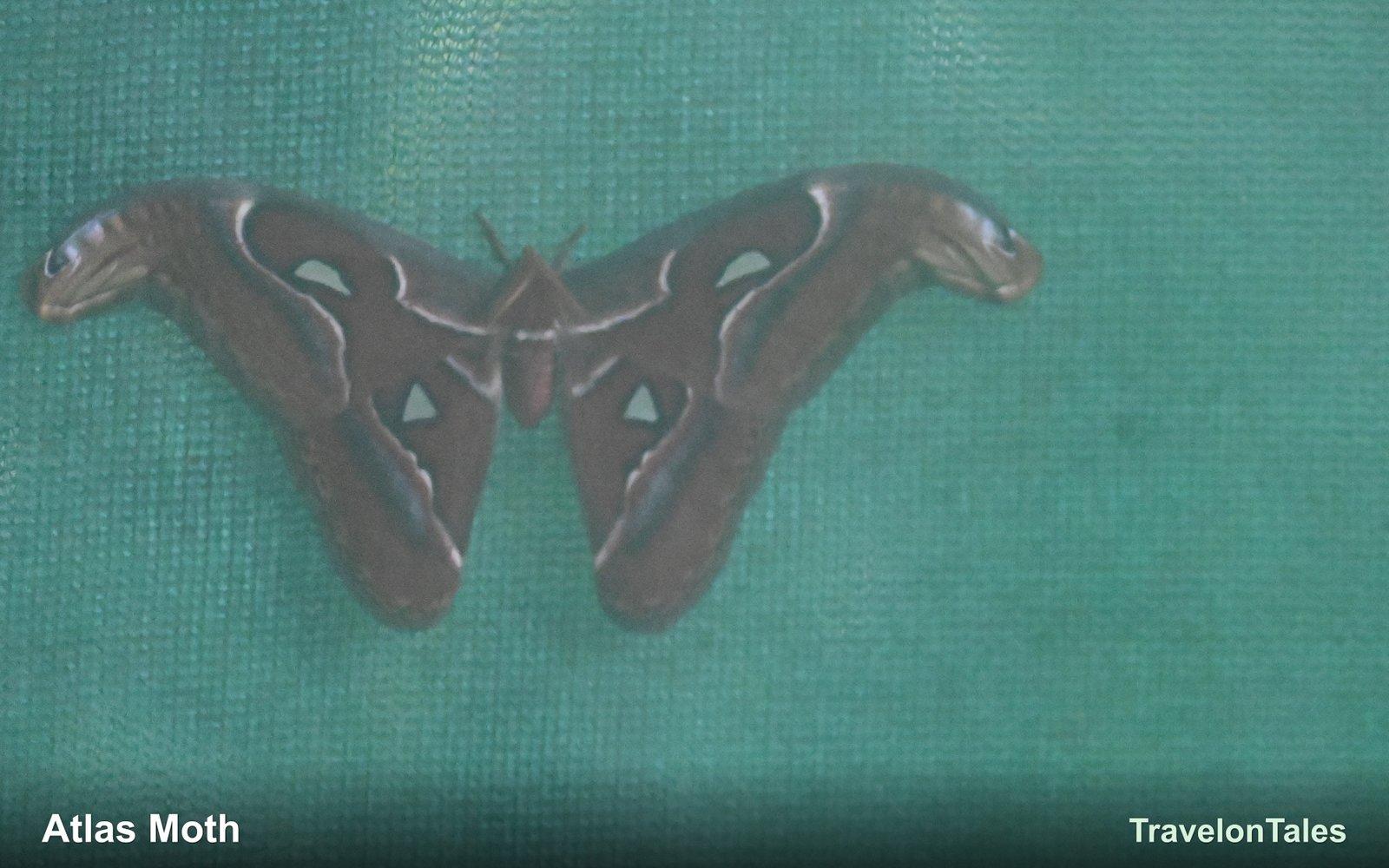
Attacus atlasNot a bird, but too good to leave out. The Atlas Moth is one of the largest moths in the world, with a wingspan that can exceed 25 cm. Its wing tips resemble snake heads — thought to deter predators. We found one resting on a wall at the homestay. A sign of how rich the insect life is during the monsoon.
Trip Checklist — 24 Species
Ceyx erithaca
Alcedo meninting
Pelargopsis capensis
Strix leptogrammica
Merops leschenaulti
Pitta brachyura
Ocyceros griseus
Chloropsis aurifrons
Treron affinis
Cacomantis passerinus
Leptocoma minima
Pycnonotus jocosus
Vanellus indicus
Prinia socialis
Prinia hodgsonii
Hirundo smithii
Psilopogon viridis
Dinopium benghalense
Spilornis cheela
Haliaeetus leucogaster
Terpsiphone paradisi
Oriolus xanthornus
Chalcophaps indica
Attacus atlas
Frequently Asked Questions
What is the best time for birding in Sindhudurg?
June to September (monsoon). The Oriental Dwarf Kingfisher and Indian Pitta are monsoon breeding visitors and are only present during these months. October is also good — the birds linger but the heavy rain eases up, making fieldwork easier.
Which kingfishers can you see in Sindhudurg?
Three species regularly: Oriental Dwarf Kingfisher (Ceyx erithaca), Blue-eared Kingfisher (Alcedo meninting), and Stork-billed Kingfisher (Pelargopsis capensis). White-throated Kingfisher is also common in the area.
How to reach Sindhudurg for birding?
The nearest airport is Chipi (Sindhudurg Airport). You can also take a train to Kudal or Kankavli stations, or drive from Mumbai (~8 hours) or Goa (~3 hours). Local transport is needed for reaching the birding spots in the forest.
Where does the Oriental Dwarf Kingfisher nest?
It digs a horizontal tunnel into an earth bank or laterite cliff near a forest stream. The tunnel is about 1 metre deep and ends in a small chamber. Finding a fresh nesting hole is the easiest way to locate these birds.
Do I need a birding guide in Sindhudurg?
Highly recommended. A local naturalist knows the nesting sites and roost locations, which saves hours of searching. We used Wildagram Wildlife Expeditions and they were excellent.
What camera gear is recommended for monsoon birding?
A 100–400 mm or 150–600 mm telephoto lens works well. The forest is dark during monsoon, so a camera body with good high-ISO performance is helpful. A rain cover for your gear is essential — it rains heavily and often.
Watch the Trip Video
A short video from our monsoon birding trip to Sindhudurg — kingfishers, owls, bee-eaters and the Western Ghats in full monsoon glory.
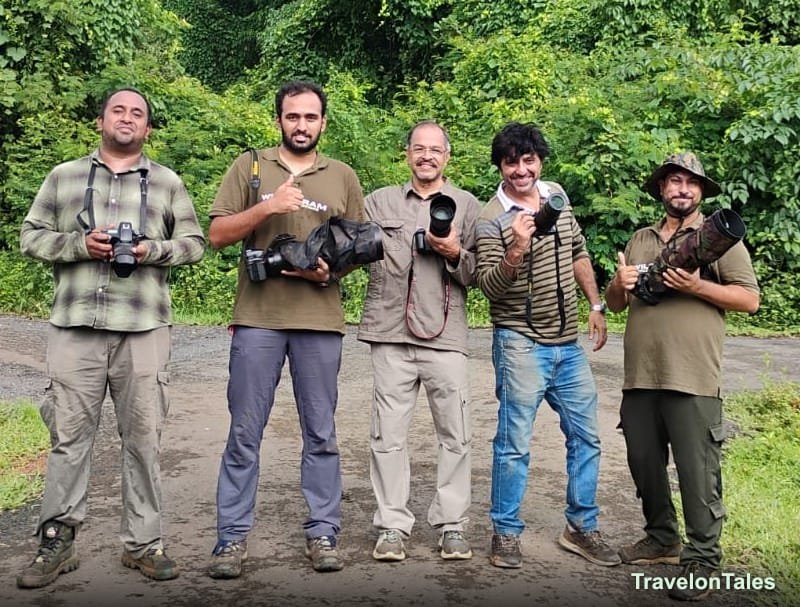
The birding team — Sindhudurg, monsoon 2026
Thank You
None of these sightings would have been possible without the team at Wildagram Wildlife Expeditions. From tracking down the Oriental Dwarf Kingfisher’s nesting holes to spotting a roosting Brown Wood Owl high in the canopy — their field knowledge turned a good trip into a great one.
Thanks also to Vanoshi Forest Homestay for the warm hospitality, the home-cooked meals, and for being right at the doorstep of some of the best birding in the Konkan.
If you are planning a monsoon birding trip to Sindhudurg, reach out to Wildagram — you won’t be disappointed.
All photographs © TravelonTales