
Birds of Sindhudurg — Field Guide with Photos & Facts

Birds of Sindhudurg — Field Guide with Photos & Facts
Western Ghats · Monsoon

Birds of Sindhudurg

Twenty birds we found in one monsoon week — where each one lives, how it flies, and what it eats. No jargon. Just the things worth knowing.

Every bird is solving the same three problems: where to live, how to move, and what to eat. Once you know a bird’s answers, you stop hunting randomly and start looking in the right place.

A kingfisher that eats lizards will not be sitting over open water. A pigeon that eats figs will be in a fruiting tree, not on the ground. This guide gives you those three answers for every bird we photographed in Sindhudurg, Maharashtra, during the 2026 monsoon.

Tap any photograph to see it full screen.

🌿HabitatWhere to point your eyes
🪶FlightHow it moves through air
🍽️FoodWhat keeps it there

The Kingfishers

Three species, three completely different jobs
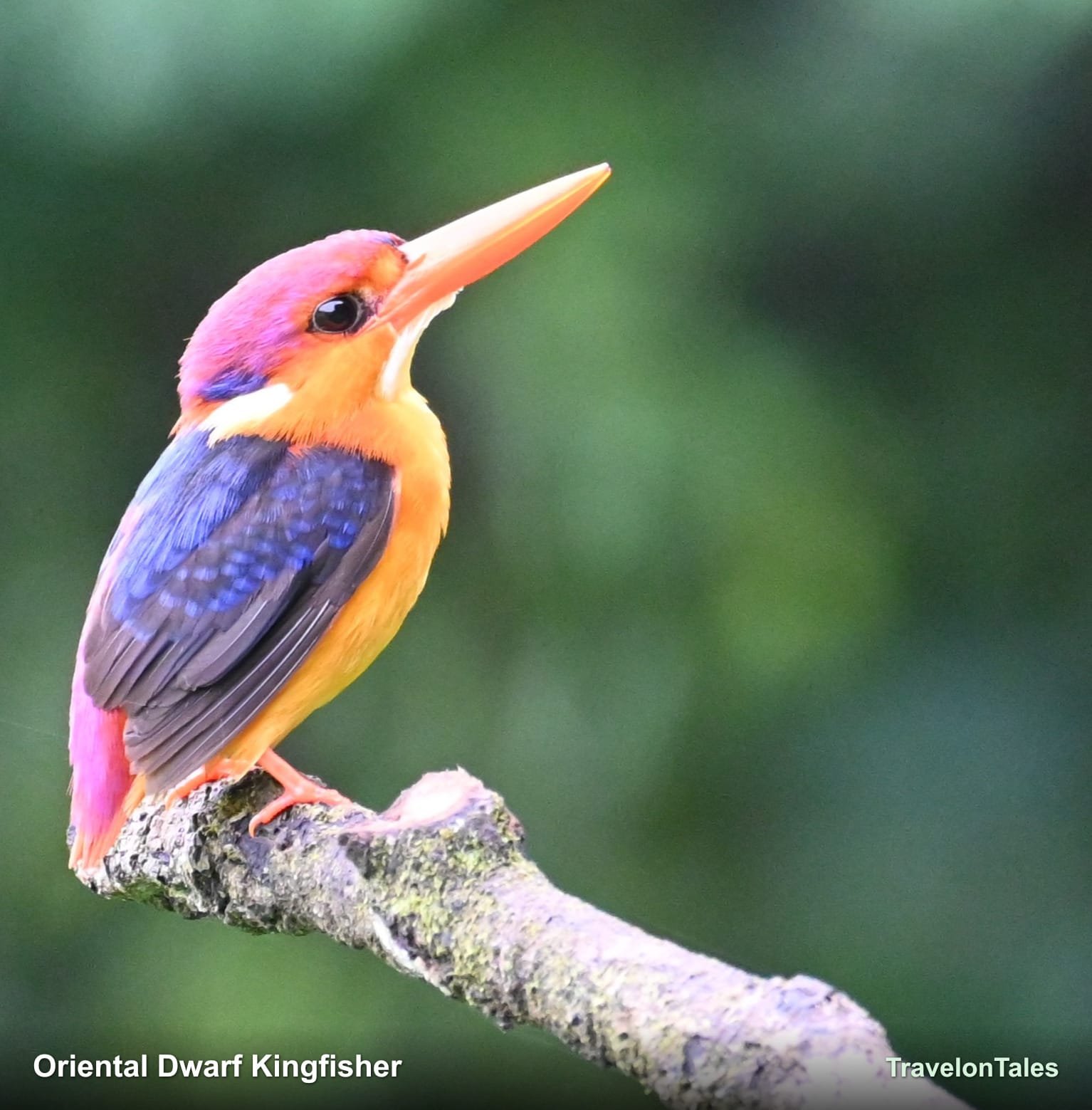
1 Oriental Dwarf Kingfisher perched by a forest stream

Oriental Dwarf Kingfisher

Ceyx erithaca · 13 cm

The reason most photographers come to Sindhudurg. A thumb-sized bird in orange, lilac and blue that arrives with the rain in June and leaves by September.
🌿HabitatDark, shaded forest streams. It likes deep shade and low perches close to the water — often knee height, not treetop.
🪶FlightAn orange blur. Low, fast and dead straight down the stream line. You usually see the flash after it has already gone.
🍽️FoodMostly insects, spiders, geckos and small frogs. Fish are a side dish, not the main course.
Did you know? Despite the name, this kingfisher is barely a fisher. It hunts the forest floor more than the water, which is why you find it in shade rather than over open pools.
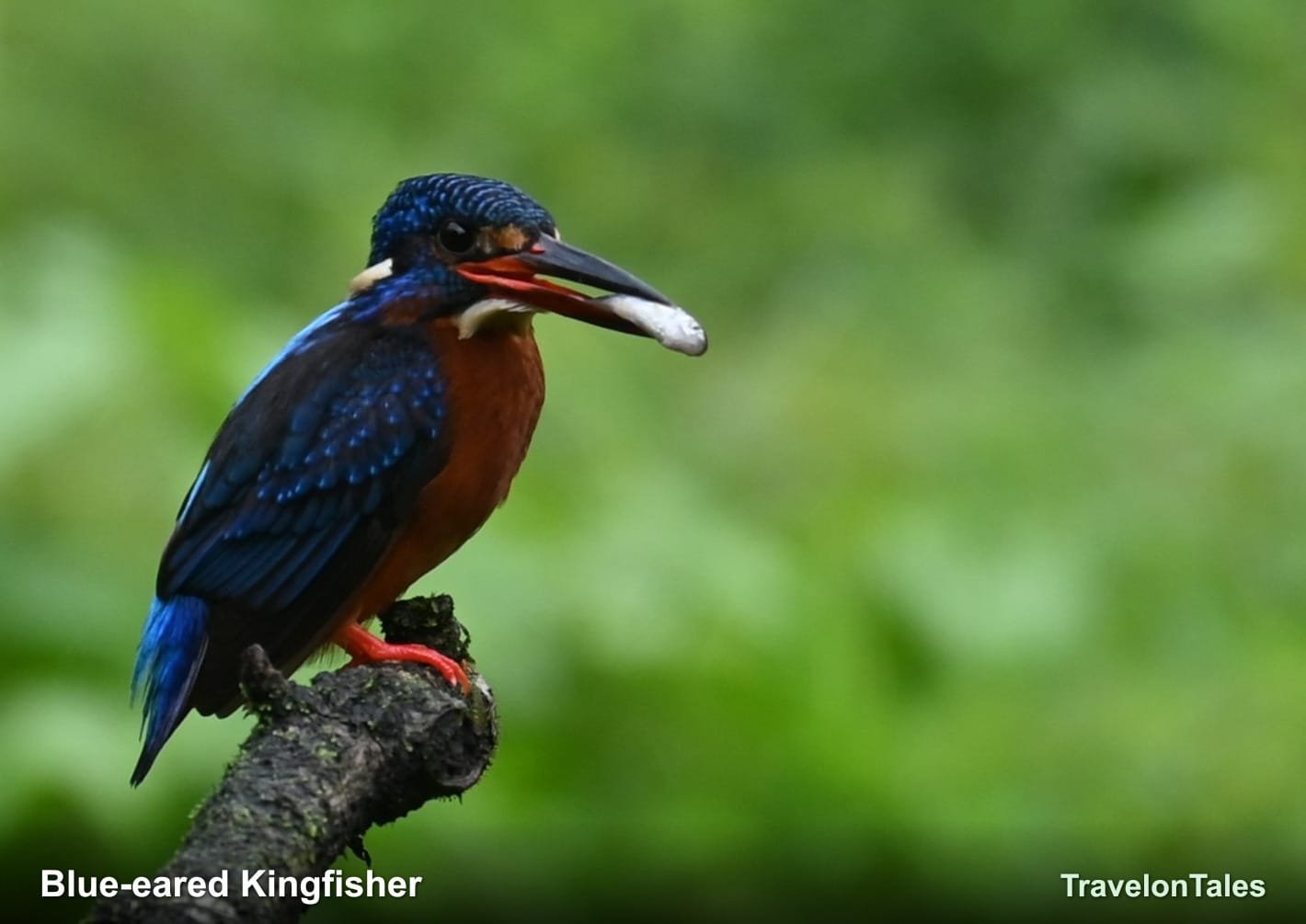
2 Blue-eared Kingfisher holding a fish

Blue-eared Kingfisher

Alcedo meninting · 16 cm

The Common Kingfisher’s shy forest cousin — deeper blue, and far less willing to sit in the open.
🌿HabitatShaded streams inside forest. Where the Common Kingfisher takes open ponds and canals, this one takes the dark water under canopy.
🪶FlightA low, arrow-straight dash a few inches above the water. Electric blue, gone in a second.
🍽️FoodSmall fish, tadpoles and water insects. It watches from a low branch, dives, and returns to the same perch to swallow head-first.
Did you know? The quickest way to separate it from the Common Kingfisher is the cheek. This bird’s ear patch is blue; the Common Kingfisher’s is orange.
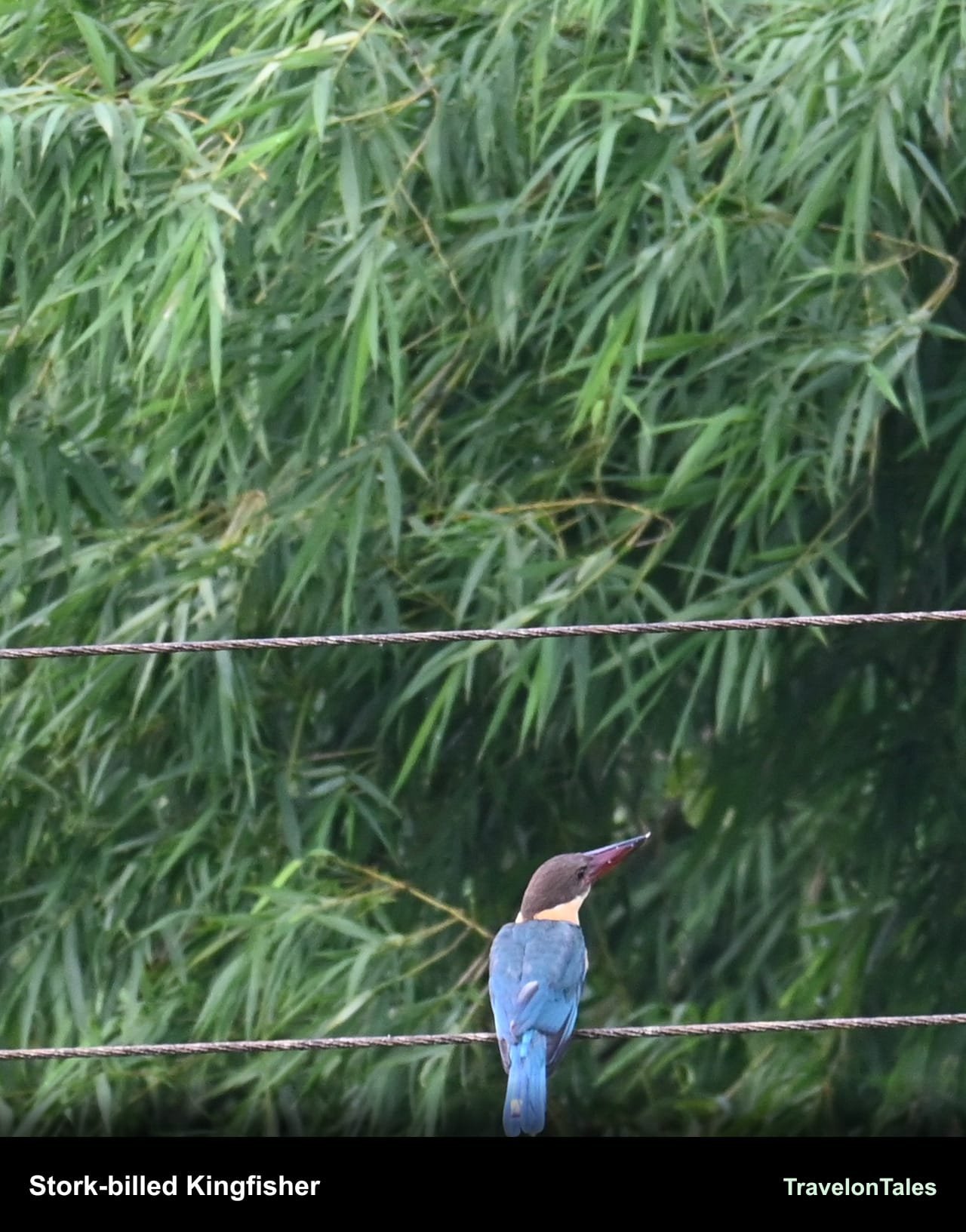
3 Stork-billed Kingfisher perched on a wire

Stork-billed Kingfisher

Pelargopsis capensis · 35 cm

The giant of the family, carrying a red bill so heavy it looks borrowed from a much larger bird.

🌿HabitatWooded riverbanks, estuaries and backwaters. It sits high and in the open — wires, dead branches, bridge rails.
🪶FlightHeavy and unhurried. Slow, deliberate wingbeats that look almost laboured next to the smaller kingfishers.
🍽️FoodAnything it can overpower — fish, frogs, crabs, large insects, even mice and the chicks of other birds.
Did you know? You will often hear it before you see it. The call is a loud, ringing cackle that carries right across a river.

The Hunters

One built for silence, one built for soaring
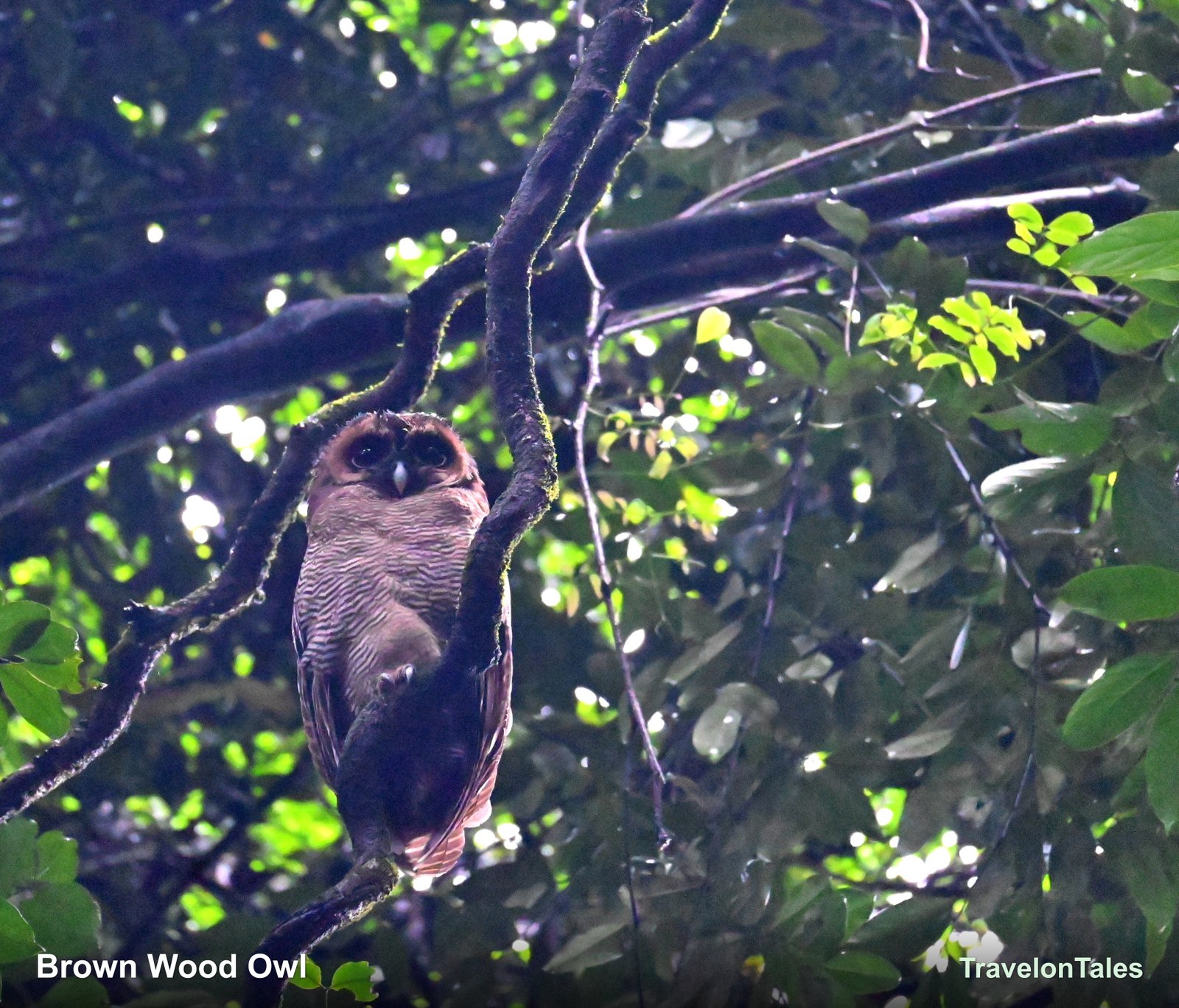
4 Brown Wood Owl staring directly at the camera

Brown Wood Owl

Strix leptogrammica · 45–53 cm

A big, dark-eyed owl that spends the day pressed motionless against a trunk, looking exactly like bark.

🌿HabitatMature, dense forest. It roosts by day in the darkest part of the canopy and needs old trees with real cover.
🪶FlightCompletely silent. The leading edge of each flight feather is fringed and soft, which breaks up the sound of air over the wing.
🍽️FoodRats, mice, small birds, lizards and large insects, hunted from a perch after dark.
Did you know? Most owls you picture have yellow eyes. This one’s are deep chocolate-brown — a good field mark, and unusually expressive at close range.
5 Crested Serpent Eagle Seen — no photo

Crested Serpent Eagle

Spilornis cheela · 56–74 cm

The forest raptor you hear before you see. It announces itself constantly while circling, which makes it one of the easiest big birds to find.

🌿HabitatWooded hills and forest edge. It perches inside the canopy on a shaded branch and watches the ground below, so scan mid-height, not the treetops.
🪶FlightSlow, wide circles on broad rounded wings held in a shallow V, with bold white bands across wing and tail. It calls almost the whole time it soars.
🍽️FoodSnakes above all, plus lizards and frogs. It drops onto prey from a perch rather than chasing it down.
Did you know? Its legs are covered in thick, coarse scales — armour that gives it some protection when it takes on a snake. The black-and-white crest goes up when the bird is alarmed.

The Forest Floor and the Undergrowth

Birds you hear long before you see
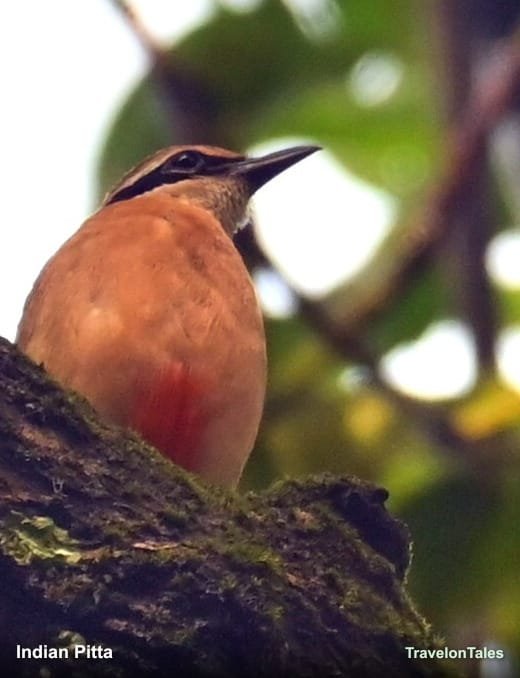
6 Indian Pitta perched on a mossy branch

Indian Pitta

Pitta brachyura · 19 cm

Known in Marathi as Navrang — “nine colours”. A ground bird painted like a parrot that somehow stays invisible in leaf litter.
🌿HabitatDamp forest floor and thick undergrowth. Like the dwarf kingfisher, it is a monsoon breeding visitor to the Western Ghats.
🪶FlightShort, whirring bursts low between patches of cover, flashing a white wing patch. It walks and hops far more than it flies.
🍽️FoodBeetles, ants, termites and earthworms, found by flicking dead leaves aside with sideways sweeps of the bill.
Did you know? Its two-note whistle — wheet-tieu — is one of the classic sounds of the monsoon, called at dawn and again at dusk. Learn that whistle and you will find the bird.
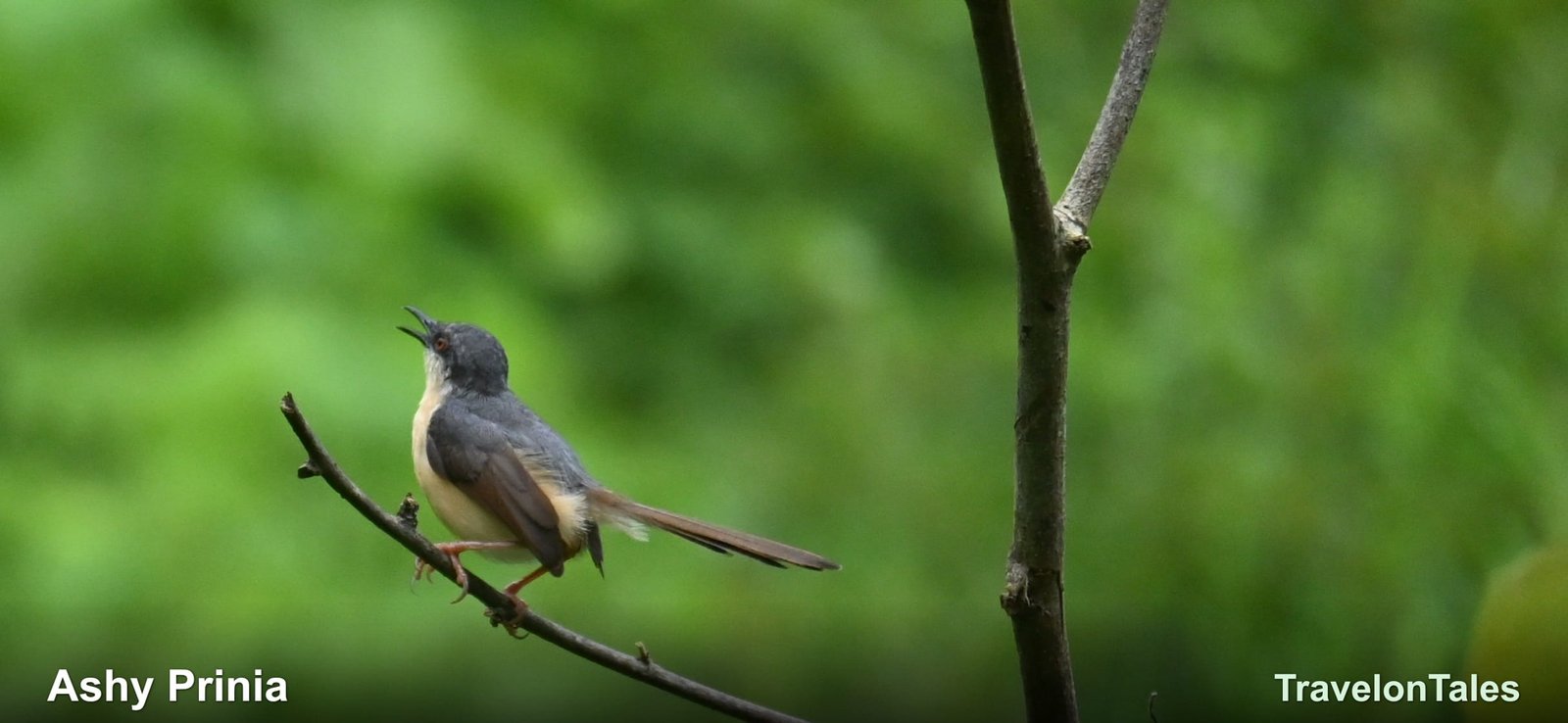
7 Ashy Prinia calling from a branch

Ashy Prinia

Prinia socialis · 13 cm

A small grey scrub warbler with a long tail it cannot seem to keep still.
🌿HabitatScrub, tall grass, garden hedges and forest edge. It avoids deep forest and loves messy, weedy ground.
🪶FlightWeak and jerky. Short low hops from bush to bush with the tail pumping up and down on landing.
🍽️FoodSmall insects and caterpillars gleaned off stems and leaves, with occasional nectar.
Did you know? It can make a sharp electric snap in flight. The sound is thought to come from the wings, not the throat.
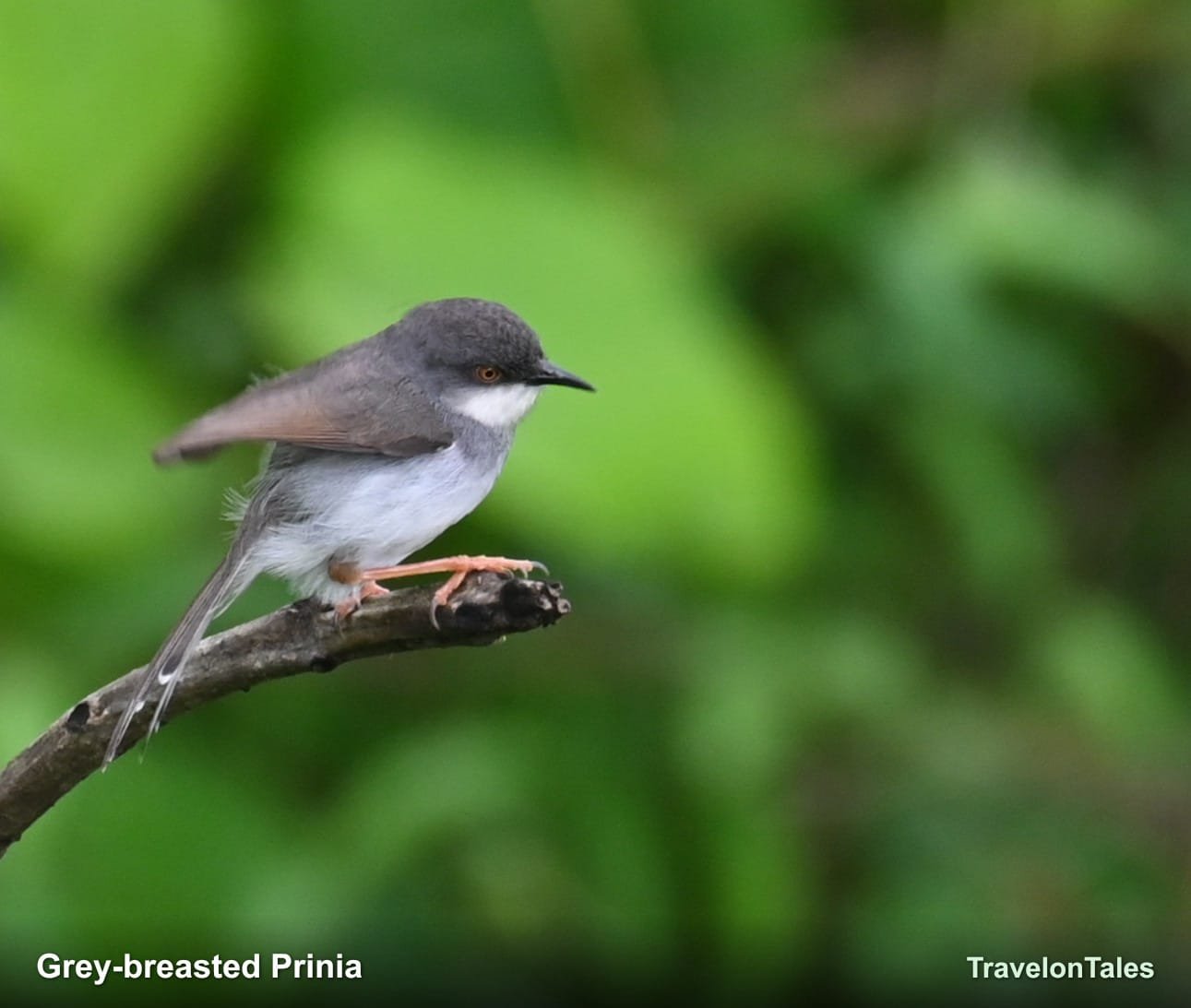
8 Grey-breasted Prinia in breeding plumage

Grey-breasted Prinia

Prinia hodgsonii · 11 cm

Smaller and plainer than the Ashy Prinia, and the one that changes clothes with the seasons.

🌿HabitatScrub, bamboo, grassland and open forest edge, usually in small restless parties rather than alone.
🪶FlightShort fluttering hops deep inside cover. It rarely crosses open ground in one go.
🍽️FoodTiny insects and larvae picked from foliage.
Did you know? In the breeding season it grows a clean grey breast band and a white throat. By winter that band fades away — the same bird can look like two different species across the year.

The Canopy Feeders

Look up — and look for fruiting trees
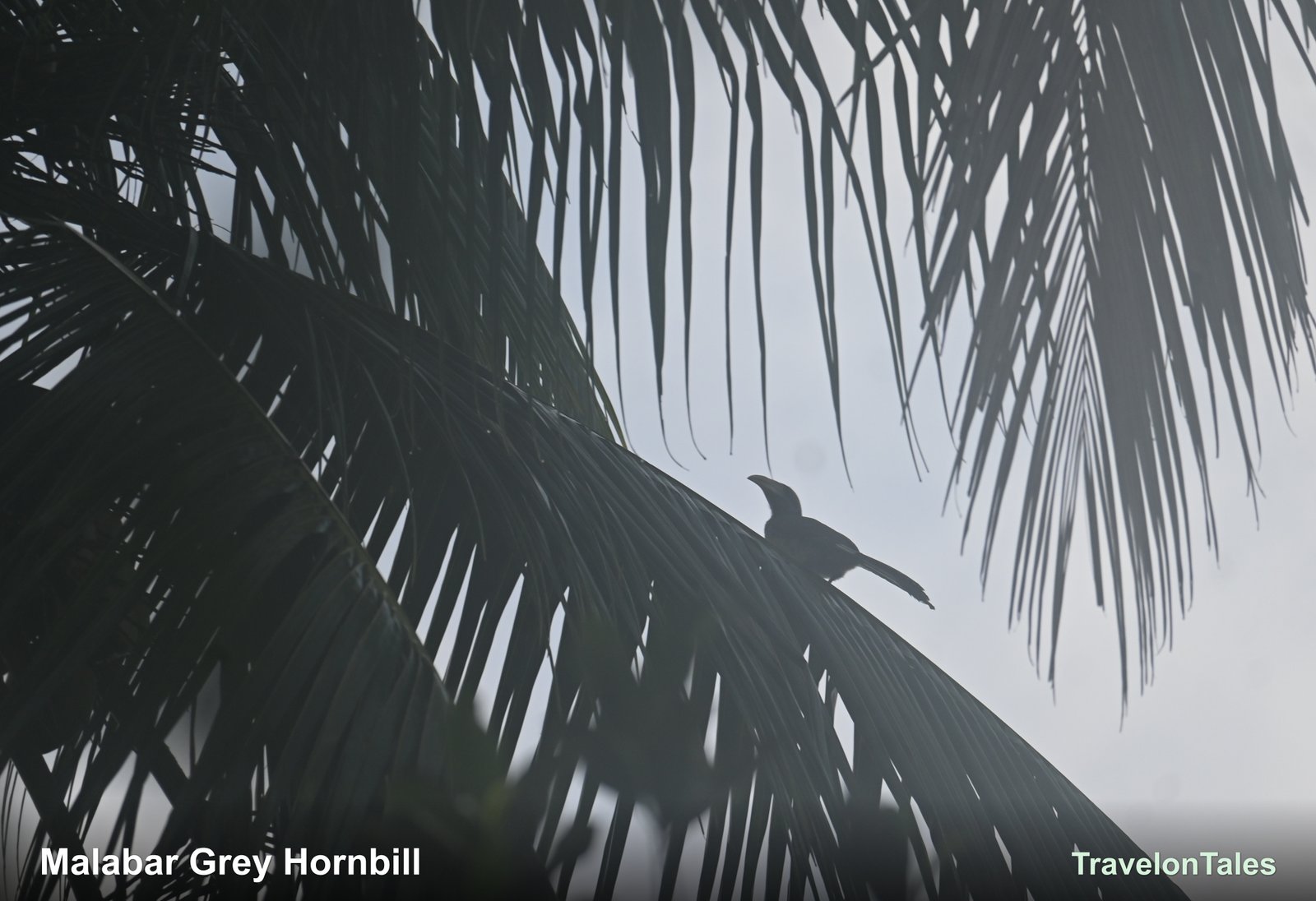
9 Western Ghats endemic Malabar Grey Hornbill silhouetted against the sky

Malabar Grey Hornbill

Ocyceros griseus · 45 cm

Found nowhere on earth except the Western Ghats. A noisy, cackling fruit specialist that travels the canopy in small parties.
🌿HabitatEvergreen forest canopy. It needs big old trees — both for fruit and for the nesting cavities it cannot dig itself.
🪶FlightUndulating and audible: a few heavy flaps, then a glide, then a dip. You often hear the wingbeats before you spot the bird.
🍽️FoodOverwhelmingly figs and other forest fruit, with insects and lizards taken opportunistically.
Did you know? The female seals herself inside a tree hollow with mud, leaving only a narrow slit. The male feeds her and the chicks through that slit for weeks until they break out.
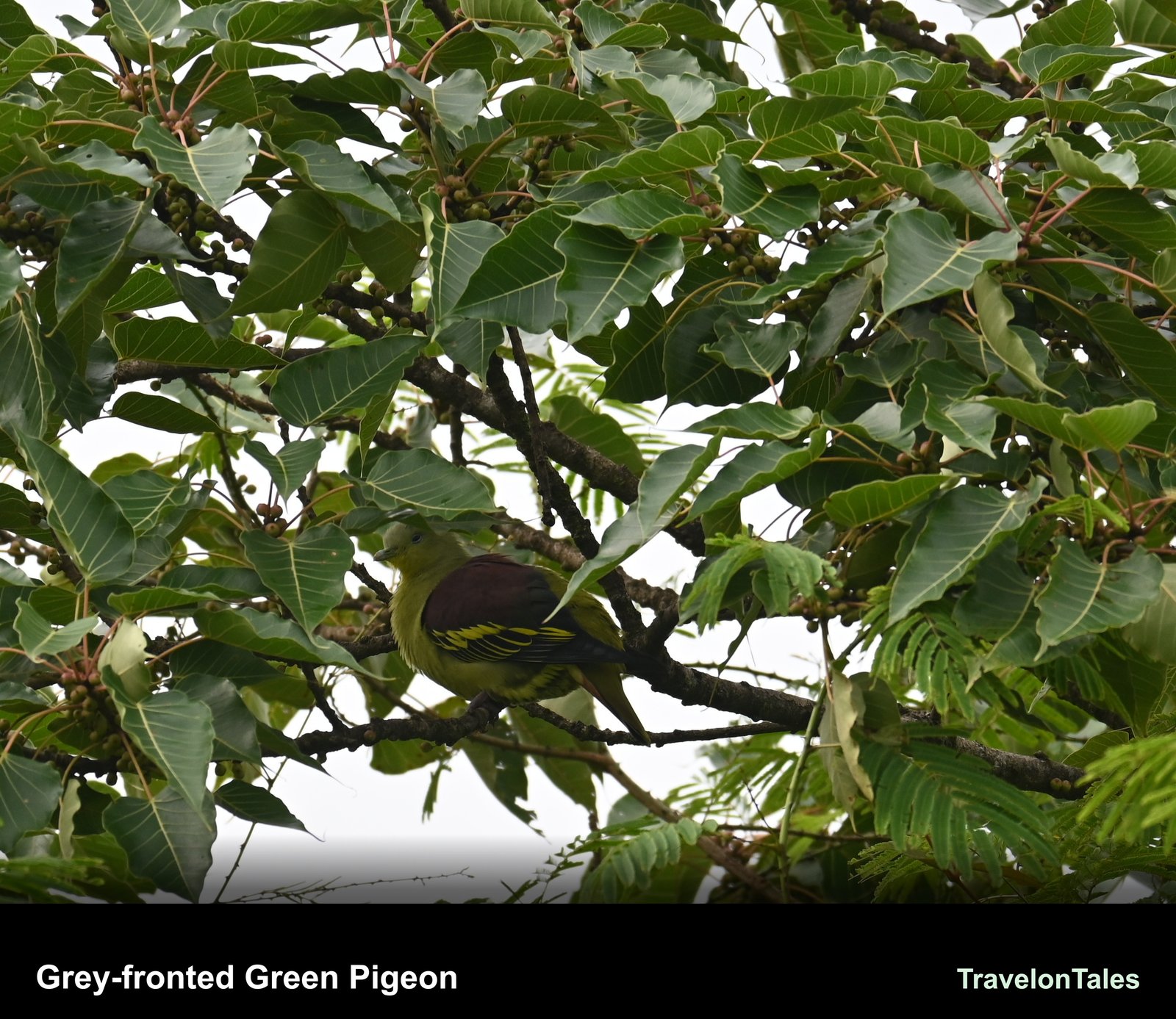
10 Western Ghats endemic Grey-fronted Green Pigeon in the canopy

Grey-fronted Green Pigeon

Treron affinis · 26 cm

A green pigeon that sits so still among green leaves it can take ten minutes to find a bird you already know is there.
🌿HabitatEvergreen forest canopy, almost always in a fruiting tree. Find the figs and you find the pigeons.
🪶FlightFast, powerful and direct, with a distinct whistle of air through the wings on take-off.
🍽️FoodAlmost entirely fruit, especially figs. It clambers along thin branches like a parrot to reach them.
Did you know? It was long treated as the same species as the Yellow-footed Green Pigeon. It is now recognised as its own bird, found only in the Western Ghats.
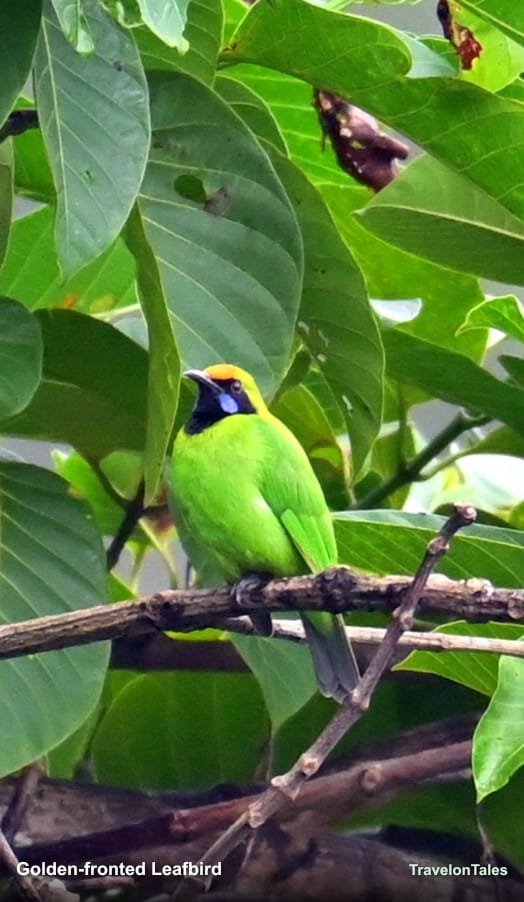
11 Golden-fronted Leafbird showing orange forehead and blue throat

Golden-fronted Leafbird

Chloropsis aurifrons · 19 cm

Leaf-green with a burnt-orange forehead and a violet-blue throat — beautiful, and almost impossible to see against foliage.
🌿HabitatMiddle and upper canopy of forest and well-wooded country, especially flowering trees.
🪶FlightQuick and agile, usually short hops between branches rather than long open crossings.
🍽️FoodA genuine three-way diet: insects, nectar and small fruit, switching with whatever the season offers.
Did you know? It is an excellent mimic. A leafbird can copy drongos and other species so well that birders regularly chase the wrong bird.
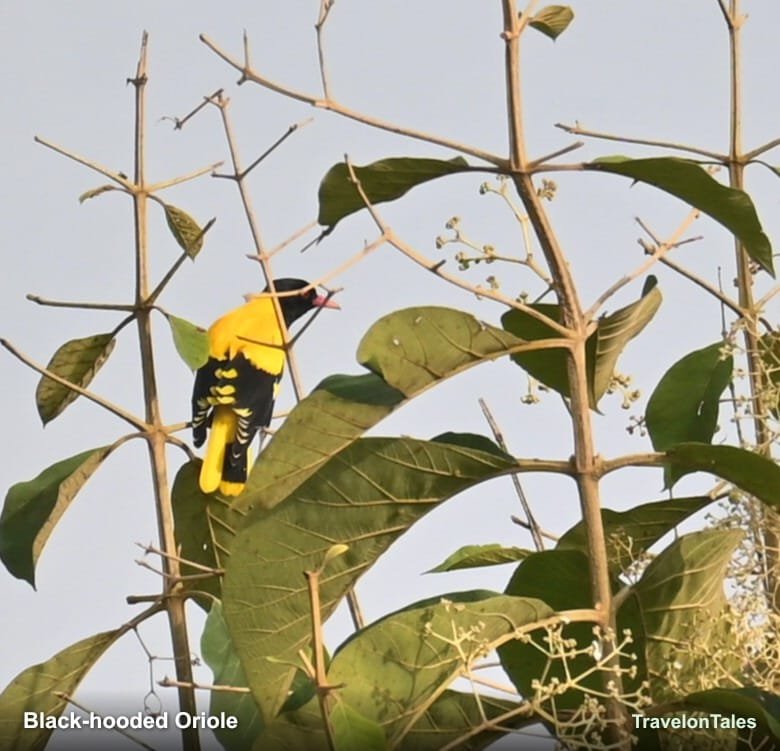
12 Black-hooded Oriole in a flowering tree

Black-hooded Oriole

Oriolus xanthornus · 24 cm

Golden-yellow with a solid black hood and a coral-pink bill. Once seen, never confused with anything else.
🌿HabitatOpen woodland, groves and big village trees. It likes wooded country with gaps, not closed forest.
🪶FlightStrong and undulating, dipping between treetops in a shallow wave.
🍽️FoodFruit and nectar, plus a lot of caterpillars and insects — especially while feeding young.
Did you know? Its nest is a deep woven cradle slung like a hammock between the arms of a forked branch, hanging clear of the trunk where snakes and squirrels struggle to reach.
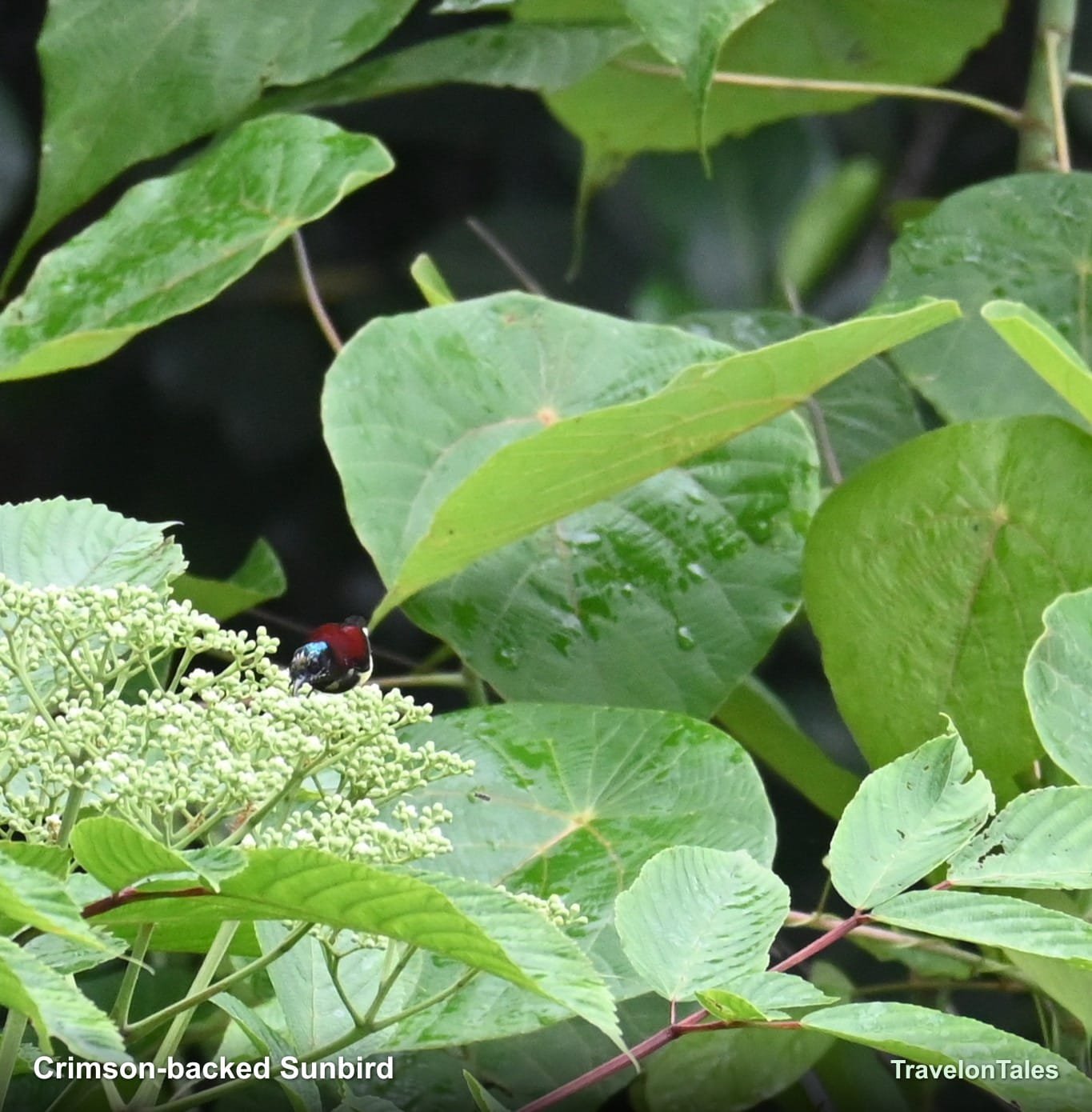
13 Western Ghats endemic Crimson-backed Sunbird male feeding on flower buds

Crimson-backed Sunbird

Leptocoma minima · 8 cm

India’s smallest sunbird, and one of its smallest birds of any kind. A male in sunlight looks like a moving jewel.

🌿HabitatForest edge, flowering shrubs and mid-canopy in the Western Ghats. Follow the flowers.
🪶FlightFast, darting and almost never still. It can hover briefly at a bloom, though it prefers to perch and lean in.
🍽️FoodNectar first, then tiny insects and spiders — essential protein, especially for growing chicks.
Did you know? Its tongue is tubular and brush-tipped, built to draw nectar out of deep flowers the way a straw draws liquid.

Trunk, Air and Open Ground

Specialists that own one particular space
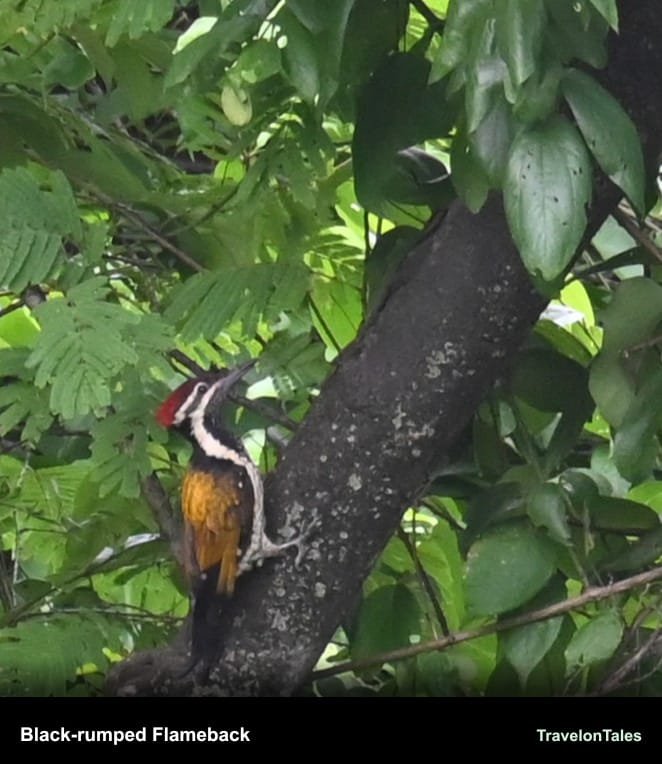
14 Black-rumped Flameback woodpecker on a tree trunk

Black-rumped Flameback

Dinopium benghalense · 26–29 cm

A golden-backed woodpecker common enough to turn up in village gardens, and loud enough that you rarely miss it.
🌿HabitatOpen forest, plantations, orchards and village trees. One of the most adaptable woodpeckers in India.
🪶FlightDeeply undulating — a burst of flaps, then wings snapped shut for a swooping dip, over and over.
🍽️FoodAnts and termites above all, plus beetle grubs dug from under bark. It also drinks nectar and takes fruit.
Did you know? Its tongue is far longer than its bill, tipped with backward-facing barbs and coated in sticky saliva — a purpose-built tool for pulling ants out of tunnels.
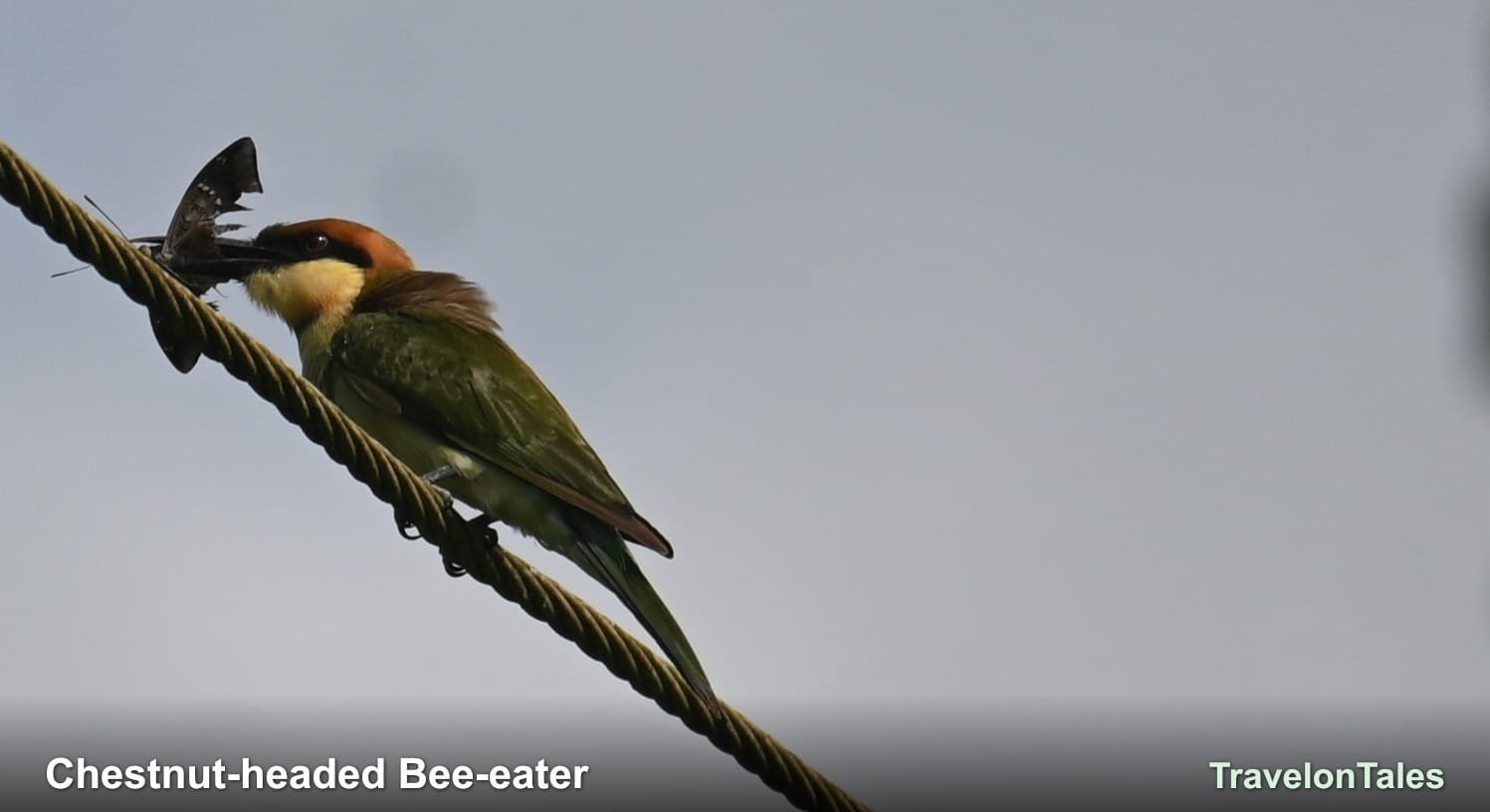
15 Chestnut-headed Bee-eater holding a butterfly

Chestnut-headed Bee-eater

Merops leschenaulti · 18–20 cm

A green bird with a rich chestnut cap that hunts by launching off a perch, catching an insect in mid-air, and returning to the same twig.
🌿HabitatForest clearings, edges and riverbanks. It wants open air to hunt in and an exposed perch to watch from.
🪶FlightLight and buoyant. Glides out, twists to snatch prey, and curls straight back — one of the most elegant flights of any Indian bird.
🍽️FoodBees, wasps, dragonflies and butterflies, all taken on the wing.
Did you know? Before swallowing a bee, it beats the insect against the perch and rubs the tail end hard to discharge the sting and squeeze out the venom.
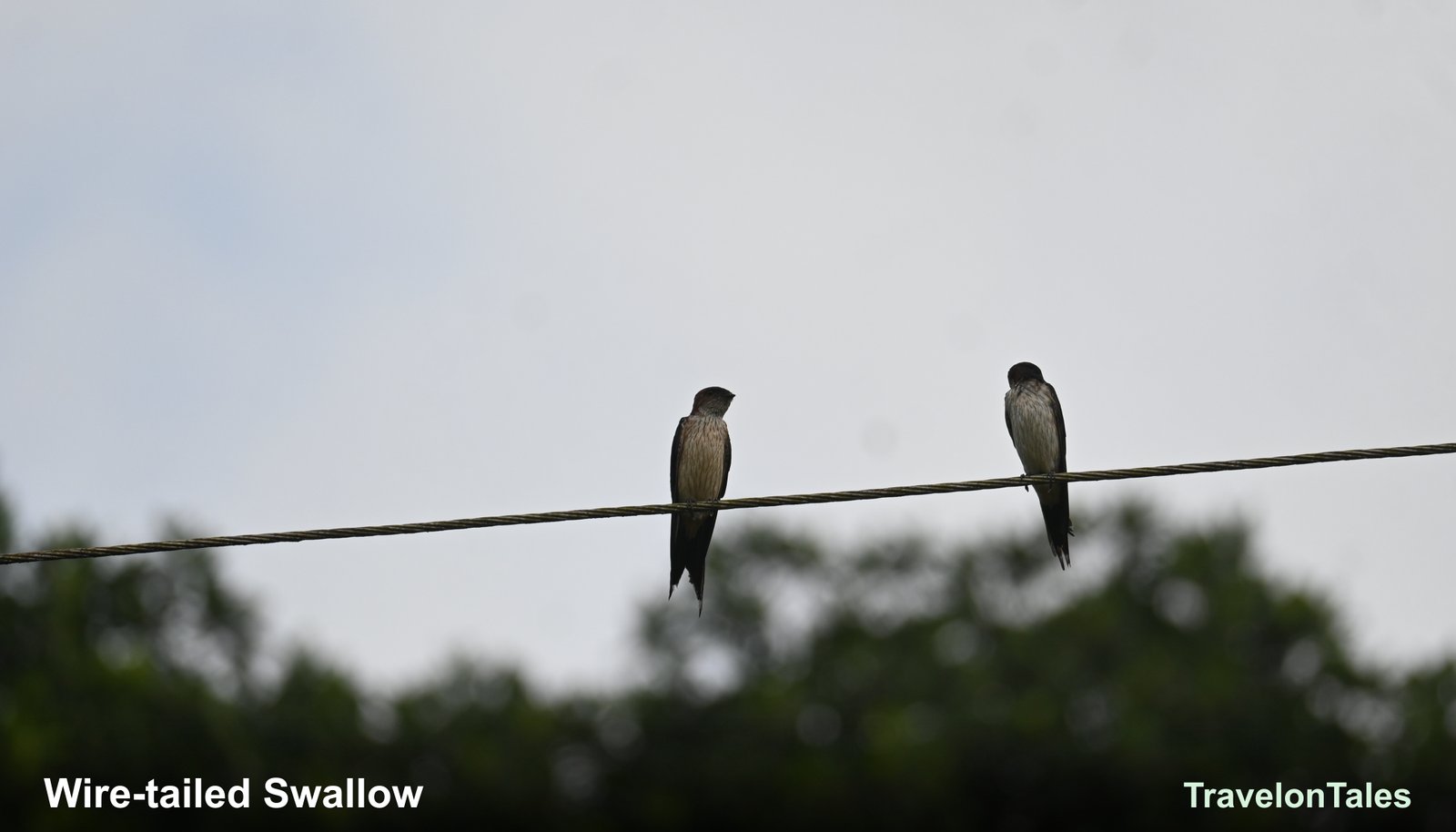
16 Pair of Wire-tailed Swallows on a wire

Wire-tailed Swallow

Hirundo smithii · 14 cm

Glossy blue above, snow-white below, with a chestnut cap and two absurdly fine tail streamers.

🌿HabitatAlways near water — rivers, bridges, culverts and village walls, where it builds a mud cup under an overhang.
🪶FlightFast, low and endlessly acrobatic. It banks, dips and turns over water almost without pause.
🍽️FoodFlying insects, caught entirely in the air. It essentially never feeds on the ground.
Did you know? The two “wires” are the outermost tail feathers, drawn out into filaments so thin they nearly vanish against the sky.
17 Indian Paradise Flycatcher Seen — no photo

Indian Paradise Flycatcher

Terpsiphone paradisi · 20 cm body, tail to 30 cm

A small bird with a glossy black head, a stiff crest, and — on adult males — two tail feathers so long they trail like ribbons through the shade.
🌿HabitatShaded forest, bamboo, mango groves and dense gardens. It stays in the gloom of the middle storey and avoids open sun.
🪶FlightShort fluttering sallies out from a perch to snatch an insect and back again, the male’s streamers whipping behind him the whole way.
🍽️FoodFlying insects — small flies, moths and beetles — taken almost entirely in mid-air.
Did you know? Males come in two colour forms. Young males are rufous-brown, and some moult into a startling pure white as they age — same bird, same species, completely different look.
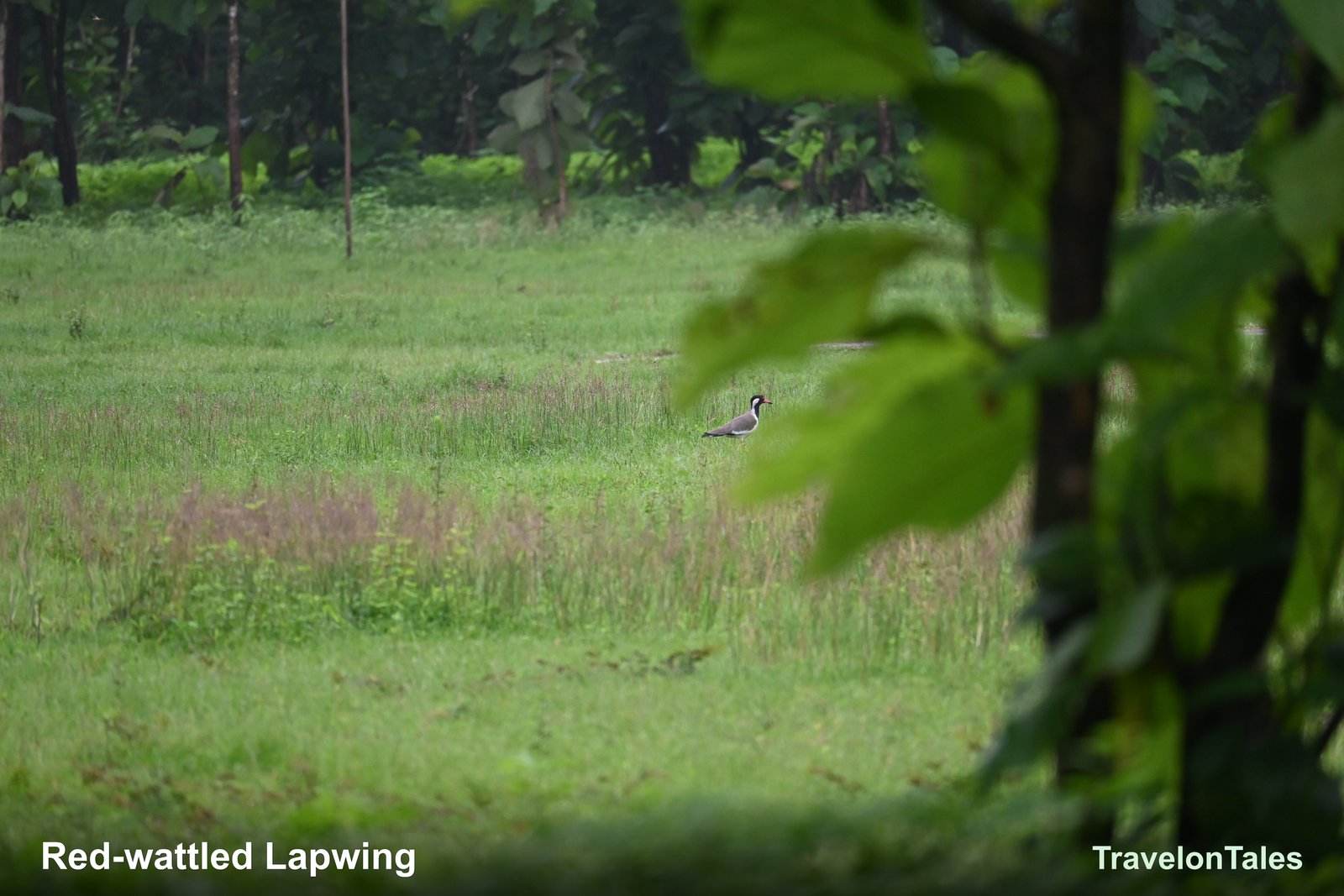
18 Red-wattled Lapwing standing in a green paddy field

Red-wattled Lapwing

Vanellus indicus · 33 cm

The self-appointed alarm system of the Indian countryside. If anything is moving in the field, this bird has already announced it.
🌿HabitatOpen ground — paddy fields, riverbanks, dry scrub and wetland margins. It lives on foot in open country.
🪶FlightSlow and flappy on broad rounded wings, usually low and always noisy.
🍽️FoodInsects, worms, snails and small crustaceans, picked off the ground in a run-stop-peck rhythm.
Did you know? It builds no nest. The eggs sit in a bare scrape on open ground, patterned so exactly like surrounding pebbles that people walk past them without noticing.
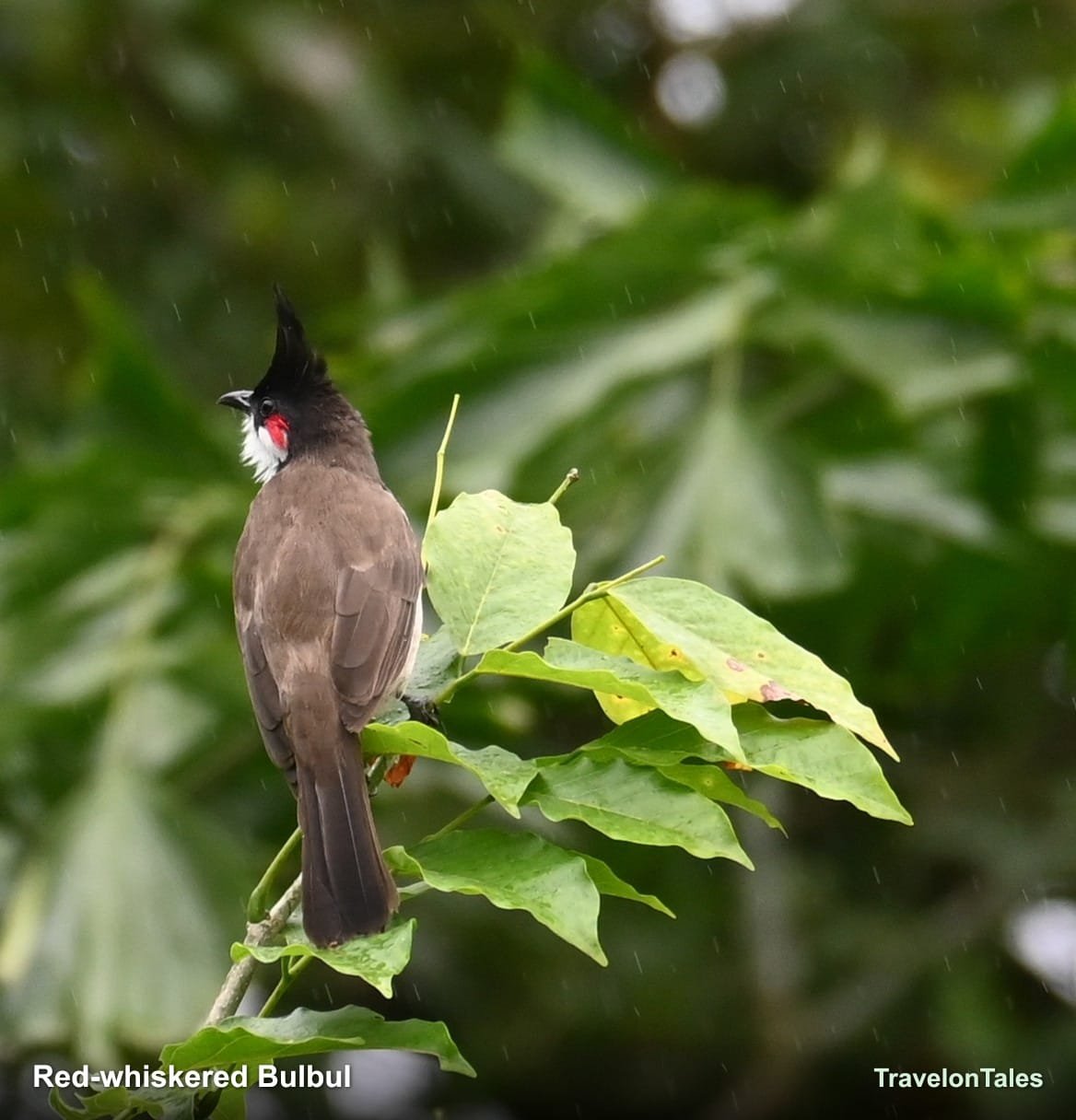
19 Red-whiskered Bulbul with raised crest in the rain

Red-whiskered Bulbul

Pycnonotus jocosus · 20 cm

A tall black crest, a white cheek and a scarlet dash below the eye — the “whisker” that gives the bird its name.
🌿HabitatGardens, forest edge, scrub and plantations. It thrives alongside people rather than avoiding them.
🪶FlightShort, flitting hops between bushes, usually with a cheerful call on landing.
🍽️FoodBerries and small fruit mainly, plus nectar and insects. It is an important seed disperser for garden and edge plants.
Did you know? That upright crest is not fixed. A relaxed bird lowers it; an alert or excited one snaps it straight up, which makes crest position a decent mood reading.
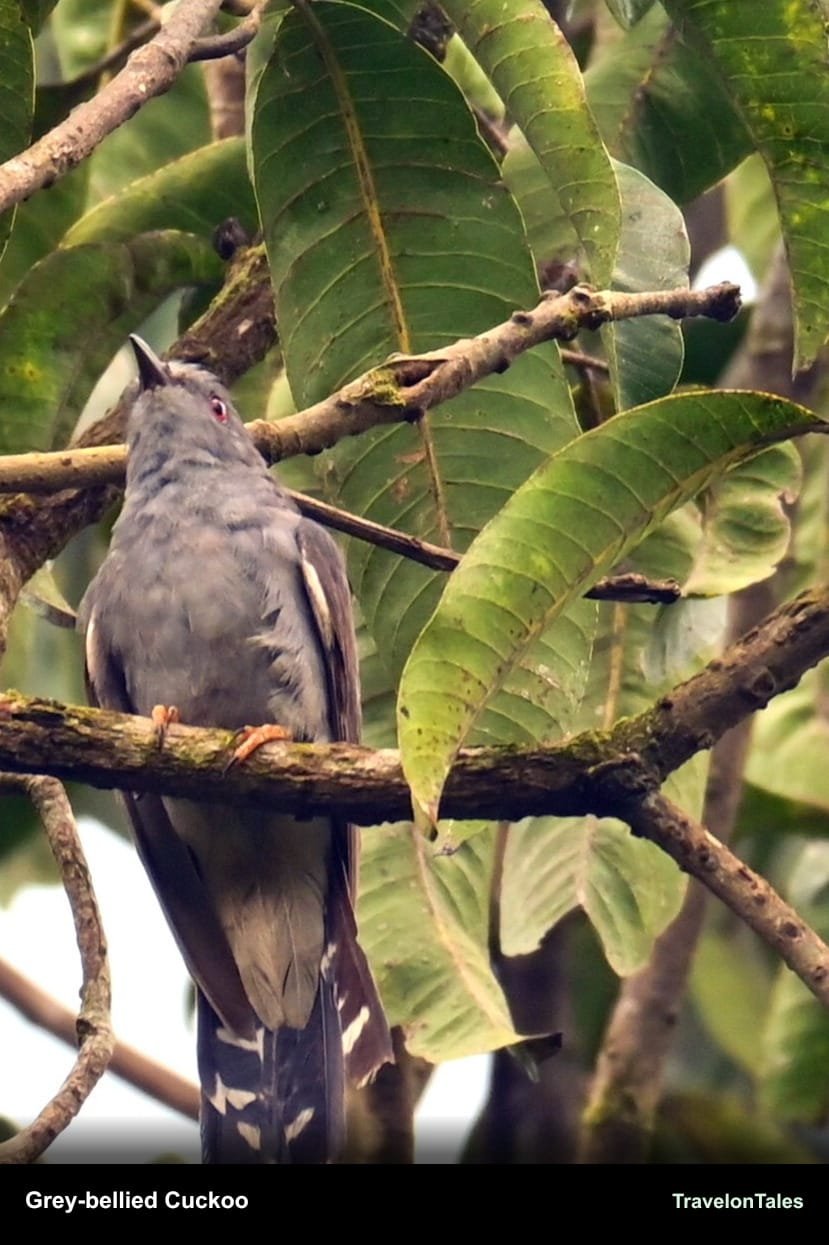
20 Grey-bellied Cuckoo perched among leaves

Grey-bellied Cuckoo

Cacomantis passerinus · 23 cm

A slim grey cuckoo that slips quietly through the canopy — and outsources every part of raising its young.

🌿HabitatWell-wooded country, forest edge, gardens and scrub — anywhere its host birds are nesting.
🪶FlightFast, direct and slightly hawk-like, which is thought to help scare host birds off their nests.
🍽️FoodCaterpillars, including the hairy, irritant kinds that most other birds refuse to touch.
Did you know? It is a brood parasite. It lays its eggs in the nests of prinias and warblers — including the two prinias on this page — and lets them do the feeding.

One That Isn’t a Bird

Too good to leave out
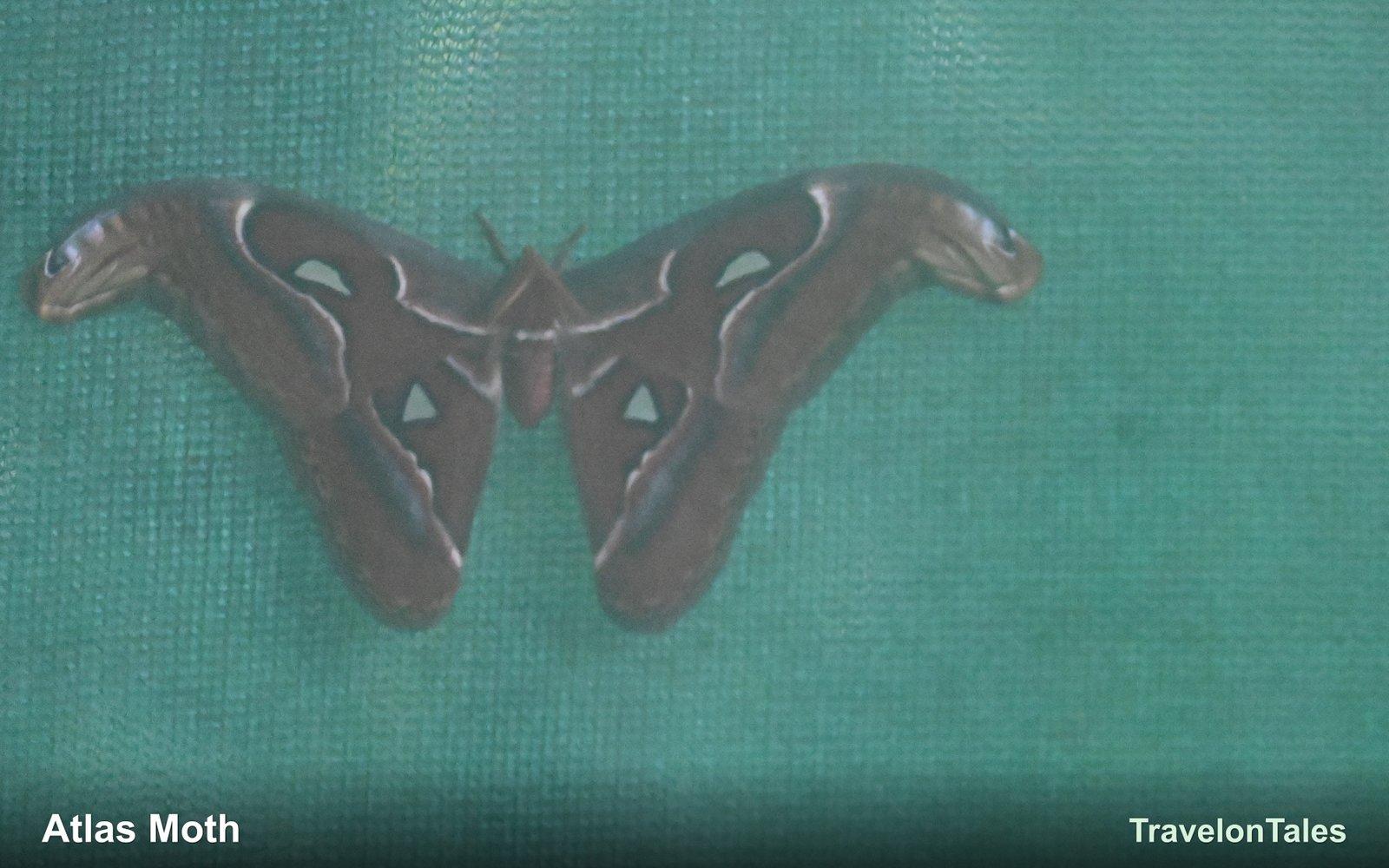
Atlas Moth showing snake-head wing tips

Atlas Moth

Attacus atlas · wingspan up to 24 cm

One of the largest moths on earth, and the strangest thing we found on the whole trip.

🌿HabitatHumid tropical forest. Adults rest by day on trunks and walls with wings spread flat and open.
🪶FlightSlow, heavy and fluttering. With that wing area it is a poor flier and does not travel far.
🍽️FoodNothing at all. The adult has no working mouthparts.
Did you know? The adult moth lives roughly one to two weeks entirely on fat stored while it was a caterpillar. Its only job is to breed. Look at the wingtips too — each one is patterned like the head of a snake, which is thought to scare off predators.

How to Use Any of This

The fastest way to improve your birding is to stop scanning everything equally. Decide what a bird eats, and you have narrowed the search to a handful of places.

Want fruit-eaters? Find a fruiting fig and sit down. Green pigeons, hornbills, barbets and bulbuls will come to you.

Want aerial hunters? Find an open clearing with exposed perches, and wait for the bee-eaters and swallows to work the airspace.

Want the forest-floor birds? Walk shaded stream banks slowly and quietly, and listen more than you look. That is where the pittas and dwarf kingfishers are.

All photographs on this page were taken in Sindhudurg, Maharashtra, during the 2026 monsoon.

×
Scroll to Top