
These deer photographs were made during our Panna Tiger Reserve trip in Madhya Pradesh. They show two animals that are easy to overlook while everyone searches the forest for a tiger: chital, also called spotted deer, and sambar. The photographs also show why a safari here is worth watching carefully even between tiger sightings.
Chital in Panna: spots, antlers and open ground
The chital in our photographs were visible in open grass and among trees. Their white spots remain visible on adult animals, making them fairly easy to recognise when the light is good. A stag has branching antlers; females do not. Look for the spotted coat first, then check the body shape and antlers before naming an animal from a distant view.

The wider frame matters. The grass, shade and distance are part of what a visitor actually sees from a safari vehicle. It is tempting to crop until the animal fills the frame, but keeping some habitat can make the photograph more useful for a reader planning a Panna safari.

Sambar in the dry forest
Sambar look different in the field. They are larger and generally darker, without the adult chital’s obvious rows of white spots. Their outline can be harder to pick out against trunks and dry leaves. In our Panna photograph, the sambar stands among the trees rather than out in open grass.
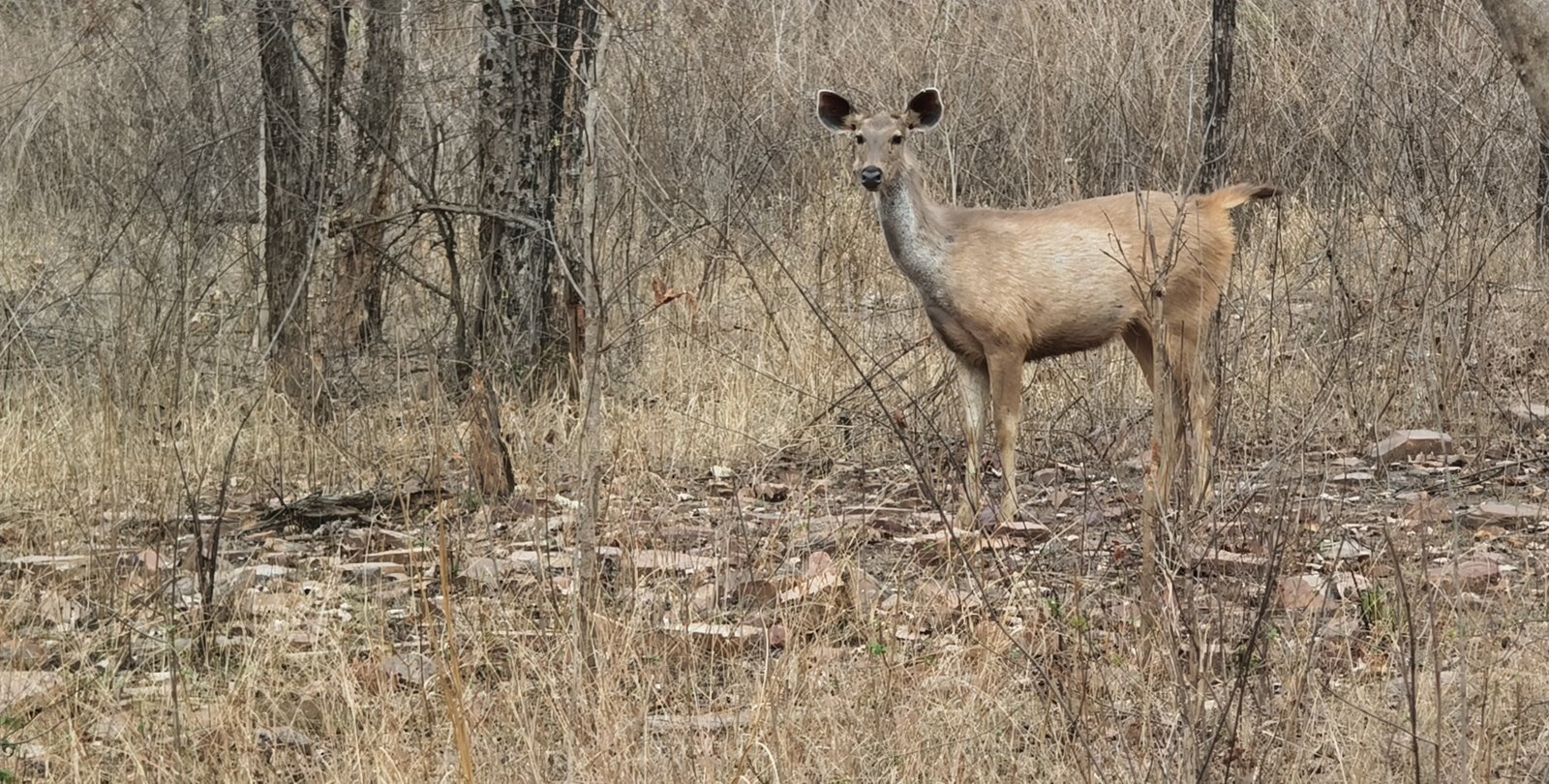
From a moving vehicle, take a moment to look into the spaces between trees. A deer may be close yet partly hidden by branches. We kept the surrounding forest in this photograph because the camouflage is part of the sighting.
How to tell chital and sambar apart
- Coat: adult chital show white spots; sambar have a plainer, darker coat.
- Build: sambar are generally bigger and heavier; chital have a slimmer appearance.
- Antlers: both species can have antlered males, so antlers alone are not enough. Check the coat and overall shape too.
- Photographing them: make one wide frame that shows the habitat and one closer frame if the animal stays visible. Keep the vehicle still and follow the guide’s directions.
These are field clues, not a reason to label every distant brown animal. If the view is brief or blocked, a caption such as “deer in the forest” is more honest than a confident species name.
Why deer matter on a Panna safari
Chital and sambar are part of Panna’s food web and can also alert other animals to danger. A deer standing still, looking in one direction, or calling may make a guide watch that section of forest more closely. A call is a clue, not a promise that a tiger will appear. The forest department’s Panna Tiger Reserve information lists both chital and sambar among the animals of the reserve.
For practical details about gates, permits and timing, read our Panna tiger safari guide. If you want to see what a tiger sighting looked like on this trip, our Panna tiger photographs are in a separate story. This page focuses on the deer and the forest they live in.
All wildlife photographs in this article are from our Panna trip. Animal sightings vary from one safari to another.