
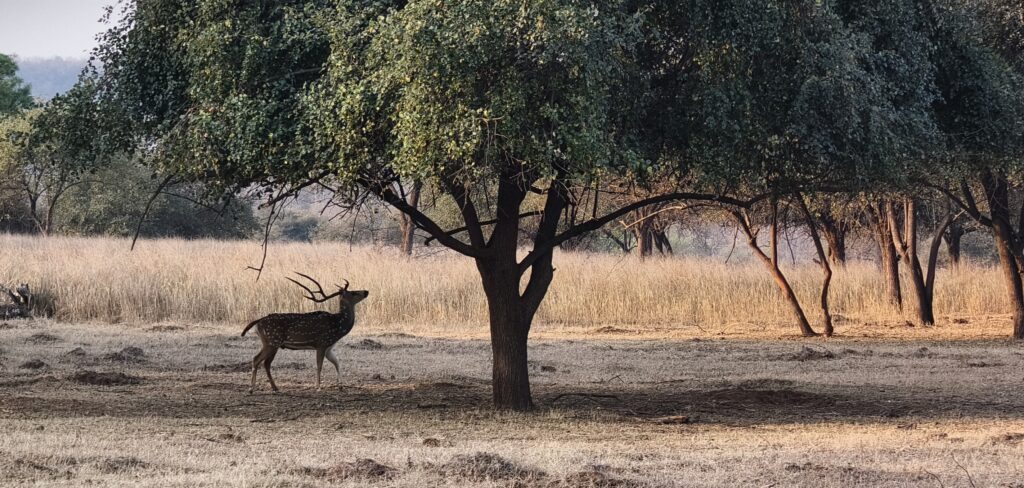
The Grace of Chital in Panna Tiger Reserve
Wildlife safaris often carry the promise of spotting the mighty tiger. But step into the forests of Panna Tiger Reserve, and you’ll quickly realise that the jungle is about so much more than the big cat. One of the most enchanting residents of these forests is the Spotted Deer (Chital, Axis axis).
Their spotted golden coats glimmer in the sunlight, and their antlers stand as natural crowns. Watching a lone buck under a tree, as seen in the photograph above, is a reminder that beauty in the wild is often found in the smallest, quietest moments.
Where You’ll Find Chital in Panna
- In open meadows, where they graze in herds.
- In shaded forest patches, like the one captured here.
- Near rivers and waterholes during early mornings or late afternoons.
- Often close to Langurs, with whom they share a mutual warning system against predators.
Safari Tips for Visitors to Panna
- Don’t just chase tigers – give yourself the gift of observing deer, birds, and the smaller wonders of the jungle.
- Photography tip: Morning light and golden evenings create magical frames for deer photography.
- Carry essentials: a camera, sunscreen, binoculars, a cap, and water.
- Practice patience: Sit still, and the forest will reveal its stories.
Fun Facts about Spotted Deer (Chital):
- Chital are active day and night, unlike many other deer species.
- Their white-spotted coats remain throughout life (not just in fawns).
- Male Chital (bucks) shed their antlers annually, which then regrow stronger.
- They are known for their musical alarm calls, often alerting other animals to predators.
Why Chital Sightings Matter in Your Safari
Spotting a herd of Chital—or a lone stag under the trees—is a spiritual moment of connection with the forest. While tigers symbolise raw power, deer embody calm elegance. Together, they balance the ecosystem and the safari experience.
Their presence indicates a healthy ecosystem, balancing predator-prey dynamics. More importantly, they remind every visitor that safaris are about the journey, not just the destination.
So, next time you’re in Panna Tiger Reserve, take a pause. Watch the way a herd moves like flowing water or how a lone stag stands still under a tree. The forest often whispers its magic through spotted deer, not always through stripes.
Chital in a dry forest
Panna is drier and rockier than the sal reserves, and the chital here behave differently for it. Herds are more scattered, they move further between water and grazing, and you find them on open rock and scrub rather than in shaded meadows.
That makes them easier to see and harder to approach. In open ground a chital herd notices a vehicle at a considerable distance, and the ones that let you close are usually the ones near a road they have grown used to.
Sharing the ground with chinkara
Panna is one of the few reserves where you can see chital and chinkara in the same morning, sometimes within sight of each other. It is a useful comparison.
- Chital: rufous, white-spotted for life, herds of ten to fifty, needs regular water, prefers some cover.
- Chinkara: sandy, unspotted, small groups or pairs, survives on very little water, prefers open scrub.
- Both sexes horned in chinkara; only male chital carry antlers.
- Chital antlers are shed and regrown. Chinkara horns are permanent.
Water in the hot months
By April the Ken and the remaining pools are doing all the work. Chital at Panna in summer are tied to water in a way they are not in winter, which is why waterhole sits are the single most productive tactic here in the pre-monsoon months.
It is also why summer is the best time for tiger sightings — the same water concentrates the prey and the predator.
Their role in the reintroduction
When Panna’s tigers were wiped out by 2009, one reason the reintroduction worked was that the prey base had survived. Chital, sambar and nilgai were still there in numbers, so relocated tigers had something to eat from the first week.
A reserve can restock tigers. It cannot quickly restock the deer that keep them alive, which is why prey monitoring gets more attention from managers than visitors ever notice.
Frequently asked questions
Are spotted deer common in Panna?
Yes, and they are a core part of the prey base that made the tiger reintroduction viable.
How do I tell chital from chinkara?
Chital are spotted, larger, herd-forming and only males are antlered. Chinkara are plain sandy, smaller, and both sexes carry permanent horns.
When is the best time to see deer at Panna?
March to May, when animals concentrate around the Ken and the remaining waterholes.
Do chital lose their spots?
No. Unlike many deer, chital keep their spots throughout life.
Related: Panna Tiger Reserve and Spotted Deer at Tadoba.
