
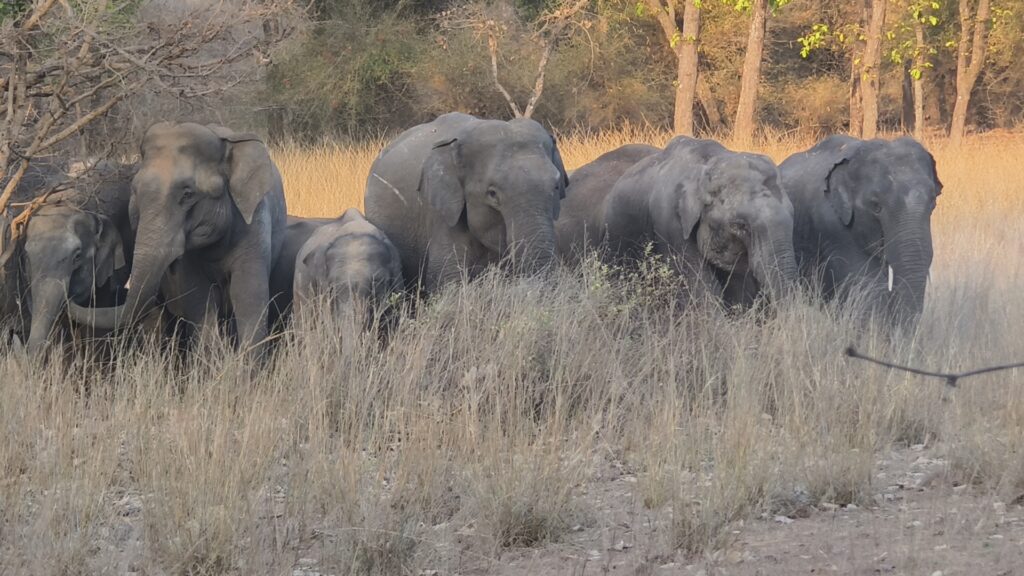
Asian Elephants at Bandhavgarh National Park
The Asian Elephant (Elephas maximus), the largest land mammal in Asia, continues to be one of the most iconic species found in India’s forests. At Bandhavgarh National Park in Madhya Pradesh, herds of these gentle giants can often be seen moving gracefully through the tall grasslands and dense sal forests, adding to the park’s rich biodiversity.
Asian elephants typically weigh between 3,000 and 5,000 kilograms. Unlike African elephants, they have smaller, rounded ears that are often said to resemble the map of India. Known for their intelligence and social nature, these elephants live in matriarchal herds led by the oldest female, who guides the group in search of food, water, and safe habitats.
📸 Wildlife in Bandhavgarh
Though Bandhavgarh is widely recognized as the tiger capital of India, the park is also home to leopards, sloth bears, wild dogs, and over 250 species of birds. The presence of elephants adds to its ecological balance and enhances the experience for wildlife enthusiasts and photographers. Observing a herd feed or travel together is a striking reminder of the harmony of the natural world.
🎶 Fascinating Facts About Elephants
- 🐘 Elephants use infrasound communication that can travel up to 10 km.
- 🌱 An adult consumes around 150 kilograms of vegetation daily.
- 🚶 Despite their massive size, they move almost silently thanks to cushioned feet.
- ❤️ Elephants display strong emotional bonds and have been observed mourning their dead.
- ❄️ Their large ears act as natural cooling systems, regulating body temperature.
🌏 Conservation Importance
The Asian elephant is currently listed as Endangered, with fewer than 50,000 individuals remaining in the wild. Rapid habitat loss and poaching are major threats to their survival. Protected areas like Bandhavgarh play a vital role in ensuring their future, providing safe habitats where elephants and other wildlife can thrive.
🧳 Travel Tips for Visitors
For those planning a safari to Bandhavgarh National Park:
- Best season: October to June offers the best wildlife sightings.
- Preferred time: Morning safaris are recommended for spotting elephants and other animals.
- Photography tip: A good zoom lens and binoculars enhance the experience.
- Responsible tourism: Maintain silence, avoid littering, and respect the park’s natural ecosystem.
The sight of elephants in Bandhavgarh is more than just a wildlife encounter — it is a powerful reminder of the delicate balance of nature and the importance of conservation. These gentle giants embody strength, wisdom, and family bonds, making them a timeless symbol of India’s natural heritage.
Elephants at Bandhavgarh are new
This is the part most visitors do not know: wild elephants are recent arrivals in Bandhavgarh. Historically there were none in this landscape. The animals now resident here walked in — moving west out of Chhattisgarh and Jharkhand over the last decade or so, following forest corridors.
So an elephant sighting at Bandhavgarh is not a return to something old. It is an ongoing range expansion, happening in front of us, and the forest department is still working out what it means.
Wild, camp, or somewhere in between
Bandhavgarh has long had trained elephants used for patrolling and monitoring, and they are a familiar sight near the gates and camps. The wild herds are a different matter entirely and should be treated as such.
- Camp elephants are with mahouts, often carrying gear, and are calm around vehicles.
- Wild elephants are unaccompanied, usually in family groups, and are not habituated to jeeps the way tigers here are.
- A lone bull is the one to be careful of. Bulls in musth are unpredictable and it is not always obvious.
How to behave around a wild herd
Elephants are the animal most likely to actually harm you on an Indian safari, and it is almost always because the vehicle got between a herd and where it wanted to go.
- Never block the track. Reverse and give them the route.
- Keep the engine running — the opposite of tiger etiquette. You may need to move.
- Watch for calves. A herd with young is a herd with no tolerance.
- Read the ears and trunk. Ears spread wide with the trunk tucked under is a serious warning; a mock charge is often preceded by a dust throw.
- Silence and stillness. No engine revving, no shouting, no clapping.
What their arrival changes
Elephants alter a forest physically. They break bamboo, push over trees, open up canopy, and spread seeds over long distances. In a sal forest that has not had elephants in living memory, that is a substantial change, and one nobody has baseline data for.
There is also conflict. Elephants raid crops, and the villages around Bandhavgarh had no experience of managing that. Compensation systems and early-warning arrangements have had to be built from scratch, and that work is ongoing.
When you are likely to see them
Herds move, so there is no reliable spot. In practice sightings cluster around the buffer zones and the fringes rather than the core meadows, and more often in the hot months when they come to water. Ask at the gate — the department tracks the herds and the guides know where they were yesterday.
Frequently asked questions
Are there wild elephants in Bandhavgarh?
Yes, but only recently. Herds moved in from Chhattisgarh and Jharkhand over the past decade; they were not historically present.
Is it safe to be near wild elephants on safari?
It is safe if the vehicle keeps its distance, never blocks their path and gives way immediately. Elephants cause more safari injuries than tigers.
How do I tell a camp elephant from a wild one?
Camp elephants are accompanied by mahouts. Wild ones are alone or in family groups with no handler.
Where in Bandhavgarh are elephants seen?
Most often in the buffer zones and forest fringes rather than the core meadows. Ask your guide at the gate for current movements.
Related: Bandhavgarh Beyond the Tiger and Bandhavgarh Fort and History.
