
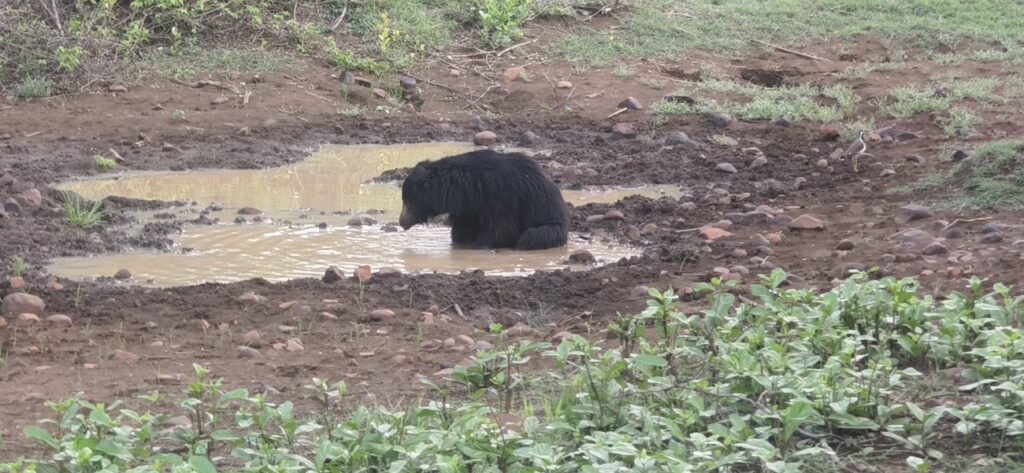
Sloth Bear Tadoba: Sighting at Tadoba Andhari Tiger Reserve

Sloth Bear (Melursus ursinus)

Introduction to the Sloth Bear in Tadoba

The Sloth Bear (Melursus ursinus) is one of the most fascinating yet elusive animals in Tadoba Andhari Tiger Reserve. Known for its shaggy black coat, long claws, and unique insect-feeding behavior, this bear is rarely seen during the day. Recently, a rare sighting of a sloth bear bathing in a Tadoba waterhole amazed wildlife enthusiasts and photographers alike.

Rich Habitat and Biodiversity

Tadoba’s mixed forests, bamboo thickets, and waterholes provide a perfect habitat for sloth bears. While the park is world-famous for its tiger population, it also protects a wide variety of species including leopards, wild dogs, gaur, and over 200 bird species.

Importance of Waterholes in Tadoba

During hot summer months, waterholes become lifelines for wildlife. Seeing a sloth bear cooling off in a muddy pool not only reflects natural behavior but also shows the importance of these seasonal water sources in India’s dry forests.

Sloth Bear Behavior in the Wild

Feeding Habits and Adaptations

Sloth bears are primarily insectivorous, relying on termites, ants, and honey. Their long snouts and flexible lips work like a natural vacuum cleaner, allowing them to suck insects straight from mounds. They also consume fruits, making them essential for forest seed dispersal.

Shy but Surprisingly Agile

Despite their heavy build, sloth bears can run faster than humans and are excellent climbers. Mothers are often seen carrying cubs on their backs — a rare trait among bear species.

Wildlife Photography in Tadoba

Capturing the Perfect Moment

Photographing a sloth bear in the wild requires patience, timing, and a bit of luck. Unlike tigers that often frequent open clearings, sloth bears are shy and prefer dense vegetation. This makes the Tadoba sloth bear waterhole sighting even more special for wildlife photographers.

Tips for Wildlife Enthusiasts

  • Use silent shooting mode to avoid disturbing animals.
  • Early mornings and late evenings are the best times for spotting.
  • Always respect animal space and never block their path at waterholes.

Conservation Significance of Sloth Bears in India

Sloth bears are listed as Vulnerable on the IUCN Red List due to habitat loss and human-wildlife conflict. Reserves like Tadoba play a critical role in ensuring their survival. Protecting waterholes, controlling forest fires, and reducing human encroachment are key measures for long-term conservation.

Conclusion

The recent sloth bear sighting at Tadoba is more than just a lucky photograph — it is a reminder of India’s rich biodiversity and the need to protect it. Whether you are a photographer, a nature lover, or simply an adventurer, Tadoba offers unforgettable wildlife experiences beyond its iconic tigers.

Built for one job

Almost everything odd about a sloth bear makes sense once you know it is a termite specialist. It is not a hunter that occasionally digs; it is a digging machine with a bear attached.

  • Claws up to eight centimetres, blunt and curved for breaking open rock-hard termite mounds.
  • No upper front incisors — a gap that lets it form a tube with its tongue and mouth.
  • Closable nostrils, so it can blow away loose earth and then suck up insects without inhaling dust.
  • Shaggy coat, unusually long, thought to protect against bites while it feeds.
  • Cubs ride on the mother’s back, which no other bear does routinely.

The feeding itself is astonishingly loud. A sloth bear excavating a mound can be heard from a long way off — a sustained sucking and snorting that carries through the forest.

Tadoba, and why the bears are visible here

Tadoba has rocky ground, plenty of termite mounds, bamboo and mahua trees, and that combination suits sloth bears well. They are seen with reasonable regularity, particularly in the buffer zones and along the hillier stretches.

The mahua matters. When the trees flower, sloth bears feed heavily on the fallen blossom, and the flowering season concentrates them in predictable places. Ask your guide which mahua trees are dropping.

The temper

Sloth bears have a serious reputation and it is deserved, though the reason is misunderstood. They are not aggressive by inclination; they are extremely short-sighted, poor-hearing, and easily startled, and a startled sloth bear’s response is to charge rather than retreat.

In the forest this makes them the animal that most often injures people on foot in central India — more than tigers or leopards. From a vehicle they are no danger at all, and they usually ignore jeeps completely.

Seeing one well

  • Early morning and dusk — they are largely nocturnal and crepuscular.
  • Look for fresh digging, broken mounds and overturned earth beside tracks.
  • Listen. You will often hear one before you see it.
  • Do not expect long views. A sloth bear crossing a slope for thirty seconds is a good sighting.

Photographing them

A black animal in low light, usually moving, usually partly hidden. Accept high ISO, expose for the animal, and aim for the moment it lifts its head out of a dig with dust in the air rather than a clean portrait you will not get.

Frequently asked questions

Are sloth bears related to sloths?

No. The name comes from early naturalists mistaking their claws and hanging posture for a sloth’s. They are true bears — Melursus ursinus.

What do sloth bears eat?

Mainly termites and ants, plus fruit, honey and mahua flowers in season.

Are sloth bears dangerous?

On foot, yes — poor eyesight and hearing mean they charge when startled. From a safari vehicle they present no risk.

When are sloth bears seen at Tadoba?

Early morning and late afternoon, especially in the buffer zones and when mahua is in flower.


Related: Tadoba Safari Guide and Buffer vs Core Zone.

Scroll to Top