
A small bird stepped out from the green edge of the grassland at Bhigwan, stood on a bare mound, and vanished again before the moment could become ordinary. This was a Barred Buttonquail (Turnix suscitator)—a ground-dwelling bird that is often heard or flushed from cover but far less often photographed in the open.
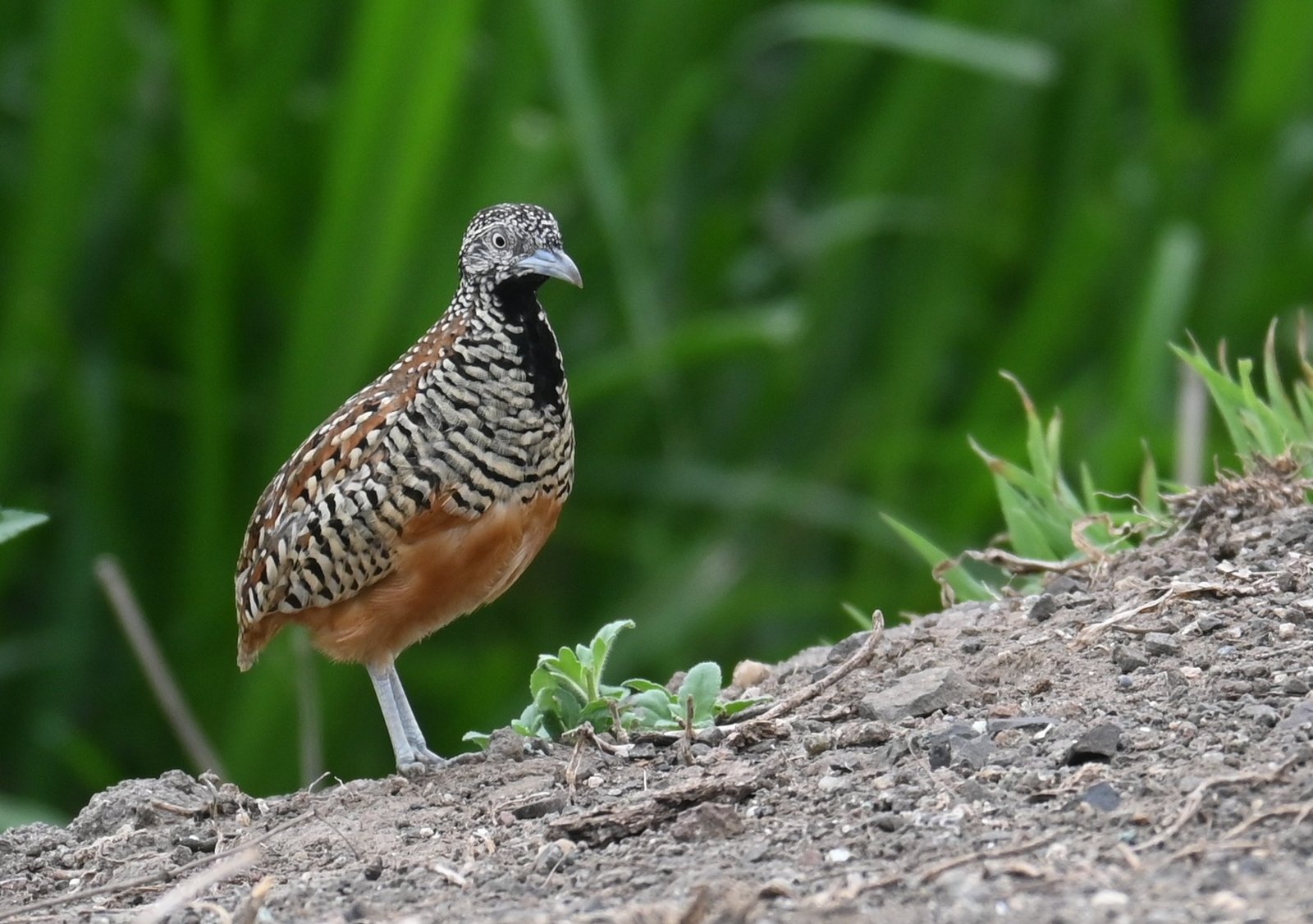
A Barred Buttonquail in Bhigwan’s grassland edge
Bhigwan is best known for its winter waterbirds, flamingos and raptors around the Ujani backwaters. But the scrub, field margins and grassland edges around the wetland are just as rewarding when explored patiently. This Barred Buttonquail was photographed on open soil beside dense green cover—exactly the sort of place where a bird that prefers to walk rather than fly can remain unnoticed.
The Barred Buttonquail is not a true quail. It belongs to the buttonquail family, Turnicidae, and is a resident of grassland, scrub and cultivated landscapes across much of India. Its compact shape, pale eye, bluish bill, warm rufous flanks and heavy barring make it distinctive when a clear view is possible. Explore more birding field notes from TravelOnTales.
How this bird was identified
The strong black-and-white barring across the breast, richly patterned upperparts and dark throat point to a female Barred Buttonquail. Females are generally larger and more boldly marked than males. Even so, buttonquails deserve a careful look: they move quietly through cover and are easy to overlook when the grass is tall.
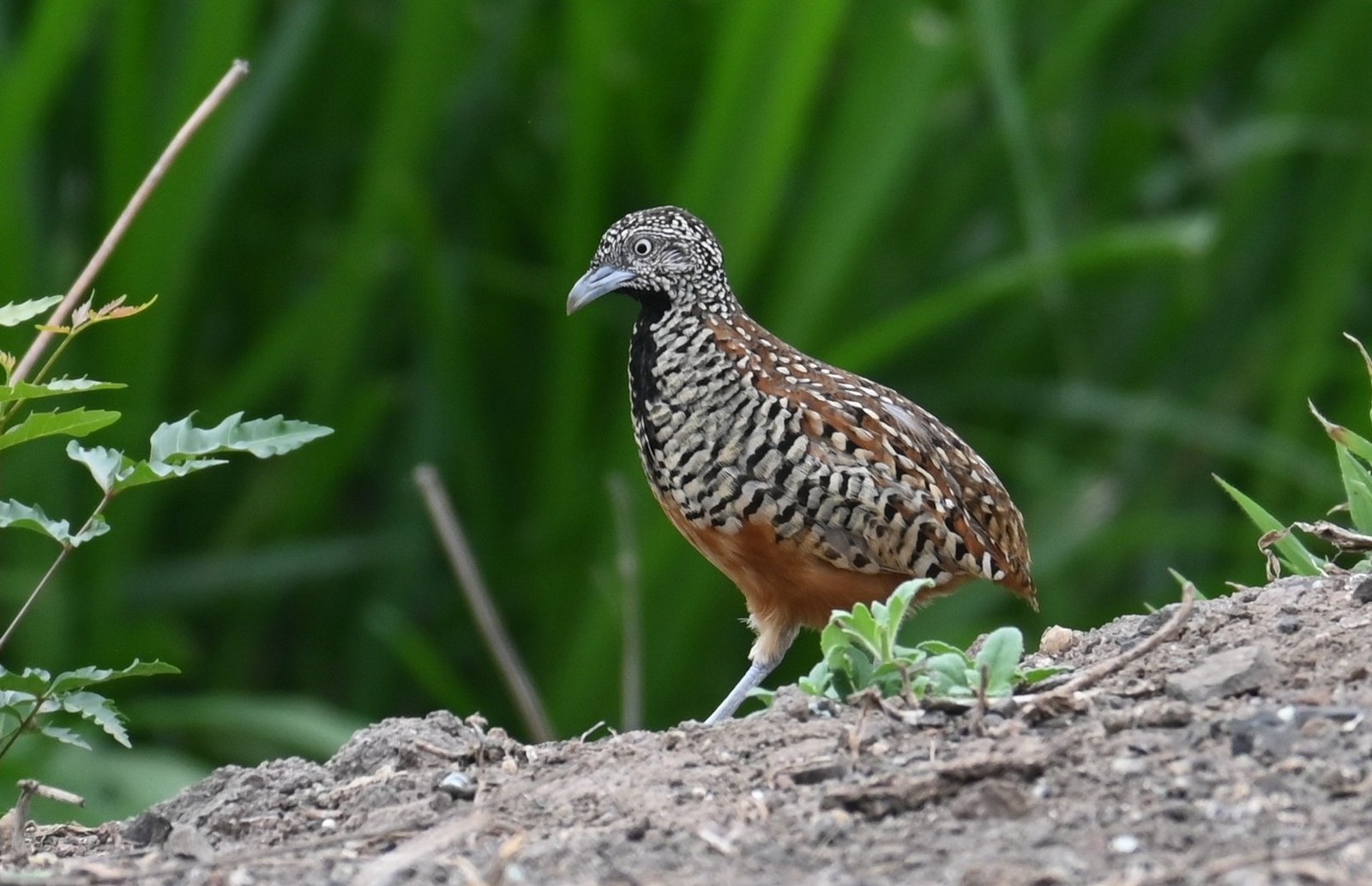
Why sightings feel special
There is no dramatic flight display here. The reward is in noticing the bird at all. A Barred Buttonquail usually keeps low, slipping between grasses and shrubs with quick, measured steps. These photographs were possible only because the bird stood briefly in the open before returning to cover.
That behaviour is a reminder to slow down in Bhigwan. Between the larger wetland birds, the rough edges of fields and grasslands can hold quiet species with equally compelling stories.
Where to look for Barred Buttonquail at Bhigwan
- Undisturbed grassland and scrub beside cultivated fields
- Dry soil banks and low mounds with dense nearby cover
- Wetland-edge vegetation away from busy roads and vehicles
The best approach is to stay on established tracks, keep a respectful distance and never push into cover for a photograph. A quiet wait is far better for the bird—and usually for the image too.
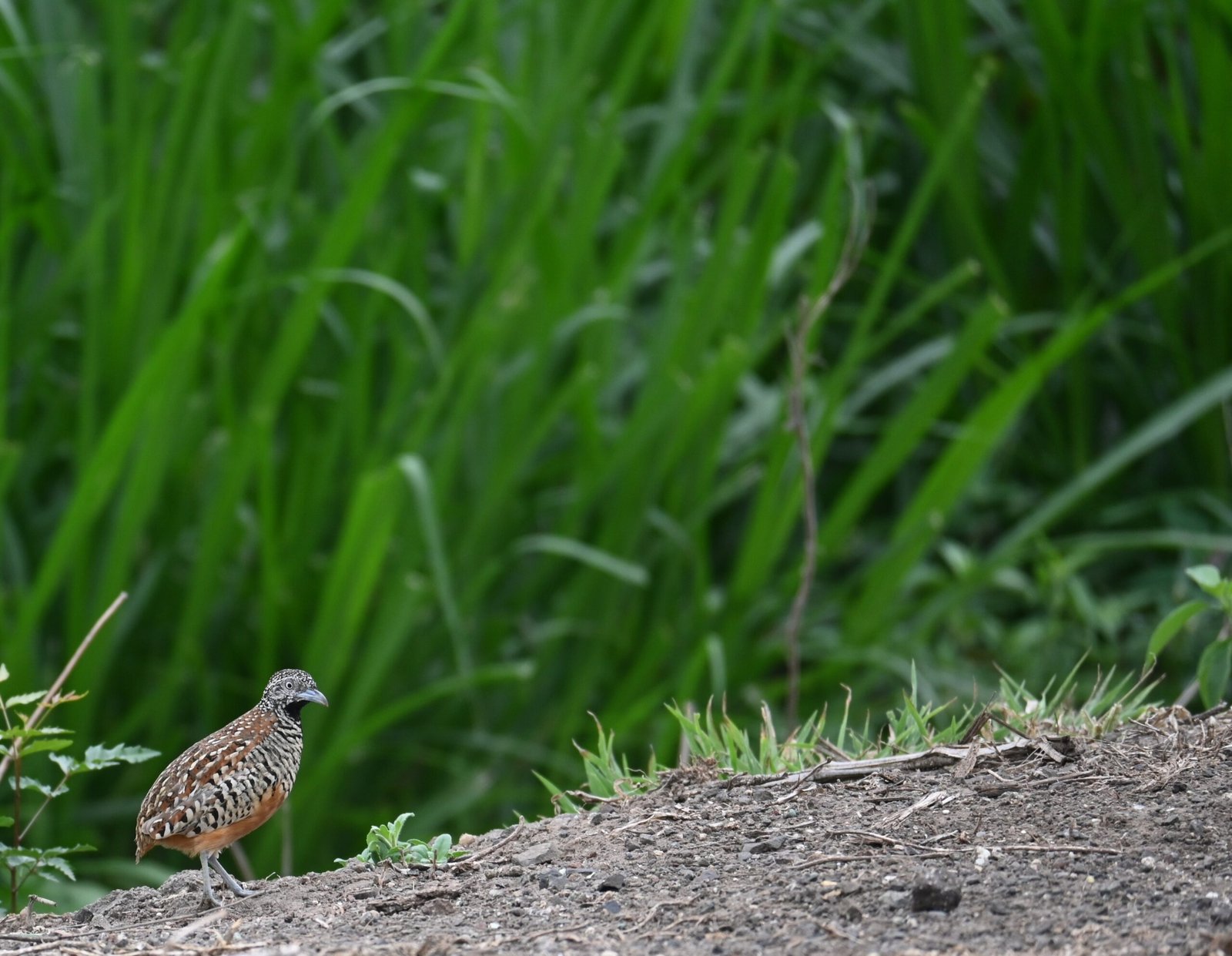
Barred Buttonquail facts
- Scientific name: Turnix suscitator
- Family: Turnicidae (buttonquails)
- Habitat: Grassland, scrub, cropland and field edges
- Status: Resident in India; globally assessed as Least Concern
Frequently asked questions
Is the Barred Buttonquail a true quail?
No. It resembles a quail but belongs to the separate buttonquail family, Turnicidae.
Can Barred Buttonquail be seen at Bhigwan?
Yes, suitable grassland, scrub and cultivated edges around Bhigwan can support this secretive resident bird. It is much easier to miss than the area’s conspicuous wetland species.
What makes the bird in these photographs a female?
The pronounced dark throat and bold barred plumage are consistent with a female Barred Buttonquail.
All photographs in this field note were taken at Bhigwan, Maharashtra, by Prashant S. Gupta.