
Among the stones at Bhigwan, a small ground bird stepped into the morning light: a male Jungle Bush Quail (Perdicula asiatica). With its rufous face, strongly barred underparts and red legs, it stood out for only a moment against the rocky scrub before disappearing back into cover.
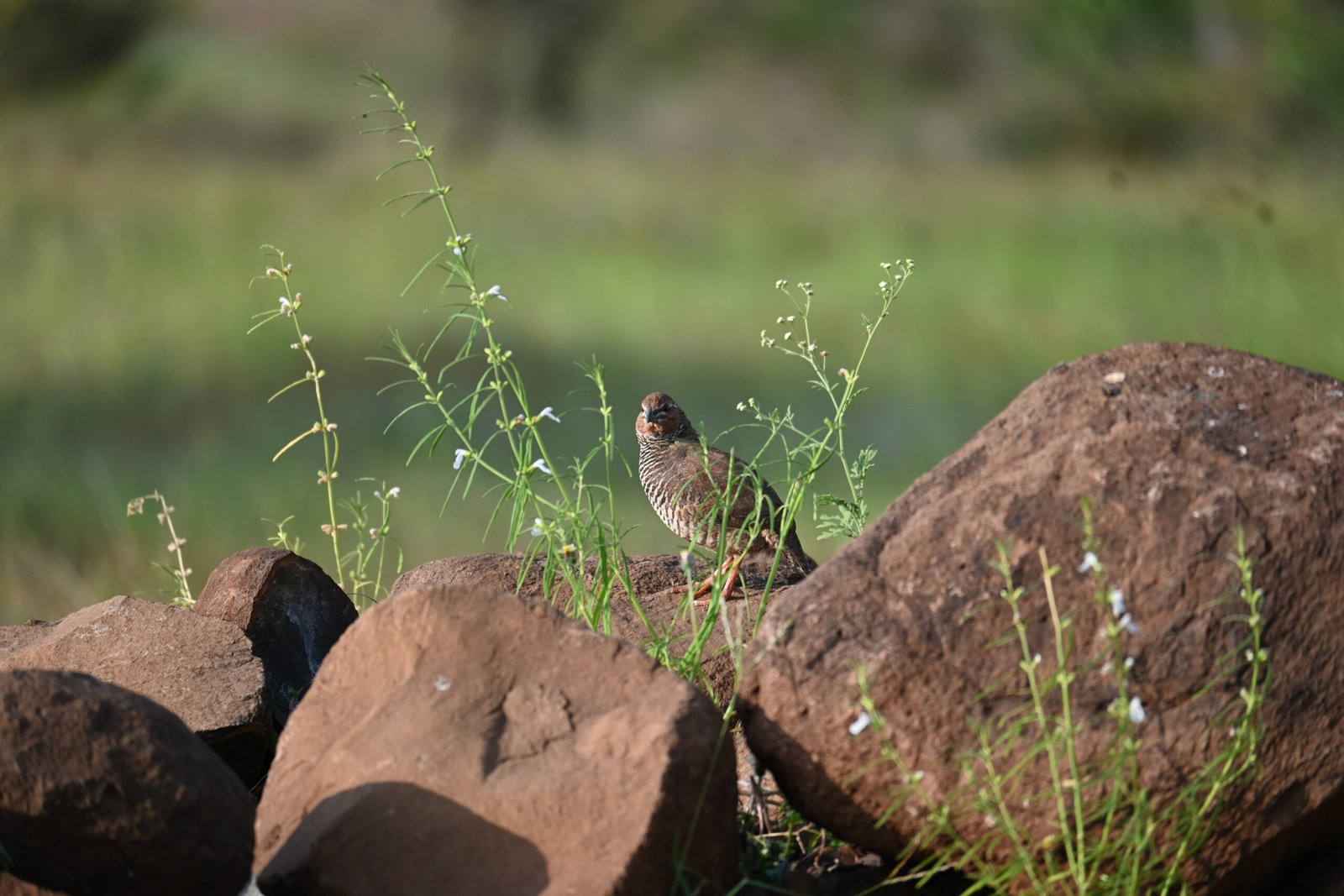
A Jungle Bush Quail in Bhigwan’s rocky scrub
Bhigwan is widely known for its wetlands and winter birds, but its dry field margins, grassland edges and stony scrub deserve equal attention. These quieter habitats support birds that are easy to miss when the focus stays only on the water. The Jungle Bush Quail is one of them: compact, ground-dwelling and usually concealed until it decides to cross an open patch.
For more species from the area, see our Bhigwan bird guide and browse the Birdsong field notes.
How to identify a male Jungle Bush Quail
The bird in these photographs shows the classic features of a male Jungle Bush Quail: a warm rufous face and throat, fine black-and-white barring across the underparts, patterned brown upperparts and reddish legs. The species belongs to the pheasant and quail family, Phasianidae, and should not be confused with a buttonquail. Its sturdy shape and rocky scrub setting are also useful field clues.
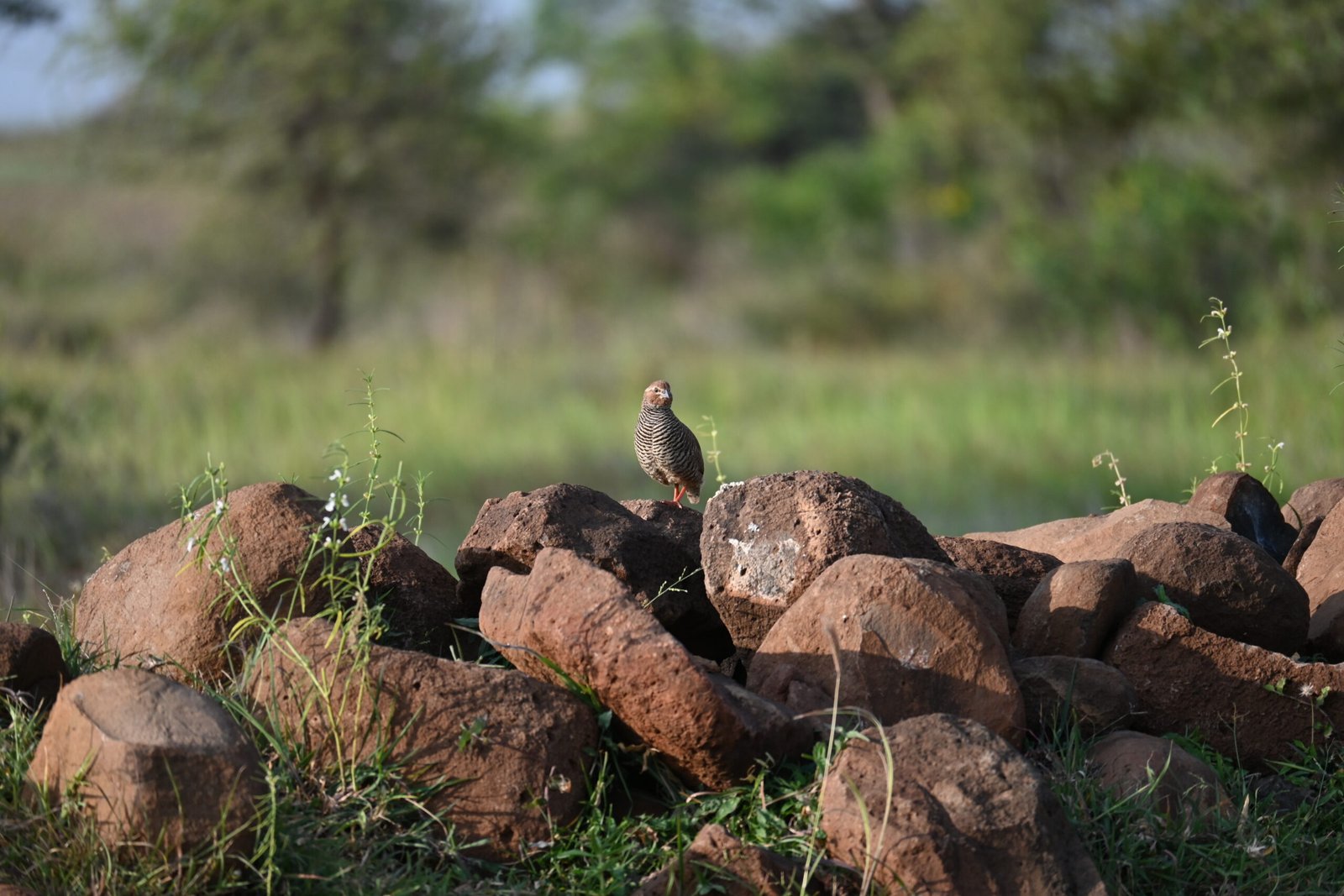
Why Bhigwan’s scrubland matters
The open boulder piles and low vegetation around Bhigwan may look ordinary beside the famous Ujani backwaters, yet they provide cover, feeding ground and movement corridors for small terrestrial birds. A careful scan of stones, grass clumps and field boundaries can reveal Jungle Bush Quails, francolins and other unobtrusive wildlife.
These birds are best watched quietly. Stay on existing paths, avoid approaching a covey, and let the birds choose their distance. A patient wait is more rewarding than trying to force a close view.
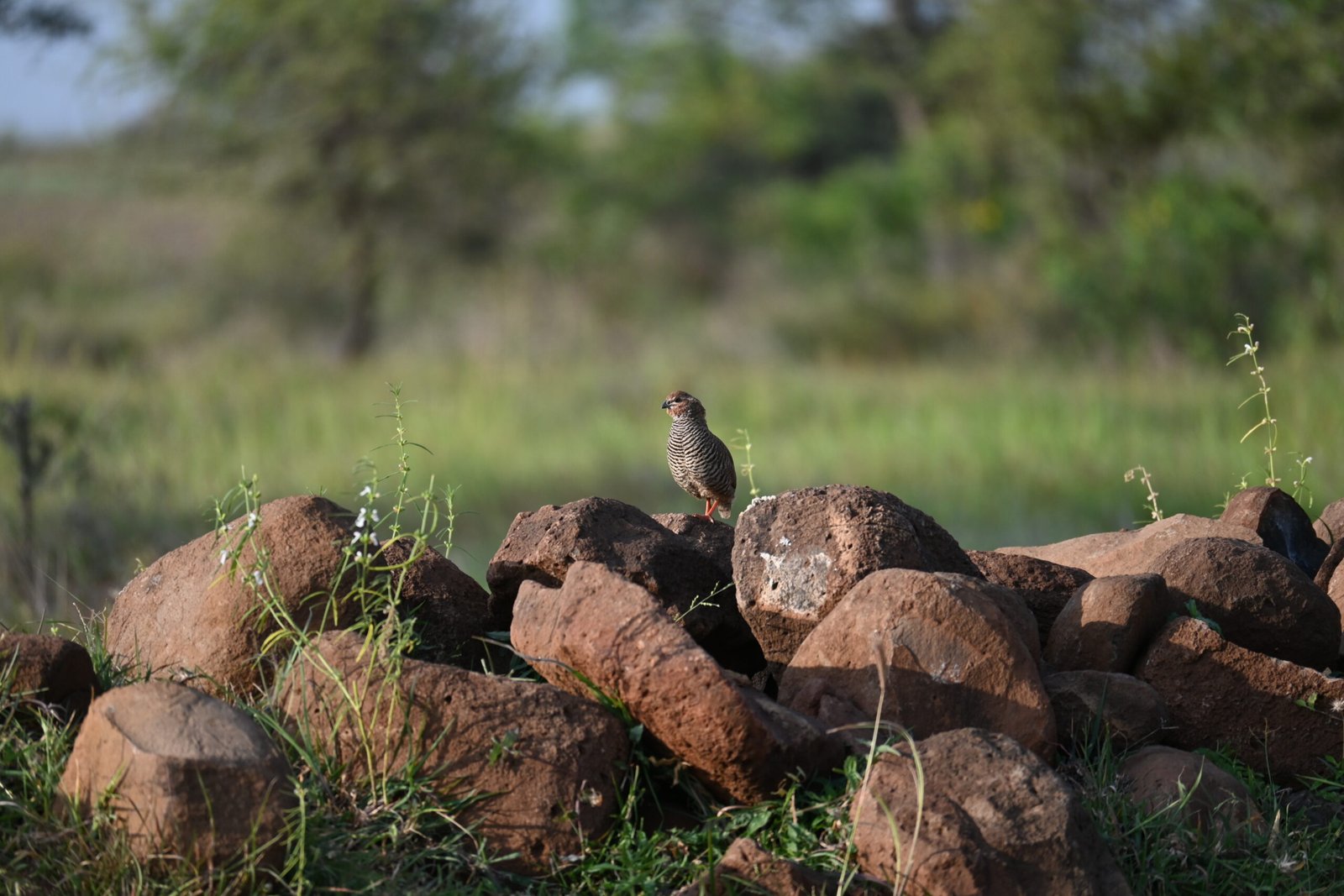
Jungle Bush Quail facts
- Scientific name: Perdicula asiatica
- Family: Phasianidae
- Habitat: Dry stony scrub, grassland, open deciduous woodland and field edges
- Behaviour: Usually secretive; often encountered in small groups or flushed from cover
- Status: Resident in India; globally assessed as Least Concern
Frequently asked questions
Is this a Jungle Bush Quail or a Barred Buttonquail?
It is a male Jungle Bush Quail. Its rich rufous face, bold barred underparts and red legs differ from the Barred Buttonquail photographed elsewhere at Bhigwan.
Where can Jungle Bush Quail be found at Bhigwan?
Look in undisturbed dry scrub, grassy field edges and rocky ground away from the busiest routes. They are much easier to hear or flush than to watch in the open.
What is the best way to photograph Jungle Bush Quail?
Keep your distance, remain still and use a long lens. Do not chase birds through cover or disturb a group for a closer image.
All photographs in this field note were taken at Bhigwan, Maharashtra, by Prashant S. Gupta.