
High in a leafy neem tree at Bhigwan, a large owl sat almost motionless in the afternoon light. The rich orange eyes, prominent ear tufts and dark vertical streaking identified it as an Indian Eagle-Owl (Bubo bengalensis), also known as the Rock Eagle-Owl. A daytime sighting of this mainly nocturnal species is a reminder that Bhigwan has rewarding birdlife beyond its famous wetlands.
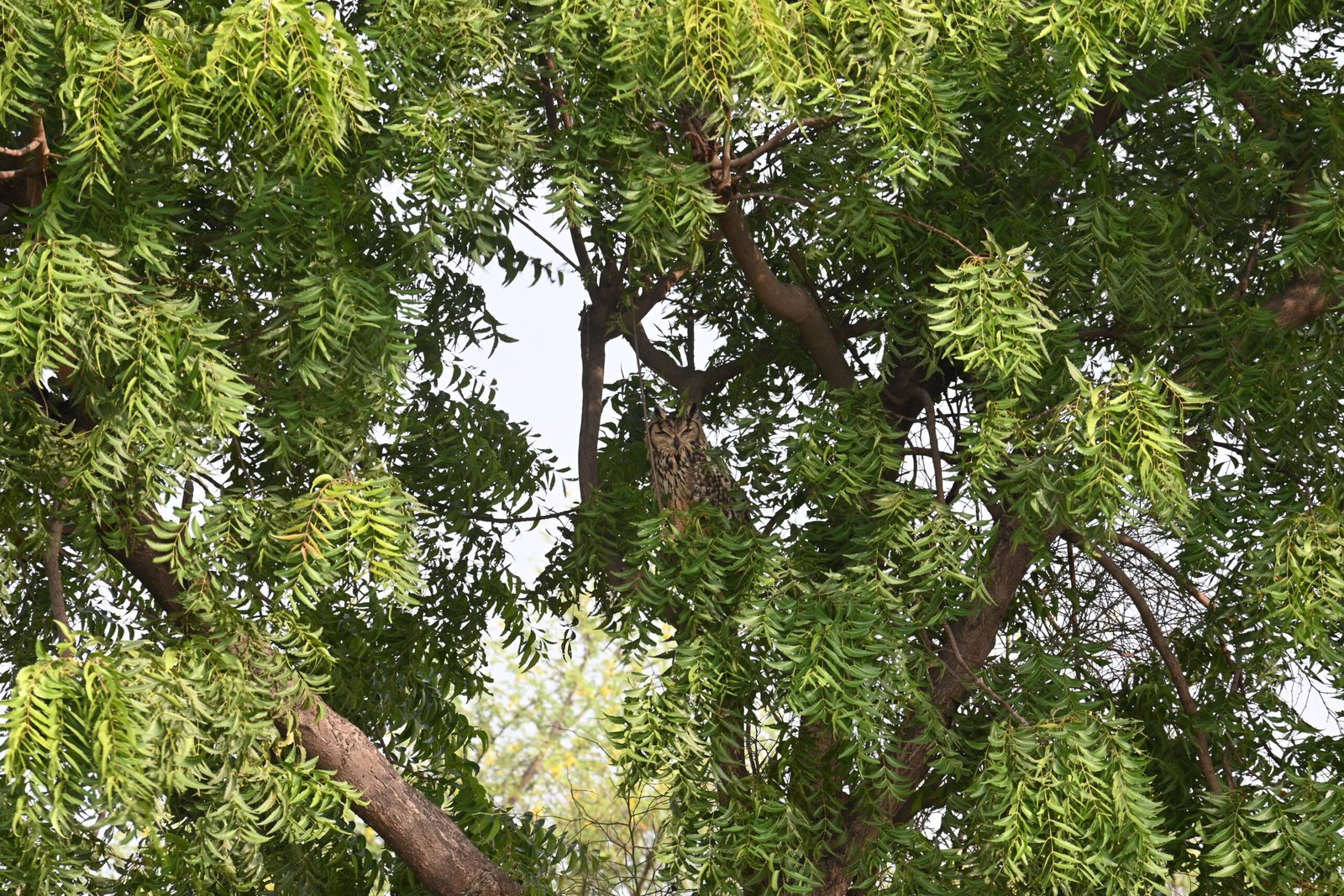
An Indian Eagle-Owl in Bhigwan’s tree cover
Bhigwan is widely known for wetland birding, waterbirds and seasonal migrants. Yet the trees, scrub, grassland edges and rocky pockets around the landscape hold a quieter set of species. Indian Eagle-Owls use a mix of open country, ravines, rocky ground and wooded cover. This individual was tucked into a mature neem tree, where foliage made it easy to overlook at first glance.
For more field observations from the area, explore our Bhigwan bird guide and browse the Birdsong field notes.
How to identify an Indian Eagle-Owl
The Indian Eagle-Owl is one of the most striking owls on the subcontinent. It is a large, powerful owl with intense orange eyes, long ear tufts and heavily streaked buff-and-brown plumage. The upright stance, strong facial pattern and thickly marked underparts distinguish it from smaller owls likely to be found around farmland and village edges.
Light can change how an owl appears in photographs, so identification is best made from a combination of features rather than colour alone. In these images, the orange eyes, ear tufts, broad head and dense vertical streaking all point to Indian Eagle-Owl.
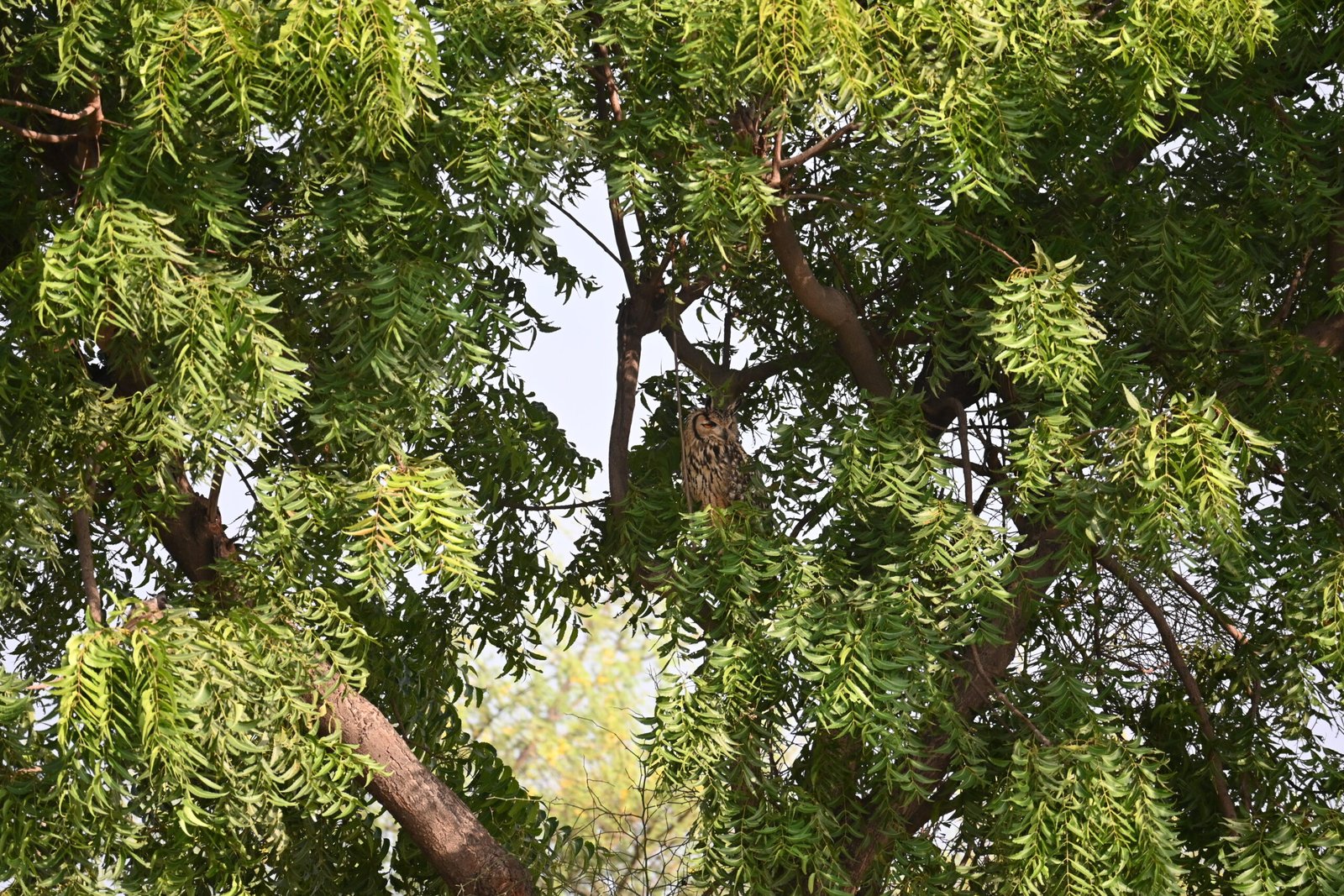
What a daytime owl sighting can tell us
Indian Eagle-Owls are chiefly active from dusk through the night. Seeing one in daylight does not mean the bird is inactive or unwell; it often means you have found a daytime resting place. Such roosts offer cover, shade and a clear view of the surroundings. A bird may sit silently for long periods, turning only its head or changing posture as light and disturbance change around it.
The best field practice is patience. Scan the canopy slowly, look for the shape of a head and ear tufts rather than expecting movement, and keep a respectful distance once an owl is located. A quiet observation has more value than a close approach that causes a bird to shift or fly.
Why a quiet roost matters
An owl at a daytime roost needs calm before its night activity. Repeated approaches, bright flash, loud calls and playback can disturb a bird that is resting. The better approach is to stay on existing paths where possible, keep the group small, speak softly and allow the owl to decide the distance. Never use bait, playback or attempts to make the bird open its eyes for a photograph.
Indian Eagle-Owl facts
- Scientific name: Bubo bengalensis
- Also called: Rock Eagle-Owl
- Family: Strigidae
- Habitat: Rocky scrub, ravines, open woodland and treed country
- Activity: Mainly nocturnal; may be seen resting during the day
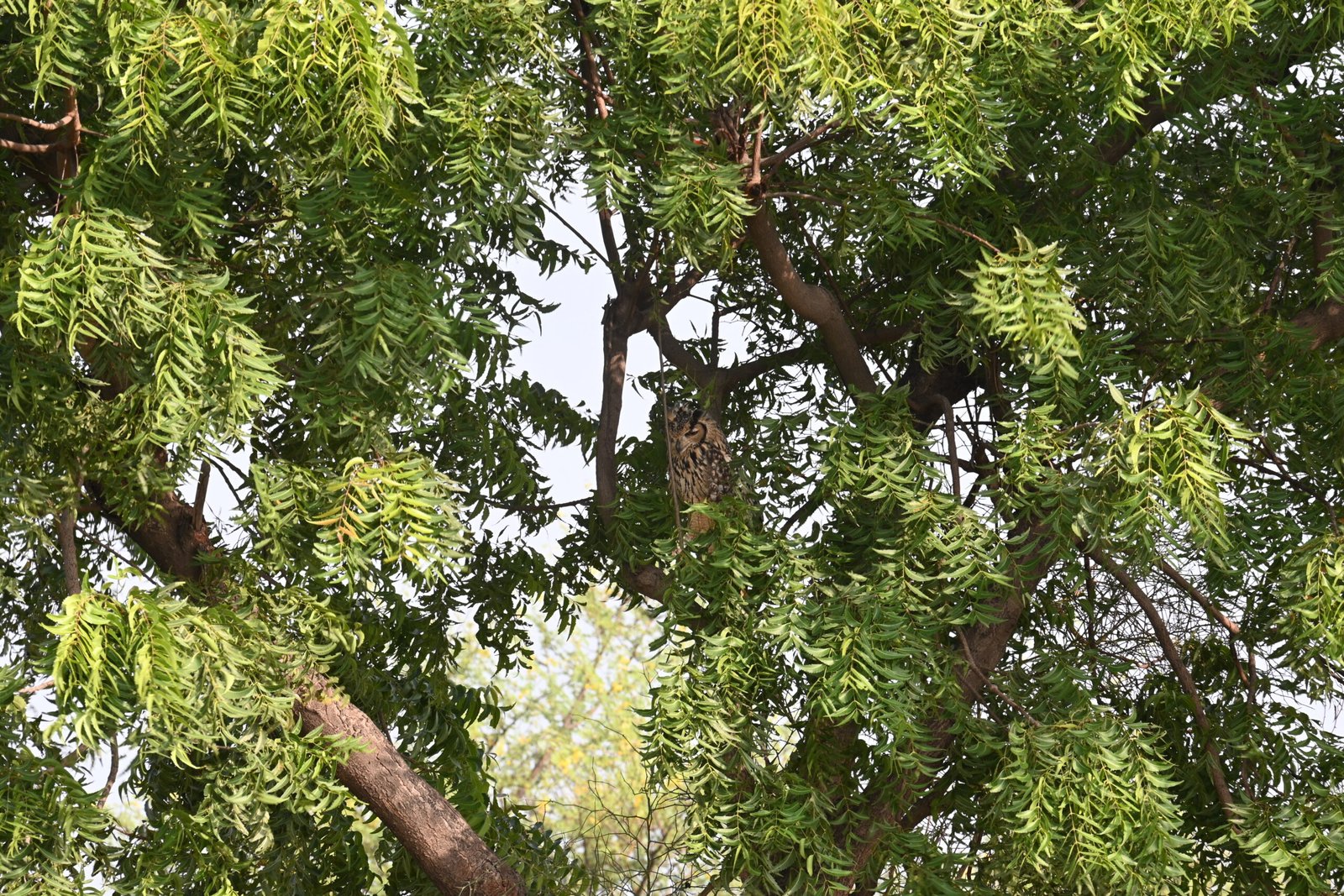
A wider Bhigwan birding day
For birders, Bhigwan works best as a landscape rather than a single checklist stop. The wetlands may lead the itinerary, but a slow look through surrounding farmland, scrub and mature trees can add raptors, passerines, quails and owls. Carry binoculars, keep the camera ready but secondary to the bird’s welfare, and give every sighting enough time for a careful observation.
Have you seen an owl on a Bhigwan birding trip? Share your observations responsibly, and continue exploring wildlife stories on TravelOnTales.