
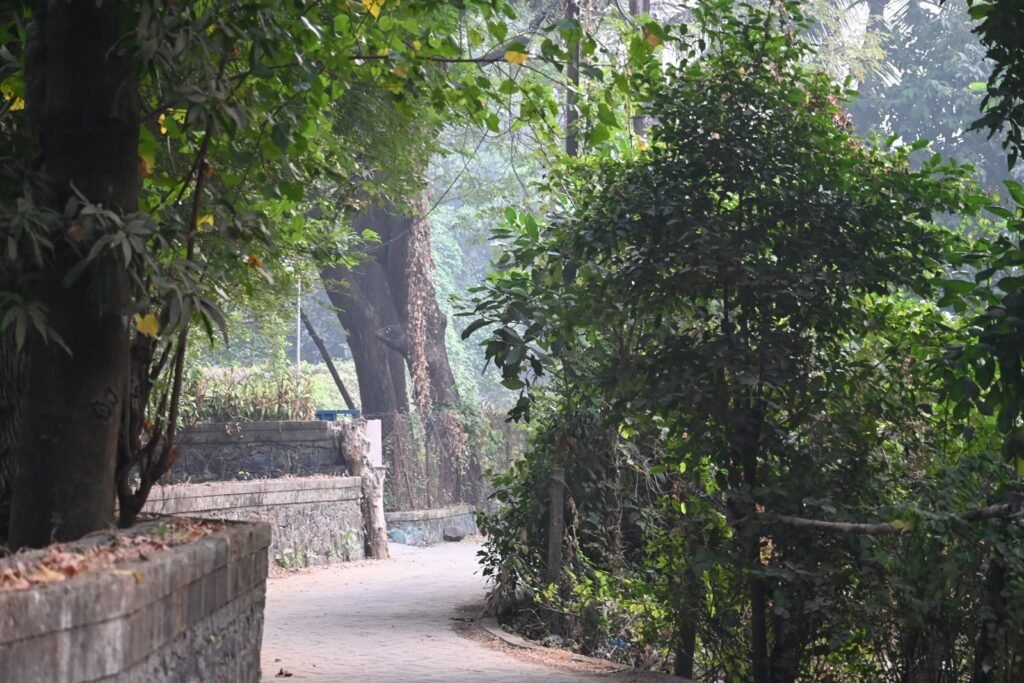
Most people go to Kihim for the beach. We went for the beach too, but the best part of the trip turned out to be the trees behind it. In one slow morning around the lanes and resort gardens near Kihim Beach, Alibaug, we photographed an iora, two kinds of bulbul, a family of jungle babblers and a White-throated Kingfisher, all within a few hundred metres of the sand.

Why Kihim Is Good for Birds
Kihim is quieter than Alibaug town. Behind the beach there are coconut and casuarina groves, old gardens, village lanes and small patches of thick shrubs. That mix of tall trees, low bushes and open ground gives many common birds food and cover very close to where people walk. You do not need a guide or a long walk; you just need to slow down.
Birds We Photographed at Kihim
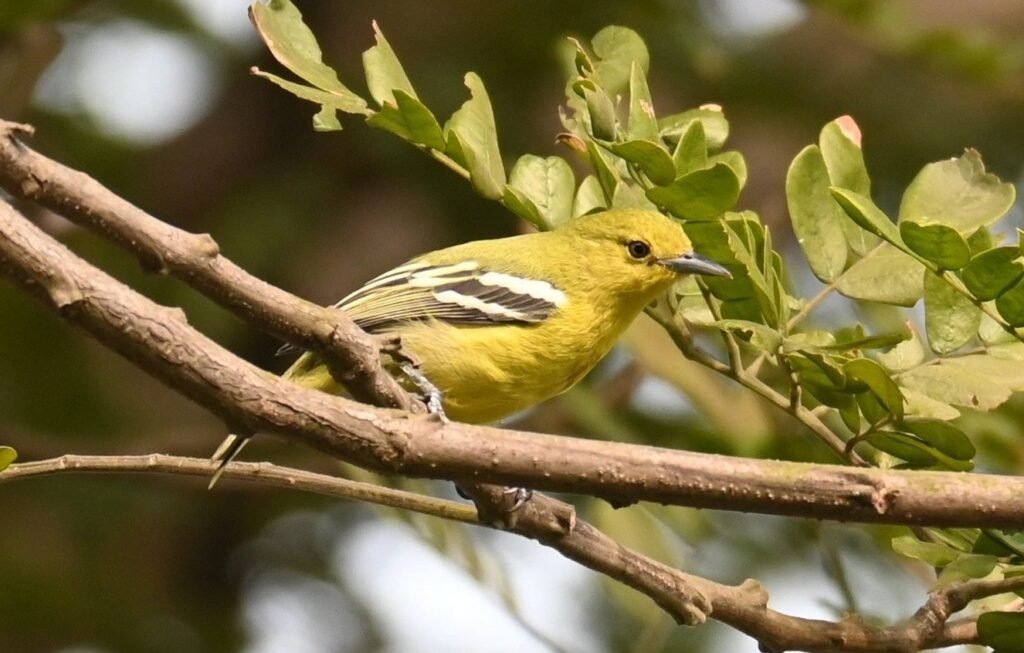
Common Iora
A small bright yellow bird with black wings and two clear white wing bars. It moves quietly through the leaves picking insects, so it is easy to miss until the yellow catches your eye. Read more in our Common Iora at Kihim post.
Red-whiskered Bulbul
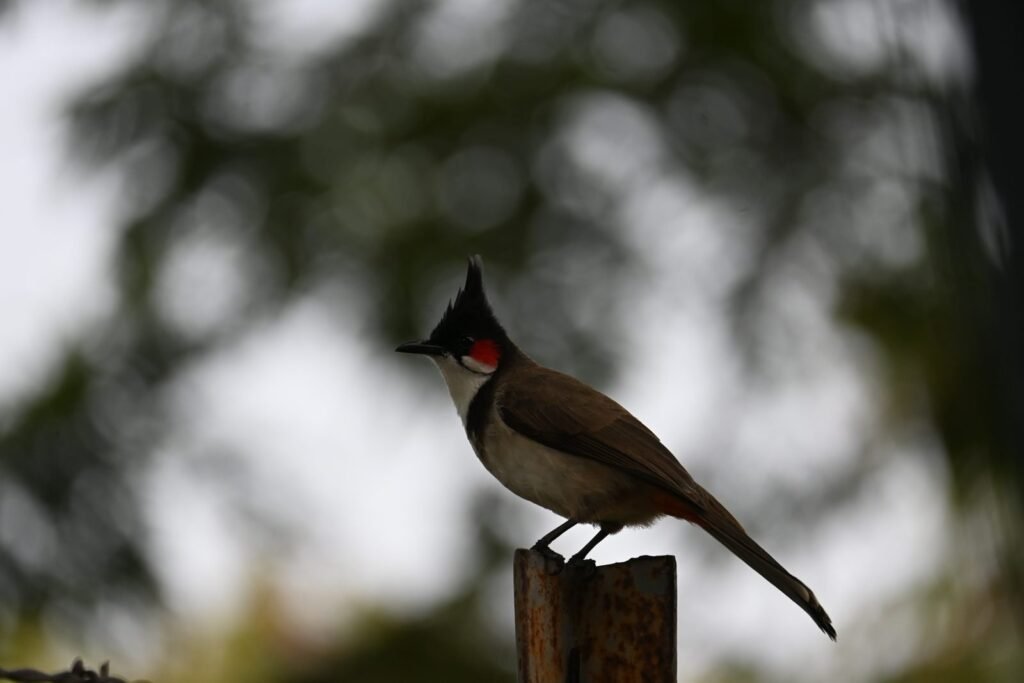
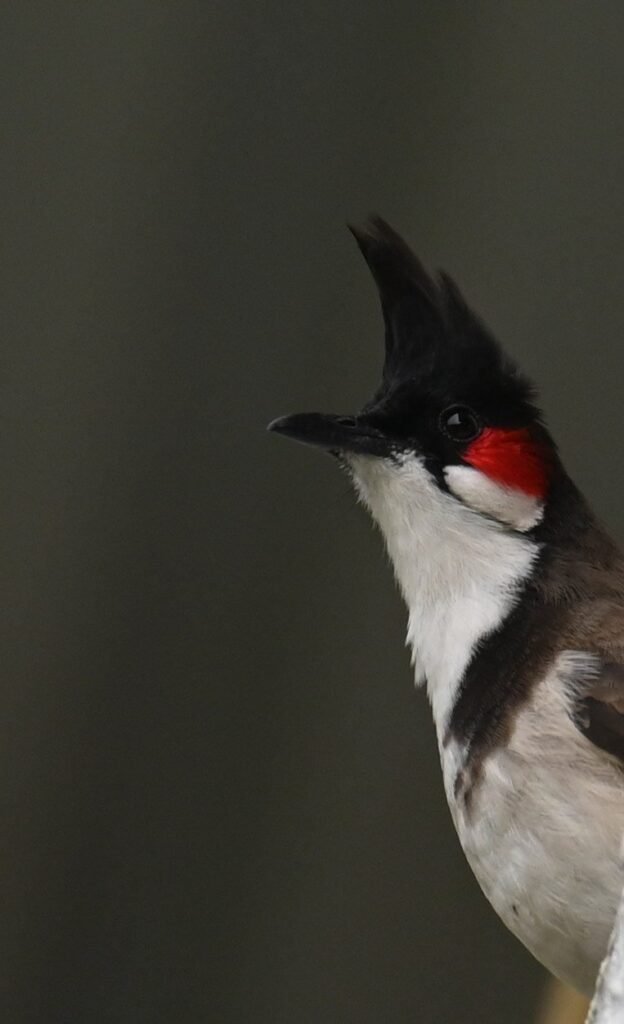
The tall black crest, white cheeks and small red patch behind the eye make this one of the easiest birds to recognise. It likes to sit up on posts and open branches and calls loudly. More photos in Red-whiskered Bulbul at Kihim Beach.
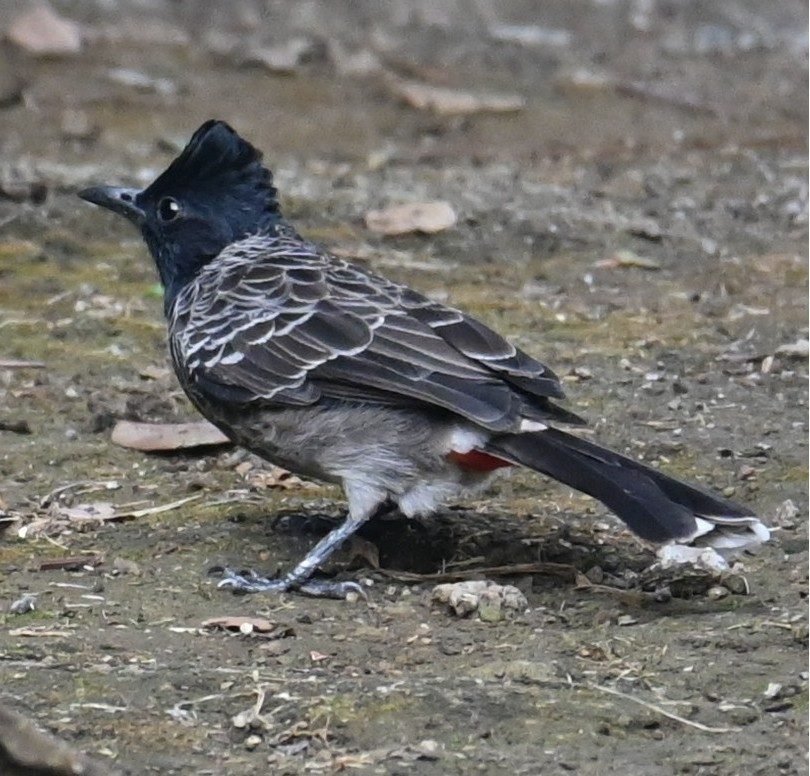
Red-vented Bulbul
Its cousin, darker and scaly-looking, with a red patch under the tail. We found these on the ground, hopping around for food near the resort.
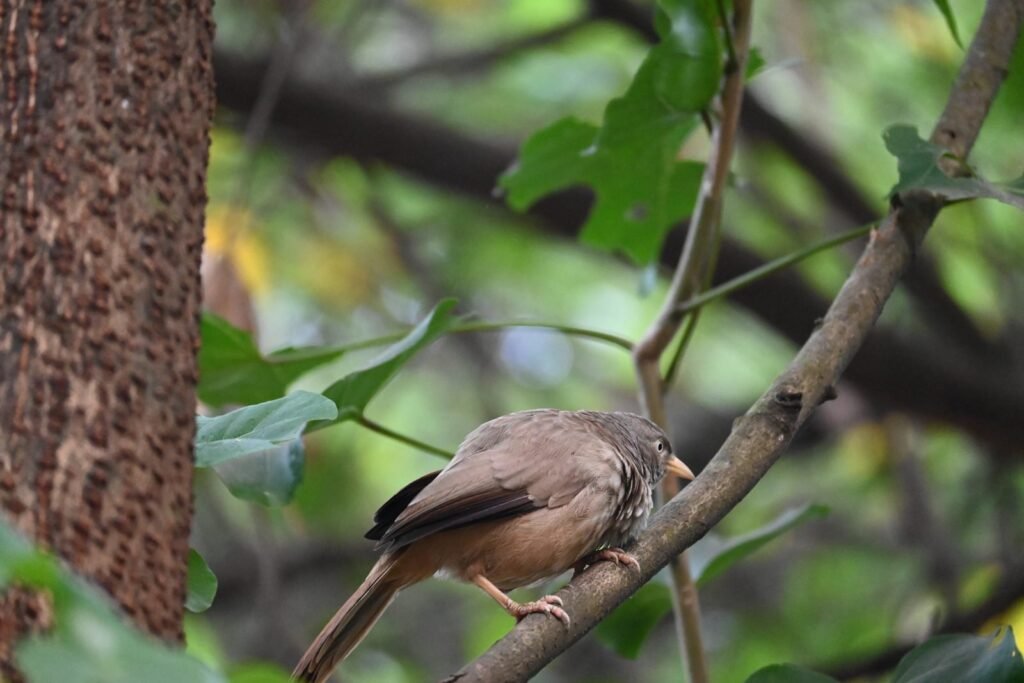
Jungle Babbler
Babblers almost never move alone. A noisy group worked its way through the branches, calling to each other the whole time, which is why people call them the “seven sisters”. See our Jungle Babbler post.
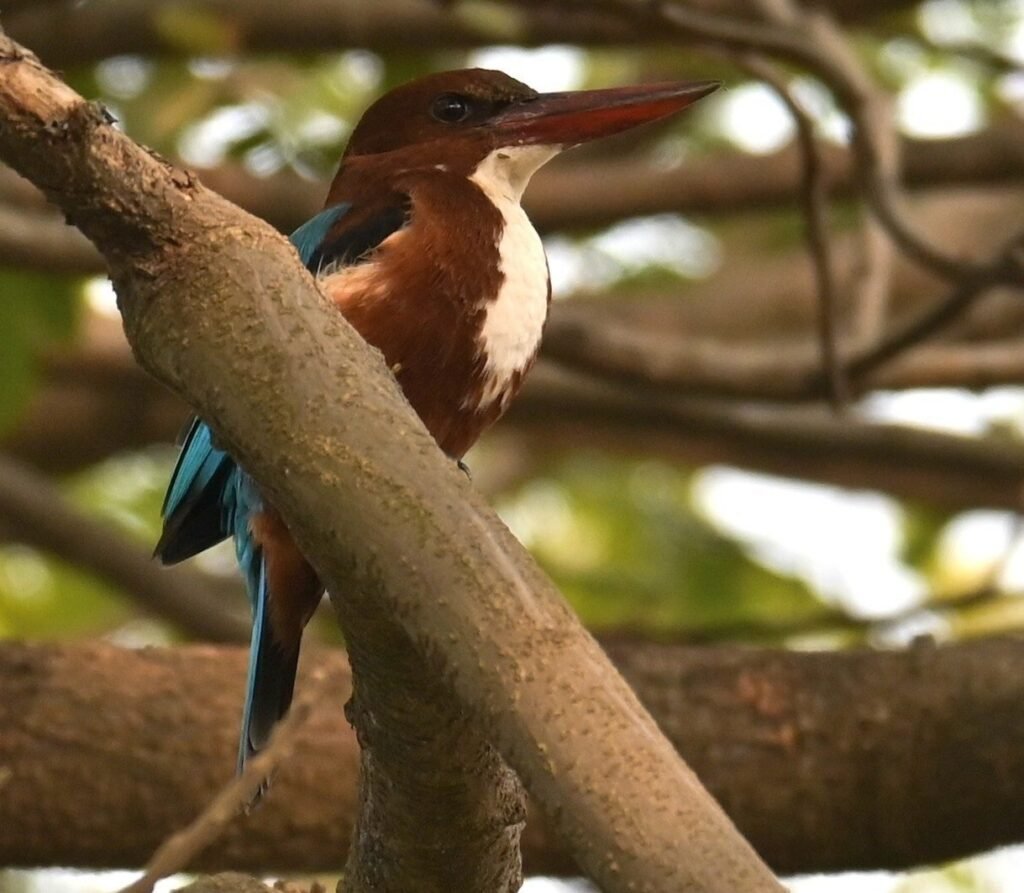
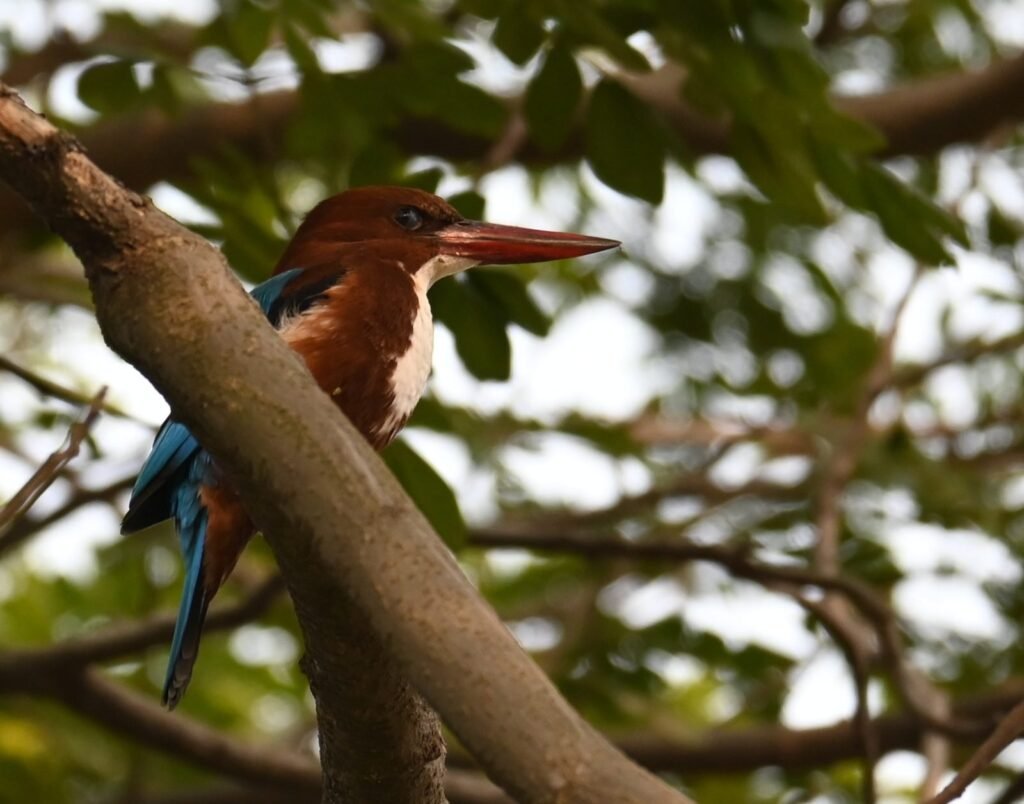
White-throated Kingfisher
The big surprise: a White-throated Kingfisher sitting high in a tree, far from any water. This kingfisher does not depend on fish; it also catches insects, lizards and frogs on land, so you can see it in gardens and fields.
Tips for Birdwatching at Kihim
- Go early. The first two hours after sunrise are when birds are most active and the light is soft.
- Walk the lanes, not just the beach. Most birds are in the trees and gardens behind the sand.
- Listen first. Bulbuls and babblers are loud; follow the calls.
- Carry binoculars and a camera with at least a 200 mm lens.
- Be quiet near gardens and homes, and ask before entering private property.
How to Reach Kihim
From Mumbai, the easiest way is the ferry across the harbour to Mandwa, then a short road trip to Kihim. On the ferry, watch for gulls following the boat; see our gull photos from the ferry. For a full day plan, read One-Day Alibaug Trip from Mumbai.
Questions People Ask
Is Kihim Beach good for birdwatching?
Yes, for common garden and woodland birds. The trees and lanes behind the beach hold ioras, bulbuls, babblers and kingfishers, especially early in the morning.
What is the best time to see birds at Kihim?
Early morning, from about sunrise to 9 am, in the cooler months from November to February.
Do I need a guide?
No. A slow walk through the lanes with binoculars is enough for these common birds.