
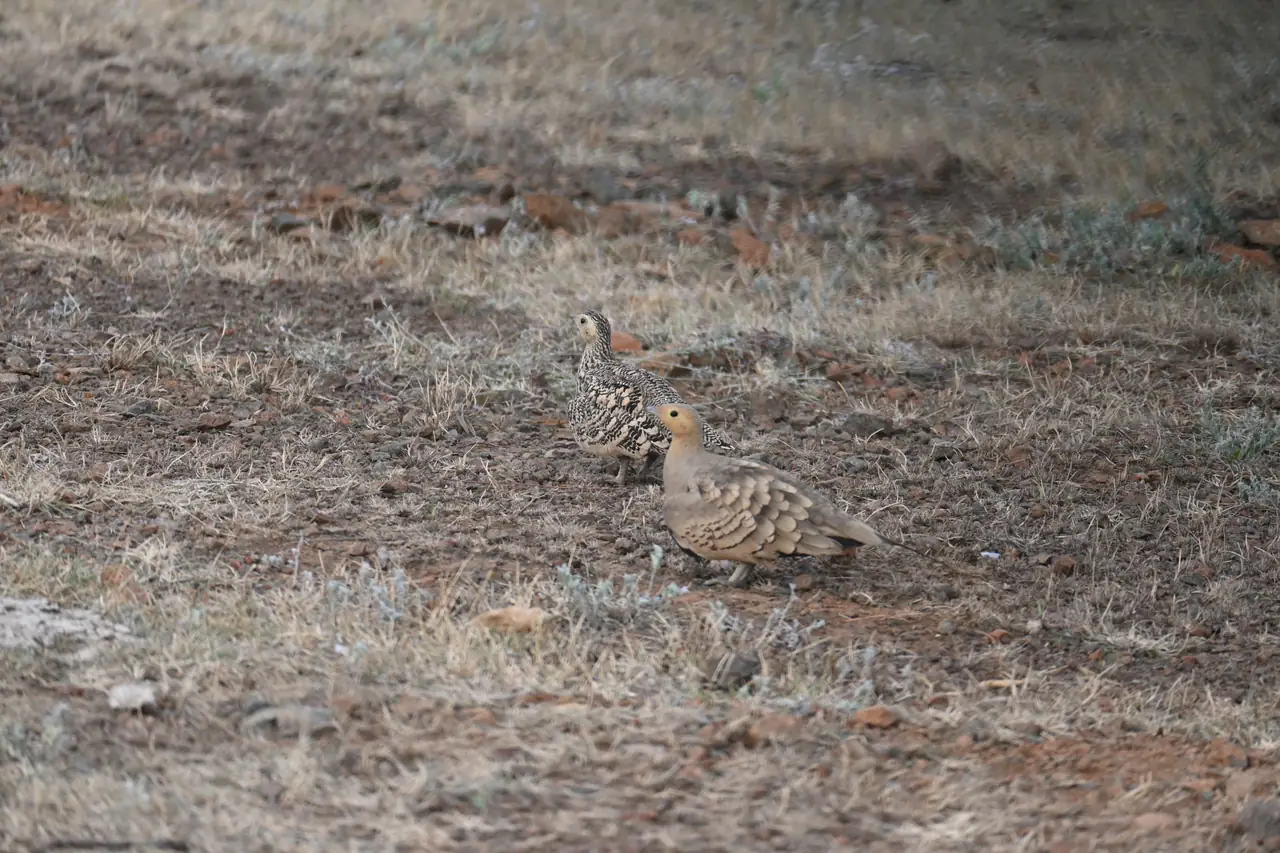
The Chestnut-bellied Sandgrouse is a pigeon-sized bird of dry, open plains. On an evening at Kadbanwadi, near Bhigwan, a pair walked together across the dry ground, the male in front and the female just behind.
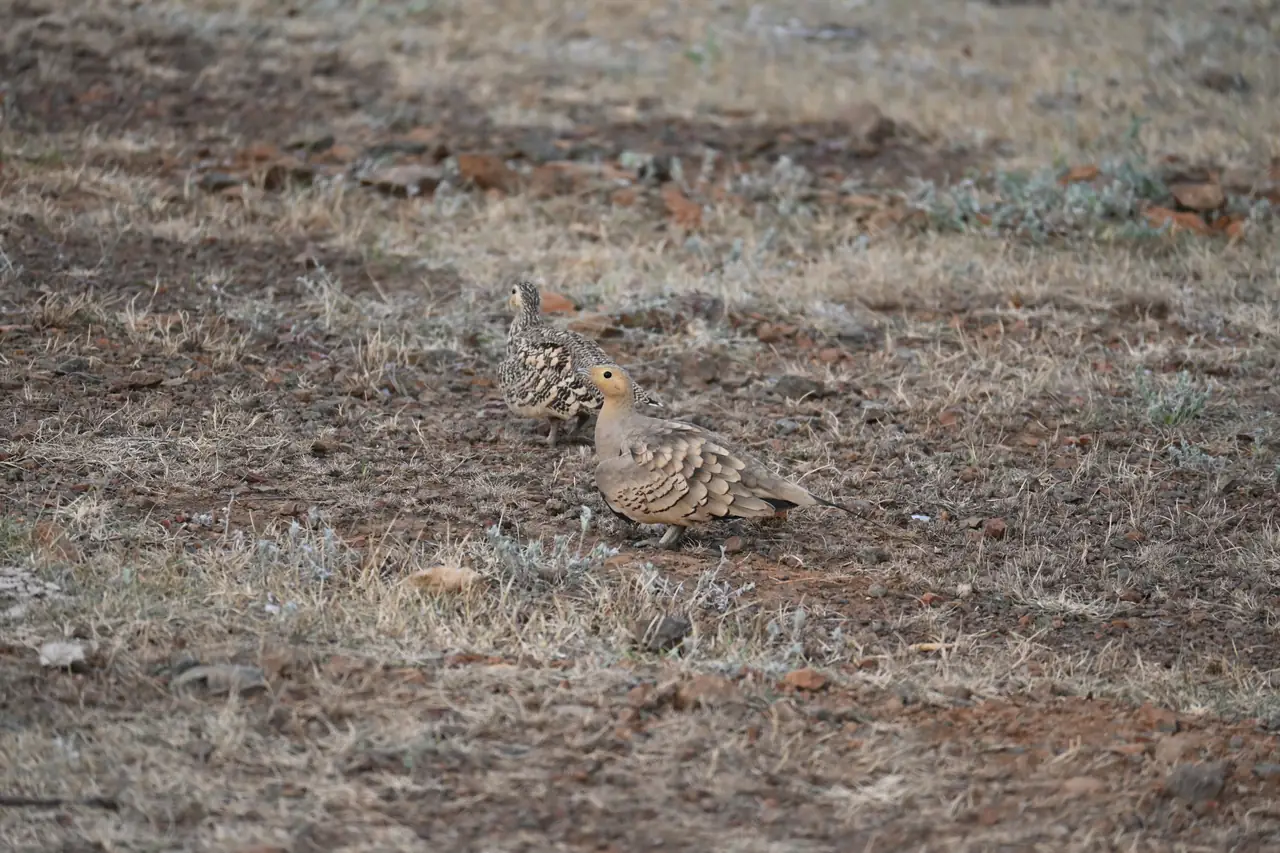
Male and female
The male is sandy buff with a yellowish face, spotted wings, a thin black band across the breast and a dark chestnut belly. His central tail feathers end in long, thin pins.
The female is covered in fine dark spots and bars, which helps her blend into the ground when she sits on the nest.
The water carriers
Sandgrouse nest far from water. The male soaks his special belly feathers at a waterhole and flies back to the chicks, who drink from his feathers. We explain this in more detail in our story on the Painted Sandgrouse.
Where to see them
Chestnut-bellied Sandgrouse live in dry, open plains and fallow fields. Near Pune, the grasslands around Bhigwan and Kadbanwadi are good places to look. Our earlier article on the Chestnut-bellied Sandgrouse at Kadbanwadi has more photos.
- Look in the early morning, when flocks fly to water.
- Scan open ground slowly, because sitting birds blend in perfectly.
- Listen for their soft, bubbling calls in flight.
Read about that evening in our Bhigwan trip story.
Chestnut-bellied or Painted Sandgrouse?
Both live near Bhigwan, and we saw both on the same day. The Painted Sandgrouse has a finely barred body, and the male has black and white bands on the forehead. The Chestnut-bellied Sandgrouse is plainer and sandier, and the male has a dark chestnut belly and a long pin tail.
A day in the life
- Early morning: flocks fly to water, calling softly.
- Mid-morning: birds feed on seeds across open ground.
- Midday: they rest quietly, often in the shade of a bush.
- Evening: a second feeding session as the heat eases.
Our sighting
At 4.35 pm at Kadbanwadi, a pair walked slowly across a patch of dry, stony ground. The male led the way, and the female followed close behind, pausing to pick seeds. They stayed calm as we watched from the vehicle.
Photography tips
- Stay low and still; sandgrouse trust a quiet, parked vehicle.
- Focus on the eye, as the patterned plumage can confuse autofocus.
- Morning water flights are exciting for flight shots.
Best time of year
Sandgrouse are seen all year in the dry grasslands. In the dry months, flocks gather near water in the mornings, which makes them easier to find.
How to reach Bhigwan and Kadbanwadi
Bhigwan is on the Pune–Solapur highway (NH65), about 105 km from Pune. The nearest airport is Pune, and Bhigwan has its own railway station (BGVN), with Daund Junction about 26 km away for more trains. State Transport buses from Pune to Solapur stop at Bhigwan. Kadbanwadi is a short drive away, and most homestays in Kumbhargaon arrange transport and local guides.
Frequently asked questions
How do you tell a male sandgrouse from a female?
The male is plain sandy buff with a dark chestnut belly and long pin tail. The female is covered in fine spots and bars.
Why do sandgrouse carry water in their feathers?
They nest far from water, so the male soaks his belly feathers and brings water to the chicks.
Where can I see sandgrouse near Pune?
In the grasslands around Bhigwan and Kadbanwadi, especially in the early morning.