
Two days, four outings and a hyena den at dusk. This is the story of a September trip to the grasslands, scrub and backwaters around Bhigwan, told through every photograph and video we brought home.
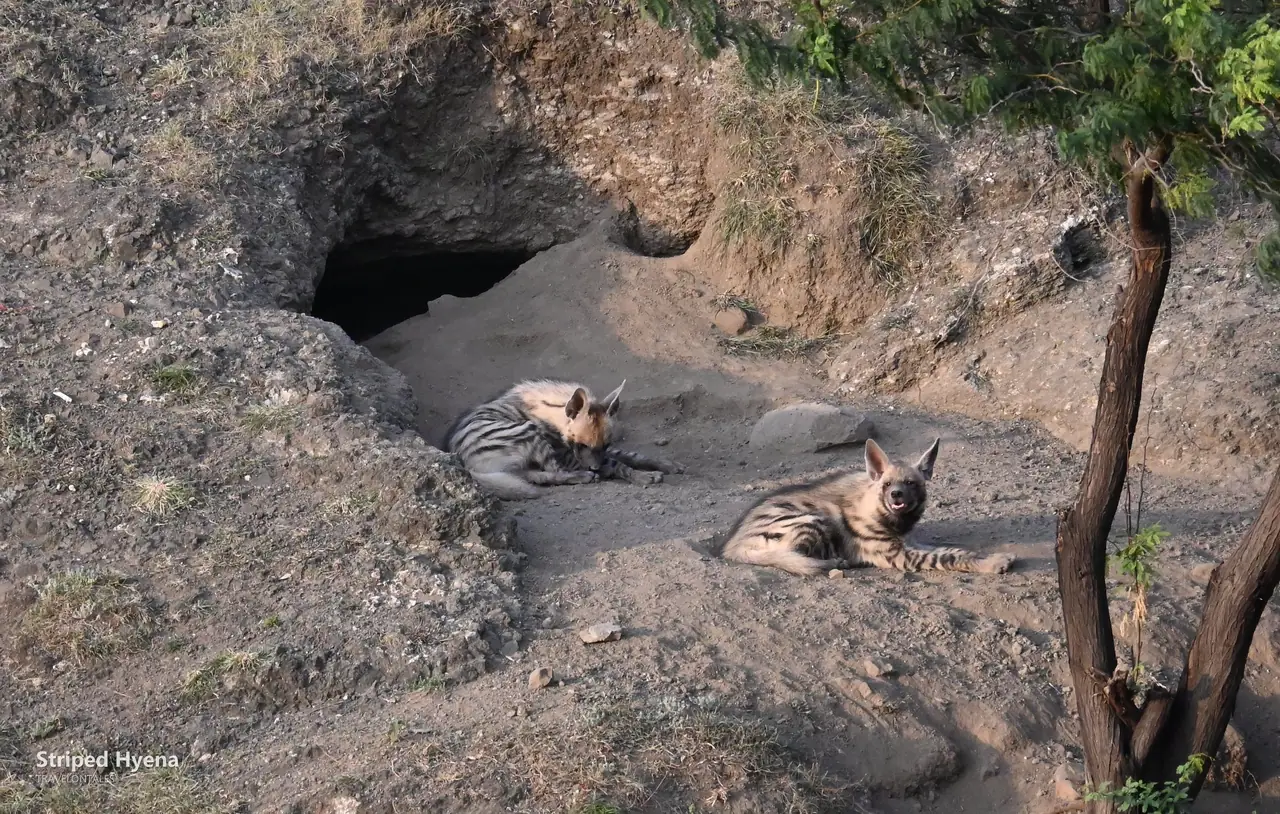
Trip at a glance
- Where: Bhigwan and Kumbhargaon on the Ujani backwater, and the Kadbanwadi grassland, about 105 km from Pune
- When: September, two days and four outings: two evenings and two mornings
- Stars of the trip: a striped hyena family, an Indian wolf, chinkara, European Rollers, Painted and Chestnut-bellied Sandgrouse, Indian Coursers and a Red-necked Falcon
- Nearest railway station: Bhigwan (BGVN), with Daund Junction about 26 km away
- Nearest airport: Pune, about 105 km away
In this story: Dusk at the hyena den · First light on the grassland · Chinkara country at Kadbanwadi · The last morning · How to reach Bhigwan · FAQs
September is a lovely, quiet time at Bhigwan. The flamingos arrive later in the winter, and until they do, the place belongs to the grasslands: quails calling from the rocks, sandgrouse sitting tight in the grass, rollers passing through on their way south and, with a little luck at a den, striped hyenas at dusk. We had two days, made four outings out of them, and every one gave us something to remember.
You can read about the birds of this trip in our first story. This one is the full journey, outing by outing, with every picture and every clip.
Outing one: dusk at the hyena den
We went out on the very first evening. Away from the backwater, the country around Bhigwan rolls out in low hills, black rock, golden grass and thorn scrub. In September the rains have only just passed, so everything still wears a wash of green.
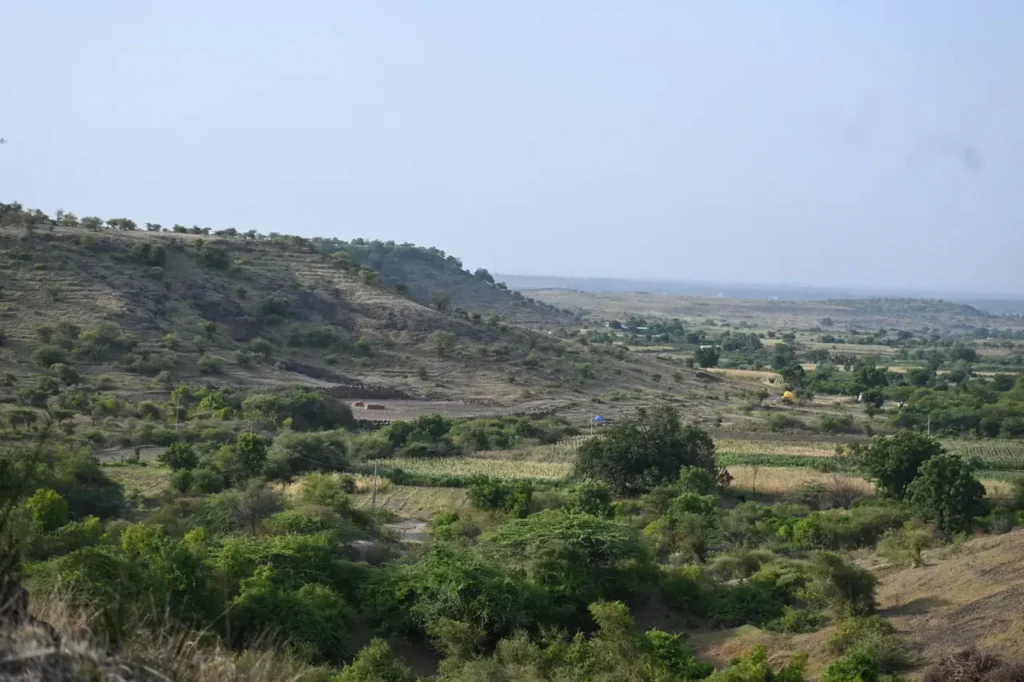
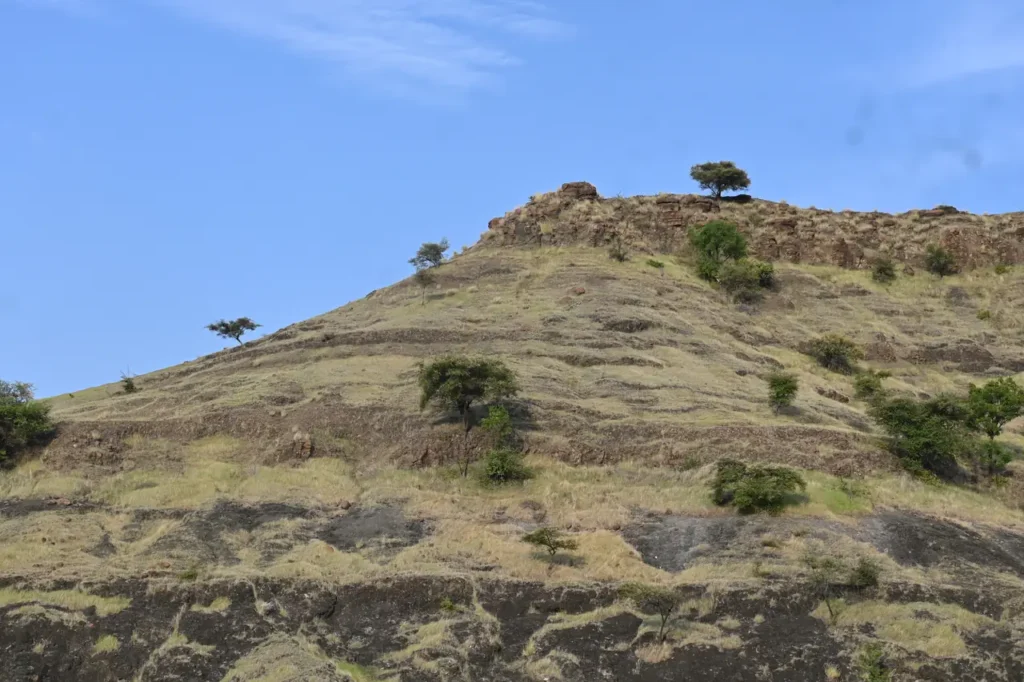
Our destination was a striped hyena den: a burrow dug into an earth bank at the foot of a slope, with a slender tree standing guard right in front of it. We reached it at about twenty-five past five, settled in at a respectful distance and waited quietly.
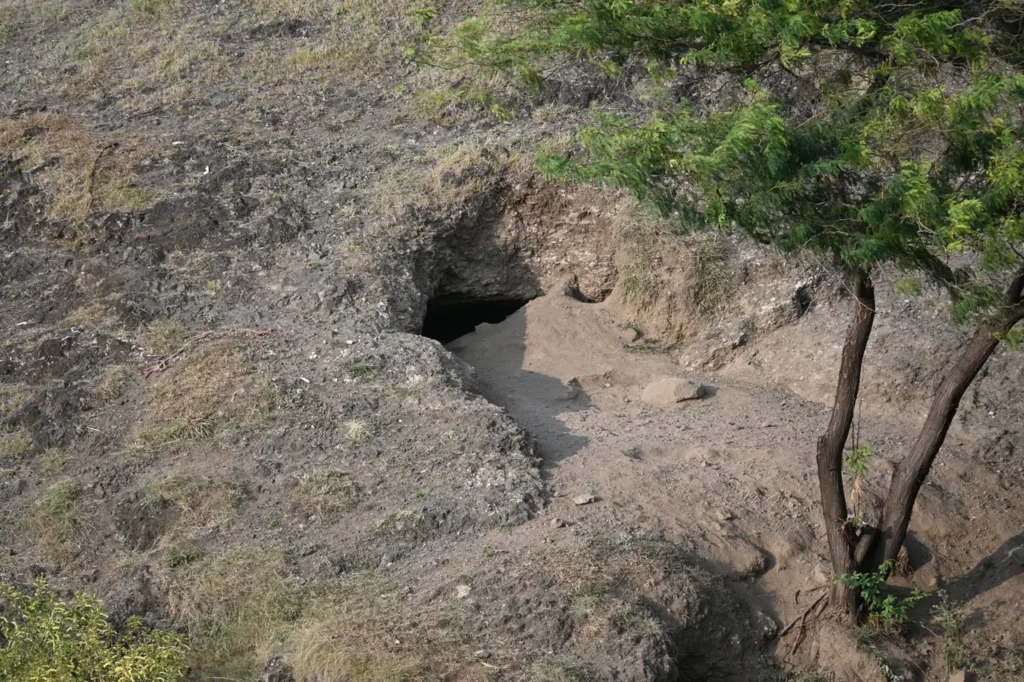
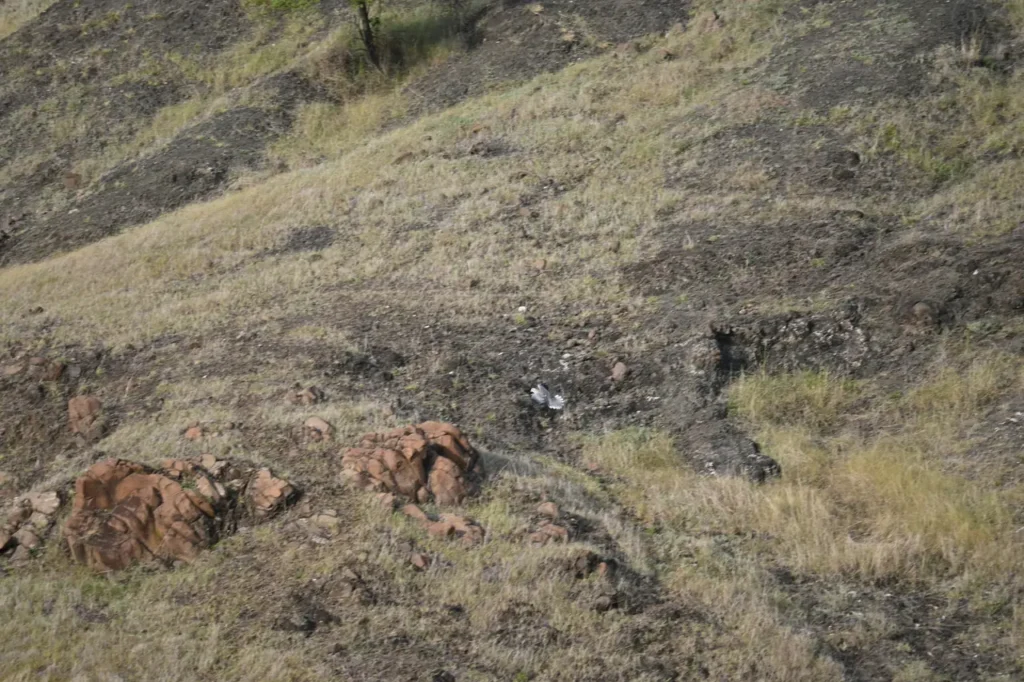
Hyenas are creatures of the night. They rest through the day and set out after dark, so an evening at a den is all about the golden minutes in between. At twenty to six the den was still calm, and the camera was rolling.
They simply appeared. One moment the sand was bare, the next two hyenas were lying a few metres apart, looking back at us as calmly as if they had been there all evening. That is the photograph at the top of this story.
As the light faded, the den came alive. Small birds pottered past the entrance, the adults stood and stretched, a cub stepped out onto the rocks and, by dusk, the family was together outside their home.
Our short film follows that evening from start to finish. Press play and you will see exactly what we saw.
The striped hyena is the only hyena found in India, a shy and gentle-mannered animal of dry, open country, and watching a family at home is a rare privilege. We keep the den’s location to ourselves so that it stays a peaceful home. If you would like to see hyenas around Bhigwan, go with a local guide who knows the area, and bring plenty of patience.
Outing two: first light on the grassland
The next morning we were out early. The sun came up behind a soft lid of cloud, and the grassland woke slowly around us.
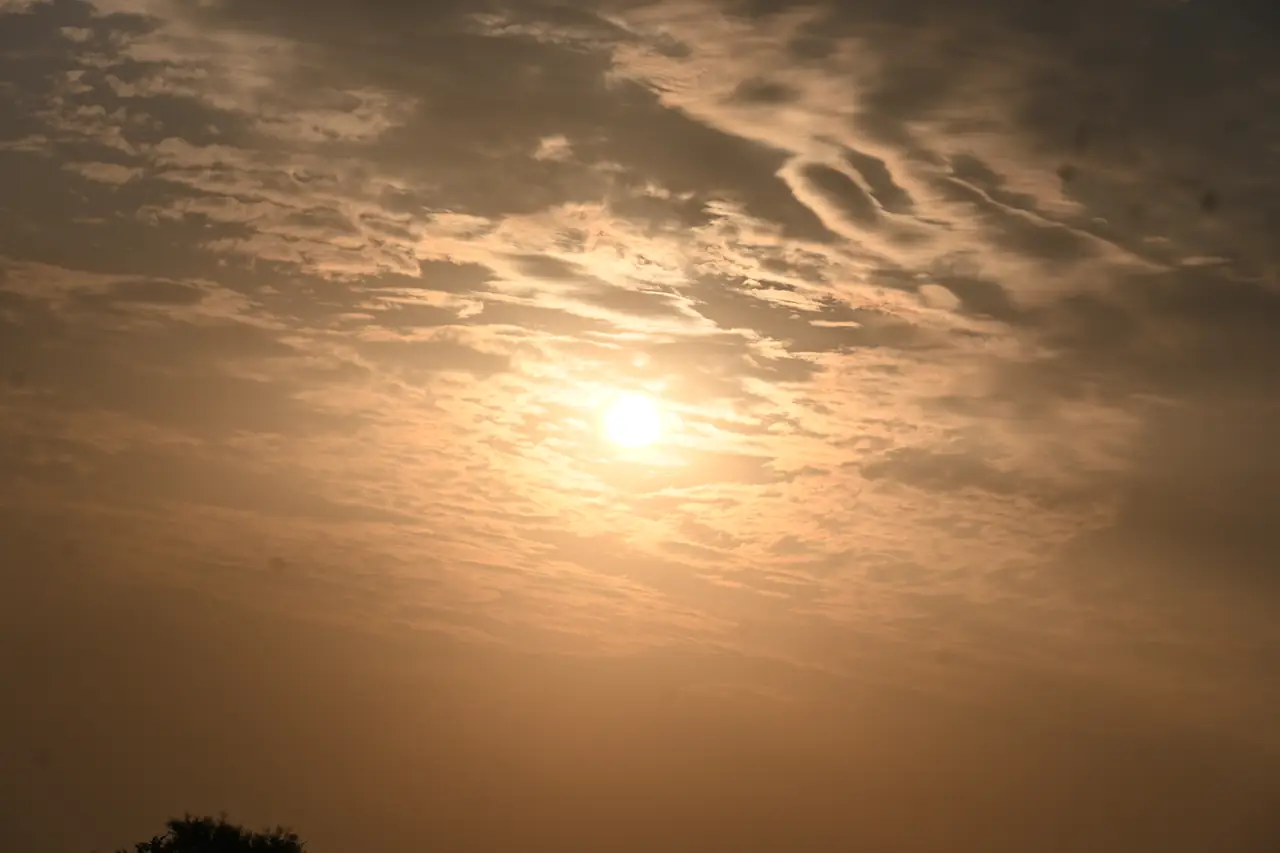
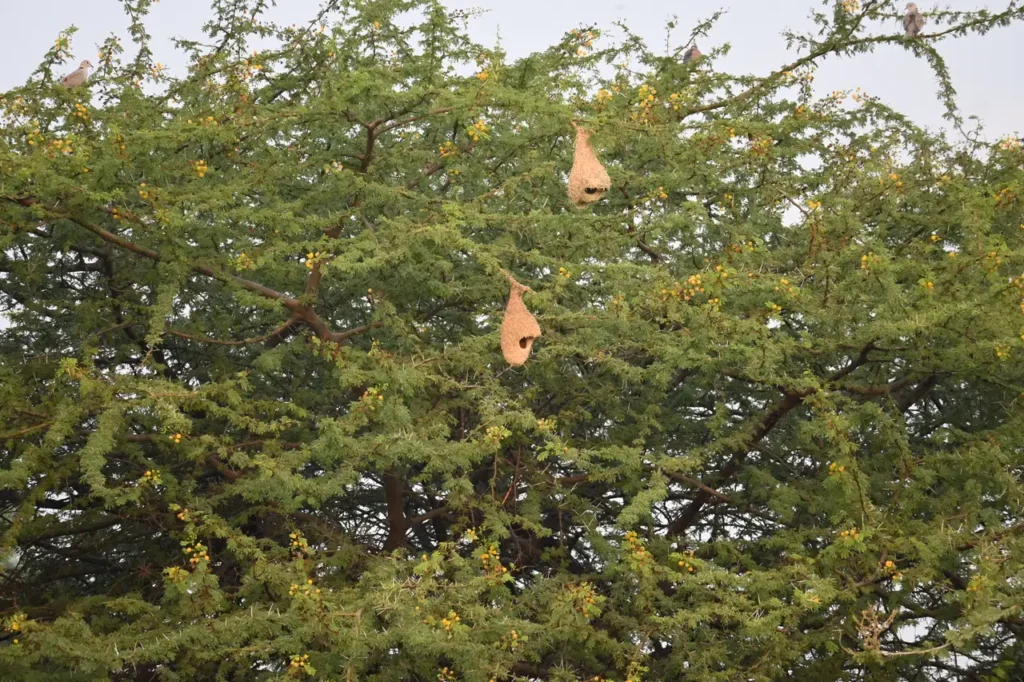
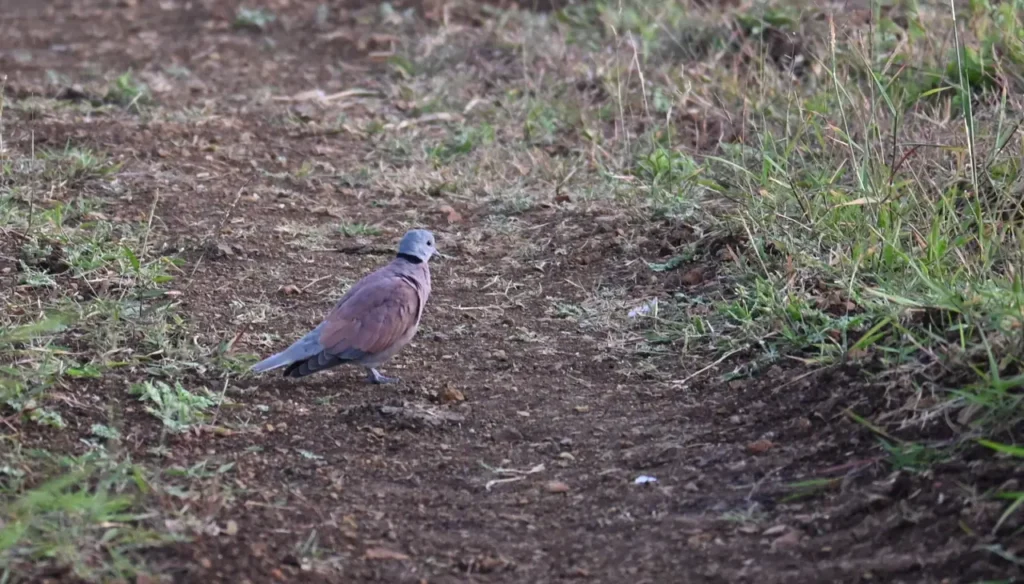
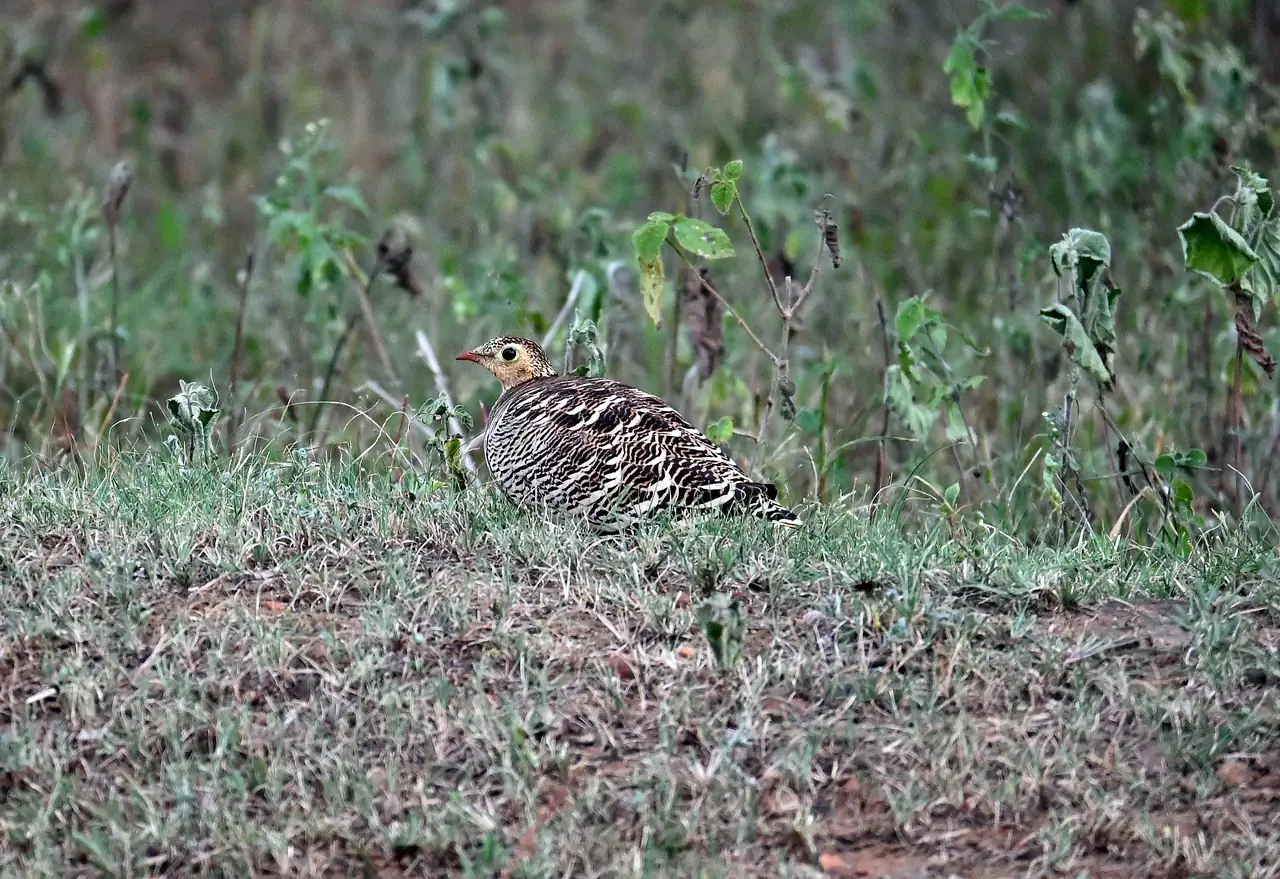
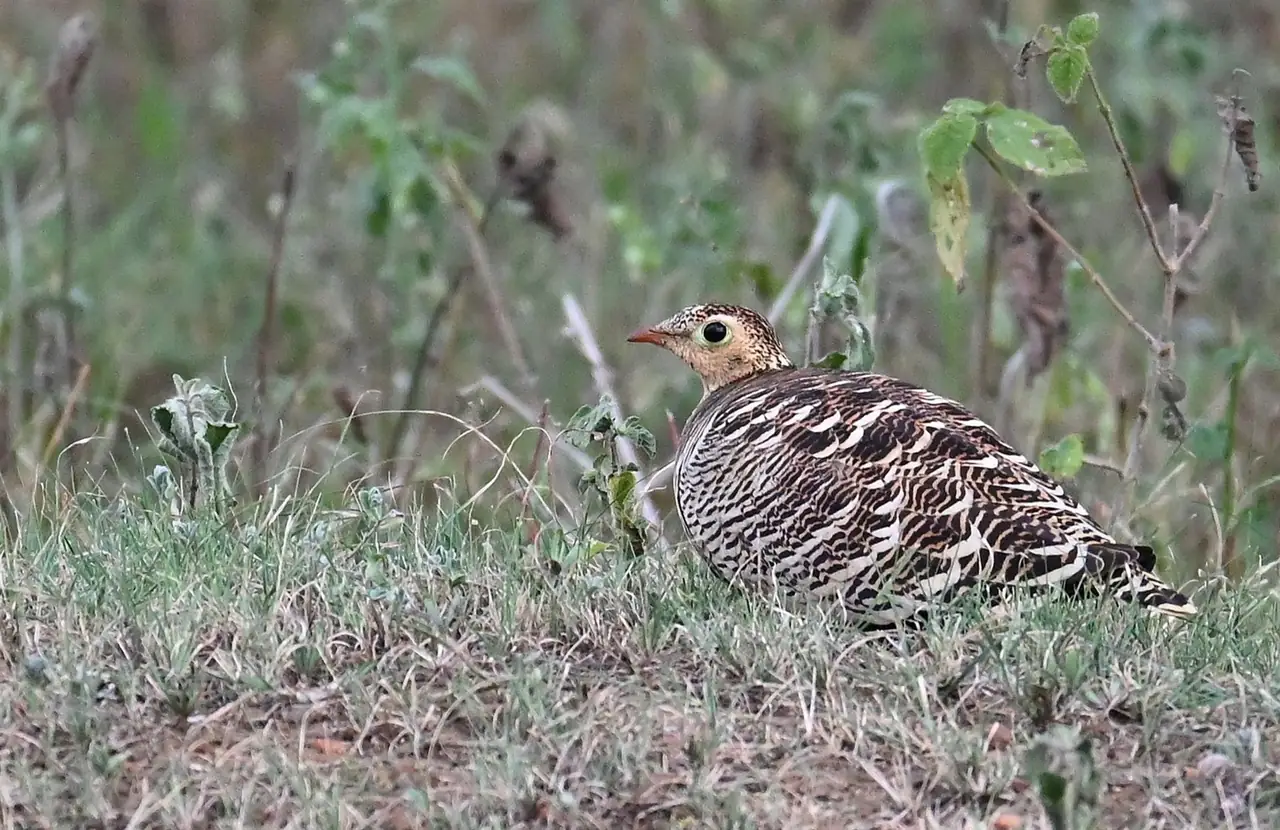
Then came the bird of the morning. A female Painted Sandgrouse sat in a patch of low green weed, her cream and black pattern melting into the ground around her. The first photo shows her as we found her; the second brings her closer. We have written a whole story about this remarkable bird, which carries water to its chicks in its feathers.
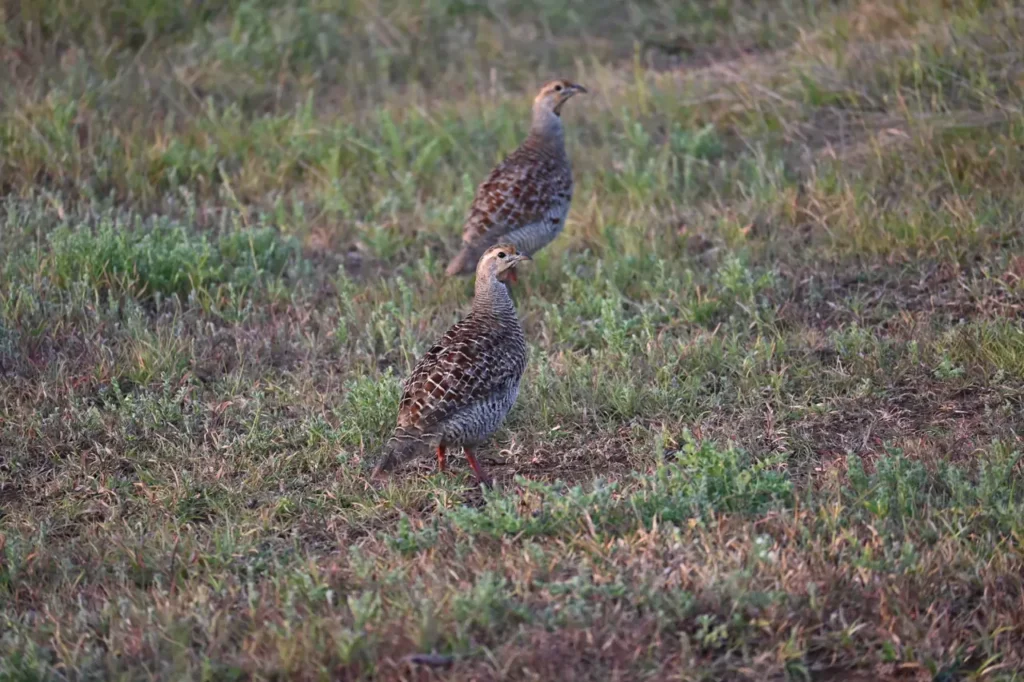
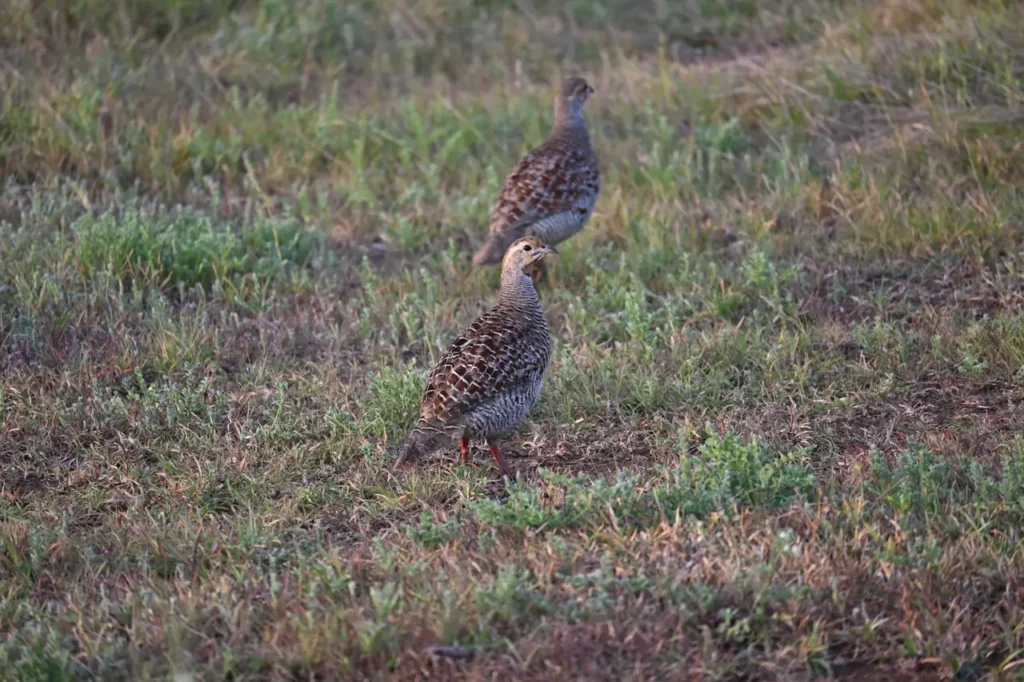
After that it became a quail morning. A stretch of rocky grassland holds a wonderful number of quails, and every one of them is an expert at standing just behind something.
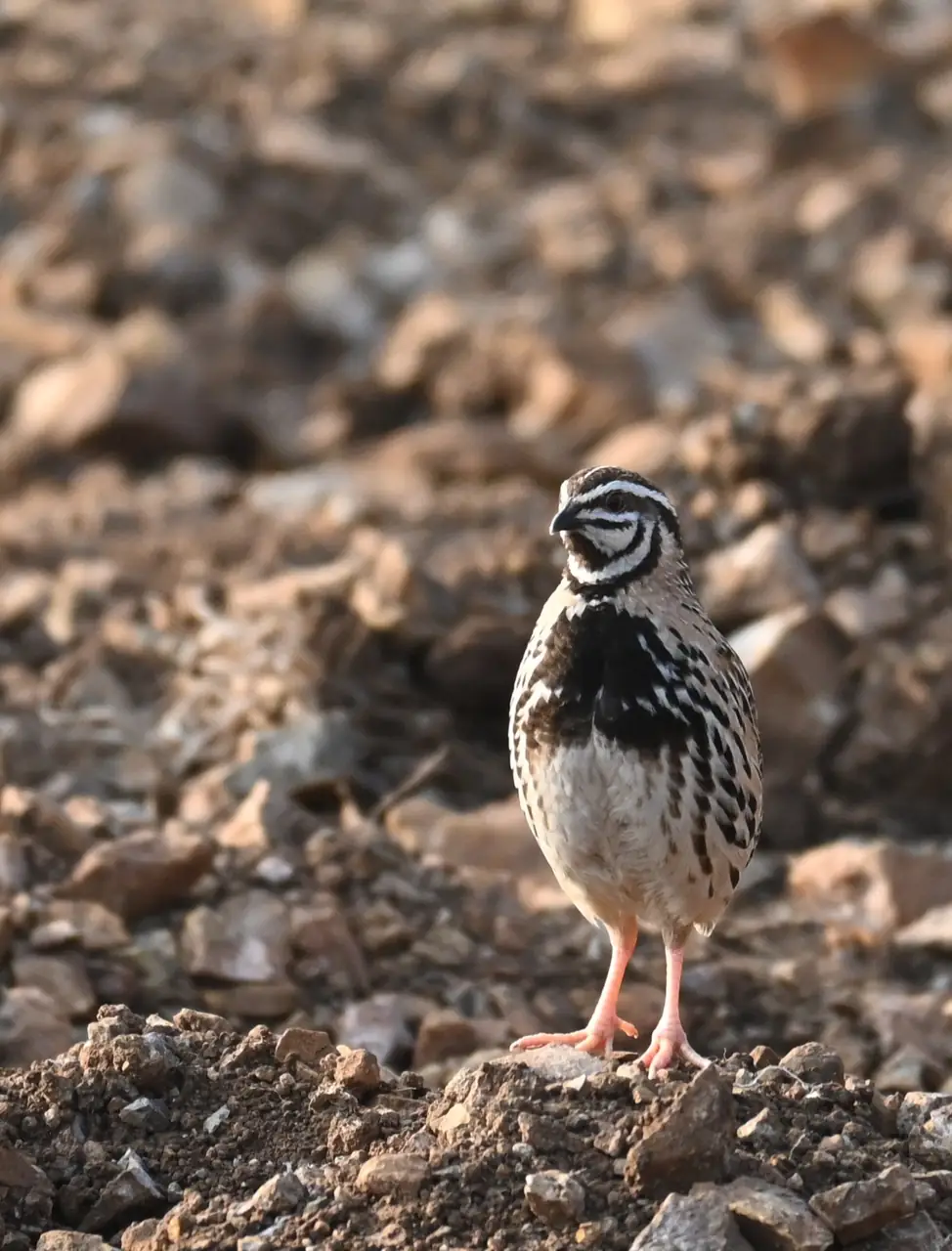
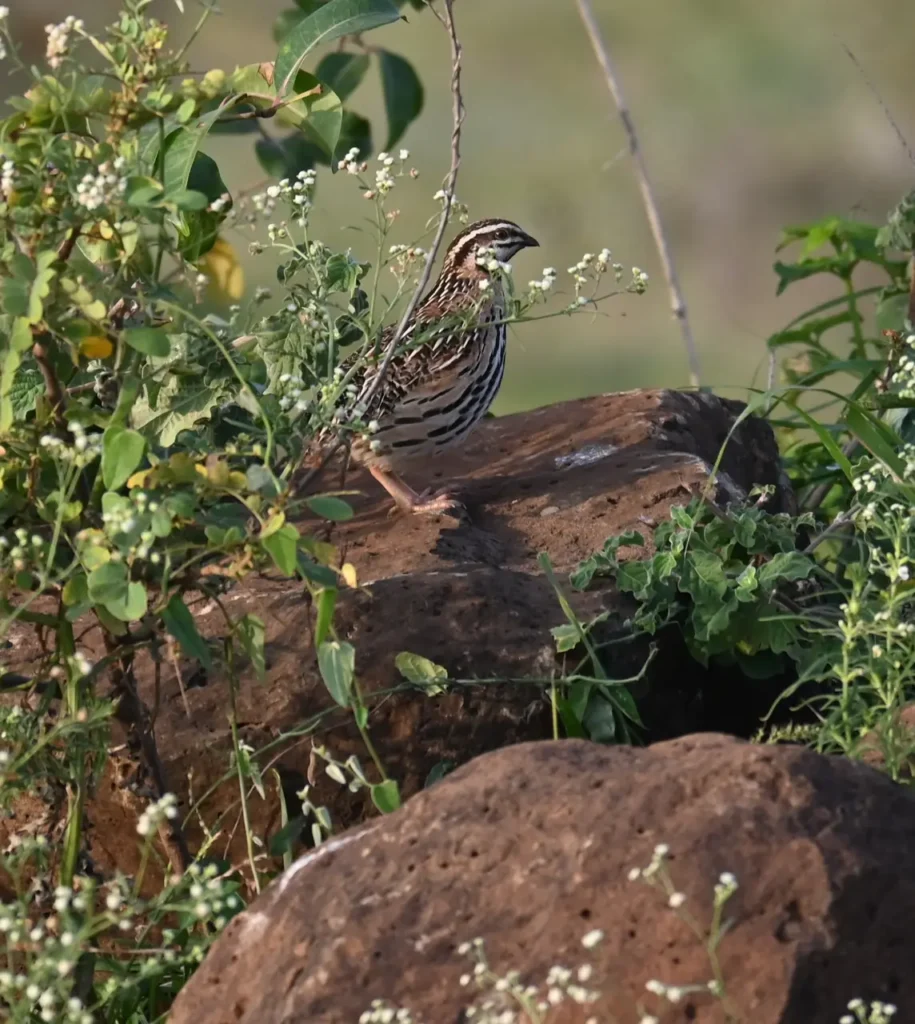
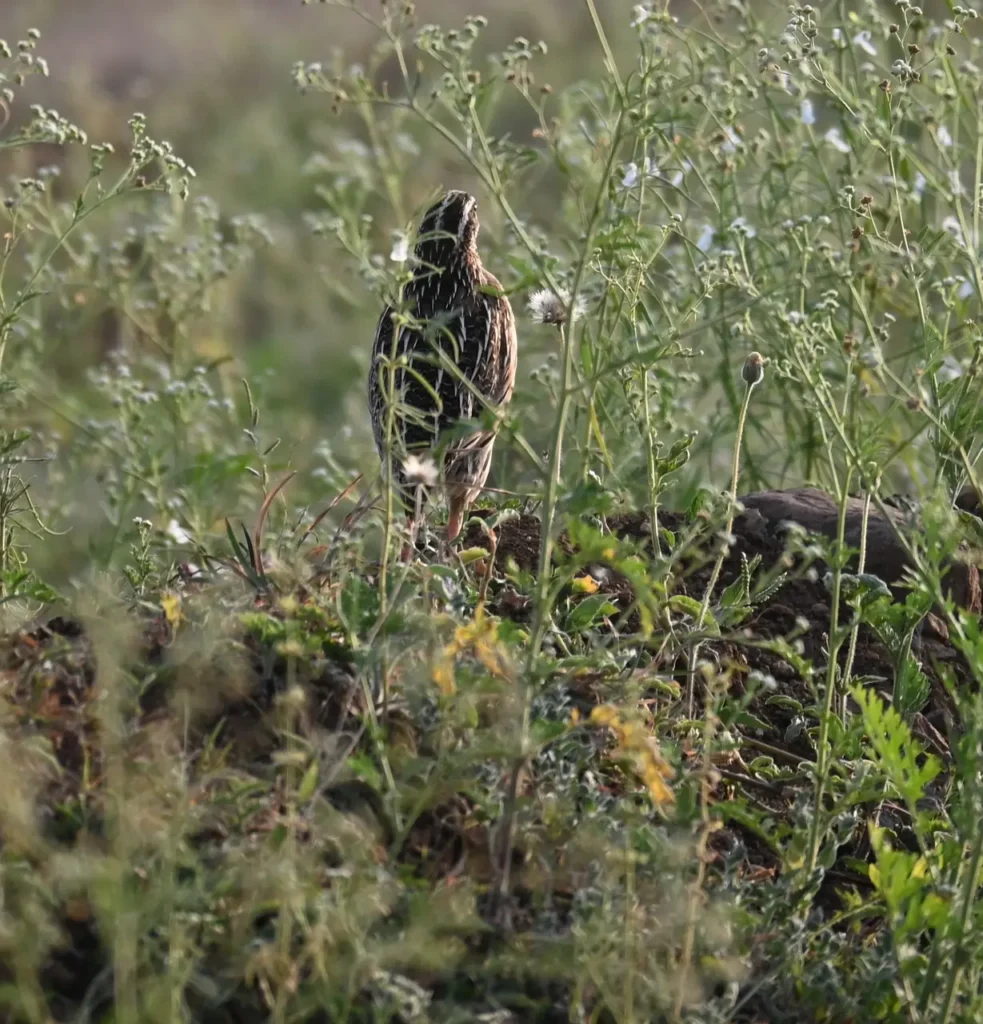
The Rock Bush Quails were the stars of the show. One climbed to the top of a pile of red rocks to keep watch, one peeped over a boulder, and one posed on a rock in the open for a proper portrait.
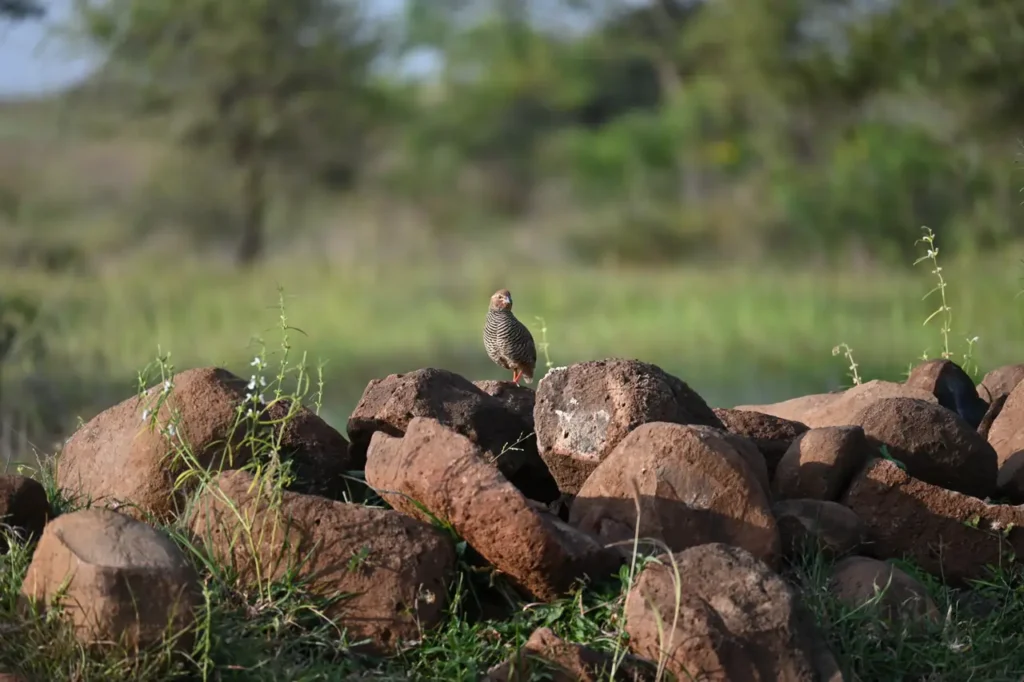
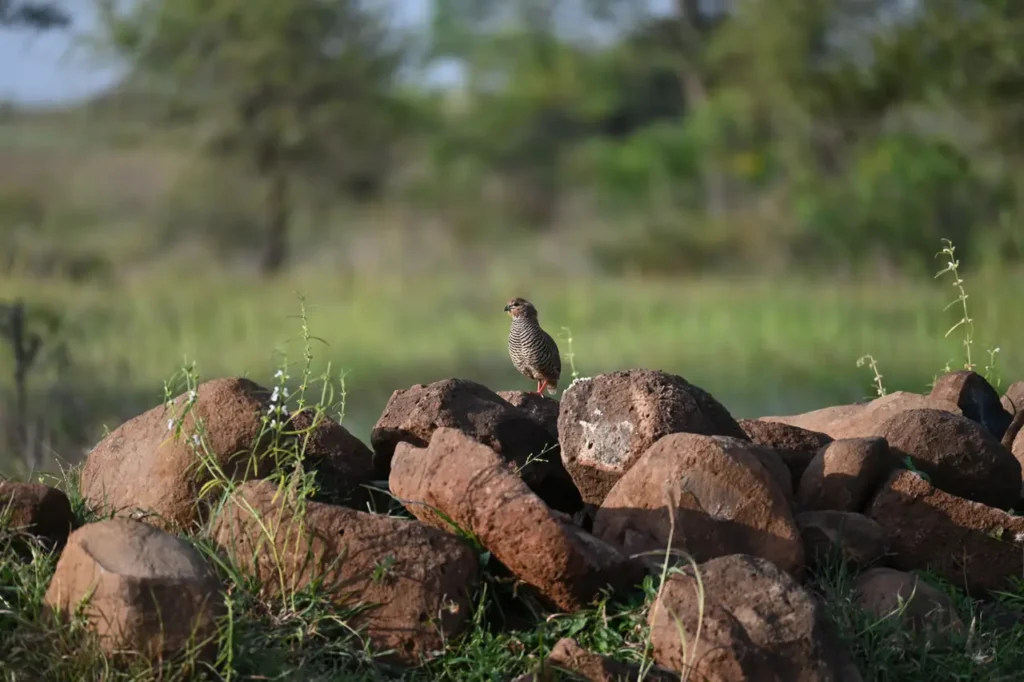
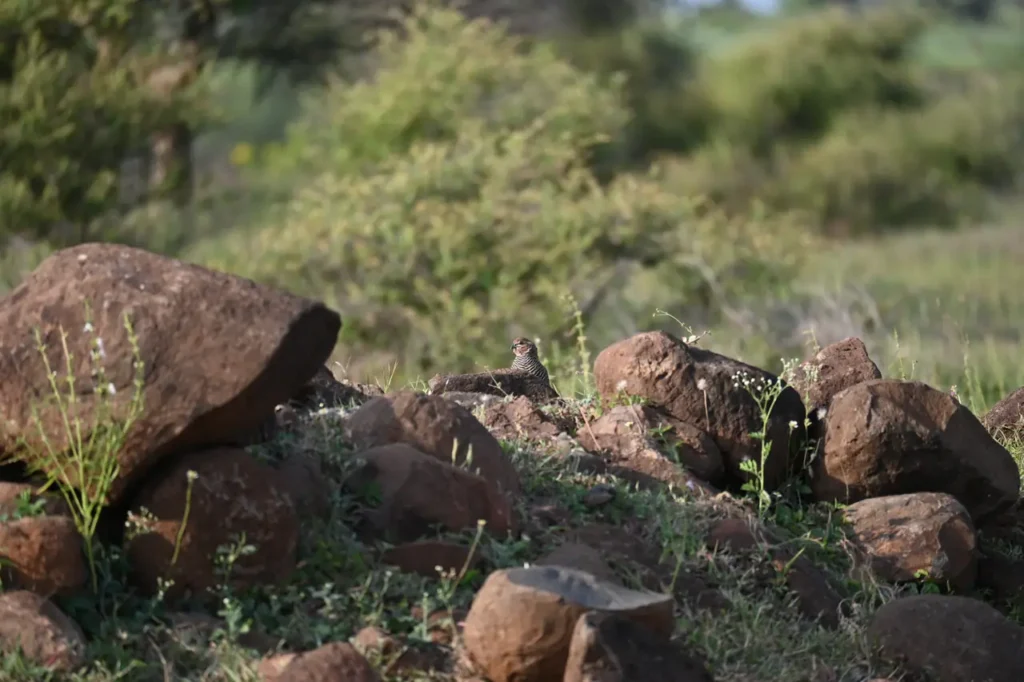
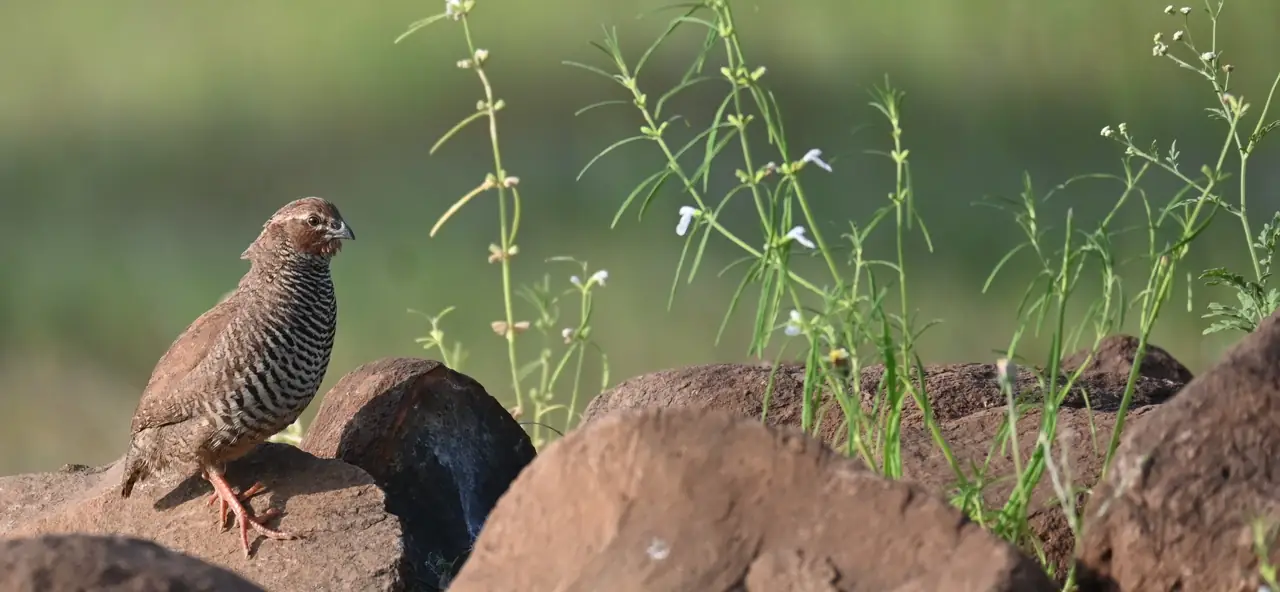
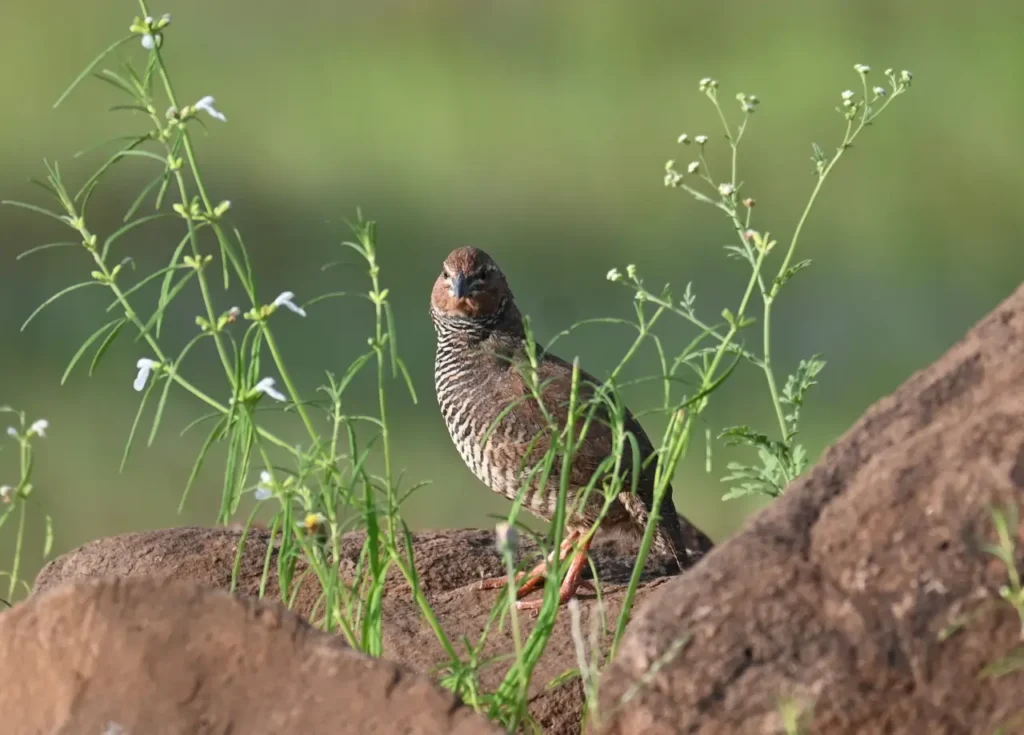
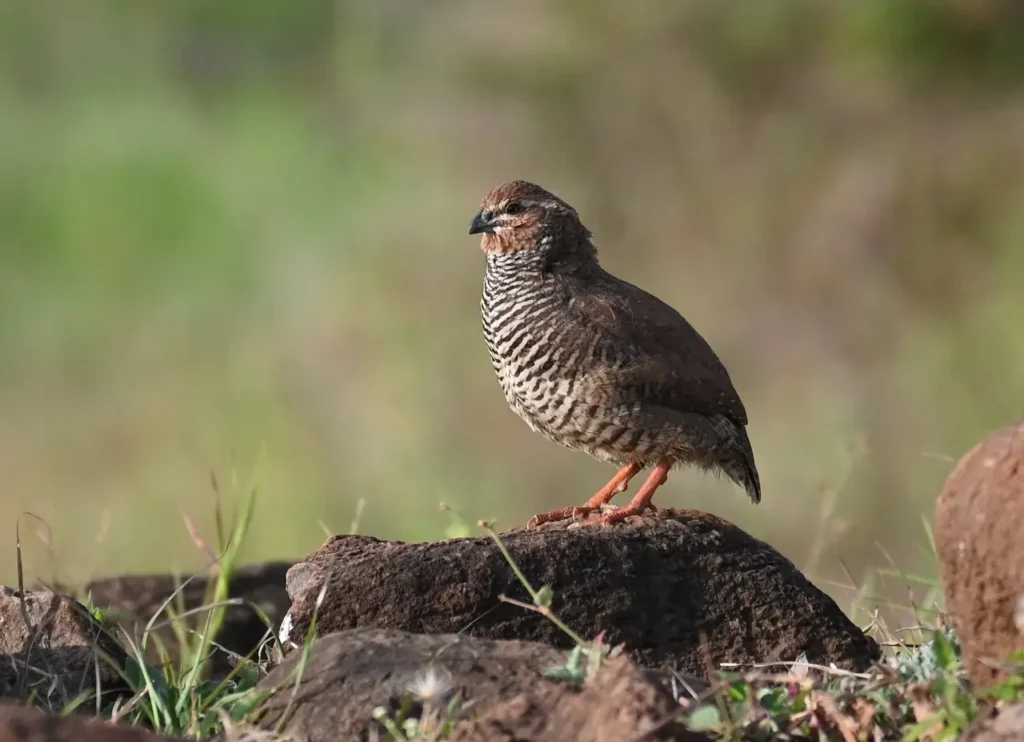
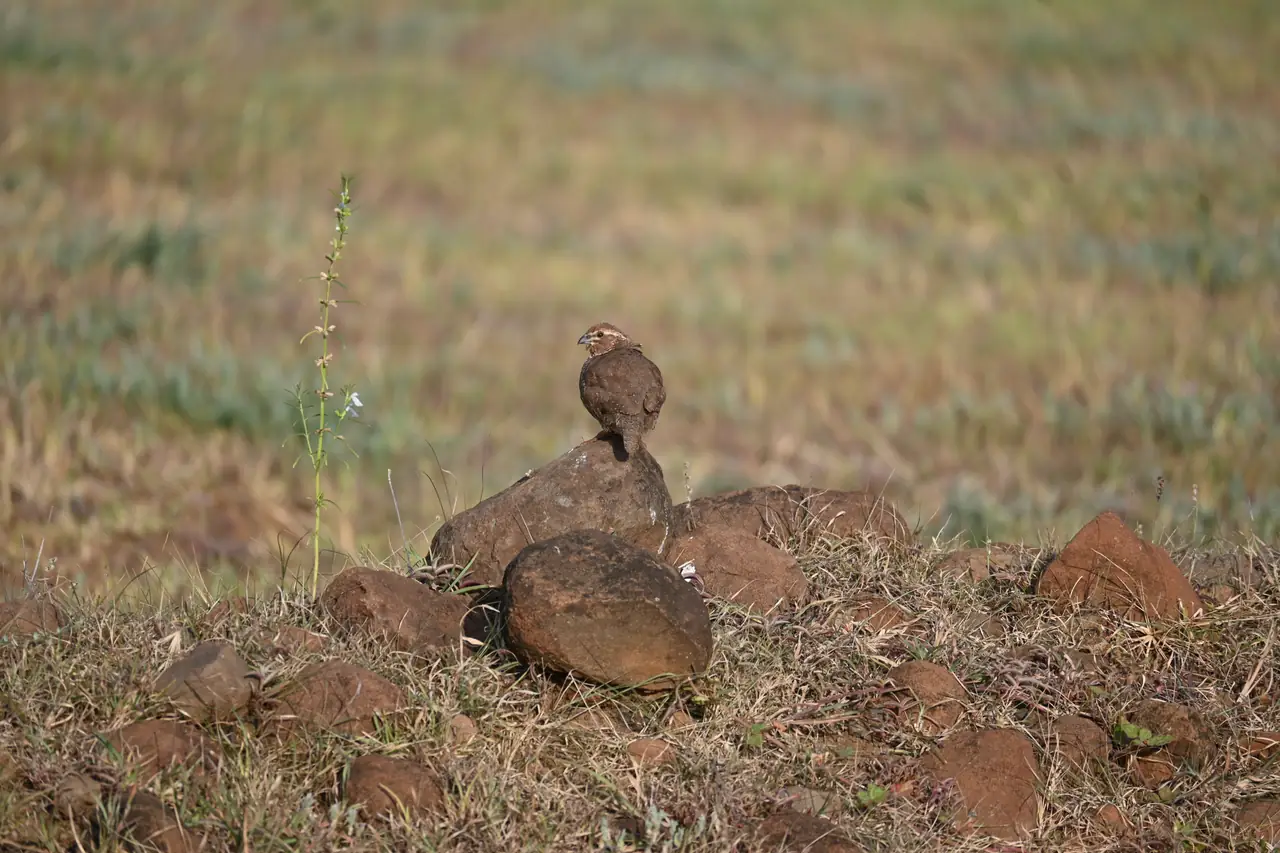
In between the quails, the rest of the grassland kept us busy.
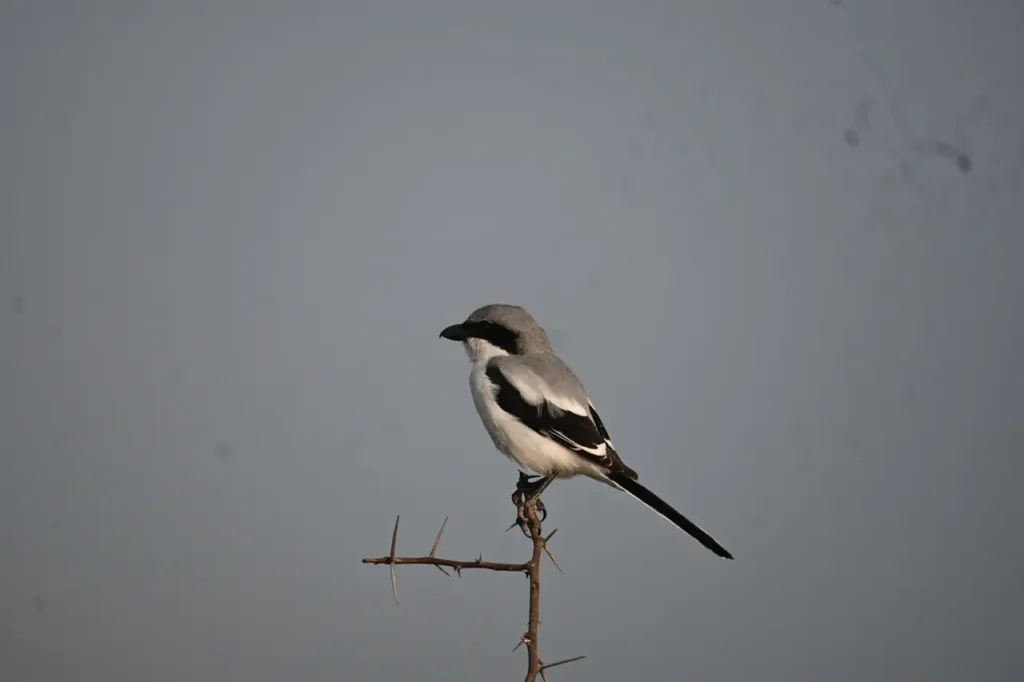
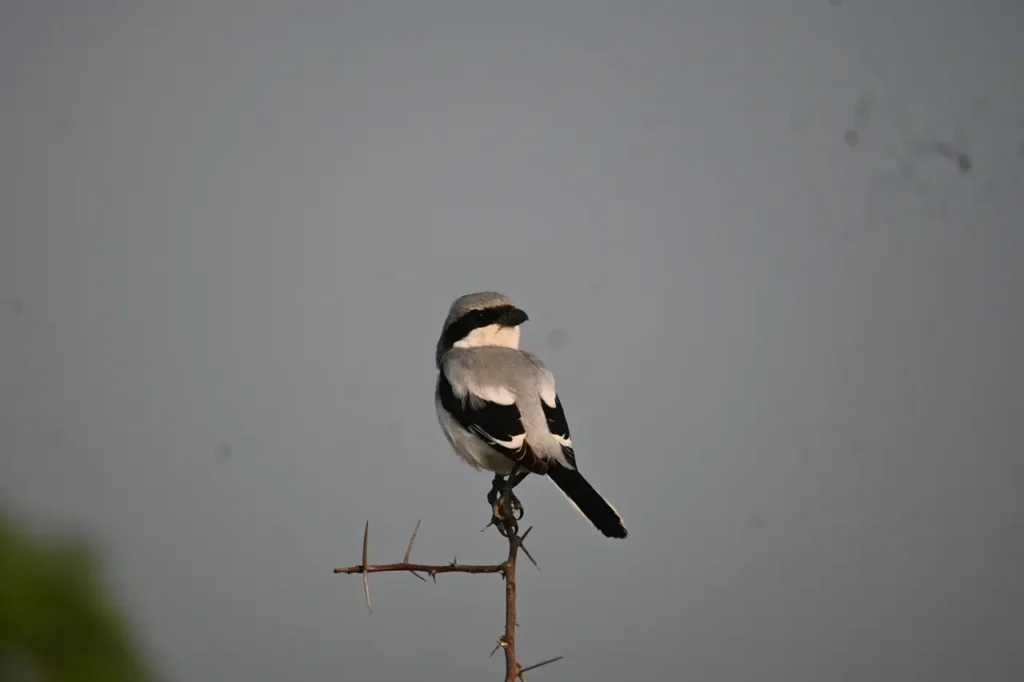
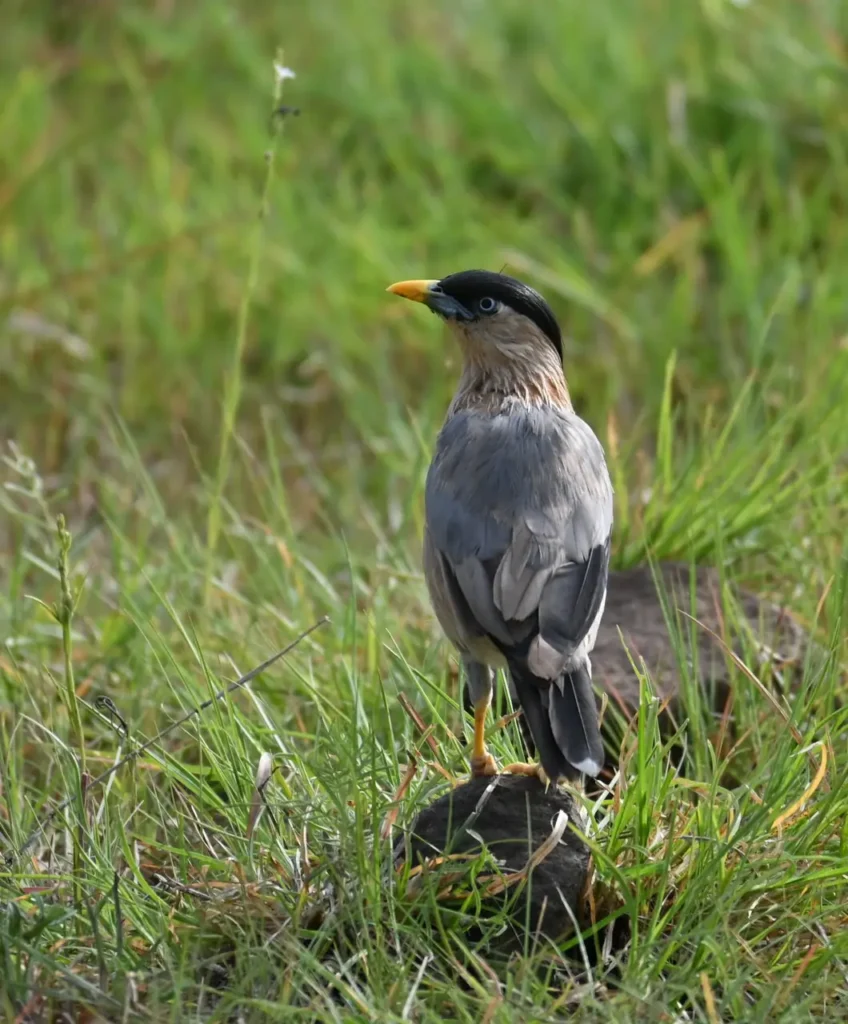
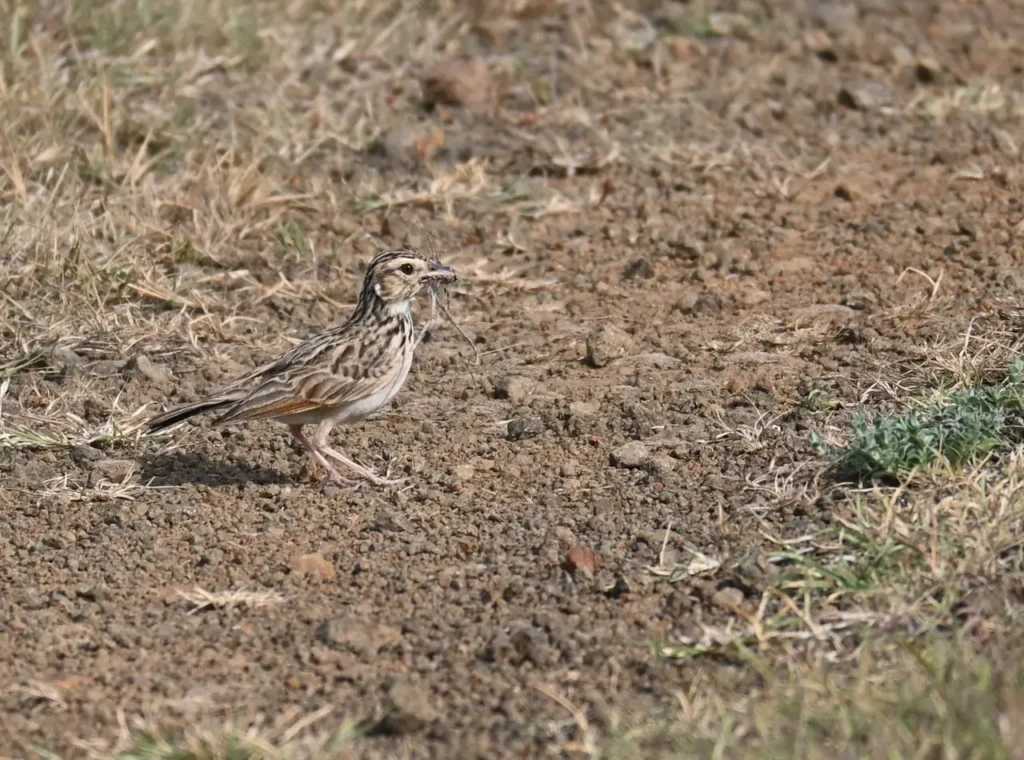
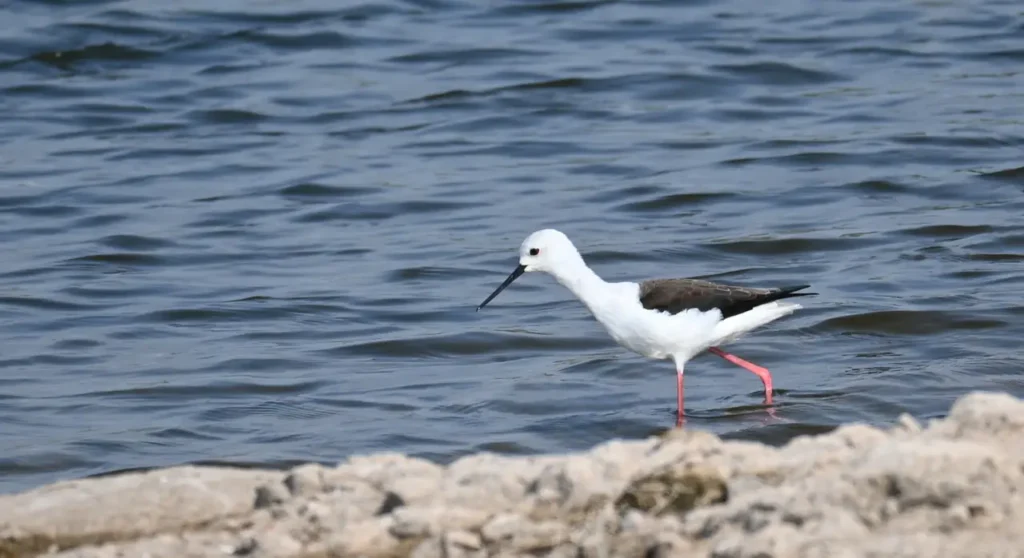
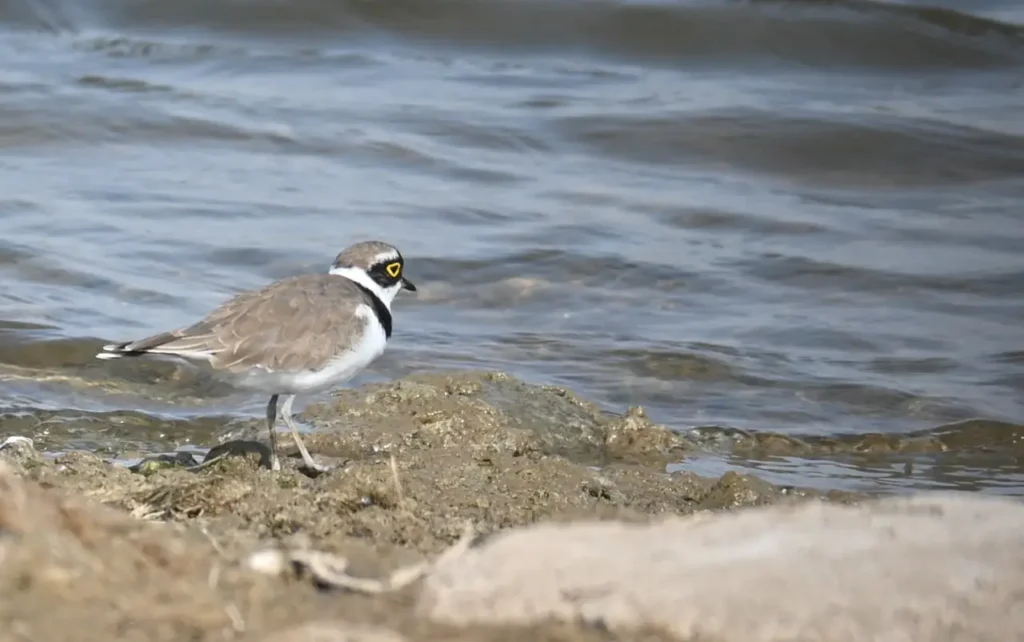
Around nine we reached the water’s edge, and the birds changed with the ground.
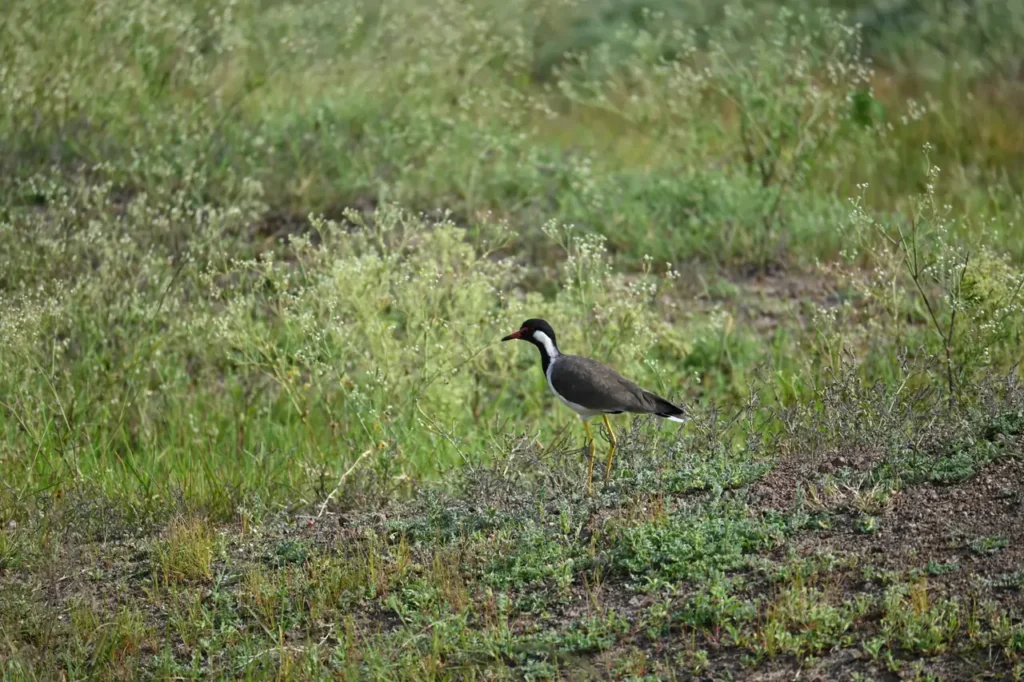
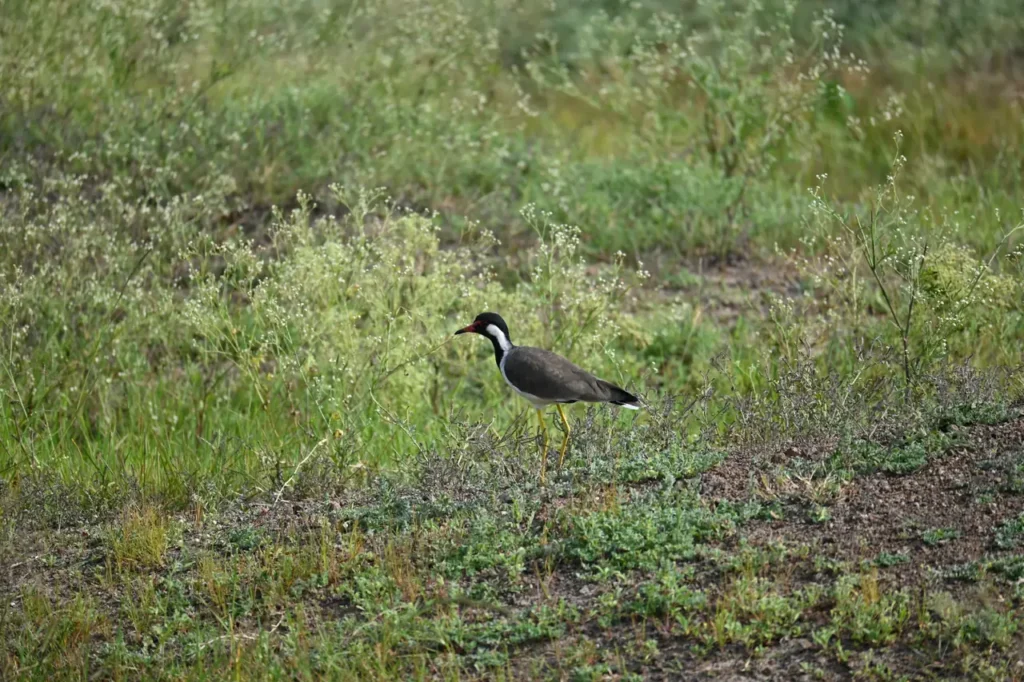
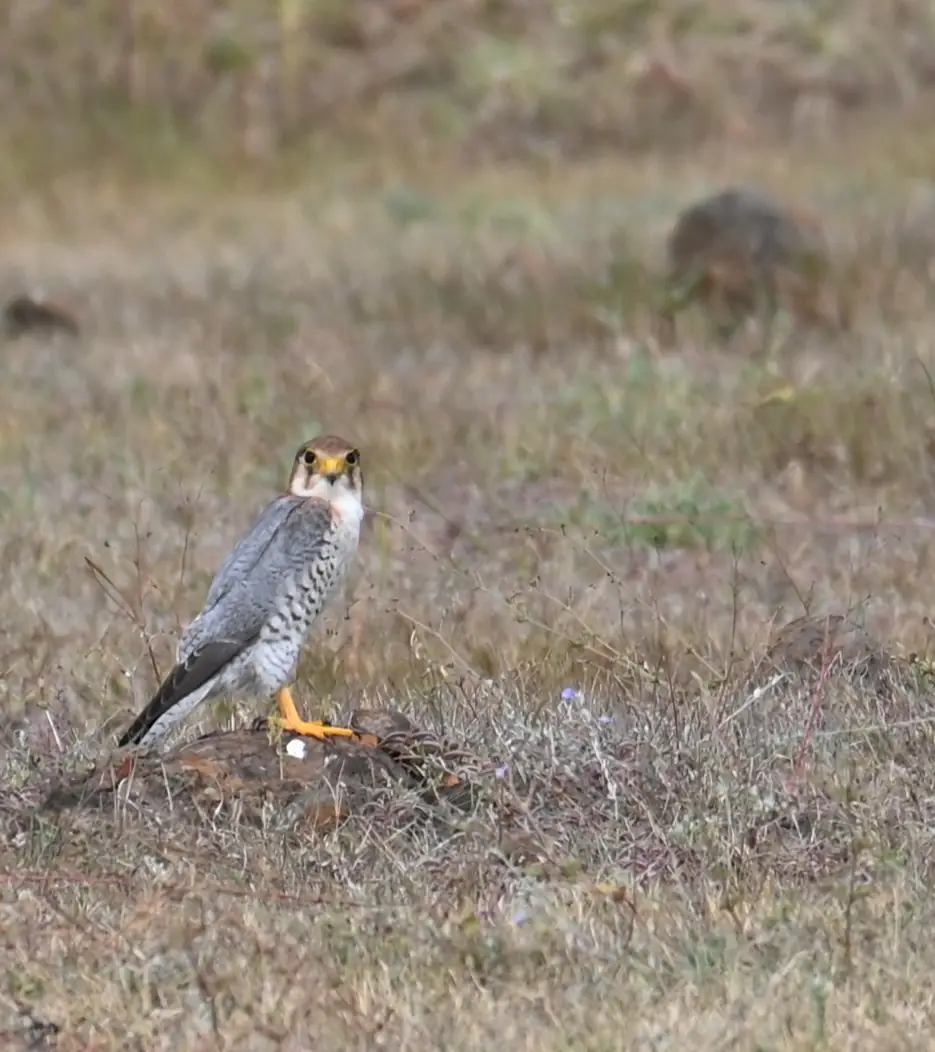
The highlight of the late morning was a small falcon standing on a mound in the grass and looking straight down the lens. The rusty crown, the yellow around the eye and the fine barring underneath make it a Red-necked Falcon, a sleek hunter of open, dry country.
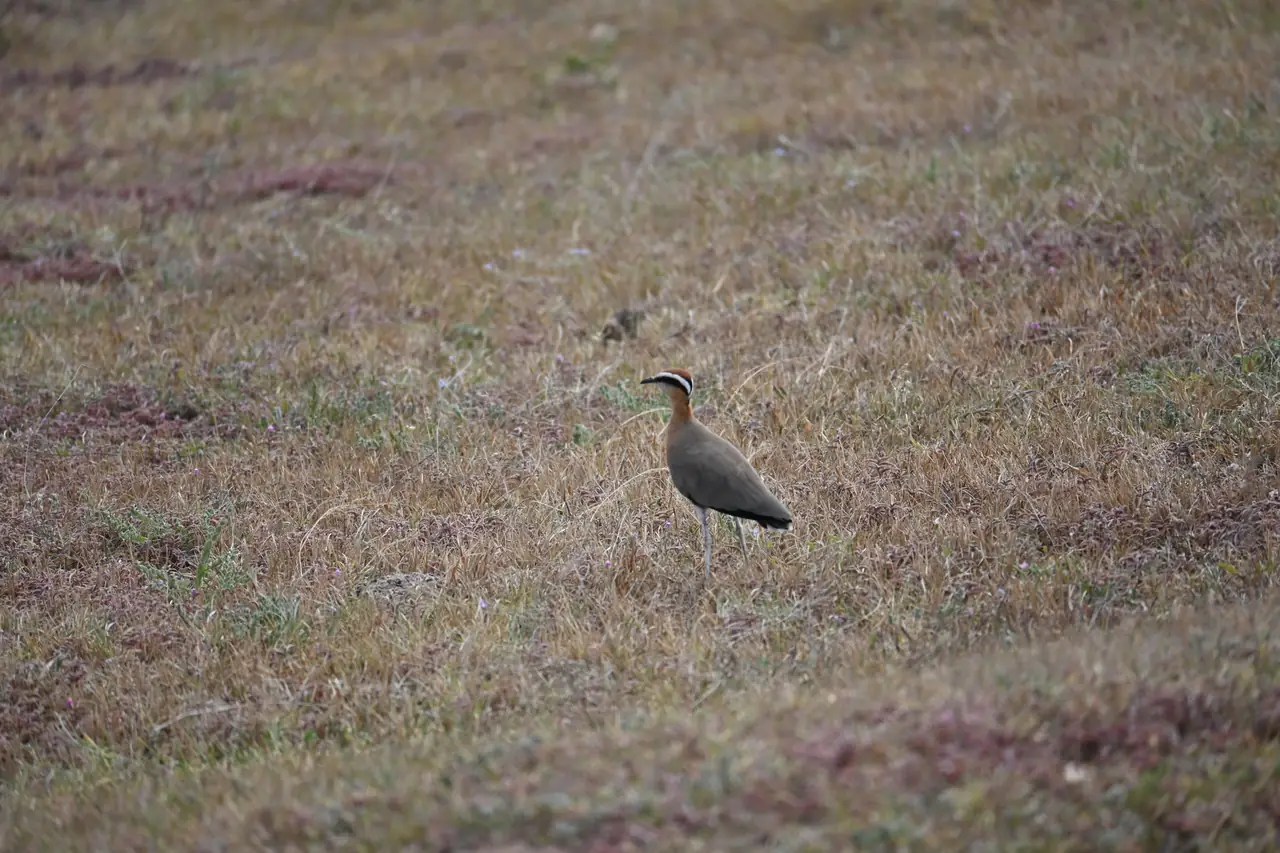
Soon after, an Indian Courser stood far out on the open grass, a first glimpse of a bird that would come much closer that evening.
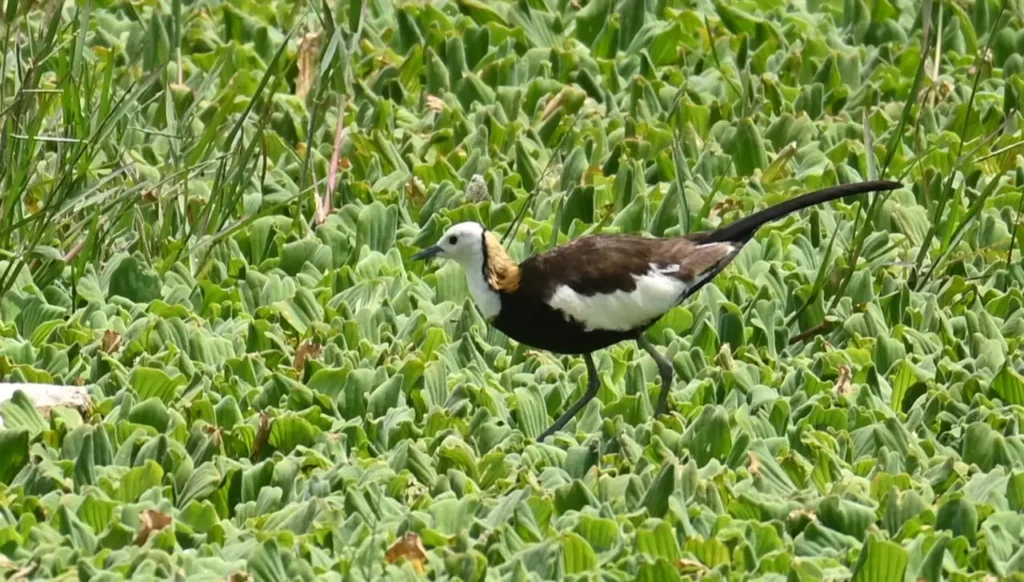
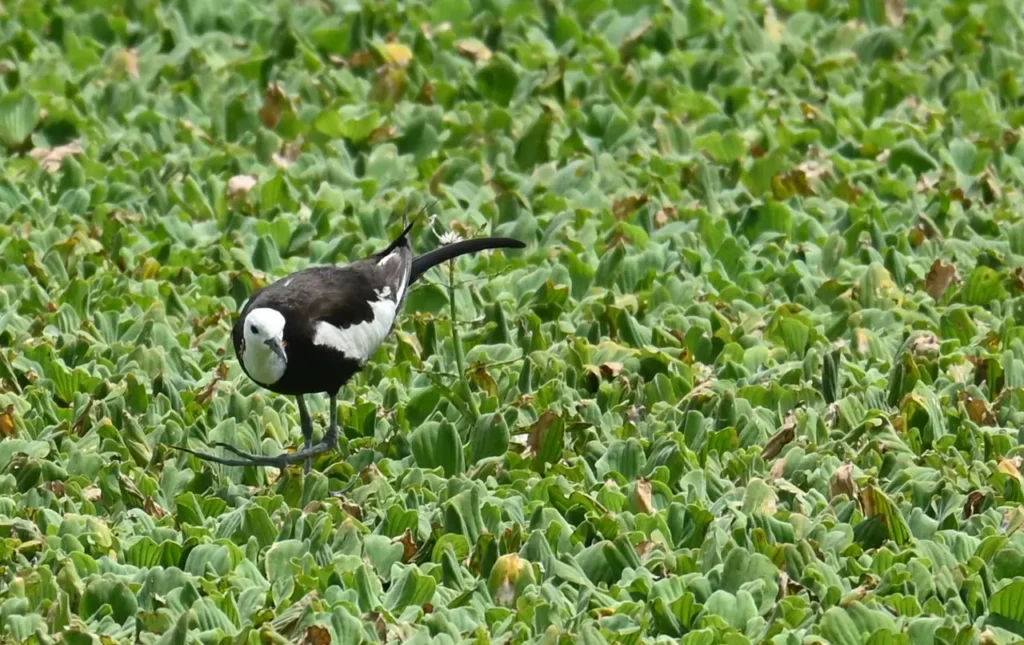
The last bird before the midday break was a Pheasant-tailed Jacana, stepping lightly across a carpet of floating water lettuce. Then it was back for lunch and a well-earned rest.
Outing three: chinkara country at Kadbanwadi
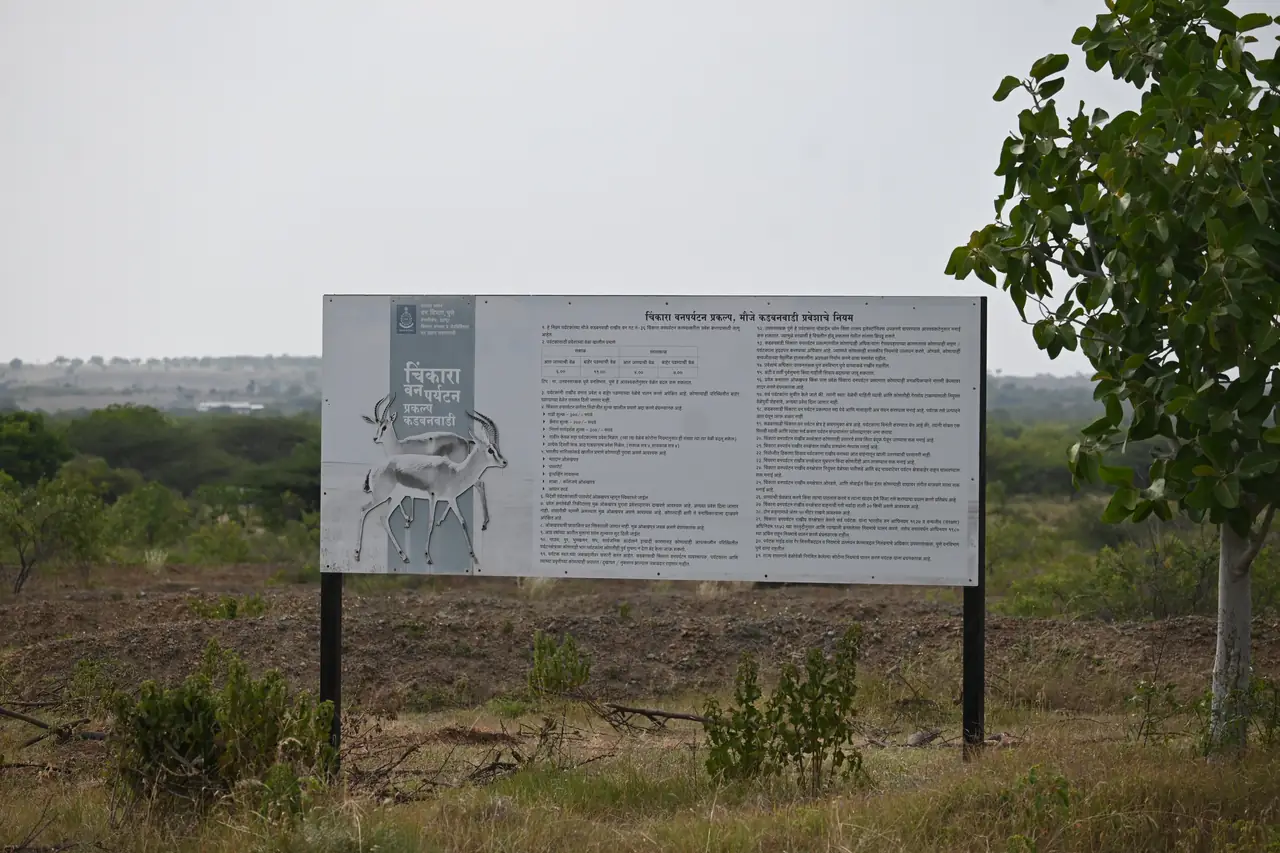
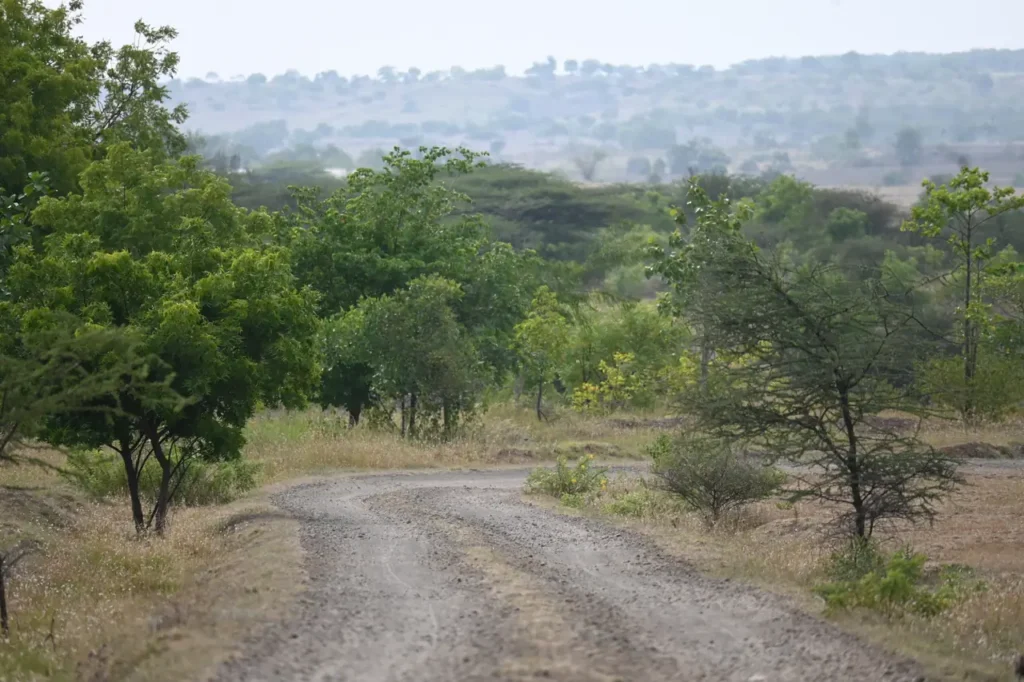
That evening we drove to Kadbanwadi, where the forest department runs a small chinkara tourism area on the grassland. The board at the entrance lists thirty rules in Marathi, and together they keep the place calm and wild. The useful details, as written on the board when we visited:
- Timings: mornings 6 to 11, evenings 4 to 7.
- Fees: ₹300 per vehicle, ₹200 per camera and ₹300 for the nature guide.
- Visitors: six to a vehicle, and eight vehicles a day, four in each session.
- ID: carry Aadhaar, a voter ID, a driving licence or a passport. Visitors from abroad carry their passport.
- Inside: keep to 20 km/h with 50 metres between vehicles, enjoy the quiet, and step out of the vehicle only at the marked spots.
Fees and timings can change, so it is worth checking before you go.
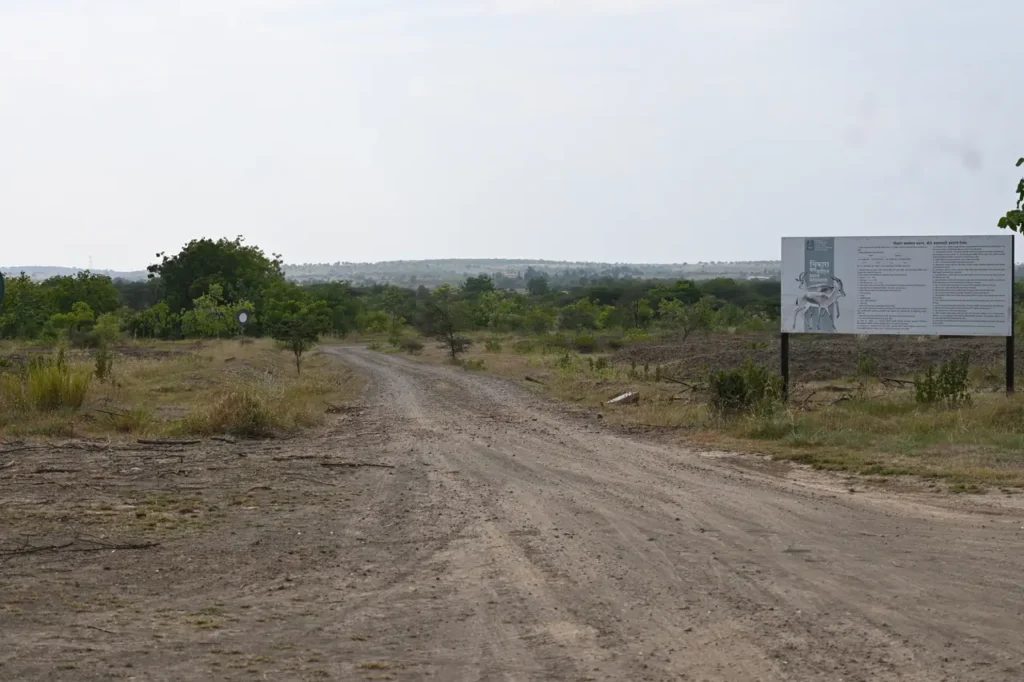
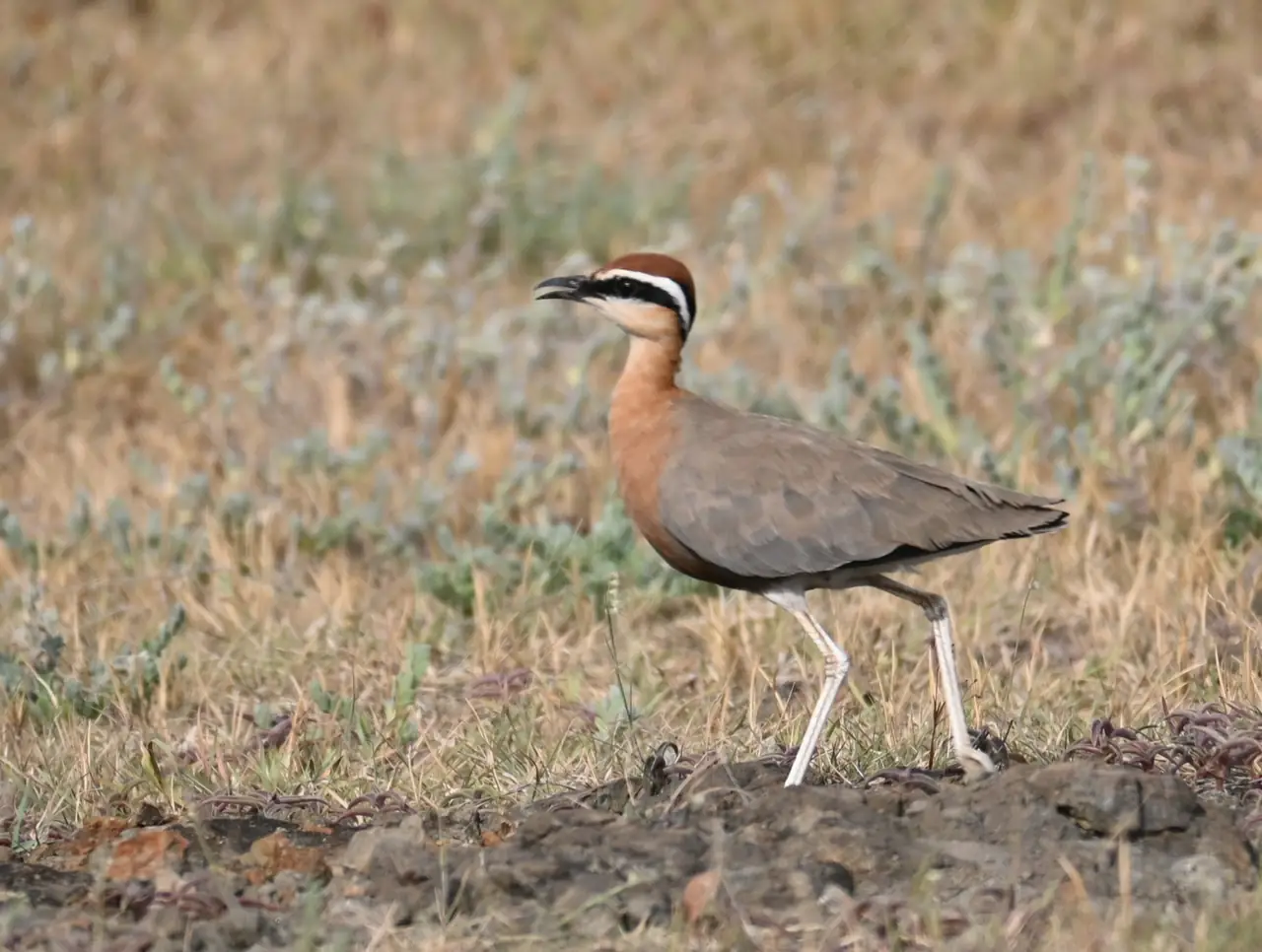
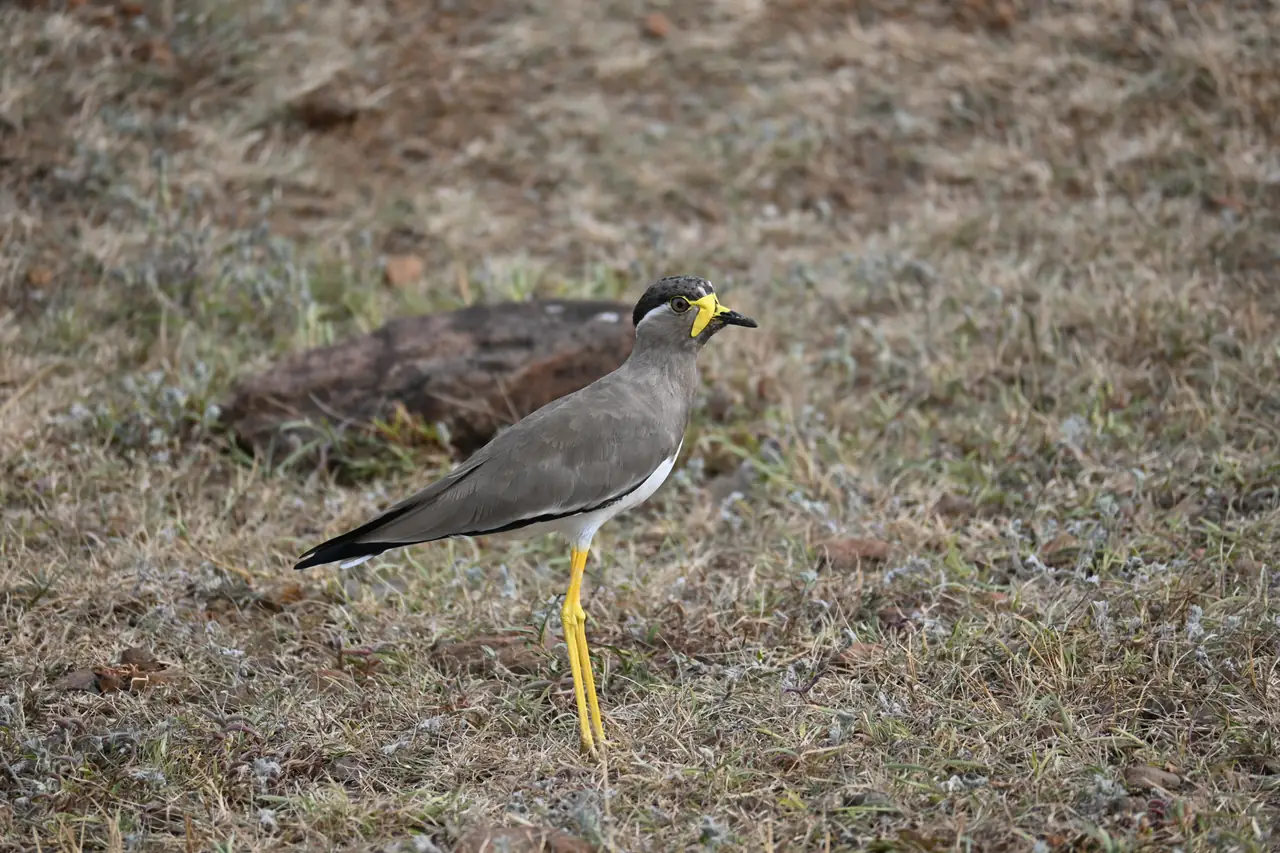
Eight minutes after we passed the board, an Indian Courser walked across the open ground, close enough to fill the frame.
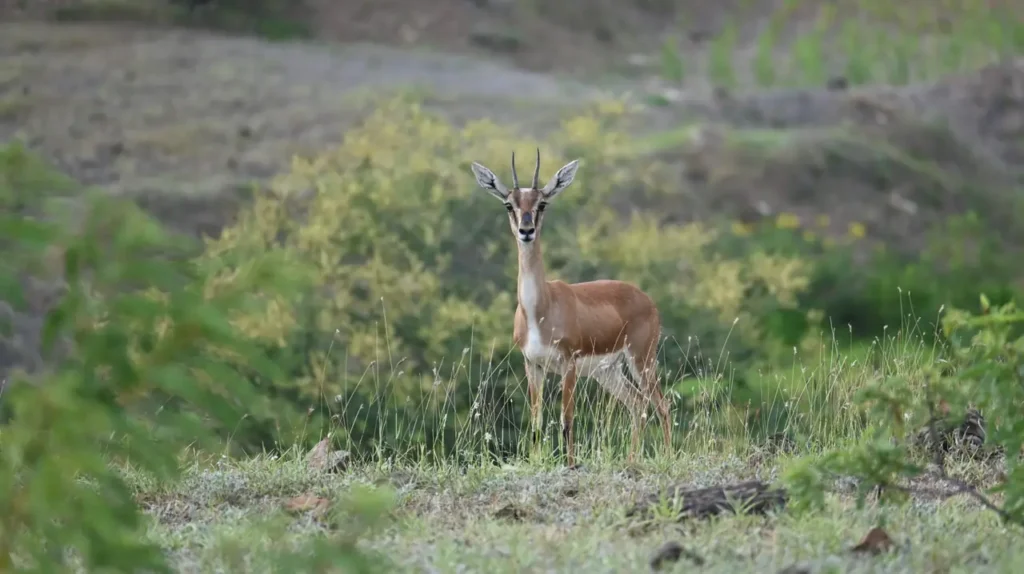
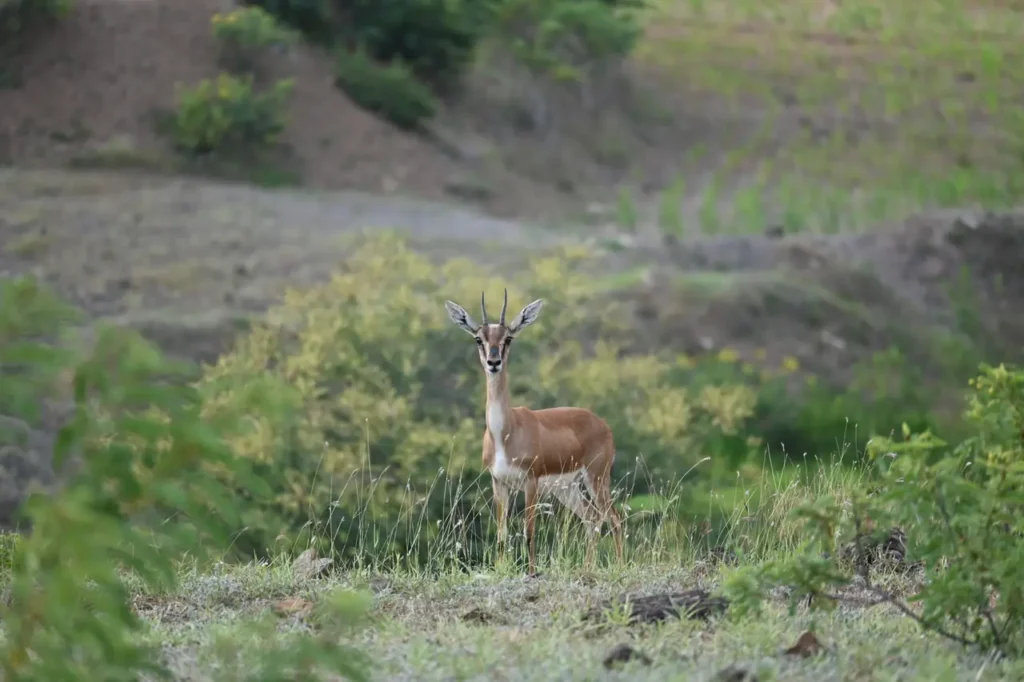
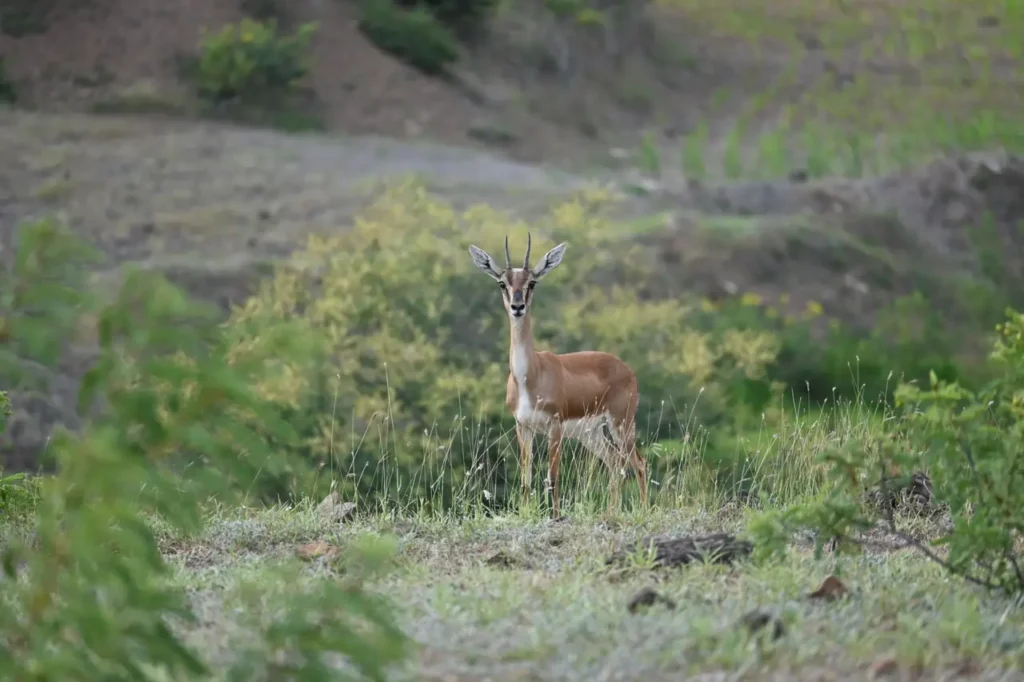
And then the animal the whole place is named for. A male chinkara stood in the green scrub and watched us, calm and curious.
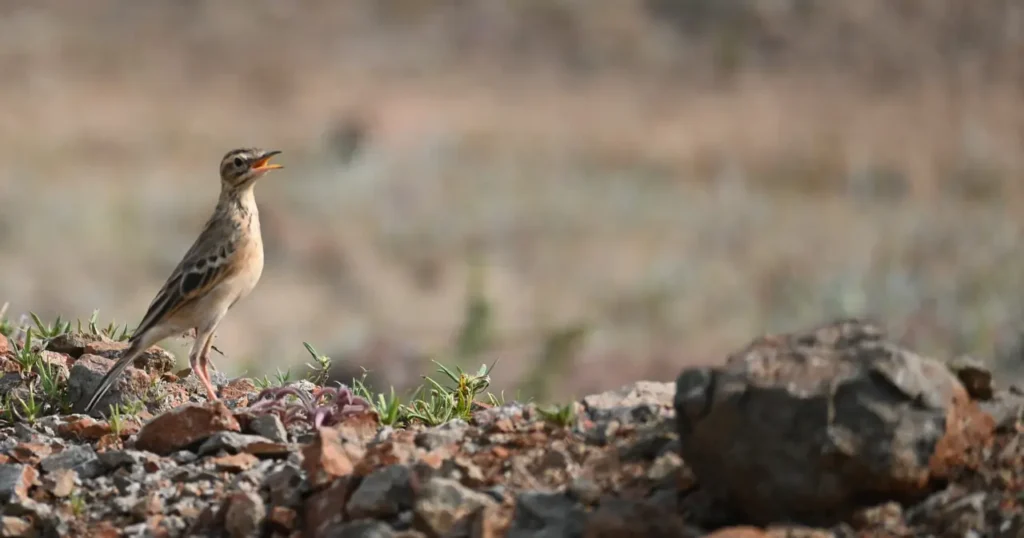
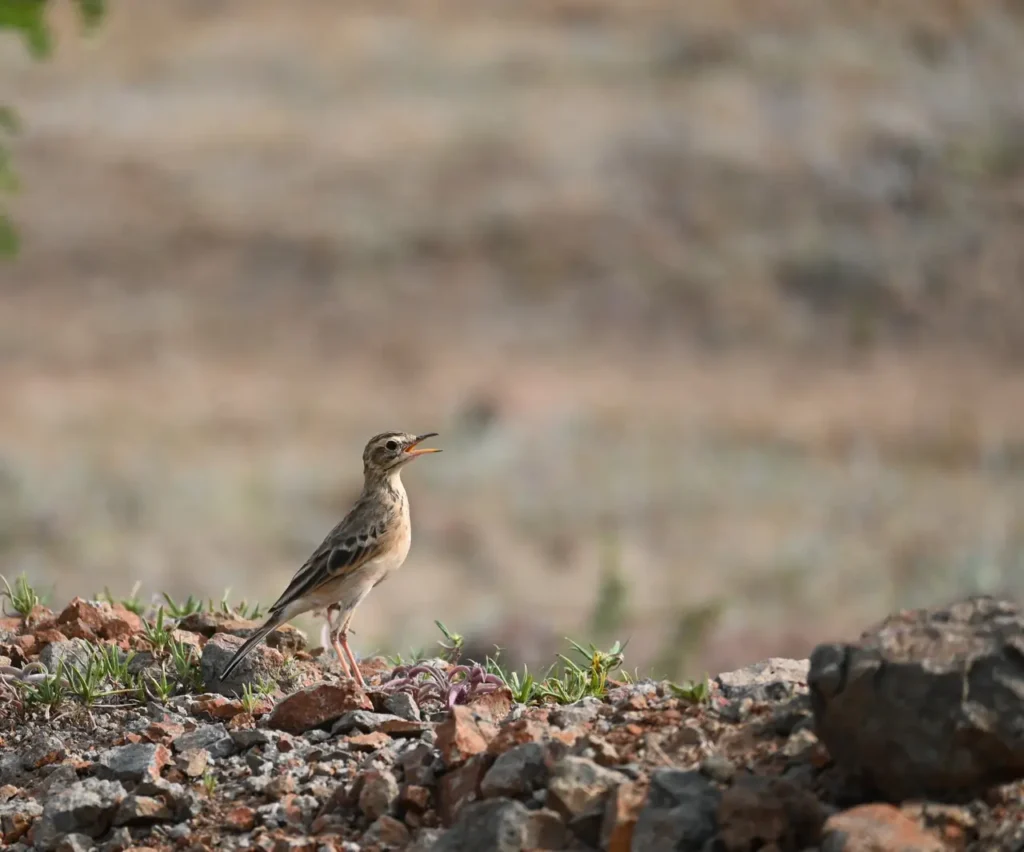
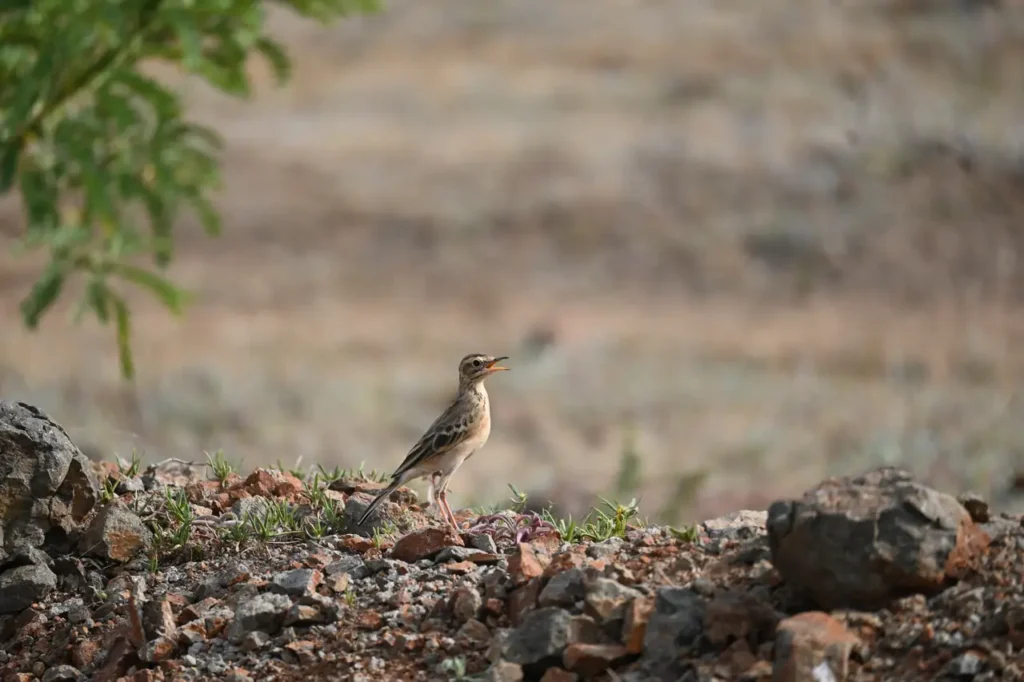
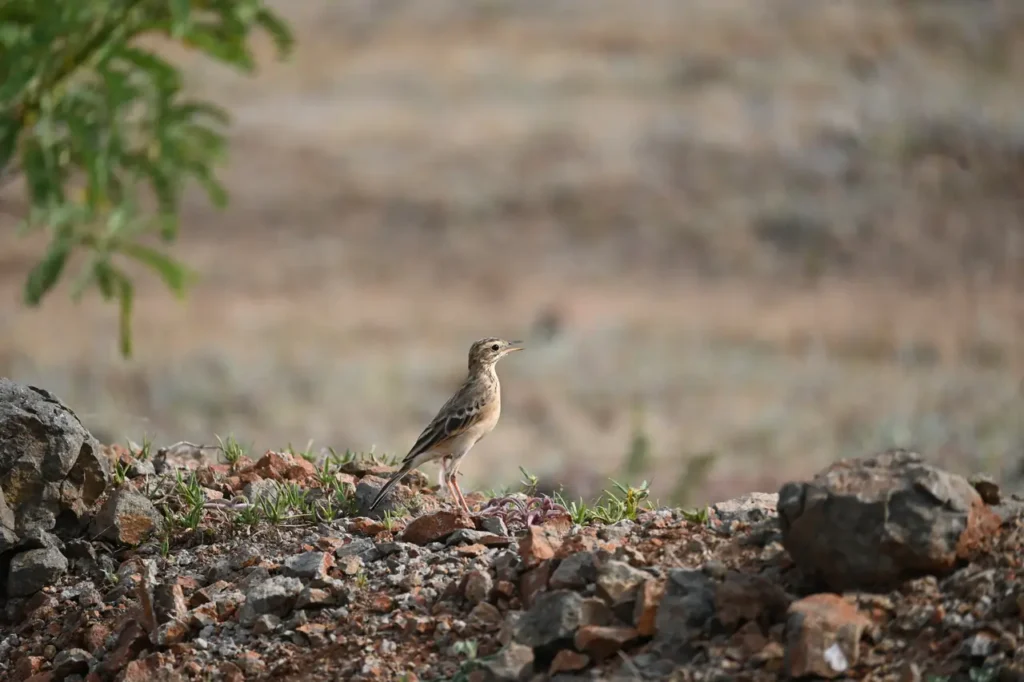
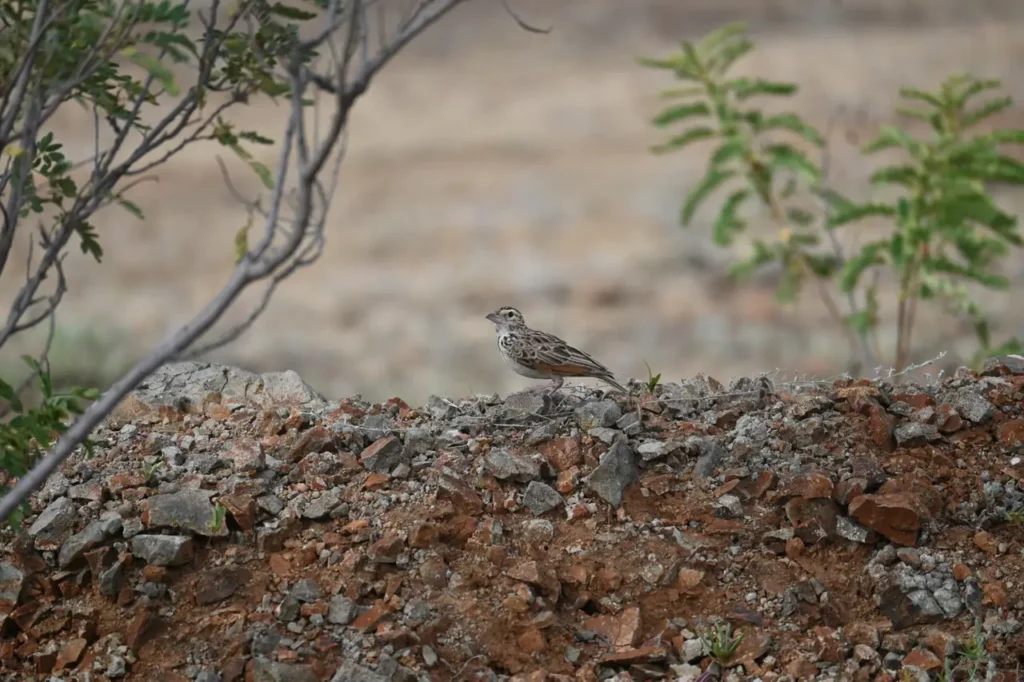
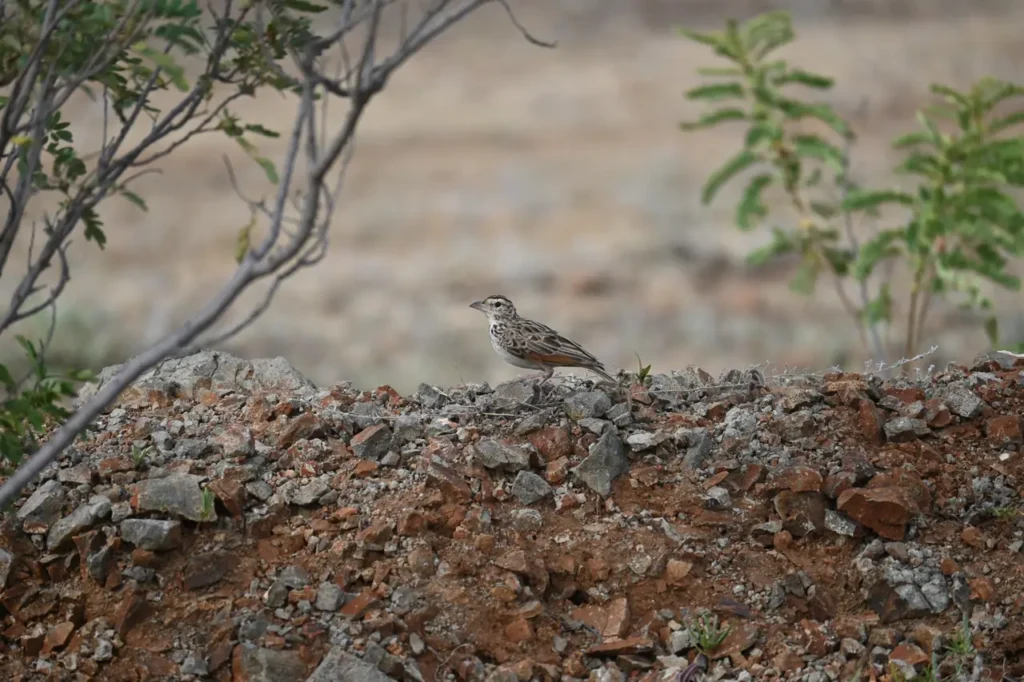
A pipit sang its heart out from a stony bank, and a lark with a flash of rufous in its wings sat on another bank close by.
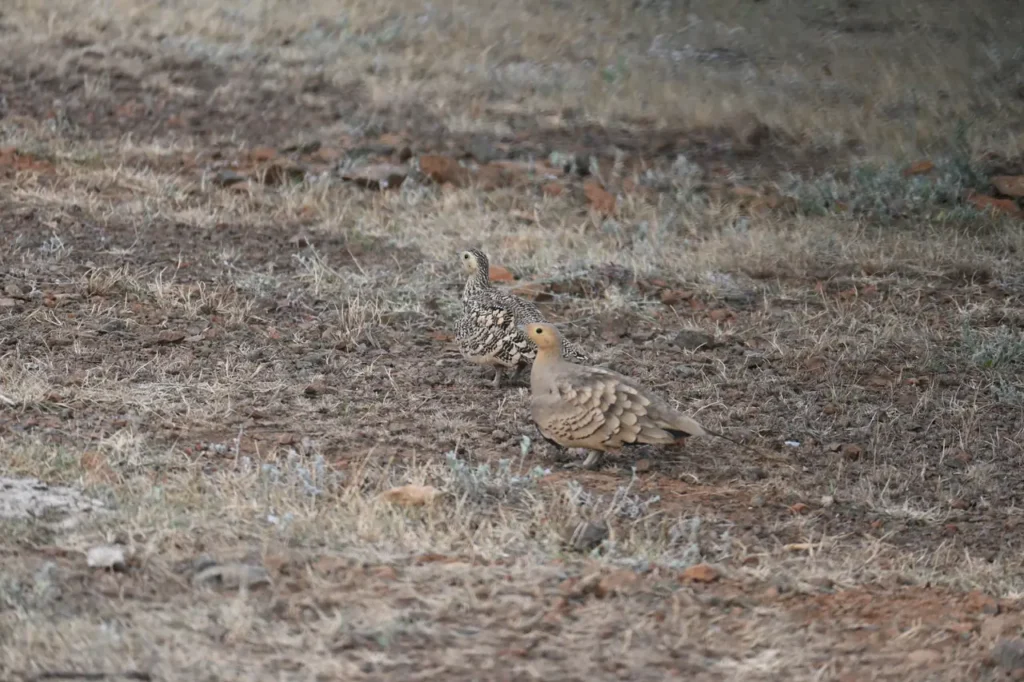
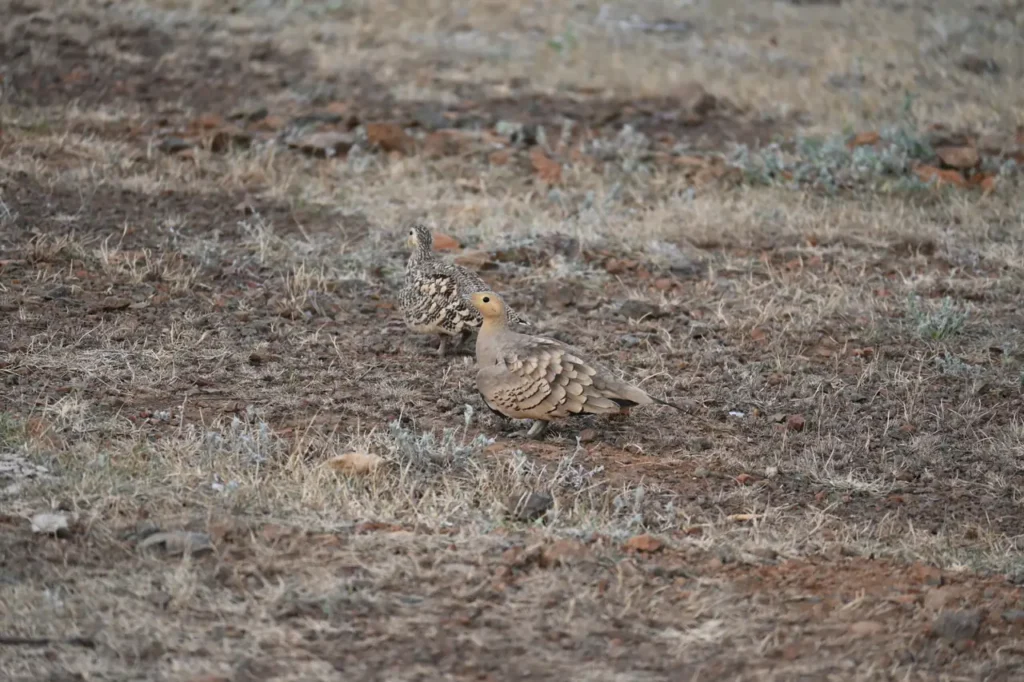
Then a second kind of sandgrouse for the day: a pair of Chestnut-bellied Sandgrouse walking together across the dry ground, the male in front with his plain buff head and long pin tail, the female behind him in rich spots and bars. Two sandgrouse species before dark.
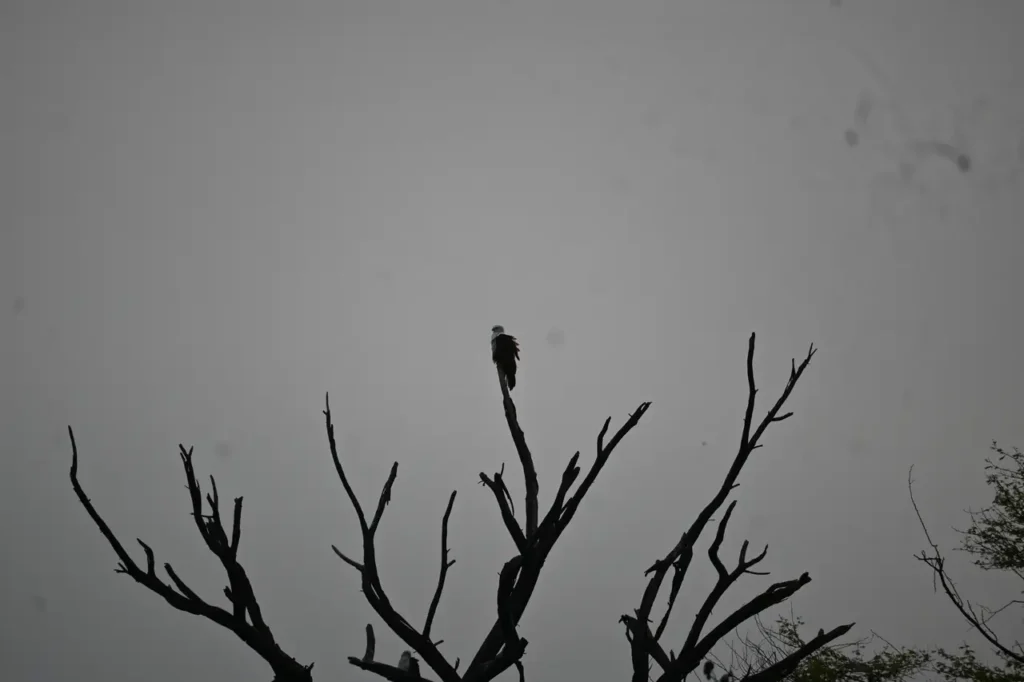
On the skyline, an eagle stood on top of a bare ridge and surveyed the grassland below.
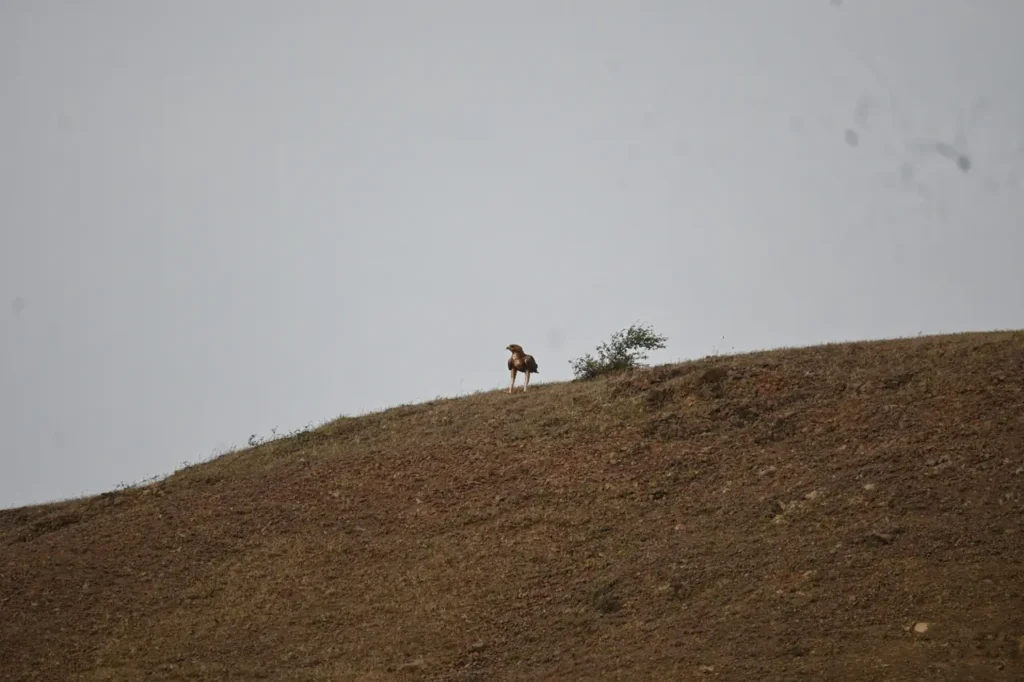
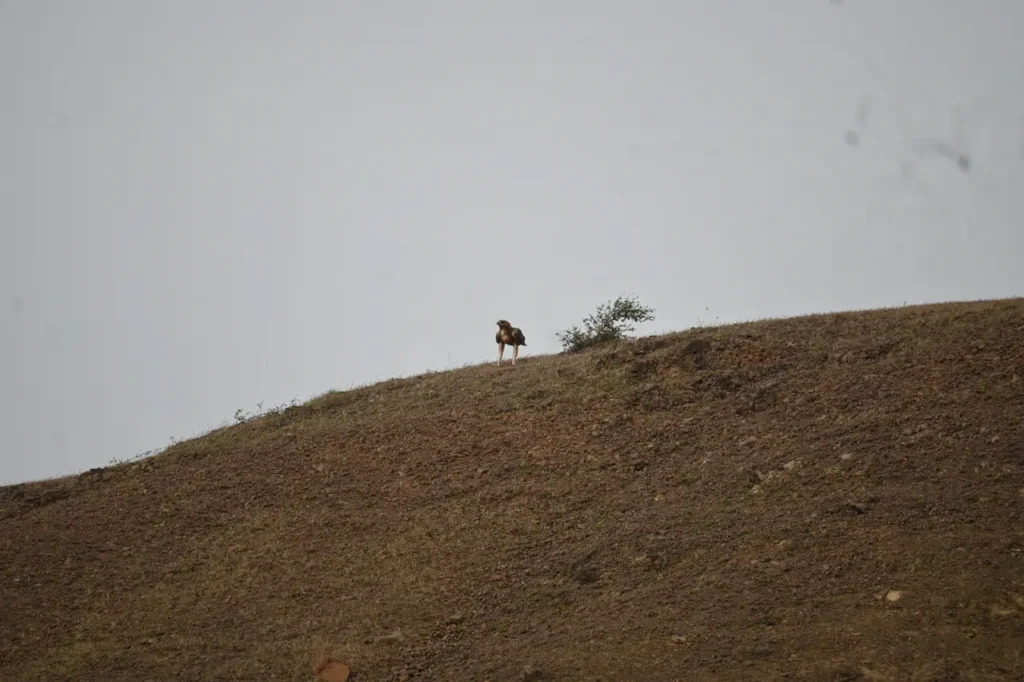
We filmed it too: a few quiet seconds of the eagle on the ridge, turning its head to watch the grassland below as the clouds drifted past.
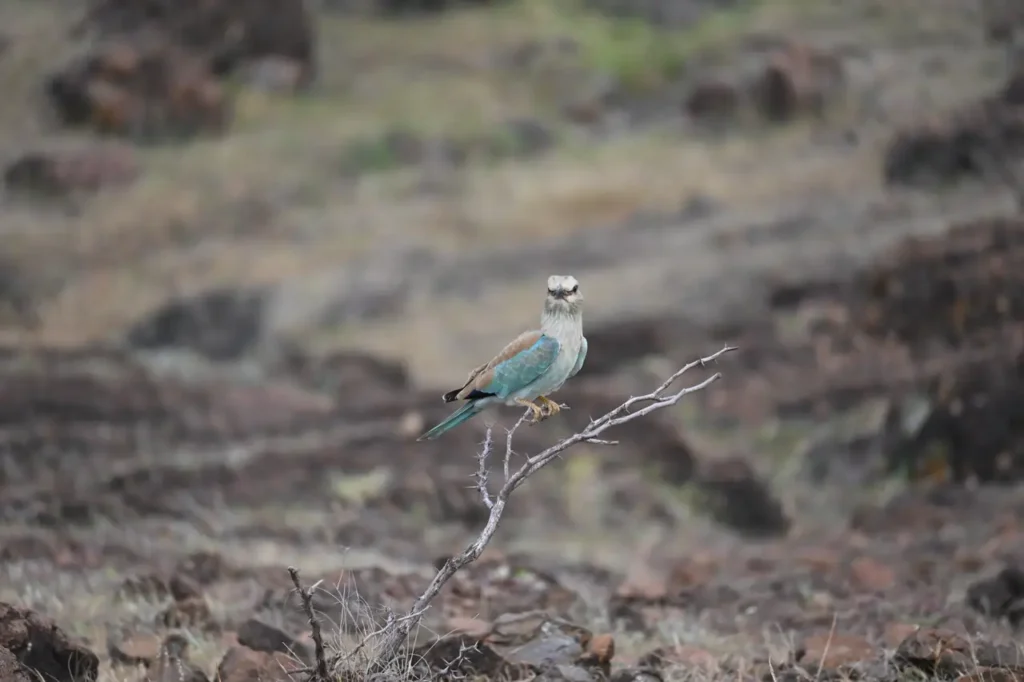
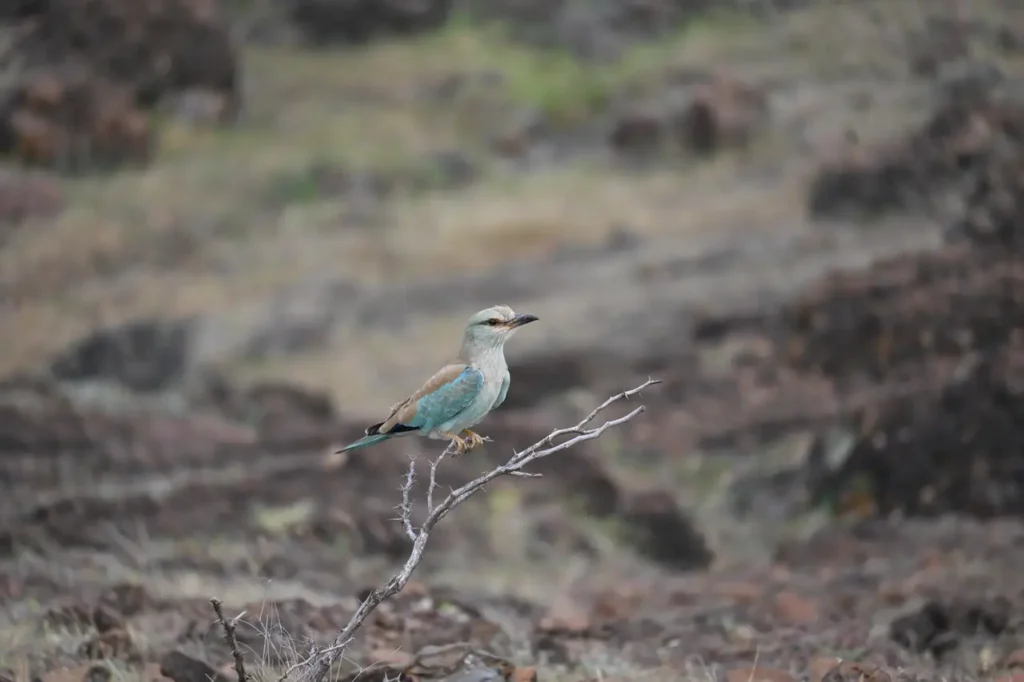
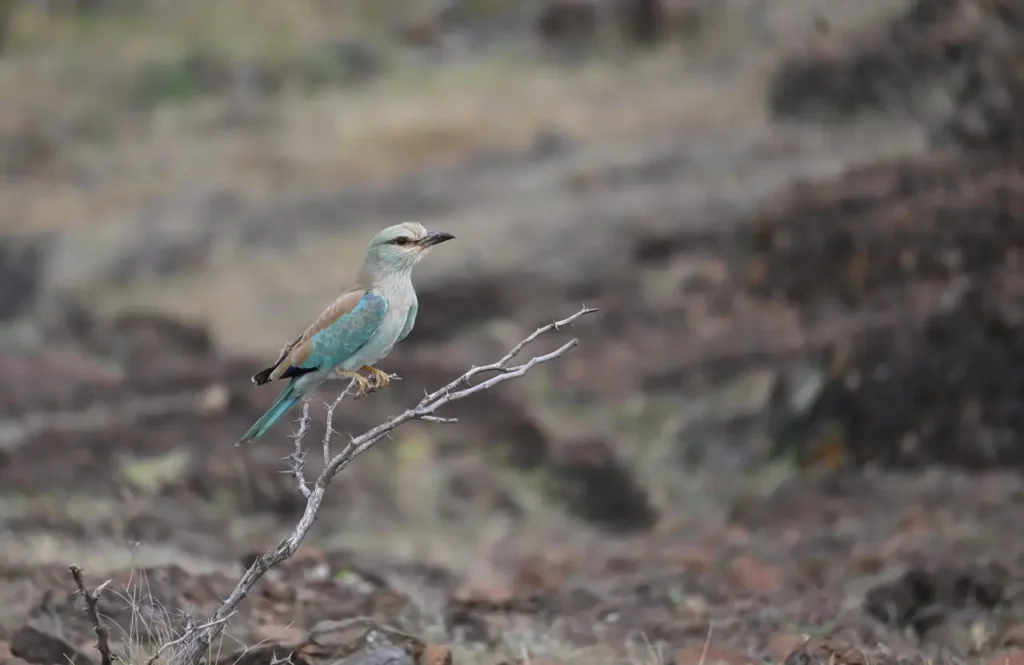
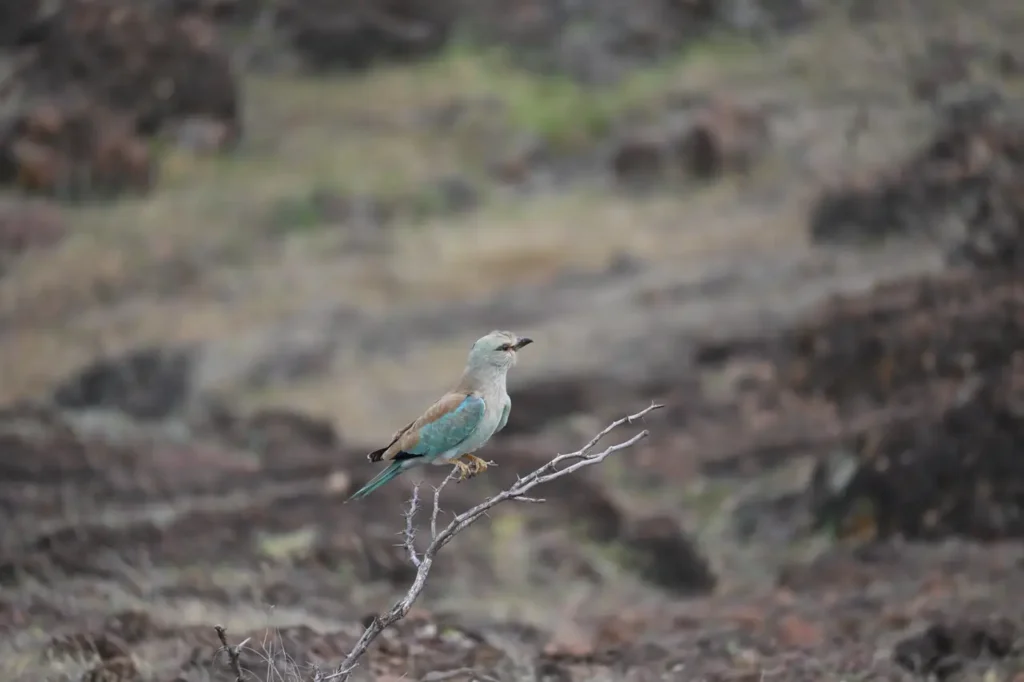
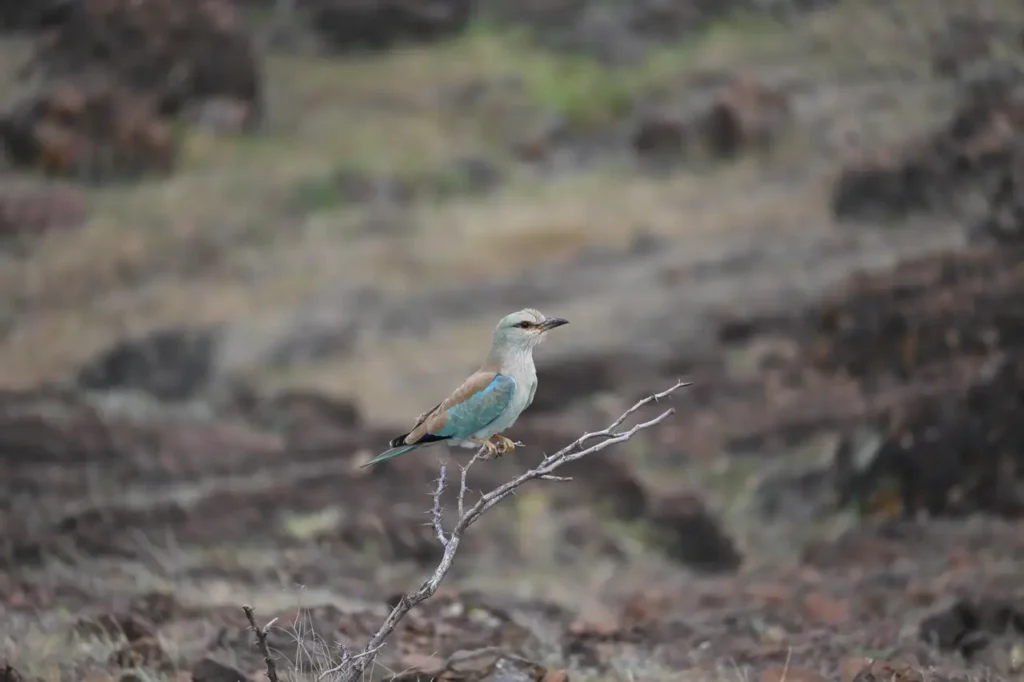
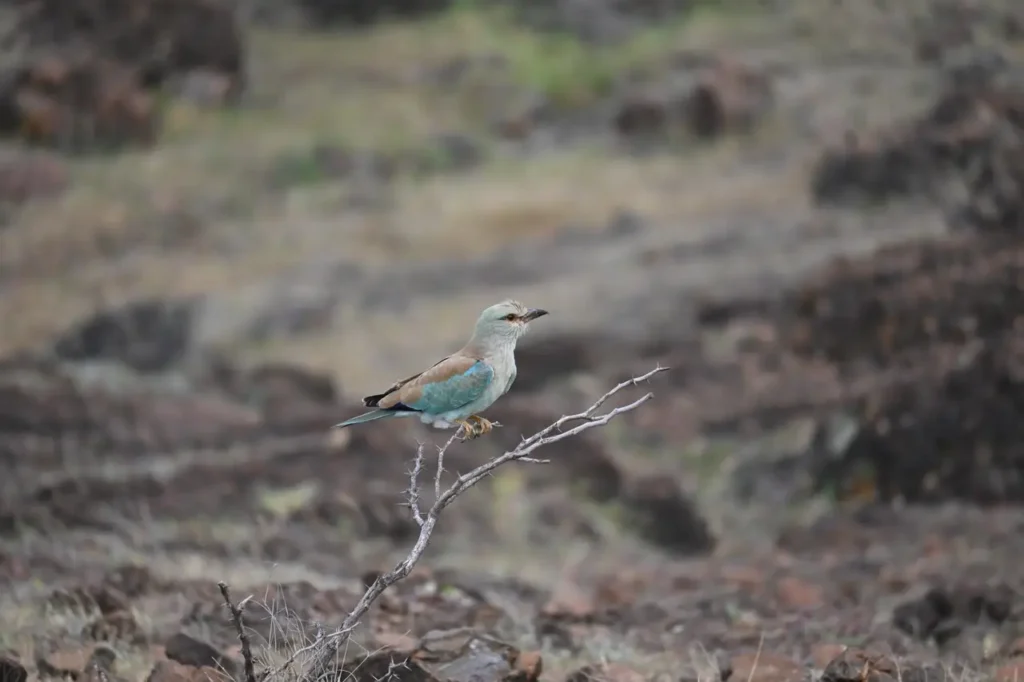
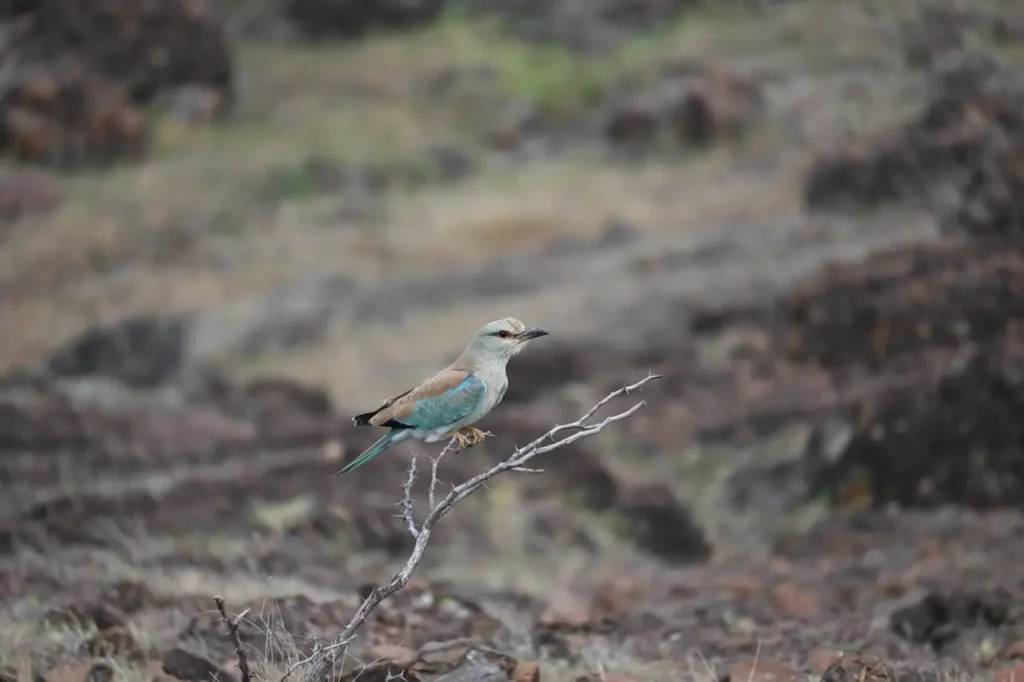
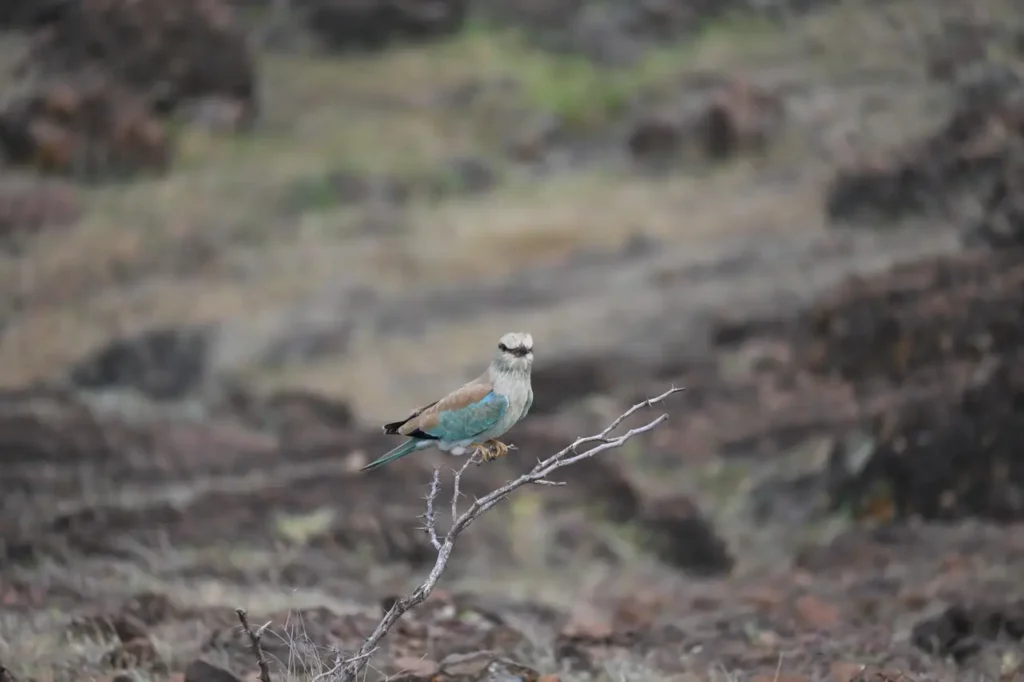
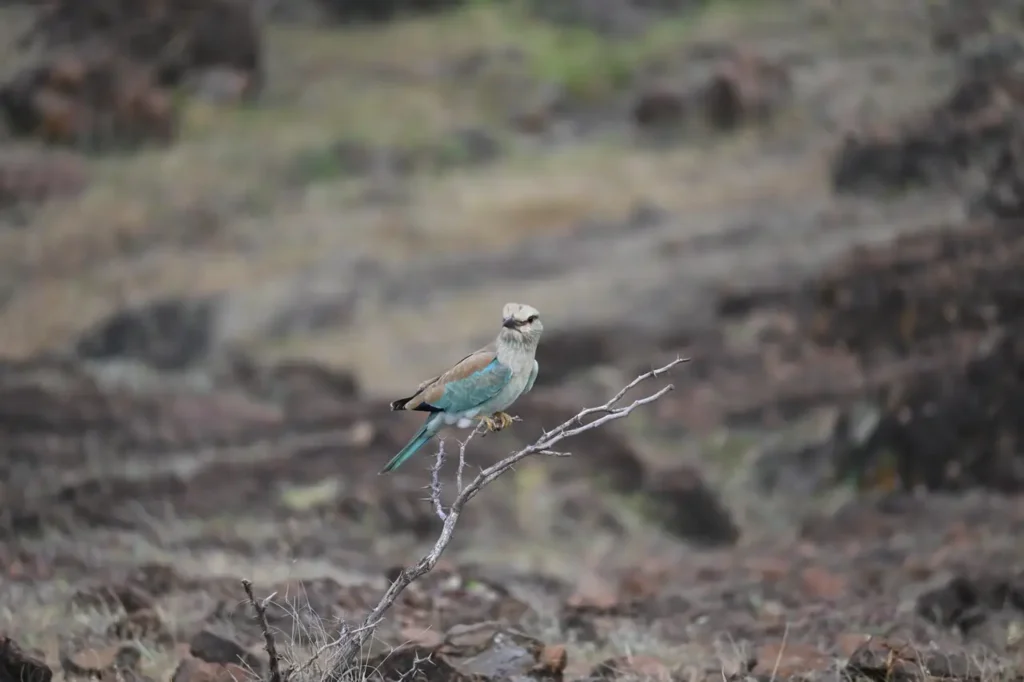
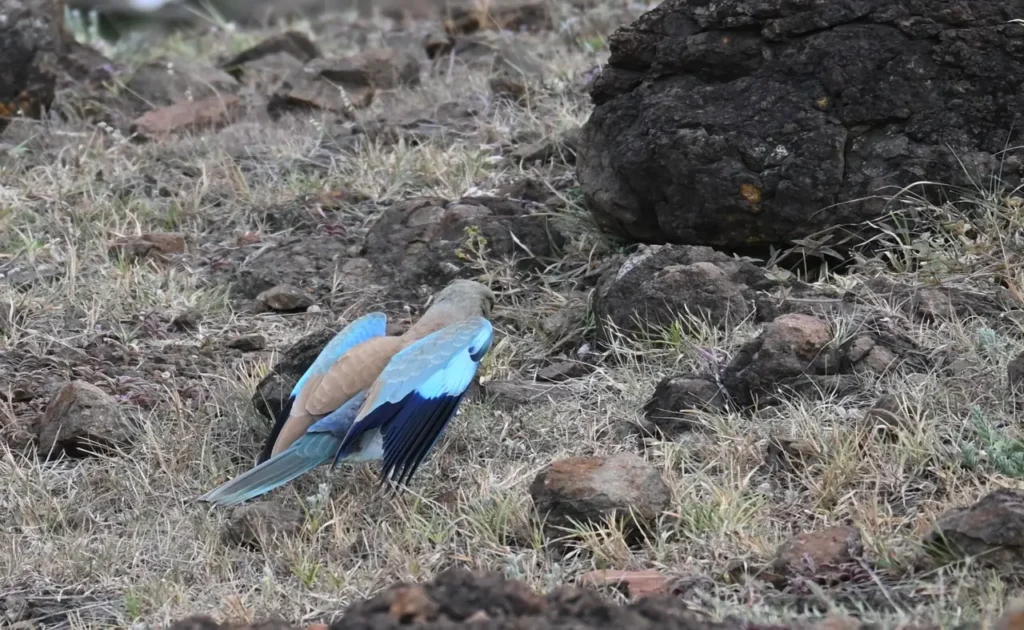
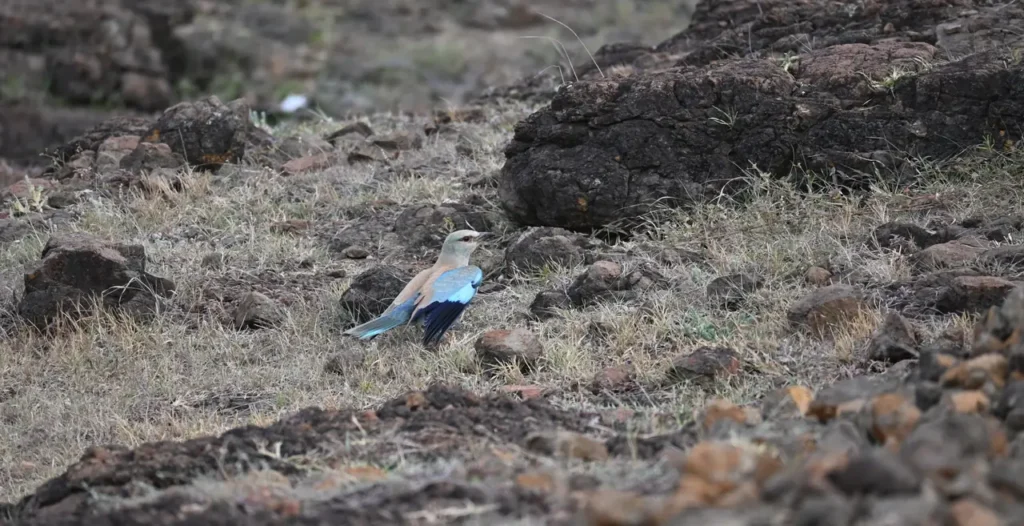
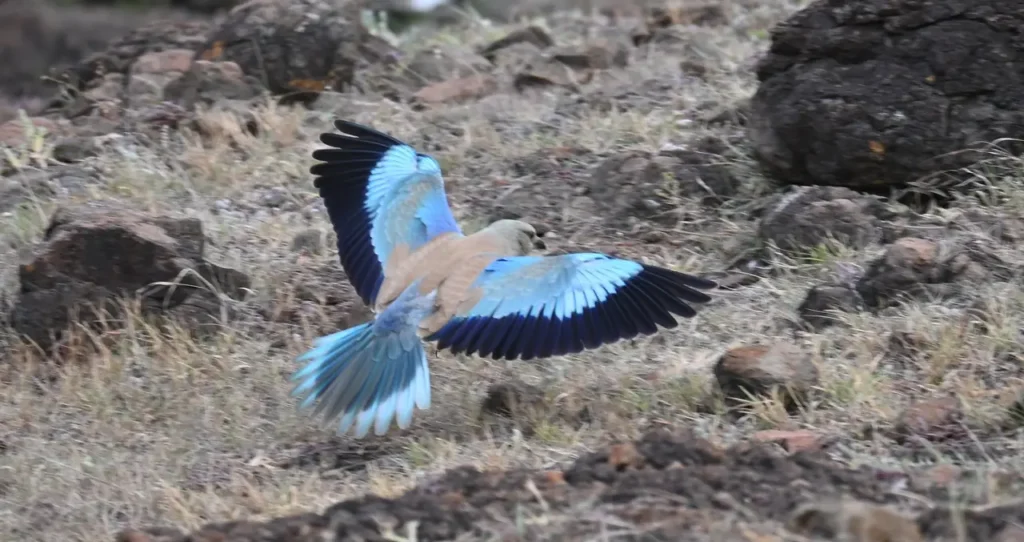
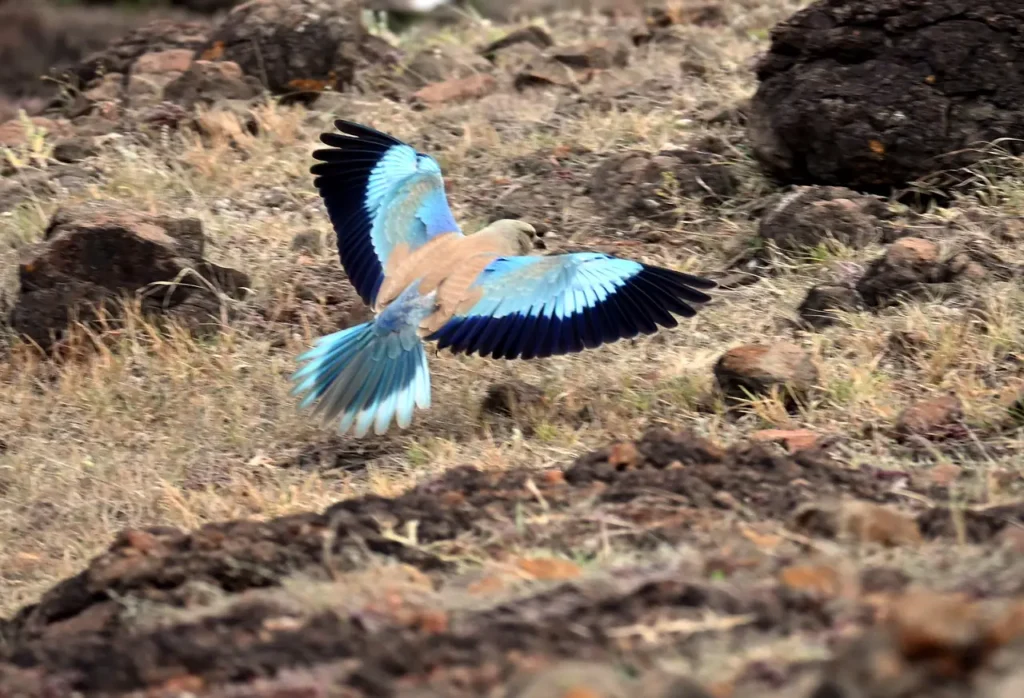
The last golden hour belonged to the European Roller. If you know the Indian Roller, the European one is paler and softer, with a sandy back and a head the colour of a washed sky. It passes through this part of India in autumn on its way to Africa, which makes September the perfect time to look. We found it on a rock, then in a thorn bush, then on a bare twig, then on the ground with its wings half open, which is when the blue really shines.
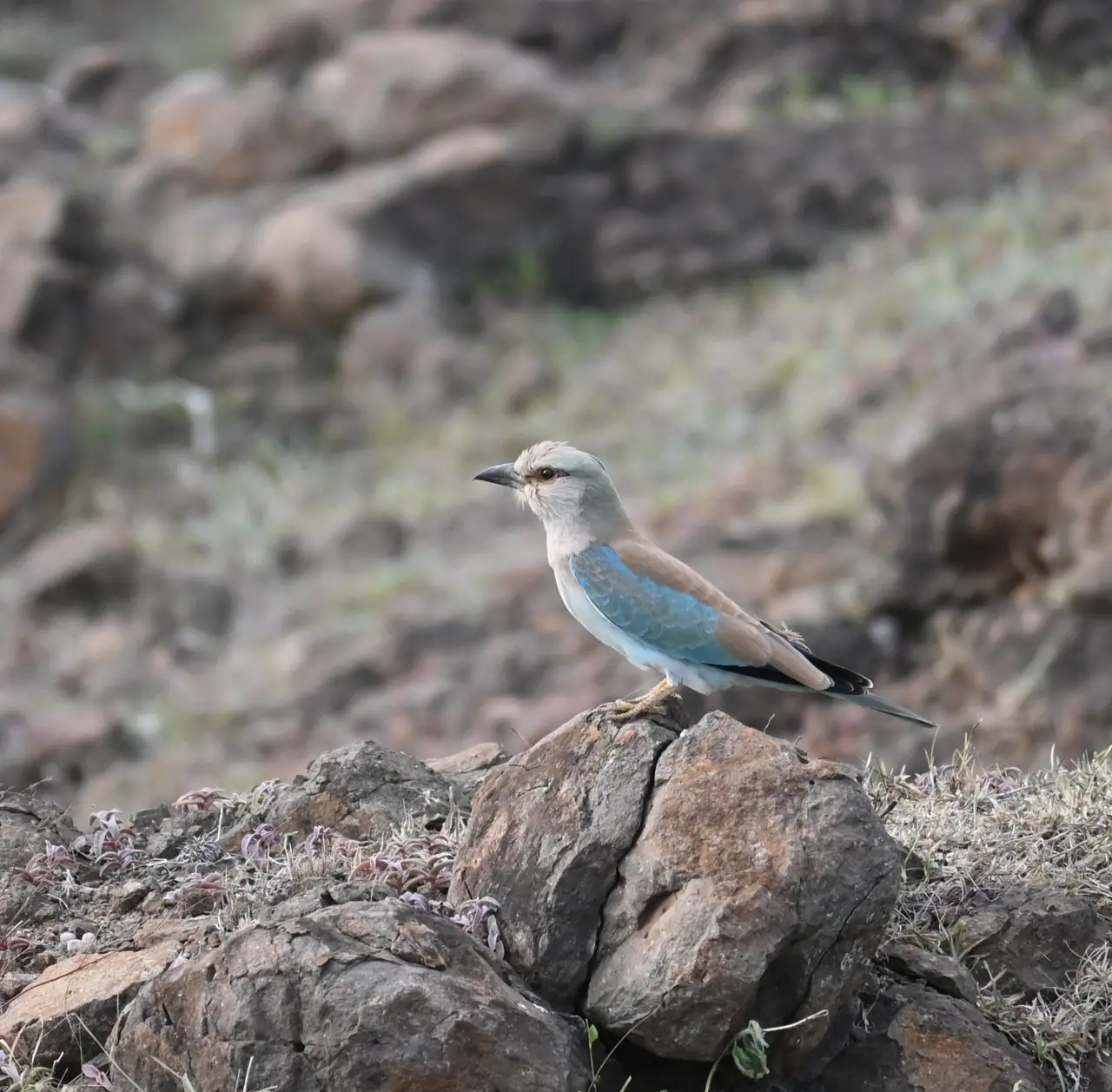
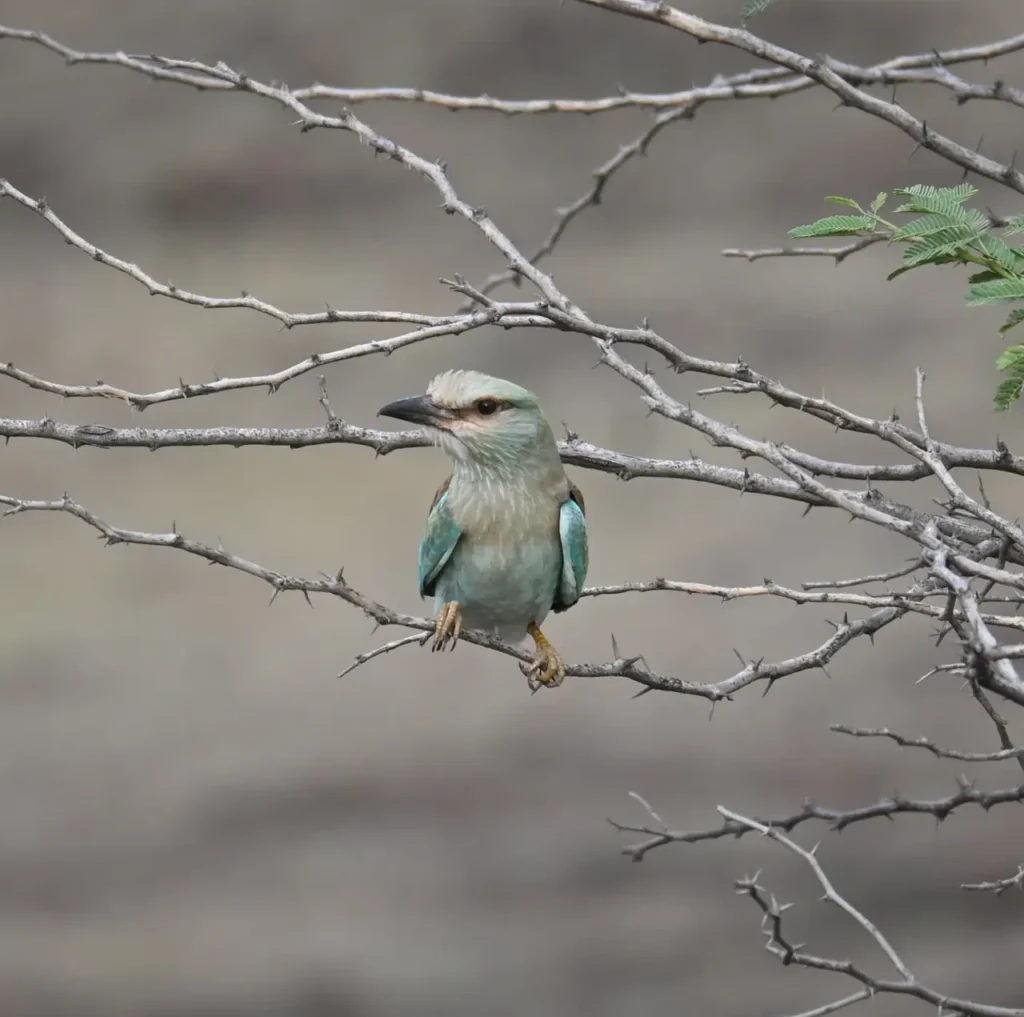
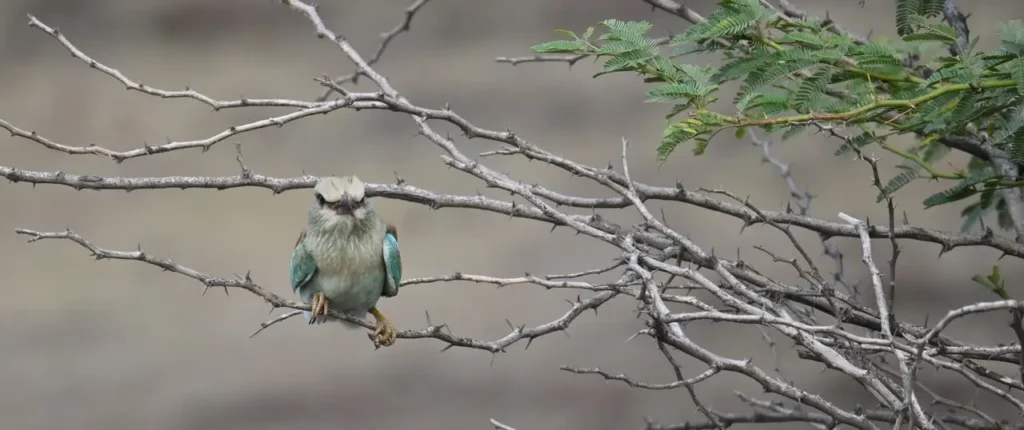
Rock, thorn bush, twig, ground and sky: one European Roller, five perches and the best light of the trip.
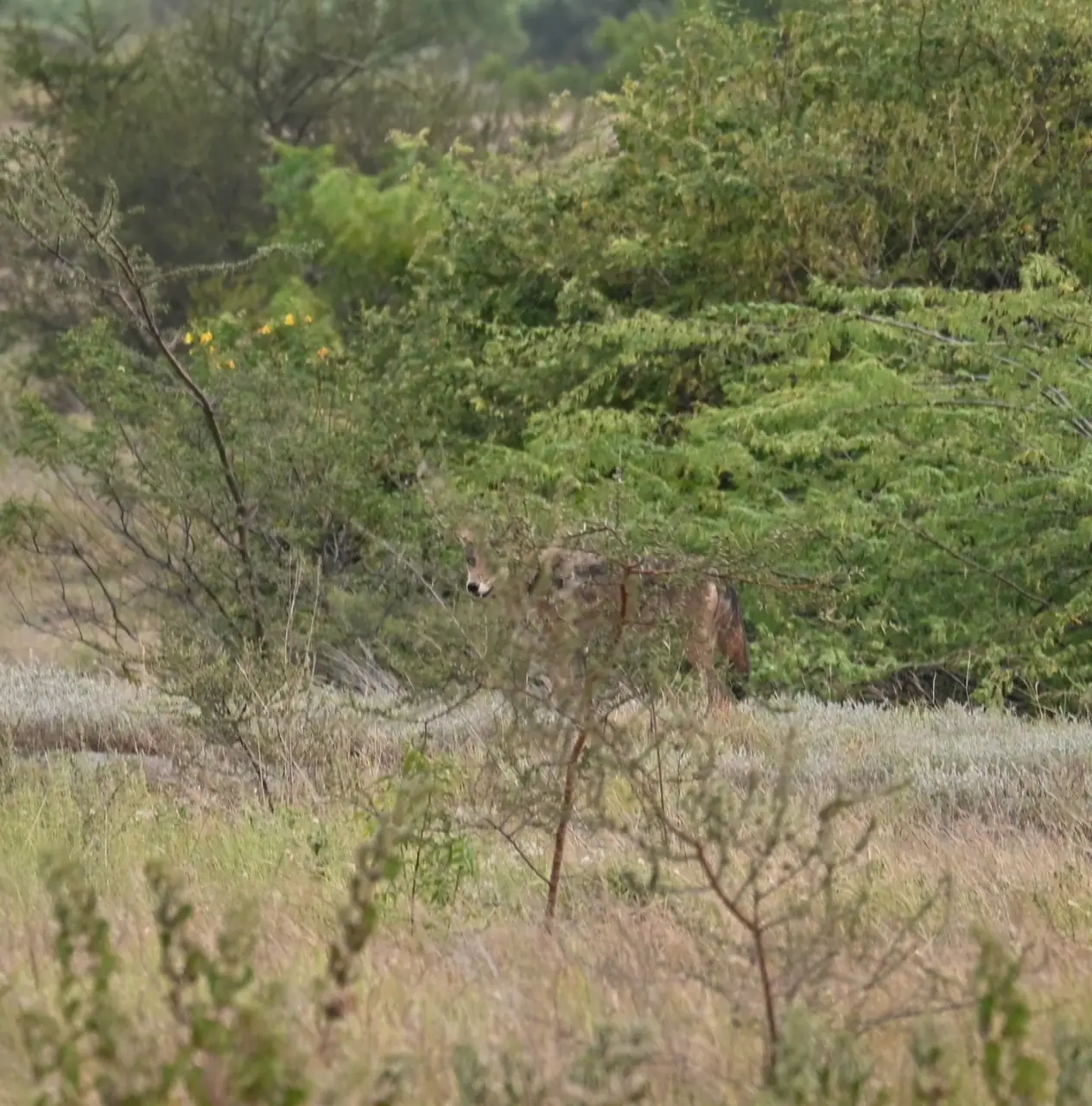
At about half past six, with the light almost gone, one last visitor looked at us from behind the bushes: an Indian wolf. Long legs, a pale muzzle, a grizzled grey-brown coat and a steady gaze. Indian wolves live in exactly this kind of open, dry country, and they are among the most special animals of the Deccan. Meeting one at dusk was a perfect end to the evening.
Outing four: the last morning by the backwater
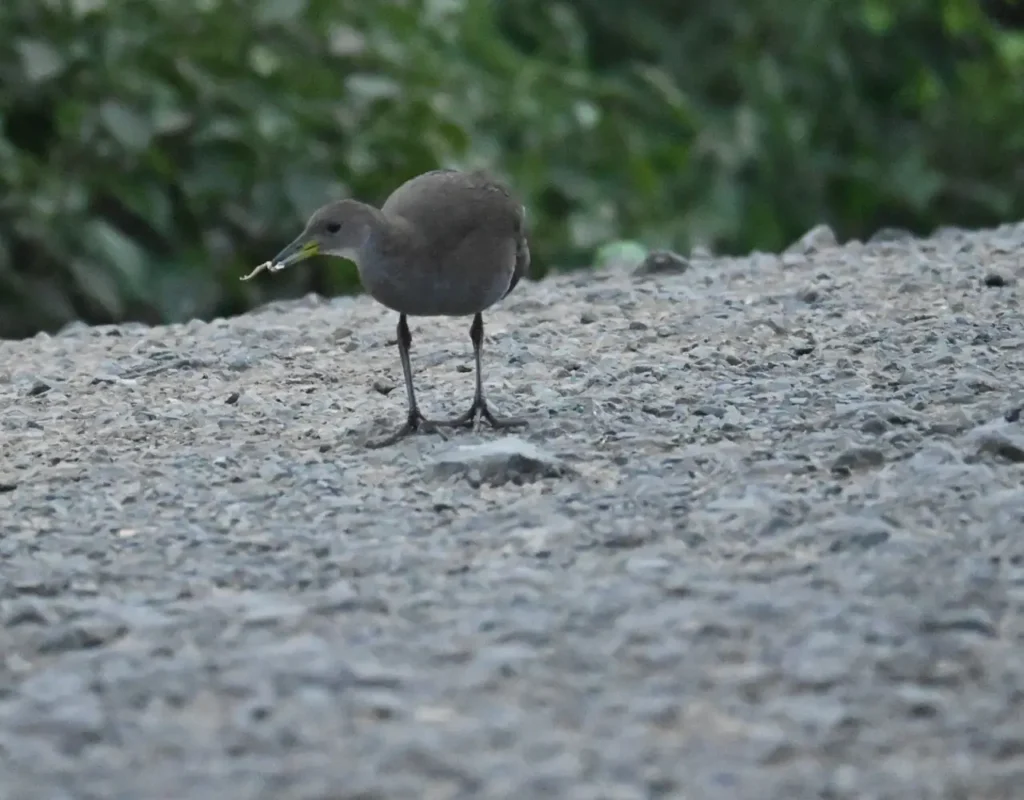
The last morning began on a gravel road in the soft early light, with a Brown Crake strolling along it. Crakes usually keep to the wet edges of reed beds, so meeting one out in the open, picking up breakfast on the road, was a lovely way to start the day.
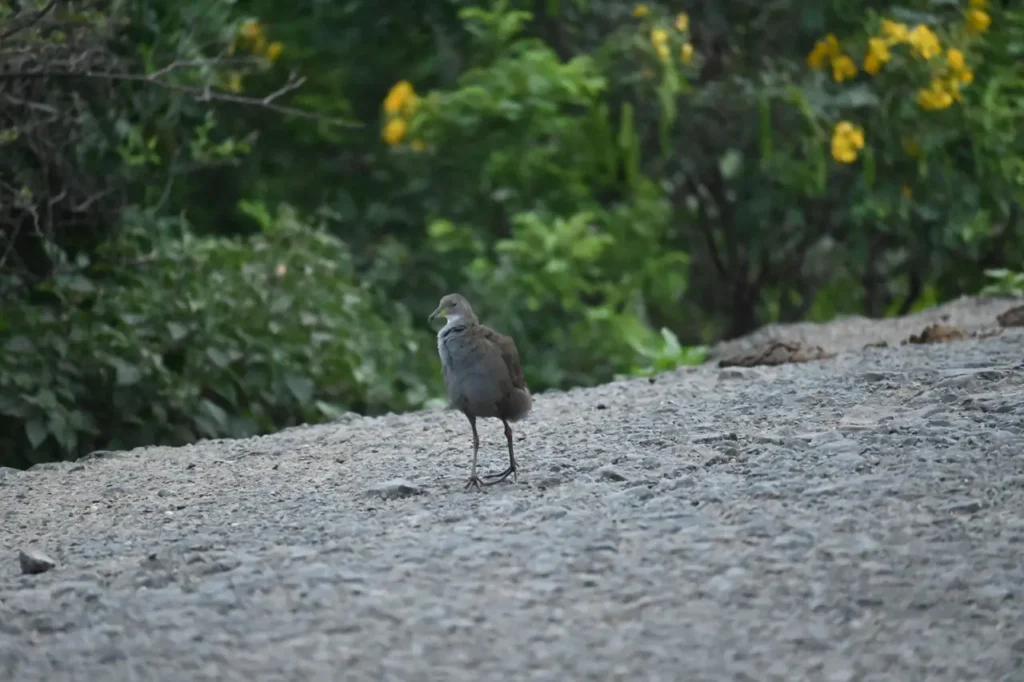
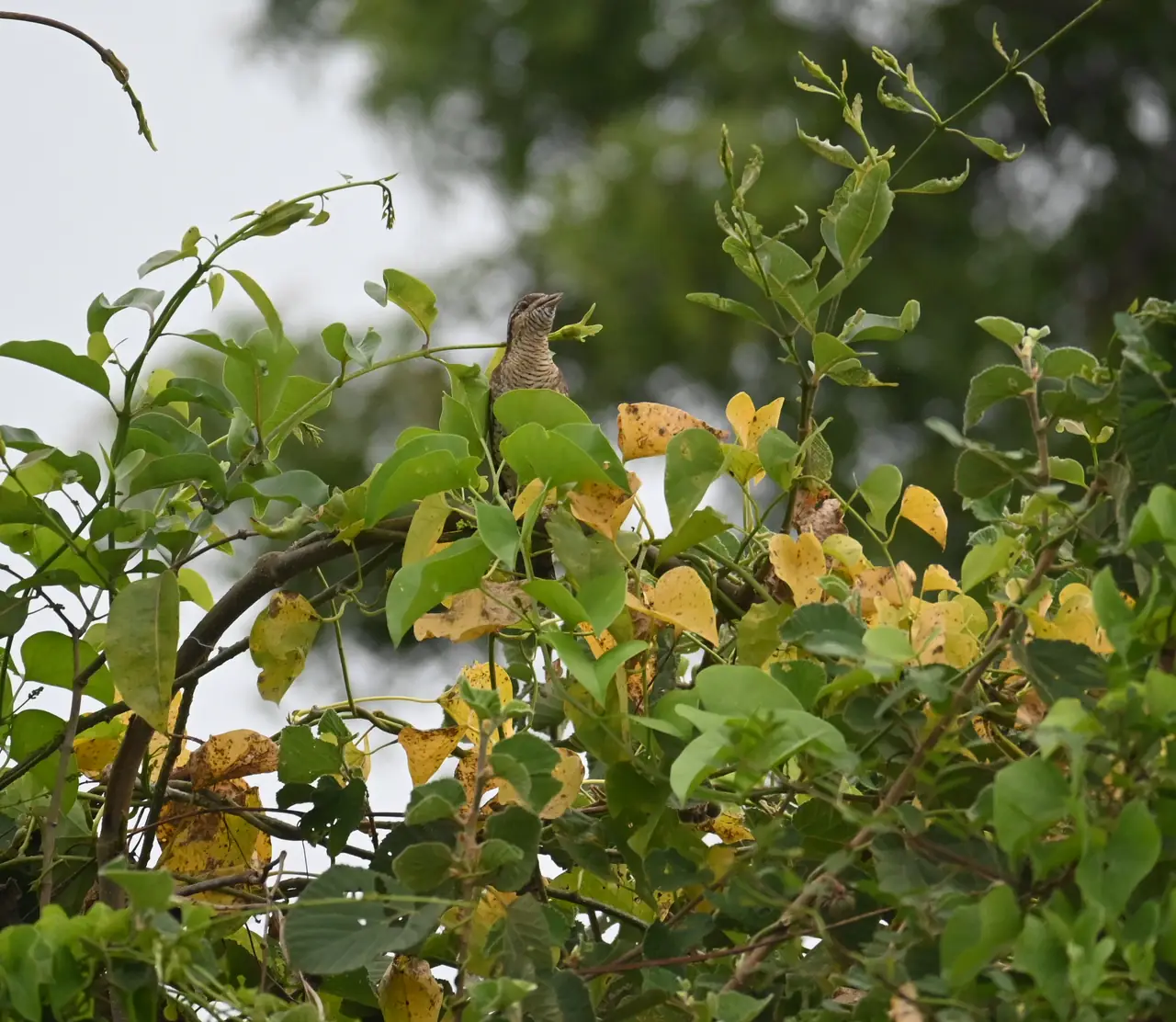
Then a wryneck, one of the most charming birds of the trip. It is a woodpecker with its own way of doing things, dressed in grey-brown bark colours, and it comes down to India for the winter. This one sat in a tangle of creeper with yellowing leaves, the perfect hiding place, and a few minutes later moved to an old stump in the reeds, where it pressed itself against the bark and all but disappeared.
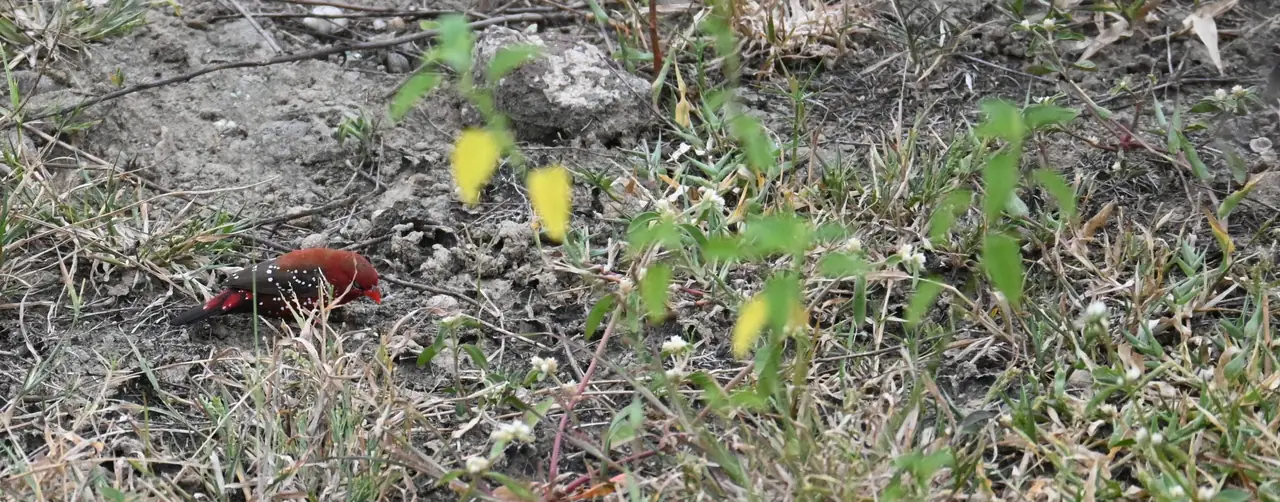
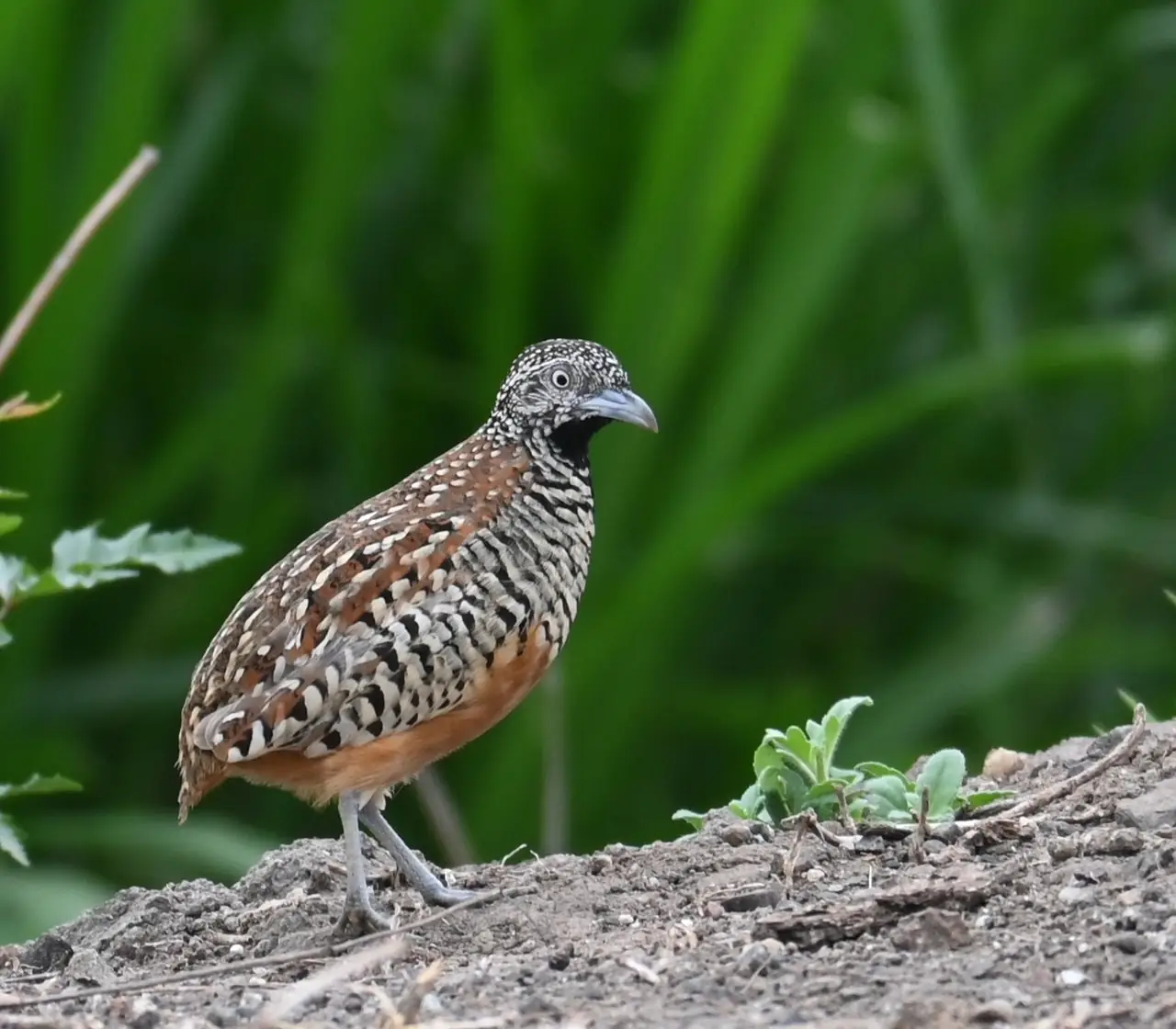
The prize of the morning was a Barred Buttonquail. A female, which in this species is the bigger and brighter one: she does the calling and holds the territory, and the male looks after the eggs.
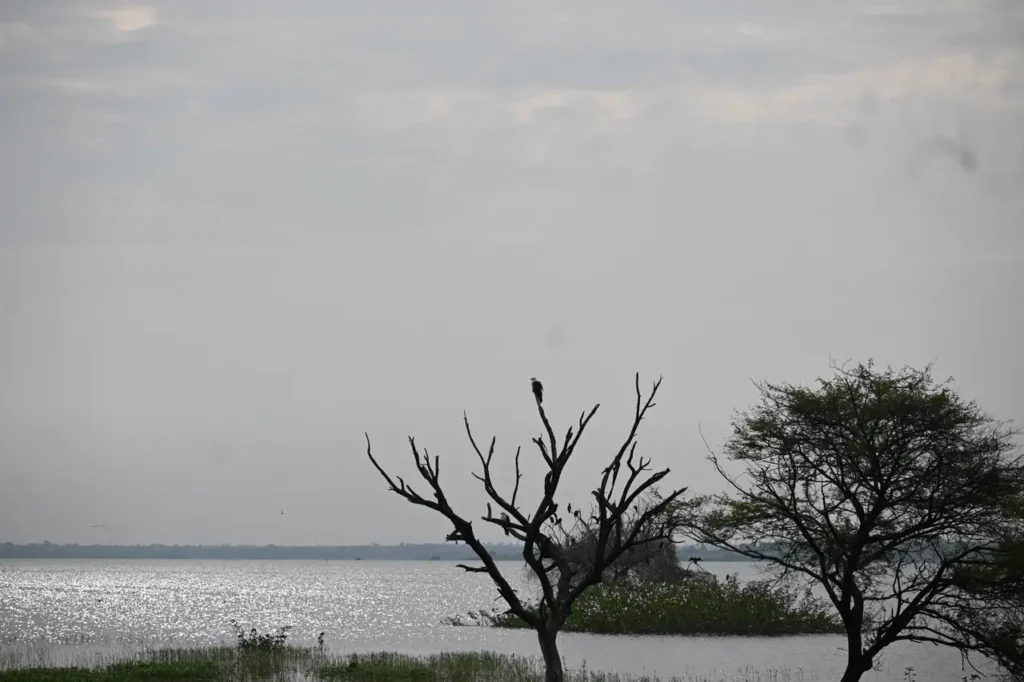
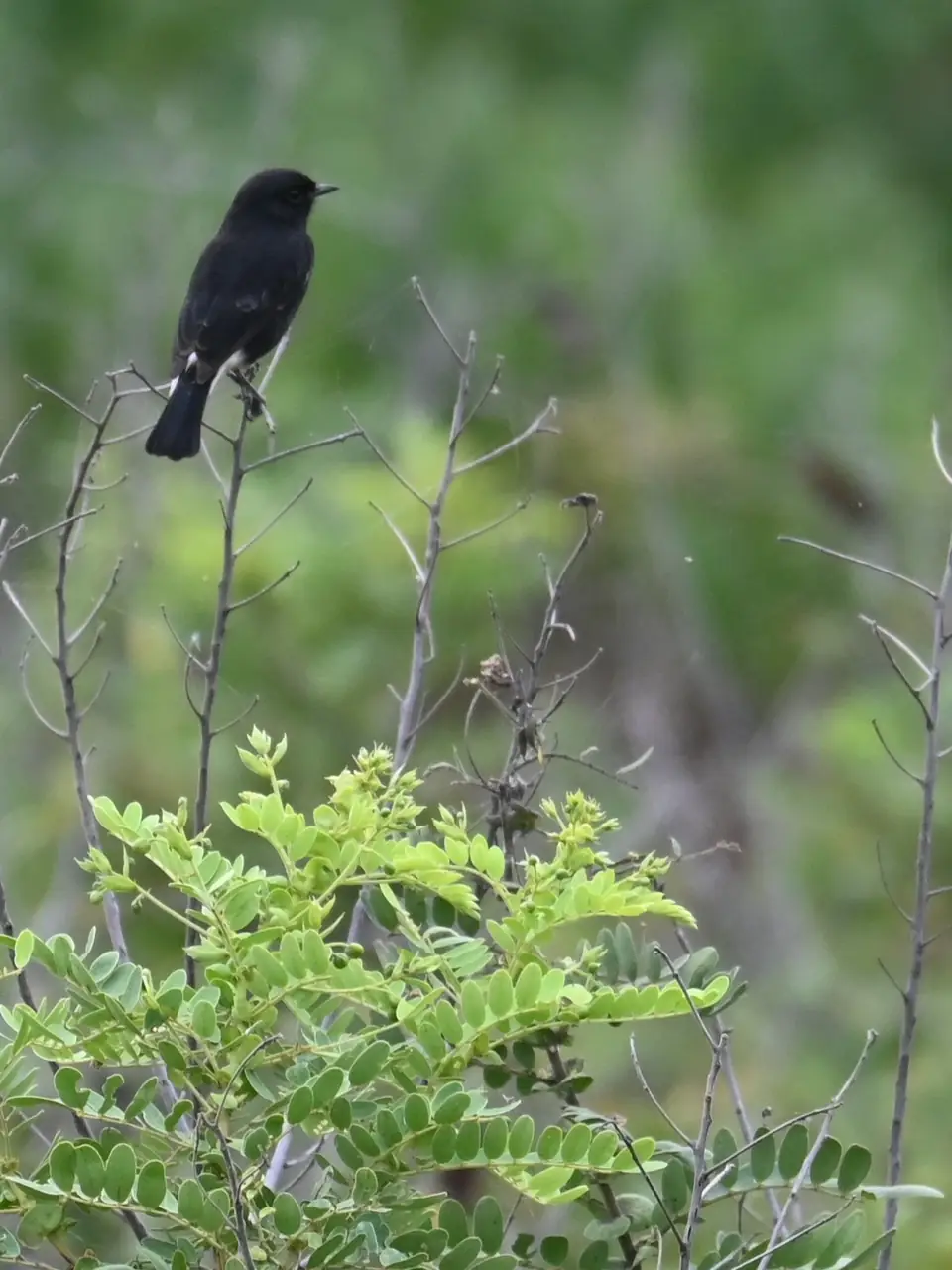
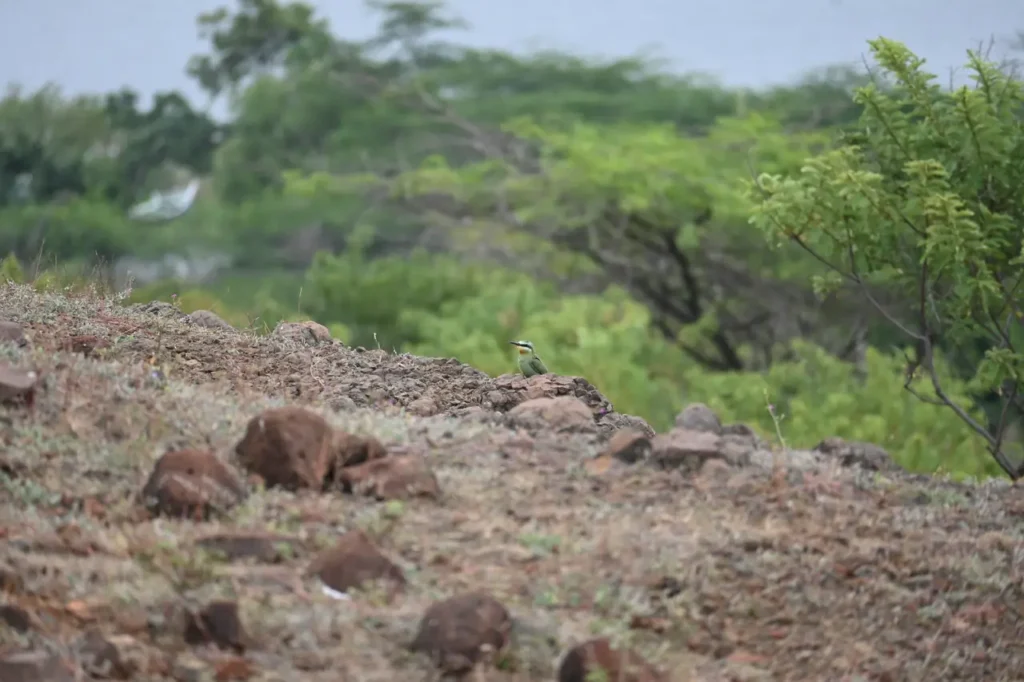
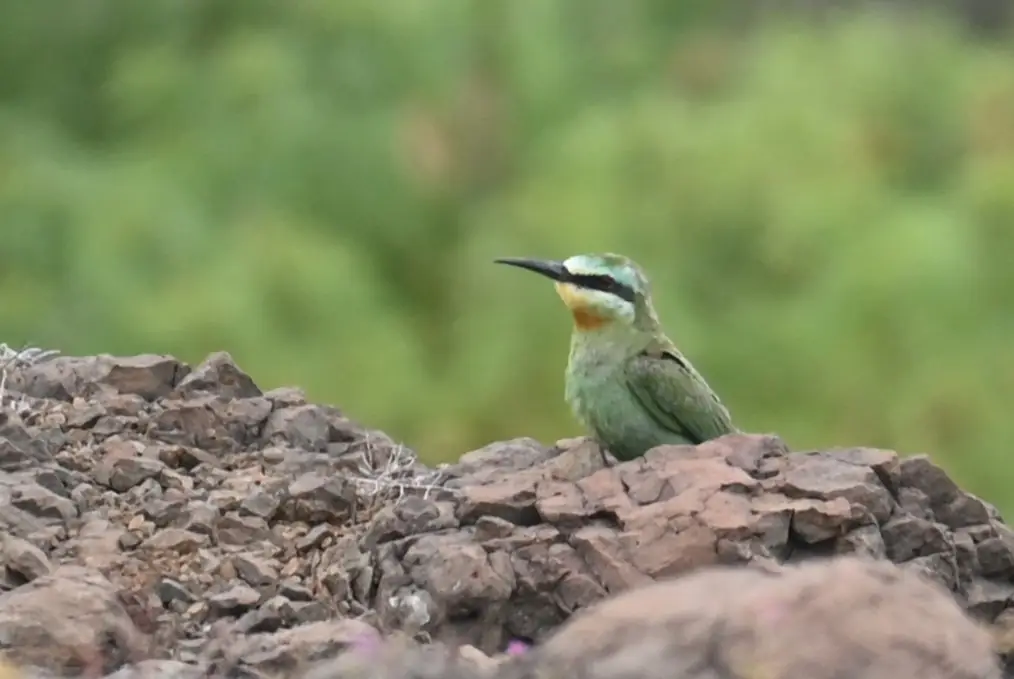
At twenty-five past ten a bee-eater landed on a rocky ridge. The first photo shows the scene as we saw it, and the second brings the bird up close.
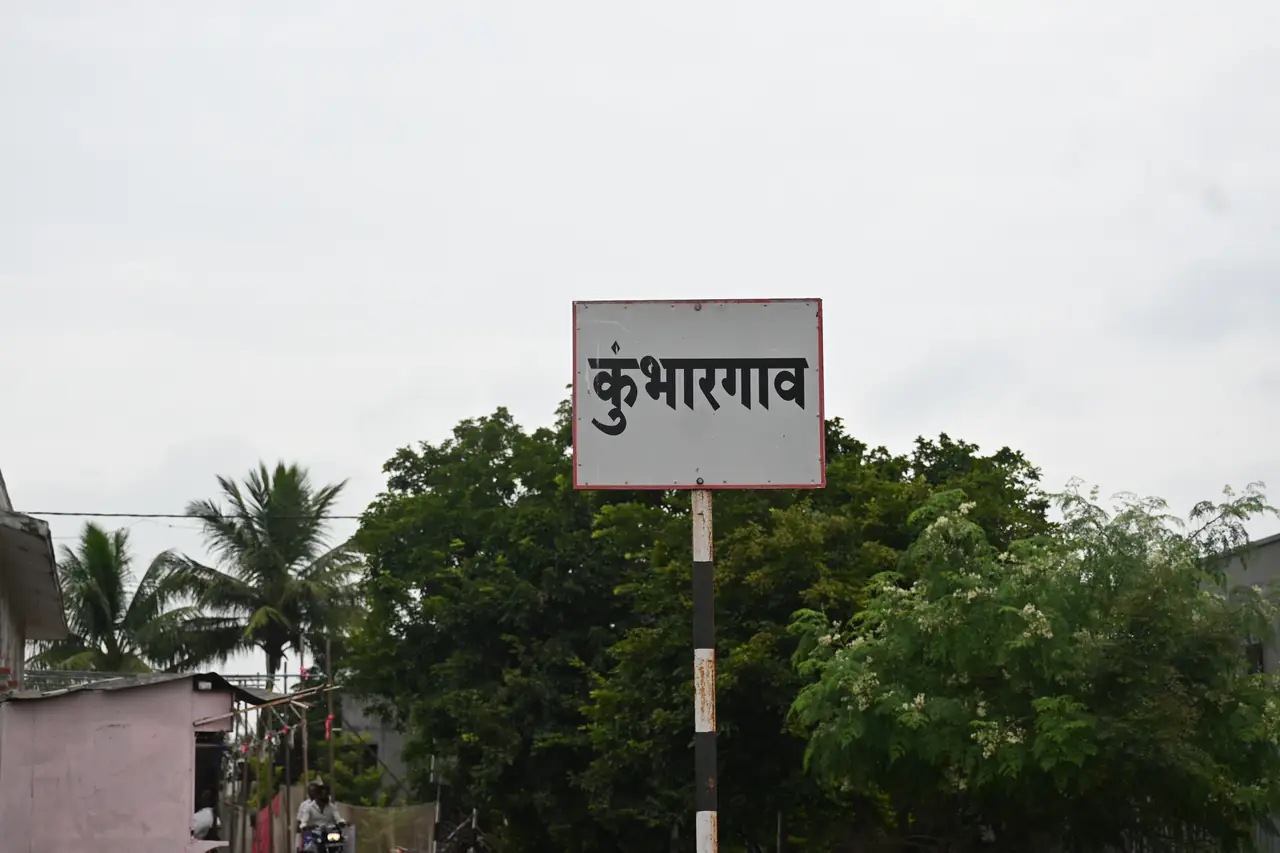
And that was the trip. The last photo in the folder is the sign for Kumbhargaon, the village we stayed in.
How to reach Bhigwan
Bhigwan sits on the Pune–Solapur highway (NH65), about 105 km from Pune, where the highway crosses the Ujani backwater. Kumbhargaon, the village most birders stay in, is 10 to 15 km from Bhigwan town on the backwater side.
By air
Pune International Airport is the nearest major airport, about 105 km from Bhigwan, with direct flights from Delhi, Bengaluru, Hyderabad, Chennai, Kolkata, Ahmedabad and most big Indian cities. A taxi from the airport takes around two and a half hours. Solapur Airport, about 150 km to the east, has regional flights from Mumbai, Hyderabad and Goa. Mumbai’s airport is about 255 km away, around five to six hours by road.
By train
Bhigwan has its own railway station (station code BGVN) on the Pune–Daund–Solapur line, served by a few local and express trains. For the widest choice, take a train to Daund Junction, about 26 km away, where trains from Mumbai, Pune, Hyderabad, Chennai and Bengaluru stop, and finish the journey by taxi or auto. Pune Junction (about 105 km) and Solapur Junction (about 150 km) are the big stations on either side.
By road and bus
Maharashtra State Transport buses running from Pune towards Solapur stop at Bhigwan on the highway, a ride of about two and a half to three hours. Driving is easy too, on a good highway all the way.
| From | Distance | Time by road | Route |
|---|---|---|---|
| Pune | about 105 km | 2 to 2.5 hours | NH65, the Pune–Solapur highway |
| Mumbai | about 255 km | 5 to 6 hours | Mumbai–Pune Expressway, then NH65 |
| Solapur | about 150 km | about 3 hours | NH65 towards Pune |
| Baramati | about 26 km | about 40 minutes | Baramati–Bhigwan road |
| Daund | about 26 km | about 40 minutes | Daund–Bhigwan road |
| Hyderabad | about 455 km | 8 to 9 hours | NH65 via Solapur |
| Delhi, Bengaluru, Chennai, Kolkata, Ahmedabad | fly to Pune | plus 2.5 hours | Pune airport, then NH65 |
From Bhigwan town, autos and taxis run to Kumbhargaon and the other birding villages, and most homestays will happily send a pickup to the bus stop or station if you share your timing.
Planning your own Bhigwan trip
- Make the most of the evenings. The hyenas, the chinkara, the close courser, the second sandgrouse, every roller photo and the wolf all came after four in the afternoon. Mornings are for small birds; evenings are for everything else.
- Go with a local guide. They know which rock the sandgrouse sits behind and which slope the quails call from, and they make every outing count.
- Two days is plenty. Four outings make a full, happy trip. Rest through the middle of the day and enjoy all four.
- Pick your season. September and October are wonderful for grassland birds and passing rollers. For flamingos and big flocks of waterbirds, see our guide to the best time to visit.
- Pack for the ground. A long lens, comfortable walking shoes, a hat and plenty of water.
Bhigwan trip FAQs
Can you see striped hyenas near Bhigwan?
Yes. Striped hyenas live in the dry, rocky country around Bhigwan. They are most active after dark, so evenings with a local guide who knows the area give you the best chance. Always watch from a respectful distance.
When is the best time to visit Bhigwan?
September and October are excellent for grassland birds such as quails, sandgrouse and coursers, and for passage migrants like the European Roller. For flamingos and large flocks of waterbirds, plan a winter visit, roughly December to March.
What is the nearest railway station to Bhigwan?
Bhigwan railway station (BGVN) is right in town. Daund Junction, about 26 km away, has many more trains from across India.
What is the nearest airport to Bhigwan?
Pune International Airport, about 105 km away. Solapur Airport, about 150 km away, has regional flights from Mumbai, Hyderabad and Goa.
What are the timings at Kadbanwadi?
As listed on the board at the entrance when we visited: 6 am to 11 am and 4 pm to 7 pm, with eight vehicles allowed each day.
How far is Bhigwan from Mumbai?
About 255 km, around five to six hours by road via the Mumbai–Pune Expressway and the Pune–Solapur highway.
Thank you for travelling along with us. If this story makes you want to see Bhigwan for yourself, September is waiting.