
There is a place near Pune where, on a good winter morning, you can stand beside a quiet lake and see painted storks, eagles, harriers and ducks without moving more than a few steps. It is called Bhigwan. If you like birds, or if you just like quiet places with open sky, this is a lovely day out.
This is a simple guide to the Bhigwan bird sanctuary. When to go, what you will see, and how to plan a day. All the birds here are ones we have photographed ourselves.
Where is Bhigwan?
Bhigwan is in Maharashtra, on the Ujani backwaters. The land around the water is a mix of wetland, open grassland and rocky scrub. The grassland near Shirshul is a favourite for raptors. Guided bird tours run as day trips from Pune, so you do not need to stay the night if you do not want to.
The best time to visit
The best season is October to March. That is winter in India. During these months, many birds fly in from far away and spend the cold season on the warm backwaters. The water fills up with life. The grass fields fill up with hunters.
If you only have one chance, go in December or January. Go early in the morning. The light is soft, the birds are active, and the air is cool.
Birds you can see at Bhigwan
We have photographed 39 species at Bhigwan across the wetlands, grasslands and rocky scrub. You can see all of them in Birds of Bhigwan. Here are the ones I keep coming back to.
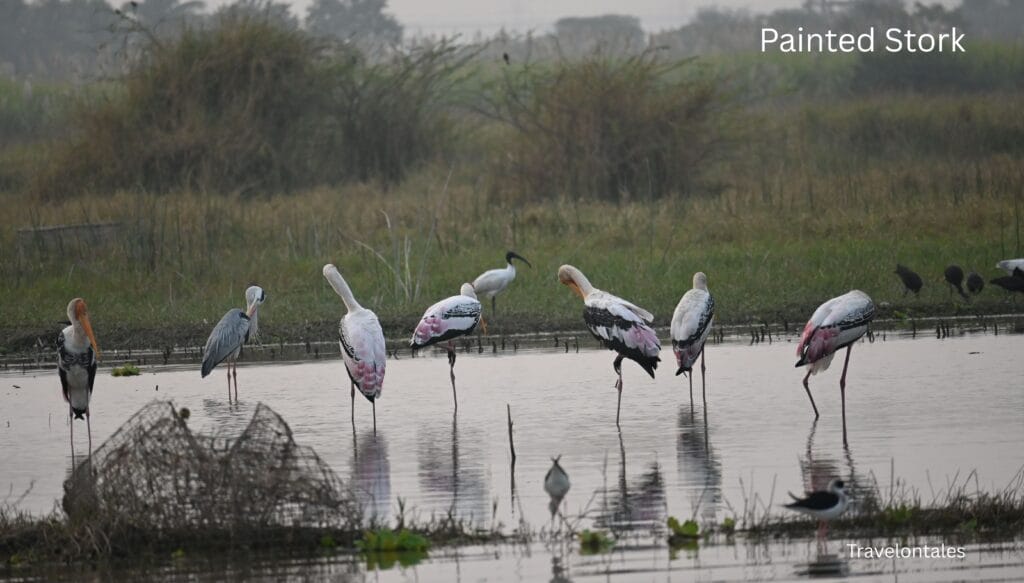
Painted stork
This is one of Bhigwan’s best-known birds. It stands in shallow water on long legs with a pink tint on its back and a long yellow bill. You often see it in small groups, wading slowly and sweeping its bill through the water.
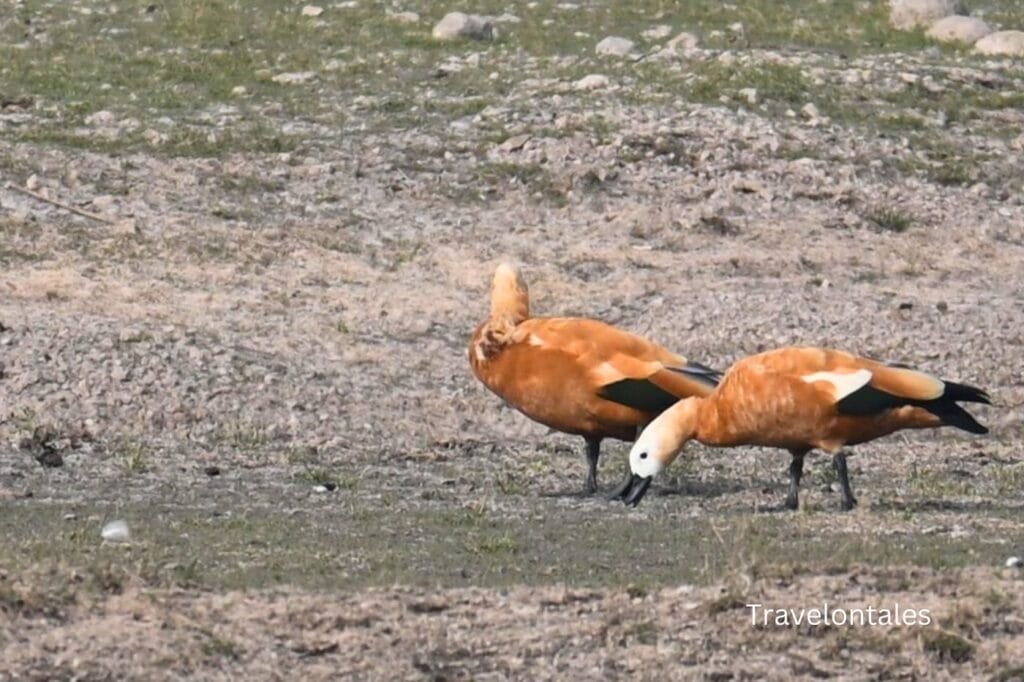
Ruddy shelduck
Locally it is called the Chakwa. It arrives from Central Asia to spend winter on the warm water. It is a bright orange bird, and pairs stay together. They call loudly to defend their feeding spot.
Northern shoveler
A duck with a big flat bill, like a spoon. The male is very colourful. You often see them swimming in circles, which stirs up food in the water.
Montagu’s harrier
The male is pale silver-grey with a black patch on the wingtip. It is one of Bhigwan’s most elegant winter visitors. The grasslands here are one of its winter homes in India. Watch for it gliding low over the grass.
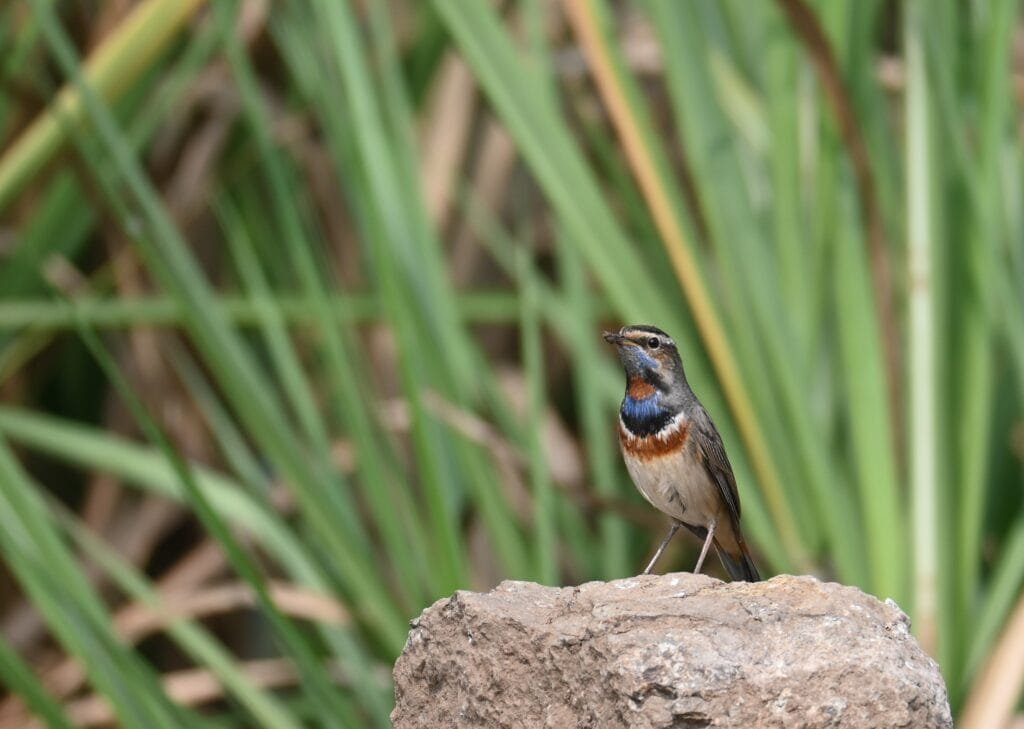
Bluethroat
A small, shy bird that hops between reeds and rocks. In winter the male shows a bright blue and orange throat. It is easy to miss, but a joy to find. I wrote more about it in Bluethroat at Bhigwan.
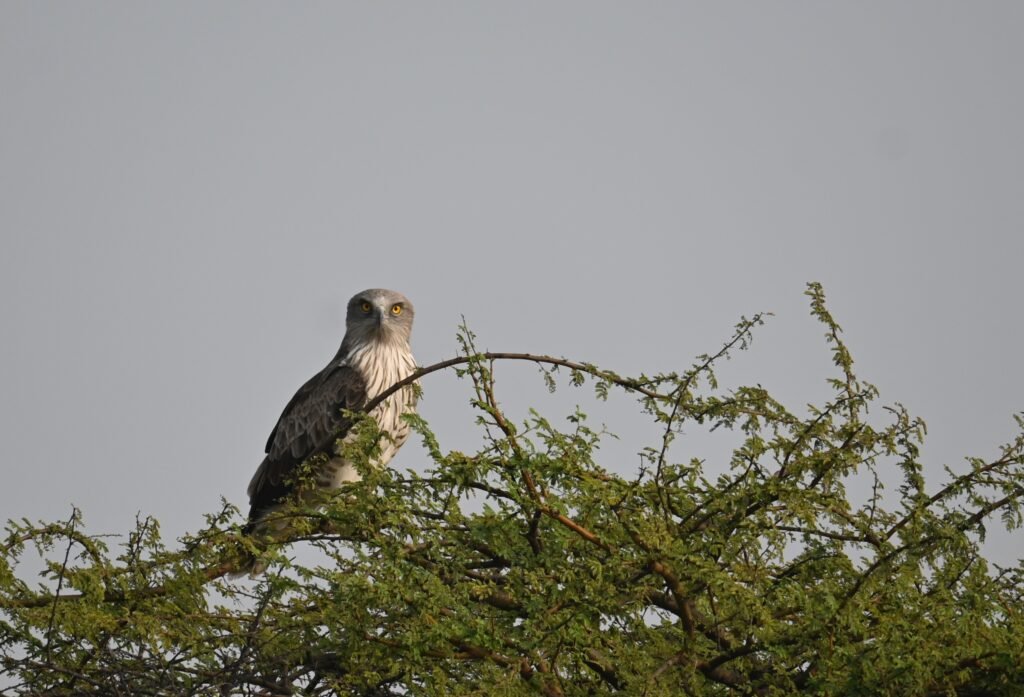
Eagles and hawks
Bhigwan has several raptors. We have photographed the short-toed snake eagle and the changeable hawk-eagle here. They like high perches in open ground. If you see a large bird sitting very still on a tree top, look at it carefully. It may be a raptor.
Owls
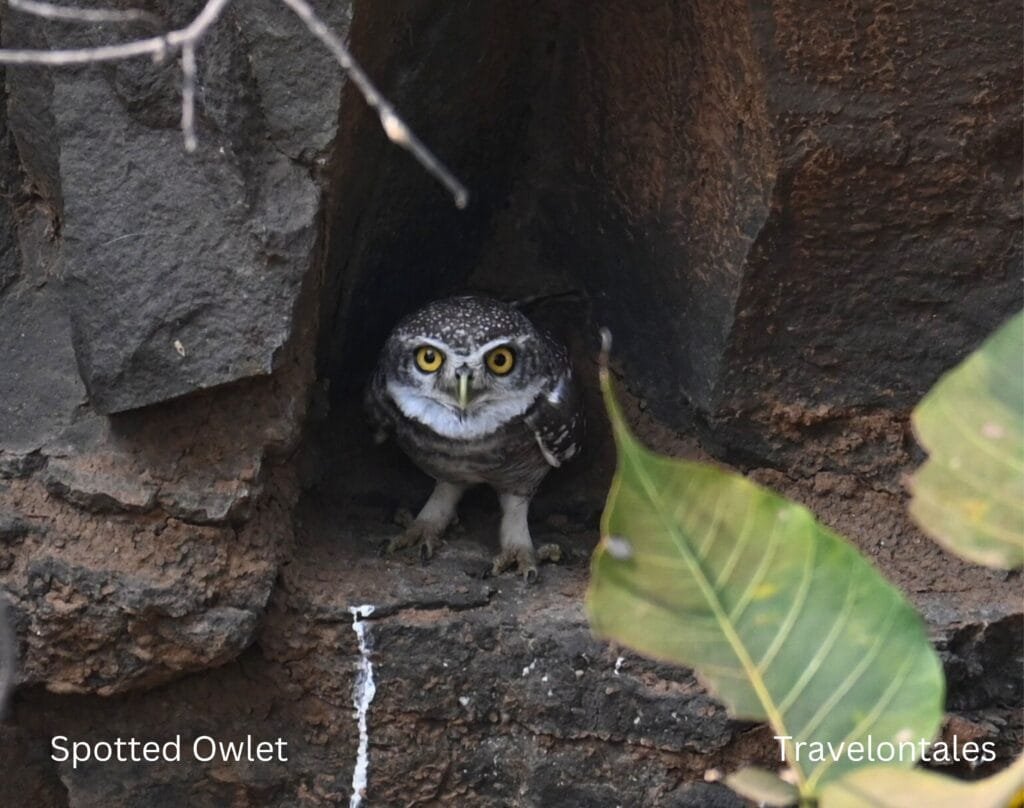
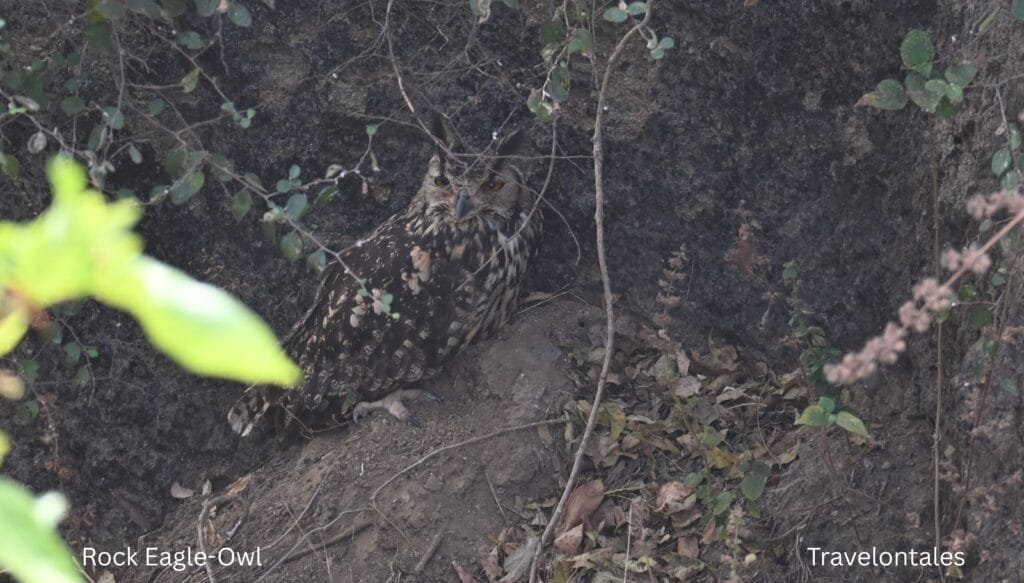
The spotted owlet is small and loves to stare back at you. The rock eagle-owl is a much bigger bird that hides in dark rock crevices during the day. Both are a real treat.
How to plan a day at Bhigwan
- Start early. Reach the water by first light. Birds are most active in the first two hours.
- Go with a guide if you can. A local guide knows where the birds sit on a given day. That saves a lot of time.
- Bring binoculars. You will find the bird first with them, then lift the camera.
- Wear dull colours. Brown, green or grey. Skip white and bright shades.
- Be quiet near the water. Birds stay longer when you do not make noise.
- Rest in the afternoon, then try again when the light softens.
What to carry
- Binoculars
- A long lens if you have one, but any camera will do for a start
- Water and a hat
- A light jacket for the early morning, because winter mornings can be cold
- A notebook. Writing down what you see is half the fun
Photographing the birds
Many Bhigwan birds sit on distant perches or stand in open water. That is good for photographers, because the background is simple. A few tips:
- Use a fast shutter, at least 1/1000 of a second for perched birds and more for flying ones.
- Put the sun behind you so it lights the face of the bird.
- Get low if you can. A bird on the water looks best from water level.
- Do not chase the bird. Sit and wait. It will come closer.
For the full set of settings, read Bird Photography for Beginners. And if you want to travel with a guide, see Bird Photography Tours in India.
Be kind to the birds
Never use recorded calls to bring a bird closer. It stresses the bird and takes it away from its food. Do not go near nests. Do not use flash, especially on owls. A good photograph is never worth upsetting a bird.
Other places to watch birds
If you enjoy Bhigwan, you may like Jawai in Rajasthan and Tadoba too. Our season-by-season guide is in Bird Watching in India: Where to Go and When.
Questions people ask
What is the best time to visit Bhigwan bird sanctuary?
October to March. Winter is when the migratory birds arrive.
What birds can I see at Bhigwan?
Painted storks, ruddy shelducks, northern shovelers, Montagu’s harriers, eagles, bluethroats and owls, among others. We have photographed 39 species.
Can I visit Bhigwan as a day trip from Pune?
Yes. Guided bird tours run as day trips from Pune.
What time should I reach Bhigwan?
At first light. The first two hours after sunrise are the best.
Do I need a long lens?
It helps, but it is not needed. Binoculars are more important. Many birds are on the water or on open perches, so even a basic camera can take nice pictures.