
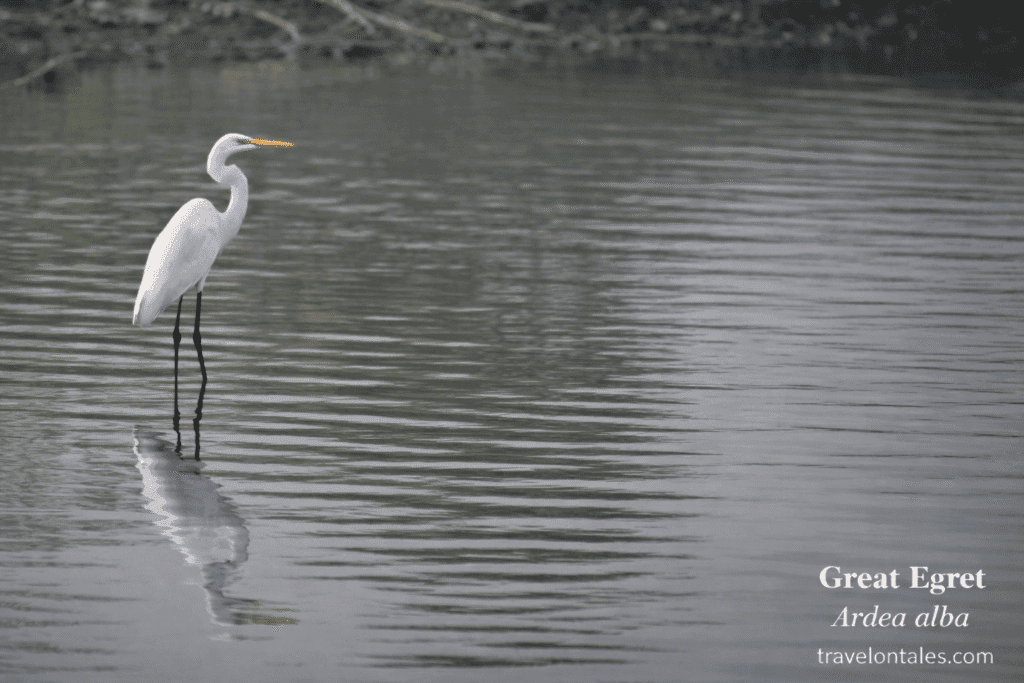
Great Egret (Ardea alba): Habitat, Behavior, and a Roadside Encounter on the Way to Alibaug
The Great Egret (Ardea alba) is one of the most elegant and widely recognized water birds found across India. With its pure white plumage, long black legs, and sharp yellow bill, it often stands motionless in shallow water—patient, alert, and completely at ease with its surroundings.
This particular sighting was not from a forest safari or protected reserve. It was captured casually during a drive on the way to Alibaug, reminding us that wildlife often reveals itself quietly, without planning or expectation.
Natural Habitat of the Great Egret
Great Egrets are highly adaptable birds and thrive in a wide range of wetland environments. Their ability to live close to human settlements makes them one of the most frequently spotted large water birds in India.
- Freshwater wetlands and marshes
- Rivers, lakes, and ponds
- Estuaries and coastal lagoons
- Mangroves and backwaters
- Flooded agricultural fields
- Roadside canals and water bodies
Because they rely more on water availability than forest cover, Great Egrets are often seen during road trips, especially along coastal routes and rural highways.
Geographical Distribution
The Great Egret has one of the widest distributions among water birds and is found on nearly every continent except Antarctica.
- Indian subcontinent
- Southeast Asia
- Africa
- Europe (seasonal visitor)
- North and South America
- Australia
Due to this broad range and stable population, the species is listed as Least Concern by the IUCN.
Feeding Habits and Diet
Great Egrets are carnivorous birds that rely on shallow water ecosystems for food. Their hunting technique is based on patience rather than pursuit.
- Small fish
- Frogs and tadpoles
- Crustaceans
- Aquatic insects
- Small reptiles
They often stand completely still for long periods before striking swiftly with their bill. This behavior not only conserves energy but also makes them fascinating subjects for observation and photography.
Behavior and Daily Lifestyle
Great Egrets are generally solitary while feeding but may gather in groups for nesting and roosting. They are most active during early mornings and late evenings.
- Calm and non-aggressive by nature
- Territorial around feeding spots
- Spend long periods motionless
Their composed behavior allows photographers ample time to frame shots, particularly reflections in calm water.
Breeding and Nesting Patterns
In India, breeding usually coincides with the monsoon season when water levels rise and food is abundant. During this period, Great Egrets develop delicate ornamental plumes used in courtship displays.
- Nests are built on trees near water bodies
- Colonial nesting with other water birds
- Both parents participate in feeding chicks
These ornamental feathers were once the reason for heavy hunting, which eventually led to early bird protection laws worldwide.
Best Time to Spot Great Egrets in India
Great Egrets can be seen throughout the year, but sightings increase during the monsoon and post-monsoon months when wetlands are full and prey is plentiful.
Why Great Egrets Are Commonly Seen During Road Trips
Great Egrets adapt well to modified landscapes. Roadside ponds, canals, and estuaries provide ideal feeding conditions, making these birds frequent companions during long drives.
This adaptability explains why travelers often encounter them unexpectedly—standing quietly beside the road, unaffected by traffic or human activity.
Photography Tips for Capturing Great Egrets
- Maintain respectful distance
- Use reflections to enhance composition
- Photograph during soft morning light
- Follow the rule of thirds
The full reflection, as seen in this image, adds balance and depth, transforming a simple roadside moment into a compelling wildlife photograph.
Frequently Asked Questions About Great Egrets
Is the Great Egret found only near forests?
No. Great Egrets are commonly found near rivers, estuaries, agricultural fields, and roadside wetlands.
What is the difference between a Great Egret and a Little Egret?
Great Egrets are larger and have a yellow bill, while Little Egrets are smaller with a black bill and yellow feet.
Are Great Egrets migratory birds?
Most Great Egrets in India are resident birds, though some show local seasonal movement depending on water availability.
Why do Great Egrets stand still for so long?
They use a sit-and-wait hunting strategy, conserving energy while watching for prey before striking quickly.
Final Thoughts
The Great Egret is a reminder that wildlife does not always require a destination. Sometimes, it appears quietly along the way—waiting to be noticed.
This moment on the way to Alibaug reinforces the idea that travel is not just about reaching places, but about observing what unfolds in between.
For more real-life wildlife encounters, road trip discoveries, and immersive nature stories, explore our safari journeys here: TravelOnTales Safaris .