
Scarlet Red Hibiscus Flower at an Alibaug Resort | Tropical Nature TravelonTales

Scarlet Red Hibiscus

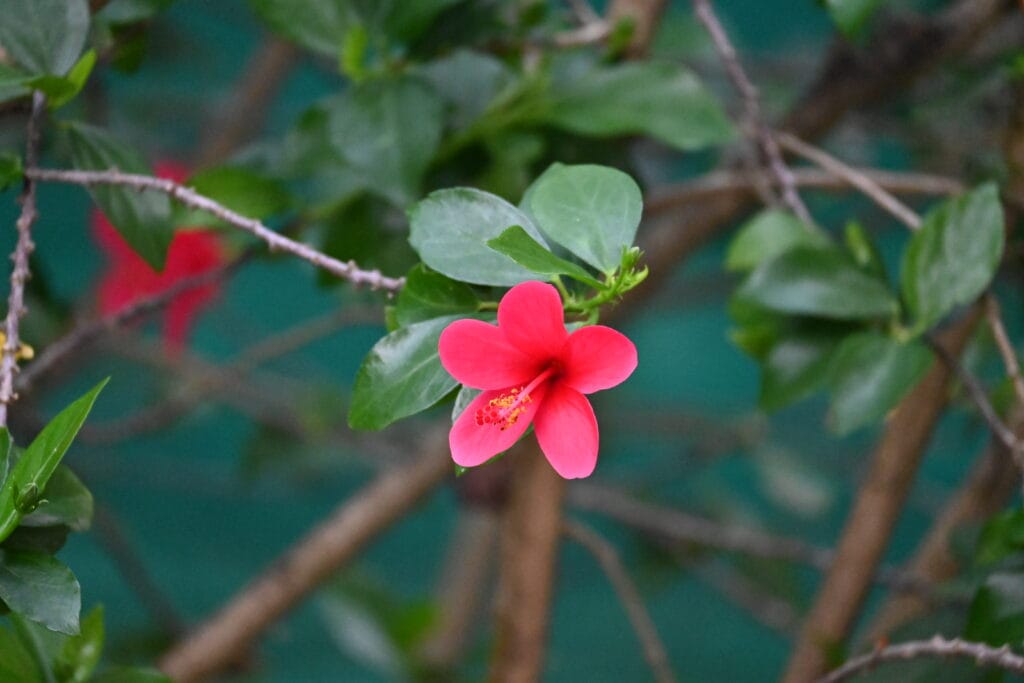
Scarlet Red Hibiscus Flower Clicked at an Alibaug Resort

This scarlet red hibiscus flower was clicked at a peaceful resort in Alibaug. The coastal air, warm sunlight, and green surroundings support tropical plant life.

Moreover, this hibiscus did not grow in a planned garden. Instead, it bloomed freely along the resort pathway. As a result, it added a bright splash of red to the calm green setting.

Hibiscus Flower in Alibaug’s Coastal Climate

Because Alibaug has a coastal climate, hibiscus plants grow easily here. The humidity and sea breeze keep the petals bright and the leaves fresh.

In addition, the scarlet petals stand out clearly. The long stamen attracts insects and draws attention. Therefore, the flower becomes a natural highlight within the resort landscape.

Cultural and Natural Significance

In India, the red hibiscus flower represents strength and energy. People often use it in religious offerings. Moreover, Ayurveda values hibiscus for its cooling nature.

Meanwhile, seeing this flower inside a resort shows balance between nature and travel spaces. It proves that tourism and natural beauty can exist together.

Why This Nature Photograph Works

This photograph captures the flower using natural light. It avoids filters and artificial effects. Therefore, the colors appear real and balanced.

In addition, the soft background blur keeps the focus on the hibiscus. The surrounding branches create natural framing. As a result, the image feels calm and well composed.

Fun Facts About Hibiscus

  • Hibiscus grows well in coastal regions
  • The flower attracts bees and butterflies
  • Hibiscus tea contains antioxidants
  • There are over 300 hibiscus species worldwide

At TravelonTales, we focus on simple travel moments. Often, small details create lasting memories. This hibiscus flower is one such moment from Alibaug.

👉 Click here to explore more nature and travel stories on TravelonTales

Why red, specifically

Bird-pollinated flowers across the world are disproportionately red, and hibiscus is a clear example. There is a reason, and it is about who can see what.

Birds have excellent colour vision and see red well. Most insects do not — bees in particular are effectively red-blind, perceiving red as a dark, unattractive colour while seeing ultraviolet that we cannot.

So a red flower is close to a private signal. It advertises loudly to birds while being comparatively invisible to the bees that would otherwise take the nectar without pollinating properly.

Nectar that suits a bird

Bird-pollinated flowers also tend to produce larger volumes of more dilute nectar than insect-pollinated ones. A sunbird needs a worthwhile quantity to justify the visit; a bee is working at a much smaller scale.

Hibiscus fits the pattern — copious nectar at the base of a long flower, positioned so that reaching it requires contact with the projecting stamen column.

No scent worth mentioning

Hold a hibiscus to your nose and there is very little there. That is consistent too.

Birds have a relatively poor sense of smell and hunt flowers by sight. Investing in fragrance would be wasted, so bird-pollinated flowers generally do not bother. Strongly scented flowers are usually aimed at insects, and night-scented ones at moths.

Bright colour, no scent, plenty of dilute nectar, projecting reproductive parts: that combination is a reliable signature of bird pollination, and you can use it to predict which garden plants will bring sunbirds.

Other plants that work the same way

  • Erythrina (coral tree) — spectacular for sunbirds and often for parakeets.
  • Bottlebrush (Callistemon) — red, brush-like, heavily visited.
  • Canna and Russelia — smaller but effective in a pot garden.
  • Silk cotton (Bombax) — a large tree, but in flower it draws an extraordinary range of birds.

Photographing at a red flower

  • Beware of clipping red. Saturated red channels blow out before the rest of the image looks bright. Underexpose slightly and check the histogram.
  • Avoid harsh midday sun, which flattens both the flower and the sunbird’s iridescence.
  • Pre-focus on the flower and wait for the bird rather than tracking the bird onto the flower.
  • Look for hovering. Sunbirds usually perch to feed but will hover at awkward blooms, which makes the better photograph.

Frequently asked questions

Why are bird-pollinated flowers usually red?

Birds see red well and most insects, particularly bees, do not. Red advertises to birds while discouraging insects.

Why do hibiscus flowers have no scent?

Birds locate flowers by sight rather than smell, so there is no benefit in producing fragrance.

What other plants attract sunbirds?

Erythrina, bottlebrush, canna, Russelia and flowering silk cotton are all reliable.

Do bees visit hibiscus at all?

Yes, but often as nectar robbers, biting through the base of the flower and bypassing the pollen entirely.


Related: Hibiscus and sunbirds, Purple Sunbird at Bhigwan and Daisies and their insect visitors.

Scroll to Top