
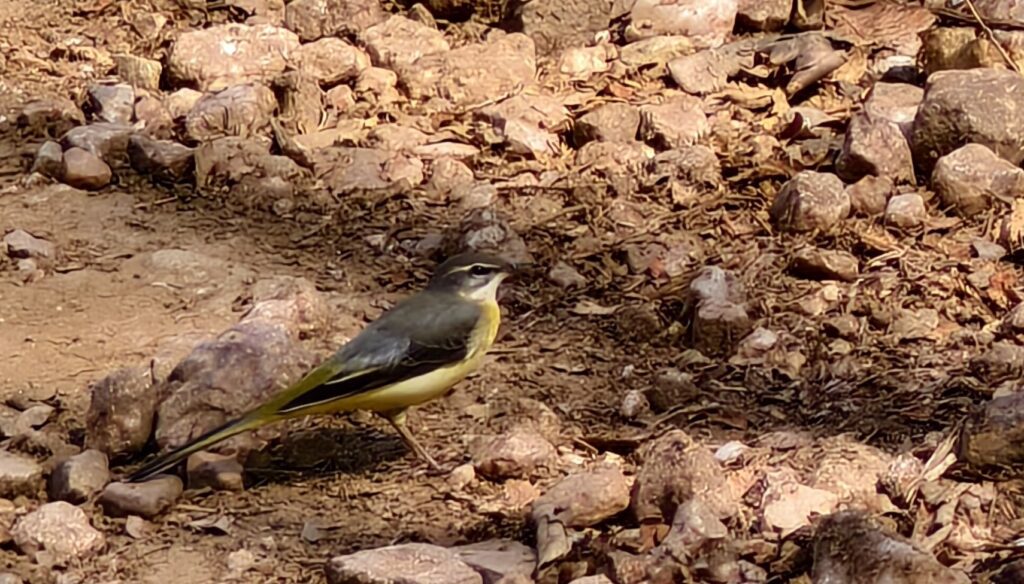
The Grey Wagtail (Motacilla cinerea)
Introduction
The Grey Wagtail (Motacilla cinerea) is one of India’s most graceful river birds, easily recognized by its bright yellow belly and constantly wagging tail. Found along clear mountain streams and rivers, it brings life and rhythm to the Himalayan wilderness — earning the poetic title, “The River Dancer.”
Appearance and Behavior
Slender, elegant, and ever in motion — the Grey Wagtail embodies nature’s rhythm. Its long tail flicks up and down continuously, perhaps as a form of communication or balance. It darts along riverbanks, catching insects mid-flight, and often returns to the same perch with ballerina-like precision.
Habitat and Migration
This species thrives in freshwater habitats — from Himalayan streams to urban canals. During winter, wagtails migrate southwards to the plains of India, becoming a common sight near village ponds and lakes. Their preference for clean water also makes them silent ambassadors for environmental health.
Symbolism and Observation
In many cultures, wagtails symbolize patience and perseverance. Their constant motion mirrors the flow of water itself — never still, yet always composed. Watching one by a quiet stream feels meditative, as if time itself has slowed down to breathe.
Photography Insight
This image captures the wagtail in its natural elegance — the earthy tones of the rocks contrasting beautifully with its yellow plumage. The light plays perfectly on its feathers, making it a visual treat for nature photographers exploring TravelonTales.com.
Fun Facts About the Grey Wagtail
- Despite its name, the Grey Wagtail’s most striking feature is its bright yellow belly.
- It has one of the longest tails among wagtail species — almost as long as its body.
- Its tail movements may help flush insects from the ground or signal to mates.
- Grey Wagtails migrate seasonally between the Himalayas and the Indian plains.
- They prefer fast-flowing rivers — often seen even above 2,000 meters in altitude!
Click Here to explore more beautiful bird stories and photographs on TravelonTales.
The wagtail with the yellow underneath
The Grey Wagtail is named after its back, which is the least useful part of it. What you actually notice is the underside — bright lemon yellow, strongest under the tail.
This causes constant confusion with the Yellow Wagtail, which is a different bird in a different habitat.
- Grey Wagtail: grey back, yellow underparts strongest at the vent, and the longest tail of any Indian wagtail. Always near running water.
- Western/Eastern Yellow Wagtail: olive-green back, shorter tail, found in open grassland and around grazing cattle rather than on streams.
Habitat separates them almost as reliably as plumage. A yellow-bellied wagtail on a rocky stream is a Grey Wagtail.
Why it needs moving water
Grey Wagtails feed on the invertebrates that live in and around fast, shallow, well-oxygenated water — mayfly and caddis larvae, small aquatic insects, and the flies that emerge from them.
That habitat requirement makes them a reasonable indicator species. A stream that holds Grey Wagtails is a stream with a functioning invertebrate community, which is not true of a polluted or silted one.
A winter visitor to most of India
Grey Wagtails breed in the Himalayas and further north across Asia and Europe, and move down to peninsular India for the winter.
So the bird on a stream in Maharashtra in January has come down from high altitude. They arrive from around September and are gone by April.
Behaviour
They work the water’s edge with constant movement — running a few steps, stopping, pumping that long tail, then flying up to snatch an emerging insect in mid-air before dropping back onto a rock.
They are territorial even in winter, and a single bird will hold a stretch of stream against others of its kind for the whole season. That means the wagtail you see today will very likely be on the same rocks tomorrow.
Photographing them
- Use the territory. The bird will return to the same rocks. Find a good one, set up, and wait.
- Get low to the water. Eye level with a bird on a stone in a stream is the picture.
- Fast shutter for the flycatching sallies, which are quick and unpredictable.
- Watch for the tail. It is the longest of the wagtails and it defines the bird’s shape; do not crop it.
Frequently asked questions
How do I tell a Grey Wagtail from a Yellow Wagtail?
Grey back and a very long tail, on running water. Yellow Wagtails have olive-green backs, shorter tails and prefer grassland and cattle.
Why is it called Grey when it looks yellow?
The name refers to the grey upperparts. The yellow underparts are more conspicuous in the field.
When can I see Grey Wagtails in India?
Roughly September to April. They breed in the Himalayas and further north, and winter across the peninsula.
What habitat do they need?
Fast, shallow, clean running water with a healthy invertebrate population.
Related: White-browed Wagtail and Birds of Bhigwan.
