
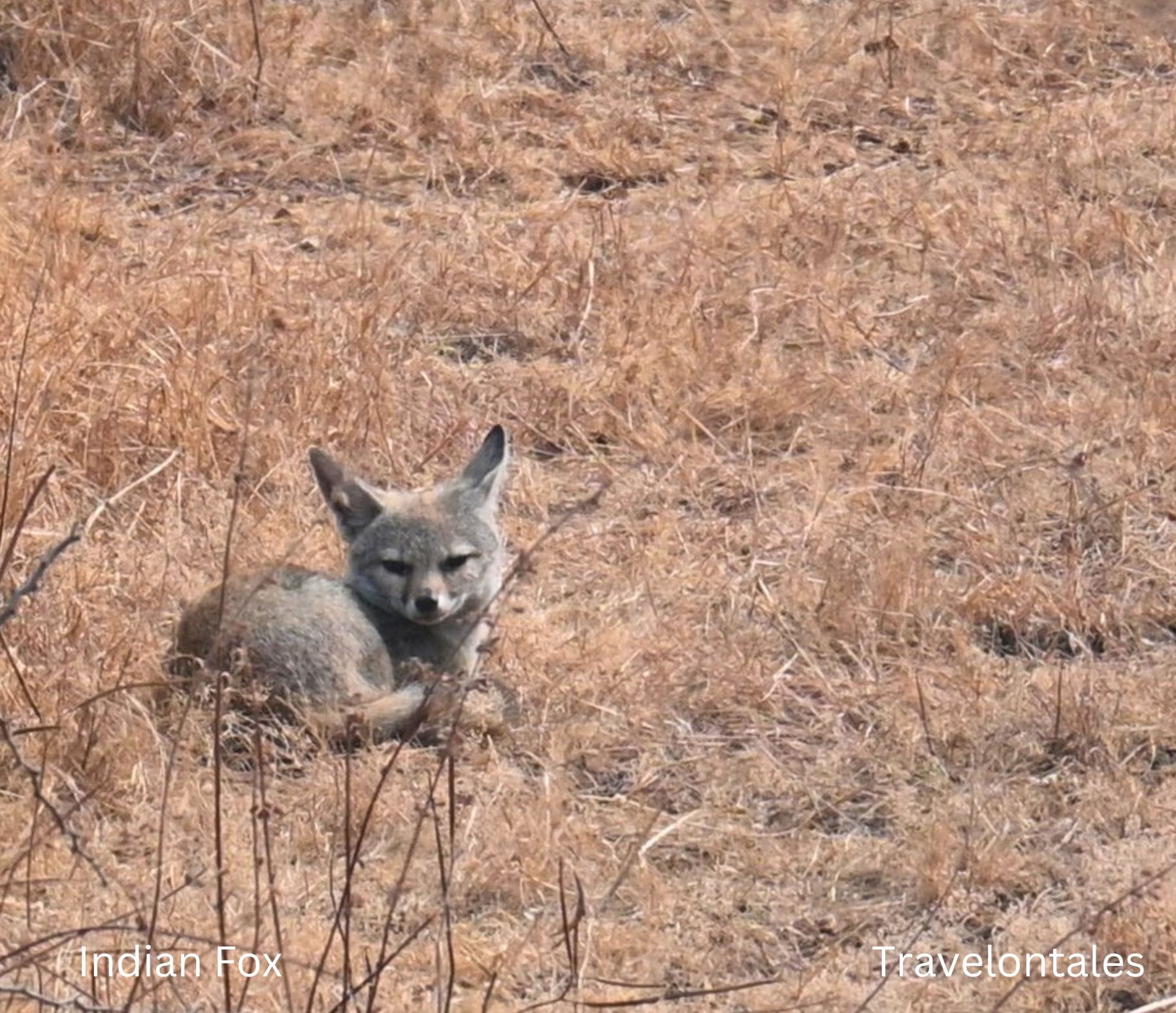
Indian Fox Bhigwan – Spotting Vulpes bengalensis in the Grasslands
“It was just sitting there — patient, watchful, blending into the dry golden grass as if it had always been part of the landscape. The Indian Fox at Bhigwan doesn’t need your attention. It simply is.”
The Indian Fox Bhigwan grasslands offer is one of Maharashtra’s most rewarding wildlife encounters. Most visitors to Bhigwan Bird Sanctuary arrive for the flamingos, the harriers, the painted storks wheeling over the Ujani backwaters — and that is entirely as it should be. But the dry scrub surrounding the reservoir is prime territory for the Indian Fox (Vulpes bengalensis), a small, sandy-grey canid found nowhere else in the world outside the Indian subcontinent. According to the IUCN Red List, the species is endemic to the subcontinent and faces growing pressure from grassland habitat loss.
Small, sandy-grey, with oversized ears and an expression that suggests it was here long before you and will be here long after — the Indian Fox at Bhigwan is a master of the open plateau, and one of the most photogenic mammals you are likely to encounter on a winter jeep safari in Maharashtra.
🦊 Indian Fox — Quick Species Profile
What Makes the Indian Fox a Bhigwan Wildlife Highlight?
Unlike the Red Fox of the Himalayas or the Tibetan Sand Fox of the high plateaus, the Indian Fox is an exclusively subcontinent species. It has evolved specifically for India’s semi-arid open habitats — dry grasslands, scrub, agricultural fringes, and the rocky plateau country that Bhigwan sits within.
Its coat is a warm grey-fawn with a distinctive black-tipped bushy tail — a reliable field mark that separates it from jackals at a distance. The ears are large and expressive, built for detecting prey underground. At rest, as in the photograph above, it can appear almost domestic — but the moment you move too quickly, it is gone.
Behaviourally, the Indian Fox is monogamous and territorial. Pairs mate for life and share a network of burrows, often re-excavated porcupine dens or self-dug tunnels in sandy laterite soil. Pups (typically 2–6 per litter) are born between January and March — making the winter birding season the ideal time to observe family activity near den entrances at Bhigwan.
“The Indian Fox Bhigwan grasslands hide belongs to no one’s highlight reel — and that is precisely what makes a sighting feel like a gift.”
Indian Fox Bhigwan Habitat: The Grassland Connection
The land surrounding the Ujani reservoir is classic open country — flat, semi-arid, broken by scrub patches, dry nullahs, and agricultural fields — precisely the ecosystem the Indian Fox has colonised across millennia. The transition zone between the wetland edge and dry scrub grasslands is where Indian Fox Bhigwan sightings are most reliable.
The grassland zones accessed during the jeep safari at Bhigwan — particularly the areas used for harrier and raptor watching — double as excellent Indian Fox territory. Organisers like Wildagram Wildlife Expeditions (run by Abhishek) actively scan these zones during early morning departures when fox activity is highest.
How to Spot the Indian Fox at Bhigwan on a Jeep Safari
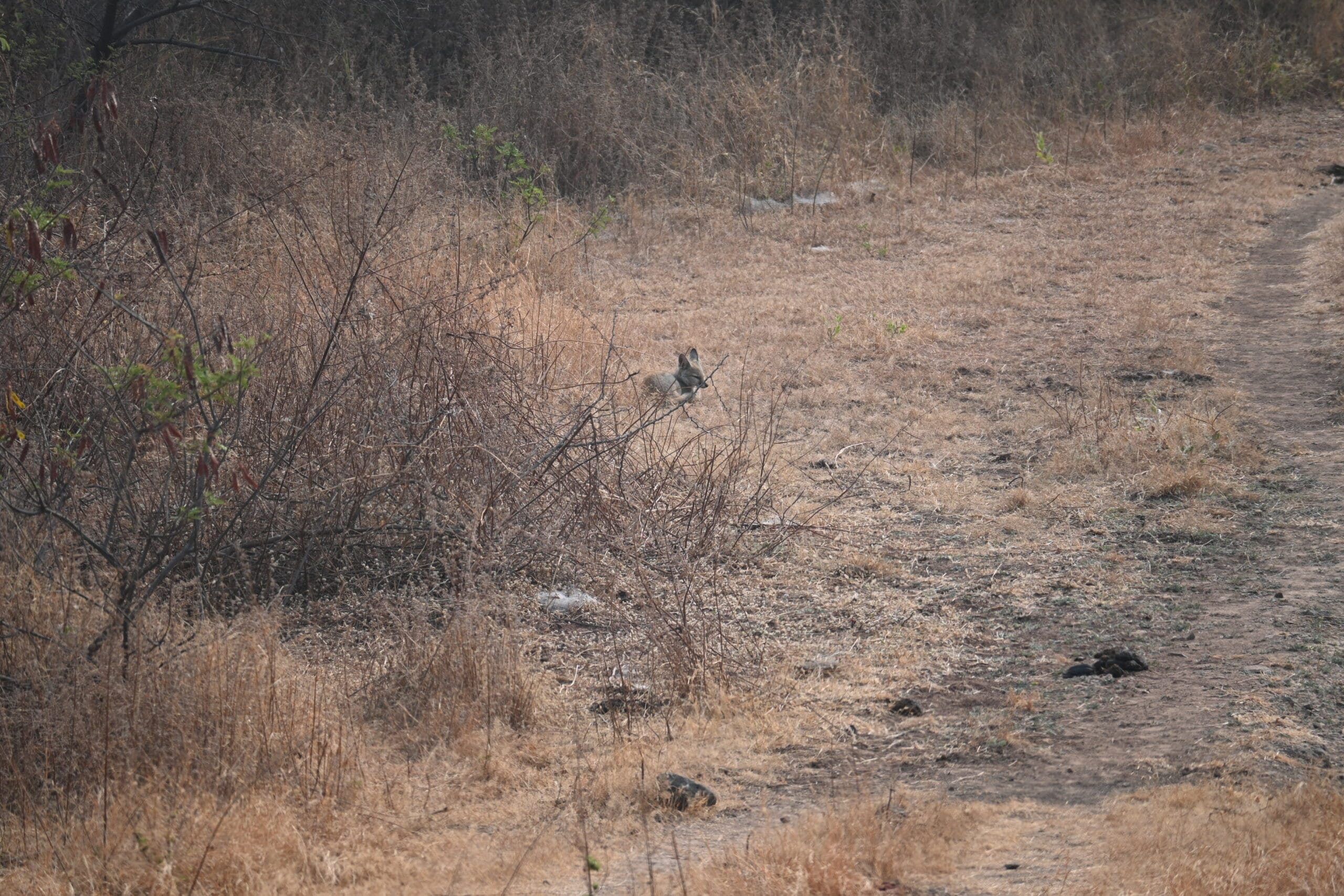
The Indian Fox at Bhigwan is not particularly rare — but it is easy to miss. Its sandy coat is near-perfect camouflage against dry winter grassland. Here is what to look for on your safari:
- The black tail tip — Often the first thing spotted. A dark smudge in pale grass that suddenly takes shape as an Indian Fox.
- Large upright ears — When alert, the ears are strikingly prominent. They will often be facing you before you notice the fox.
- Movement pattern — Indian Foxes move in quiet, purposeful trots. Look for steady diagonal movement across open Bhigwan grassland.
- Den entrances — Sandy soil with a fan of dug earth nearby is a reliable indicator of an active fox burrow. Keep a respectful distance.
- Pairs at dawn — During breeding season (Jan–Feb), you may spot two Indian Foxes grooming near the den entrance in early light.
Best Season for Indian Fox Bhigwan Sightings
The Indian Fox is most active around dawn and dusk — aligning perfectly with the morning jeep safaris departing Bhigwan around 6:00–6:30 AM. The optimal window for Indian Fox Bhigwan sightings is October to March. By November, the grasslands have dried significantly, reducing ground cover and making foxes far more visible against the pale earth.
January and February are particularly rewarding — breeding activity increases movement around den sites, and the early morning Bhigwan light produces exceptional photographic conditions. Avoid June–September: the grasslands are dense with green cover and the Indian Fox is essentially invisible.
Indian Fox Bhigwan Photography: Tips from the Field
The Indian Fox is one of India’s most photogenic small mammals — but it demands patience and the right technique. Here is what works in Bhigwan’s open grassland terrain, shooting with a Nikon Z50:
- Telephoto reach — A 300–500mm lens lets you fill the frame without disturbing the Indian Fox. Shoot from the jeep wherever possible.
- Stay low and still — The Indian Fox keys on movement and vertical silhouettes. Crouch immediately if you exit the vehicle.
- Expose for the coat — Sandy fur and golden Bhigwan grassland are close in tone. Use spot metering on the fox’s body, not the sky.
- Golden hour light — Early Bhigwan morning light is warm and raking — perfect for separating the Indian Fox from its background.
- Fast shutter speed — Keep shutter at 1/800s or above. On the Nikon Z50, ISO 1600–3200 is acceptable for early morning conditions.
- Wait for a clean background — Dry grass bokeh is the signature Indian Fox Bhigwan image. Patience pays off.
Conservation: Why Protecting Indian Fox Bhigwan Habitat Matters
The Indian Fox is listed as Least Concern by the IUCN, but localised declines across the are significant. The primary threats to Indian Fox Bhigwan habitat are grassland conversion to agriculture, road mortality along highways, persecution by farmers, and habitat fragmentation. The Ujani wetland complex around Bhigwan creates a vital grassland corridor — making it one of the most important informal refuges for the Indian Fox in Maharashtra.
Indian Fox vs. Indian Jackal at Bhigwan: Field Identification
In Bhigwan’s terrain, the Indian Jackal (Canis aureus) is the most likely source of confusion with the Indian Fox. Here is a quick separation guide:
🔍 Fox vs. Jackal — Bhigwan Field ID
Frequently Asked Questions — Indian Fox Bhigwan
Planning a Bhigwan Wildlife Trip?
Read the complete TravelOnTales guide to Bhigwan Bird Sanctuary — 3-day itinerary, accommodation, safari booking, and full species checklist including the Indian Fox.
Read the Complete Bhigwan Guide →The Indian Fox Bhigwan grasslands are home to is not a species that announces itself. It does not demand attention the way a tiger does, or earn gasps the way flamingos do. It simply sits and watching, patient, its black-tipped tail curled around its haunches — utterly at home in a landscape most people pass through without slowing down. That, in the end, is what makes finding one at Bhigwan feel like something worth writing about.
TravelOnTales