
Before you see a tiger, you often hear it. Not the tiger itself. Its neighbours. The deer, the langurs and the peacocks in the forest give warnings, and a good guide listens to every one of them.
This is a simple guide to the alarm calls on a safari. What they are, who makes them, and how guides use them to find big cats. It comes from our own drives in Tadoba, Bandhavgarh and Jawai.
What is an alarm call?
When an animal sees a predator, it often calls out. The call warns other animals. Deer, langurs, peafowl and lapwings all do this. For us, it means one thing: something is moving, and it is worth stopping.
On our first morning at Tala Gate in Bandhavgarh, we reached the gate at 5:45 AM. It was dark, and somewhere in the forest, an alarm call was already sounding. That is what the guides listen to.
Who makes the calls?
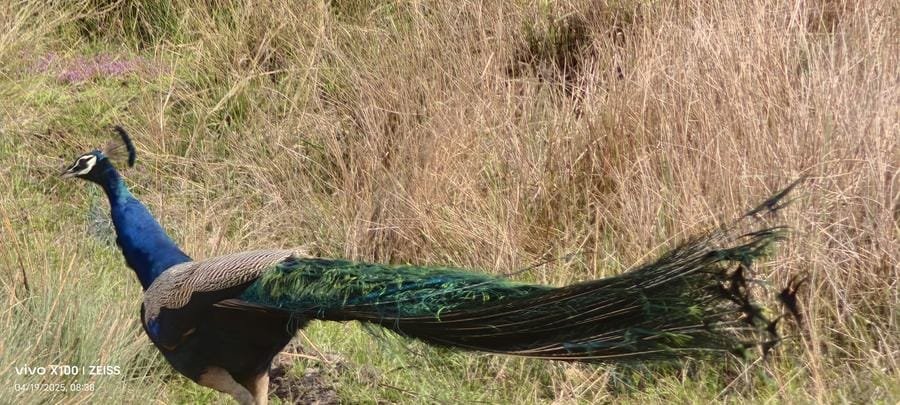
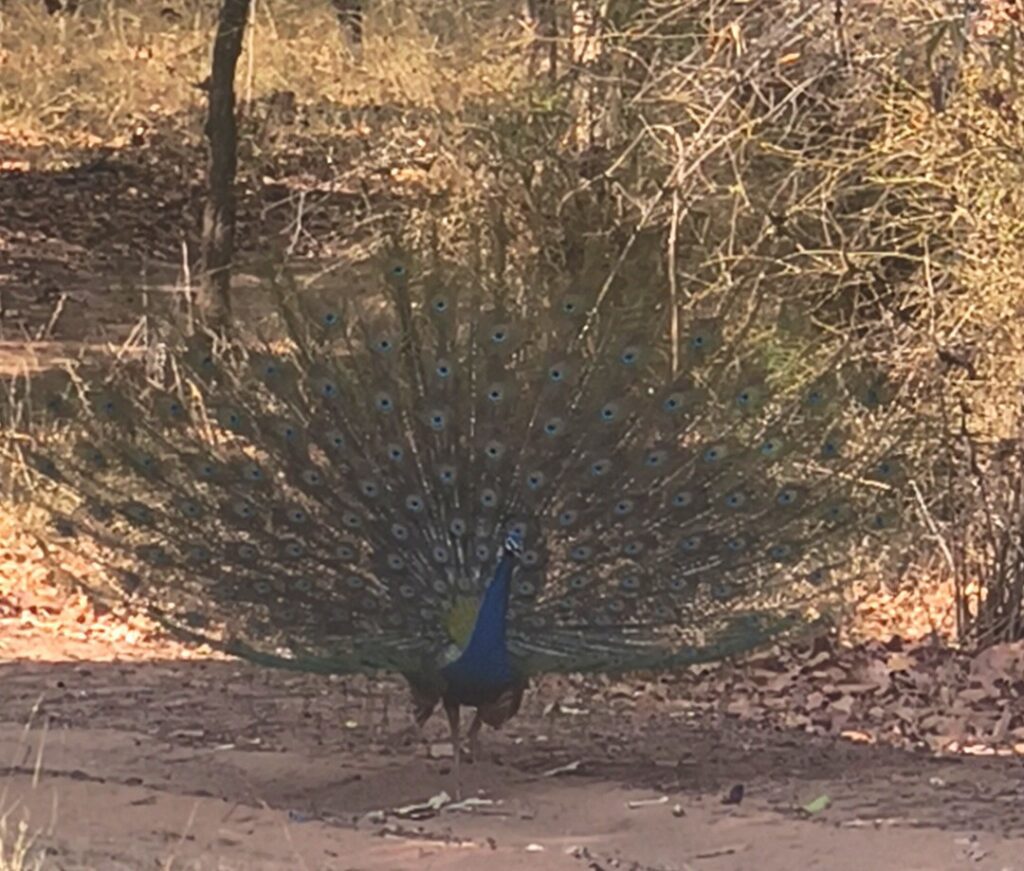
Peafowl
The peacock is a loud bird, with a ringing call that sounds like “may-awe”. It gives this call when it sees a predator, and also before rain. Guides listen for peacock alarms along with deer and langur calls. A peacock that calls again and again from the same spot is worth stopping for. See Peacock vs Peahen.
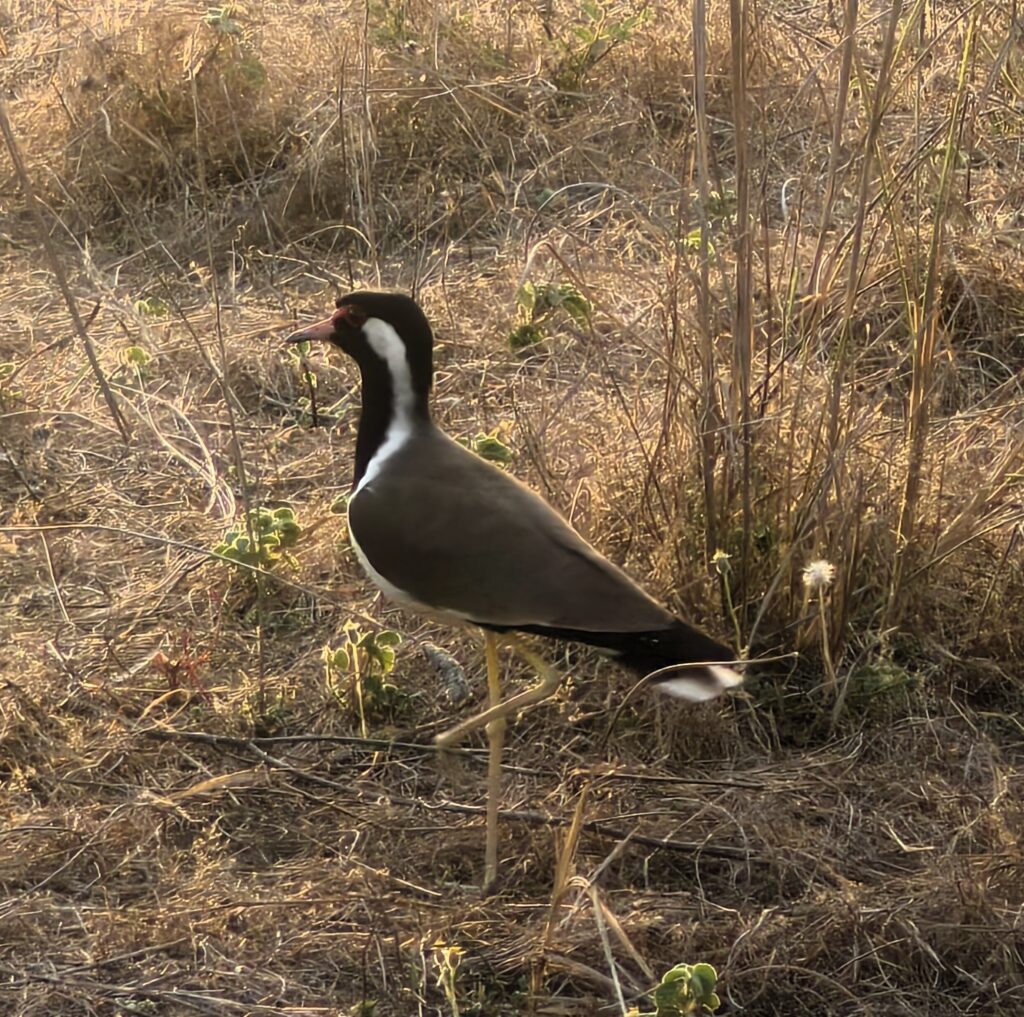
Red-wattled lapwing
The lapwing nests on open ground and has nowhere to hide. So it watches, and it shouts. It calls at anything it dislikes, a jackal, a dog, a person, or sometimes a big cat. A lapwing that keeps calling means something is moving across open ground. See Red-wattled Lapwing at Bandhavgarh.
Langurs and deer
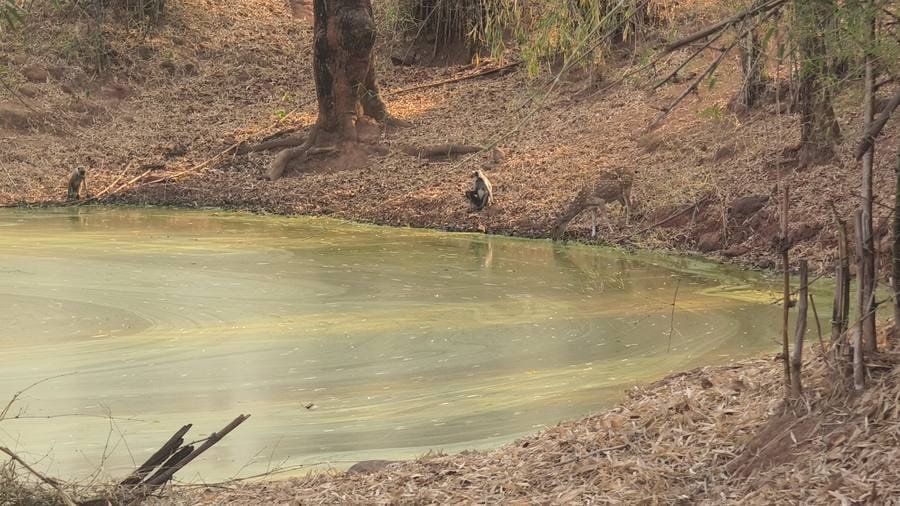
Langurs sit high in trees and see a long way. When they see a predator, they shout. Spotted deer and sambar also give alarm calls. Where deer gather in numbers, a predator is often not far away. At a waterhole at Bandhavgarh, we photographed a langur and a spotted deer at the same spot. Places like this are worth watching.
What a guide does when he hears a call
- He stops the jeep. He wants to hear the call and know which way it comes from.
- He turns off the engine. He needs silence.
- He asks everyone to stay quiet. The call may be repeated.
- He thinks about the place. He knows where tigers have been walking and where the water is.
- He decides whether to wait or move. Sometimes he waits in one place. Sometimes he goes to a spot where the animal may come out.
This is why a good guide is worth so much. A good one hears what you cannot.
How you can help
- Be quiet. If you talk, you cannot hear the calls.
- Learn the sounds. The peacock and the lapwing are easy to learn.
- Do not ask the driver to rush. Let the guide work.
- Be patient. Sometimes the animal never shows. Sometimes it walks out after ten minutes.

Be careful: not every call means a tiger
A peacock also calls before rain. A lapwing also calls at a dog. Alarm calls can mean a leopard, a jackal, a person or just a startled bird. So a call is a clue, not a promise. It tells you where to look, not what you will find.
What to read next
If you are going on your first trip, read Your First Tiger Safari in India and Jungle Safari Rules in India. For leopards, see Leopard vs Tiger. And for photographing what you find, read Tiger Photography in India.
Questions people ask
What is an alarm call on a safari?
It is a warning call made by deer, langurs, peafowl or lapwings when they see a predator.
How do guides find tigers?
They follow signs and listen to alarm calls from animals and birds, and they know where tigers like to walk and drink.
Does a peacock call mean a tiger is near?
Not always. A peacock also calls before rain. But if it calls again and again from one spot, it is worth stopping.
Which bird gives the loudest warning?
The red-wattled lapwing and the Indian peafowl are among the loudest.