
You can read ten guides on camera settings and still come home with a picture of a tiger’s back disappearing into the green. I know, because I did. This guide is different. It is not about the perfect camera. It is about what we have learned on tiger safaris in Bandhavgarh, Tadoba and Panna, written in plain words, for people who love the animal and want to photograph it well and honestly.
1. You do not find the tiger. You get ready for it
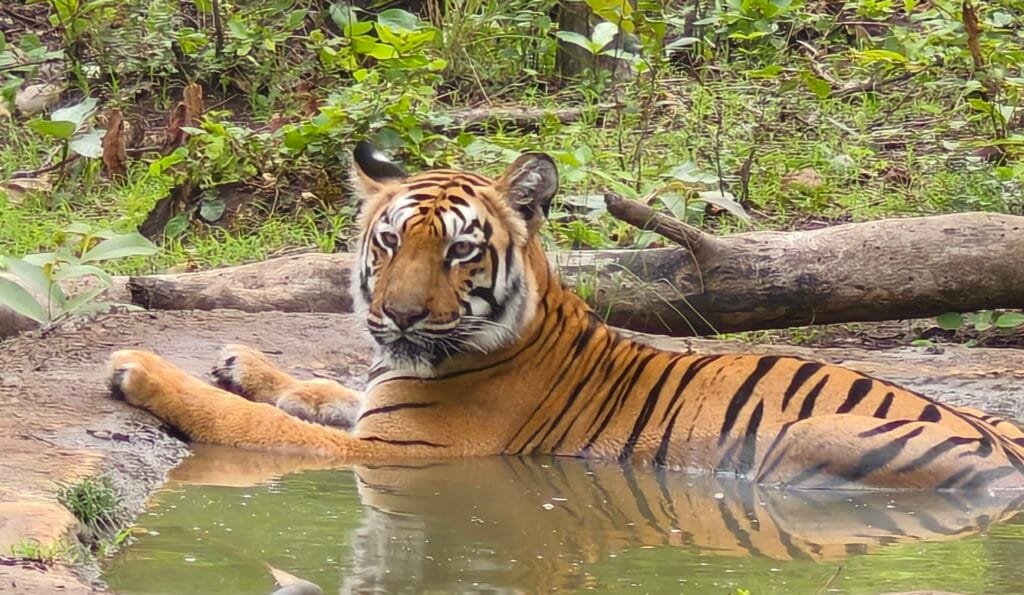
A tiger safari is not a photo shoot. You sit in a jeep, on a fixed route, with a guide and a time limit. The tiger does what it wants. Most of your skill is not in your fingers. It is in being ready.
Ready means the camera is on. The settings are already chosen. The lens is on the side of the jeep where the tiger is likely to appear. And your bag is closed, so nothing is rattling when the guide whispers, “there.”
Settings are chosen before the tiger appears, not after.
When a tiger steps out, the sighting can be over in seconds. So spend the quiet hours checking your shutter speed. Do not spend them on your phone.
2. Camera settings: a starting point, not a rule
Light in a tiger forest is hard. The sun comes through the leaves in hard patches, with deep shade next to them. A tiger’s orange coat sits right in the middle of that. So the settings below are only starting points. Change them to fit the light you really have.
| Situation | Shutter speed | Why |
|---|---|---|
| Tiger resting or sitting | 1/500 or faster | You shoot from a jeep, and a jeep moves even when you do not. |
| Tiger walking | 1/1000 or faster | Walking is slower than it looks, but legs and head still blur. |
| Tiger moving fast | 1/2000 or faster | Fast action needs a fast shutter. Raise your ISO to get it. |
- Use a wide aperture, but not the widest. If you stop down a little, the face is sharper and you have more room for focus mistakes.
- Let the ISO change by itself. Auto ISO with a fixed shutter speed is the easiest way to keep up as the light changes between sun and shade.
- Use continuous autofocus. If your camera has animal or eye tracking, turn it on. Tigers often walk toward you.
- Check the picture, then check the bright patches. Orange fur and black stripes can fool the camera. Look at the histogram, and do not burn out the bright spots.
- Never use flash. It does nothing at that distance, and it disturbs the animal.
3. Read the animal, not only the light
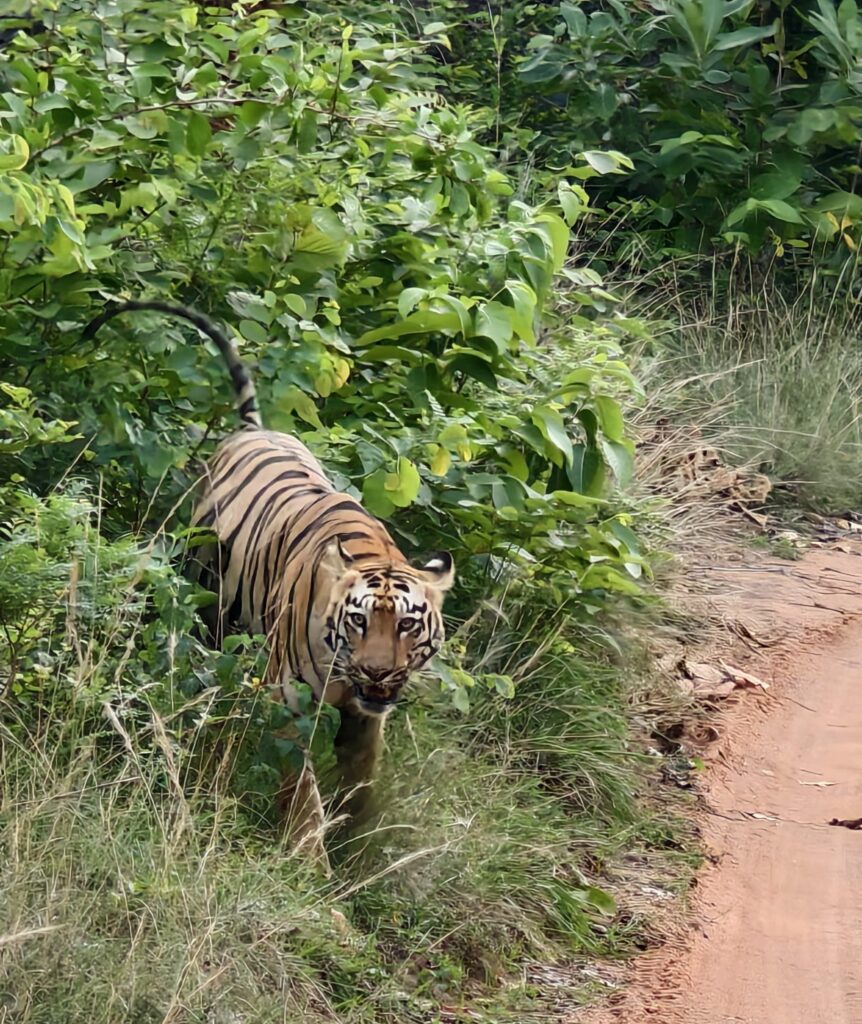
The best tiger pictures are about behaviour. A tiger walking out of cover. A tiger drinking. A tiger resting. A tiger marking its territory. Your guide reads this behaviour for a living, so listen to him.
Alarm calls are a big clue. Deer, langurs and peafowl often warn of a tiger long before you see it. The lapwing does the same. I wrote about that in Bird Watching at Bandhavgarh.
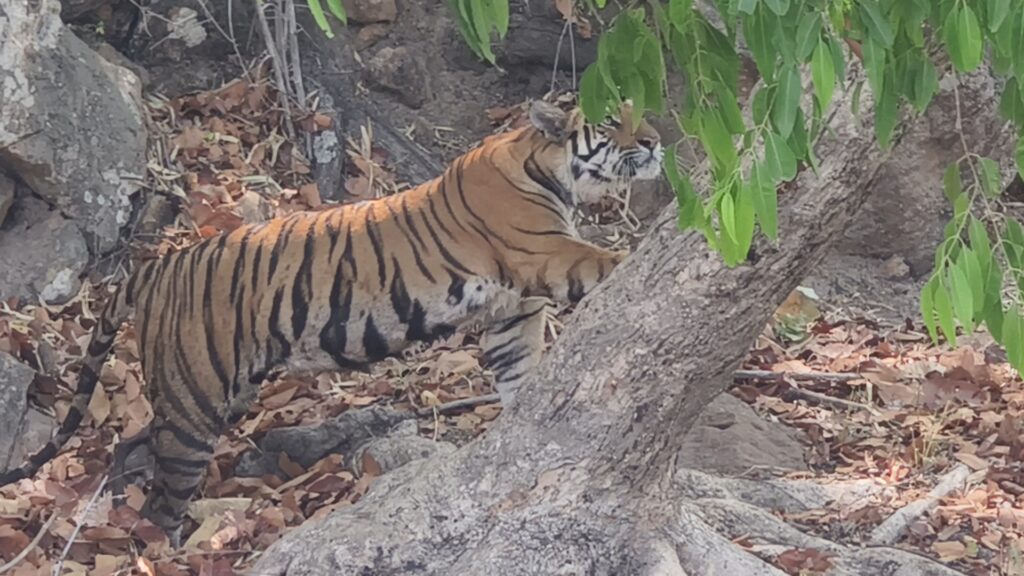
Tigers also leave signs. If you know where a tiger has been marking, you know where it may walk next. In how tigers mark territory at Bandhavgarh, I explain the four signs a tiger leaves.
4. Composition: give the tiger room
- Eyes first. If the eyes are sharp and the tiger is looking at you, the picture works even if everything else is a bit off.
- Leave space in the direction it is moving. A tiger walking out of the frame looks cut off.
- Use the forest. A tiger framed by trees, branches or a track tells the viewer where it lives. Do not crop too tight.
- Watch the background. A branch across the face ruins a frame. Ask the driver to move a metre, if it is safe.
- Shoot a burst. A walking tiger gives you many frames. Pick the one with the best leg position and head turn.
5. Waterholes: where patience pays
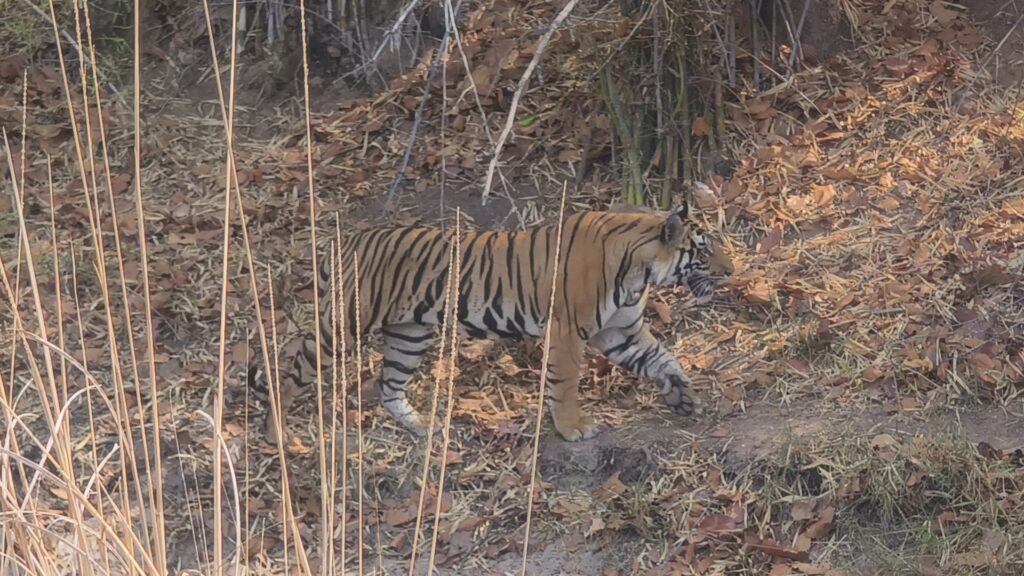
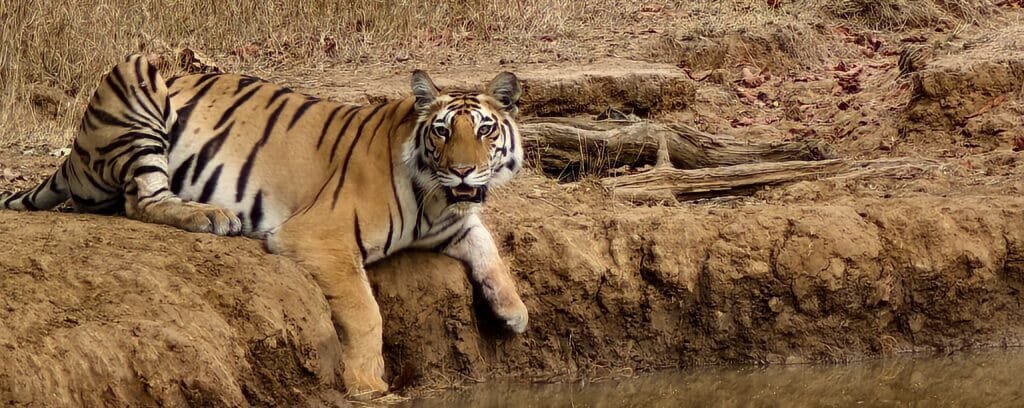
In hot weather, tigers come to water. A waterhole is one of the best places to photograph a resting or drinking tiger. The light is gentler there, because water reflects light into the shadows. And a tiger at water often stays a while.
At Tadoba in April and May, a tiger at a waterhole can stay 30 to 40 minutes. That is enough time to try different angles, check your exposure and relax a little.
6. Sightings are often not pretty at first
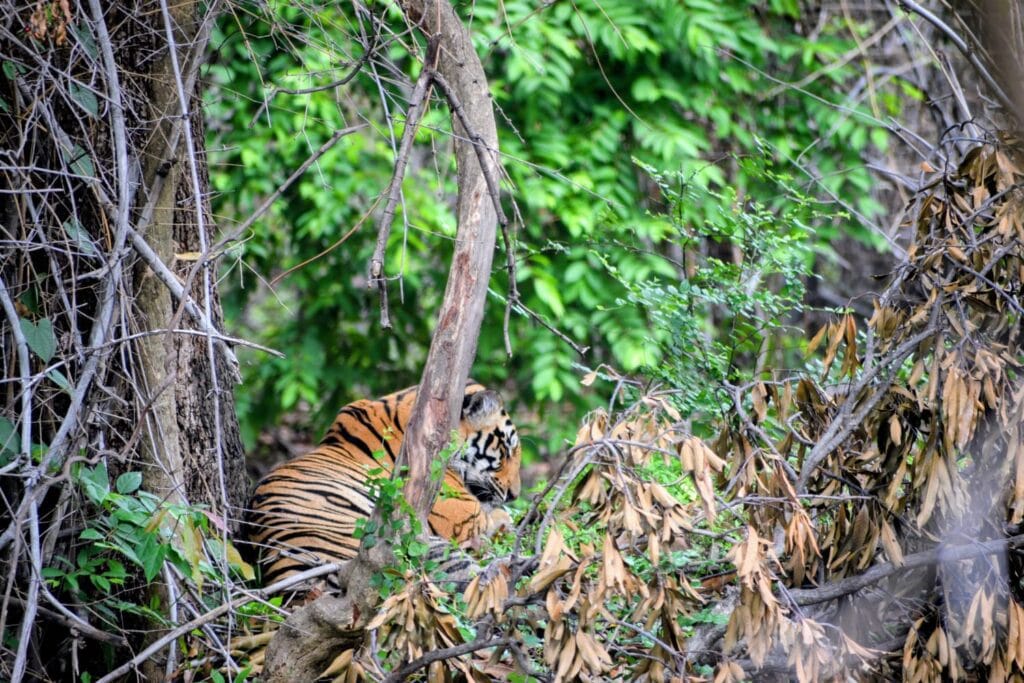
Most tiger sightings do not look like the pictures online. Often the tiger is deep inside bushes, and you see only a patch of orange. Do not put the camera down. Stay quiet and wait. Sometimes a tiger stands up and walks into the open after ten minutes. Sometimes it does not. That is wildlife. But the people who wait are the people who get the shot.
7. Ethics come before the photograph
- Stay in the vehicle and follow your guide.
- Keep quiet. Noise ends sightings.
- Never ask the driver to crowd or follow an animal.
- No flash, no baiting, no calling.
- If the tiger changes its behaviour because of you, you are too close.
A relaxed tiger gives you a better photograph than a nervous one. That is the rule behind everything above.
Where to go next
If you are choosing a park, read Tadoba, Bandhavgarh and Panna: which tiger reserve first?. For a real two-day account, see Bandhavgarh Tiger Safari: I Saw Tigers in 2 Days. For Tadoba, see the Tadoba tiger photography tour guide and Tadoba Andhari Tiger Reserve.
Questions people ask
What shutter speed should I use for tiger photography?
Start at 1/500 for a resting tiger and 1/1000 or faster for a walking one. Go faster if the animal moves quickly. The jeep adds some movement too.
Can I photograph tigers with a phone?
Yes, in good light and when the tiger is close. A long lens gives you much more reach and detail.
Is a tripod useful on a tiger safari?
Not usually. Jeeps move and there is little space. Most photographers hold the camera and rest it on a bean bag or the jeep rail.
When is the best light for tiger photography?
Early morning and late afternoon. The light is softer and the animals are more active than at midday.
Related: Bird Photography for Beginners
Related: Bandhavgarh Wildlife Photography: A Photographer’s Guide
Related: Best Time to Visit Bandhavgarh National Park
Related: Wildlife Photography Tours in India: How to Choose the Right One
Related: Leopard vs Tiger: How to Tell Them Apart in the Wild
Related: Jungle Safari Rules in India
Related: What to Wear and Pack for a Jungle Safari in India
Related: Safari Alarm Calls: How Guides Find Tigers by Listening
Related: Your First Tiger Safari in India: What to Really Expect
Related: Wildlife Photography for Beginners
Related: Golden Hour Wildlife Photography