
A tiger does not patrol its territory by walking the boundary every day. It leaves messages. Scent on tree trunks, scrapes in the dust, claw marks on bark and droppings left in the open.
Guides read these signs to work out which tiger is around, how recently it passed and which way it went. Once you know what to look for, a safari changes. You stop only watching for a tiger and start reading the forest.
Tap any photo to view it full size.
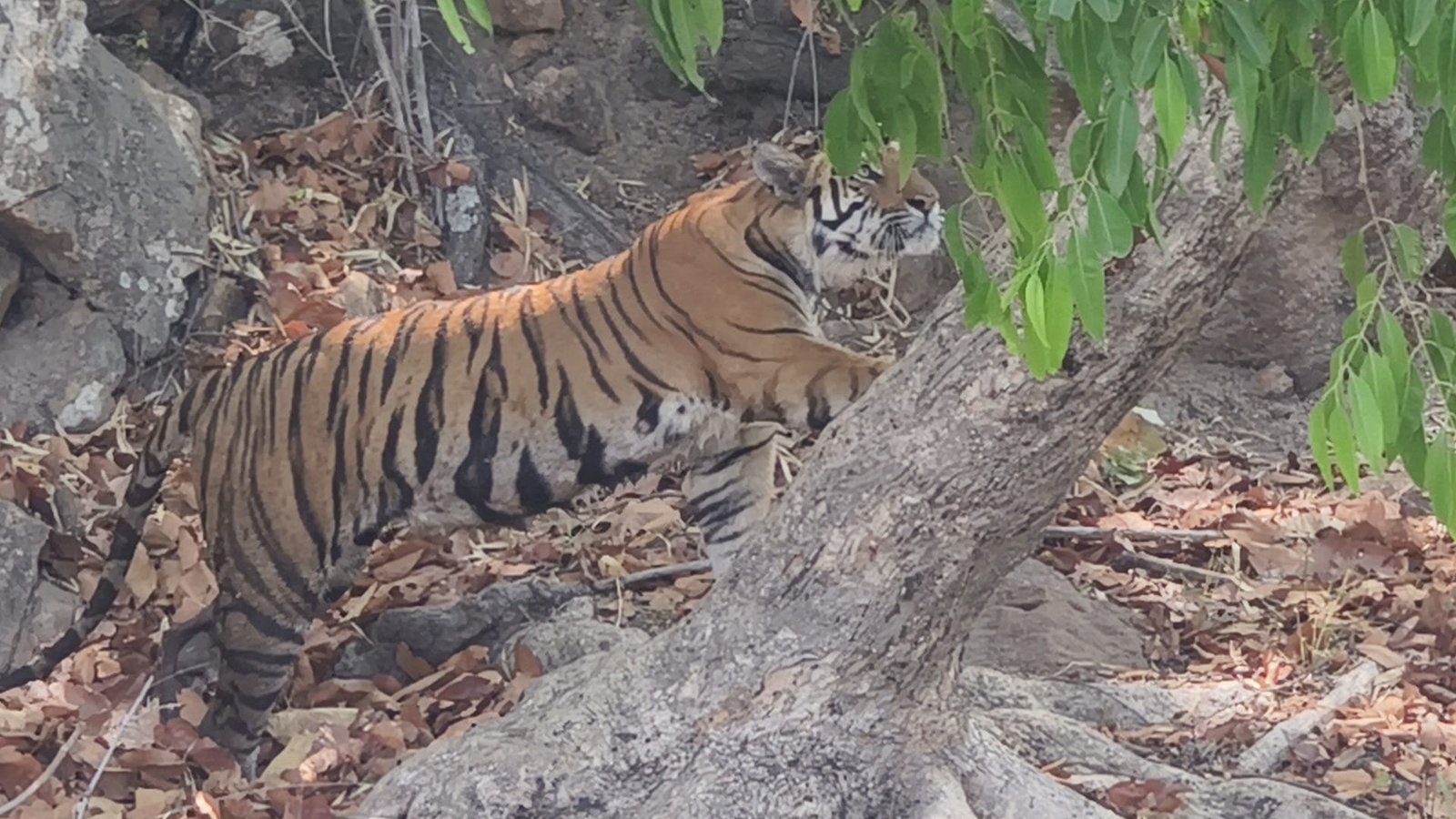
The four signs a tiger leaves
1. Spray marking
This is the main one. The tiger backs up to a tree trunk, rock or bush, lifts its tail and sprays a mix of urine and scent gland fluid upward onto the surface.
The smell is strong and slightly musky. Guides often smell a fresh mark before they see anything. It carries information about which individual it was, its sex, and roughly how long ago it passed.
2. Scrapes
The tiger rakes its hind feet backwards through soft earth or leaf litter, leaving a shallow trough usually 30 to 50 cm long, often with droppings or urine on it.
Scrapes are common on forest roads because the dust holds the mark well. A fresh scrape with sharp edges means a tiger passed recently. Old ones go soft and fill with leaves.
3. Claw marks on trees
Tigers rake tree trunks with their front claws, usually at a height that reaches well above a person. This leaves vertical grooves in the bark.
It does two jobs at once. It leaves a visual sign that other tigers can see from a distance, and it cleans and sharpens the claws.
4. Droppings left in the open
Most animals hide their droppings. Tigers often leave them in the middle of a road or track, sometimes on a scrape. Placing them where they will be found is the point.
Why tigers do this
A tiger territory can cover a very large area, and a tiger cannot be everywhere at once. Marking lets it hold ground without having to meet and fight every rival.
- Avoiding conflict: a fresh mark tells another tiger the area is taken. Most rivals move away rather than risk a fight.
- Finding a mate: a female in season leaves marks that advertise it. Males check marking trees constantly.
- Keeping the map current: scent fades, so marks are refreshed. A territory that stops being marked is one another tiger will move into.
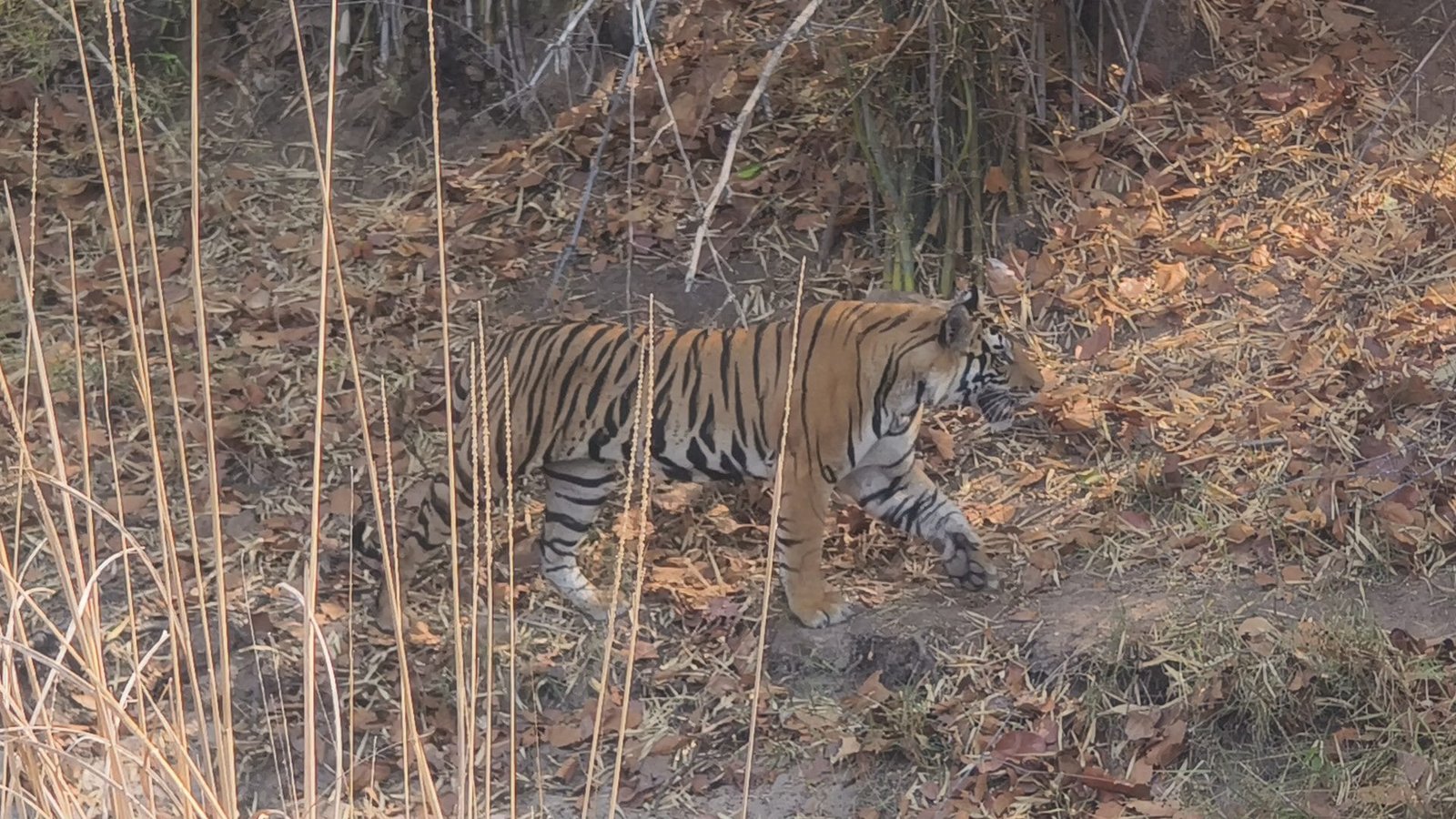
How guides use these signs
On a safari the driver and guide are reading the road surface constantly. They look at pugmarks for direction and freshness, scrapes for how recent, and they watch where a tiger stopped.
Combined with alarm calls from chital, sambar and langur, this is how a good guide predicts where an animal is heading rather than following it around.
- Pugmark direction tells you which way it walked.
- Sharp edges on a pugmark or scrape mean it is fresh.
- A marking tree beside the road is worth waiting at.
- Alarm calls plus a fresh scrape usually means the animal is close.
Where to see this at Bandhavgarh
Bandhavgarh has a high tiger density, so marking signs are easy to find. Look at the base of large trees beside the forest roads, especially at junctions and near water.
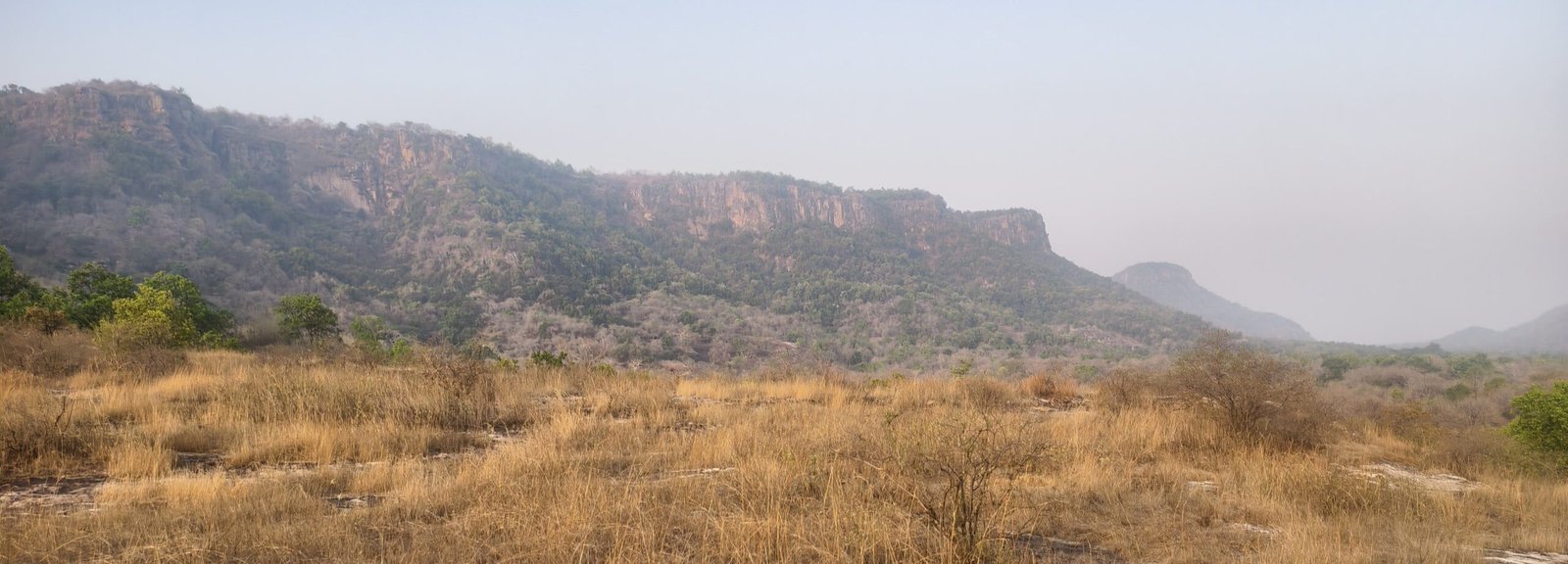
Zones are Tala, Magadhi and Khitauli. Tala is the most famous and the most booked.
Best time to visit
October to June. The park closes during the monsoon.
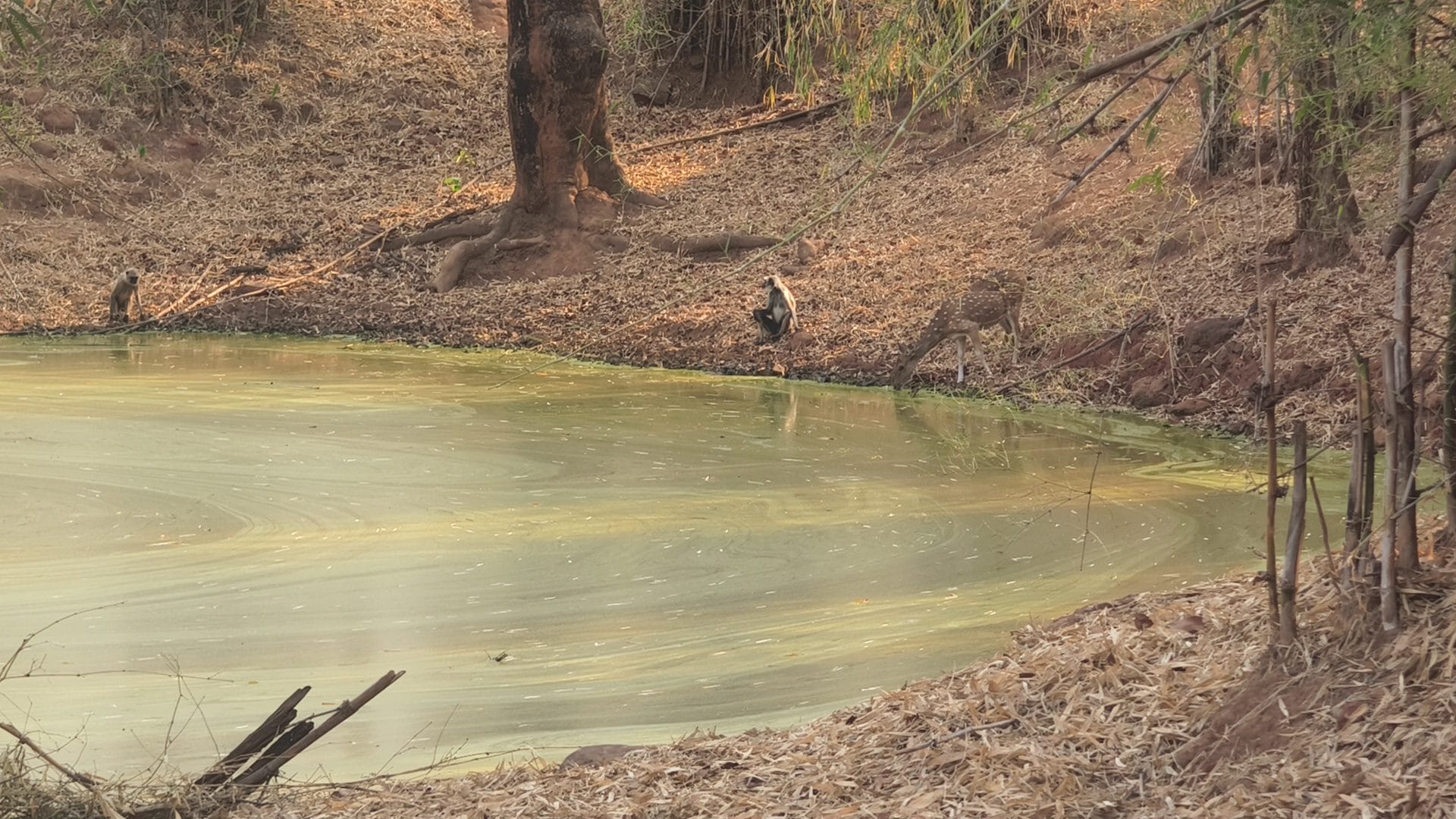
March to June is best for sightings. The forest is dry, water is limited so animals concentrate at waterholes, and tracks show marks clearly. It is also very hot.
Photography tips
- Photograph the sign, not just the animal. A scrape or a claw-marked tree tells a story a portrait does not.
- Include scale. Claw marks mean nothing in a photograph unless something shows how high up they are.
- Watch the marking tree. If a guide points one out, keep your camera on it rather than scanning around.
- Stay quiet at a mark. A tiger about to mark will not do it with noise nearby.
How to reach Bandhavgarh
- Nearest airport: Jabalpur, about 165 km. Khajuraho is around 240 km.
- Nearest railway: Umaria, about 35 km. Katni is another option.
- Gates: Tala, Magadhi and Khitauli.
- Season: the park is open roughly October to June and closed in the monsoon.
Frequently asked questions
How do tigers mark their territory?
Mainly by spraying a scent and urine mix onto tree trunks and rocks. They also make scrapes in the ground, rake claw marks on bark and leave droppings in the open.
Why do tigers scratch trees?
To leave a visible mark that other tigers can see, and to condition their claws. The height of the mark also signals the size of the animal.
How long does a tiger scent mark last?
It fades over days, faster in rain and heat. Tigers refresh marks regularly, which is why they follow the same routes.
Can you smell a tiger mark?
Yes. A fresh spray mark is strong and musky, and guides often notice it from a vehicle.
Do female tigers mark too?
Yes. Females mark their own territory, and a female in season marks more to advertise it.
Related posts: Bandhavgarh Tiger Safari Guide, Bandhavgarh National Park Safari and Tadoba, Bandhavgarh or Panna.
Related: Tiger Photography in India: Field Notes from Bandhavgarh and Tadoba
Related: Bandhavgarh Wildlife Photography: A Photographer’s Guide