
Most people book Bandhavgarh for tigers. Very few expect to meet a herd of wild elephants. We did, in dry grass near the forest edge, in the last light of the afternoon.
Wild elephants are a relatively new part of the Bandhavgarh story, and that is what makes them interesting.
Tap any photo to view it full size.
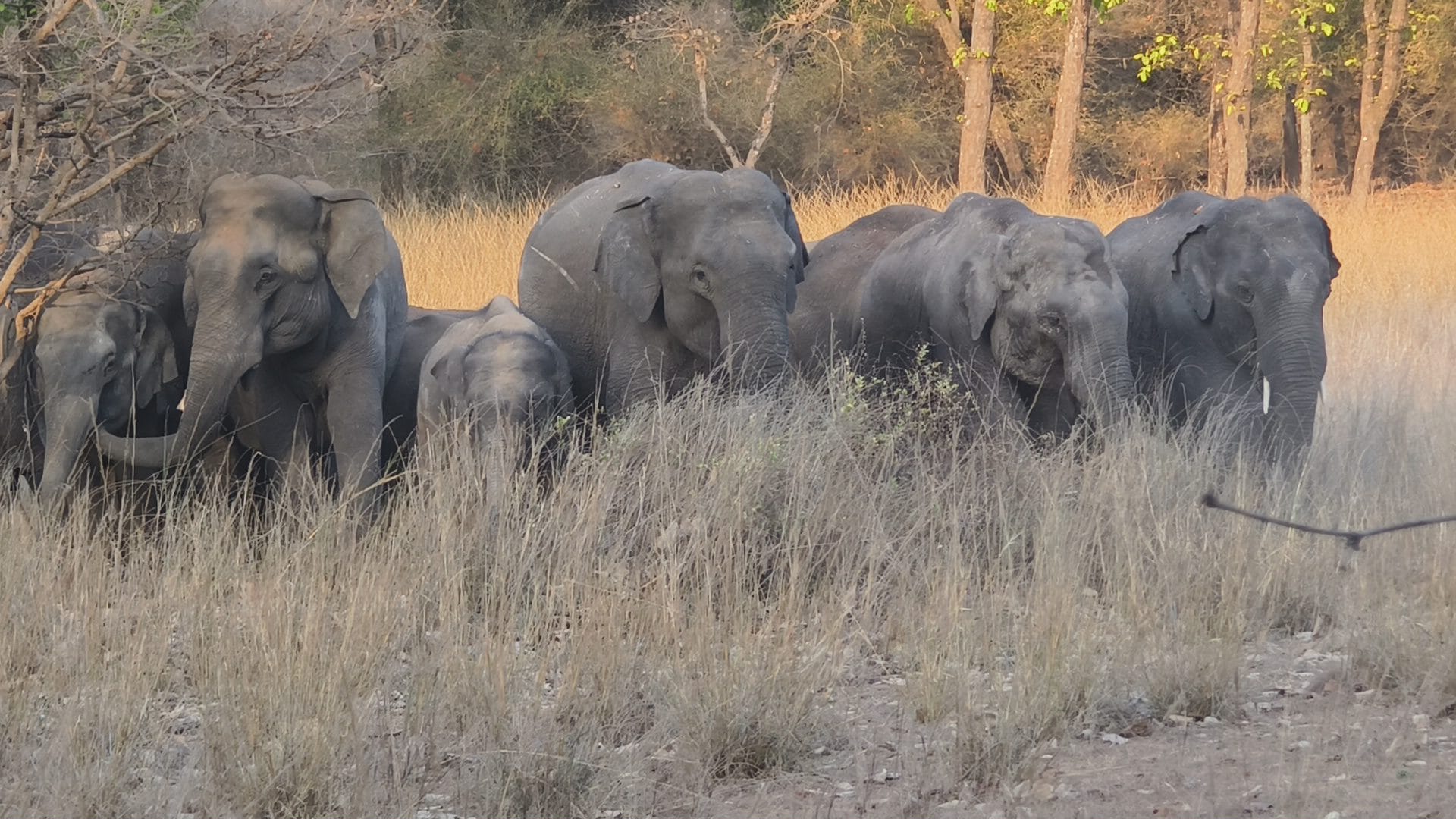
Bandhavgarh did not always have wild elephants
For most of its history as a reserve, the elephants you saw at Bandhavgarh were working animals. Departmental elephants were used by the forest staff for patrolling and for tracking tigers, and they are still a familiar sight around the park.
Genuinely wild herds are a much more recent arrival. In recent years elephants have moved in from the forests on the Chhattisgarh side and begun using Bandhavgarh and the surrounding corridors.
So a wild herd here is not a leftover population. It is an ongoing movement, and the animals are still working out their routes.
How to tell a wild herd from departmental elephants
- No chains, no gear. Working elephants usually carry rope, a chain or saddle marks.
- Herd structure. A wild herd is females and calves of different ages together. Working elephants are usually single animals.
- Behaviour. Wild elephants keep calves in the middle and put themselves between the calf and you.
- Distance. A wild herd moves away from vehicles. A departmental elephant ignores them.
Where they are seen
The herds use the buffer areas and the forest edges as much as the core zones, and they move between Bandhavgarh and neighbouring forest. Sightings are not tied to one zone the way tiger territories are.
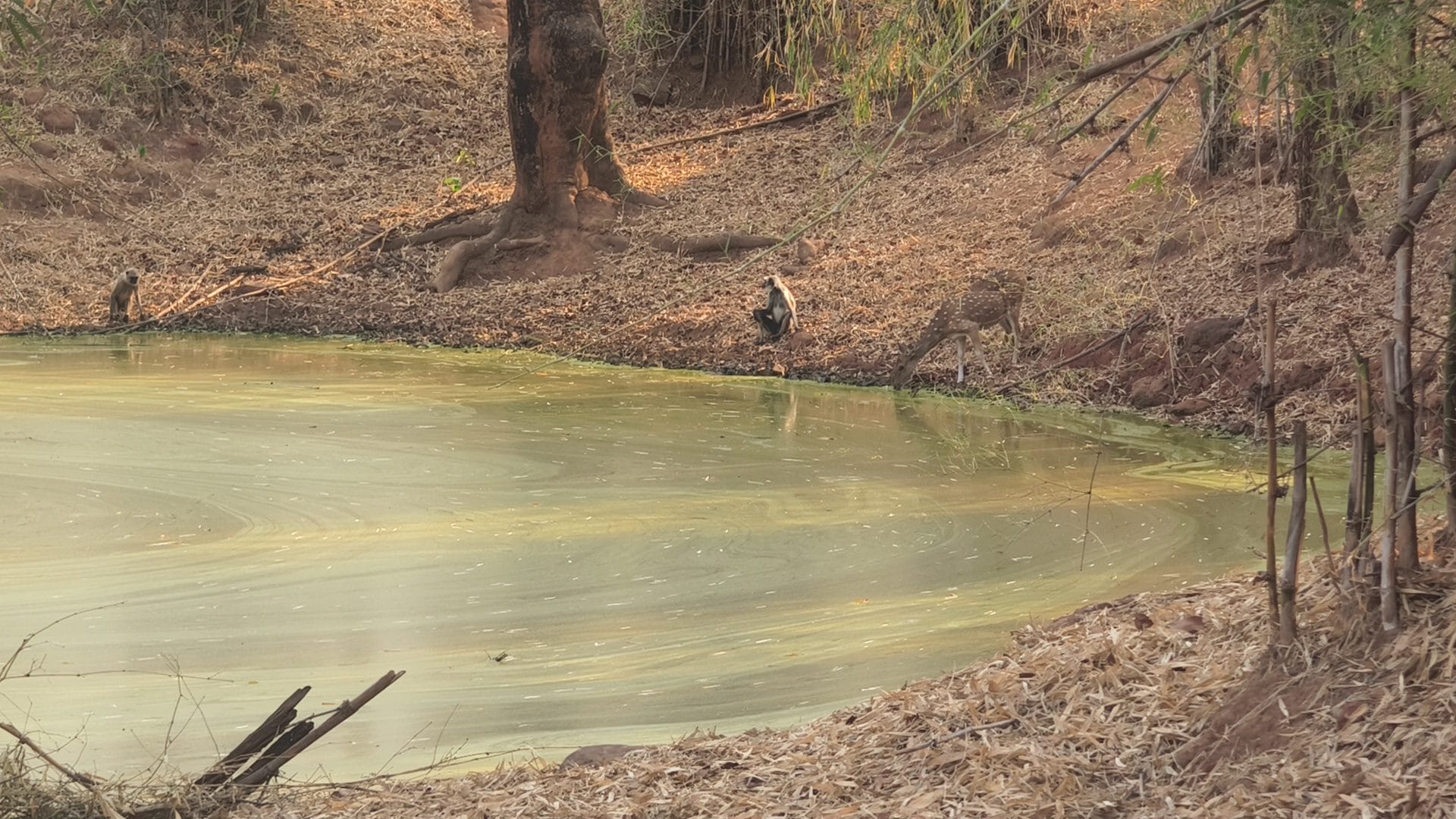
Grassland edges and areas near water are the most likely places, especially in the late afternoon.
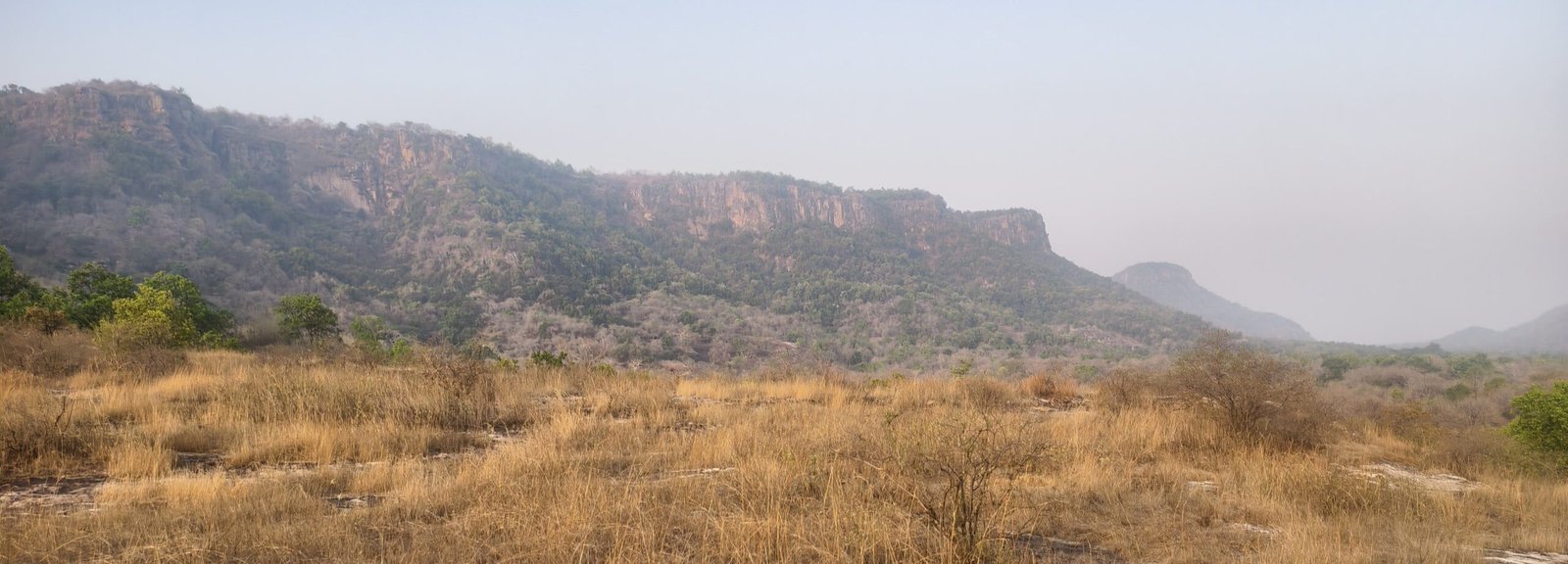
Best time to see them
The park is open roughly October to June and closed for the monsoon.
March to June is the best window for wildlife generally. Water is scarce, animals concentrate, and the dry grass makes a large grey animal easier to pick out than it is in thick green cover.
That said, elephant sightings at Bandhavgarh remain unpredictable. Nobody can promise you one.
Safety around wild elephants
This matters more than it does with tigers. A tiger will almost always leave. A herd with calves may not.
- Stay in the vehicle and let the driver decide the distance.
- Never get between the herd and the calves. This is what triggers most charges.
- Keep the engine running so the driver can reverse immediately if needed.
- No noise. No shouting, no horn, no clapping to make them look up.
- Watch the ears and trunk. Ears spread wide, trunk raised and a step forward mean back off now.
If the herd starts moving towards the vehicle, the correct response is to reverse away calmly, not to hold position for a photograph.
Photography tips
- Shoot the herd, not one animal. The relationship between adults and calves is the picture.
- Use late light. Grey skin in midday sun goes flat. Low sun brings out the texture.
- Do not use flash. Ever, with elephants.
- Give context. A wide frame showing grass and forest tells the story better than a tight crop.
Other wildlife at Bandhavgarh
Beyond tigers and elephants, the park has leopard, sloth bear, Indian gaur, sambar, chital, wild boar, jackal and a long bird list.
How to reach Bandhavgarh
- Nearest airport: Jabalpur, about 165 km. Khajuraho is around 240 km.
- Nearest railway: Umaria, about 35 km. Katni is another option.
- Gates: Tala, Magadhi and Khitauli.
- Season: open roughly October to June, closed in the monsoon.
Frequently asked questions
Are there wild elephants in Bandhavgarh?
Yes. Wild herds have moved into Bandhavgarh in recent years from the forests on the Chhattisgarh side. They are separate from the departmental elephants the forest staff use.
Is it common to see them?
No. Sightings are unpredictable and far less reliable than tigers. Treat one as a bonus, not a plan.
Are wild elephants dangerous?
They can be, particularly a herd with calves. Stay in the vehicle, keep your distance and follow the driver.
What is the difference between wild and departmental elephants?
Departmental elephants are trained animals used by forest staff for patrolling and tracking. Wild elephants are free-ranging and avoid vehicles.
When is the best time to see elephants at Bandhavgarh?
March to June, in the late afternoon, near grassland edges and water.
Related posts: How Tigers Mark Territory, Bandhavgarh Tiger Safari Guide and Bandhavgarh National Park Safari.