
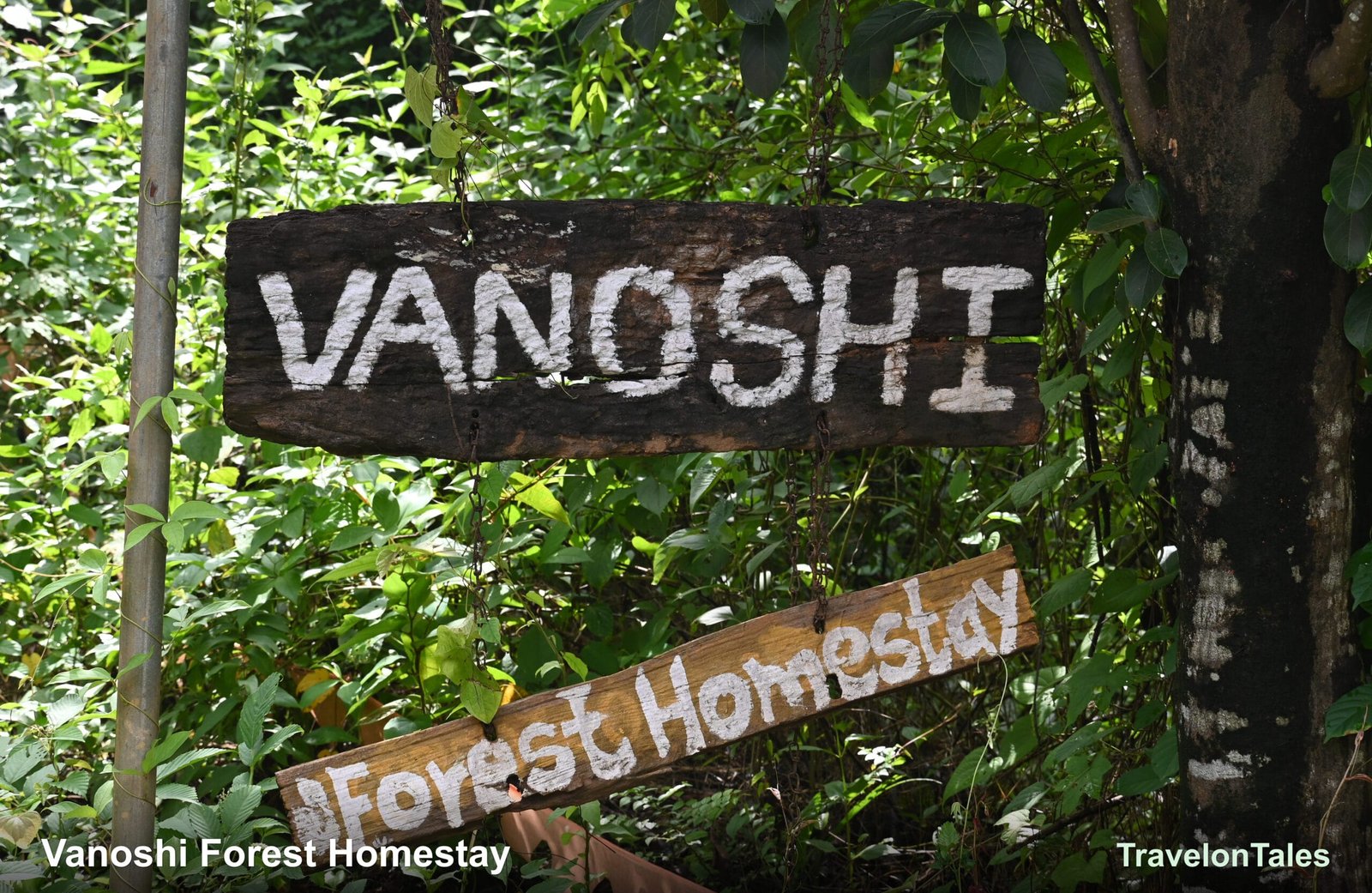
You will miss the turning. Everybody does. There is no gate, no reception building and no board on the main road. What there is, further in, is a piece of dark timber hanging from a tree on two chains with VANOSHI painted on it by hand, and a second board below it that says Forest Homestay.
That is the whole announcement. Past it the track drops into the trees and you are there.
What the place actually is
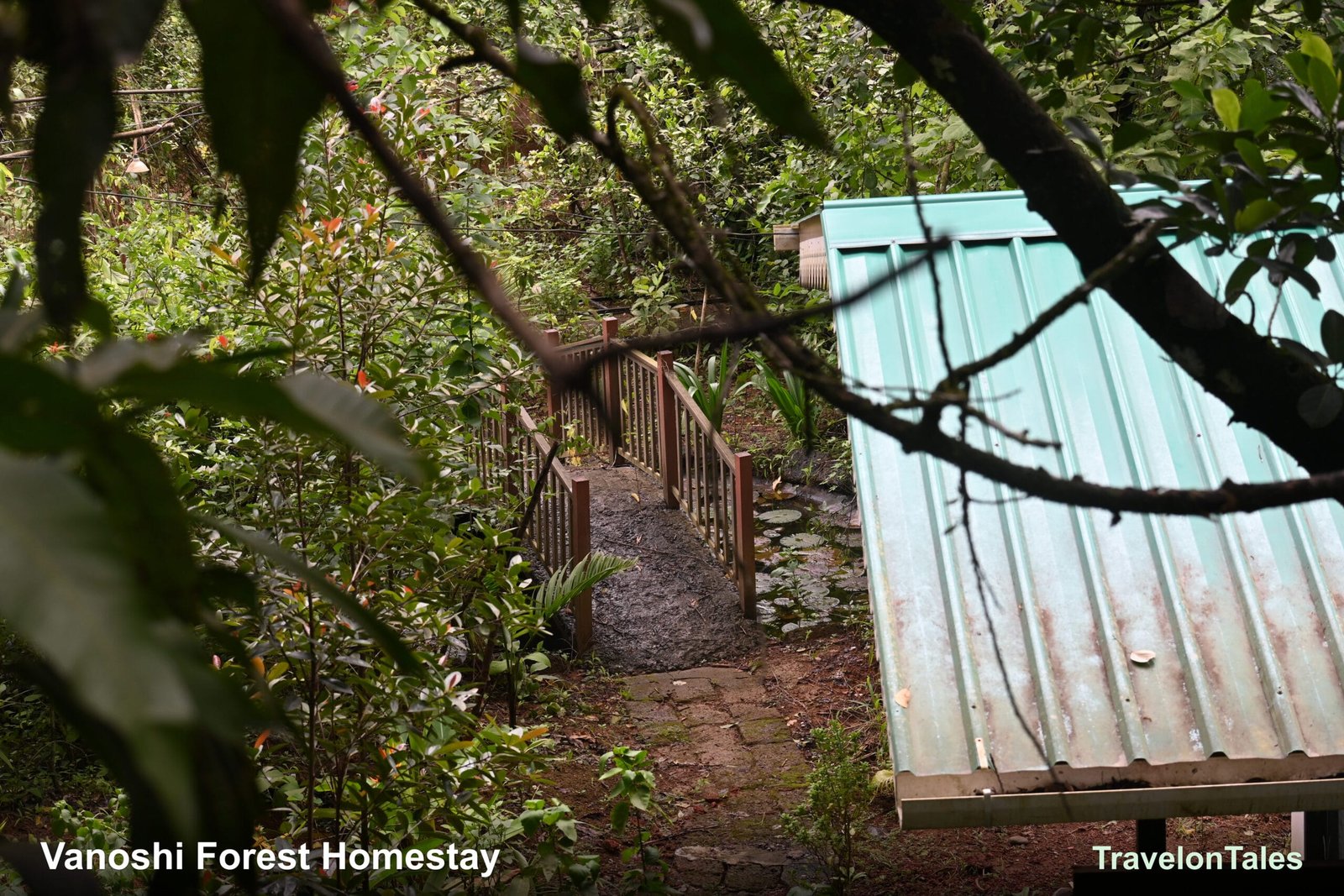
Vanoshi Forest Homestay is not a resort and it does not pretend to be one. It is a small cluster of simple rooms under turquoise tin roofs, connected by laterite and stone paths, set inside forest that has not been cleared to make room for them.
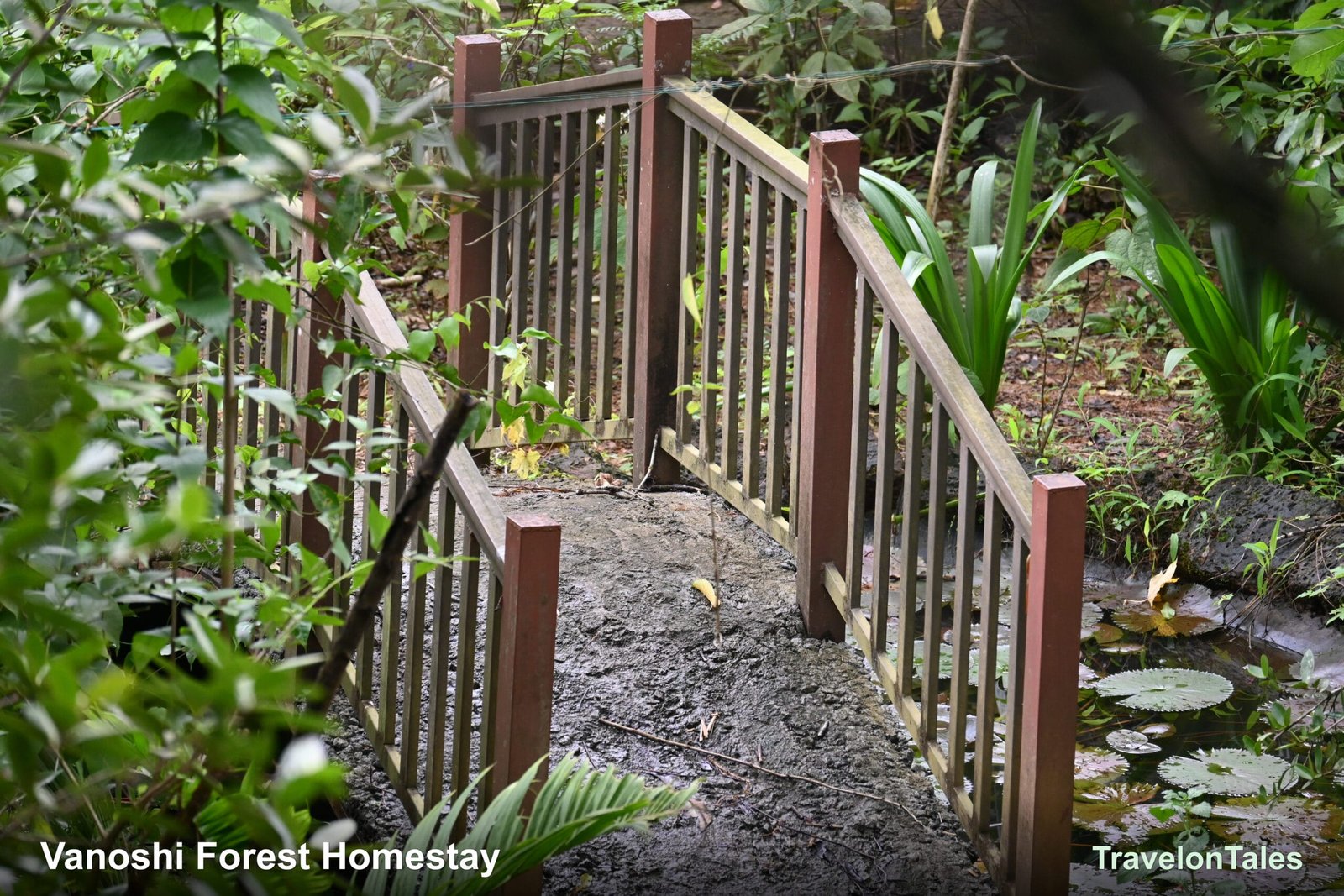
A short flight of steps with a wooden railing crosses a pond with lilies in it. Bare bulbs hang from wires strung between trees. The vegetation comes right up to the buildings, which in the monsoon means everything is wet, green and quietly dripping.
If you need marble floors and a buffet, this is the wrong place. If you want to be able to walk out of your room at 6 am and be birding within a minute, it is close to ideal.
The location is the entire point
Plenty of places will put you an hour from good habitat and then drive you there. Vanoshi does not need to. The forest that holds the Oriental Dwarf Kingfisher, the Blue-eared Kingfisher and the Brown Wood Owl starts where the property ends.
This matters more than it sounds. Monsoon birding is about being in position early and staying put. Every hour you save not driving is an hour you spend at a perch.

It also means you can go out again at short notice. If the rain eases at four in the afternoon you are outside in two minutes, not thirty.
A day here, honestly
Before six
You wake up because the forest is loud. Not birds especially, but rain on a tin roof, water moving somewhere below, and frogs that have been going all night.
Six to nine
This is the whole trip. First light is when the kingfishers are most active and when the forest is briefly quiet enough to hear alarm calls. You go out with a guide, you find a perch, and you wait.

Breakfast
Back for hot food and to dry off. Everything you own is damp by now.
The middle of the day
Not much happens and it usually rains hard. You clean gear, charge batteries, put things in front of a fan and wait. Bring something to read.
Four until dark
Second session. Cooler, softer light, and often the best behaviour of the day if the rain lets up.
After dark
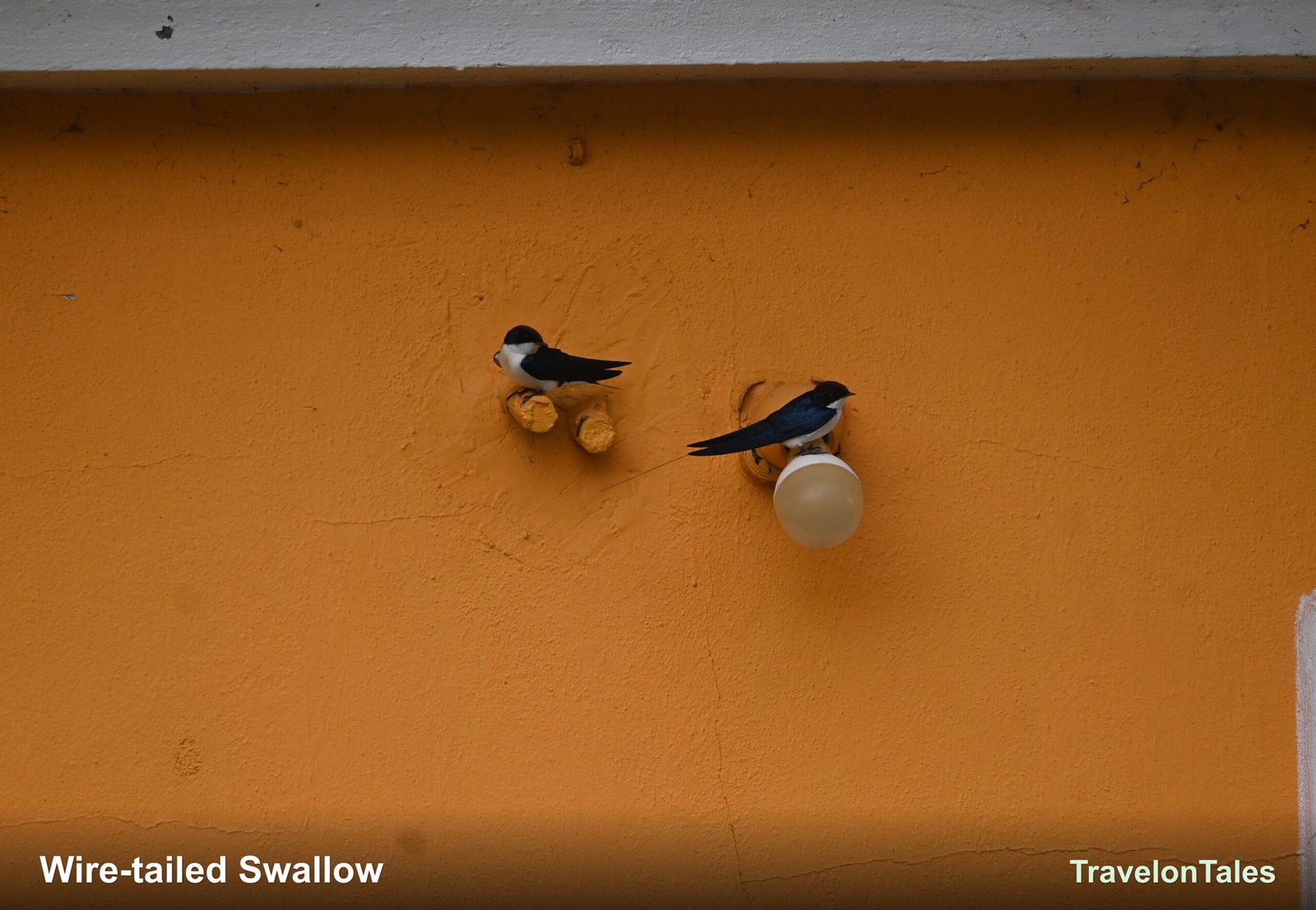
The lights on the property bring insects, and the insects bring everything else. Our Atlas moth turned up on a mesh door at night. Wire-tailed swallows had already claimed the lamp above the walkway and sat there in a row.
The guiding
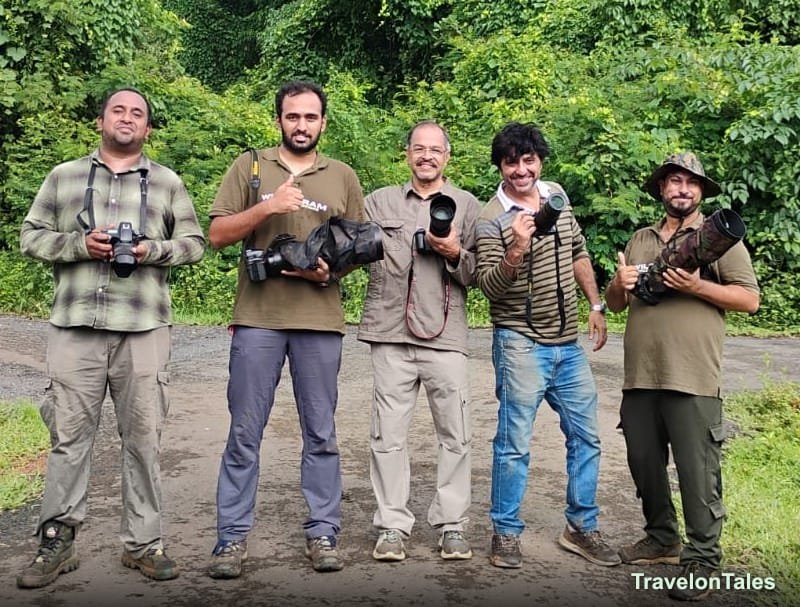
We birded with the team from Wildagram Wildlife Expeditions, and it is the reason the trip worked.
The difference a local guide makes here is not marginal. Kingfisher nesting tunnels are small holes in an earth bank that you will walk past a hundred times. A roosting Brown Wood Owl sits motionless in deep shade twenty feet up. We would not have found either.
Their field knowledge turned a good trip into a great one. That is not a courtesy line, it is the difference between seeing the bird and not.
The food
Home cooking, Konkani, served hot when you come in wet. Expect rice, local fish if you eat it, and endless tea. Nobody asked us what we wanted and we did not need to be asked.
If you are vegetarian, vegan or have allergies, say so when you book rather than on arrival. This is a home kitchen, not a hotel with a standing menu.
What the surrounding area looks like
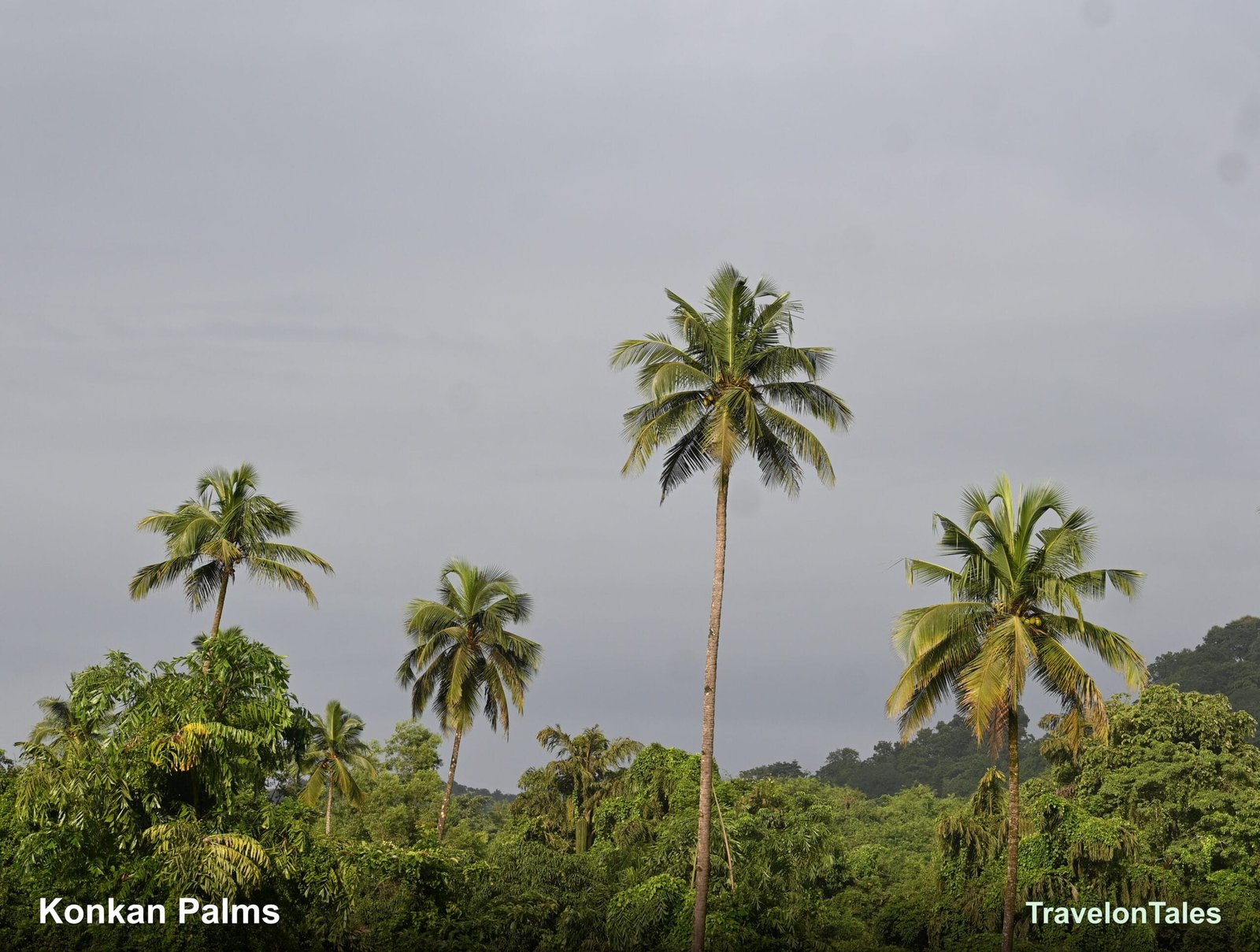
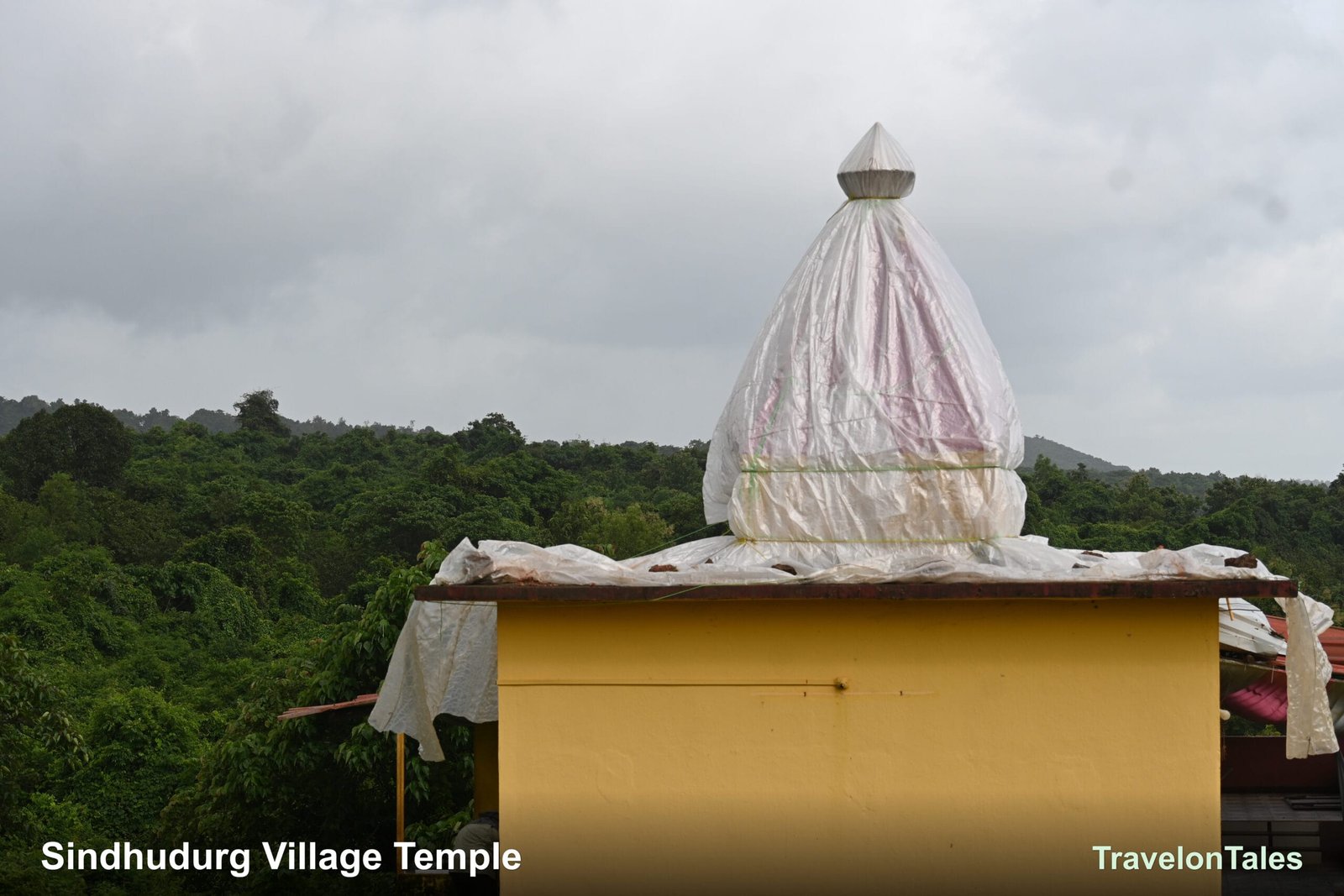
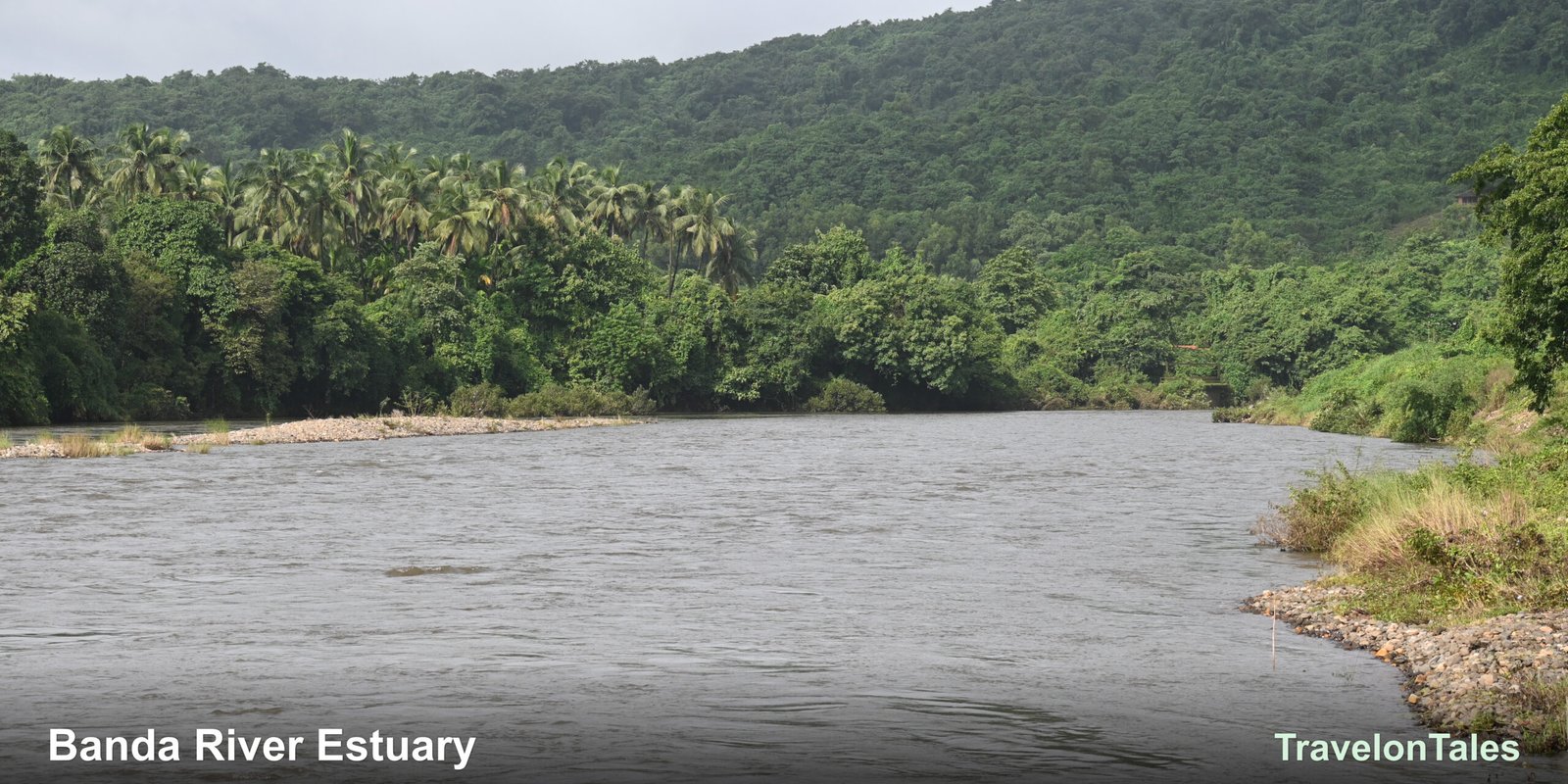
It is worth an afternoon just driving. Sindhudurg in the monsoon is rivers running full, laterite cut into the hillsides, coconut palms and small temples with their spires wrapped in plastic against the rain.


Be realistic about the monsoon
People book this trip on the strength of photographs and then discover what those photographs cost.
- It rains most of the day. Not showers. Rain.
- Nothing dries. Clothes, boots, camera bags. Two days in, everything is damp.
- Leeches. On the trails, in your socks. Carry salt and check your ankles.
- Power can be intermittent in heavy weather. Charge when you can, carry spare batteries.
- Phone signal is patchy. Treat it as a feature.
- Lenses fog moving between cool damp air and a warm room. Silica gel and patience.
None of this is a complaint. It is the same weather that brings the birds. But if you go expecting a comfortable weekend that happens to have kingfishers in it, you will be disappointed.

Who this suits
- Birders and wildlife photographers who want habitat on the doorstep and do not mind rough conditions.
- People who like quiet. There is no entertainment here and that is the appeal.
- Anyone chasing the Oriental Dwarf Kingfisher. This is one of the reliable places, in the only season it is here.
Who it does not suit
- Anyone expecting hotel standards, room service or reliable wifi.
- Families looking for activities. The activity is walking in the rain looking at birds.
- Visitors outside the monsoon expecting the same birds. The star species leave.
Getting there
- By air: Chipi (Sindhudurg Airport) is the nearest. Goa is the bigger alternative and further.
- By train: Konkan Railway to Kudal or Sawantwadi, then road.
- By road: around 8 to 10 hours from Mumbai, 6 to 7 from Pune.
- Last stretch: narrow forest roads. In heavy rain, take it slowly.

Booking it
Two practical notes. First, the monsoon window is short — roughly mid-June to early September — and the people who come for the kingfisher all come in the same few weeks. Book early.
Second, ask directly about the things that matter to you rather than assuming. Room configuration, meals, whether guiding is arranged through the homestay or booked separately with Wildagram, and what the current rates are. We are not going to quote prices here that will be out of date by next season.
Frequently asked questions
Where is Vanoshi Forest Homestay?
In the forest belt of Sindhudurg district, southern Konkan, Maharashtra, inland from the coast.
Is it good for birding?
Yes, and specifically because of where it sits. Prime habitat begins at the property edge, so you are birding within a minute of leaving your room.
What is the best time to stay?
Mid-June to early September for monsoon breeding species including the Oriental Dwarf Kingfisher and Indian Pitta. Outside that window those birds are gone.
Do I need a guide?
For the kingfishers and the owl, effectively yes. We used Wildagram Wildlife Expeditions and would not have found the nesting tunnels or the roosting owl without them.
Is it comfortable?
It is clean, simple and well kept. It is not luxurious and does not try to be. In the monsoon, expect damp.
What should I carry?
Rain covers for all gear, silica gel, a dry bag, spare batteries, salt for leeches, quick-dry clothing and a second pair of shoes.
Read next: Sindhudurg Monsoon Birding Guide — 27 species, Oriental Dwarf Kingfisher, Brown Wood Owl and the Atlas moth that turned up on the door.