
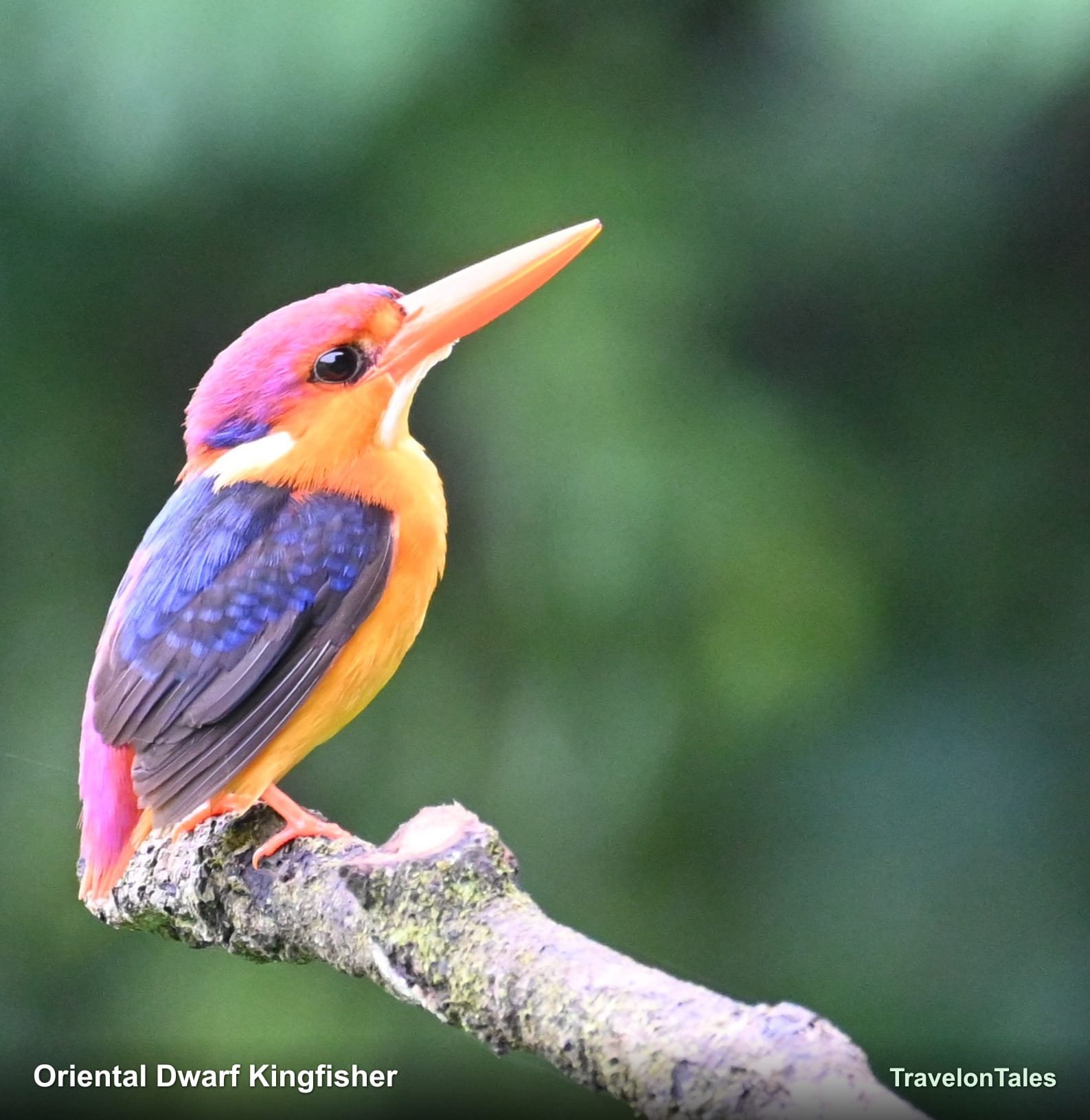
The Oriental Dwarf Kingfisher is one of the smallest and most colourful birds in India. It is only 13 cm long. Every monsoon it comes to the Konkan coast to breed, and Sindhudurg is one of the best places to see it.
We drove down from Mumbai and spent two days photographing this bird near Vanoshi in August. Here is what we learned about finding it, and the photos we came back with.
Tap any photo to view it full size.
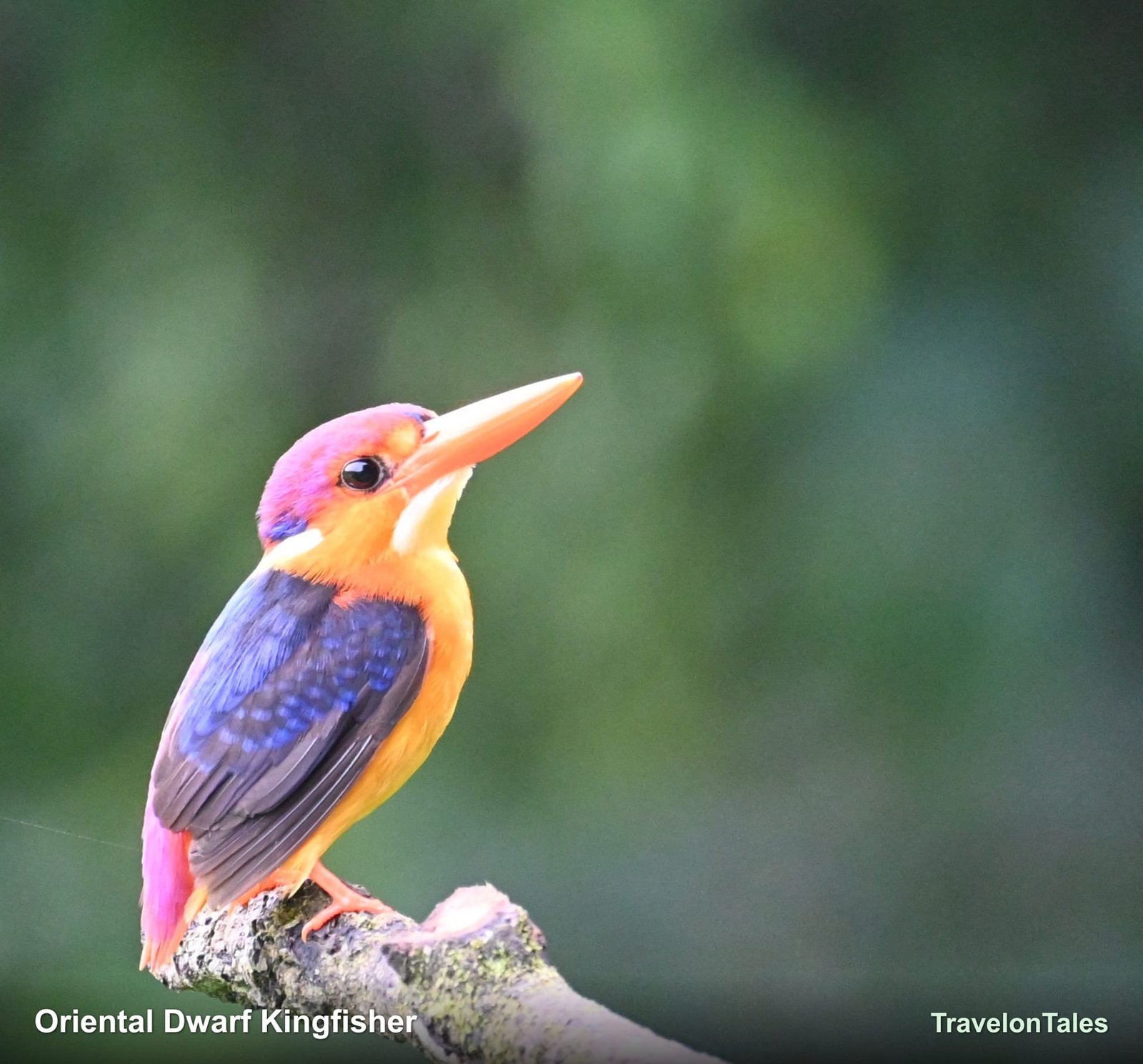
What is the Oriental Dwarf Kingfisher?
The Oriental Dwarf Kingfisher (Ceyx erithaca) is also called the Black-backed Dwarf Kingfisher. It has a lilac-pink head, orange chest, dark blue wings with bright blue spots, and a big coral-red bill.
Even though it is a kingfisher, it does not eat much fish. It mostly eats geckos, skinks, crickets, spiders, small frogs and crabs. It hunts near the forest floor and along small streams.
How to tell it apart from other kingfishers
Sindhudurg has several kingfishers in the same forest. This is the quickest way to separate them.
- Oriental Dwarf Kingfisher: tiny (13 cm), lilac-pink head, orange body, red bill. Sits inside the forest, away from open water.
- Blue-eared Kingfisher: slightly bigger, deep blue above, orange below, dark bill. Always close to a stream.
- White-throated Kingfisher: much bigger (28 cm), brown head, big white throat patch. Common on wires and open ground.
- Stork-billed Kingfisher: largest of them, heavy red bill, loud call. Near bigger water bodies.
If the bird is small enough to make you look twice, and it is orange with a pink head, it is the Oriental Dwarf Kingfisher.
Where to see it in Sindhudurg
Sindhudurg is in the southern Konkan region of Maharashtra. The forest belt inland from the coast is the main area. We stayed near Vanoshi.
The birds sit on low branches near forest streams. A local guide or homestay owner will know which perches are being used that season. This saves a lot of time.

Best time to see the Oriental Dwarf Kingfisher
The season is mid-June to early September. July and August are the best months because the birds are breeding.
Outside the monsoon you will not find them here. They move away after the breeding season is over.
Where does it build its nest?
This bird does not nest in trees. It digs a tunnel into a mud bank or a laterite cutting. The hole is round and small, about the size of a coin.

Please do not disturb an active nest. Do not point a lens into the hole and do not cut plants around it. If the parents keep flying around with food but will not land, you are standing too close. Move back.
Photography tips
- Wait at the perch. Find a branch the bird already uses, set up your frame, and wait. Chasing it does not work.
- Use a high ISO. The forest is dark in the rain. A sharp photo at ISO 6400 is better than a blurry one at ISO 800.
- Go early. The first two hours after sunrise were the most active for us.
- Keep your distance. A 400mm or longer lens lets you stay back. The bird relaxes and you get better behaviour.
- Protect your gear. Rain covers, silica gel and a dry bag are essential.

Other birds you will see
The kingfisher is the main reason people come, but the same forest gives you plenty more in one trip. On our two days we also recorded:
- Blue-eared Kingfisher
- Brown Wood Owl
- Malabar Grey Hornbill
- Indian Pitta
- Chestnut-headed Bee-eater
- Grey-fronted Green Pigeon
- Crimson-backed Sunbird
We have listed the full trip in our Sindhudurg monsoon birding guide, which covers 27 species.
Photos from the trip
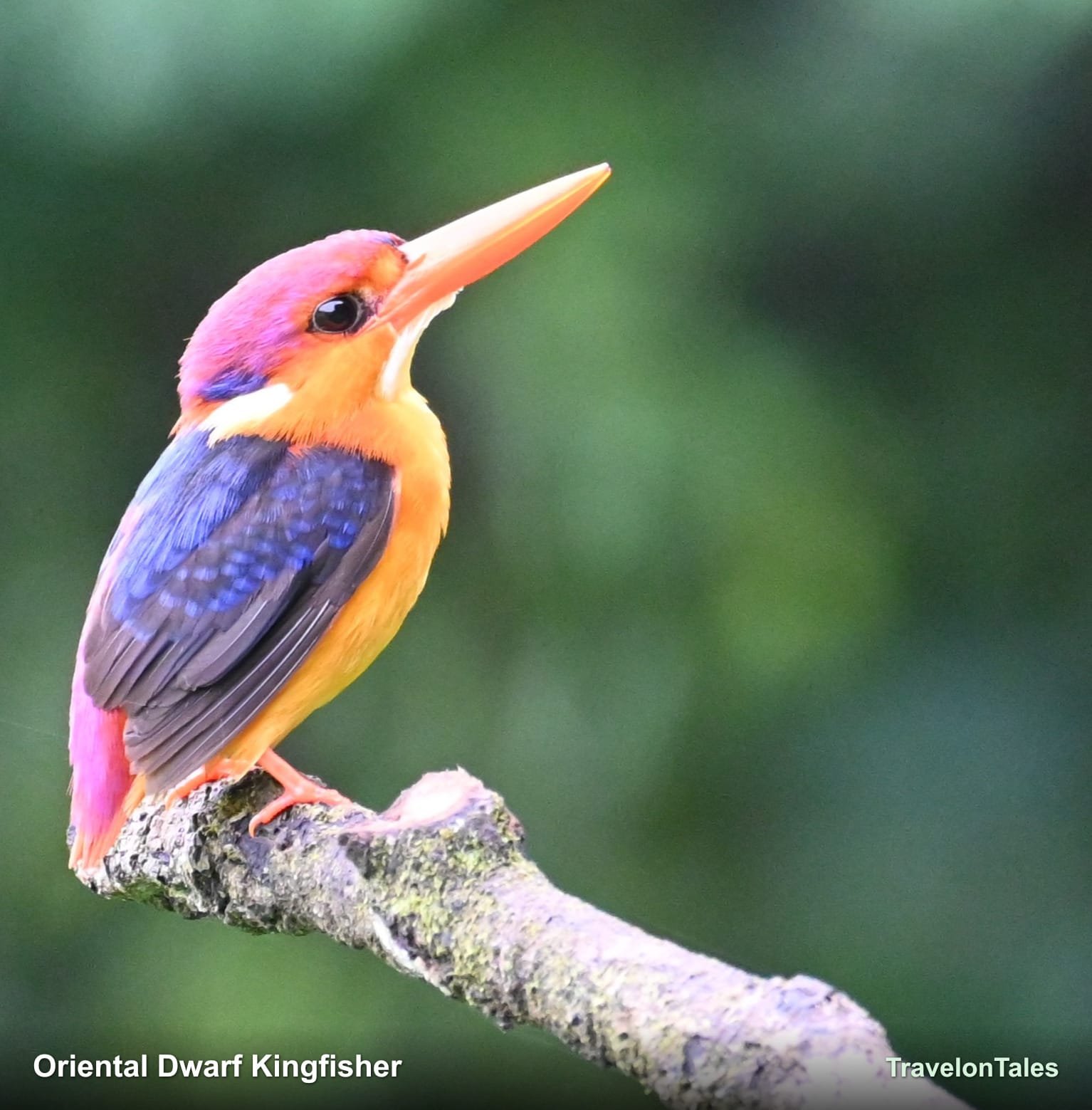

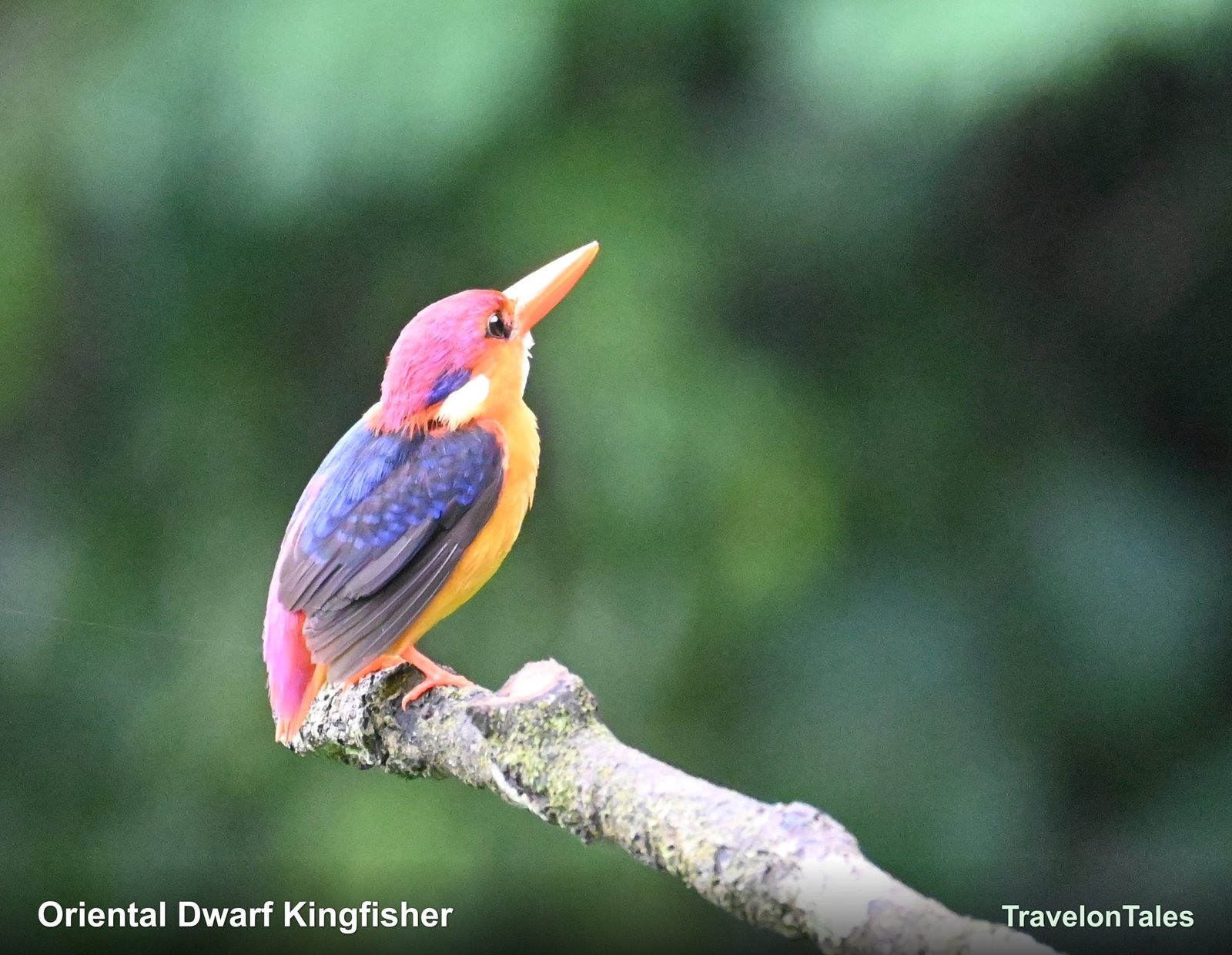
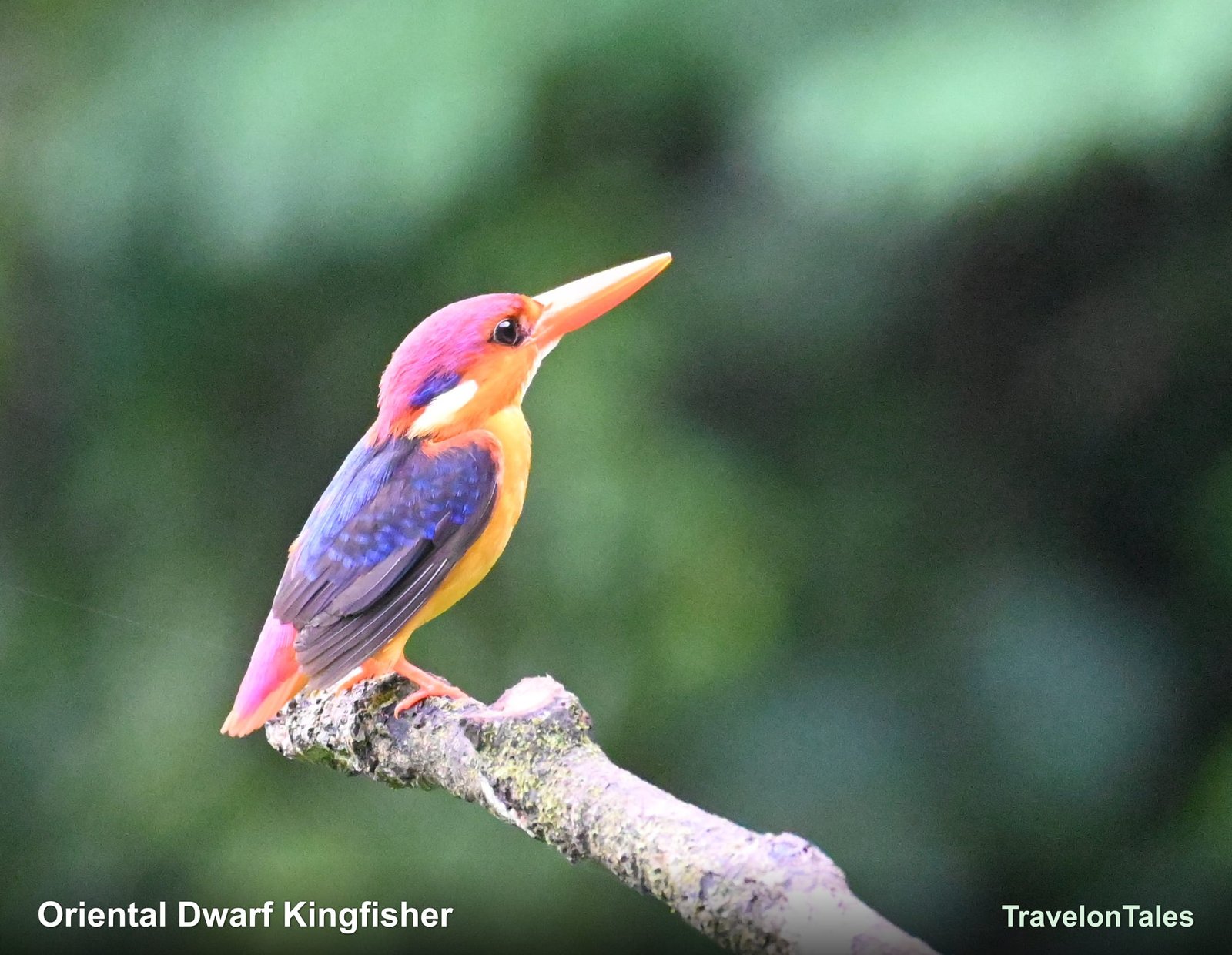

How to reach Sindhudurg
- By road from Mumbai: about 8 to 10 hours by car. This is how we travelled. From Pune it is around 6 to 7 hours.
- By air: Chipi (Sindhudurg Airport) is the nearest. Goa (Dabolim or Mopa) is the larger alternative.
- By train: Konkan Railway, get down at Kudal or Sawantwadi.
- Stay: homestays in the forest belt are the best option for birding.
What to carry
- Rain cover for camera and bag, plus a few dry cloths
- Silica gel packets and a sealed dry bag
- Spare batteries. Cold and damp drain them faster
- Salt or a leech guard for your ankles
- Quick dry clothes and a second pair of shoes
Frequently asked questions
How big is the Oriental Dwarf Kingfisher?
About 13 cm from bill to tail. It is smaller than a house sparrow.
Is it rare?
It is not rare in the right place at the right time. In Sindhudurg during the monsoon it is seen regularly. Outside the season it is very hard to find.
What does it eat?
Geckos, skinks, insects, spiders, small frogs and crabs. It rarely eats fish.
Which lens should I use?
A 400mm or longer lens helps because you should keep your distance. A tripod or beanbag is useful in low light.
Can I see it without a guide?
You can, but a local guide will find the active perches much faster. In one week of your own searching you may miss it completely.
How many days do I need?
Two days is enough if you have a guide and the perches are known. Add a day if you want the nest and the other forest birds as well.
Related posts: Sindhudurg Monsoon Birding Guide (27 species) and Birds of Sindhudurg Field Guide.