
Wildlife of India · TravelOnTales
Indian Gaur (Bos gaurus): Weight, Size, Habitat and Identification
Meet the enormous wild bovine often called the Indian bison—and learn how to identify, understand and responsibly photograph it.
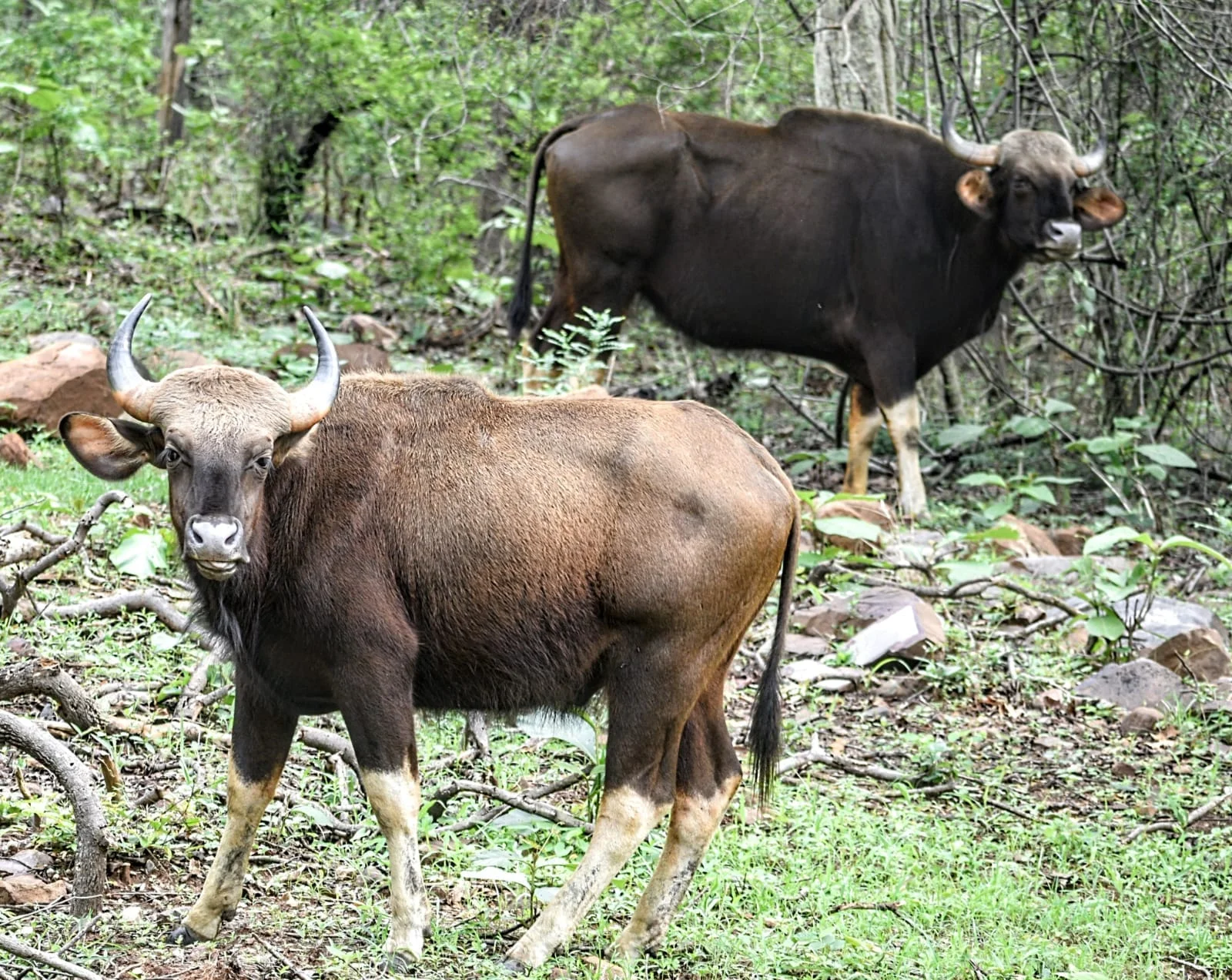
The Indian gaur (Bos gaurus), commonly called the Indian bison, is the largest living species of wild cattle. With its muscular body, curved horns, powerful shoulders and unmistakable white legs, the gaur is one of the most impressive animals found in India’s forests.
Yet it rarely receives the attention given to tigers, leopards or elephants.
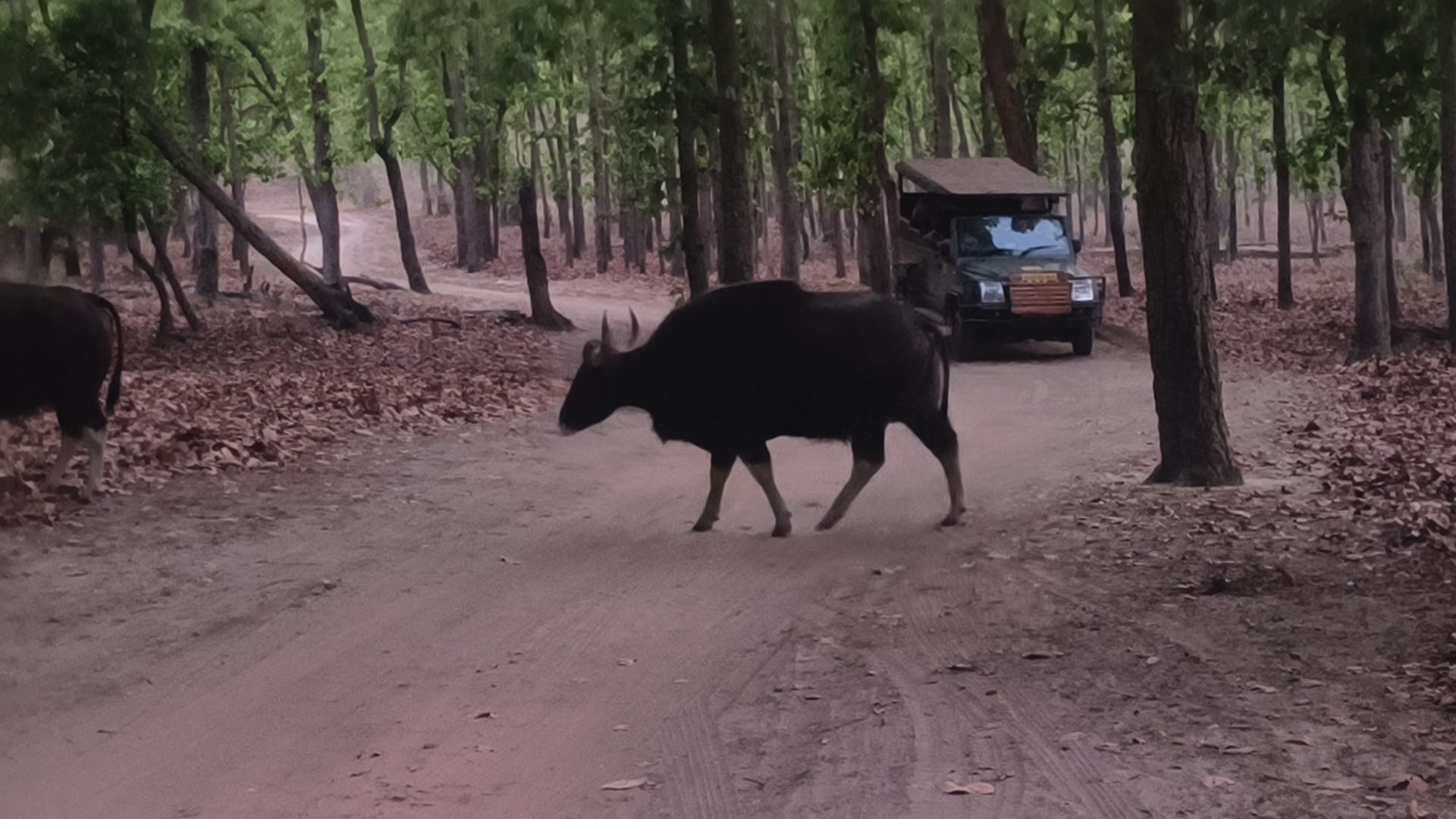
I have seen gaurs during wildlife safaris in India, and their true size is difficult to appreciate through photographs alone. When a fully grown bull steps out from the forest and stands beside a safari track, it can appear almost as large as a small car. It does not need to roar or charge to command attention—its presence is enough.
Indian Gaur Facts at a Glance
| Feature | Information |
|---|---|
| Scientific name | Bos gaurus |
| Common names | Indian gaur, gaur, Indian bison |
| Animal family | Bovidae |
| Diet | Herbivore |
| Male weight | Commonly around 600–1,000 kg; exceptional bulls may be heavier |
| Female weight | Commonly around 440–700 kg |
| Shoulder height | Approximately 1.5–2.2 metres |
| Main habitat | Forests, grasslands and forest clearings |
| Distribution | South and Southeast Asia |
| Conservation status | Vulnerable |
| Key identification | White or pale lower legs |
What Is a Gaur Animal?
The gaur is a large wild bovine native to South and Southeast Asia. It belongs to the genus Bos, which also includes domestic cattle.
Although it is widely called the “Indian bison,” the gaur is not a true bison. American and European bison belong to a different genus and have different physical characteristics. “Indian bison” remains a familiar common name, but Indian gaur or simply gaur is more scientifically accurate.
Its scientific name, Bos gaurus, helps distinguish it from domestic cattle and other large bovines such as buffalo, yak and bison.
How Much Does an Indian Gaur Weigh?
Indian gaur weight varies according to sex, age, geographic location and access to food.
A mature male gaur commonly weighs approximately 600–1,000 kilograms, although exceptionally large bulls may be heavier. Females are smaller and generally weigh around 440–700 kilograms.
Large males possess an enormous ridge of muscle over their shoulders. This elevated profile, combined with relatively lower hindquarters, gives the animal its powerful, slightly front-heavy appearance. A large bull may reach close to two metres or more at the shoulder, making it taller than many adult humans.
How to Identify an Indian Gaur
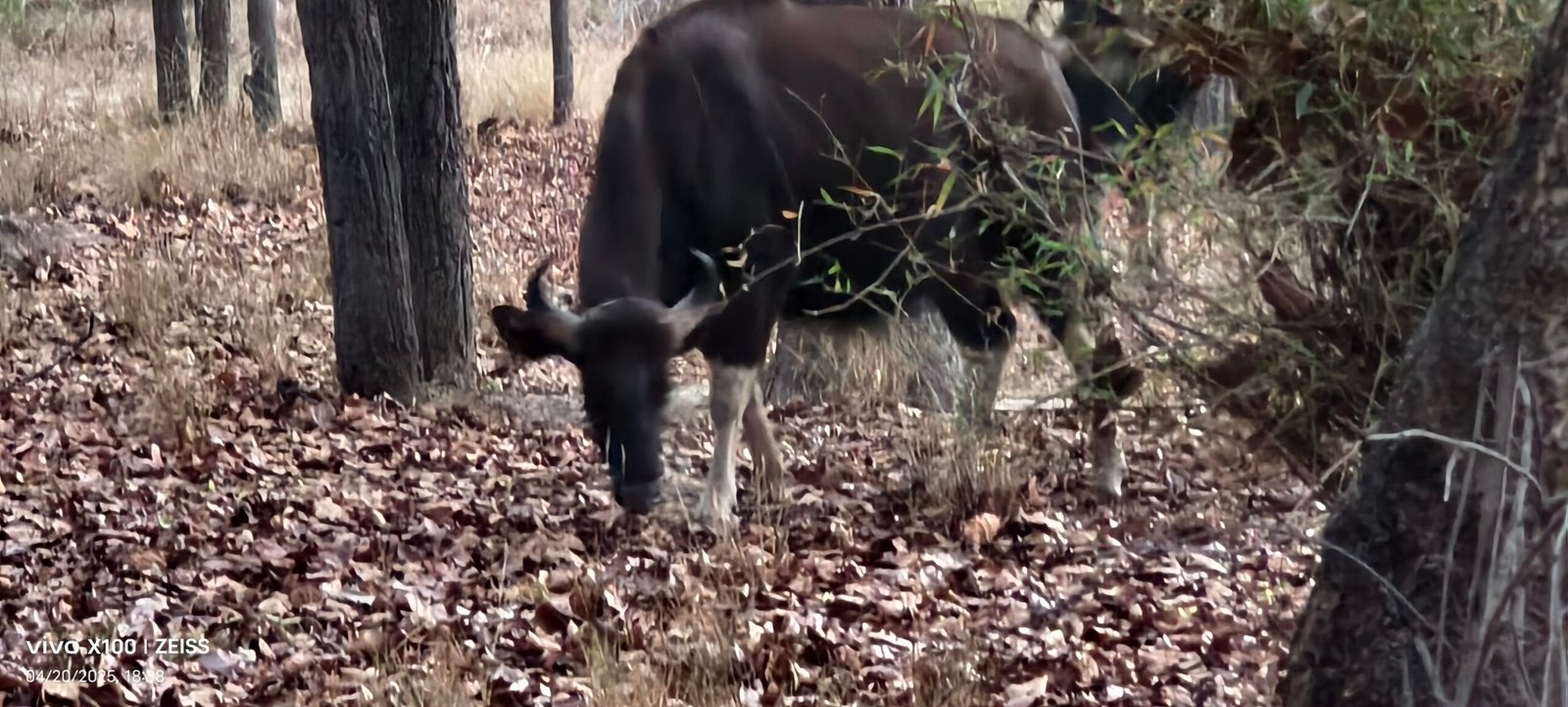
1. White lower legs
The pale or white lower legs are the gaur’s most noticeable identifying feature. They can look as though the animal is wearing white stockings.
2. Massive shoulder ridge
Adult gaurs have a strongly developed ridge along the shoulders and upper back, especially prominent in mature bulls.
3. Dark body colour
Adult males are generally dark brown and may appear almost black in certain light. Females and younger animals are usually lighter brown.
4. Broad forehead
The forehead is wide and often lighter than the rest of the face, giving the animal a distinctive profile.
5. Curved horns
Both males and females have horns. They grow outward before curving upward and inward, with darker tips.
Indian Gaur vs Bison vs Buffalo
| Feature | Indian gaur | Bison | Wild water buffalo |
|---|---|---|---|
| Scientific group | Bos | Bison | Bubalus |
| Body shape | Tall with muscular shoulder ridge | Heavy body with a large hump | Broad body with wide-spreading horns |
| Coat | Relatively short | Thick and often shaggy | Sparse and coarse |
| Lower legs | Characteristically pale or white | Generally dark | Generally dark |
| Typical habitat | Forests and grassy clearings | Grasslands and open woodland | Wetlands and floodplains |
| Found naturally in India | Yes | No true wild bison | Yes |
Where Are Indian Gaurs Found?
Indian gaurs inhabit forested regions across parts of India and Southeast Asia. Within India, populations occur in the Western Ghats, Central India, Eastern India and parts of Northeast India.
They favour landscapes with undisturbed forest cover, grassy clearings, reliable water, plentiful vegetation and connected wildlife corridors.
Protected landscapes where gaurs may be seen include:
- Tadoba–Andhari Tiger Reserve
- Bandhavgarh National Park
- Kanha Tiger Reserve
- Pench Tiger Reserve
- Nagarhole National Park
- Bandipur National Park
- Periyar Tiger Reserve
- Satpura Tiger Reserve
A sighting is never guaranteed. Gaurs may remain inside thick vegetation, particularly where human activity has disturbed them.
What Does the Indian Gaur Eat?
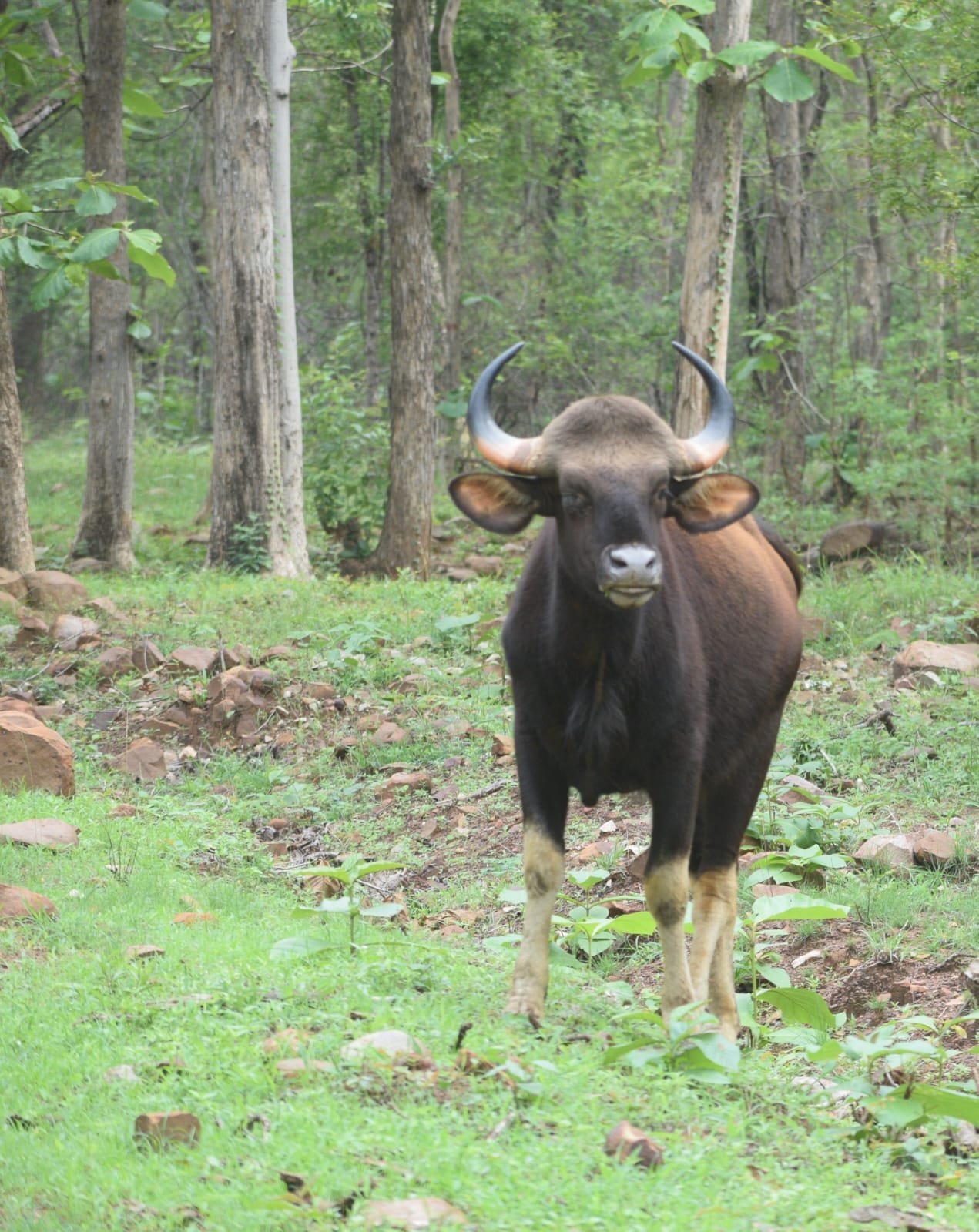
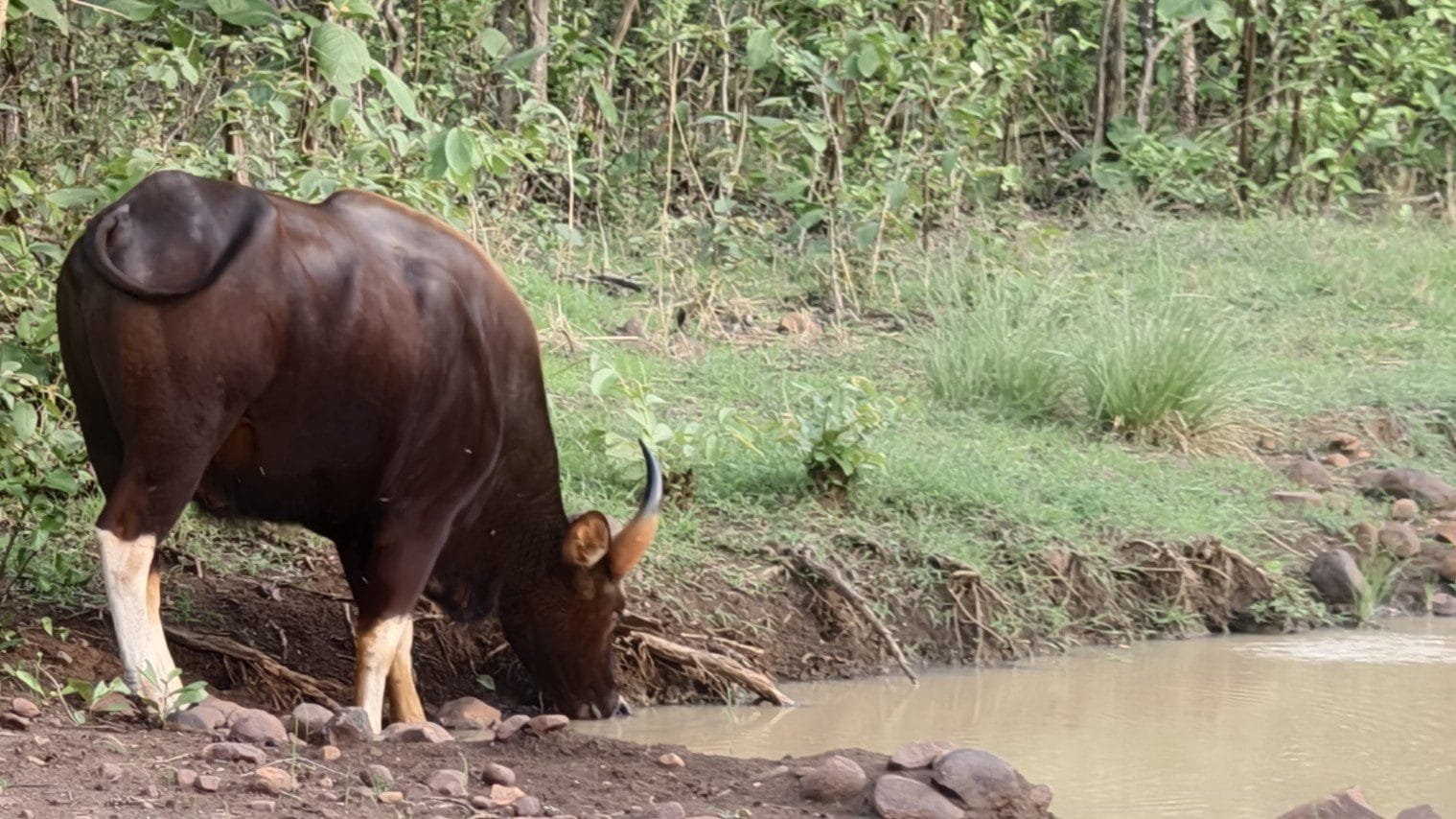
The Indian gaur is a herbivore that both grazes and browses. Depending on the season, its diet may include grasses, leaves, bamboo, young shoots, shrubs, flowers, seeds, bark and fruits.
Gaurs often feed during cooler morning and evening hours. Water and fresh vegetation influence their movement through the forest.
Are Indian Gaurs Dangerous?
Gaurs generally avoid humans, but they are extremely powerful wild animals and must never be approached. An alarmed gaur can run surprisingly fast. An adult bull, a mother with a calf or an animal that feels cornered may behave defensively.
- Remain inside the safari vehicle.
- Keep a respectful distance.
- Never block the animal’s path.
- Avoid shouting or making sudden movements.
- Never feed a wild gaur.
- Follow the forest guide’s instructions.
If a gaur is encountered outside a protected area, move away calmly and inform the local forest department. Trying to surround or photograph it at close range can endanger people and the animal.
Indian Gaur Behaviour and Social Life
Females and calves commonly live in herds, often led by an experienced adult female. Mature bulls may live alone or temporarily join a herd.
Gaurs communicate using body posture, scent and vocalisations. A disturbed animal may produce a snort or whistle-like alarm. Herd members can become highly alert when calves are present. Where human disturbance is low, gaurs may be active during daylight; in more disturbed landscapes, they can become increasingly active during evening or night.
Conservation Status of Bos gaurus
The Indian gaur is classified as Vulnerable on the IUCN Red List. Major threats include habitat loss, fragmentation, hunting, disease transmission from domestic cattle and conflict near forest boundaries.
Wildlife corridors are particularly important because isolated forests can prevent gaurs from moving safely between feeding, breeding and water resources. Protecting gaur habitat also benefits tigers, leopards, deer, birds and numerous smaller species.
Photographing Indian Gaurs on Safari
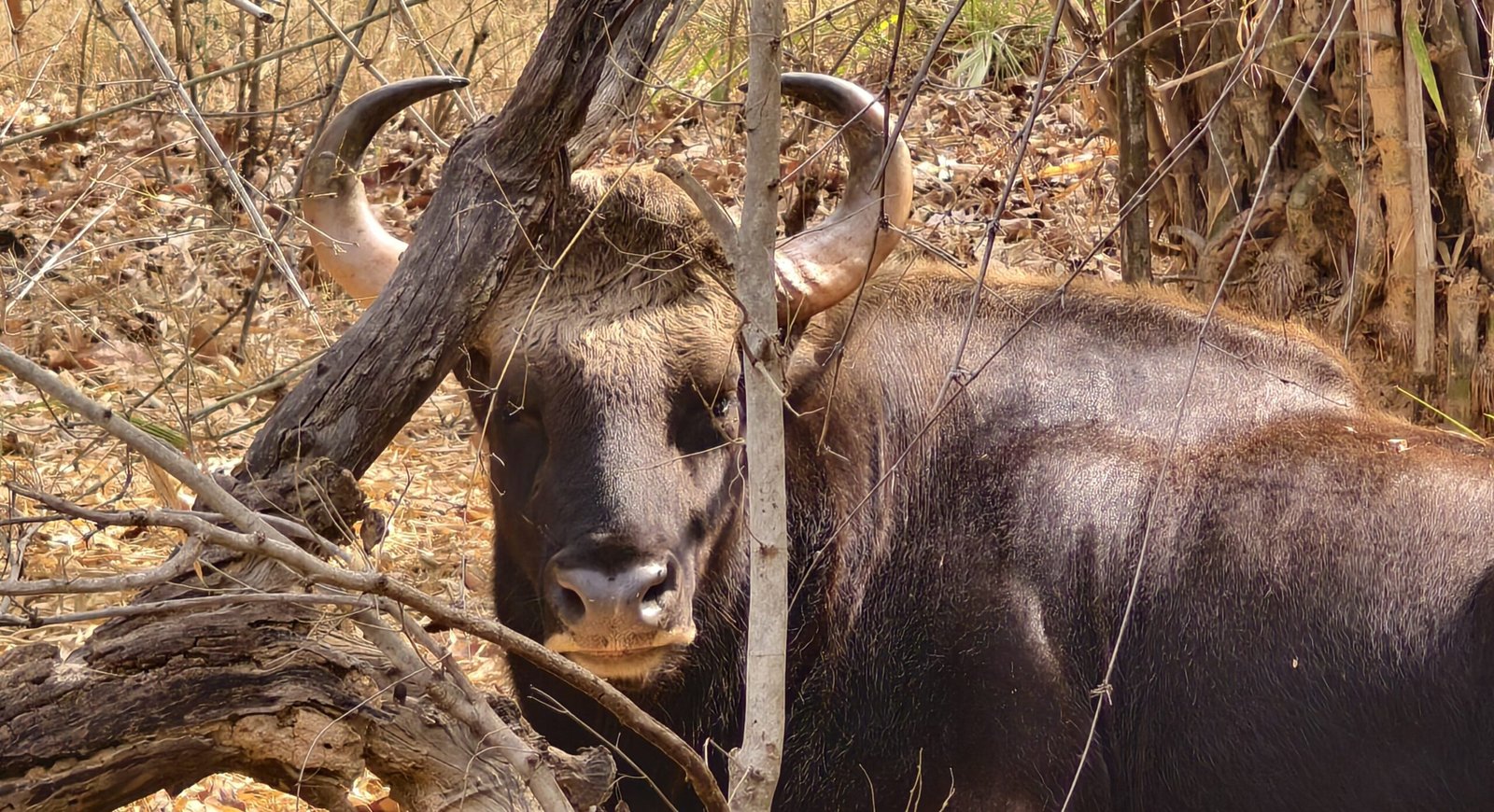
A dark gaur standing inside a shaded forest can be difficult to photograph. The camera may expose for the brighter background and leave the animal underexposed.
- Use continuous autofocus when the animal is moving.
- Maintain a moderately fast shutter speed.
- Increase ISO when the forest is dark.
- Watch highlight detail on the forehead and white legs.
- Focus on the eye.
- Include part of the forest to communicate scale.
- Capture behaviour, not only close portraits.
- Never ask the driver to move dangerously close.

Frequently Asked Questions
What is the scientific name of the Indian gaur?
The scientific name of the Indian gaur is Bos gaurus.
Is the Indian gaur the same as the Indian bison?
“Indian bison” is a common name for the gaur, but it is not a true bison. It is a wild bovine belonging to the genus Bos.
What is the weight of an Indian gaur?
Adult males commonly weigh approximately 600–1,000 kilograms, while females generally weigh around 440–700 kilograms. Individual weights vary.
Is the gaur bigger than a buffalo?
A mature male gaur can be taller and heavier than many domestic buffaloes. The comparison depends on the individual and the buffalo species or breed.
What do gaurs eat?
Gaurs eat grasses, leaves, shoots, bamboo, shrubs, flowers, bark and seasonal fruits.
Where can gaurs be seen in India?
Gaurs occur in protected landscapes including Tadoba, Bandhavgarh, Kanha, Pench, Nagarhole, Bandipur, Periyar and Satpura.
Are Indian gaurs endangered?
The gaur is classified as Vulnerable, rather than Endangered, on the IUCN Red List. It still faces serious pressure from habitat loss and fragmentation.
Bull, Cow or Calf: How to Tell Them Apart
- Bull: almost black and massive, with a tall shoulder ridge and a pale grey patch on the forehead between the horns.
- Cow: browner and smaller, with a lower ridge and slimmer horns.
- Calf: reddish-brown, and usually kept in the middle of the herd.
The biggest bull you see standing alone in the bamboo is not lost. Adult bulls spend much of the year alone or in small bachelor groups and join the herd, which is led by an adult cow, in the breeding season.
Tiger vs Gaur: Does a Tiger Hunt Gaur?
Yes, but carefully. In Tadoba and Bandhavgarh gaur are an important part of a tiger’s diet, but tigers mostly take calves, young animals or lone gaur. A healthy adult bull of over a tonne is a serious risk for a predator that hunts alone. When a herd is threatened it bunches together with the calves in the middle and the adults facing outward, and both tigers and dhole packs have been driven off this way.
Our Gaur Sightings at Tadoba
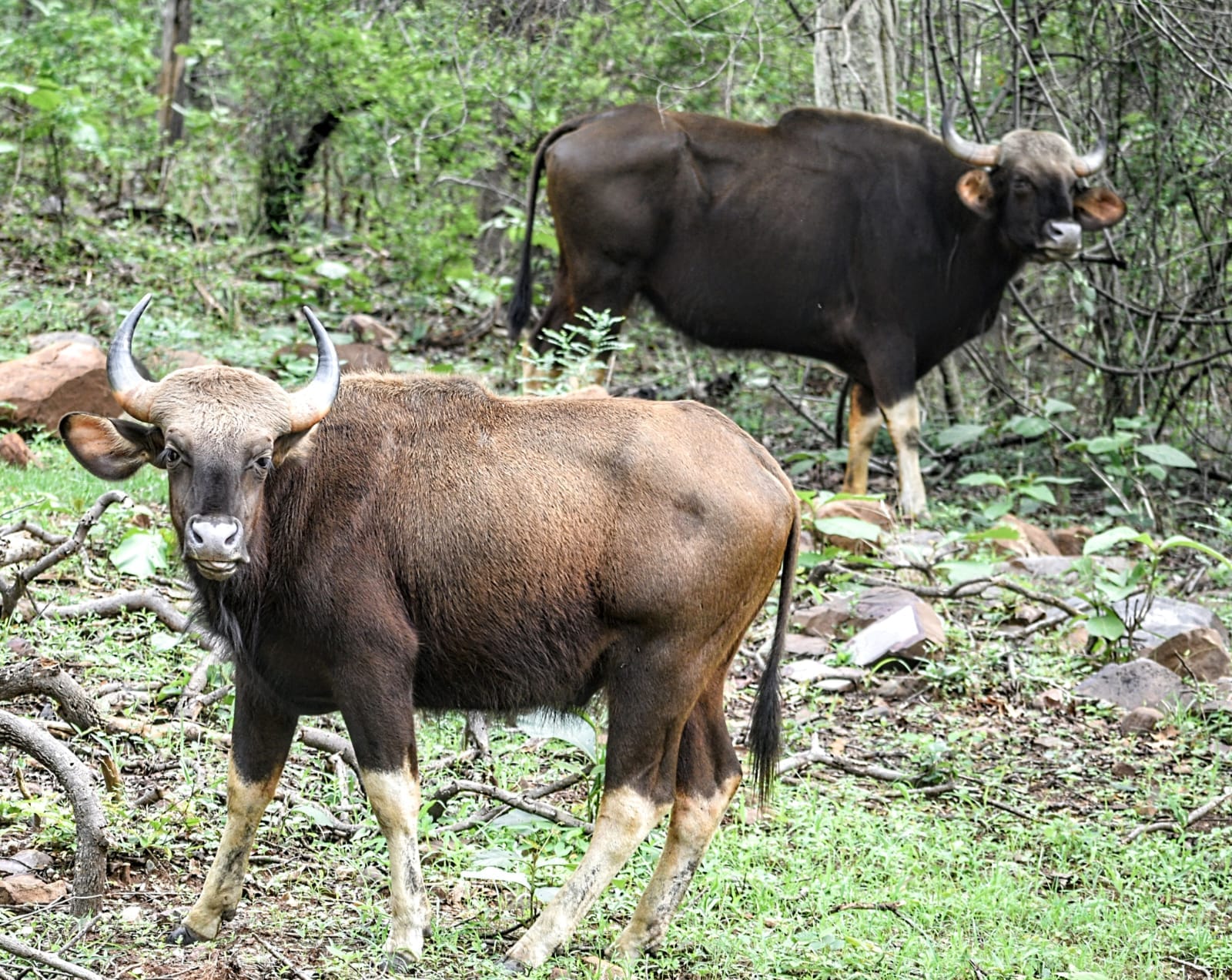
We went to Tadoba hoping for a tiger, like everyone. In the Navegaon zone the forest gave us two huge gaur instead, standing quietly in the green, eating and looking around as if to say “this is my jungle”. They were not bothered by the jeep at all. After a few minutes our driver said “Chalo, tiger dhoondte hain” and the whole jeep laughed.
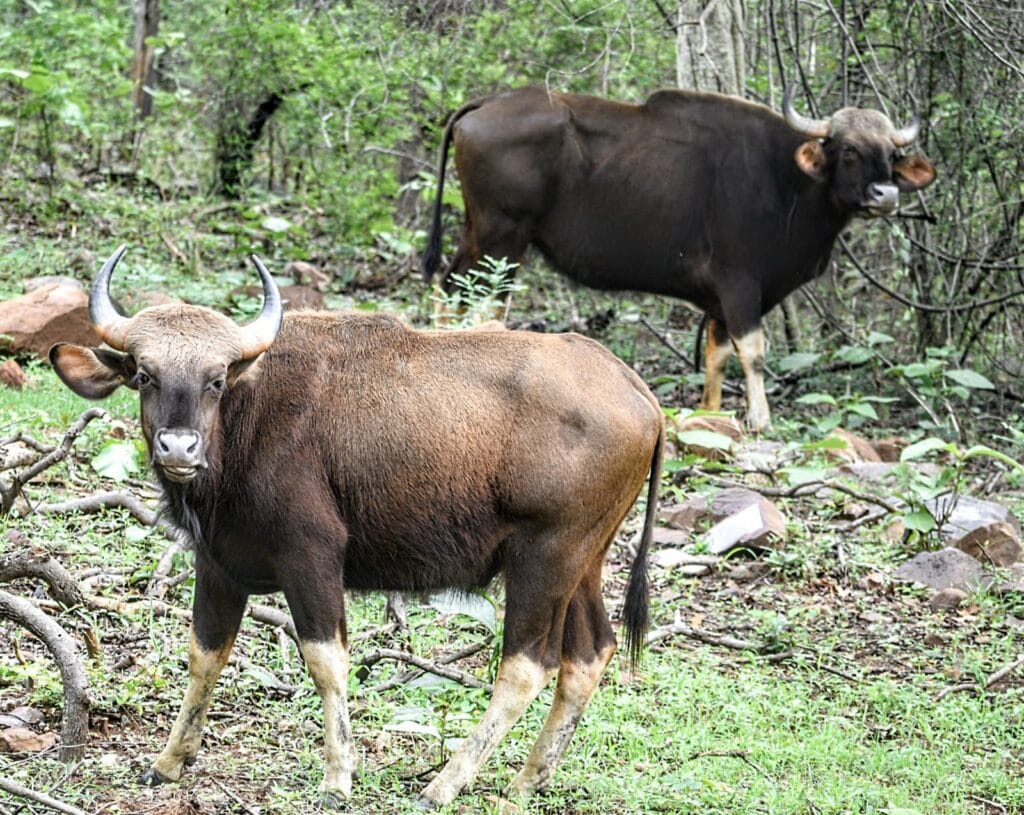
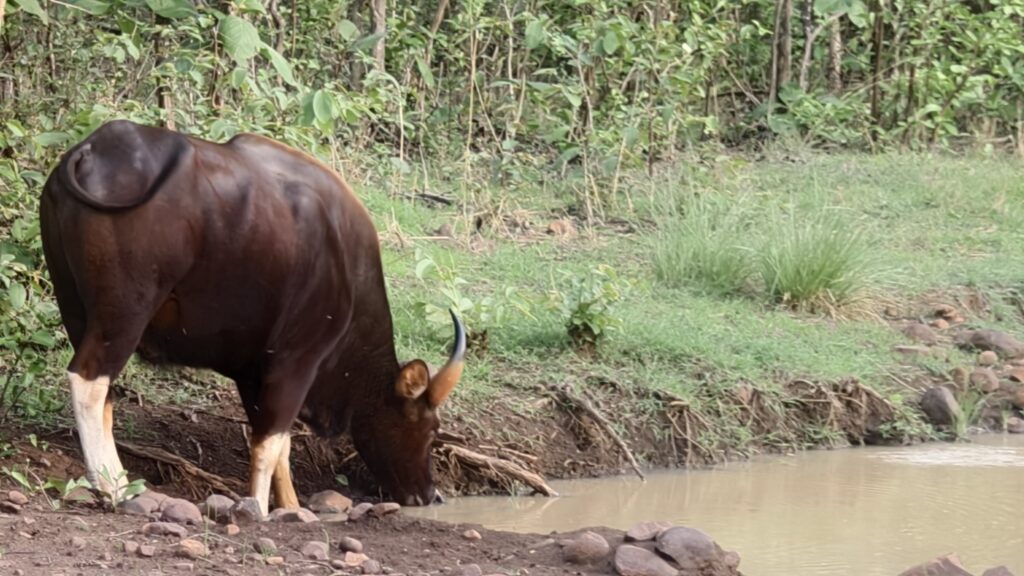
Tadoba holds a healthy gaur population. They are seen most often around water in the hot months and in the bamboo along the hillier routes. Remember that mobile phones are not allowed inside Tadoba, so carry your own camera. Read our full Tadoba safari guide.
Best Places and Time to See Indian Gaur
- Tadoba (Maharashtra): regular sightings, especially March to June near water.
- Bandhavgarh (Madhya Pradesh): gaur were brought back here in 2011–12 and the herd has grown. See Indian Gaur at Bandhavgarh.
- Kanha, Pench, Nagarhole, Bandipur and Mudumalai: large, easy-to-see herds.
Gaur feed in the early morning and late evening and rest in deep shade at midday, so morning and evening safaris give the best chances.
More Gaur Stories on TravelOnTales
- Is the Indian Gaur Dangerous? What Safari Visitors Should Know
- Indian Bison: Why the Gaur Is Not a Bison, and Where to See It
- Indian Gaur at Bandhavgarh: Field Notes
A Forest Giant Worth Stopping For
On a tiger safari, it is tempting to measure success only by whether a tiger appears. That approach overlooks much of what makes an Indian forest extraordinary.
Seeing an Indian gaur emerge silently from dense vegetation is a reminder that the forest has giants other than elephants. Its immense size, calm movement and sculpted form make it one of India’s most memorable wild animals.
The gaur does not demand attention. It simply stands in the forest—and makes everything around it look smaller.
Related: Is the Indian Gaur Dangerous?
Related: Indian Bison: Why the Gaur Is Not a Bison, and Where to See It
Read next: Where Is the Gaur Found in India? Best Parks to See One