
Bandhavgarh in Madhya Pradesh is famous as one of the best places in India to see a wild tiger. The Tala zone below the old Bandhavgarh Fort is among the most tiger-rich forests in the country, and in two days there we saw several tigers, plus wild elephants, gaur and a surprising list of birds. This guide covers zones, booking, timings, how to reach and what to expect, with our own photos and field notes.
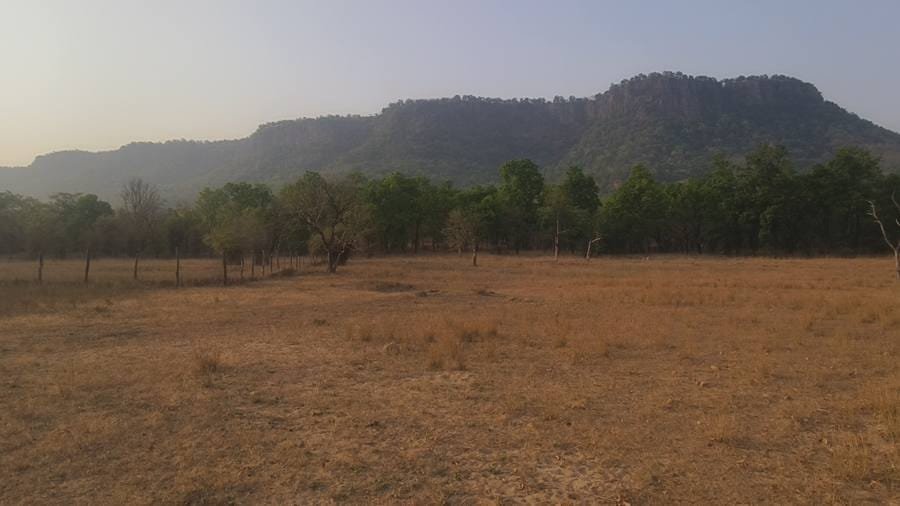
Bandhavgarh at a Glance
- Location: Umaria district, Madhya Pradesh; Tala village is the main base
- Core zones: Tala, Magdhi, Khitauli
- Open: 1 October to 30 June (core zones)
- Nearest railway station: Umaria, about 35 km
- Nearest airport: Jabalpur, about 170 km (about 3.5 hours)
- Best for tigers: March to June, especially April and May
- Booking: MP Forest Department portal, forest.mponline.gov.in
Why Bandhavgarh Is So Good for Tigers
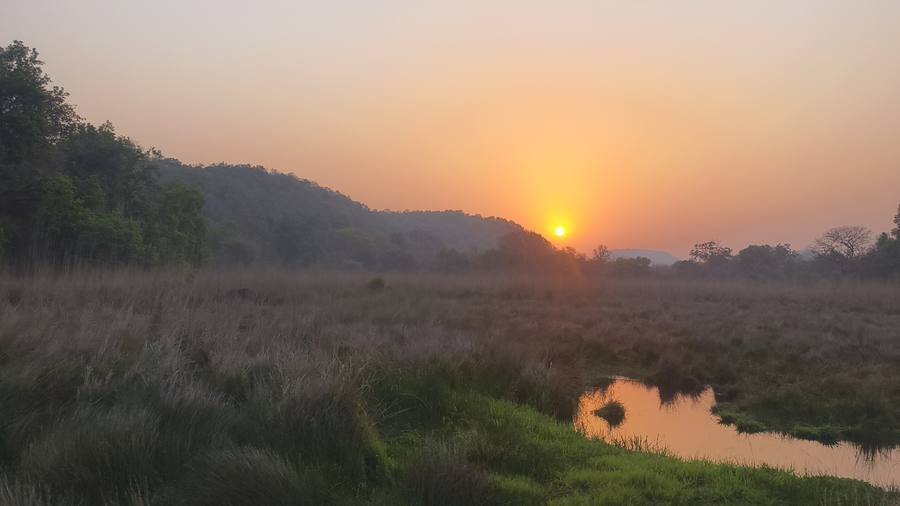
The reserve sits on the Vindhya hills. A tall rocky escarpment, with the ruins of Bandhavgarh Fort on top, rises above open meadows, sal and bamboo forest and small streams. By April the leaves have fallen, the grass has turned gold and water is found only in a few pools, so tigers and their prey are easier to see. The tigers here are also used to jeeps and often walk along the tracks themselves.
Our Tiger Sightings
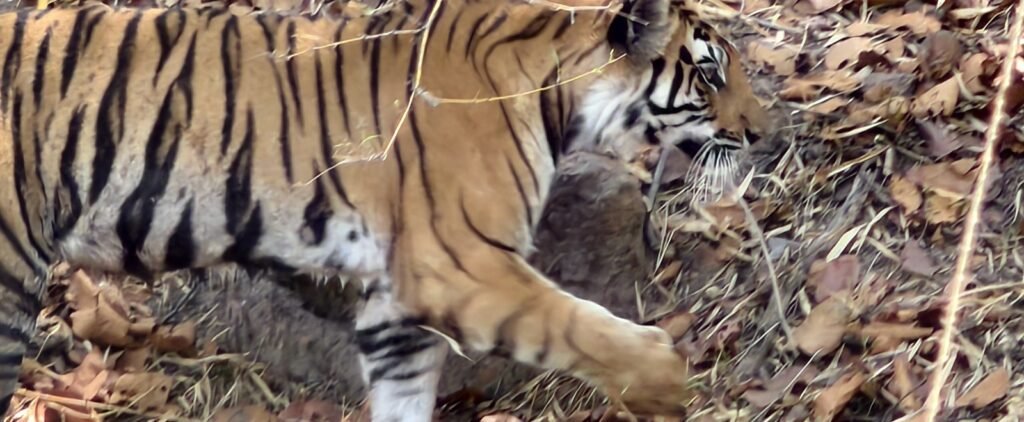
In Tala zone one morning, a young tiger came out of the bamboo onto a rocky slope, walked through the leaf litter in full view for about a minute and a half, and then a second, smaller tiger appeared on the boulders above it. Two tigers in a few minutes, both calm and completely unbothered by the vehicle.
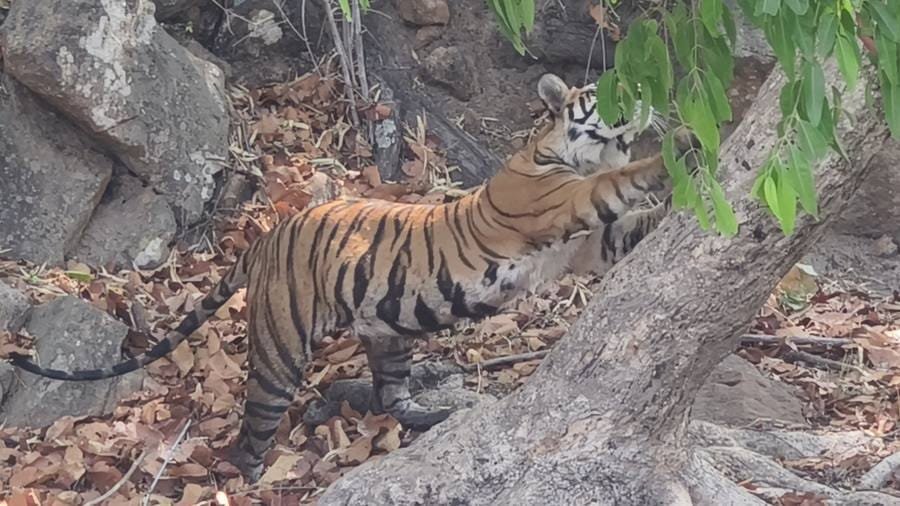
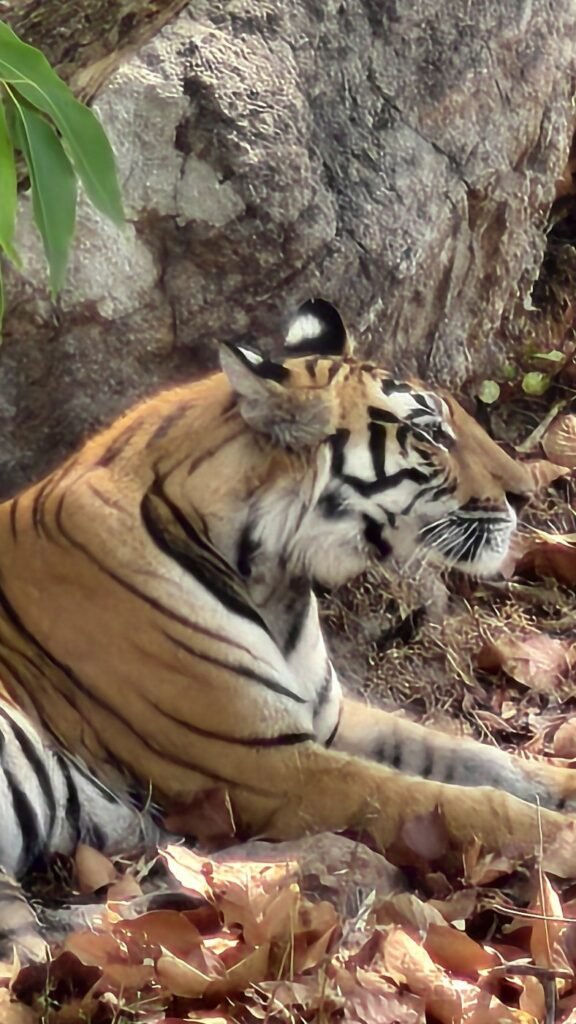
Later the same morning we found a tiger resting in the shade beside a big rock, completely relaxed, turning its head now and then to look around.
Sheshshaiya: An Ancient Vishnu Inside the Forest
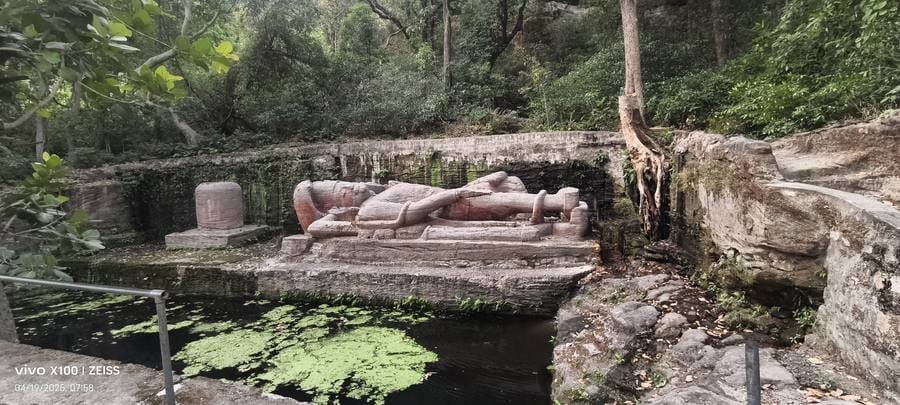
Deep in Tala zone is the Sheshshaiya, a large stone sculpture of Lord Vishnu lying on the serpent Sheshnag, beside a small tank of dark, still water covered with floating plants. It is generally dated to around the 10th century and is reached during the normal Tala safari, with no extra charge. The fort on the hill above is not open to visitors, but its cliffs are seen from many Tala routes.
Bandhavgarh is also where Mohan, the white tiger caught in 1951, came from. He is the ancestor of almost every white tiger in captivity today, but there are no white tigers in the wild here now.
Beyond the Tiger: Elephants, Gaur and Birds
Wild Elephants
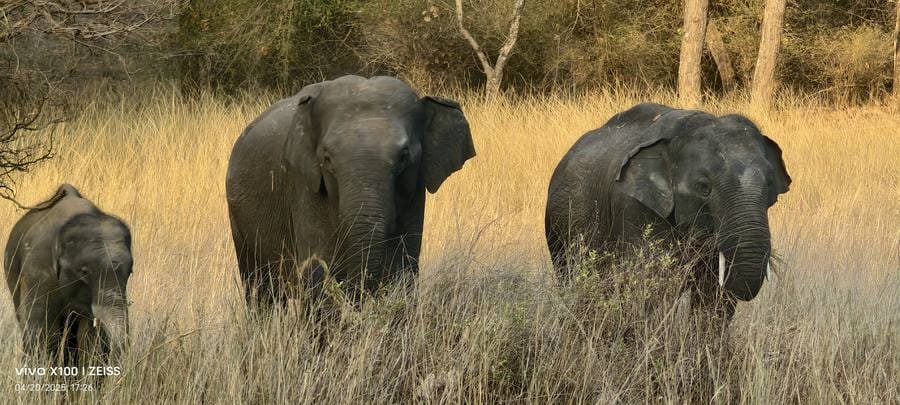
Late one afternoon a herd of wild elephants fed in the tall golden grass of an open meadow, adults with a calf kept close between them. Wild elephants moved into Bandhavgarh only in recent years; read Wild Elephants at Bandhavgarh.
Gaur
On a forest track we came face to face with a big gaur bull standing still in the dry bamboo, looking at us from under its curved horns. On another evening a small gaur herd fed at the edge of a grassland. See Where Is the Gaur Found in India?
Birds
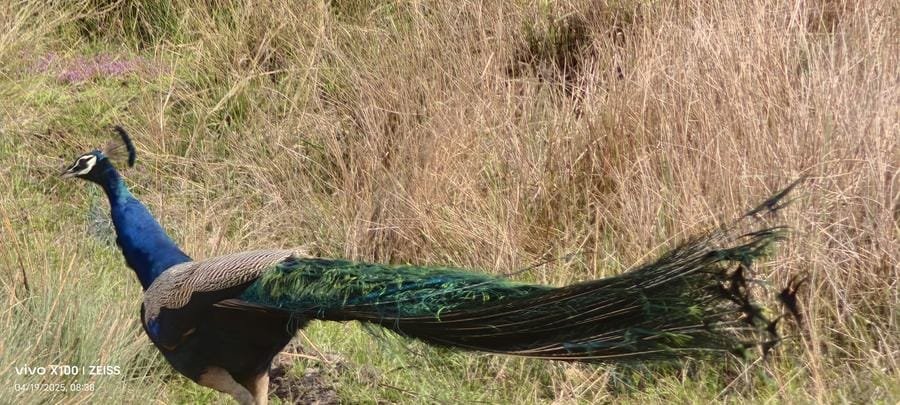
Bandhavgarh is not only about big animals. We watched a Stork-billed Kingfisher with its huge red bill, a Lesser Adjutant fishing at a waterhole, and peacocks everywhere, one of them spreading its full train beside the water.
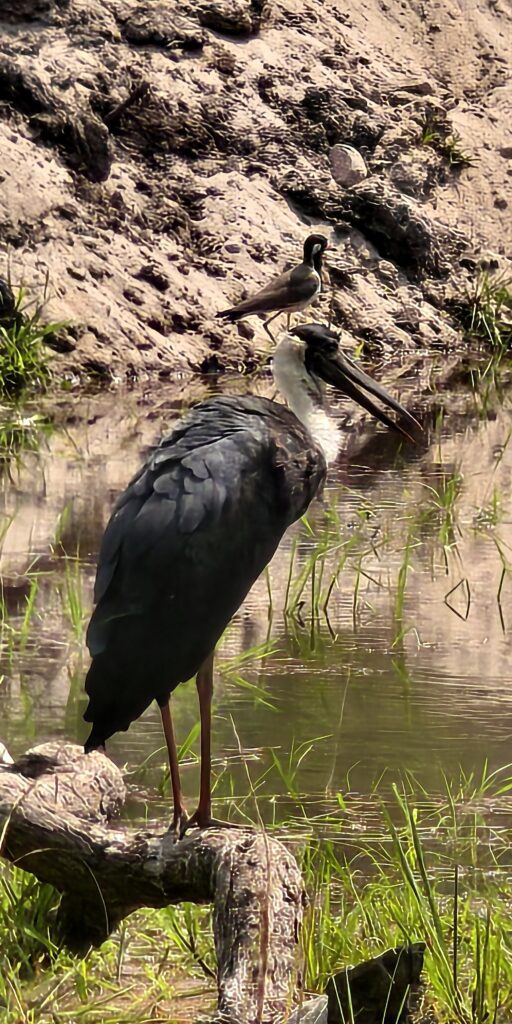
Woolly-necked Stork
At a forest stream in Bandhavgarh we also watched a Woolly-necked Stork standing on a fallen log at the water’s edge.
Bandhavgarh Safari Zones
| Zone | What it is like | Best for |
|---|---|---|
| Tala | The famous core zone below the fort, with meadows, streams and the Sheshshaiya. Books out first. | Tigers, first visits |
| Magdhi | Core zone with more bamboo and fewer visitors than Tala. | Tigers, gaur, elephants |
| Khitauli | Quieter core zone with open areas and good herbivore numbers. | Birds, landscapes, wild elephants |
| Buffer zones (such as Panpatha, Johila, Dhamokhar) | Cheaper, easier to book, some stay open longer. | Extra drives, quieter safaris |
More detail: Bandhavgarh Safari Zones and Timings Explained.
Best Time to Visit Bandhavgarh
- March to June: hot, but the best tiger sightings, as animals come to the last waterholes.
- October to February: cool and green; cold early mornings; good for birds and photography.
- July to September: core zones closed for the monsoon.
Month by month: Best Time to Visit Bandhavgarh · Bandhavgarh Weather and Climate.
Safari Timings
There are two safaris a day, each about four hours. Mornings start around sunrise (roughly 5:30 to 6:30 am depending on the season) and evenings run from mid-afternoon to sunset. Timings change through the year, so confirm with your resort before you go, and reach the gate early for ID checks.
How to Book a Bandhavgarh Safari
- Book on the official MP Forest Department portal, forest.mponline.gov.in. Booking opens about 120 days before the date.
- Choose the zone, date and morning or evening slot. Tala sells out first in peak season.
- Enter every visitor’s name and ID exactly as on their government ID; names cannot be changed later.
- Choose a full jeep (you control the pace) or a shared seat (cheaper).
- Carry the permit and original ID to the gate. A guide is assigned at the gate.
How to Reach Bandhavgarh
- By train: Umaria station is about 35 km from Tala; Katni is another option.
- By air: Jabalpur is about 170 km (about 3.5 hours by road); Khajuraho is farther.
- Base: most resorts are in and around Tala village, close to the main gate.
Tips for a Better Safari
- Do as many morning drives as you can; tigers are most active early.
- Carry binoculars and a lens of at least 300 mm.
- Wear dull colours, carry water and a hat in summer, and warm layers in winter.
- Ask your guide to wait at active waterholes in the dry season.
- Stay seated and quiet, and never ask the driver to crowd an animal.
Frequently Asked Questions
What is the best time to visit Bandhavgarh for tigers?
March to June, especially April and May, when the forest is dry and animals gather at water.
Which zone is best for tigers at Bandhavgarh?
Tala is the most famous and productive zone. Magdhi is a good second choice.
How do I book a Bandhavgarh safari?
On the official MP Forest Department portal, forest.mponline.gov.in, up to about 120 days in advance.
What else can I see at Bandhavgarh?
Wild elephants, gaur, sloth bear, leopard, chital, sambar and many birds, plus the Sheshshaiya sculpture inside Tala zone.
Is Bandhavgarh open in the monsoon?
The core zones close from 1 July to 30 September.
Read next: Tadoba Safari Guide · Panna Safari Guide · Tadoba vs Bandhavgarh vs Panna