
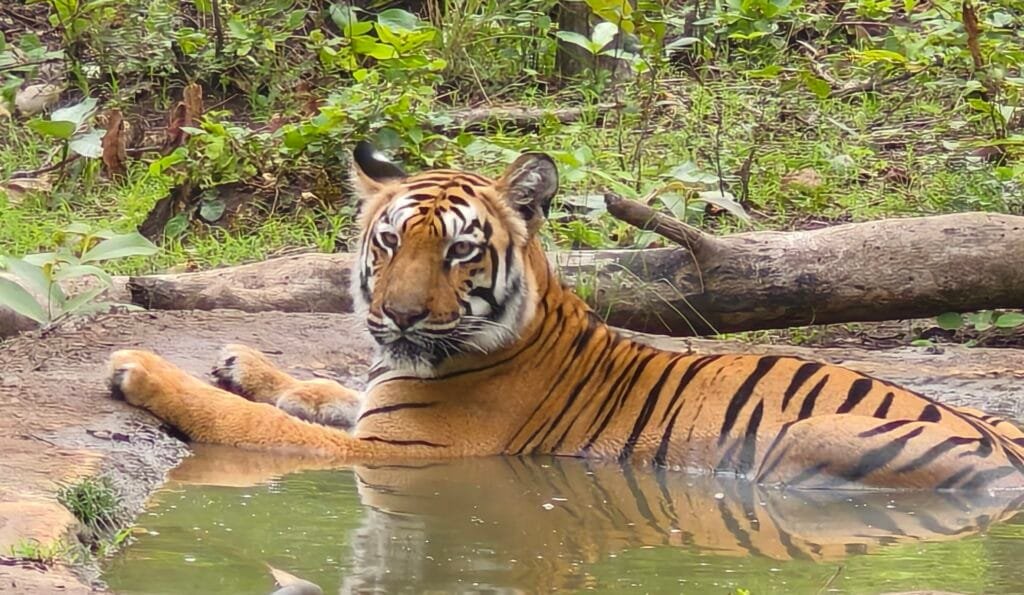
Tadoba Andhari Tiger Reserve is one of the best places in India to see a wild tiger. It is Maharashtra’s oldest and largest national park, the forest is dry and open, and the tigers are used to safari jeeps. This guide covers everything you need to plan a trip: when to go, which gate to book, safari timings and cost, how to reach from Mumbai and Nagpur, and what we saw on our own drives.
Tadoba at a Glance
- Location: Chandrapur district, Maharashtra
- Area: about 1,727 sq km (core and buffer)
- Open: 1 October to 30 June (core zones); some buffer zones stay open in the monsoon
- Nearest airport: Nagpur, about 150 km
- Nearest railway station: Chandrapur, about 45 km from Moharli gate
- Best for tigers: March to June
What Makes Tadoba Special
Tadoba gets its name from Taru (Tadoba), a deity still worshipped by local communities, and from the Andhari river that flows through the forest. The national park was set up in 1955, and the Andhari Wildlife Sanctuary was later joined to it to form today’s tiger reserve.
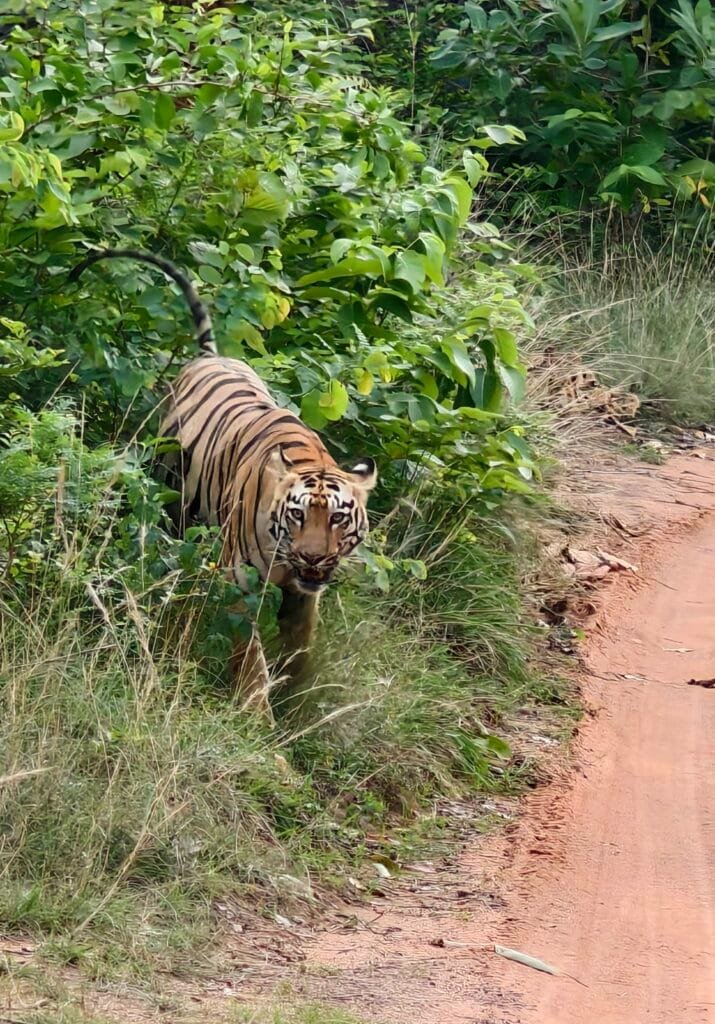
The forest is dry deciduous: teak, bamboo and open grassy patches, with Tadoba Lake and Kolsa Lake inside the reserve. In the hot months these lakes and the forest waterholes draw tigers, sloth bears, gaur and deer. Because the tigers here are used to vehicles, they often walk, rest and drink without reacting to the jeep, which makes for very natural sightings.
Best Time to Visit Tadoba
| Season | Months | What to expect |
|---|---|---|
| Winter | October – February | Cool and comfortable, green forest, good for birds. Tigers are seen but are spread out. |
| Summer | March – June | Very hot (can pass 45°C), but the best tiger sightings: animals come to the same waterholes every day. |
| Monsoon | July – September | Core zones closed. Some buffer zones open; lush forest, fewer people, harder sightings. |
If photography is your goal, April and May are the sweet spot. Water is scarce, tigers visit known waterholes in the early morning, and the light is good before the heat builds. Read more in Best Time to Visit Tadoba, Month by Month.
Safari Timings and Closed Days
| Season | Morning safari | Evening safari |
|---|---|---|
| Winter (Oct – Feb) | about 6:30 – 11:00 am | about 2:00 – 6:00 pm |
| Summer (Mar – Jun) | about 5:30 – 9:30 am | about 3:30 – 6:30 pm |
- Each safari is about four hours long.
- Core zones are closed on Tuesdays; buffer zones on Wednesdays.
- Reach the gate at least 30 minutes early for permit and ID checks.
- Timings can change, so confirm with your resort or the forest department before you go.
Tadoba Zones and Entry Gates
Tadoba has three main tourism zones and more than 20 entry gates. The simplest rule: choose your resort first, then book the gate closest to it, so you are inside the forest at first light instead of driving.
| Zone | Core gates | Buffer gates | Good for |
|---|---|---|---|
| Tadoba (north) | Kolara, Navegaon | Junona, Mamla | Tadoba Lake, regular tiger sightings, birds |
| Moharli (south-west) | Moharli, Khutwanda | Devada, Agarzari, Adegaon | First visits, most resorts, summer waterholes |
| Kolsa (south) | Pangdi, Zari | Kesalghad and others | Quieter drives, leopard, wild dog, sloth bear |
- First visit: Moharli or Kolara
- Photography in summer: Moharli waterholes
- Fewer crowds: Kolsa zone (Pangdi, Zari)
- Monsoon: Agarzari, Devada or Junona buffer
- Birds: Tadoba Lake area
Do not ignore the buffer zones. They hold resident tigers, are cheaper and easier to book, and often feel quieter. See Tadoba Buffer vs Core Zone.
How Much Does a Tadoba Safari Cost?
Tadoba uses dynamic pricing: fees depend on the zone, weekday or weekend, and how far ahead you book. These are approximate full-jeep prices (up to six people, including vehicle, guide and entry) and can change, so always check the official Maharashtra Forest Department booking site.
| Zone | Booked | Weekday | Weekend |
|---|---|---|---|
| Core | 60–120 days ahead | about ₹7,575 | about ₹11,575 |
| Core | 4–45 days ahead | about ₹4,575 | about ₹5,575 |
| Core | 1–3 days ahead | about ₹7,575 | about ₹7,575 |
| Buffer | 1–120 days ahead | about ₹4,075 | about ₹4,075 |
A camera fee is charged separately for DSLRs and video cameras. Booking 4 to 45 days ahead on a weekday usually gives the best value.
How to Reach Tadoba
- By air: fly to Nagpur (direct flights from Mumbai, Delhi, Hyderabad and others), then drive about 150 km, roughly 2.5 to 3 hours.
- By train: Chandrapur is the closest station, about 45 km and an hour from Moharli. Nagpur and Wardha have more trains.
- By road: about 150 km from Nagpur, about 440 km from Hyderabad and about 800 km from Mumbai.
From Mumbai: a Simple Weekend Plan
Driving from Mumbai takes 14 hours or more, so most people take the overnight train to Chandrapur or fly to Nagpur.
- Thursday night: overnight train from Mumbai to Chandrapur.
- Friday: taxi to your resort; afternoon safari.
- Saturday: morning and afternoon safaris, one core and one buffer.
- Sunday: morning safari, then fly back from Nagpur or take the train.
How to Book a Tadoba Safari
- Use only the official Maharashtra Forest Department booking portal. Avoid third-party sites that add fees.
- Pick your zone, gate, date and slot. Booking opens 120 days ahead and peak dates fill fast.
- Enter every visitor’s name and ID exactly as on their government ID. IDs are checked at the gate.
- Pay online and download the permit. Permits are generally non-transferable and non-refundable.
- Reach the gate 30 minutes early. A guide is compulsory and is assigned at the gate.
For December to February and April to May, book at least 30 to 60 days ahead, especially for Moharli and Kolara.
How Many Days Do You Need?
Plan at least two full days, which gives you three or four safaris. One drive is a gamble; several drives across core and buffer give you a fair chance of a tiger and a feel for the whole forest. Tadoba has one of the higher tiger densities in India, but no drive is ever guaranteed.
What We Saw on Our Tadoba Safari
On a June morning we found a tiger lying in a small forest pool, forelegs stretched onto the muddy bank, cooling off as the heat built. It turned and looked straight at the jeep for a long moment, and nobody moved. In summer a tiger can spend hours in water like this.
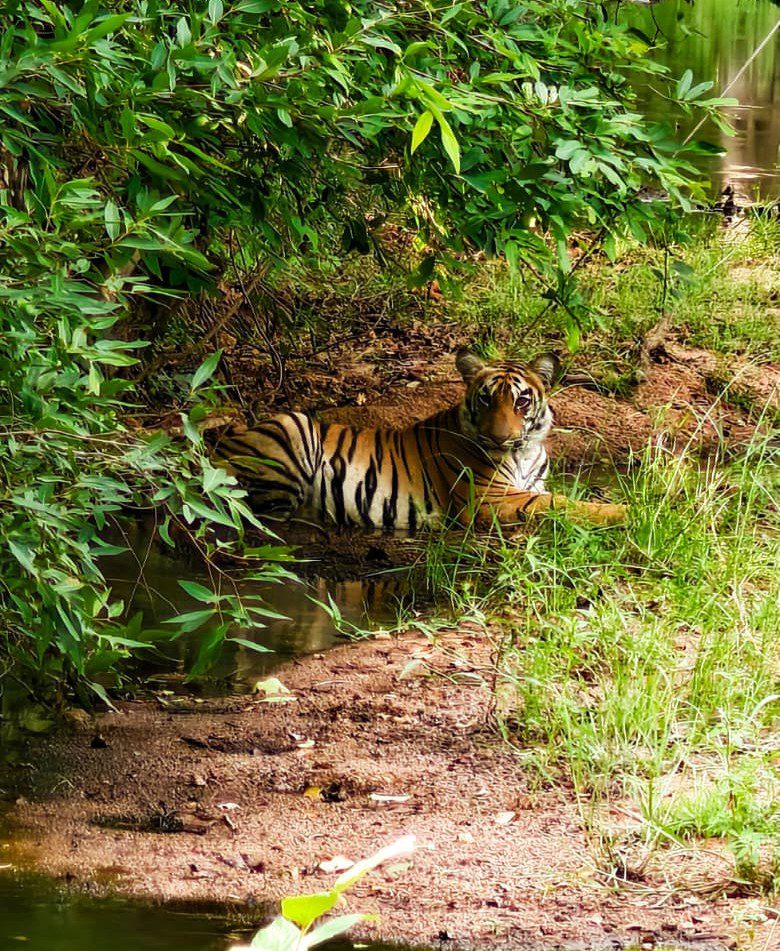
Photo tip: meter for the tiger’s face, not the bright water. Shoot at about f/5.6 to f/8 and at least 1/500s, and keep shooting when the tiger looks at you.
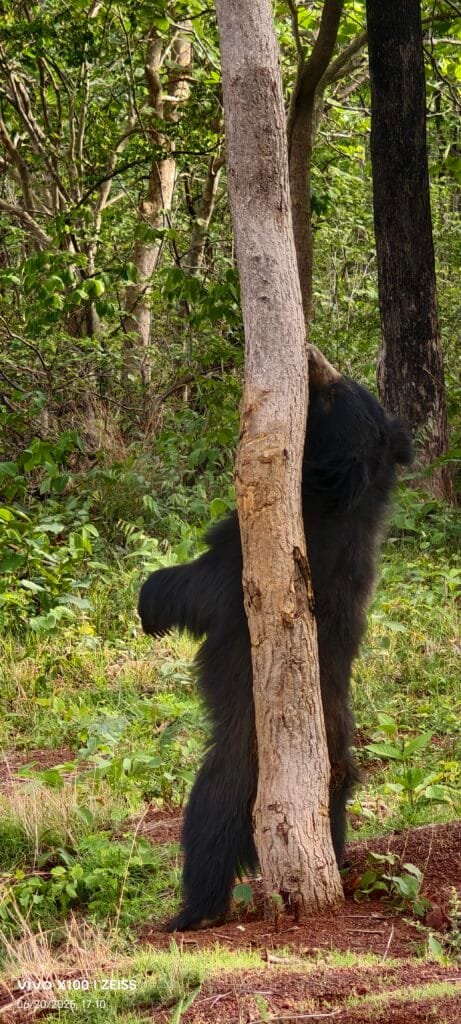
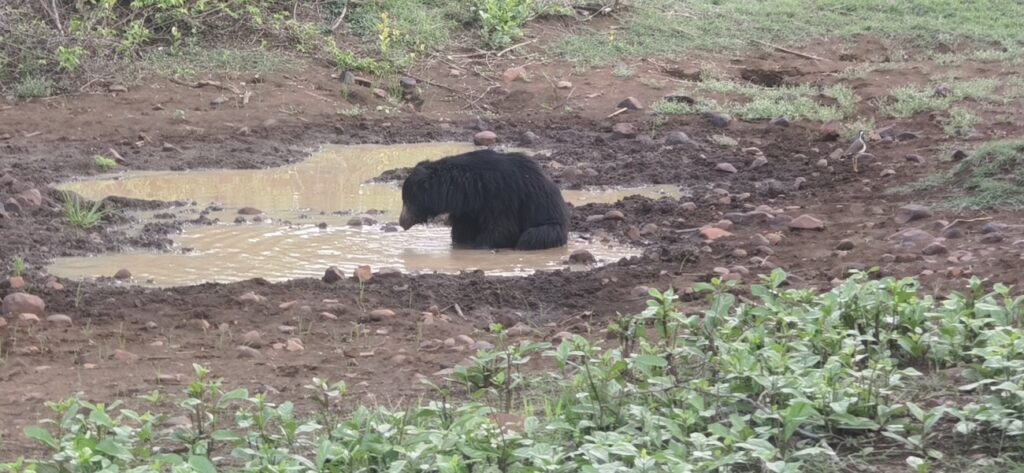
Tigers were not the only highlight. Sloth bears were everywhere on our drives: one stood up against a tree, another crossed the track in front of us, and a third spent several minutes digging in the undergrowth, ignoring the jeep completely.
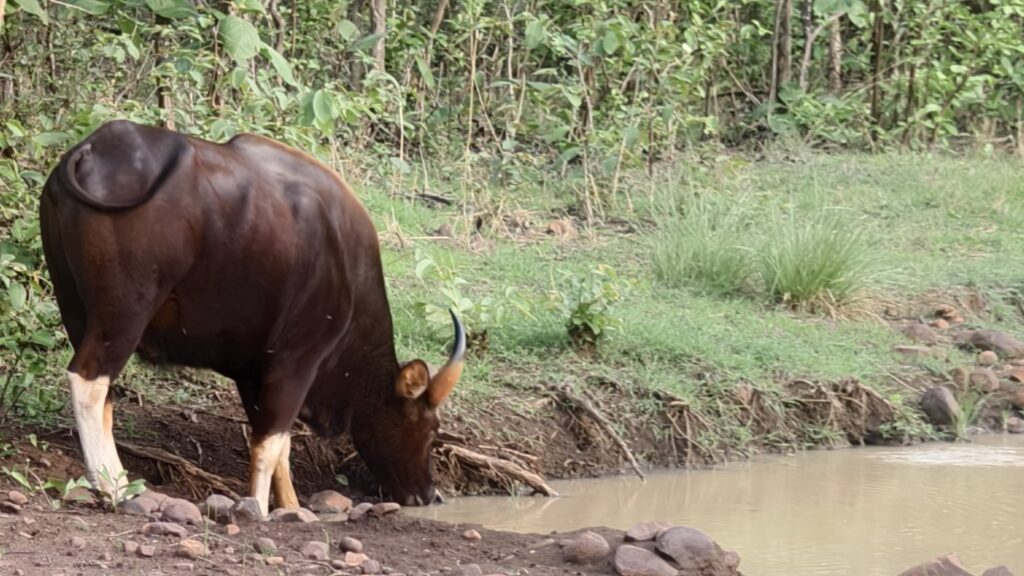
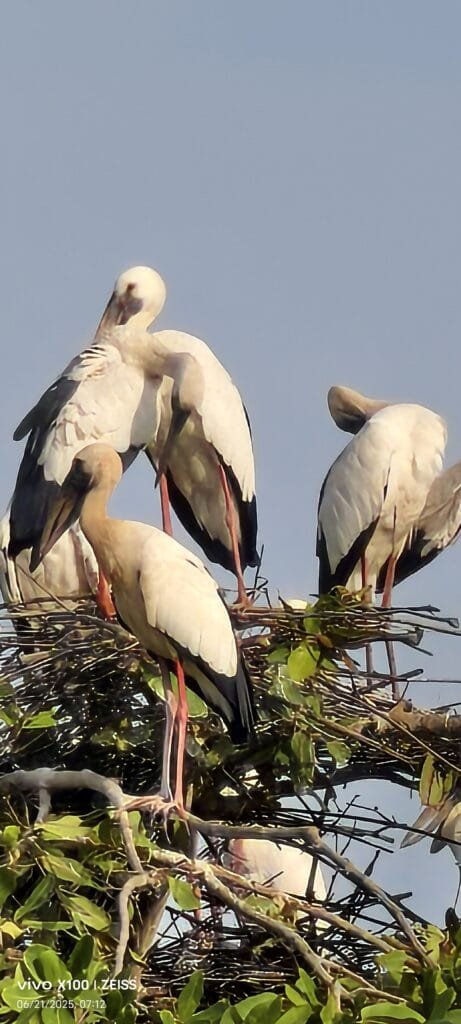
Near a waterhole a gaur bull walked slowly through the trees, its white “socks” bright in the evening light, and early one morning we passed a colony of Asian Openbill Storks standing on their stick nests in the treetops.
What Else You Can See
Besides tigers, Tadoba has leopard, sloth bear, gaur, dhole (wild dog), sambar, chital, wild boar, mugger crocodile, langur and more than 280 bird species, including the crested serpent eagle, Indian roller and Malabar pied hornbill.
What to Pack
- Camera with a telephoto lens (300 mm or more) and binoculars
- Clothes in olive, brown or khaki; avoid white and bright colours
- Hat, sunscreen and at least a litre of water per person in summer
- Warm layers for winter mornings in an open jeep
- A scarf or mask for dust
- Original photo ID and your permit
More ideas: What to Wear and Pack for a Jungle Safari in India.
Tips for a Better Tadoba Safari
- Choose the morning safari if you can only do one; tigers are most active in the first hour.
- Stay close to your gate so you enter at first light.
- Listen for alarm calls from deer and langurs, then wait quietly.
- Stay seated inside the jeep and keep your phone on silent.
- In summer, ask your guide to wait at an active waterhole rather than driving around.
- Look at everything, not just tigers: the bears, birds and gaur make the trip.
Frequently Asked Questions
How far is Tadoba from Mumbai?
About 800 km by road. Most people take the overnight train to Chandrapur or fly to Nagpur and drive about 150 km.
Which Tadoba gate is best?
Moharli and Kolara are the best-known core gates. For fewer crowds try Pangdi or Zari in the Kolsa zone, or a buffer gate such as Agarzari or Junona.
What is the best month to visit Tadoba?
March to June for tiger sightings; October to February for cooler weather and birds.
Is Tadoba open in the monsoon?
The core zones close from 1 July to 30 September. Some buffer zones stay open.
How many days do I need at Tadoba?
At least two full days, with three or four safaris.
Read next: Tadoba Tiger Photography Tour · Tadoba vs Bandhavgarh vs Panna · Birds of Tadoba