
Bhigwan · Accipitridae
Brahminy Kite
Haliastur indus
In Hindu iconography, Garuda — the divine eagle that carries Vishnu — is often depicted with the Brahminy Kite in mind: white-headed, chestnut-bodied, a raptor of rivers and coasts. At Bhigwan, Garuda is everywhere and easy to photograph.
- Status at Bhigwan
- Resident
- How often seen
- Common
- Size
- 44–52 cm
- Family
- Accipitridae
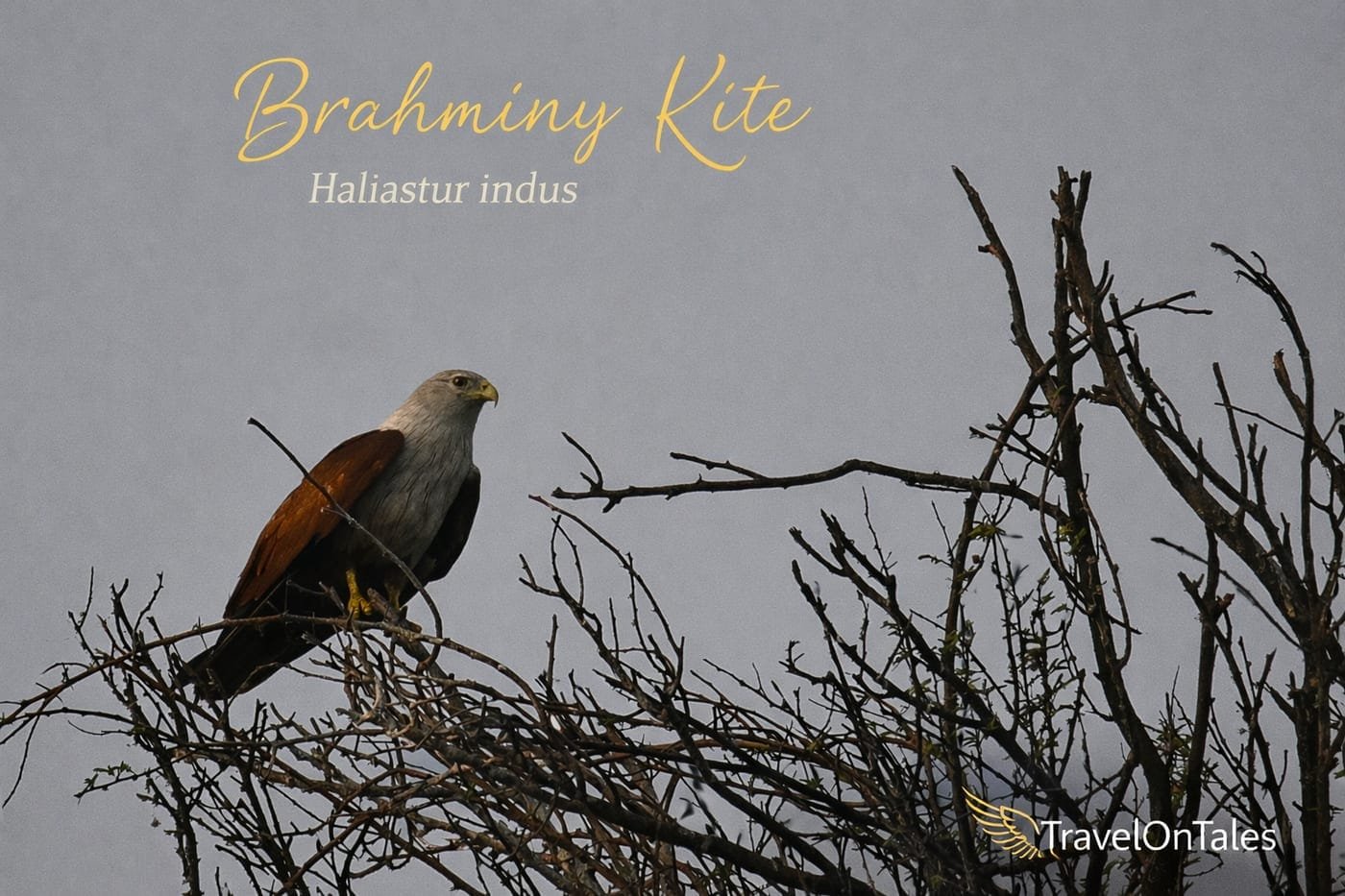
The adult bird — unmistakable once seen
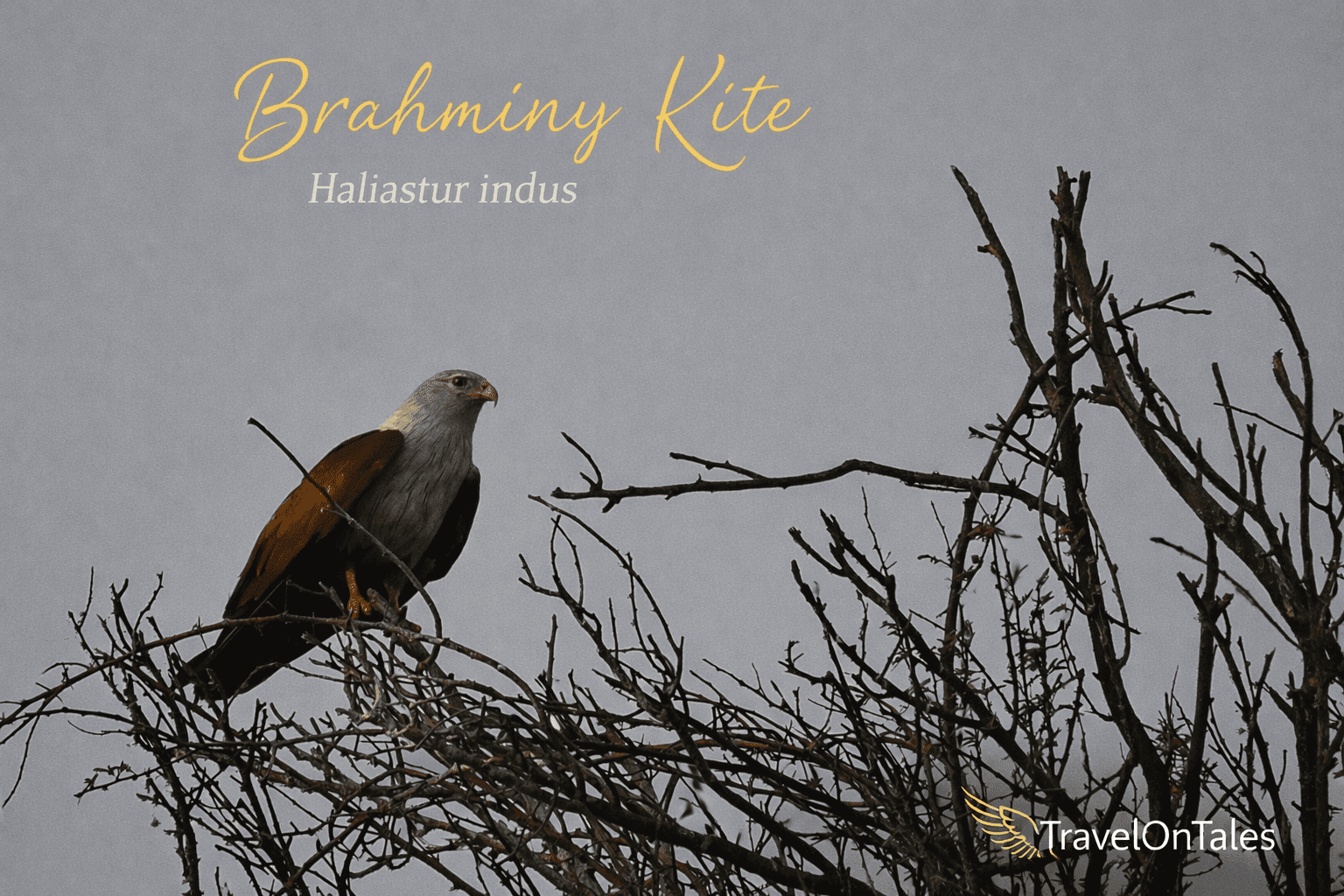
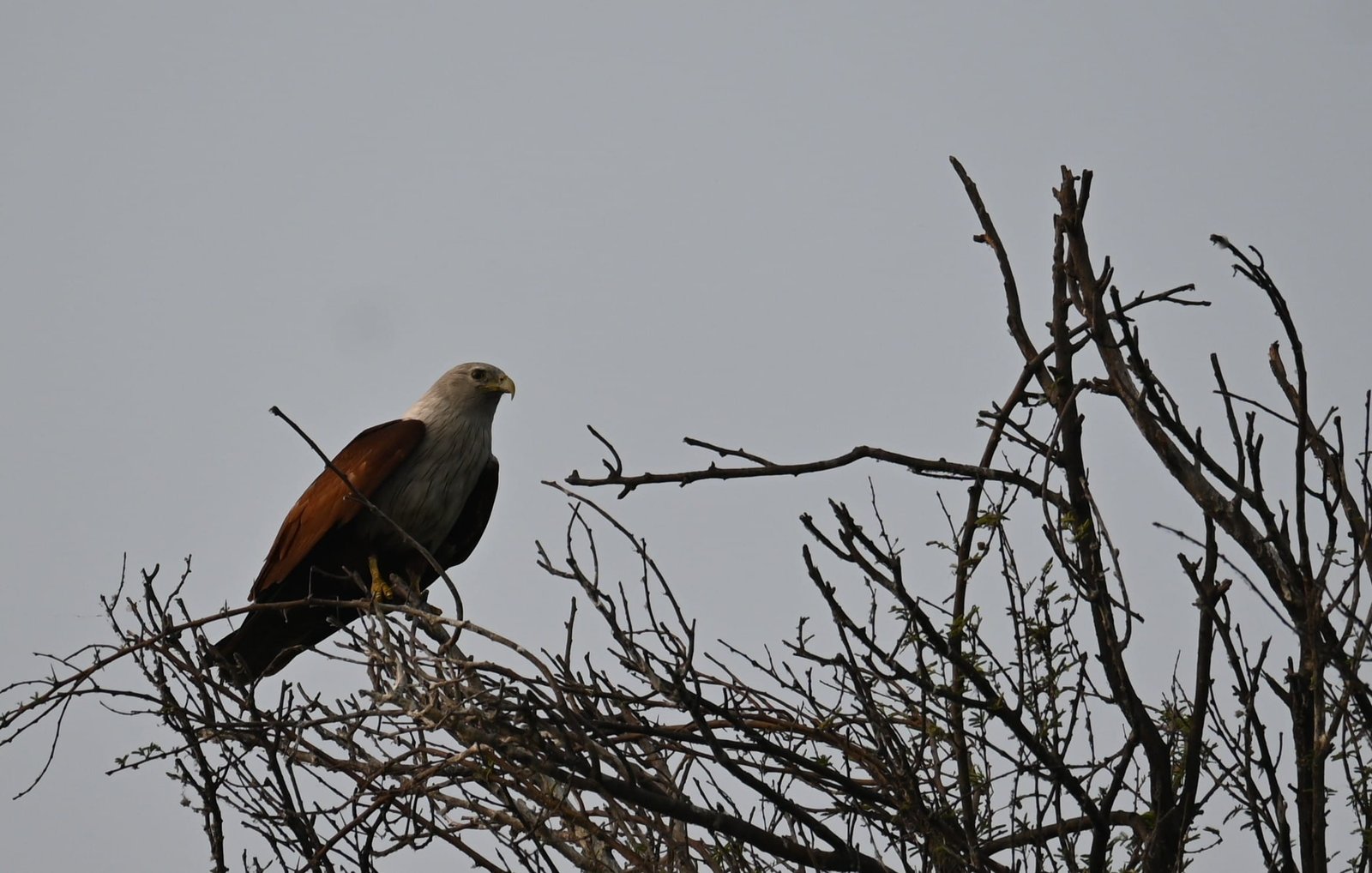
The adult Brahminy Kite has a colour combination that no other Indian raptor shares: rich rufous-chestnut body with a clean white head, neck and upper breast. The boundary between white and chestnut is sharp and sits roughly at the base of the throat. In flight the white wing-linings contrast with the darker flight feathers. The tail is rounded — not forked like the Black Kite — and shows a pale terminal band in good light.
Immatures are a very different story. They are streaky brown throughout with a pale, buff-washed head and show a pale window in the outer wing in flight. Many first-time birders at Bhigwan correctly identify the adults and then log the immatures as separate species. It takes 3–4 years for a Brahminy Kite to reach full adult plumage, so birds at various transitional stages are always present in the population.
How it feeds
The Brahminy Kite is a scavenger and opportunist rather than a specialist hunter. It grabs fish from the water’s surface in a low, shallow swoop — talons extended, body nearly horizontal — without diving. It also takes dead fish and offal from fishing boats, steals food from other birds (including other Brahminy Kites, which it chases with persistent aerial harassment), and picks at carrion near the waterline.
The piracy is particularly visible at Bhigwan. Watch a tern or an egret that has just caught a fish: a Brahminy Kite that was circling 50 metres away will peel off and give chase within seconds. The tern usually drops the fish; the kite catches it before it hits the water. The whole sequence lasts less than five seconds.
Where it is at Bhigwan
Along the entire reservoir margin. Brahminy Kites are resident and spend most of the day patrolling the waterfront on slow, buoyant wingbeats. They perch on dead trees, boat masts, mooring posts and the dam wall. The area around the fishing boat jetty at Kumbhargaon is particularly reliable — the kites know that boats disturb fish to the surface and that cleaning catches means offal in the water. Multiple birds are usually visible simultaneously.
Photography from the water
The boat safari at Bhigwan puts you within 20–30 metres of perched and flying birds. Morning light from the east gives the chestnut plumage its best warmth and the white head holds its detail without blowing out. For the surface grab, set a continuous burst at 1/2500 sec or faster. The approach and the swoop are the action; the splash, if any, is the frame people remember.
Questions about the Brahminy Kite
Is the Brahminy Kite protected in India? +
Yes — like all wild birds in India, it is protected under the Wildlife Protection Act 1972. Its cultural association with Vishnu means it is also informally protected at many temple sites across South India, where birds that have learned to associate temples with food scraps are remarkably tame. At Bhigwan the birds are wild and wary of humans on land, though tolerant of boats on the water.
How can I tell an immature Brahminy Kite from a Black Kite? +
The tail shape is the fastest mark: the Black Kite has a distinctly forked tail (the fork is shallow but visible in flight), while the Brahminy Kite has a rounded tail. Brahminy immatures also tend to show more contrast between the pale head and the darker body than Black Kites do, and they spend more time over water than the primarily terrestrial Black Kite.
Does the Brahminy Kite dive underwater for fish like an Osprey? +
No — it is a surface-grabber, not a plunge-diver. The Brahminy Kite swoops low and snatches fish from within the top few centimetres of the water surface, keeping its wings dry. It occasionally gets its feet wet but rarely goes deeper. The Osprey, by contrast, plunges feet-first and can fully submerge. At Bhigwan the Osprey is an occasional visitor and the two species hunt in completely different ways.
Are there many Brahminy Kites at Bhigwan or just one or two? +
Multiple birds are present simultaneously throughout the year — typically 5–10 individuals visible at any given time along the reservoir margin, with more during post-breeding dispersal. Because they spend most of the day in slow, visible flight over the water and perch on prominent objects, they are one of the most consistently seen raptors at Bhigwan regardless of season or time of day.
Plan your visit
Birds of Bhigwan
Brahminy Kite is one of ten species photographed on a single visit to Bhigwan. The full guide with all ten birds is on the main page.
More Brahminy Kite photographs
Plan your trip: Bhigwan Bird Sanctuary: Complete Travel and Birding Guide