
Panna Tiger Safari:
A firsthand journey through rocky plateaus, quiet deer trails and the landscape shaped by the Ken River—with the practical details you need to plan your own safari.
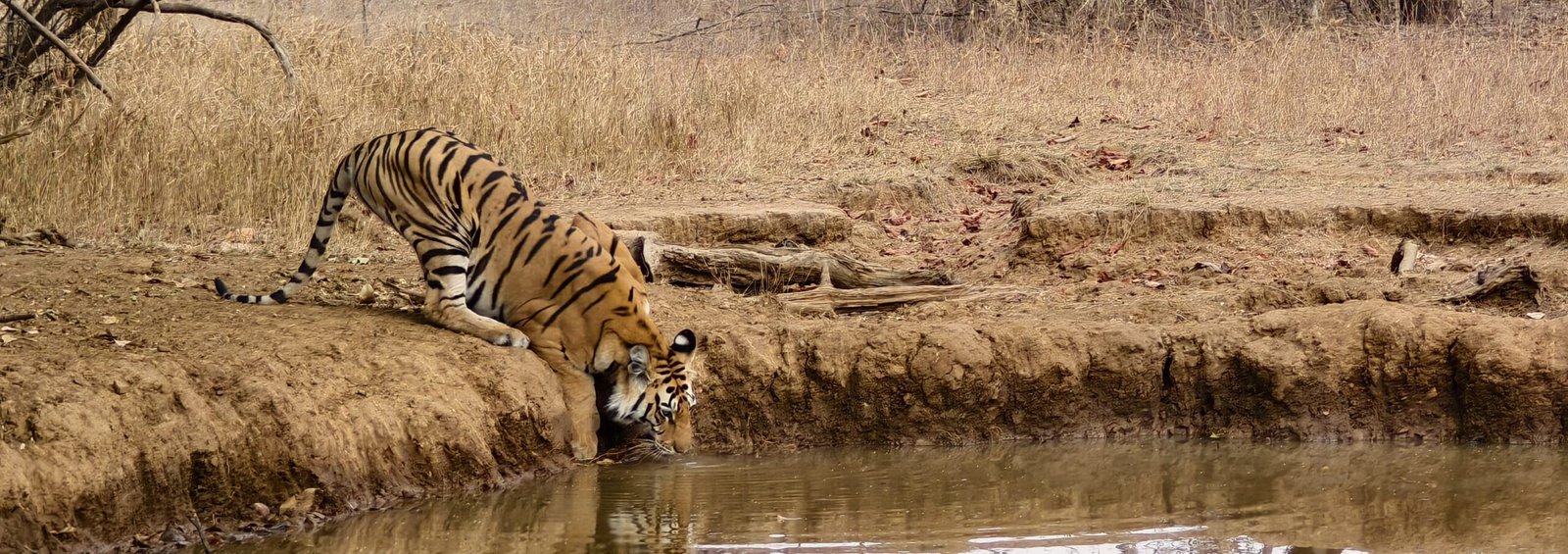
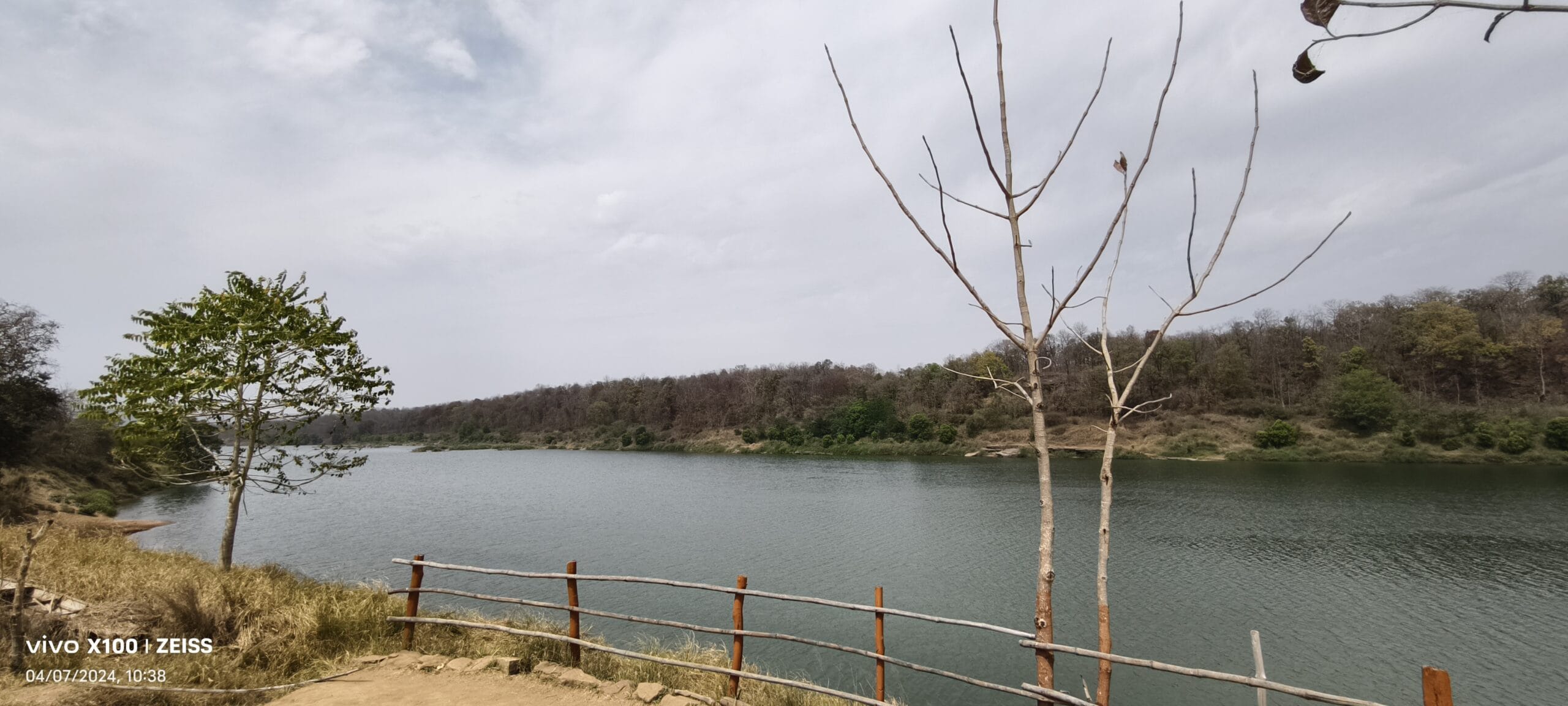
Panna does not reveal itself all at once. It arrives in fragments: pale morning light on a dusty track, alarm calls travelling through dry woodland, deer pausing at the forest edge, and the Ken River cutting a calm line through an otherwise rugged landscape.
Most visitors come hoping for a tiger—and there is nothing wrong with that hope. But a Panna tiger safari becomes memorable when you stop treating the forest like a waiting room for one animal. The reserve has its own rhythm, its own silences and a landscape unlike the better-known forests of Central India.
For another perspective from this landscape, read our earlier Panna Tiger Safari experience, featuring more moments and observations from the forest.
Why Panna Feels Different
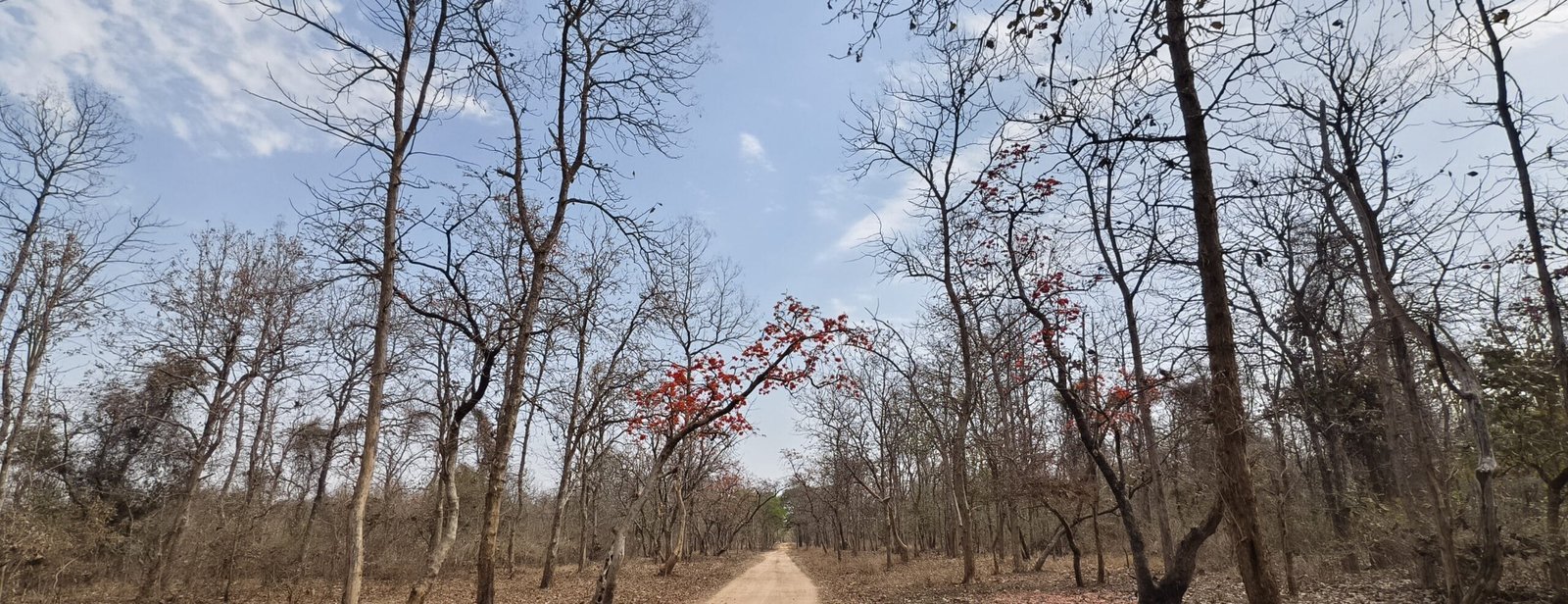
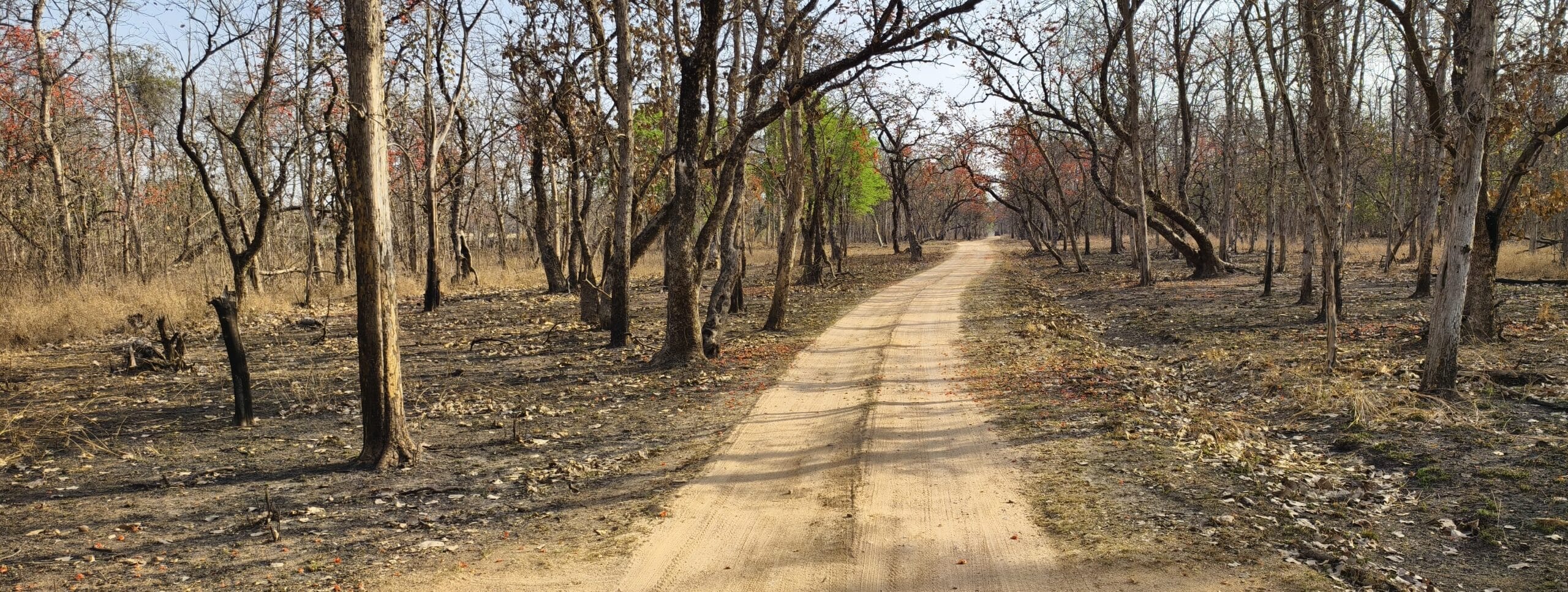
Panna’s beauty is not the deep-green drama of a rainforest. It is more architectural: exposed rock, long escarpments, open meadows, gorges and trees shaped by heat and dry seasons. The Ken River holds this landscape together, supporting wildlife and giving the reserve a visual identity of its own.
The reserve is also known for an extraordinary conservation comeback. After its tiger population collapsed, tigers were reintroduced and bred successfully. That history adds weight to every pugmark and alarm call. Here, the presence of a tiger is not just thrilling—it is evidence of what determined conservation can restore.
Panna Safari Gates: Where Should You Enter?
Madla Gate
For a first visit, Madla is usually the simplest choice. It is around 25 kilometres from Khajuraho according to MP Forest information, and most travellers will find more accommodation and transport options on this side. Madla offers access to varied terrain—grassland, rocky tracks, riverine patches and former village meadows.
Hinouta Gate
Hinouta is farther from Khajuraho and quieter in terms of nearby tourist infrastructure. Its elevated, rocky terrain offers a different mood. If you are planning several drives, combining entry areas can give you a wider sense of the reserve.
Akola and Jhinna
Akola and Jhinna may appear as core or buffer options depending on current forest operations. Do not book accommodation based on an old blog post or a map pin alone. Confirm the exact gate shown on your permit.
How to Book a Panna Tiger Safari
Use the official Madhya Pradesh Forest Department booking portal. The system may show full-vehicle, single-seat and short-notice options depending on the current season and availability.
Keep the exact ID details of every visitor ready. Carry the accepted original identification used during booking. The permit price may not represent the entire cost: official information notes that authorised vehicle and guide charges can be payable separately at the gate.
Prices, reporting times, operating zones and booking windows change. That is why this guide deliberately avoids pretending that one frozen rupee figure will remain accurate forever. Check the portal before paying for your hotel.
The Best Time to Visit Panna
| Season | What it feels like | Best for |
|---|---|---|
| October–February | Pleasant days, cold mornings and fresher scenery after the monsoon | Families, birdwatching and comfortable travel |
| March–April | Warmer weather with thinning vegetation | A balance of wildlife visibility and manageable heat |
| May–June | Very hot and dry; wildlife may concentrate near water | Committed wildlife watchers prepared for extreme heat |
Core tourism generally operates between October and June, subject to the annual forest schedule. Weather comfort and sighting potential are not the same thing: winter is kinder to travellers, while late summer may make animal movement around water more visible.
Waiting for the Tiger—Without Missing the Forest
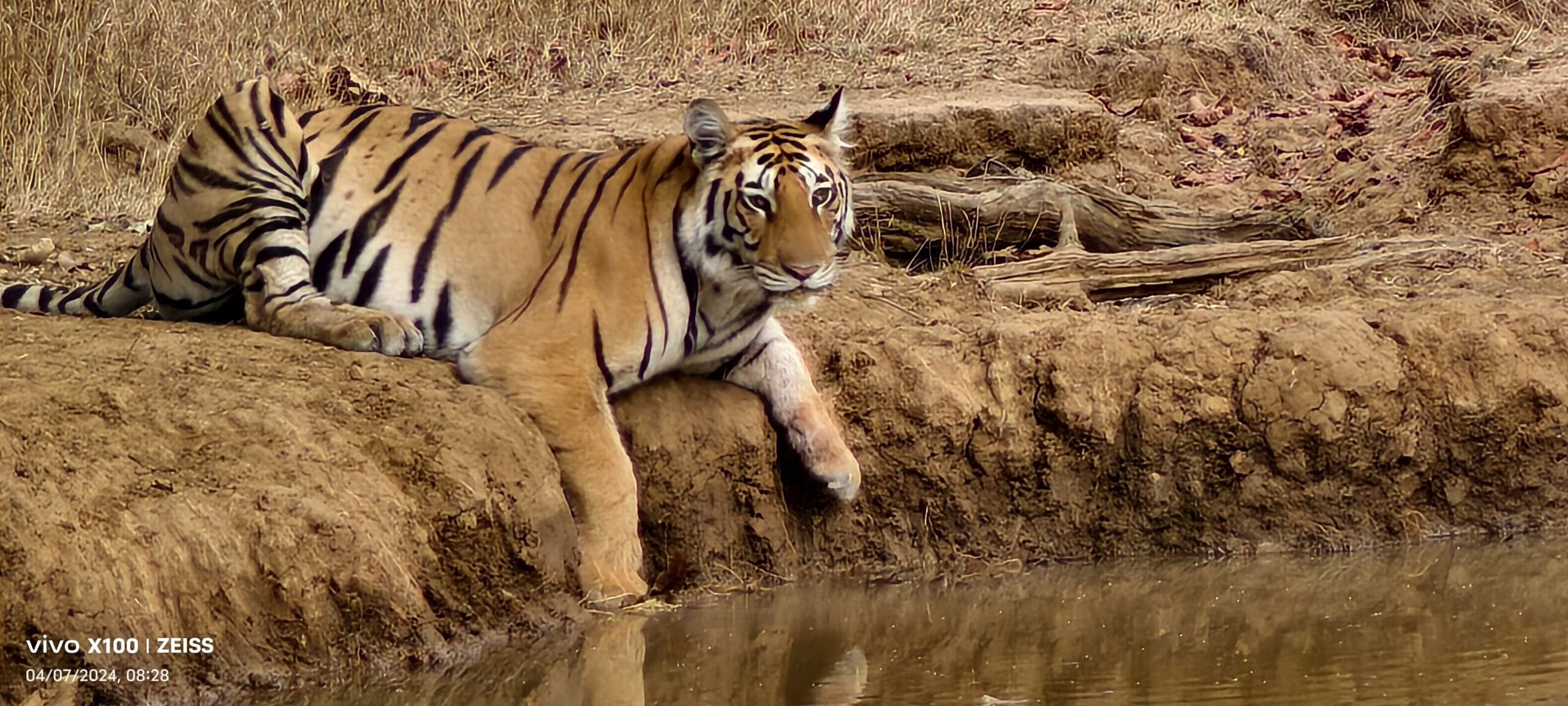
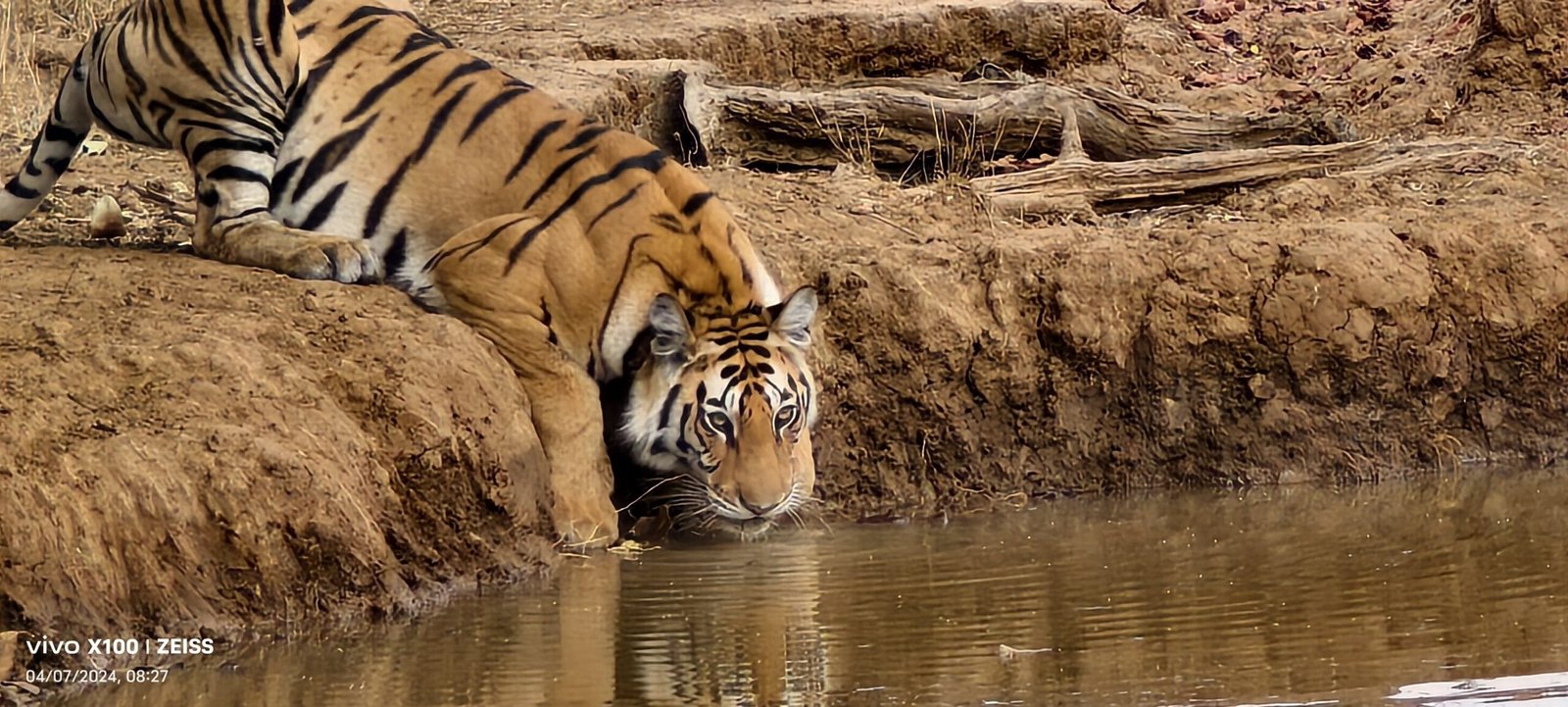
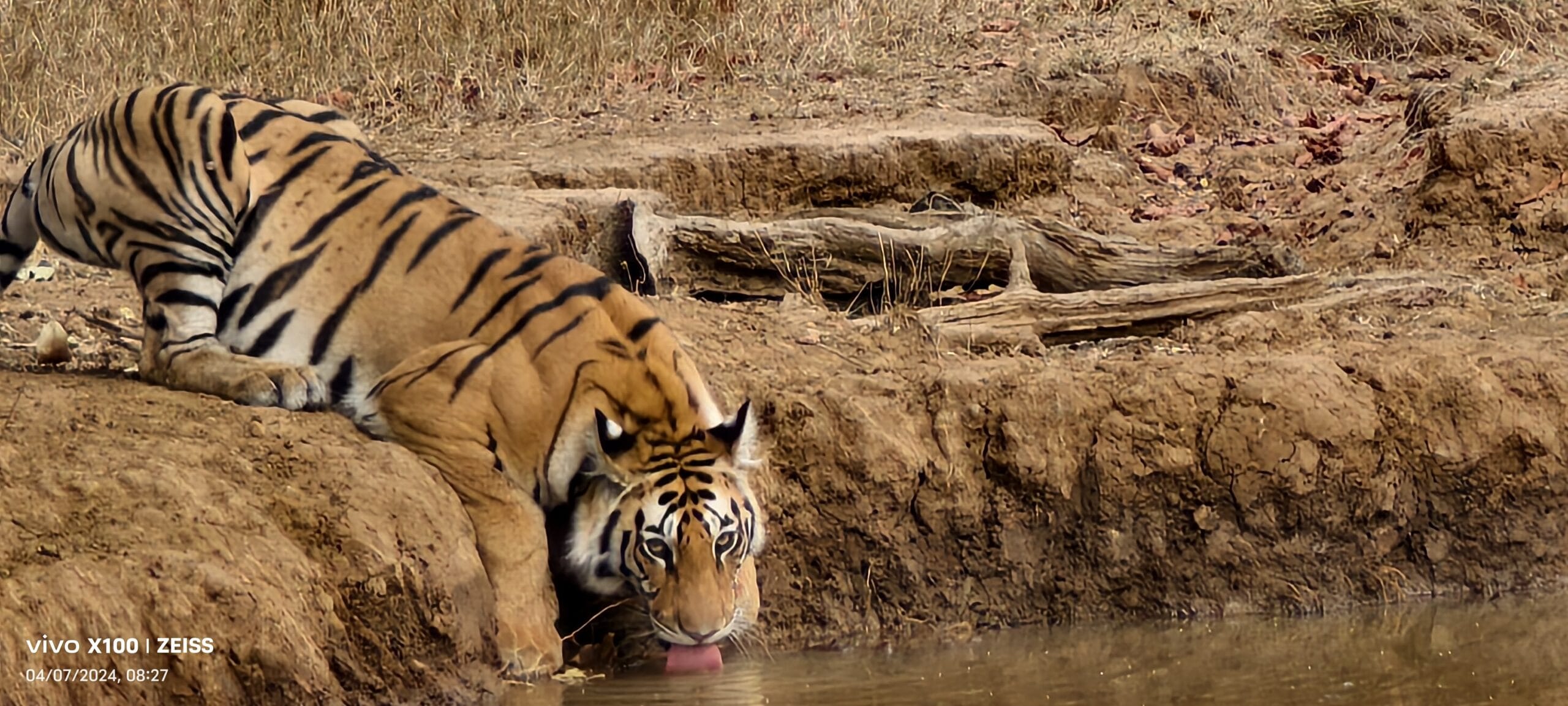
A tiger safari contains long stretches when nothing dramatic happens. Those stretches are not empty. A guide may notice fresh pugmarks, a sambar’s posture may change, or a langur may stare steadily into a thicket. The forest often tells you what is present before it shows you.
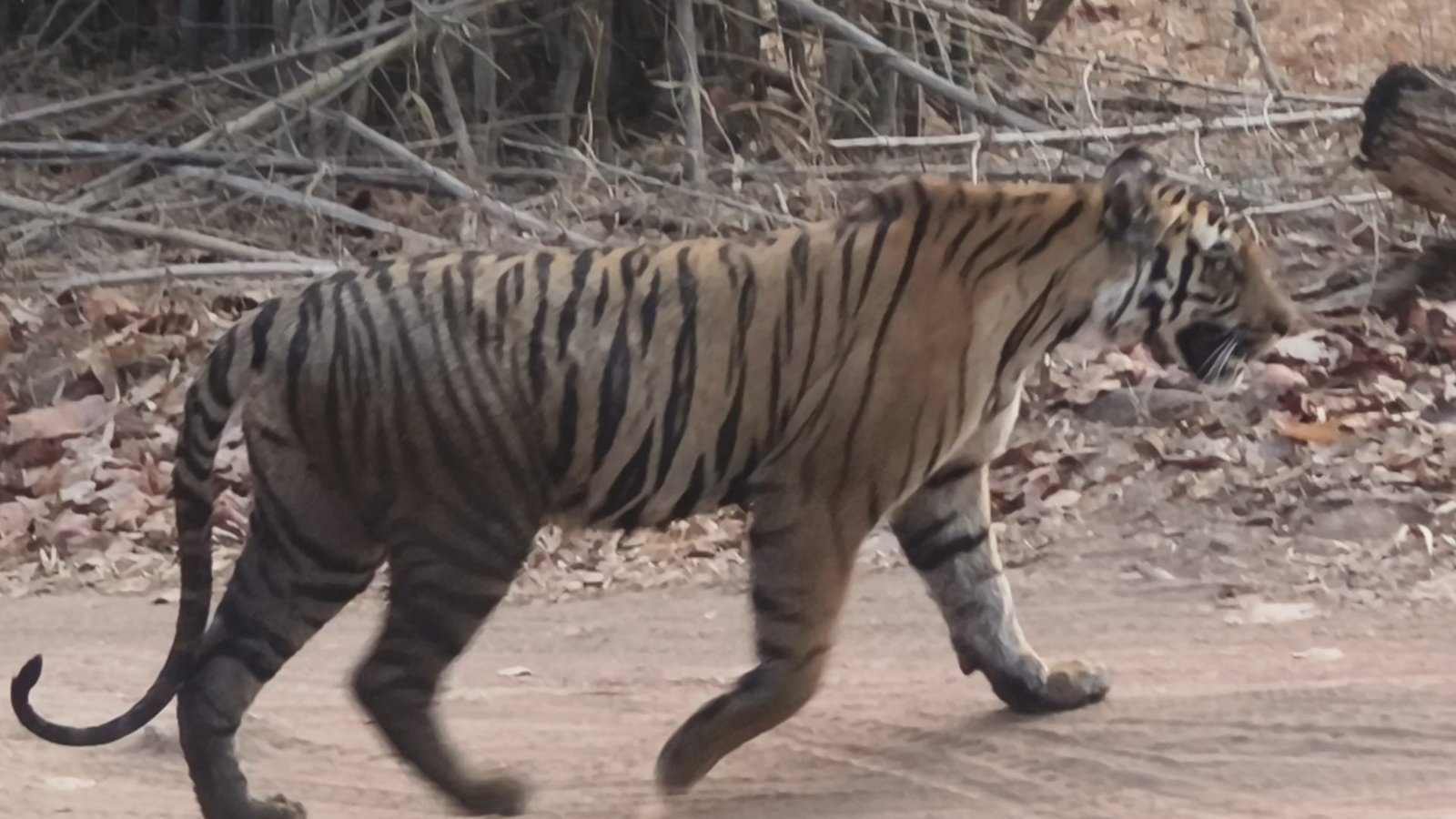
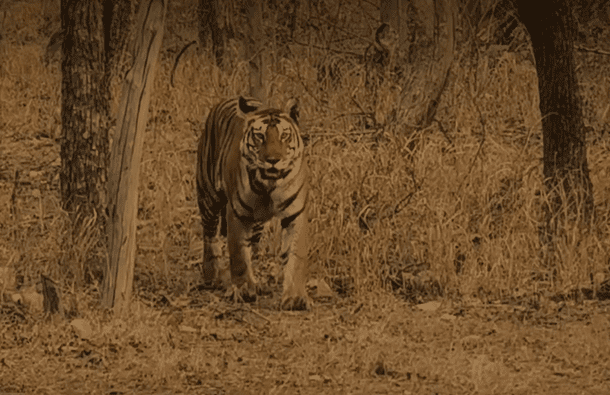
And then, sometimes, the tiger appears.
The Deer Tell Their Own Story
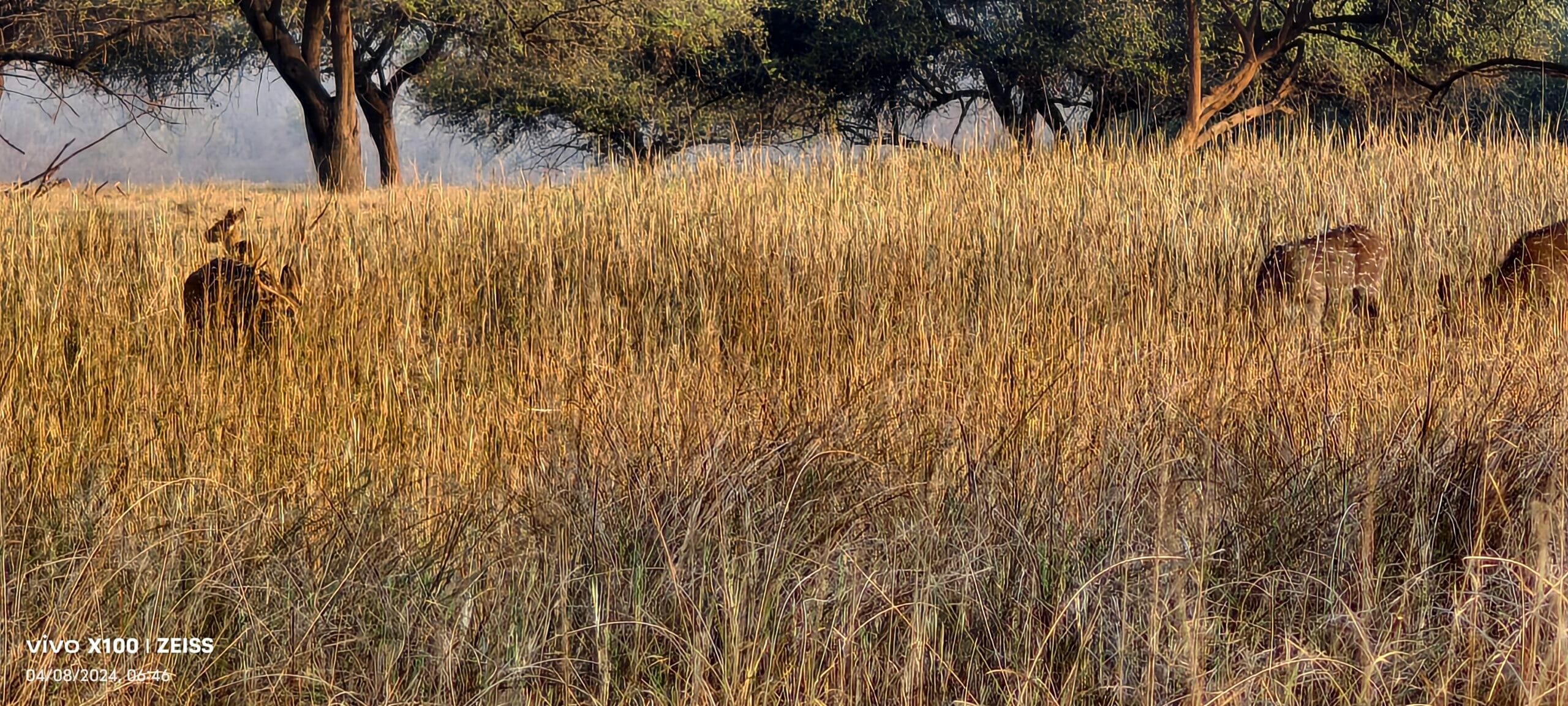
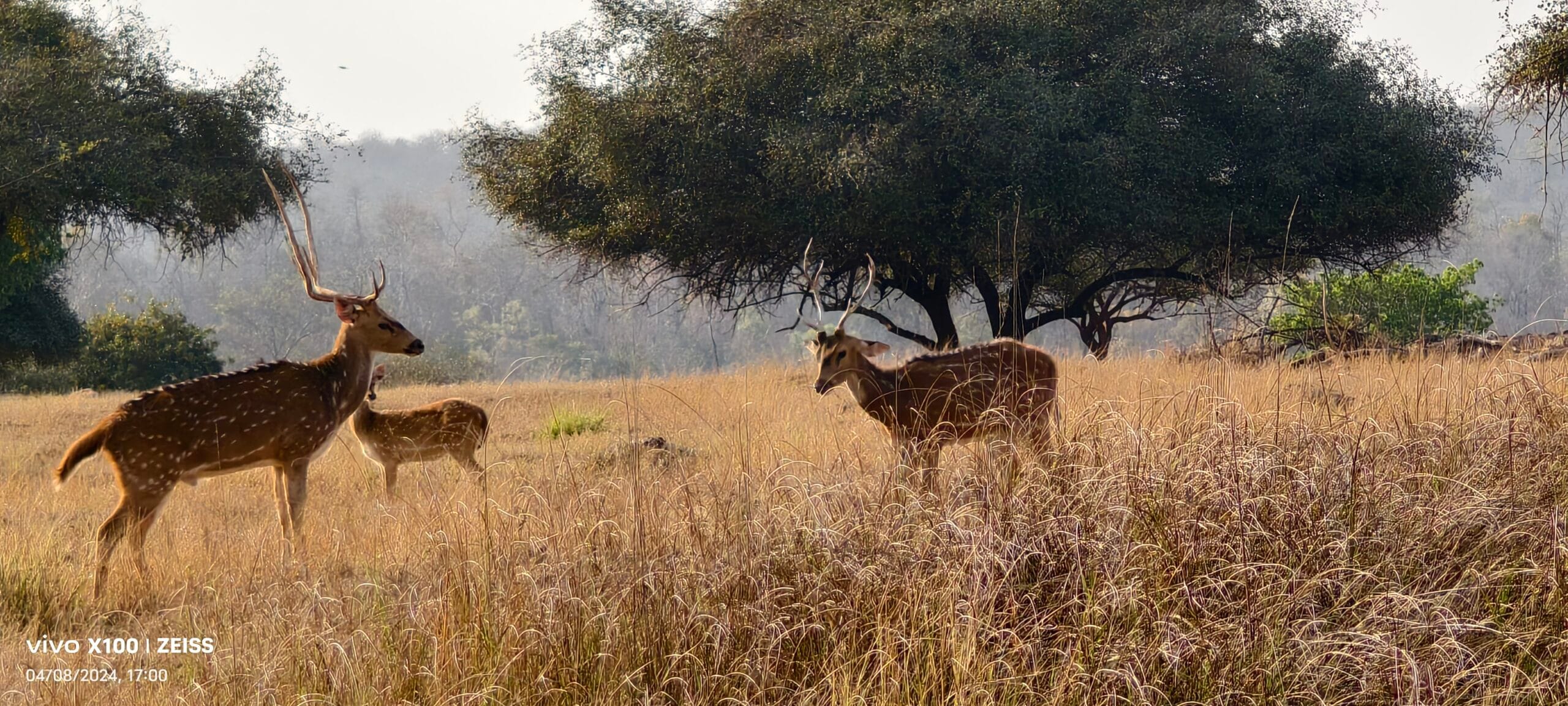
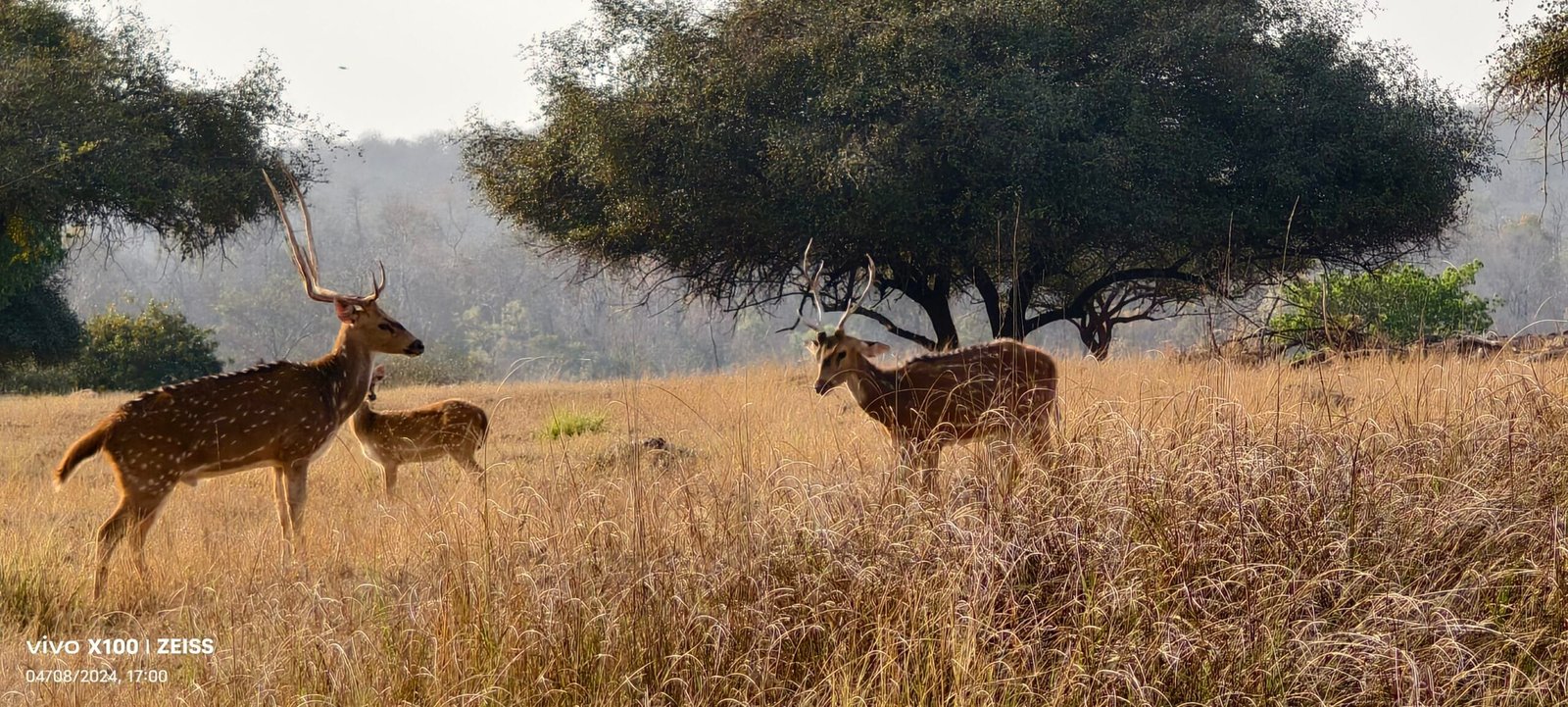
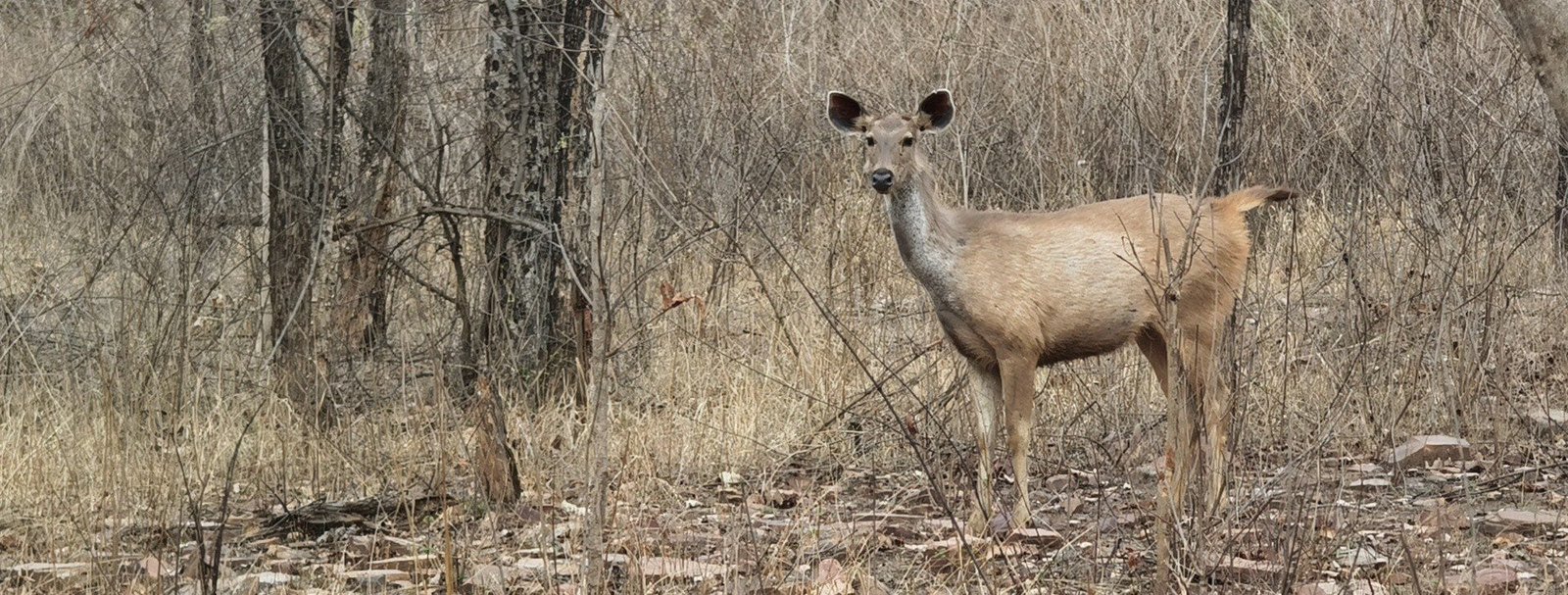
Chital and sambar are sometimes dismissed as the animals seen “before the tiger.” That is an unfair way to look at them. They give movement to Panna’s meadows, sound the forest’s alarm system and form an essential part of its ecology.
Photography Notes from the Safari Vehicle
Panna rewards photographers who can shift quickly between wildlife and landscape. Keep a fast shutter speed ready for sudden movement, but do not frame every animal so tightly that the forest disappears. A deer against a rocky plateau or a tiger moving through dry grass can say more than another full-frame portrait.
- Use continuous autofocus for moving wildlife.
- Raise ISO when light falls rather than accepting motion blur.
- Watch pale highlights and deep shadows in harsh midday light.
- Carry a wider focal length for the Ken River and plateau views.
- Protect equipment from dust and avoid changing lenses on a moving track.
- Never pressure the driver to crowd an animal for a photograph.
How to Reach Panna
Khajuraho is the most convenient air and rail base for many visitors, especially those using Madla Gate. Satna, Katni and Jhansi are other railway options, depending on your route. Panna and Khajuraho work well as a combined wildlife-and-heritage trip.
When choosing accommodation, ask for the actual driving time to the gate printed on your permit. “Near Panna” is a generous phrase on hotel listings and occasionally has a creative relationship with geography.
A Simple Two-Day Plan
Day one: arrive near Madla or Khajuraho, settle in and take an afternoon safari. Review your photographs in the evening and prepare batteries, cards and warm clothing for the next morning.
Day two: take a morning safari, rest during midday and return for an afternoon drive. If time permits, add Khajuraho or a responsible Ken River experience.
Three drives will not reveal everything, but they offer a fairer introduction than judging the reserve after one hurried safari.
Frequently Asked Questions
Which is the best gate for Panna tiger safari?
Madla is generally the most convenient for first-time visitors travelling from Khajuraho. Choose according to the official schedule, availability and your accommodation.
How do I book a Panna National Park safari?
Book through the official MP Forest portal. Verify permit, vehicle and guide charges before travelling.
What is the best time to visit Panna?
November to February offers comfortable weather. March and April offer a useful balance, while May and June can be rewarding but extremely hot.
Is a tiger sighting guaranteed?
No. Tigers are wild animals. Their movement, weather, habitat and chance determine sightings.
Can Panna and Khajuraho be visited together?
Yes. Madla Gate is approximately 25 kilometres from Khajuraho according to official MP Forest information.
The Safari Ends, but Panna Stays
What remains after Panna is not always the tiger. It may be the silhouette of a deer, dust floating through a shaft of light, the sudden seriousness of an alarm call or a quiet bend in the Ken River.
That is the real pleasure of this forest. Panna does not offer a single spectacle. It asks you to pay attention—and rewards you when you do.