
Bhigwan’s fields, scrub and rocky edges can produce several compact ground birds that are easy to call “quail” at first glance. They are not all the same. This guide compares three species photographed around Bhigwan: the Rain Quail, Jungle Bush Quail and Barred Buttonquail. Each favours a different setting, shows different markings, and rewards a slightly different approach in the field.
Quick answer: three very different birds
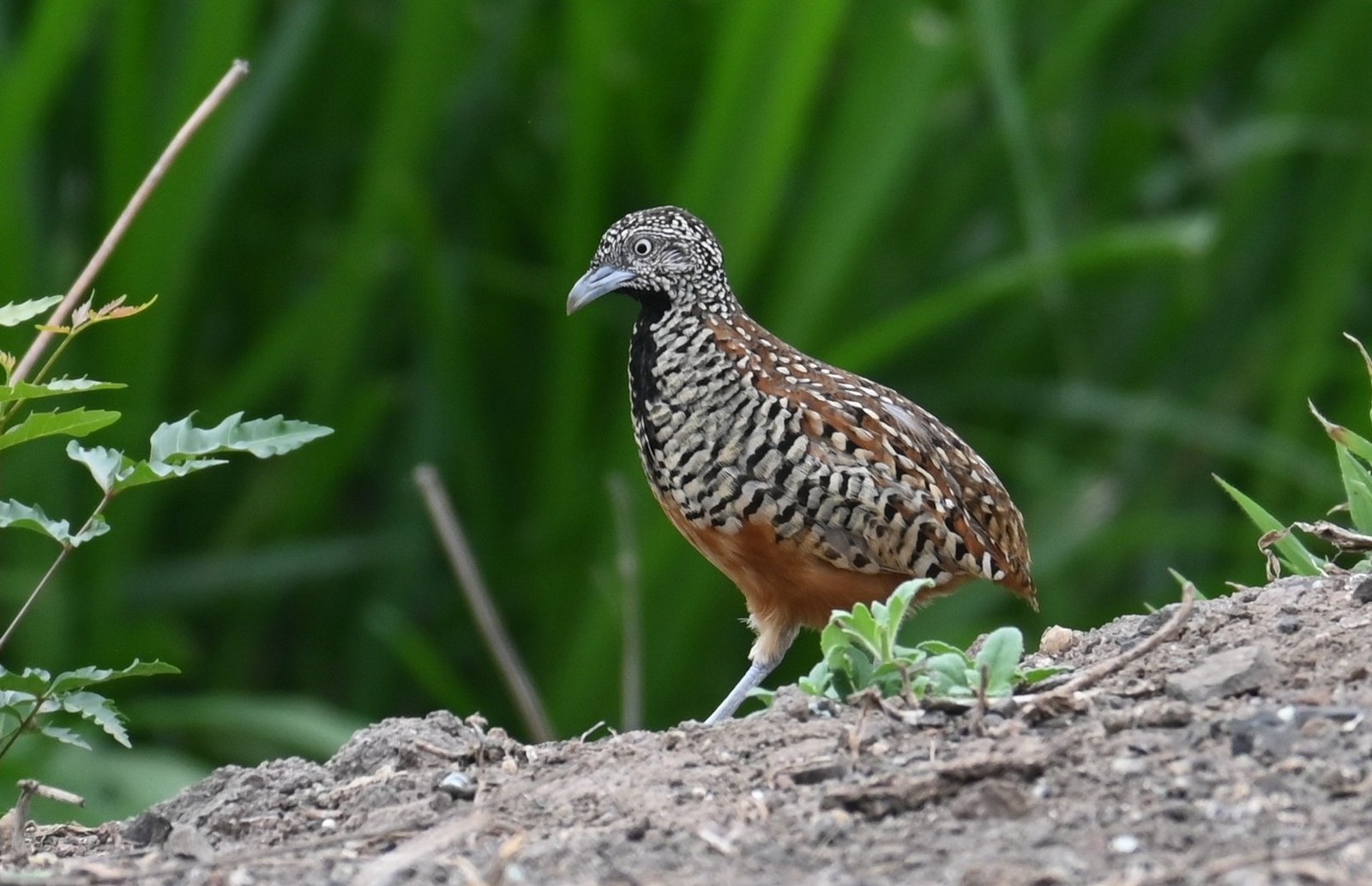
The name “quail” can be misleading. Rain Quail is a true quail, usually noticed in open cultivation and dry grass. Jungle Bush Quail is also a true quail but belongs to a small, secretive group that uses rocky scrub and low cover. The Barred Buttonquail is not a true quail at all: it belongs to the buttonquail family. It is more strongly barred below and often appears in dense grass or along earthen banks.
Rain Quail
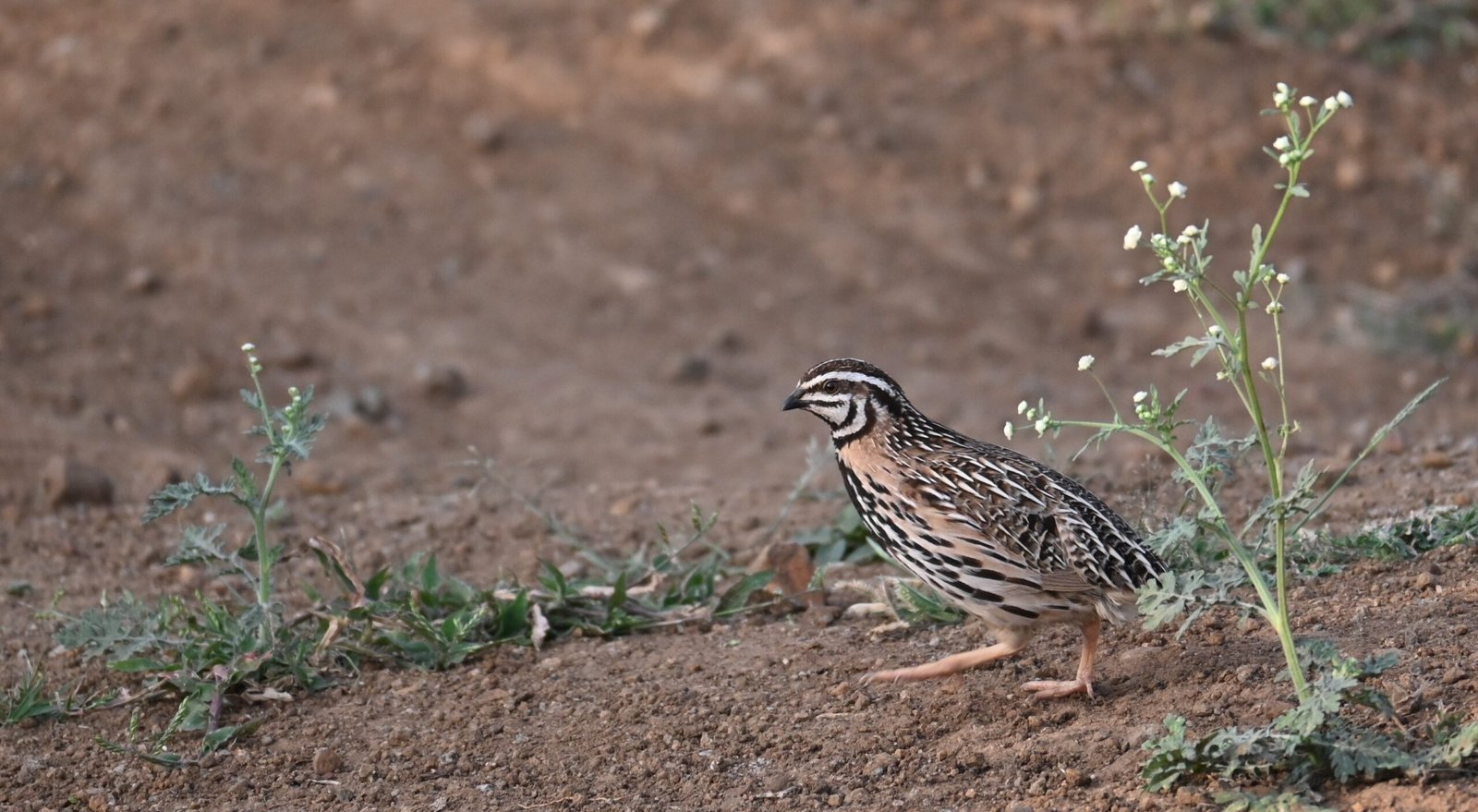
Field clue: Bold black-and-white face and dark breast in a male.
Habitat: Open fields, bare soil and farm edges.
Behaviour: Walks briskly in the open, then slips into cover.
Jungle Bush Quail
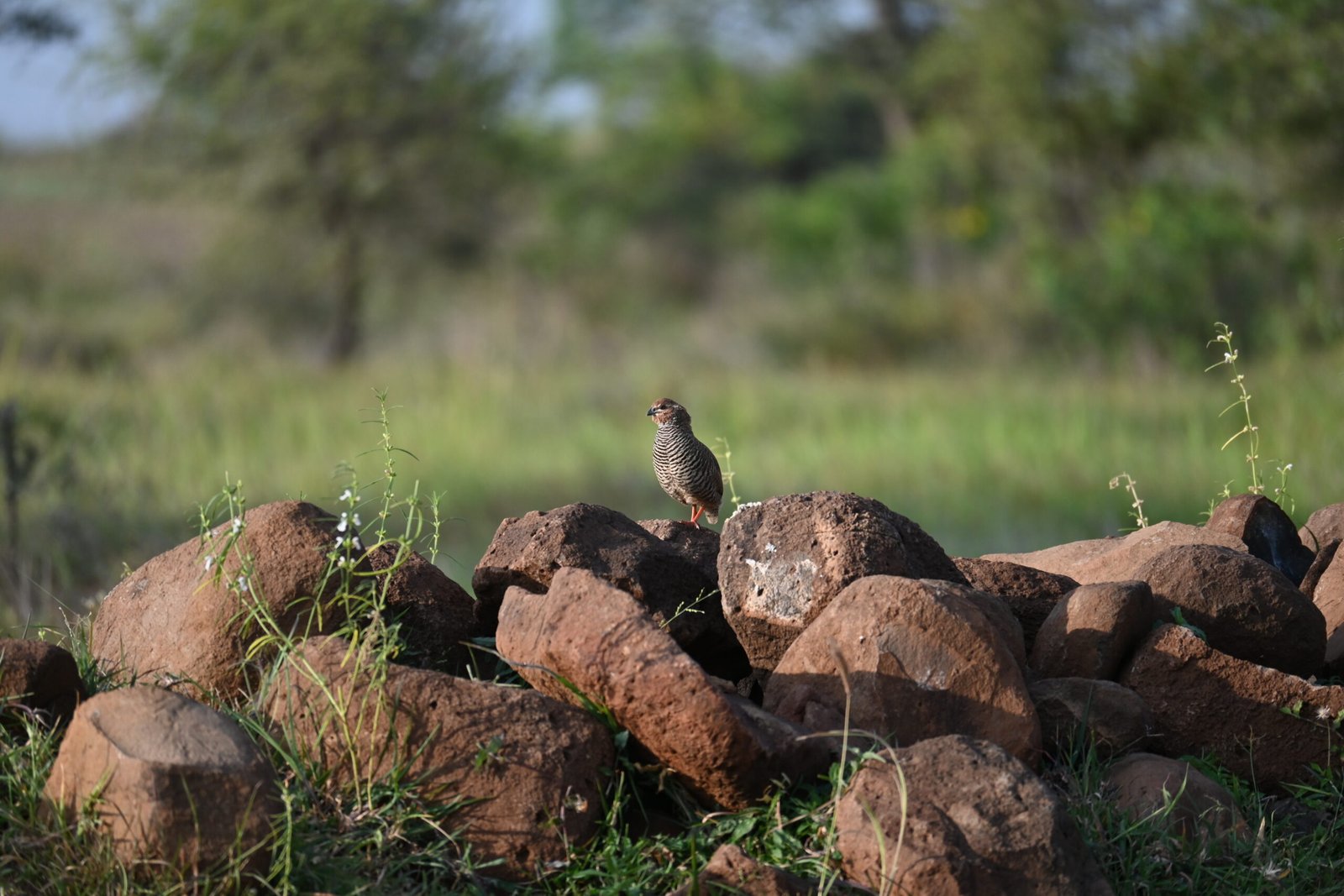
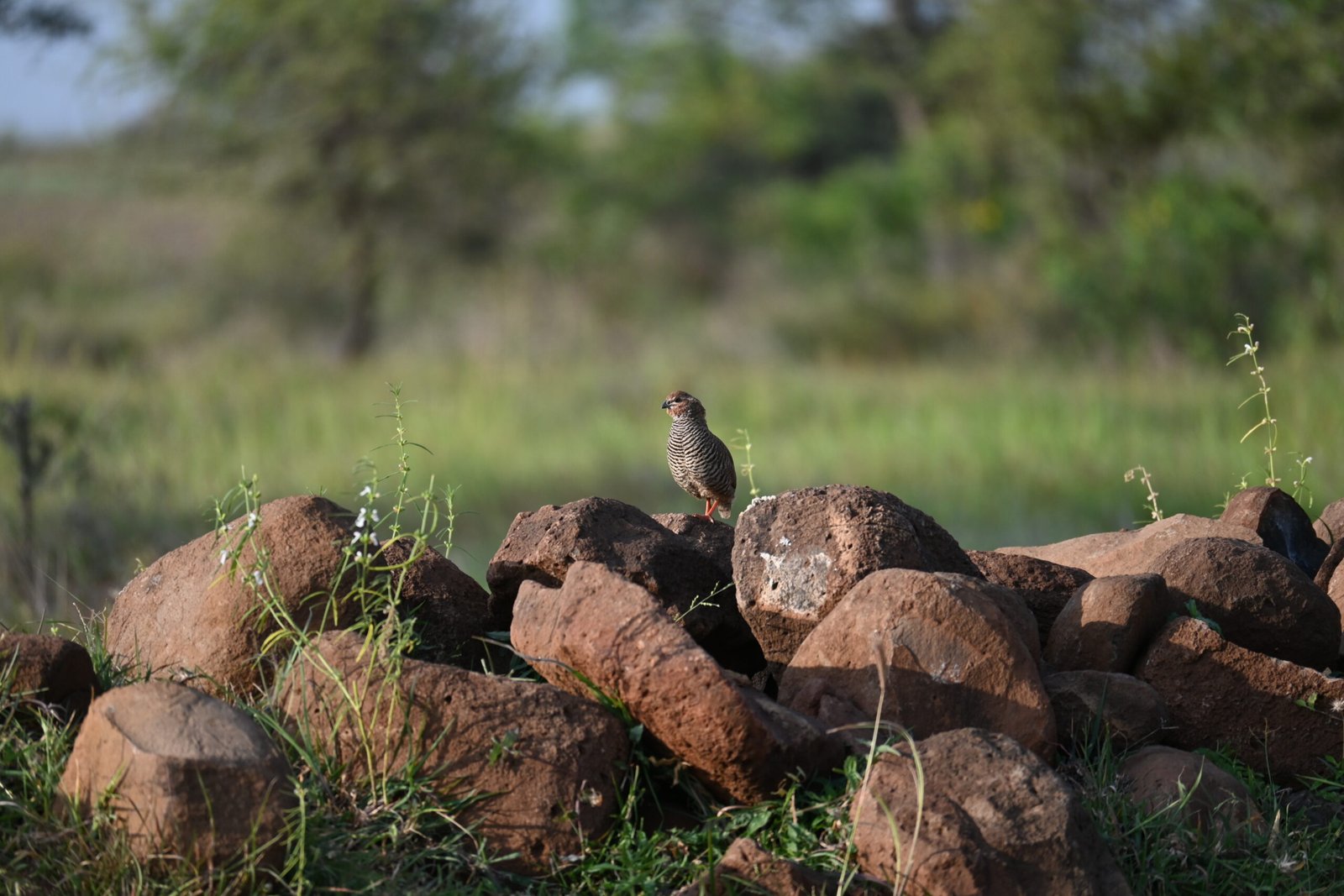
Field clue: Compact body with fine barring; often seen in a small group.
Habitat: Rocky scrub, thorny margins and low vegetation.
Behaviour: Moves quickly on foot and stays close to cover.
Barred Buttonquail
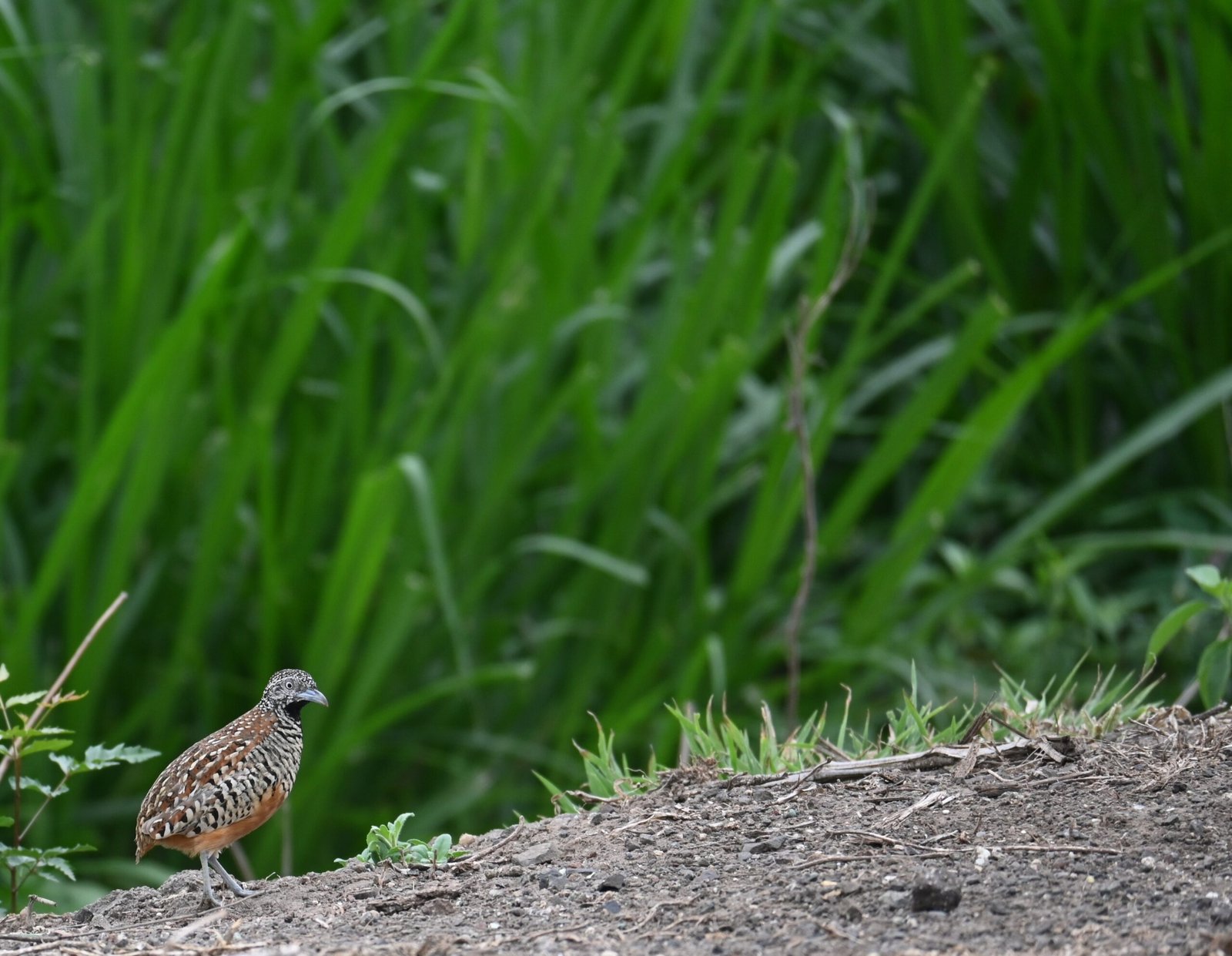
Field clue: Strong pale-and-dark bars across the underparts.
Habitat: Grassy edges, scrub and earthen banks.
Behaviour: Low to the ground and easily overlooked until it moves.
Compare the birds in photographs
Tap or click any photograph to view it at full size.
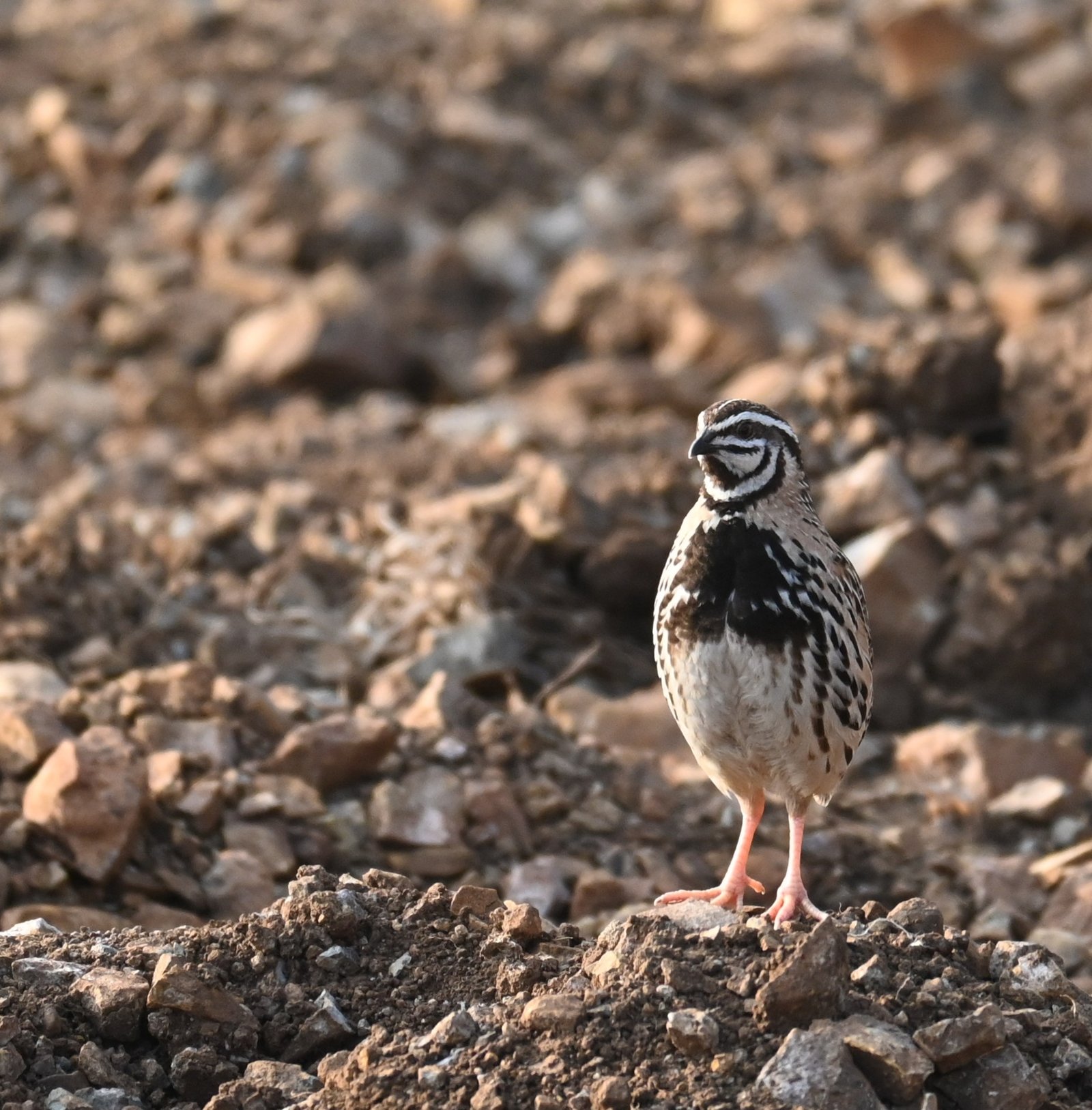
Facial stripes and dark breast
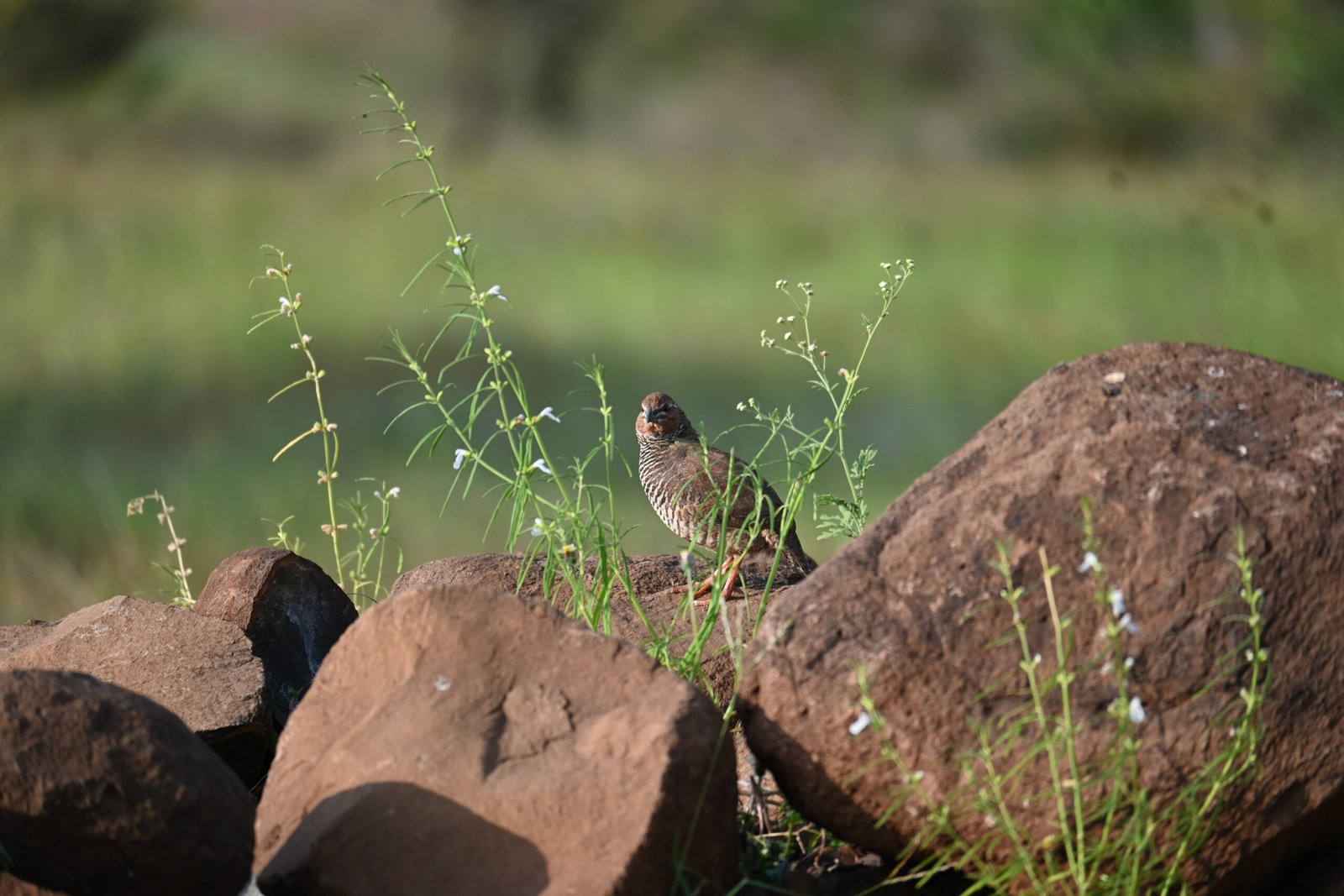
Fine barring and compact shape
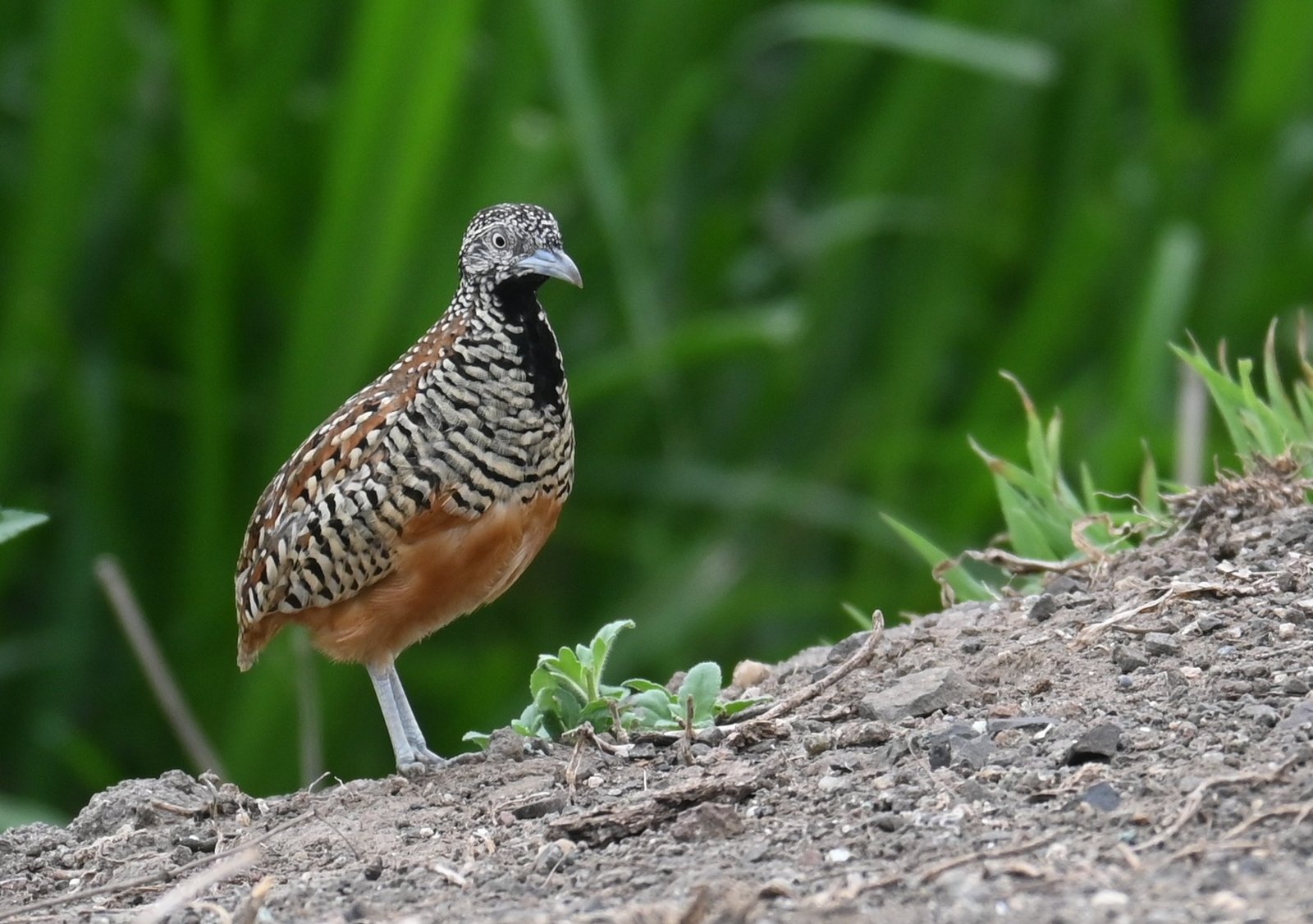
Bold bars across the underparts
More field photographs from Bhigwan
These wider frames show each bird in its surroundings, while the closer photographs above make the field marks easier to compare.
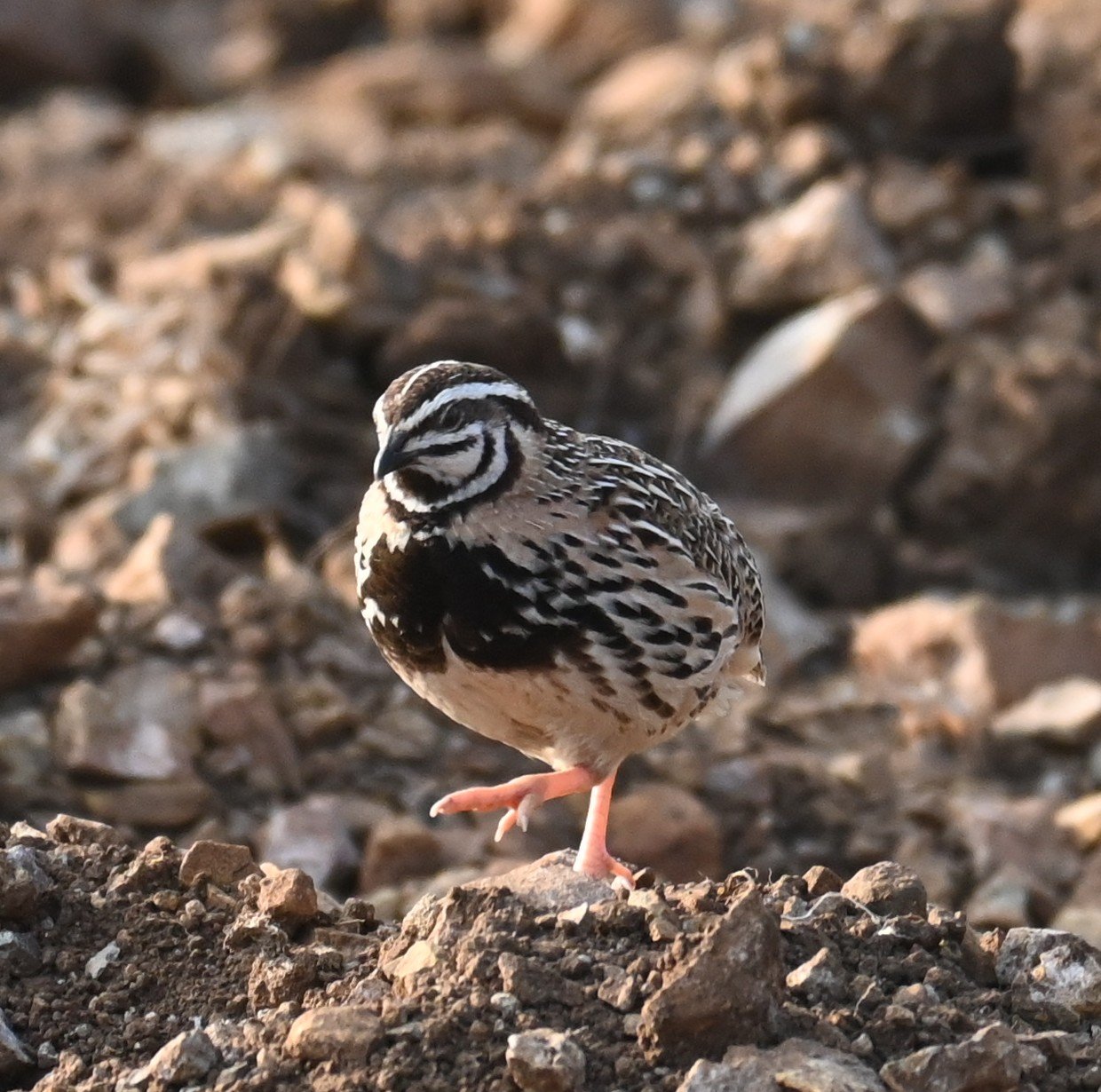
1. Rain Quail: the open-country specialist
The Rain Quail is the easiest of the three to recognise when a male gives a clear view. Look first at the face: the pale eyebrow and dark bands create a sharply patterned head. A dark central breast patch contrasts with the paler belly, while the back is warm brown and streaked. The pinkish legs and upright, alert posture are useful supporting clues.
In Bhigwan, Rain Quail are most likely on open, dry ground near fields, tracks and loose soil. Early morning and late afternoon light can make the subtle brown tones easier to photograph. Keep distance and let the bird choose its route; a bird that is feeding normally is much more likely to remain visible than one that has been pressured.
See the full Rain Quail field notes from Bhigwan for more photographs, habitat context and responsible birding tips.
2. Jungle Bush Quail: small birds of rocky scrub
Jungle Bush Quail are usually less obvious than Rain Quail. Their compact proportions and fine barring suit a life close to rocks, thorns and low vegetation. Instead of standing in wide-open farmland, they frequently move between cover, often in small groups. A short glimpse can be enough to identify the species when the habitat and shape are considered together.
Look for a smaller, rounded bird with dense barring rather than the bold facial contrast of a male Rain Quail. The best strategy is to scan quietly along rocky edges, fallen stones and short scrub. Avoid trying to flush a covey for a photo; patient waiting produces more natural behaviour and is better for the birds.
Read the detailed Jungle Bush Quail at Bhigwan article for the original field observations.
3. Barred Buttonquail: similar size, different family
Although it is often grouped with quails by birdwatchers, the Barred Buttonquail belongs to a separate family. Its name is a useful warning not to identify birds by size alone. The bird has a rounded, low-slung impression, richly patterned upperparts, and very clear dark-and-pale barring on the breast and belly. In the right view, these bars are much stronger than the finer patterning of a bush quail.
At Bhigwan, dense grass, weed growth and earthen banks are productive places to look. The species can remain almost invisible against soil and vegetation, so scan slowly for movement at ground level. If it crosses into the open, a low, calm viewing position is preferable to approaching closely.
Our Barred Buttonquail field notes include a closer photographic study of this distinctive ground bird.
How to identify them in a few seconds
- Look at the face: a crisply black-and-white patterned male face points towards Rain Quail.
- Look at the breast: broad, obvious bars across the underparts support Barred Buttonquail.
- Look at habitat: exposed field and farm-edge ground suit Rain Quail; rocky cover is stronger for Jungle Bush Quail; lush grass and low banks often suit Barred Buttonquail.
- Look at the whole bird: do not rely on a single feather pattern. Posture, body shape, habitat and behaviour together make an identification far more reliable.
When and how to look for quails in Bhigwan
Bhigwan is widely known for waterbirds, yet its agricultural margins, scrubland and rocky ground are equally valuable for ground birds. Visit during cool, quiet parts of the day, stay on existing paths, and scan with binoculars before lifting a camera. Seasonal rainfall changes both vegetation height and visibility, so the same location may look very different across the year.
For a broader list of species and habitats, explore our Birds of Bhigwan guide. If you are planning a trip, combine patient birding with responsible wildlife photography: no playback, no flushing, no baiting, and no attempt to alter the bird’s natural behaviour.
Why a careful comparison matters
A good identification adds more value to a wildlife photograph than a name alone. Knowing whether a bird is a Rain Quail, Jungle Bush Quail or Barred Buttonquail tells a richer story about its habitat and behaviour. These small ground birds are part of the same Bhigwan landscape, but each uses it in its own way. Watching closely is the best way to see those differences.
All photographs in this guide were made in Bhigwan, Maharashtra. Please watch wildlife with space and patience.