
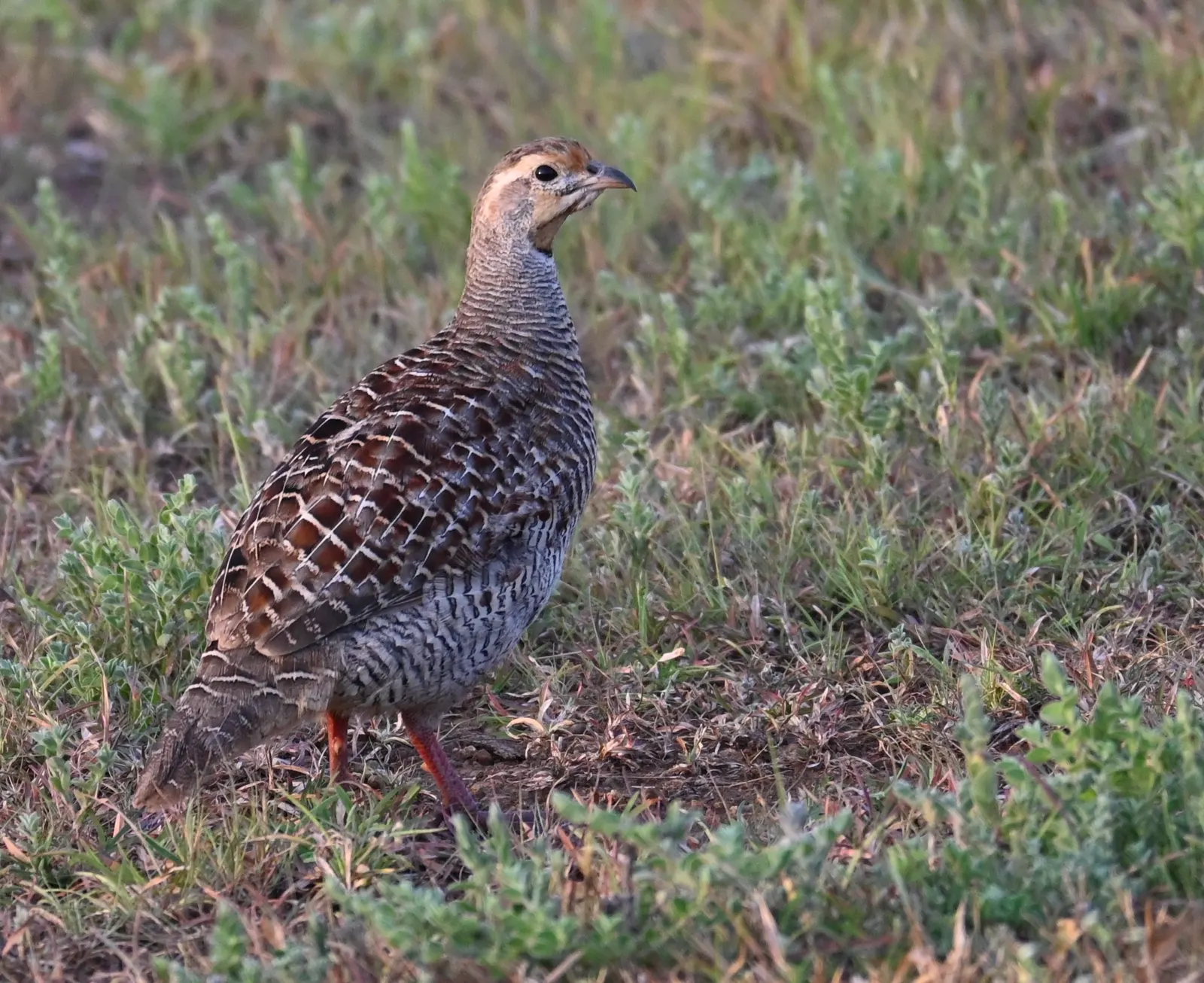
A Grey Francolin and a sandgrouse can look like much the same brown bird when they are far out in Bhigwan’s grassland. Both spend time on the ground and both can blend into dry vegetation. Put clear photos beside each other, though, and the differences become easier to see. This guide compares the Grey Francolin in our DSC_0180 photograph with the Painted Sandgrouse in our grassland series.
Compare the photographs
Open each image for a larger view. The crops have the same display size here, but the birds were not photographed at the same distance, so do not judge their real size from the pictures alone.
More field photographs
These are separate photo series from the Bhigwan area, not the two birds together in one frame. Compare the body shape, face pattern and the ground around each bird. Click or tap a photograph to open the larger image.
Grey Francolin


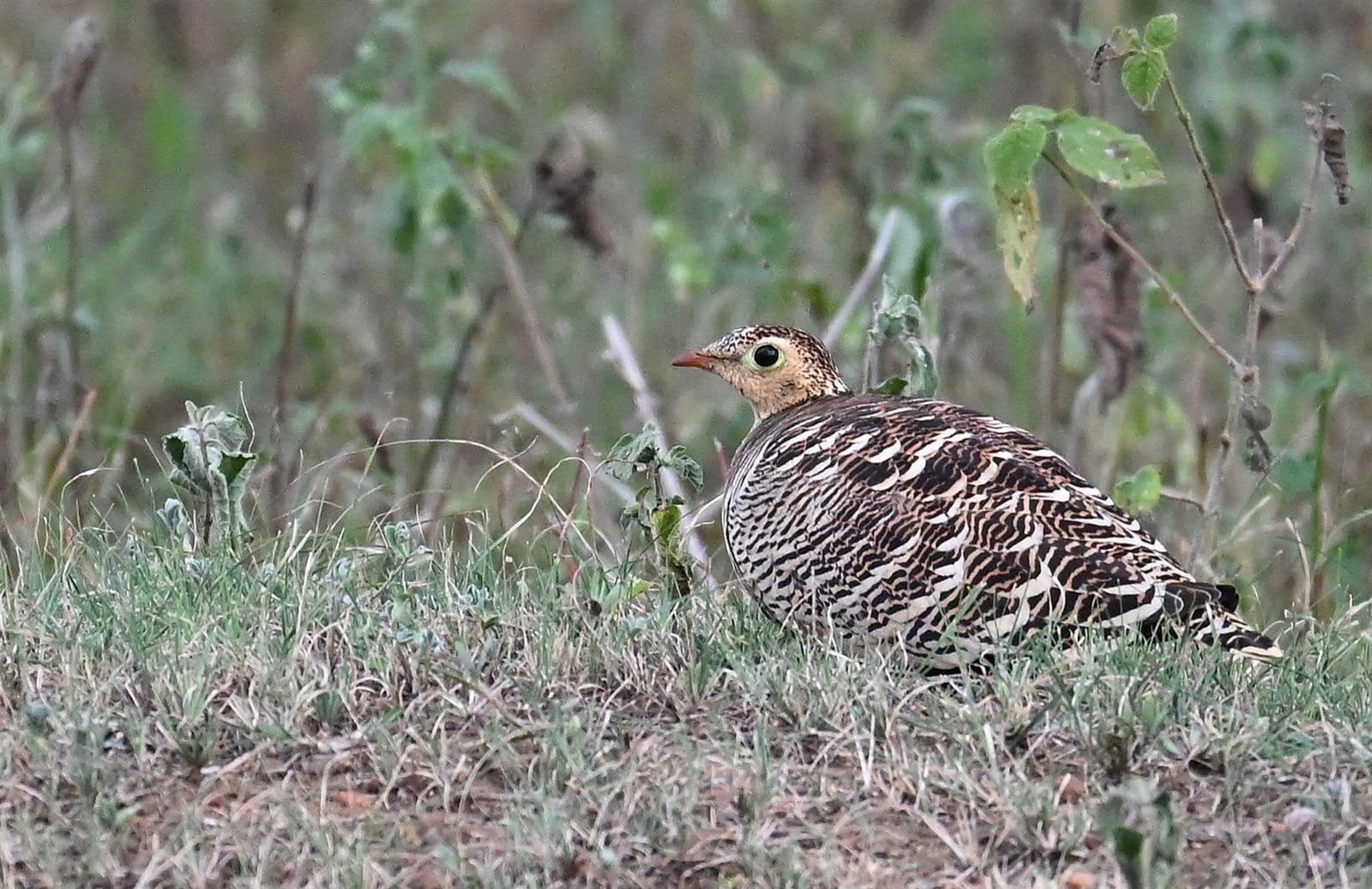
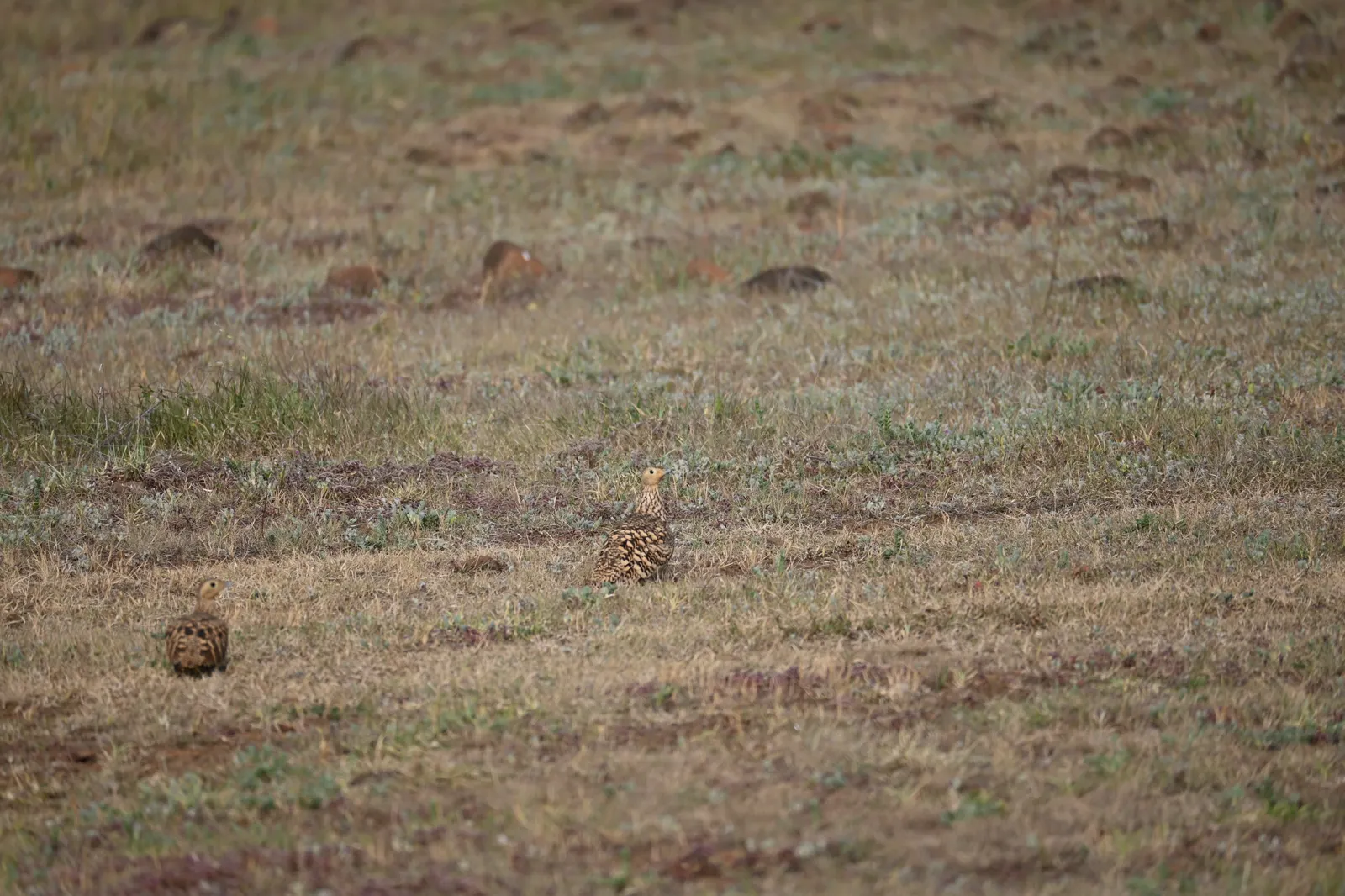
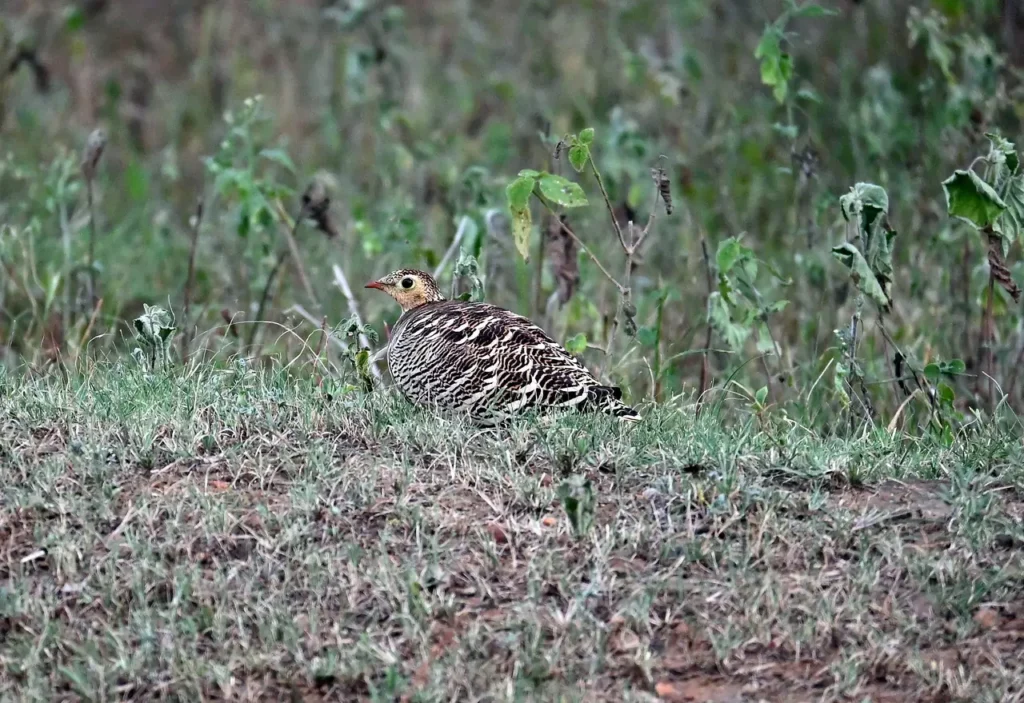
Sandgrouse
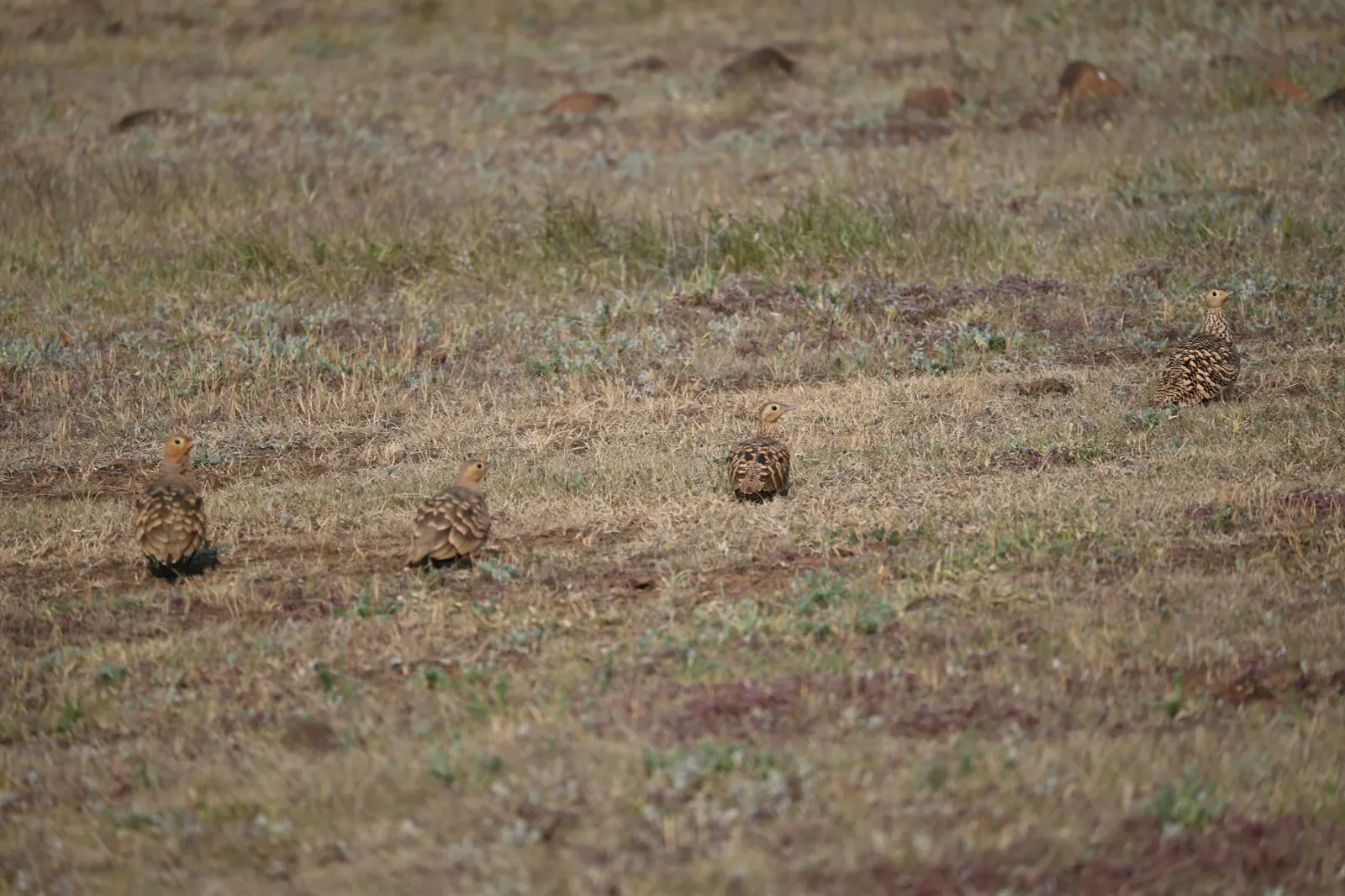
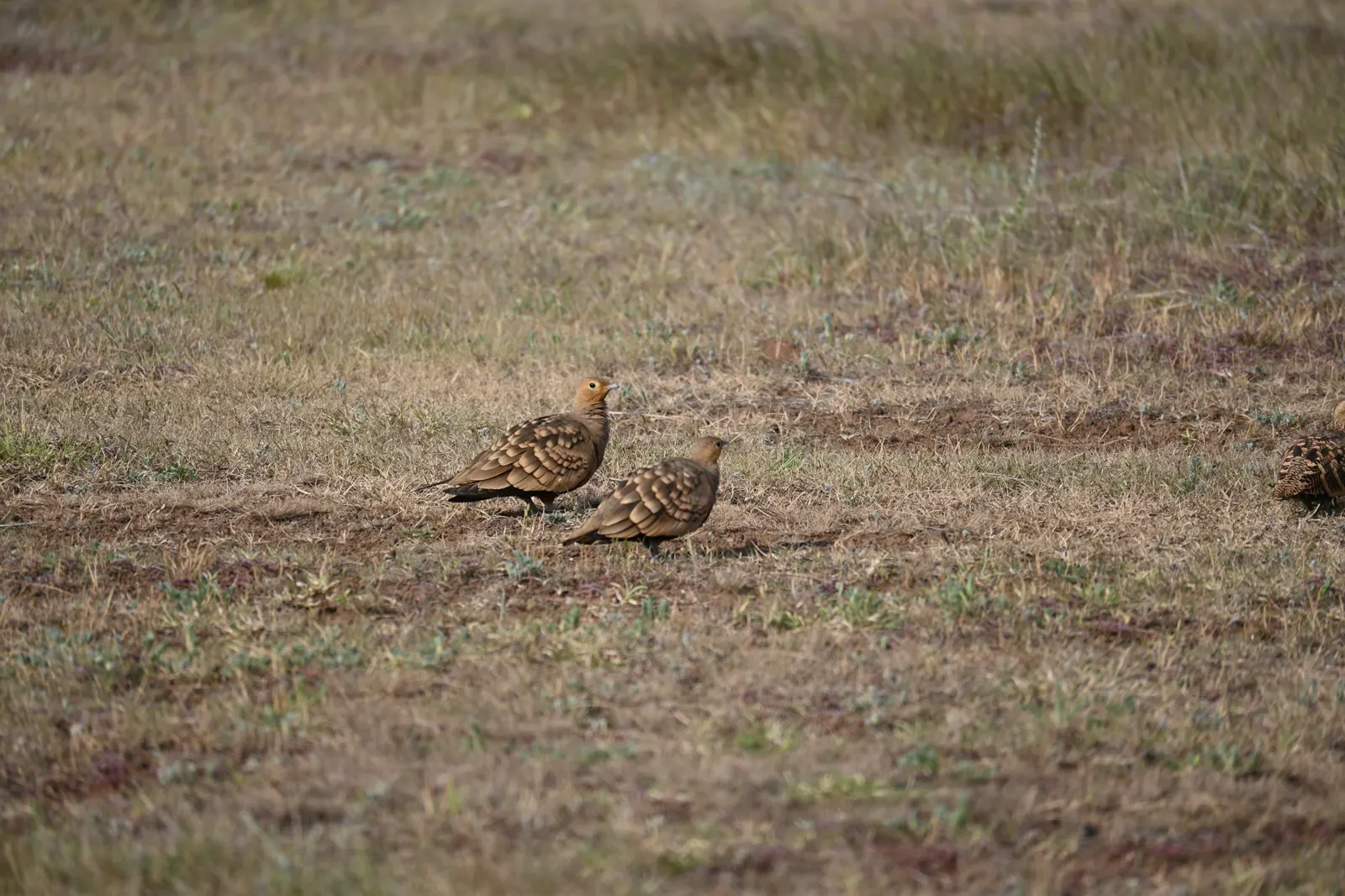
The quickest differences
| Look at | Grey Francolin | Painted Sandgrouse |
|---|---|---|
| Face and head | Warm orange-brown face with a clear pale eyebrow | Softer pale face in the female shown here |
| Body shape | Upright, chicken-like stance with a longer visible neck | Rounder, lower body; short legs are less obvious in grass |
| Pattern | Fine, close barring across neck and underparts | Dense mottling and barring across much of the body |
| First impression | Often walks with head raised | Often seems to melt into the ground |
What the Grey Francolin photo shows
Start at the face. In DSC_0180, the eye sits in a warm, plain face above a pale line. The neck has close grey-and-dark bars. The bird stands high enough for the reddish legs and longer neck to be visible, and its back has brown and cream markings. Those details suit Grey Francolin. The bird is sometimes called Grey Partridge in older writing; the name Grey Francolin is clearer for this comparison.
The photo does not show its call or a flock, so we are using plumage and shape here. For more about the bird on its own, see our Grey Francolin article. The eBird species guide also describes the orange-toned face and fine barring.
What the sandgrouse photos show
In the sandgrouse photographs, the birds sit lower in the short grass. Their rounded bodies and intricate pattern make them harder to pick out from the ground. The single-bird portrait makes the markings easier to study; the wider frame shows why the same bird can vanish from view a few steps farther away. These are the photos used in our Painted Sandgrouse field notes.
Do not use brown colour alone to name a sandgrouse. Bhigwan also has Chestnut-bellied Sandgrouse, a separate species with a different pattern and shape. If the view is brief or the photo does not show enough detail, “sandgrouse” is more honest than a forced species label.
A useful way to check in the field
First note the stance and the length of the visible neck. Then check the face, breast and back pattern. Take a wider frame before zooming in: the surrounding ground, grass height and distance can help you understand how the bird was seen. If the bird remains settled, keep your distance. A photograph made from the track is better than disturbing a ground bird for a cleaner background.
For more birds from the same dry landscape, visit our Bhigwan grassland photo guide. This comparison is based on the photographs here; it is not a claim that the francolin and sandgrouse were photographed together.