
Bhigwan is famous for flamingos, but the land away from the backwater is worth looking at too. On the stony grassland around Bhigwan and Kadbanwadi, we photographed four very different birds: a singing pipit, a Red-necked Falcon, a blue roller and an Indian Courser. These pictures show where each bird sat or moved, not just a close crop of its feathers.
This is a photo walk through that dry country. If you are planning a Bhigwan birding trip, it may help you know where to look once you leave the water.
1. Start with the ground: a pipit on the stones
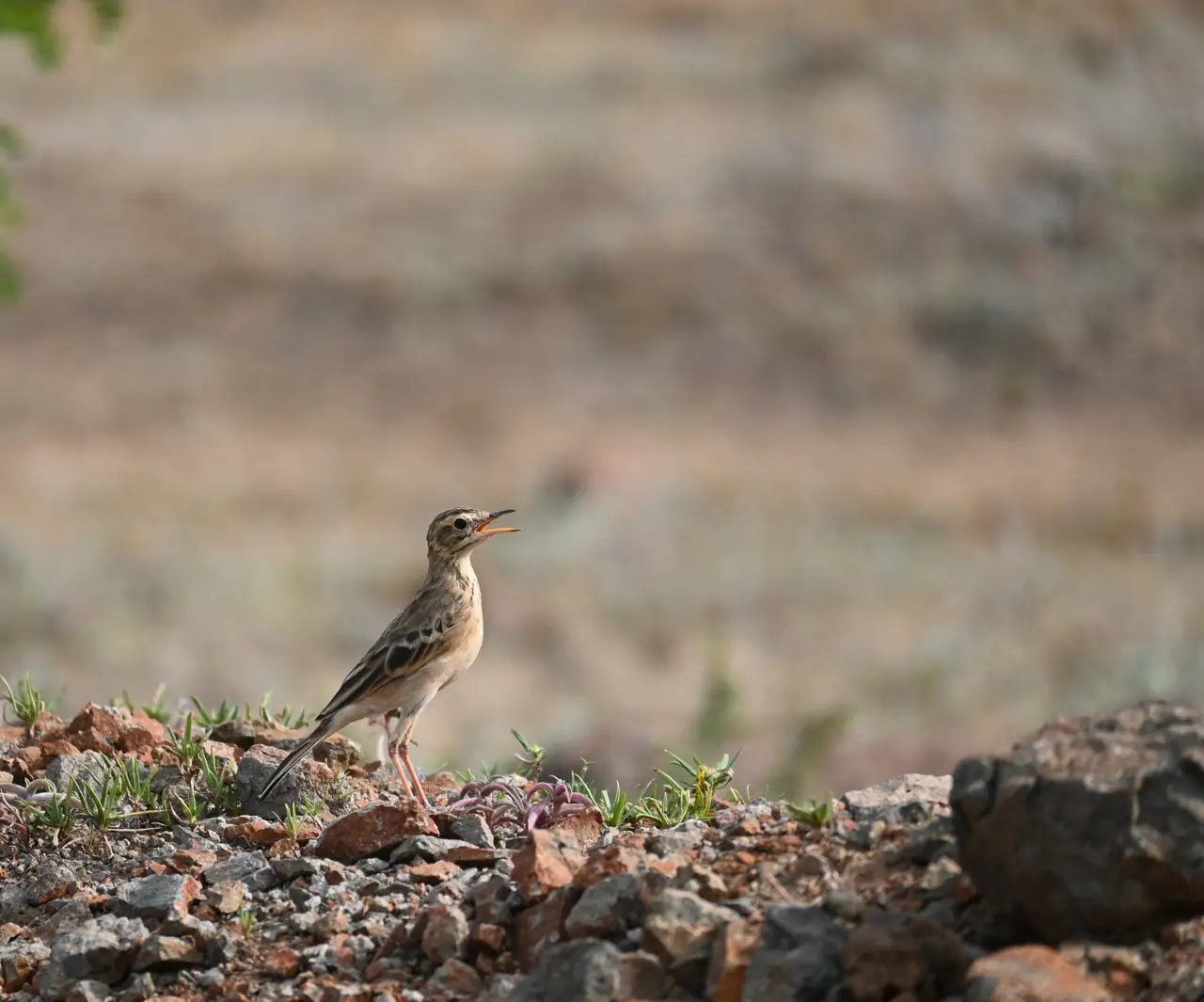
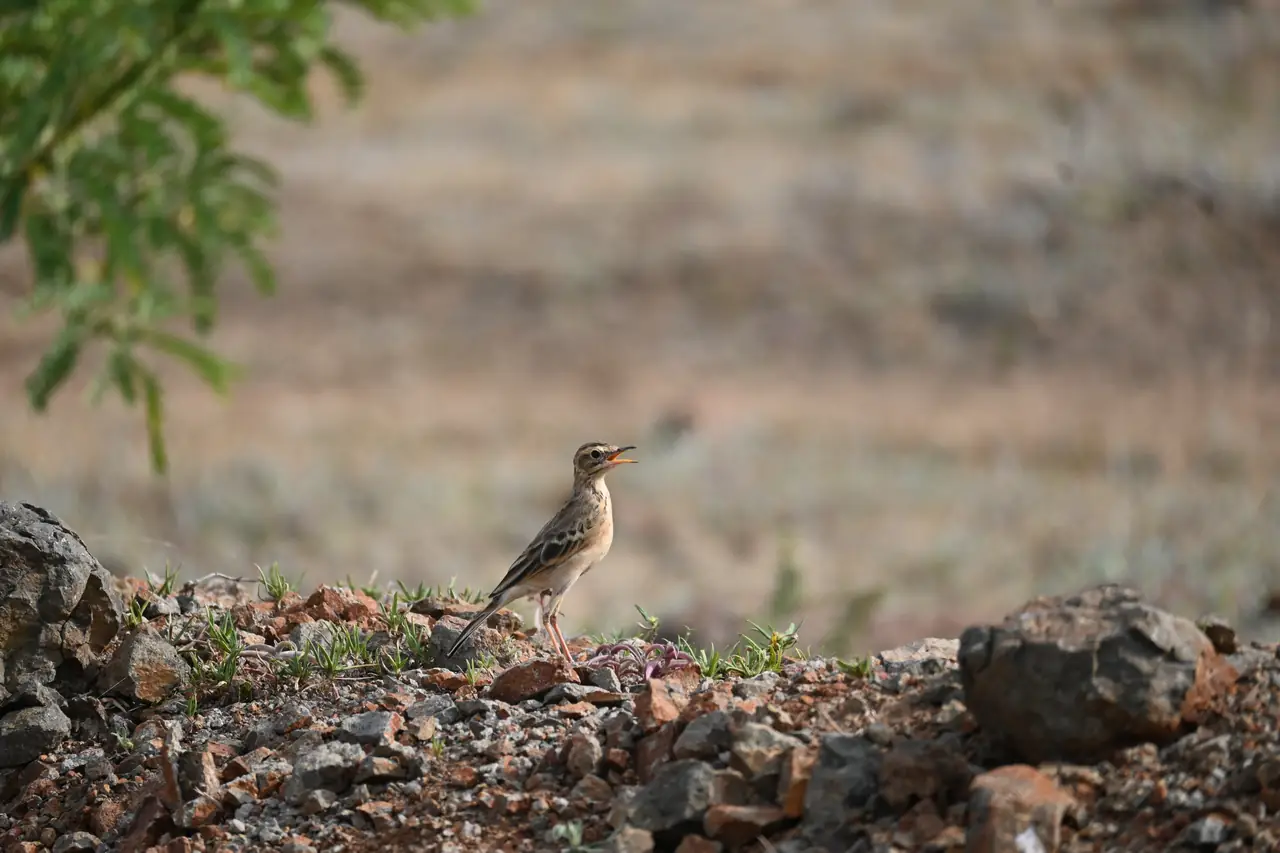
The pipit was easy to miss until it lifted its head and opened its bill. It stood on a low bank among stones and sparse grass, almost the same colours as the ground. In the close frame you can see its pale underside, brown upperparts and long tail. The wider frame shows how little cover it needed to disappear again.
Pipits can look very alike. A photograph of one side is not enough for us to name this bird to species with confidence, so we have kept the honest label pipit. If you are trying to identify one in the field, note its call, tail, bill, leg colour and habitat as well as its markings. A short sound recording can be more useful than another distant photo.
2. Look up: a Red-necked Falcon
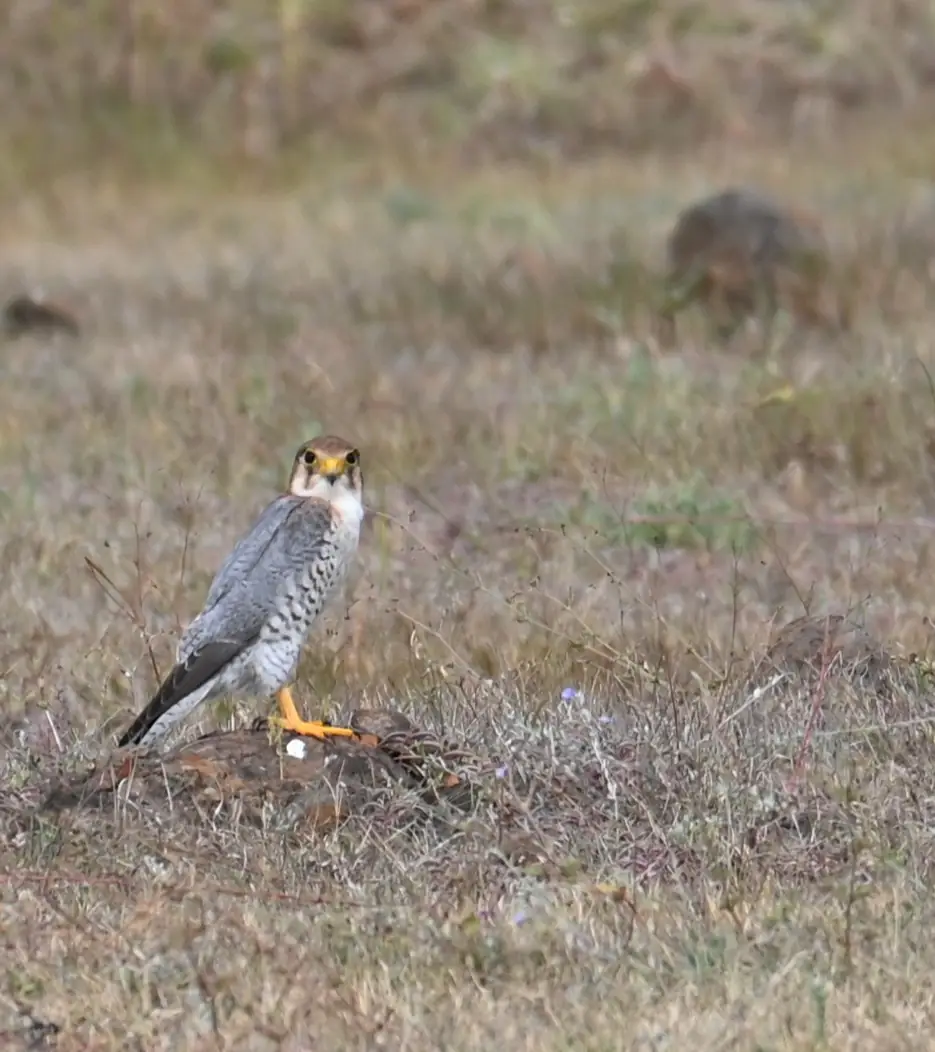
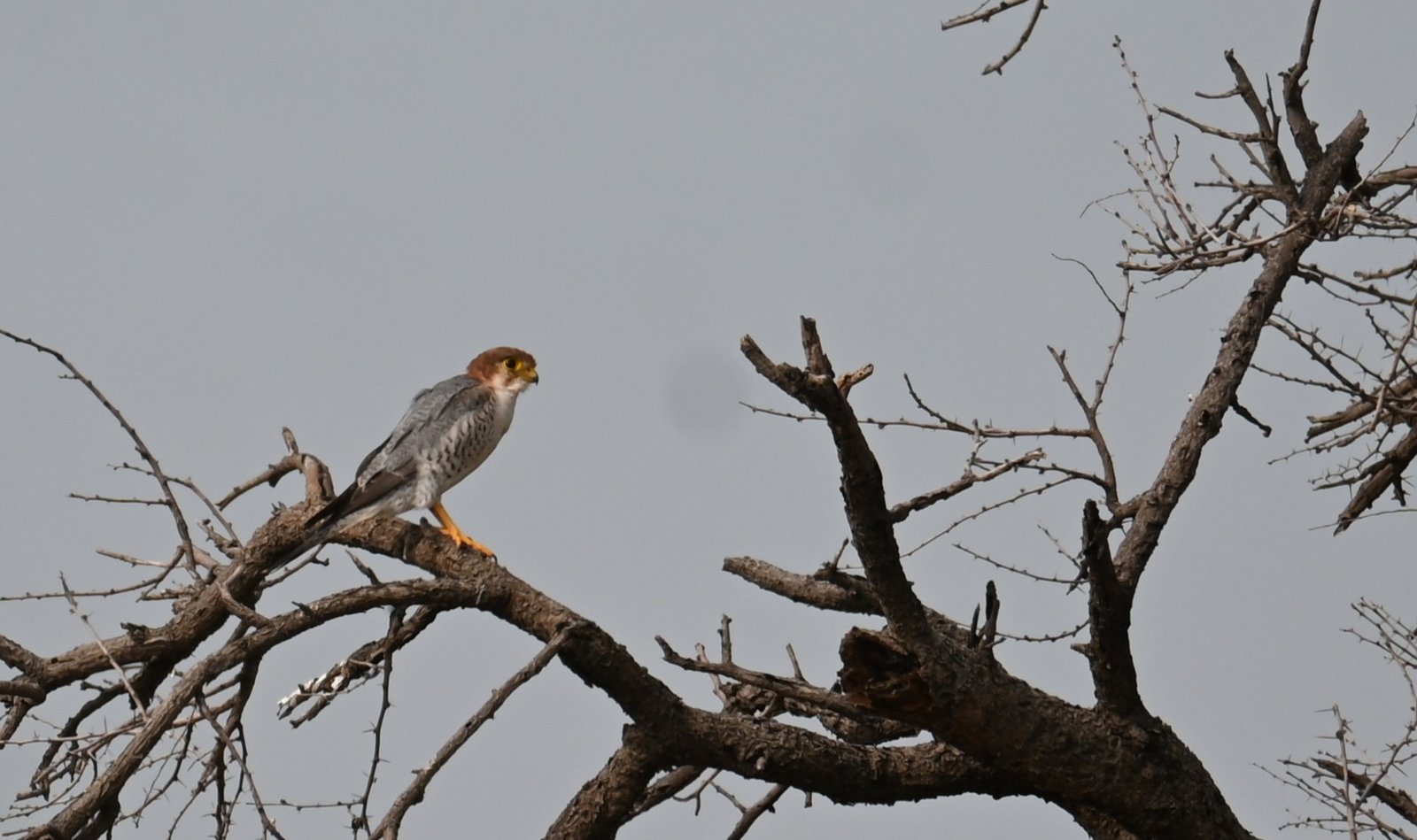
Next, look across the grass for a small raised mound or a bare branch. Our Red-necked Falcon used both. Its rust-coloured head, blue-grey back, fine marks below and yellow face and feet show well in the photographs. In the tree frame, the open country around the perch is as important as the bird itself.
It is tempting to walk closer when a falcon sits still. We stayed back and used the long lens. That left the bird room to choose when to move, and it gave us both a portrait and a sense of the place. For more identification details, read our Red-necked Falcon guide.
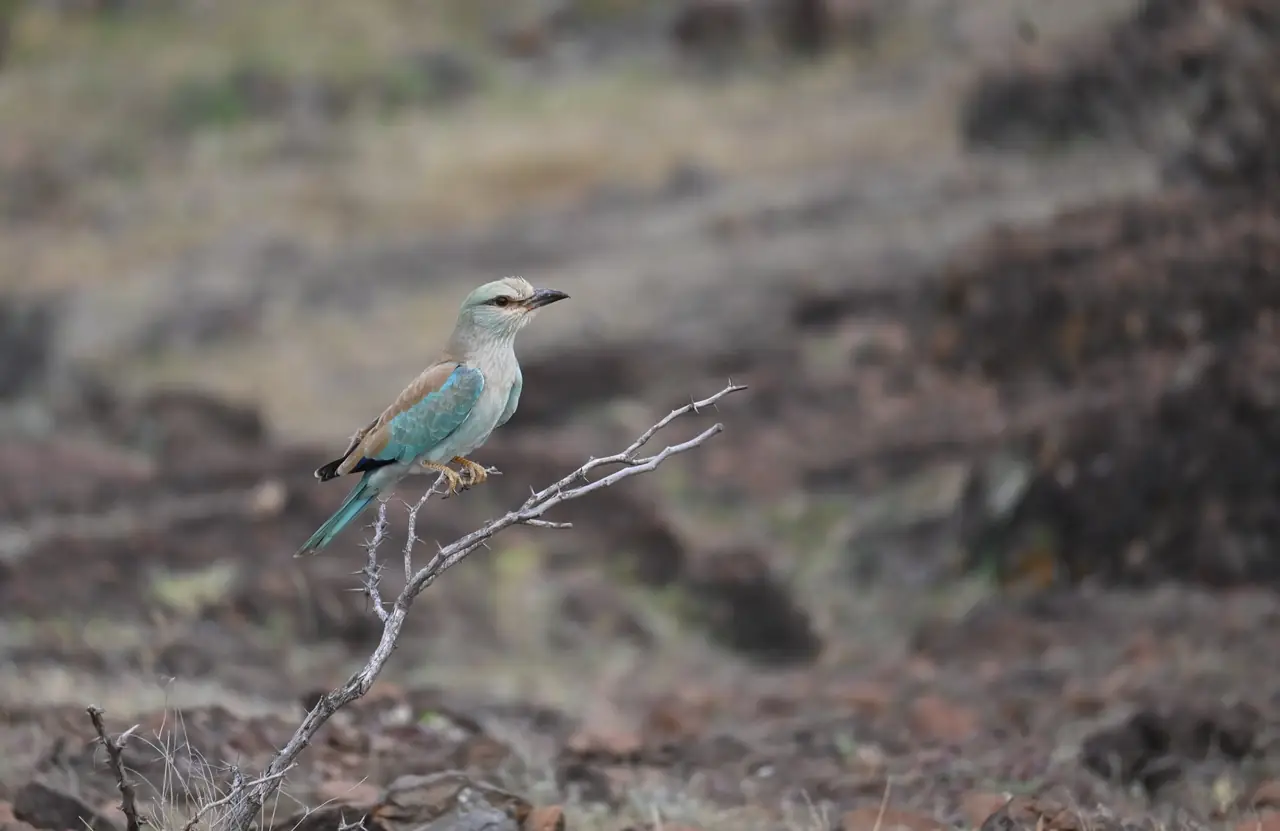
3. Check the thorn branches: a blue roller
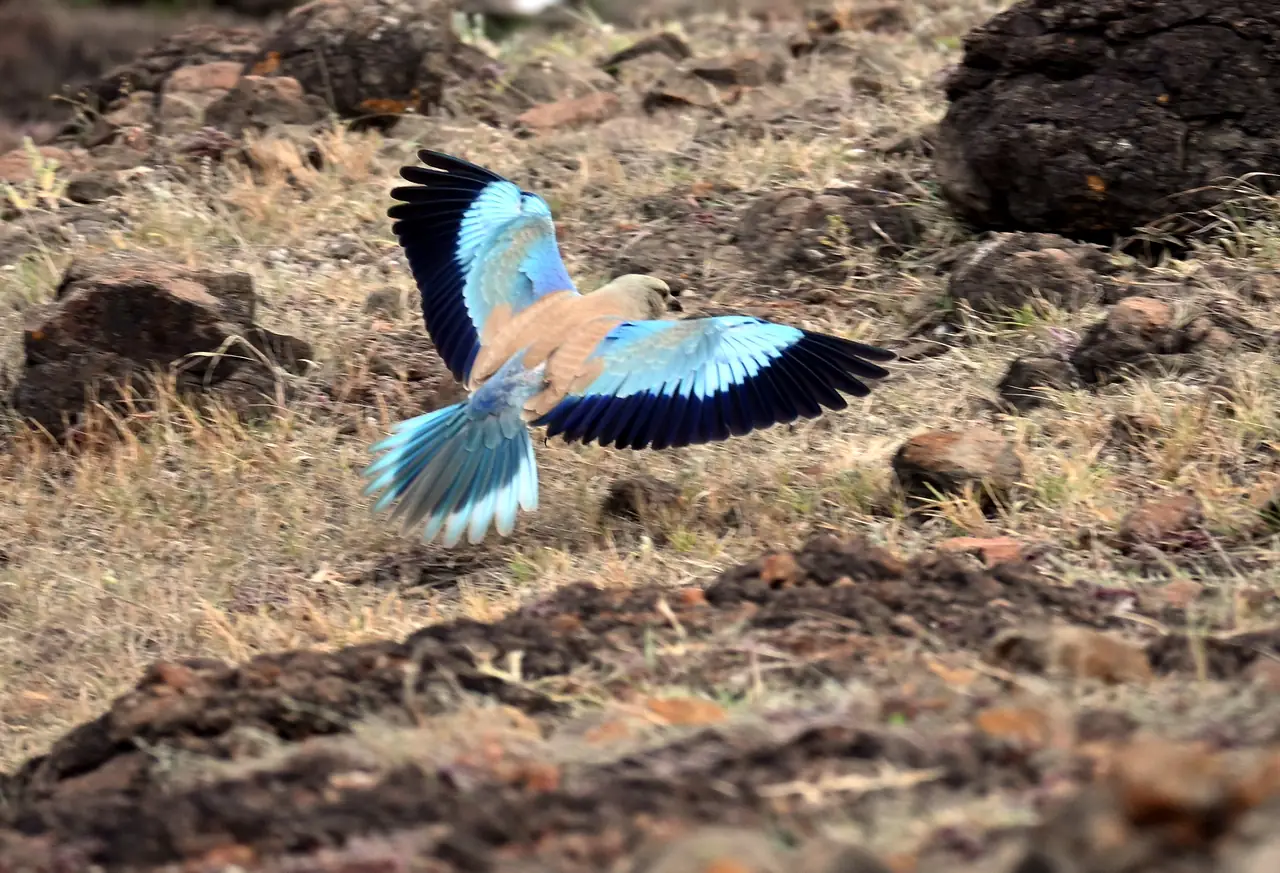
The roller gave us a different kind of picture. Perched among bare twigs, it looked pale and quiet against the brown hills. Then it opened its wings and the blue became the main feature. A perched view and a flight view together tell much more than either one alone.
Rollers can be confused when light or age changes their colours. We are leaving the species name off this set while we check the identification, rather than putting a doubtful name into a search result or image caption. For now, the useful field lesson is simple: photograph the throat, back, wings and tail if the bird flies. Those views can settle an uncertain ID later.
4. Watch the open patches: an Indian Courser
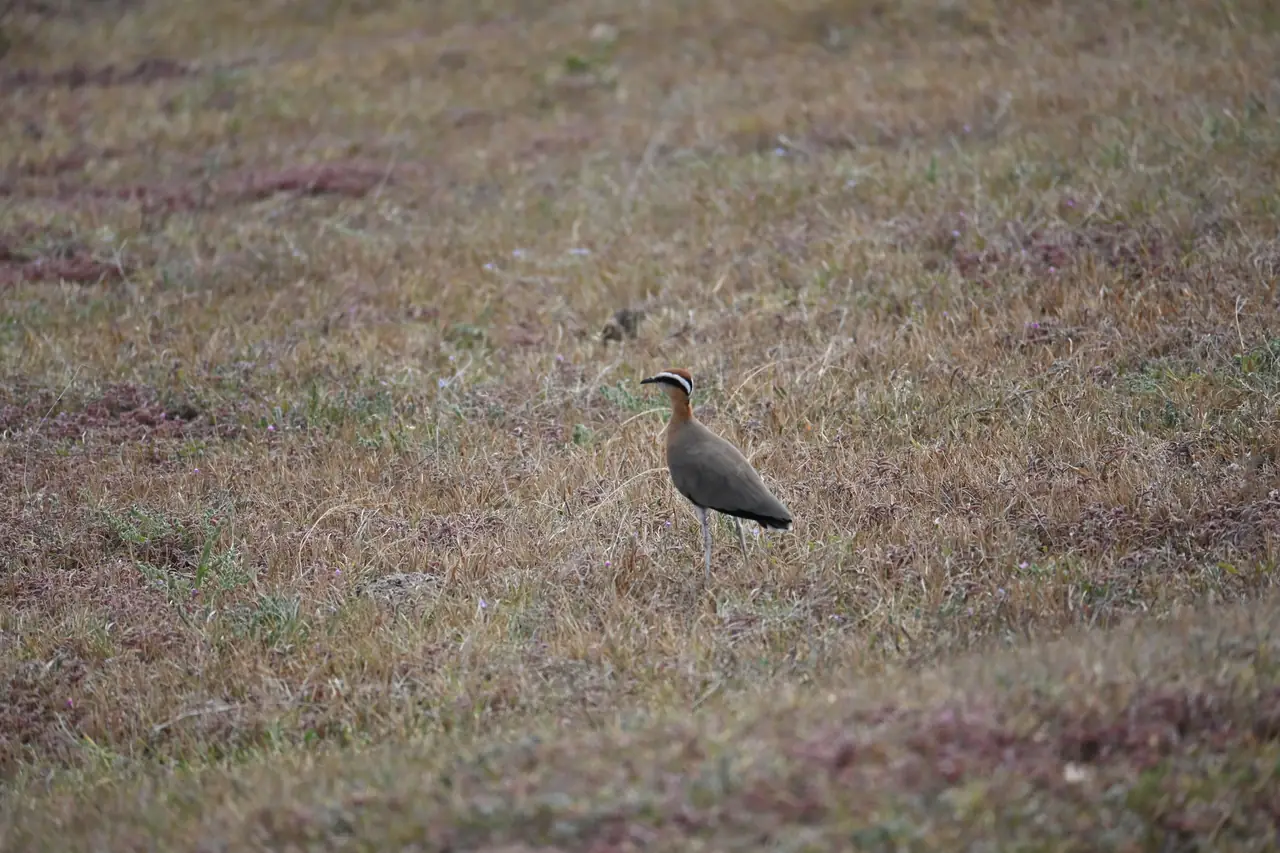
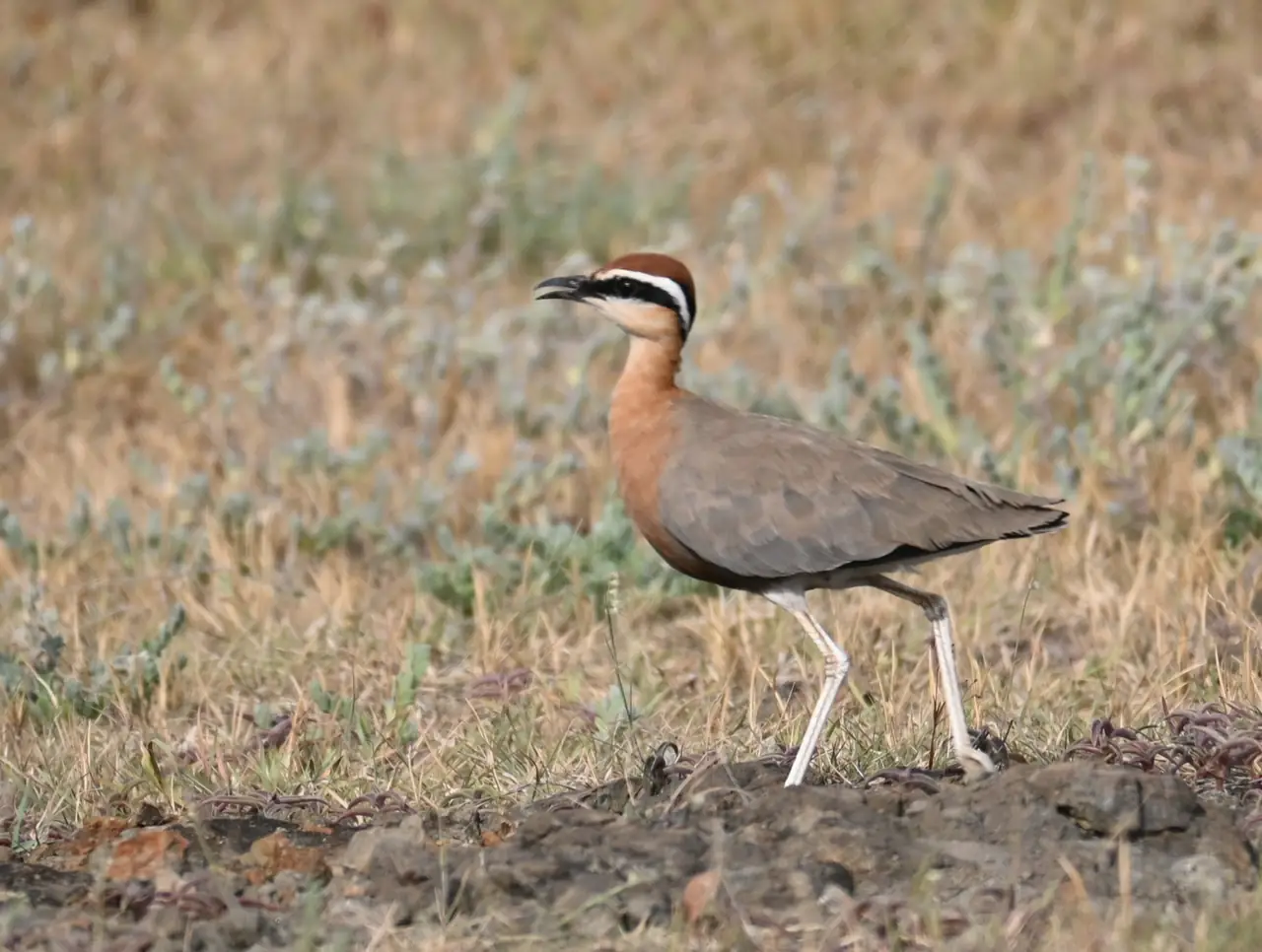
There was almost nowhere for the Indian Courser to hide, yet it still took a careful scan to pick it out. The bird stood tall on dry ground, with a chestnut cap, bold black-and-white lines through the eye and long pale legs. These are the details to look for when a courser is far away.
One photo gives the open grassland view; the other comes closer to the head pattern. Keep both kinds of shot. The wider one tells readers where the bird lives, while the close one helps with identification. We have more on its behaviour and field marks in our Indian Courser guide.
How to photograph Bhigwan grassland birds
Give the dry ground as much time as the lake. Scan from an existing track or vehicle before moving. Watch the edges of stones and grass for small birds; check isolated branches and mounds for larger ones. When a bird is settled, take one wide habitat photo first. If it stays relaxed, take a closer frame. Do not chase a bird, play calls or try to make it fly for a picture.
These four sets came from the same wider Bhigwan landscape, but each bird used it differently: the pipit kept to the ground, the falcon watched from a lookout, the roller used a thorn perch, and the courser crossed the open patch. That is why a grassland outing can feel full even without a boat ride.
For the rest of the trip, including the wetlands and other wildlife, see our two-day Bhigwan field story. You can also browse the Birds of Bhigwan photo guide before planning your own visit.
Photos: Prashant S. Gupta / TravelOnTales. Click or tap any photograph to open a larger version; use your browser’s zoom controls to inspect it and return to this article.