
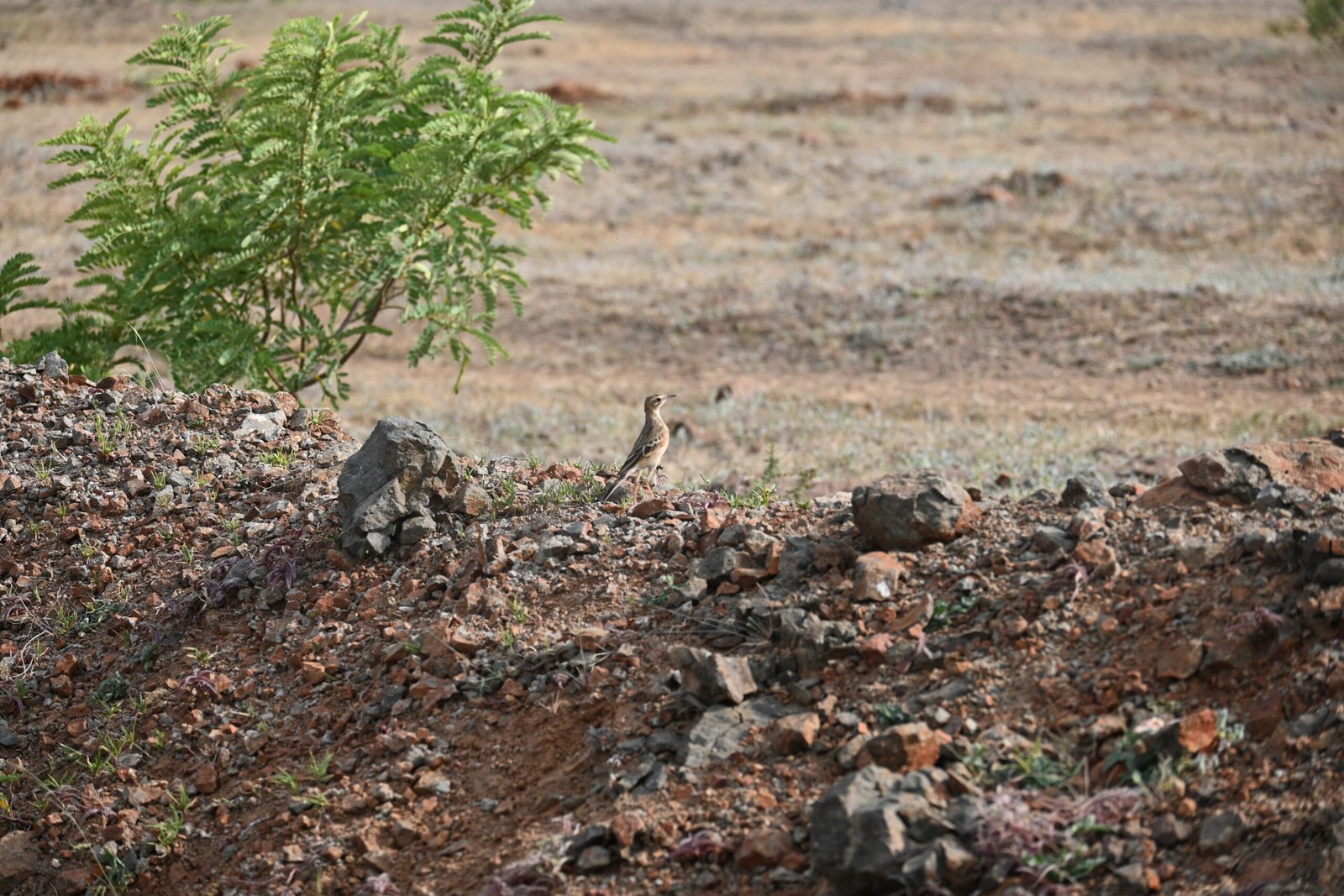
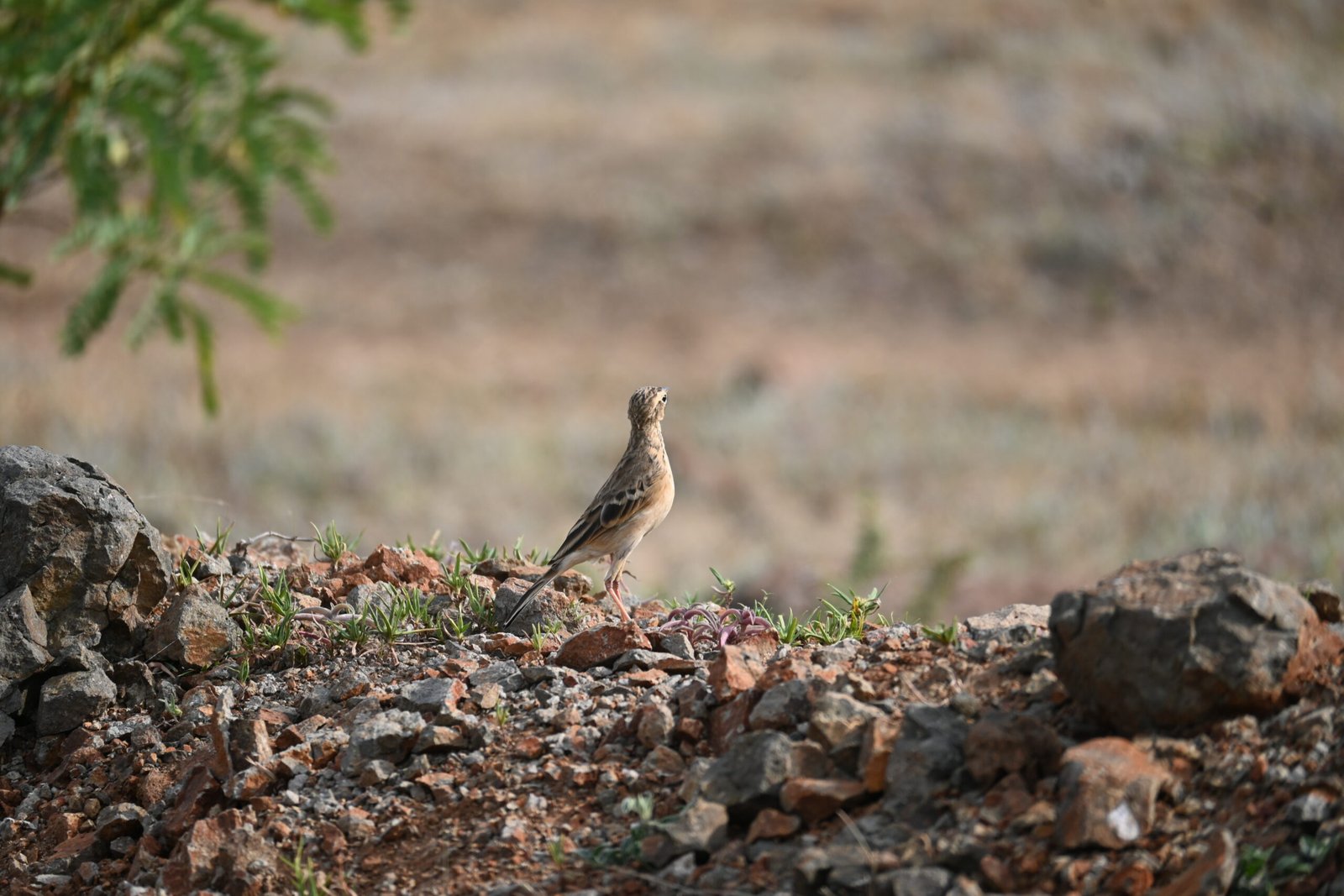
Bhigwan is often described through its lake and flamingos, but the open ground beyond the water has its own birds. These photographs show a pipit on a low, rocky rise with short plants and bare soil. It was easy to overlook at first: the brown plumage almost matched the stones. Once the bird stood upright, its slim bill, long tail and ground-walking shape were much clearer.
This is a photo diary of the bird and its habitat, not a claim of a confirmed species. Several pipits occur in Maharashtra, and a few still photographs without a recorded call do not give me enough evidence to choose one confidently.
Pipit photos from Bhigwan
Tap or click a photograph to open the full-size file. The four frames are from the same short observation and show the bird from different angles.
What the photographs show
The bird stood on stony, mostly open ground, with scattered low vegetation nearby. In the wider frame, the pipit occupies only a small part of the scene. That is useful context rather than wasted space: it shows how easily a brown ground bird disappears into Bhigwan’s dry landscape.
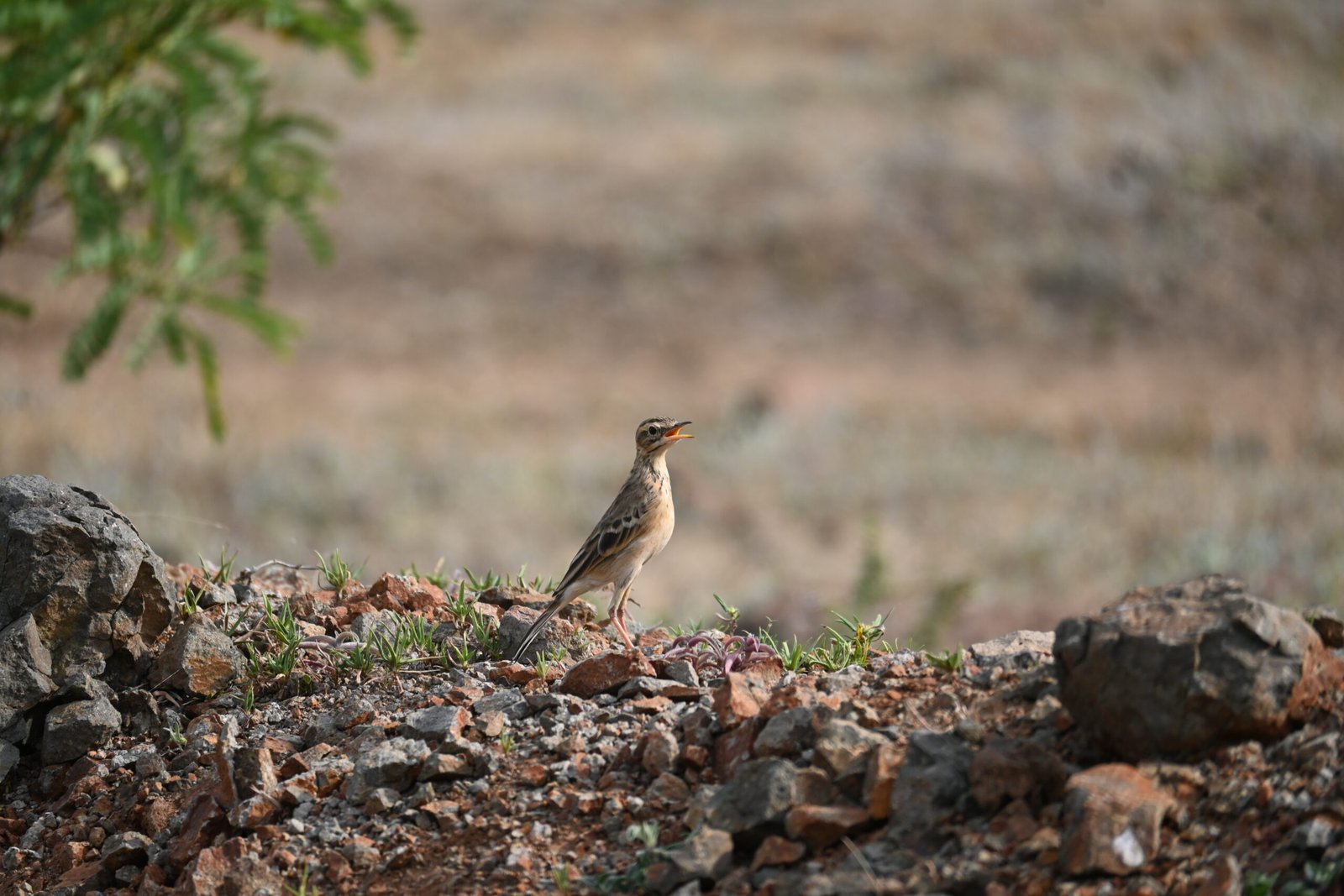
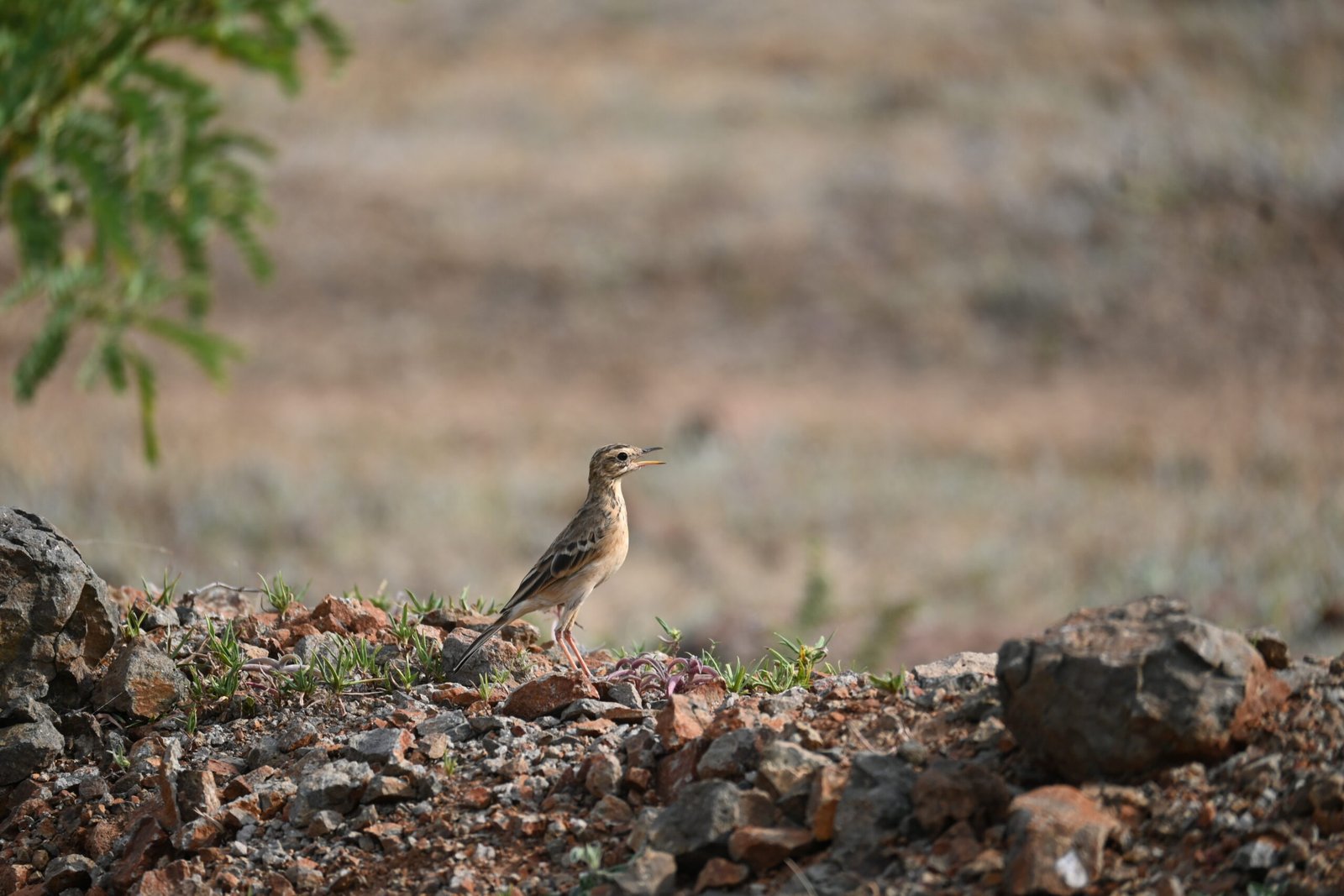
The closer frames show a pale underside, brown upperparts, a slim pointed bill and a relatively long tail. The bird held an alert, upright posture. One photograph catches its bill open; a still image alone does not tell us whether it was calling, breathing or doing something else. The pictures are strongest as a record of appearance and place, not proof of behaviour that the camera cannot establish.
Why I have not put a species name on it
Pipits can look very similar, especially in changing light. Identification may depend on a combination of size, bill shape, breast streaking, the eyebrow, tail pattern, habitat and the call. Those details are not all equally clear in this set. Assigning a confident name just to make a more specific headline would risk misleading readers and anyone using the photographs for identification.
For comparison, the eBird Paddyfield Pipit guide explains how similar that species can be to other pipits, while the eBird Long-billed Pipit guide also stresses the value of habitat and voice. Those are identification references, not a label for the bird pictured here.
How to photograph pipits without disturbing them
Start by scanning the ground with binoculars. A pipit may be visible only when it moves or stands against a clean background. Once found, remain still and allow it to keep its distance. A wider photograph can show the habitat, while a second, closer frame may reveal plumage details. Record the location, date, call if heard, and any behaviour while it is fresh in your memory; those notes may be as useful as the photos when checking an identification later.
Try to keep the sun behind or beside you, but do not pursue the bird to improve the angle. In this rocky terrain, a calm, low viewing position also helps separate the bird from the background without changing its route.
More birds from the same landscape
The pipit is part of a wider Bhigwan grassland story. See our Bhigwan grassland birds photo guide for the landscape, and our separate field notes on the Red-necked Falcon and Indian Courser. Each article focuses on its own bird rather than combining several species into one account.
Photographs: TravelOnTales, Bhigwan, Maharashtra. The exact pipit species remains unconfirmed.