

Wild Indian Gaur (Bos gaurus) – What is Gaur, Indian Bison vs Buffalo Explained, Safari Guide
By Prashant S. Gupta · April 4, 2026
The Indian Gaur (Bos gaurus), also known as the wild Indian bison, is the largest wild cattle species in the world. It is a herbivore found in Indian forests like Tadoba and Bandhavgarh, recognized by its massive body, curved horns, and distinctive white legs.
If you’ve ever searched “what is gaur”, “wild indian bison”, or “wild gaur”, you are looking at one of the most powerful yet misunderstood animals of India — the Indian Gaur (Bos gaurus).
Massive in size, calm in behavior, and dominant in presence, the gaur is a true king of Indian forests. Frequently seen in Tadoba, Bandhavgarh, and Panna, this animal often gets confused with bison or buffalo — but it is neither.
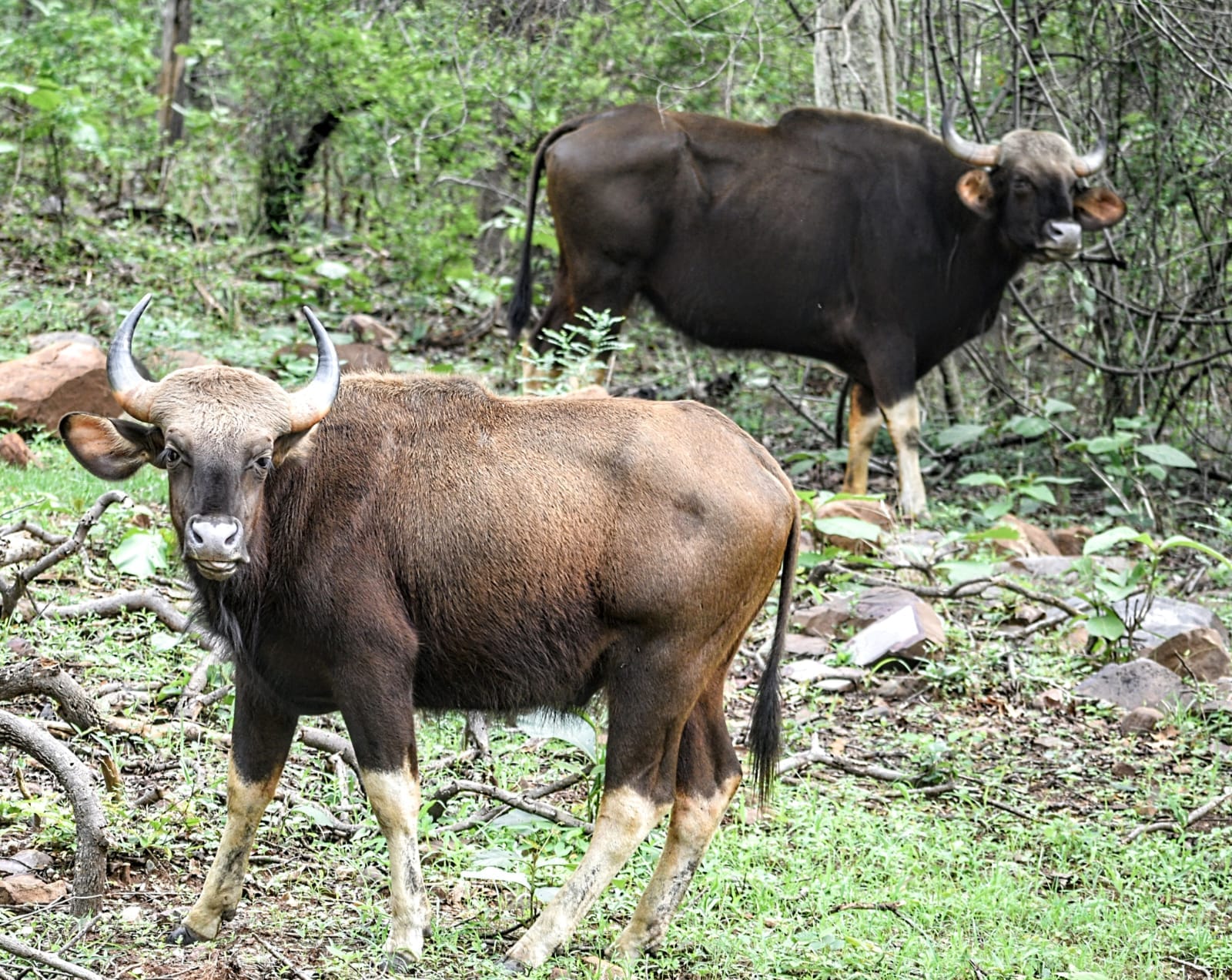
A dominant bull gaur in its natural forest habitat — note the massive build, curved horns, and distinctive white legs visible even from a distance.
What is Gaur (Wild Indian Bison)?
Gaur (Bos gaurus) is the largest wild cattle species, commonly called Indian bison. It is a forest-dwelling herbivore found in India and Southeast Asia, known for its muscular build and white lower legs.
The Indian Gaur (Bos gaurus) is the largest wild cattle species in the world. It belongs to the cattle family and is native to India and Southeast Asia.
It is commonly called the Indian Bison, but scientifically this is incorrect. True bison belong to a completely different genus.
- Scientific Name: Bos gaurus
- Weight: Up to 1,500 kg
- Height: Around 6 feet at shoulder
- Diet: Herbivore (grass, leaves, fruits)
- Status: Vulnerable
The gaur is easily recognized by its massive muscular body, curved horns, and unique white “stockings” on its legs.
Why is Gaur Called Wild Indian Bison?
The gaur is called wild Indian bison because of its large size and strength, but it is not a true bison species. It belongs to the cattle family (Bos), while real bison belong to a different genus.
The term “wild indian bison” is widely used in India due to the gaur’s size and strength. However, this name is misleading.
True bison are found in North America and Europe, whereas gaur belongs to the cattle family. The similarity is only visual, not scientific.
Gaur vs Bison vs Buffalo – Complete Difference
| Feature | Gaur | Bison | Buffalo |
|---|---|---|---|
| Location | India | USA / Europe | Asia / Africa |
| Habitat | Forests | Grasslands | Wetlands |
| Body Type | Muscular | Hairy with hump | Wide body |
| Leg Color | White | Dark | Dark |
This is one of the most searched topics, and here is the clear explanation:
Gaur vs Bison
- Gaur: Found in India, smooth dark body, white legs, forest habitat
- Bison: Found in USA/Europe, thick fur, large shoulder hump, colder regions
- Genus: Gaur = Bos | Bison = Bison
Gaur vs Buffalo
- Gaur: Muscular body, upward curved horns, forest dwelling
- Buffalo: Wider horns spreading sideways, prefers wetlands and grasslands
- Leg Color: Gaur has white legs, buffalo does not
Quick identification: White legs = Gaur. No white legs = likely buffalo.
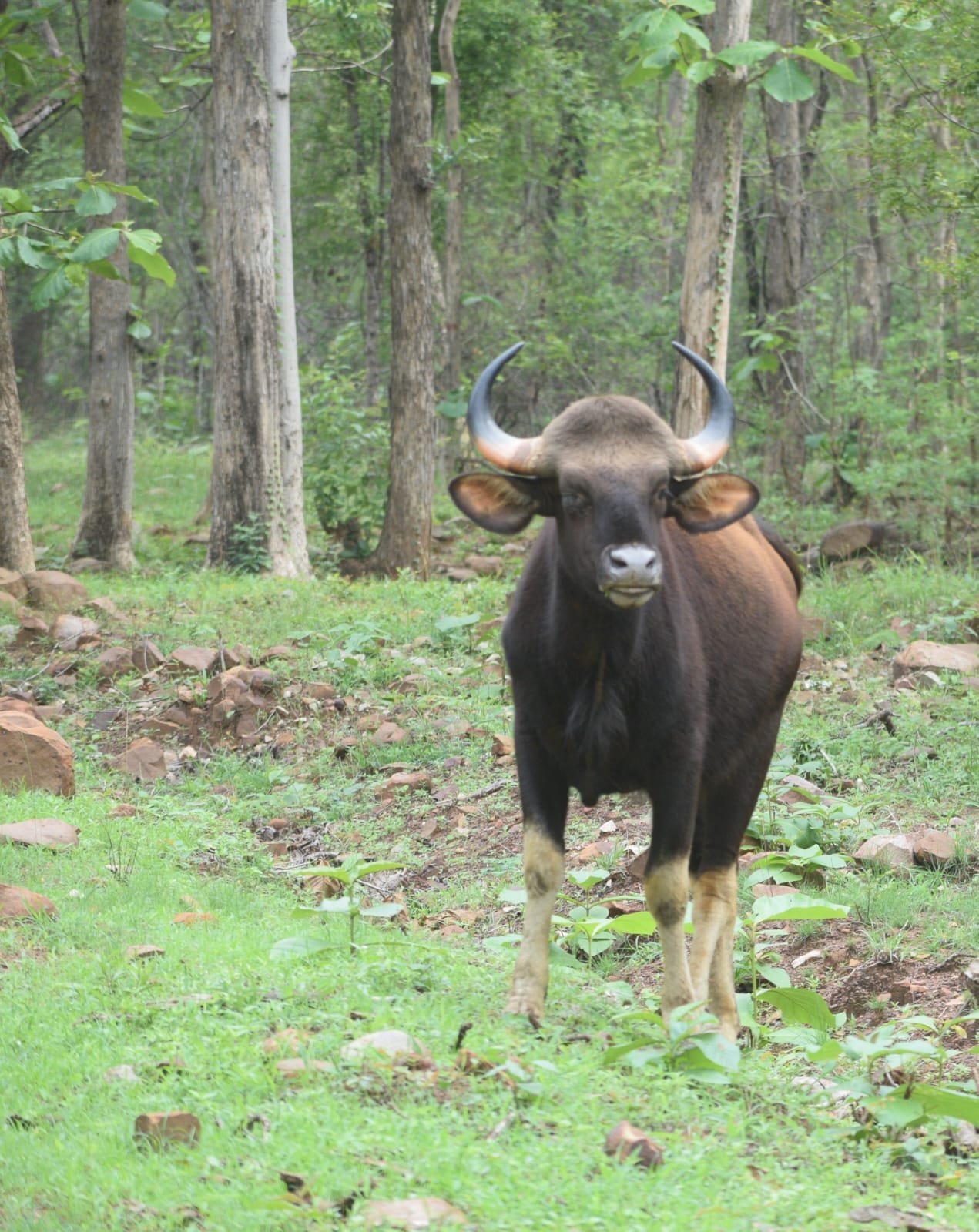
Close-up view of gaur showing curved horns, strong facial structure, and its signature white lower legs (“stockings”) — a key feature that distinguishes it from buffalo.
Where is Gaur Found in India?
The Indian Gaur is found across central and southern India in dense forest regions.
Top locations for gaur sightings:
- Tadoba National Park – High population and frequent sightings
- Bandhavgarh National Park – Seen near grasslands and forest edges
- Panna National Park – Emerging wildlife destination
Behavior of Wild Gaur
Gaur are generally calm animals but extremely powerful. They live in herds led by females, while mature bulls are often solitary.
Key behavioral traits:
- Active during early morning and evening
- Rest during hot afternoon hours
- Prefer water sources during summer
If threatened, gaur can become aggressive, so maintaining distance during safari is essential.
Best Time to See Gaur in India
The best time to spot gaur is during February to June.
- Dry forests improve visibility
- Animals gather near water sources
- Higher chances of sightings during safaris
Wildlife Photography Tips for Gaur
- Shoot during early morning or evening
- Use zoom lens (200mm–400mm)
- Focus on eye contact for dramatic shots
- Use natural forest framing for depth
Conservation Status
The Indian Gaur is listed as Vulnerable. Major threats include habitat loss, diseases from domestic cattle, and human interference.
India’s tiger reserves play a crucial role in protecting gaur populations.
Interesting Facts About Wild Gaur
- Largest wild cattle species in the world
- Can run faster than expected despite size
- Recognized by white “stockings” on legs
- Strong enough to face predators like tigers
Conclusion
The Wild Indian Gaur is not just another animal — it represents strength, balance, and dominance of Indian forests.
Whether you see it in Tadoba, Bandhavgarh, or Panna, the experience is unforgettable.
If you are planning a wildlife safari, don’t just look for tigers — watch the gaur. It might just become the highlight of your journey.
Click here to explore more wildlife stories on TravelOnTales