
Plum-headed Parakeet in Bhigwan Grasslands – Bird Photography, Identification & Habitat Guide

The Plum-headed Parakeet

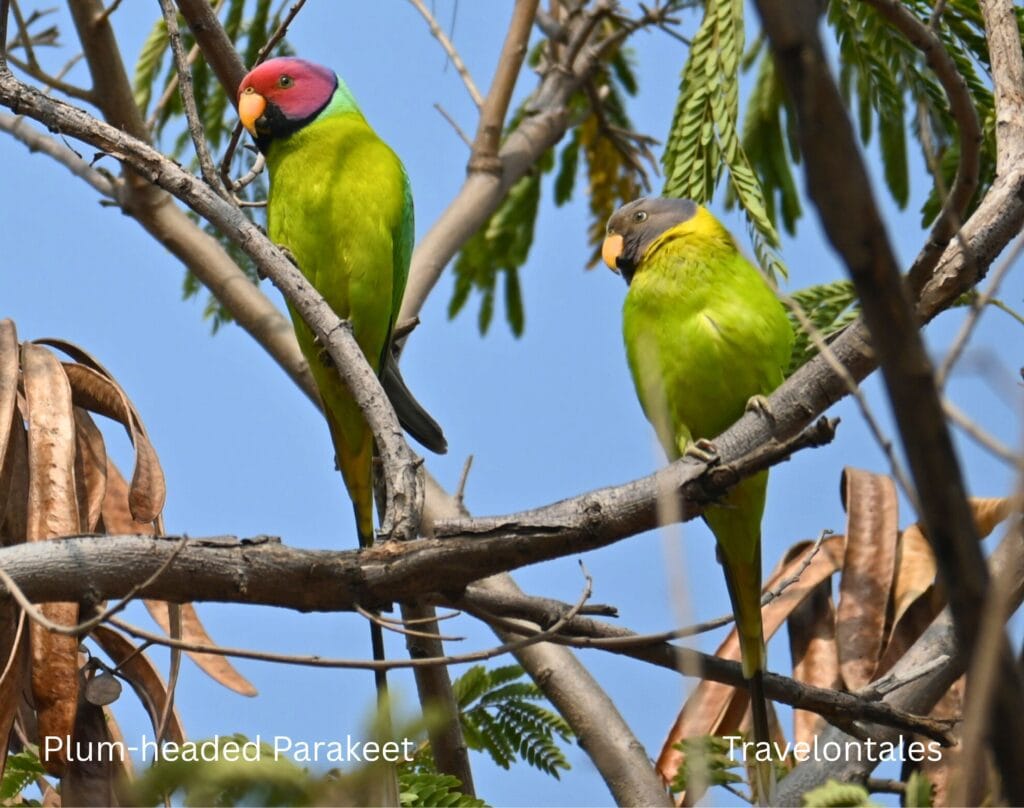
Plum-headed Parakeet perched on tree branch in Bhigwan grasslands

By Prashant S. Gupta | April 2026 | Bhigwan Grasslands, Maharashtra

Plum-headed Parakeet perched on tree branch in Bhigwan grasslands is a moment that perfectly captures the calm beauty of birdlife in this region. This pair, sitting quietly, shows how simple nature can be — yet so powerful.

Clicked on: Nikon Z50
Location: Bhigwan Grasslands

Plum-headed Parakeet Bhigwan Identification

The Plum-headed Parakeet Bhigwan is easy to identify because of its unique color difference between male and female.

  • Male: Plum-colored head with black ring
  • Female: Grey-blue head
  • Body: Bright green
  • Beak: Orange-yellow

Habitat of Plum-headed Parakeet in Bhigwan

The Plum-headed Parakeet Bhigwan is commonly seen in grasslands, forests, and farmland areas.

Bhigwan is not just about flamingos — its grasslands are full of birdlife.

Read full guide: Bhigwan Bird Sanctuary Guide

Behavior and Nature

  • Seen in pairs or small flocks
  • Feeds on fruits and seeds
  • Fast and active flyer

Best Time to Spot Plum-headed Parakeet Bhigwan

  • Morning: 6 AM – 9 AM
  • Evening: 4 PM – Sunset
Photography Tip: Timing matters more than gear. Even Nikon Z50 can deliver great results with patience.

Learn More

More details here: Plum-headed Parakeet Info

Final Thoughts

This is what makes Bhigwan special — quiet, simple, and beautiful.

Explore more wildlife stories

FAQs

Where can I see Plum-headed Parakeet in Bhigwan?

They are found in grasslands and tree areas across Bhigwan.

Which camera was used?

This photo was clicked using Nikon Z50.

Is Bhigwan good for bird photography?

Yes, Bhigwan is one of the best birding locations in Maharashtra.

Two birds that look like different species

Plum-headed Parakeets are one of the clearer examples of sexual dimorphism among Indian birds. A pair sitting together looks like two species until you know.

  • Male: a deep plum-red head shading to purple-blue at the nape, with a narrow black chin stripe and a black collar below it. A red patch on the shoulder.
  • Female: a dull blue-grey head with no black collar, and a pale yellow band around the neck instead.
  • Both: green body, long blue-green tail with a white tip, yellow upper mandible.

Young birds resemble the female, and males take a couple of years to acquire the full plum head. A green-bodied parakeet with a grey head is either a female or a young male.

Separating them from Rose-ringed Parakeets

Rose-ringed is the bird most people see. Plum-headed is slimmer, faster and quieter, and prefers wooded country to open farmland.

  • Head colour settles it immediately in adults.
  • Flight: Plum-headed is noticeably swifter and more agile, weaving through trees rather than flying in a straight line.
  • Call: a distinctive interrogative tooi-tooi, quite unlike the harsh screech of a Rose-ringed.
  • Habitat: Plum-headed favours light forest, groves and wooded edges.

Where to find them around Bhigwan

Not on the open water. Look in the wooded patches, orchards, larger trees around villages and along canal banks with mature growth.

They are easiest to locate by call, particularly in the early morning as they move between roost and feeding trees.

Feeding

Fruit, seeds, grain, flower buds and nectar. They are frequently found at flowering trees, where they chew through blossoms for the nectar at the base.

Unlike the Rose-ringed Parakeet they are not a significant crop pest, largely because they stay in wooded areas rather than working open fields in flocks.

Photographing a pair

  • Get both birds in one frame. The male and female together is the picture — it shows the dimorphism in a way two separate photographs never will.
  • Watch flowering trees. Feeding birds stay put far longer than perched ones.
  • Fast shutter for flight. They are quick and unpredictable through branches.
  • Soft light. The plum head goes muddy and dark in harsh sun and glows in overcast or early light.

Frequently asked questions

How do I tell a male from a female Plum-headed Parakeet?

The male has a plum-red head with a black collar. The female has a grey-blue head with a yellow neck band and no black collar.

Do young males look like females?

Yes. Juveniles resemble the female and males take around two years to develop the full head colour.

How is it different from a Rose-ringed Parakeet?

Slimmer, faster, quieter, prefers wooded country, and the head colour is entirely different in adults.

What do they eat?

Fruit, seeds, grain, buds and nectar. They are often seen at flowering trees.


Related: Telling the Indian parakeets apart, Rose-ringed Parakeets in urban India and Birds of Bhigwan.

Scroll to Top